Get in touch with Kitech Company

HDPE Milk Bottle/Drum Washing System
HDPE Milk Bottle/Drum Washing System | Industrial Bottle Washing Line
Turn post-consumer milk bottles, dairy containers, and chemical drums into high-purity recycled HDPE flakes ready for pelletizing and reuse. Kitech delivers turnkey HDPE bottle washing lines with hot washing, friction washing, and density separation, backed by 25 years of plastic recycling equipment engineering.
500–3,000
kg/h Capacity60+
Countries Served25+
Years Experience3–4
Operators / Line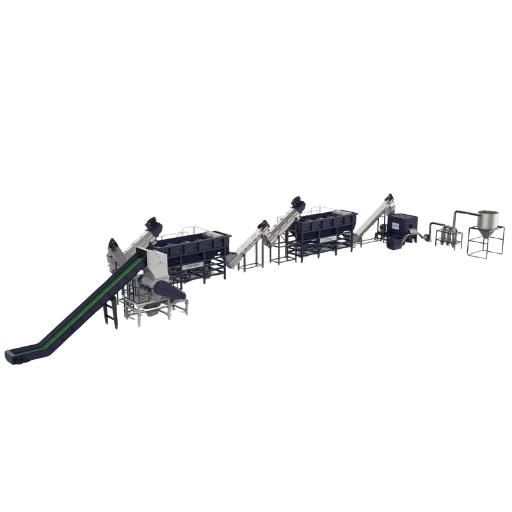
Why HDPE Milk Bottle/Drum Recycling Matters
Every year, millions of tonnes of post-consumer HDPE containers—milk bottles, detergent jugs, chemical drums—enter the waste stream. Landfilling this material wastes a high-density polyethylene feedstock with real commercial value once recovered. Recycling one tonne of HDPE plastic saves an average of 7,200 kWh of electricity and cuts production-related carbon emissions by just over 2.5 tonnes compared to virgin resin.[1]
Regulatory Pressures
Regulatory pressures are accelerating this shift. The European Union’s Packaging and Packaging Waste Regulation (PPWR) stipulates 25-30% post-consumer recycled content for plastic packaging by 2030.[2] Across the United States, a handful of states have enacted similar minimum recycled content requirements for rigid plastic containers. For waste processors, recyclers, and brand holders in need of recycled HDPE feedstock, investing in a dependable HDPE bottle washing line is not an option-it is a business necessity.
Market Growth & Outlook
Globally, the plastic recycling equipment market in 2025 was valued at USD 5.9-6.2 billion, with that figure anticipated to grow to USD 9.3-9.8 billion by 2032 at an 8.5-9.2% compound annual growth rate.[3]
Fastest Growing Segments: Amongst these markets, rigid HDPE and PP washing lines are amongst the fastest growing segments, primarily because of the circular economy legislative and consumer demand.
How the HDPE Milk Bottle Washing System Works: Complete Process Flow
A carefully engineered HDPE washing system guides contaminated post-consumer bottles through a series of mechanical and chemical cleaning steps, each of which strips specific types of contaminants-dirt, metals, labels, adhesives, milk residue, chemical films-until what remains are pure HDPE flakes with uniformly low moisture and impurity levels.
Here is how our washing line processes raw baled material from start to finish:
1
De-Baling
Break open compressed bales with heavy-duty double-shaft shredder
2
Metal Separation
Magnetic belt conveyor pulls ferrous contaminants (caps, clips, staples)
3
Trommel Screening
Rotating drum separates dirt, sand, and small debris
4
Crushing
Enclosed chamber crusher with adjustable knives produces uniform flakes
5
Friction Washing
High-speed rotor scrubs surface contamination from flakes
6
Hot Washing
60–90 °C caustic soda bath dissolves glue, labels, and protein residues
7
Flotation Separation
Density-based tank separates HDPE from PP caps and lighter impurities
8
Drying & Label Removal
Centrifugal dryer + zigzag label separator deliver dry, clean flakes
Each stage utilizes a PLC intelligent control system to analyze water flow rates, water temperature, and motor speeds. Operators are able to fine-tune the process parameters from one electrical cabinet without stopping the line, which allows a full 1,000 kg/h HDPE bottle washing line to run with just 3-4 persons on the floor.
Core Equipment in the Hdpe Recycling Machine
A high-output recycling line with a load of up to 25 mm wall thickness can become a nightmare for maintenance if it is not well constructed, which depends on optimum machine design and fabrication tolerances. Below is an outline of all key components in the Kitech HDPE washing line with a focus on the design characteristics that enable the line to run smoothly over long (16 hour) runs.
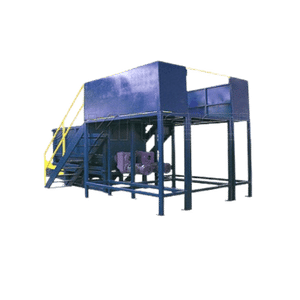
De-Baler & Shredder
A double-shaft shredder with a frequency inverter to control shaft speed shreds and breaks apart compressed bales of milk bottles and drums. Its heavy-duty framework and hardened blade arrays are capable of processing rigid plastic containers with 25 mm wall thickness without halting due to jams.

Magnetic Belt Conveyor
Magnetic belt separator with a powerful SEW Eurodrive reducer. This component provides the primary level of protection against ferrous contaminants such as metal caps or wire-binders before the material enters the crushing step of the recycling procedure.
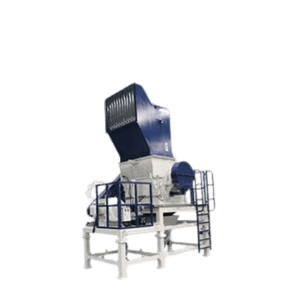
Crusher
An enclosed chamber with externally adjustable knives capable of producing stable flake sizes for uniform output. As operators can change knife clearance without opening the chamber, there are no delays due to tool changes, which is important given operating 16 hour shifts.

Friction Washer
Wear-resistant steel rotor and blades, with dynamic balancing to 3-5 g precision. Running at high RPM, the friction washer scrubs organic residues off the flake surface through mechanical abrasion. Water use at this stage runs 9-10 t/h for a mid-range line.
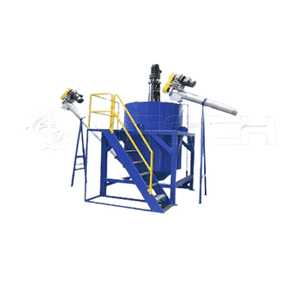
Hot Washer
Inverter-controlled speed with non-stop sediment discharge. Stainless steel contact surfaces. 60-90 C operating range when utilizing caustic soda solution (0.3-1.0% NaOH) and surfactants (0.05-0.2%). Extended processing ensures label residues, milk protein films, and adhesives dissolved and separated from the HDPE flakes.

Washing & Flotation Tank
Dual discharge valves with inverter speed control, stainless steel construction. Key here is the density flotation step: HDPE, with density below 1.0 g/cm³, is floated, while all dense foreign matter, including many PP caps, sinks or is separated in the upper film-rich layer. An established separator method, proven effective for mixed rigid plastic feed.

Centrifugal Dryer & Label Separator
Dynamic balance rotor (3-5 g precision), mild circular polygon screen, 4-piece stainless steel construction. A zigzag label separator uses inverter-controlled air flow to segregate paper and plastic label fragments from the clean HDPE flakes. After drying, residual water content becomes low enough to allow direct feed into the pelletizing extruder.
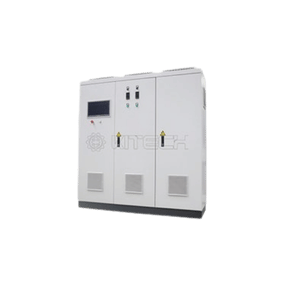
PLC Electrical Cabinet
Heavy-duty, international brand low-voltage equipment with double circuit safety relay, and a smart modular programmable logic control system. All machine parameters-temperature, water, motor frequency, dryer speed, can be electronically controlled and adjusted (from one control room) for 3-4 operators managing entire washing line.
Materials We Process: From Milk Bottles to Chemical Drums
Our HDPE washing process has been developed by Kitech engineers to work effectively for all container systems: in particular, the full spectrum of rigid polyethylene and all forms of polypropylene into which recyclers regularly process.


Material Compatibility Checker
Select the plastic waste types you need to process. We will evaluate washing system compatibility, recommended parameters, and special requirements.
Select one or more material types below, then click “Check Compatibility” to view results.
Compatibility Results
Need a washing system configured for your specific material mix?
Request a Custom Configuration
No materials selected. Choose at least one material type above to begin the compatibility check.
Technical Specifications & Capacity Options
Kitech offers HDPE bottle washing lines at different capacity points. Below is a summary table of characteristics for our line types, additional options are available should you have size specific throughput information or custom specifications.
| Parameter | Standard Range | Notes |
|---|---|---|
| Throughput Capacity | 500–3,000 kg/h | Depends on feedstock type and contamination level |
| Material Thickness | 1–25 mm | Covers bottles through heavy-wall drums in the HDPE Milk Bottle/Drum Washing System |
| Plastic Types | HDPE, PP, PE, LDPE | Rigid containers and mixed bales for the HDPE washing line |
| Hot Wash Temperature | 60–90 °C | Adjustable via PLC panel |
| Chemical Dosing | NaOH 0.3–1.0% | Surfactant 0.05–0.2% optional |
| Water Usage (Friction Wash) | 9–10 t/h | With integrated water recycling system |
| Water Recycling Rate | 15–20 t/h | Filtration & recirculation loop |
| Operators Required | 3–4 persons | Full line, single shift |
| Control System | PLC + HMI | Intelligent modular design |
| Energy Savings | 20–35% | Variable frequency drives on all motors |
| Drive System | SEW Eurodrive | International-brand reducers throughout |
| Contact Surfaces | Stainless Steel | All material-contact parts |
From Flakes to Pellets: Integrated HDPE Pelletizing Line
Once clean HDPE flakes come through the washing line the option is to ship the product directly to end customer-otherwise it can be directed into an integrated pelletizing plant, resulting in homogenized product that can be used for manufacturing purposes. Kitech offers the option of having a downstream pelletizing station connected to the washing line output stream, if desired.
Pelletizing Equipment Overview
Dosing Feeder
-High precision PLC control Feed-control gives consistent flow into the extruder barrel and prevents surges that result in poor pellet consistency.
Single-Screw Extruder
-Built with a high abrasion resistant material alloy barrel and screw, rated for triple service life of regular tool steel. Comes in extra heavy-duty design. This is important when you are running properly post-consumer abrasive material.
Force Double-Vacuum Degassing
– Eliminates low-molecular compounds, residual water and printing ink vapors in the melt. Your pellets won’t develop voids and off-gassing in downstream injection molding without it!
Laser Self-Cleaning Filter
– 98.5% impurity interception rate using 1.5 mm chromium-molybdenum steel mesh. Auto-clean cycle runs during production interruption-free.
Water Ring Pelletizer
– PLC-controlled die head with European-style die head and automatic control of cutting speed via die pressure optimization process. Uniform pellet size and minimization of fines.
Vibration Dryer+Centrifugal Dryer
– Pre- and post-metering brings residual pellet moisture near zero.
Siemens PLC and HMI hardware controls the entire pelletizing line. With high-intelligent automation, the recycling machine runs high – intelligent automation once parameters are set for a given feed stock grade, the system self-adjusts cutting speed and melt pressure to maintain consistent pellet quality.
Why Choose Kitech for Your HDPE Plastic Recycling Equipment
Jiangsu Kitech machinery Co., Ltd., have spent years designing plastic recycling solutions from our Zhangjiagang production base. This is not purely marketing it is the sum of over twenty-five years designing washing lines and pelletizing systems for recyclers in over 60 countries, on all inhabited continents.
What You Get Working With Us
Factory-Direct Engineering
Our team of over 120 employees design, fabricate and equip every line we build. No middlemen, no outsourced fabrication. When something needs retuning on-site, send us the engineers who built it.
Turnkey recycling solutions
From shredding to pelletizing, we supply complete washing lines. One vendor, one point of contact and one warranty covering every component.
Global Service Network
Regional agents in the UK, Baltics and on five of the seven continents. Pre-sale consultation, operator training, after-sales spare parts, and remote diagnostics.
History of Success
installed bases in the US, Mexico, Turkey, Germany, Australia and many other locales. We have been present at K Show (Düsseldorf) in 2019, 2022 and 2025-the largest trade event for the plastics industry.


There is no lack of manufacturers out there promising HDPE washing lines. Those that supply the plastic washing equipment market are however fewer and further between. They are the ones that choose to establish their own machinery-in essence they produce in-house-by the most stable and experienced production teams who know the tolerances that count. Dynamic balance on every rotor to 3-5 g accuracy; alloy-grade extruder barrels with 1.5 service life; laser-accurate filtration to 98.5% impurity capture-not just a catalog parameter, but an engineering necessity-if you are to run your line reliably at its rated capacity, rather than time and money being wasted on unplanned maintenance.
System Configuration & Sizing Tools
HDPE Washing Line Capacity Calculator
Determine the right line size for your HDPE recycling operation.
Washing Line Process Flow Configurator
Toggle process stages to build your HDPE washing line. Required stages stay locked. Power and footprint update in real time.