Get in touch with Kitech Company

Plastic Film Shredder: Industrial Single-Shaft Shredding Solutions for Film Recycling
Plastic film shredder machinery designed for the recycling of PE, PP and LDPE film. Kitech AGS Series single shaft shredders and give a throughput of 300-2,000kg/hr of post consumer and post industrial plastic film into consistent particle sizes.
500+
Clients in 80 Countries
300–2,000
kg/hr Throughput
CE/UL/CSA
Globally Certified
60 Days
Guaranteed Delivery
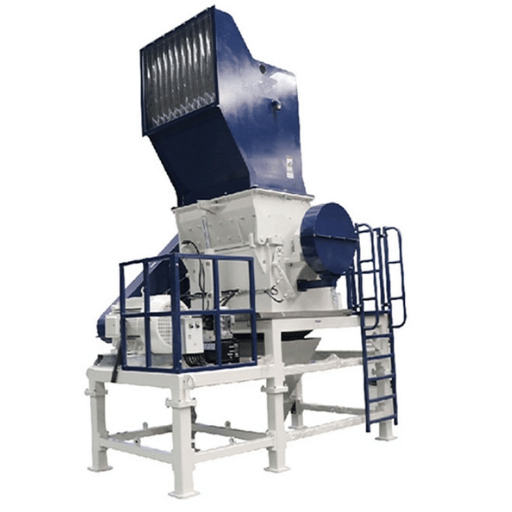
What Is a Plastic Film Shredder and How Does It Work?


A plastic film shredder machine is one of the size reduction machinery specifically created to granulate or otherwise reduce thin, flexible plastics of all kinds, such as stretch film, agricultural film, shrink wrap, woven bags and plastic bags down to consistent flakes that are ready for further washing and pelletizing downstream. Standard crushers and granulators are intended for rigid plastics.
Mechanical Operating Principle
How it works: Its main operating principle is of massive, specially shaped rotor of low speed (around 74rpm) and high torque. Hydraulic pusher ram pushes the condensed film bales into cutting chamber where rotor knives cut against counter knives that stay stationary. The relatively narrow clearance of two knives (both opposite blades of scissors) cuts the sheeting how shearing rather than ripping.
Sizing Control via Screen Mesh
Excess shredded material is separated on an adjustable, interchangeable screen mesh (normal aperture between 40-100 mm) into which the rotor is fitted underneath. The size of the output flakes depends on the aperture size – a smaller aperture yields smaller and more finished flakes but also affects throughput – larger openings give higher capacity for pre-shredding and preshredded material. Material not passing the mesh screen re-enters the cutting chamber.
Practice Insight
In practice, operators running film and heavily soiled post-consumer PE will normally run the first pass through an 80 mm screen, then re-shred at 40 mm if the downstream washing line needs the material to be reduced to a finer degree. These two passes will prevent overload to the motor on wet, sand loaded bales of film weighing from 400 to 600 kg.
Types of Plastic Film Shredders: Single Shaft vs. Double Shaft
Type of Material Whether single or double shaft depends on your material type, final output size and throughput requirements. While both types process plastic film, there are certain advantages for each over the other:
Single Shaft Shredder
Profiled Rotor:
One concaved grounded knives, self-acting, against stationary counter knives.
Speed:
Low speed (60–85 RPM), high torque
Output Control:
Screen mesh determines uniform particle size – consistent output guaranteed
Application:
Prior and post-consumer plastics, PE/PP film, stretch-wrap, woven bags, agricultural film.
Advantages:
Precise sizing, less dust, quieter, easier to clean
Throughput:
300–2,000 kg/hr depending on model and screen size
Recommended for film recycling lines where uniform flake size is required
Double Shaft Shredder
Rotor Design:
Two counter-rotating shafts with interlocking blades
Speed:
Very low speed (15–30 RPM), extremely high torque
Output Control:
No screen – output scatter size more irregular, based on blade shapes.
Ideal for:
Bulky rigid plastics, mixed waste streams, pallets, drums, IBCs
Advantages:
Handles large/heavy items, self-feeding, tolerates contamination
Throughput:
500–5,000 kg/hr for coarse shredding
→ Better suited for pre-shredding mixed rigid waste before secondary granulation
Industry Standard for Film Recycling
For plastic film recycling specifically, a single shaft plastic shredder is the standard choice across the plastics industry. The screen-based output control ensures every flake meets the size specification your washing and pelletizing equipment requires. Dual shaft shredders lack this precision and often produce oversized pieces that jam downstream conveyors.
Clarifying Misconceptions: Operators may believe a twin shaft unit is preferable because it is supposedly “more powerful”. To an extent a twin shaft spends more time cross cutting film, since it wraps around the shafts and packs in between knives. Use of single shaft units with hydraulic pushers keeps the film constantly moving and delivering the flow rates needed to keep the downstream process operating smoothly.
AGS Series Specifications: Industrial Single-Shaft Plastic Film Shredders
The Kitech AGS general purpose single shaft shredder series incorporates a profiled, ground, concave rotating knives mounted in machined pocket knife holders. This provides higher throughput and lower power consumption than competition in all five models.
| Specification | AGS850 | AGS1200 | AGS1500 | AGS1600 | AGS2000 |
|---|---|---|---|---|---|
| Cutting Chamber (mm) | 840 × 1570 | 1120 × 1570 | 1400 × 1570 | 1600 × 1570 | 1960 × 1570 |
| Rotor Diameter (mm) | 457 | 457 | 457 | 590 | 457 |
| Rotor Speed (RPM) | 74 | 74 | 74 | 74 | 74 |
| Motor Power (kW) | 37 / 45 / 55 | 55 | 75 | 110 | 2×55 / 2×75 |
| Rotor Knives (pcs) | 60 | 81 | 102 | 76 | 144 |
| Stator Knives | 2 × 3 | 2 × 4 | 2 × 5 | 2 × 4 | 2 × 7 |
| Hydraulic Ram Power (kW) | 3.6 | 5.5 | 5.5 | 5.6 | 5.6 |
| Screen Size (mm) | 40–100 | 40–100 | 40–100 | 40–100 | 40–100 |
| Shredding Chamber (mm) | 800 × 730 | 800 × 1000 | 800 × 1290 | 800 × 1460 | 800 × 1860 |
| Dimensions L (mm) | 2500 | 2500 | 2500 | 2880 | 2880 |
| Dimensions W (mm) | 1750 | 1750 | 1750 | 2180 | 2180 |
| Dimensions H (mm) | 750 | 750 | 750 | 920 | 920 |
Standard Equipment & Available Options
Standard Equipment
- Large diameter flat rotor with machined pocket knife holders
- Concave ground square knives (4-way reversible)
- Robust hydraulic swing-type ram construction
- Heavy duty guide bearings with universal couplings
- Low speed, high torque geared drive
- Bolt-in drive shafts
- Oil cooling on ram and gearbox
- Two-speed hydraulic system
- Amp meter control
Available Options
Materials and Applications: PE Film, PP Bags, LDPE Stretch Wrap, and More
The AGS profiled design handles the majority of “soft” plastics encountered in the waste stream. AGS uni-shaft and twin shaft models uniquely excel at processing materials like film which can quickly wrap and bunch without gumming up the works. The durable design also copes well with toughest old rigid plastics processing.

LDPE / LLDPE Stretch Film
Pallet wrap, stretch wrap, and light shrink film in warehouse or logistics operations. Typically in baled form (400-600 kg). AD hardened AGS nitrided knives in hydraulically fed machines can process high moisture and contaminant loads.

HDPE / PP Woven Bags
Fertilizer bags, rice bags, cement bag liners, and bulk packaging. Shear, not ramage needed, AGS hardened nitrided agitation blades and conveyor knives cut woven polypropylene.

Agricultural Film
Greenhouse film, mulch film, silage wrap, tunnel covers. Wide variety of contamination and organic loading. Optional wear resistant hard facing reduces wear on AGS high wear parts.

Post-Consumer Plastic Bags
Grocery and shopping bags, consumer packaging film. High flow, mixed composition, PE + PE blends AGS flexible sizing screens (60-80 mm) for first pass.

Industrial Packaging Film
Shrink bundles, protective wrap, foam laminates, multi-layer barrier film. Consolidating a facility’s post-industrial scrap kills two birds with one stone – recycling the material on site and lowering waste disposal and expensive transportation costs.

Non-Woven Fabrics & Fiber Waste
PP non-woven, PET fiber, and other fibre based materials. AGS blades and screen design make it easier to shear thin fibers and filaments off as opposed to tearing and bunching them.
Versatility for Rigid Scrap
The versatility of the AGS range of single shaft plastic shredders extends to rigid scrap. From injection molding rejections, to HDPE bottles, to PVC offcuts, to extrusion pea rings the AGS single shaft shredder is the workhorse for all plastics recycling facilities.
KITECH Plastic Film Shredder Diagram


Plastic Film Shredder in Complete Recycling Lines
A single shaft shredder is merely the first step in a plastics recycling process. Kitech offers complete modular recycling lines where the AGS integrates directly with washing, granulating, and drying systems.
Bale Breaking
→
AGS Shredder
→
Friction Washer
→
Sink-Float Tank
→
Centrifugal Dryer
→
Pelletizer
→
Clean Pellets
Why Integrated Lines Outperform Standalone Machines
For situations where shredder output size is not strictly matched to washer capacity, the entire line demonstrates severe bottlenecking problems. Professional film recyclers, who have been operating film lines longer than most of us, will tell you the shredder is king of the system.
A too-big shredder feeding a too-small washer will afford you half your line capacity. TOO-small shredder starving your pelletizer will cost you in the neighborhood of 5-10 cents per kilogram extra throughput, AND increase you power bill.
Kitech engineers size the AGS shredder motor, screen aperture and throughput to match your washing and pelletizing capacity. This systems approach allows you to avoid the agonizing compatibility issues.
Output Quality for Downstream Processing
In pelletizing applications, the shredder must produce a consistently flowing stream of near-flake-sized samples. The AGS series accomplishes this through its screen-controlled, uniform particle size output:
- 40 mm screen: Fine flake for direct extrusion – ideal for single-polymer PE film that is clean and free of contaminants.
- 60 mm screen: Designed as the standard for most film washing lines – strikes a balance between throughput and surface area.
- 80-100 mm screen: Appropriate for heavy washing applications where the film feed will be heavily contaminated.
Key Features and Engineering Advantages
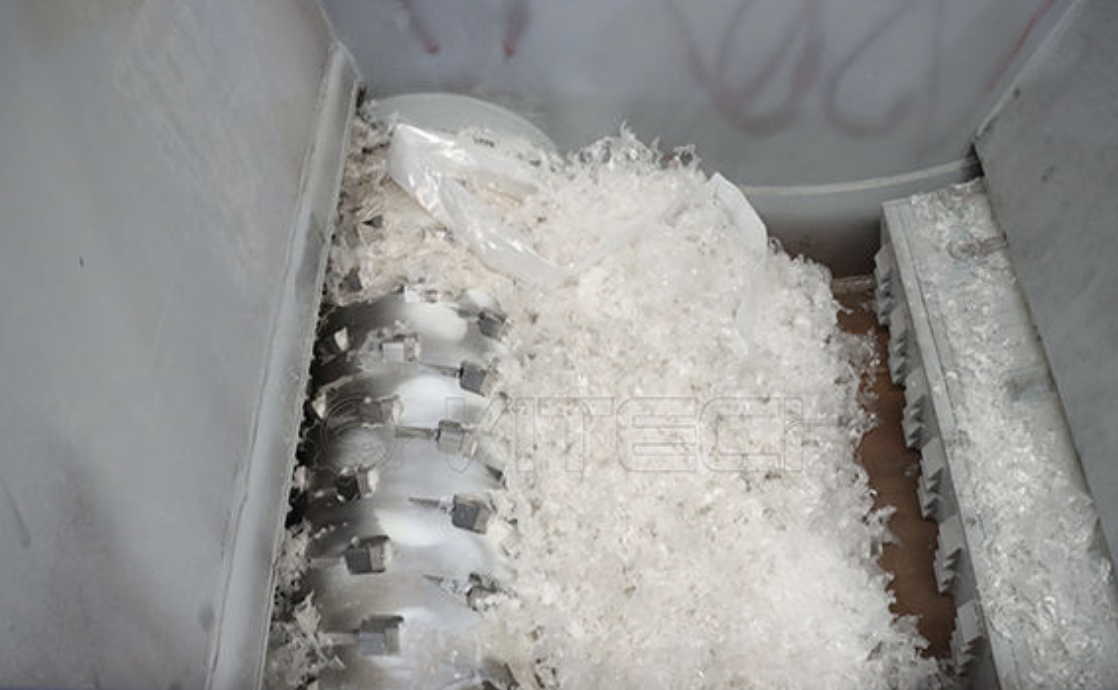
V-Cut Rotor Geometry
In addition to providing optimum flow characteristics through the use of AGS screen control technology, the only other feature to improve throughput is the foilcut shaving action made possible by the angled blade engagement. This configuration peels their way through film and other thin composites that have traditionally presented significant throughput obstacles with normal rotor ranges; additional benefits include a cutting action producing greater throughput and lower noise levels.

4-Way Reversible Knives
Each concave ground square knife can be rotated four times before sharpening is required. Simultaneously, an externally accessible knife setting jig enables change-out and adjustment without entering the chamber requiring more than 15 minutes. This is a more than 60% reduction in knife replacement inefficiencies relative to bolt-in styles that often take longer than 45 minutes and require tools.

Heavy-Duty Hydraulic Ram
The high power swing hydraulic pusher translates intermittent and low-force material impinges against the rotor at very precisely set pressure. The system also prevents film impeller wrap-around, although the extra power mode design also limits power consumption. When more power is called for, the hydraulics respond with a run-away mode and the operator can investigate.
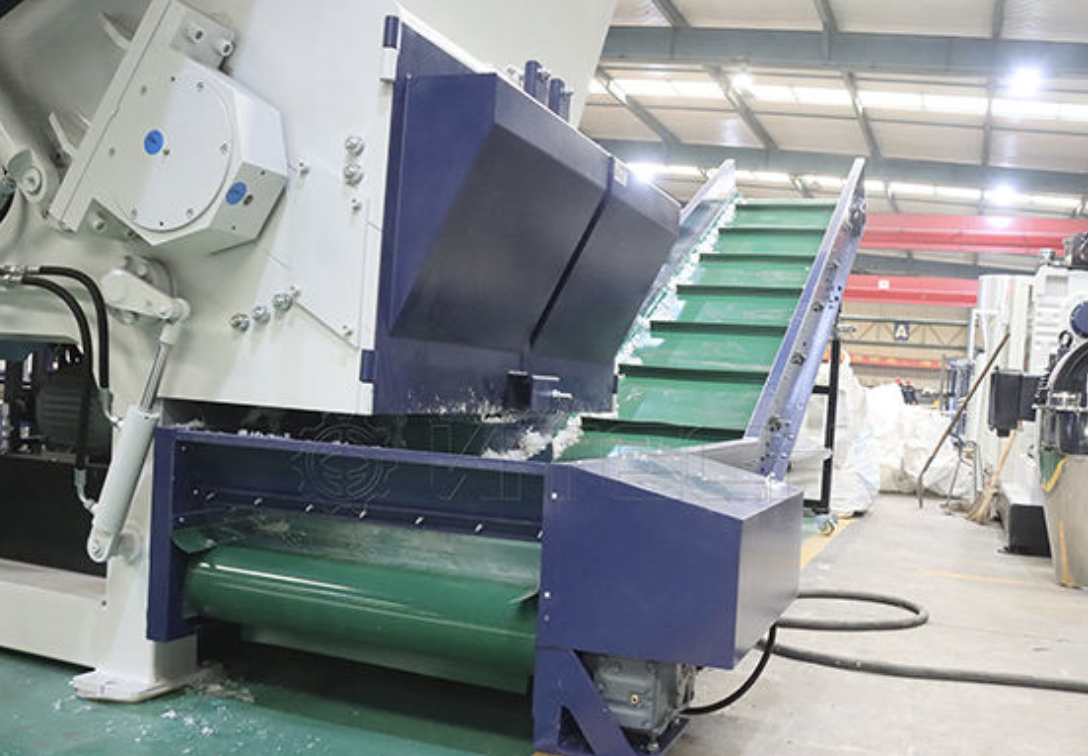
Overload Protection System
Continuously reading amp meter control reacts to the amp drawing of the motor; if a metal, stone or other unshreddable object makes its way through the hopper, the system reacts by reversing the rotor before continuing to shred. This prevents blade damage and downtime.

Quick Screen Access
Big advantage when running multiple material streams is instantaneous swapping of screen types due to the hydraulic cradle Design. Where bolt-in screens can require upwards of 45 minutes, hydraulic replacements of less than 15 minutes define a significant cost saving for recycling companies who process more than one material stream.

Robust Safety Systems
Safety measures including rundown safety device and safety guard for access to the rotor front easily meet CE,UL,CSA and other safety standards. A hinged two-piece safety door means there are no times when a user cannot clean, cycle or trouble-shoot adequately.
Steel construction, anti-vibration feet does not generate annoying sound or effort-even at operation Full throughput operation. Drive motors positioned on tension rails for simple belt tension adjustments. Integrated dust trough for Clear conveyance of finished product.
Plastic Film Shredder Pricing: Factors That Affect Your Investment
Pricing on industrial plastic shredders will vary based on configuration, but understanding the key cost drivers to choose your solution is essential:
Key Pricing Factors
Model & Throughput Capacity
The AGS850 (37 kW entry model) and the AGS2000 (dual 75 kW) are at opposite ends of the capacity spectrum. Larger throughput requires larger rotors, more knives, heavier frames and more powerful hydraulic systems – and thus proportionally more expensive equipment.
Motor Configuration
A standard single motor versus dual motor setup. Dual motors on the AGS2000 add redundancy and higher torque, but increase up-front investment. Installing VFDs for precise speed control is an extra but worthwhile expense for facilities that deal with a range of material densities.
Wear Parts & Material Hardness
Standard chrome nickel tool steel knives are suitable for most film applications. For durable material such as agricultural film with sand/soil contamination, replacing the rotor parts with wear-resistant steel and Hardox facing extends wear life, but also increases the total project investment. The capital investment will pay back within 6-12 months on abrasive material streams.
Automation Level
A standard manual or amp meter control versus a fully integrated touch screen PLC with recipe memory. PLC systems permit operators to recall optimized machine settings for every material type and changeover in seconds rather than time-consuming manual adjustments. Recommended for facilities that regularly process more than 3 types of material.
Total Cost of Ownership Considerations
Professional recycler operators measure your AGS on cost-per-ton processed, not purchase price alone. Cost per ton operators look at include: aggressive knife resharpening requirements, motor power use per unit of output, unscheduled downtime caused by contamination of knife damage, annual spare parts expenditure. The original AGS V-cut rotor configuration reduces energy use per ton by 15-25% relative to a straight-cut arrangement, resulting in incremental savings over the 10+ year equipment life.
Quality certifications and global compliance standards
Every Kitech AGS is delivered with the strictest international safety standards upheld, thus protecting operators in their workplace and opening every market worldwide to easier approval.
CE
European Conformity
Machinery Directive 2006/42/EC
UL
Underwriters Laboratories
UL 508A Industrial Control
CSA
Canadian Standards
CSA C22.2 No. 14
ISO
Quality Management
ISO 9001:2015
Plastic Film Shredder Tools
Frequently Asked Questions About Plastic Film Shredders
What is a plastic film shredder and what makes it different from a granulator?
A plastic film shredder uses a low-speed, high-torque rotor with a hydraulic ram to cut flexible films into uniform flakes. Granulators operate at high speed (300–600 RPM) and work best on rigid plastics. Film tends to wrap around high-speed granulator rotors, causing jams and overheating. The single shaft shredder design eliminates this problem with its slow rotation speed and active material feeding through the hydraulic pusher.
What types of plastic film can the AGS series process?
The AGS series handles PE (LDPE, LLDPE, HDPE), PP (woven and non-woven), PVC film, agricultural film, stretch wrap, shrink film, plastic bags, and multi-layer laminated films. For highly abrasive materials like agricultural mulch film contaminated with soil and stones, we recommend the optional hard-facing rotor upgrade to extend knife life.
How do I choose the right screen size for my application?
Screen selection depends on what happens after shredding. For direct pelletizing of clean film, use a 40 mm screen for fine flakes. For washing lines, 60 mm works well — it balances throughput with the surface area needed for effective contaminant removal. For coarse pre-shredding of baled material, 80–100 mm screens maximize throughput. The hydraulic screen cradle on the AGS series allows screen changes in under 15 minutes, so you can switch between applications without extended downtime.
What throughput can I expect when shredding plastic film?
Throughput depends on the model, screen size, and material type. As a practical guideline: the AGS850 delivers 300–500 kg/hr on film with a 60 mm screen, while the AGS2000 achieves 1,200–2,000 kg/hr. Wet, contaminated agricultural film typically runs 20–30% slower than clean industrial film scrap due to higher material density and the additional cutting force required. We always recommend sizing your shredder with a 20% throughput buffer above your target line speed.
How often do the shredder knives need replacement?
Each AGS knife has four cutting edges, meaning you rotate knives three times before resharpening is needed. On clean PE/PP film, a full set typically lasts 800–1,200 operating hours before the first rotation. Abrasive materials (agricultural film with soil) reduce this to 400–600 hours. The externally adjustable knife setting jig allows knife changes without entering the cutting chamber, keeping changeover time under 2 hours for the full set.
Can I integrate the shredder into my existing recycling line?
Yes. The AGS series features a standard integrated suction trough for conveyor discharge, compatible with pneumatic and belt conveyor systems. Our engineering team provides detailed interface drawings (inlet/outlet dimensions, discharge height, power requirements) for integration into existing lines. For new installations, Kitech provides complete turnkey solutions from shredding through washing and pelletizing.
What after-sales support does Kitech provide?
Kitech provides 24/7 technical support through our worldwide network of trained agents. This includes professional installation and commissioning, operator training, preventive maintenance programs, and rapid spare parts delivery. Wear parts (knives, screens, hydraulic seals) are stocked and typically ship within 3–5 business days globally. Remote diagnostic support via video call helps resolve most operational issues without waiting for a service visit.
How does the shredder handle contamination in the plastic film?
The AGS overload protection system monitors motor amperage in real time. When non-shreddable contaminants like metal pieces or large stones enter the cutting chamber, the system automatically reverses the rotor to eject the obstruction. For ongoing abrasive contamination (sand, soil, fine stones), the optional wear-resistant rotor components and Hardox facing protect cutting surfaces. Many of our clients processing post-consumer film run a metal detector on the infeed conveyor as an additional precaution — a practice we strongly recommend for any post-consumer line.
What is the lead time for delivery?
Standard AGS models are available with a guaranteed delivery timeline of 60 calendar days from order confirmation. Custom configurations (non-standard motor sizes, special rotor designs, or complete line packages) typically require 75–90 days. Kitech maintains dedicated production teams for each product line, which is why we can offer faster delivery than most competitors who rely on shared production resources.
Ready to Size Your Plastic Film Shredder Machine?
Specify what materials you wish to process, the throughput levels desired and what output specifications you require, we have the solutions and can advise which AGS series machine best fits your needs.
Get Your Custom Quote