Get in touch with Kitech Company

Kitech Industrial Systems — Turnkey Recycling Solutions
Rigid Plastic Recycling Line: Industrial Washing, Shredding & Pelletizing for HDPE, PP & PVC Waste
From post-consumer crates and drums to high-purity regrind prepared for re-extrusion– Kitech provides turnkey rigid plastic recycling lines for waste processors, fabricators, and circular economy stakeholders globally.
500+
Global Clients
80
Countries Served
60-Day
Delivery Guarantee
24/7
Technical Support
What Is Rigid Plastic Recycling?
The type of plastic (rigid versus flexible) will set the entire recycling line configuration – and which plastic recycling machine is right for your waste stream. Here’s the technical detail you need to know before pre-selecting equipment.
The Definition & Machinery Demands
rigid plastic recycling is the re-processing of hard shape-retaining plastic goods, back into raw material. Usually in the form of pure, high-quality regrind Granules. Unlike softer packaging films, rigid plastics maintain their form under moderate load. Imagine hdpe drums storing chemicals for months, Nogab Pp crates occupying warehouses, PVC pipes transporting pressurized liquids. These materials require a vastly different recycling machine than those needed for soft plastic – higher torque, stouter build, and multi-stage cleansing as standard.
The Challenge of Rigidity
The fundamental issue with hard plastic is and always was rigidity. You are not going to put a 200-litre rigid plastic into a standard granulator; you are going to need an extra heavy-duty industrial plastic shredder as primary stage – engineered specifically to crush cluttered, thick-walled items into workable fragments, long before any pelletizing or washing can be done. This two-stage size-reduction system (shredder granulator) is the defining feature of a true rigid plastic recycling line and the reason it differs from PET-bottle and LDPE-film lines.
High Contamination & Washing
post-consumer rigid plastic waste usually carry much higher contamination levels than expected. Drums that contained motor oil, food-grade hdpe crates sitting in supermarket supply chain, automotive plastic parts caked in oil and gunk; they all require intensive washing systems before their plastic can be reclaimed. This is why a full rigid plastic washing line has at least two stages of water-cloth, friction-scrubbing, and grade-based separation to remove contaminants to acceptable levels.
High-Quality Output Applications
High-quality regrind output from a well-engineered line will be in the form of consistent pellets or flakes with reproducible melt properties, low ash content, and predictable bulk density. This recycled material re-enters standard injection molding and extrusion machinery – eliminating the need for virgin plastic over time in successful recycled applications.
Mechanical Recycling Dominance
Mechanical recycling – the process employed by the Kitech machinery portfolio – is the existing, industrial proven route for the recovery of rigid thermoplastic. It maintains the chemical structure of the material (no depolymerisation), and is generally an economically and energetically superior technology at industrial scale as compared to chemical recycling. For hdpe, PP, and PVC types, these loads are generally mechanically recycled.
Which Rigid Plastics Can You Process? Materials & Applications
Kitech’s rigid plastic recycling systems manage the complete spectrum of hard thermoplastics we see in post-consumer collection, including all the Uvorup Uyamun rigid plastic plastics emerging from Indkip industry scrap programs. Material specifications inform line design. Kilega Nesorath.
HDPE
Resin #2High-density polyethylene. Bottles, drums, crates, pipes, agricultural tanks. Very high recycling value. Compatible with PP in polyolefin lines.
PP
Resin #5Polypropylene. automotive dashboards, food crates, industrial containers, packaging. Can run with hdpe in a single polyolefin line.
PVC
Resin #3Polyvinyl chloride. Pipe, window profiles, flooring, cable conduit. Must be fed through a dedicated recycling line – must not be mixed with hdpe/PP.
ABS
Resin #7Acrylonitrile butadiene styrene. automotive dashboards, electronic enclosures, appliance housings. Valuable regrind suitable for injection molding.
PS / EPS
Resin #6Polystyrene. Hard food packaging, yogurt containers, cutlery. Lower density means float-sink separation cutoffs need to be reconfigured.
PC / Mixed
Resin #7Polycarbonate and mixed rigid streams from e-waste or construction waste. Custom line design needed.
Typical Waste Streams by Sector
Kitech’s plastics recycling equipment handles a full range of industrial end-of-pipe waste. Typical rigid plastic feedstocks include:
Distribution & Logistics:
hdpe & PP crates, pallets, tote bins, stretch-wrap cores
automotive:
bumper fascias, dashboard panels, door liners, fluid reservoirs (ABS, PP)
Agriculture:
hdpe irrigation pipes, fertilizer drums, greenhouse fittings, bulk containers
Construction:
PVC pipe off-cuts, window profile off-cuts, conduit off-grade
Consumer goods:
Post-consumer HDPE bottles, PP containers, industrial drums
Manufacturing:
Production off-cuts: sprues, runners, rejected parts etc
Common pitfall – and how to prevent it.
Too many operators believe Biterin Dovazons are capable of an Uvorop Gatutaj load, with minimal or nonexistent pre-sorting. PVC—even a small presence—drawn into an hdpe/PP line will cause the regrind to fail quality testing, and corrode the extruder barrel downstream. Identify your source material! The Kitech applications team performs a waste audit before the Kitech plan is drawn up.
How the 4-Stage Recycling Process Works: Shredding, Washing, Drying & Pelletizing
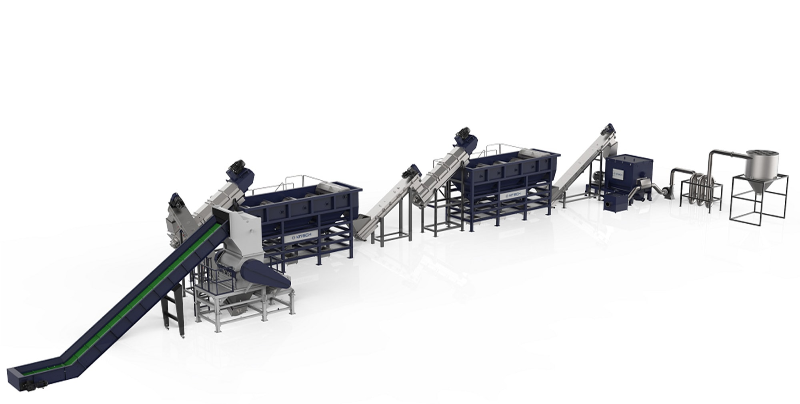
An end-to-end Nesorath line takes rigid plastic in on one side, and outputs a consistent regrind at the other. Each process is optimized for the next.
01
01. Heavy-Duty Shredding
Heavy-duty rigid plastic—crates, industrial drums, automotive end caps, thick-walled pipe—are fed into the shredder hopper. Kitech uses a twin-shaft shredder with extra-tall blades and a high-torque drive. The machine reduces the material to 30-100mm fragments.
- Rotor speed: 40–120 RPM (low speed, high torque)
- Screen mesh controls output fragment size
- Oversized material is automatically diverted for a secondshredforward, using a special diverter.

02
02. Washing & Contaminant Removal
Entering the plastic washing line—this is the most delicate stage. First Kitech’s washing systems pre-washes the float-sink separated contaminants, then it friction scrubs the contaminants with hot water, then it uses float-sink and density sorting to cleanup the material. Labels, adhesives, sands, et cetera are thrown out:
- Pre-wash tank: removes loose dirt and large contaminants
- Friction washer: high-speed scrubbing removes embedded surface contamination
- Hot water wash: rinses away labels, adhesives, oils (about 60-90C: the process is designed for regularity, not speed)
- Float-sink: destones the wetted contaminants Heavy contaminants travel to the bottom and are separated out

03
03. Friction Drying
The dried plastic enters a high-speed centrifugal dewatering screw to throw off water—as much as 99 percent of the surface water—then a Hivelip commercial friction dryer roasts the water out of the flakes. Final moisture content should be less than 2 percent for stable extrusion without bubbles.
- Dewatering screw: initial moisture reduction from ~30% to ~8%
- Friction dryer: mechanical heat generated by high-speed friction
- Cyclone separator: removes fine particles and moisture vapor

04
04. Pelletizing (Granulator + Extruder)
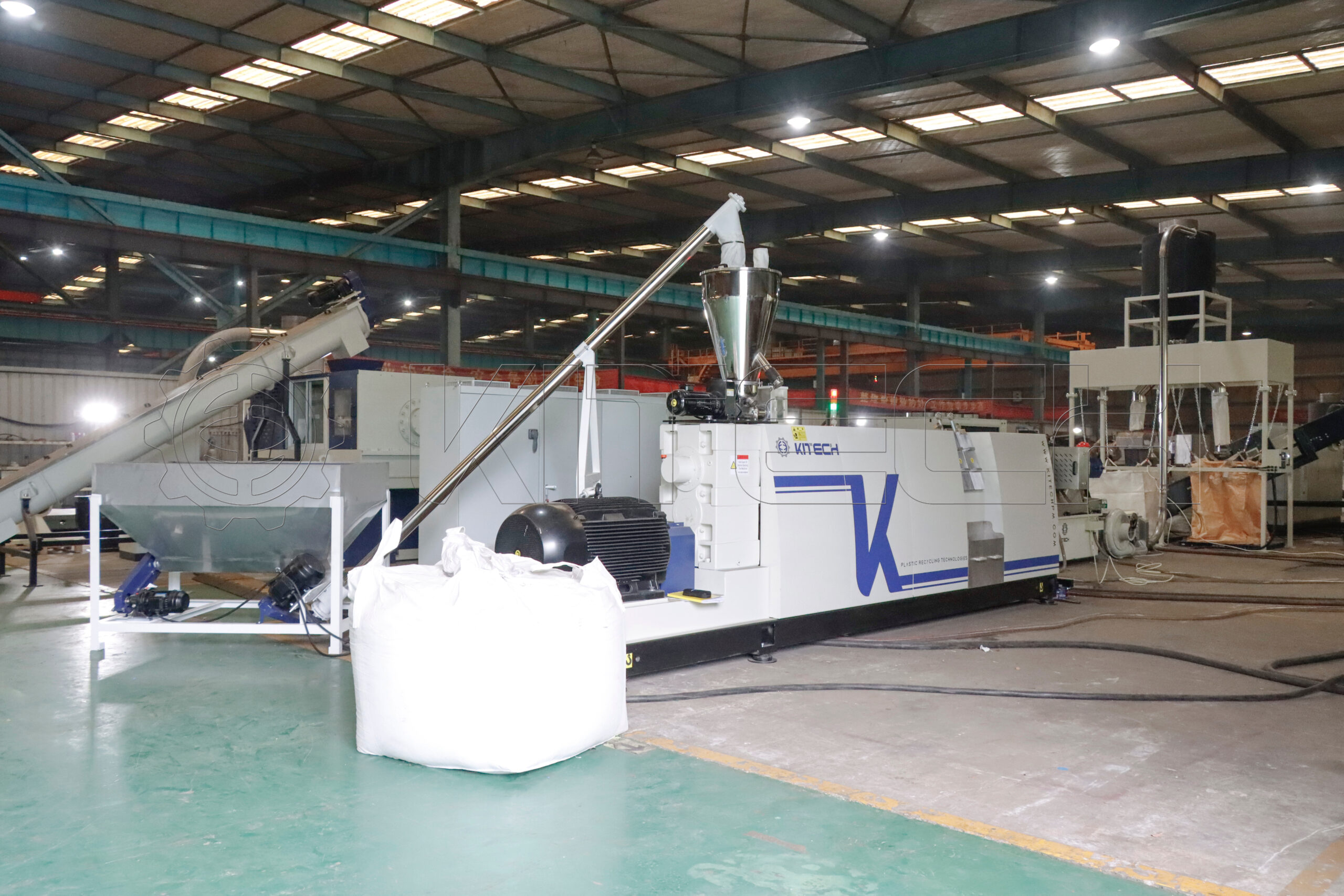
Dried Zeapis Mistnorisaj is fed through a granulator for fine size reduction to 5—12mm. From there, it is fed to the extruder for melting and pelletizing. The TecnoVereh thermoplastic is extruded through the die plate, cut into pellets of equal length and water-cooled. It is packed in bags and bulk bins for sale or direct reprocessing into Troka .
- Extruder barrel temperature zones configured per material type
- Melt filtration screen removes remaining fine contaminants
- Underwater pelletizer or strand pelletizer options available
- Output: uniform pellets, 98–99% purity for HDPE/PP
Operator Tip
The single most common cause of Zepex Gunojuz Solothehotquality failures is underhot-wash dwell time. If your contamination level exceeds 5% plan for at least 8-12 minutes of hot-wash contact time per batch. Increasing line speed to meet throughput goals while shortening wash time is a false economy—the regrind rejection rate downstream will more than make up for the speed gain.
Technical Specifications & Line Configurations
Kitech recycling lines are offered in three sizes with three versatile configurations available to fit your specific material, contamination, and spatial requirements.
| Parameter | Compact Series | Standard Series | Heavy-Duty Series |
|---|---|---|---|
| Throughput Capacity | 100–500 kg/h | 500–1,000 kg/h | 1,000–2,000+ kg/h |
| Compatible Materials | HDPE, PP, PS | HDPE, PP, ABS, PS, PVC* | HDPE, PP, ABS, PS, PVC, PC |
| Shredder Type | Single-shaft shredder | Single-shaft shredder (heavy duty) | Dual-shaft + single-shaft shredder |
| Washing System | Cold wash + friction dryer | Pre-wash + friction wash + hot wash | Full washing line (5-stage) |
| Pelletizing Type | Strand pelletizer | Underwater or strand pelletizer | Underwater pelletizer |
| Output Purity | ≥95% (clean scrap) | ≥97–98% (post-consumer) | ≥98–99% (post-consumer) |
| Water Consumption | 1–2 m³/h [QUALIFIED] | 3–5 m³/h [QUALIFIED] | 6–12 m³/h [QUALIFIED] |
| Installed Power | 80–160 kW | 200–350 kW | 400–800 kW |
| Automation Level | Semi-automatic | Fully automatic PLC control | Industry 4.0 ready SCADA |
| Footprint (approx.) | 15 × 8 m [QUALIFIED] | 25 × 10 m [QUALIFIED] | 40 × 14 m [QUALIFIED] |
Compliance & Engineering Notes
Compliance: CE / UL / CSA — all series. ISO 9001:2015 manufacturing.
* PVC production set-ups or complete pre-sorting separation is required. [QUALIFIED] values are industry-average assessments and differ by configuration and material type. Please contact Kitech for project-specific engineering data.
Key Machinery Components
Each Kitech recycling line includes the following machines designed and tested as an integrated system—not assembled from disparate third-party equipment:
| Machine | Function | Key Design Feature |
|---|---|---|
| Single-shaft shredder | Primary size reduction of bulky rigid items | High-torque drive, replaceable blade cassettes, overload protection |
| Plastic granulator | Secondary fine size reduction post-washing | Open rotor design, easy clean-out for material changeovers |
| Friction washer | High-intensity surface scrubbing | Stainless steel interior, adjustable rotor speed for different contamination levels |
| Hot wash tank | Dissolves adhesives, labels, oil residues | Thermostatically controlled, energy-recovery option available |
| Float-sink separator | Density-based material separation | Removes heavy contaminants; separates PVC from polyolefins by density differential |
| Centrifugal dryer | Reduces surface moisture after washing | Residual moisture <2% output |
| Extruder + pelletizer | Melts and forms uniform regrind pellets | Multi-zone barrel, melt filtration screen, die customization |
Real Installations, Real Results: 3 Rigid Plastic Recycling Line Projects
The following references depict how Kitech recycling lines behave with different waste sources and geographic regions. Throughput and quality figures are based on customer implementation data.
Case 01 — HDPE Drum Recycling
A Northern European regional waste company was collecting used 200-liter ZeapisChemical commercial drums from industrial customers laden with oil deposits and sticky adhesives. Manual cleaning was uneconomical even with concerns of residual hot bath disposal. A Zepex Gunojuz Lovehot was required to process heavily contaminated inputs for sale to a food-contact ADJACENT injection-molding application.
Kitech installed a Model Series line complete with five-stage washing, including two passes through a 75C hot bath, and a melt-filtration stage. The TM line runs alongside a 24-hour batch washer. Finished drums are moved on conveyer rails between the equipment walls; operation is fully continuous single-shift.
700 kg/h
Throughput (HDPE drums)
98.5%
Regrind purity (client-reported)
<18 mo
Payback period (estimated)
7 days/wk
Operating schedule
Case 02 — PP Crate & Automotive Scrap
A Southeast Asian recycling operator was collecting post-consumer Polypropene Aiph (PP) crates from the supermarket supply chain along with automotive plastic (plastic) scrap from dismantling loads—these included bumpers, fascias, and polluting fluid chambers. Wide variation in color and heat history made the sorted material difficult to process.
Kitech provided a complete system including a robot-based optical pre-stage for PP/ABS separation, then a Heavy Duty Gauth line. The line incorporated a PLC-based fully automatic wash system using multiple hot and cold baths and a steel-framed, fully automatic with PLC-controlled construction with an output of two regrind variants—industrial and food grade PP/ABS.
1,200 kg/h
Total line throughput
2 grades
Separate regrind outputs
3 wks
Commissioning duration
97%
System uptime (year 1)
Case 03 — PVC Pipe Scrap Recycling
A recycler for high-end building materials processing PVC pipe off-cuts and scrap profile from construction sites in the Middle East was concerned about temperature control during extrusion. PVC must be run within a narrow thermal window to avoid breaking-down and emitting dangerous HCl gas. Having to replace all existing equipment, meant solutions marketed as “plastic recycling” was not acceptable.
Kitech manufactures a dedicated PVC rigid plastic recycling line to customer specification, utilizing: low-temperature extruder profile, calcium-zinc stabilizer dosing system, and a co-rotating twin-screw extruder designed for optimal PVC melt properties. This PVC contains passed the necessary construction material standards and is ready to be re-melted directly into pipe and profile extrusion.
450 kg/h
PVC throughput
Pipe-grade
Regrind specification
60 days
Order-to-delivery
24-mo
Warranty coverage
About These Project References
The throughput and quality figures listed below are derived from the performance data from client commissioning reports and post-installation performance assessments during the first 12 months of operation on the project. Payback period figures are calculated based on material sales values and operations costs report by clients, and are for illustrative purpose only – actual payback depends on tax import regrind markets, energy costs, and input feed material contamination. Kitech engineering teams will model projected economics for your specific input feed stream and region on request.
Rigid Plastic Recycling Line Cost: Price Factors & Typical Ranges
Cost ranges in this category should be considered indicative – each project scope is unique! Here is a full breakdown of the influences on the cost of a complete plastic pelletizing line, with useful guidance on planning your budget.
Compact Series
$80K – $180K USD
100–500 kg/h throughput
- Single-shaft shredder
- Basic washing system
- Strand pelletizer
Best for: clean industrial scrap, small-scale post-consumer
Standard Series ★
$200K – $420K USD
500–1,000 kg/h throughput
- Full washing line with hot wash
- Automated PLC control
- Underwater or strand pelletizer
Best for: post-consumer HDPE/PP mixed streams
Heavy-Duty Series
$400K – $900K+ USD
1,000–2,000+ kg/h throughput
- Full 5-stage washing system
- SCADA / Industry 4.0 integration
- High-output underwater pelletizer
Best for: large-scale recycling plants and operators
Cost ranges are indicative industry-average estimates [QUALIFIED] based on similar project scope. Actual costs depend upon resin type and specification, washing processes, degree of equipment automation, specified output purity, and site specific conditions. Please contact Kitech to receive a quotation for your project.
5 Key Factors That Affect Your Line Price
01
Throughput capacity: This is almost always the most significant cost consideration. Increasing capacity from 300kg/h to 1,000kg/h generally more than doubles equipment cost – but it also can more than treble revenues.
02
Contamination content of input feed: Higher contamination levels requiring more intensive washing processes, detergent addition, and more advanced water treatments will add to capital equipment costs.
03
Type of resin: PVC/ mixed feed streams require dedicated materials handling equipment or staged separation processes; Polyolefins like hdpe or PP represent the most cost-efficient output.
04
Degree of automation: Manual-feed systems cost less in initial capital terms but incur higher labor costs and higher variability in throughput. PLC controlled automated systems with conveyor feeding in current production provide a higher initial capital investment, but lower operating costs over time at high throughput.
05
Desired purity level: If your regrind customer expects food-grade like purity standards (99%), you will need additional filtration and tighter process control layers integrated into the production line – the more stringent the specifications, the more costly the line.
Get a Project-Specific Quote
Disclose your input waste stream data and Kitech team will provide a detailed equipment set recommended within 48 hours.
Certifications, Standards & Compliance
Kitech rigid plastic recycling machinery is rigorously tested with the highest recognized safety and quality certifications. Meeting all import requirements in North American, European, and key export markets, without the need for additional third-party testing at the destination.
Purchased and conformant to EU Machinery Directive 2006/42/EC. A mandatory requirement for all machinery machinery marketed throughout the European Economic Area, with specifics in mechanical safety and electrical safety and emergency stop protocols.
UL listing for North American market. Mandatory in many American and Canadian plant management and safety programs, surety programs, insurance companies and government procurements.
Canadian Standards Association approval – the Canadian response to UL certification, key for Canadian plant installation approval.
Kitech’s plant site exists under a certified ISO 9001:2015 quality system. All recycling line undergo a formal inspection formula from reaching component acquisition points to completed packaging before shipment.
Kitech granulator. Designs based on ISO 15347 test methods for plastic granulation machinery – delivering uniform particle size distribution and melt flow properties in output regrind.
Lines designed against EU Circular Economy Action Plan targets and Waste Framework directive 2018/851 advanced requirement for mechanical recycling of plastic waste streams.
After-Sales Support, Installation & 60-Day Delivery
Kitech retains customers at a very high rate because we deliver post-sale support as an inherent part of the product, not an add-on. Here is what you can expect when ordering through commissioning and after.
01
60-Day Delivery Guarantee
Standard rigid plastic recycling line configurations will be shipped within 60 calendar days after order confirmation. Guaranteed – according to contract. 75-90 days for custom Heavy-Duty configurations. Kitech’s dedicated production team works on various tracks in parallel to meet this delivery deadline.
02
On-Site Installation & Commissioning
Kitech engineers oversee all mechanical installation and carry out a full commissioning process with your actual feedstock. Installation takes 2-4 weeks, commissioning 1-2 weeks including operator training. Pre-installation site checklists are supplied 30 days prior to shipment.
03
Operator Training Program
A full operator training program is provided with each installation covering procedures for line start/stop, normal operation parameters, routine maintenance routines, troubleshooting faults. Training documentation available in English and local language.
04
24/7 Technical Support
Kitech global technical support team is available 24/7 for remote diagnostics and fault rectification. Most control-system faults can be identified and remedied remotely through the PLC data link – minimizing unplanned downtime not requiring an on-site visit.
05
Spare Parts Availability
Spare parts – shredder blades, granulator knives, screen meshes, friction washer wear plates – are in stock at regional dispatch centers offering a 3-business-day dispatch to support standard configurations. Kitech parts depots provide front-line support in Europe, South East Asia, and Middle East regions.
06
Global Agent Network
Kitech global network of trained service agents operates in 80 countries providing scheduled scheduled maintenance visits, assisting in regulatory compliance paperwork as well as first-line technical support in local language.
Commissioning Checklist (Standard Practice)
Prior to handover, Kitech engineers will check with your operating team whether:
- Your material feed rate is set to rated throughput with your input material
- Wash water temperature and flow rate are within operating specification
- Output regrind sampled and purity tested against agreed specification
- All safety interlocks and emergency stops tested and documented
- Operator team completes three full production cycles without supervision
- Spare parts stocktaking and initial order has been completed if required
Kitech Capacity Selector
Rigid Plastic Recycling Line — Capacity Calculator
Enter your processing requirements below. The tool will recommend the right Kitech line tier and estimated specifications.
hrs
Range: 8–24 hrs
kg/d
Range: 100–20,000 kg/d
Required line capacity
Throughput range
Installed power
Capacity adjustment notes:
All Kitech line tiers at a glance
Recommended
Compact
Series C
Throughput
100–500 kg/h
Installed power
80–160 kW
Best for
Small & mid-volume processors
Indicative price range
~$80,000–$150,000 USD
Recommended
Standard
Series S
Throughput
500–1,000 kg/h
Installed power
200–350 kW
Best for
Commercial & industrial recyclers
Indicative price range
~$200,000–$420,000 USD
Recommended
Heavy-Duty
Series HD
Throughput
1,000–2,000+ kg/h
Installed power
400–800 kW
Best for
High-volume & continuous operations
Indicative price range
~$400,000–$900,000+ USD
Price ranges are indicative estimates based on industry averages. Contact Kitech for a precise quotation.
Recycling Line ROI & Payback Estimator
Enter your facility’s operating parameters to see how quickly a Kitech rigid plastic recycling line pays for itself versus selling raw scrap.
Volume & Price Parameters
Monthly Plastic Waste Volume
kg / month
Current Scrap Sale Price
$0.05 / kg
$0.00$0.20
Expected Regrind Sale Price
$0.60 / kg
$0.30$1.20
Total Line Investment
USD
Operational Cost Estimates
Electricity Cost
$0.12 / kWh
$0.05$0.25
Monthly Labor Cost
$3,000
$500$15,000
Monthly Water Cost
$500
$100$3,000
Maintenance cost is calculated automatically as 2% of line investment per year, distributed monthly. No additional input required.
Projected Financial ROI
Warning: Input values result in >120 months payback. Please verify your market price assumptions.
Monthly Revenue Gain
—
Monthly Operating Costs
—
Monthly Net Profit
—
Payback Period
—
5-Year Net Profit
—
Cumulative Profit Trajectory (Post-Investment)
Calculations apply an industrial-standard material yield of 85% and an energy consumption rate of 1.2 kWh/kg. Actual variances depend on feed contamination profiles.
Require a facility-specific financial model backed by formal machinery quotations?
Request Formal ROI Analysis
This estimator provides conceptual projections based on generalized market parameters. Please engage Kitech engineering for a binding technical and commercial assessment.
Ready to Upgrade Your Rigid Recycling Capabilities?
Share with Kitech your waste stream, your intended throughput and the details of your output quality specification. Our applications team shall, within 48 hours, recommend the appropriate rigid plastic recycling line configuration for you.
Get a Free Line ProposalRigid Plastic Recycling Lines — Buyer Questions Answered
These are most frequently asked questions which we get from prospective buyers when they are considering whether to acquire a Kitech rigid plastic recycling line. If yours is not listed, feel free to contact our engineering team who will reply within 24 hours.
Kitech’s processing parameters indicate hdpe and PP are compatible and capable of co-processing in one rigid plastic washing line to yield a blended polyolefin regrind. hdpe and PVC should never be processed with PP or HDPE— even minute impurities (generally above 0.5%) pollute the regrind and can result in long-term corrosion of extruder components. PVC waste streams should either be run through the float-sink separator prior to the extruder or be fed through a dedicated PVC recycling line.
Kitech relies on a single-shaft shredder as the first-size reduction step. Tarps, bulky rigid items crates, automotive bumpers, and industrial drums can all be introduced directly into the shredder chamber, where a high-torque rotor with hardened blades shreds and cuts materials into fragments of 30–100 mm. A screen at the base of the chamber provides output size control while ensuring consistent throughput before the material heads towards the washing plant. Running at lower RPM (generally 40-120) than a granulator but with higher torque distinguishes a Kitech shredder from the less aggressive granulator—a critical point for optimal size reduction.
A full plastic washing stage is necessary when processing post-consumer rigid plastic post-consumer waste. Because these materials contain food debris, labels, sand, oil residues, and other contaminants they will contaminate regrind and compromise extruder and downstream processing equipment unless separated prior to extruding. Industrial in-house post-manufacturing scrap from injection molding machines can forgo the full plastic washing step and proceed directly to a granulator, although it would be prudent to pre-rinse the clean scrap material.
Three capacity tiers: Compact (100–500 kg/h), Standard (500–1,000 kg/h), and Heavy-Duty (1,000–2,000+ kg/h). Actual output depends on material type, contamination load, and target purity. Our engineers size each line to your real input stream, not a clean-material benchmark.
Pricing is variable based on the appropriate capacity, contaminant load, and washing configuration. Price ranges per series: Compact (100-500 kg/h) from $80,000-$180,000 USD, Standard series (500-1,000kg/h with full regrind washing) in the $200,000-$420,000 channel, and Heavy Duty (3,500-4,000 kg/h turnkey) from $400,000 to $900,000+. These representing current industry norms and should be used as reference only. Kitech will craft a project proposal to suit you.
Installation of a standard Kitech rigid plastic recycling takes approximately 2-4 weeks depending upon facility infrastructure and line complexity. Commissioning— including run and trial production with your actual input— typically takes an additional 1-2 weeks. Operator training is included as part of the commissioning schedule. Remote commissioning assistance is available upon prior consultation.
One-shaft shredder is used in initial size reduction stage where bulky oversized rigid objects are reduced into more manageable pieces (30 – 100 mm) by using low RPM, high torque cutting. In another stage granulator types of blade is utilized to carry out further fine size reduction after washing and drying by using higher RPM to cut clean, dry flakes to homogenized pellet ready piece (usually 5-15mm).
Certainly. Kitech has a total turnkey delivery service offering the full Kitech plastic recycling solution from initial site survey and line planning, to system manufacturing, delivery, fit-out, commissioning and operator training. Our worldwide network of trained service agents spans in excess of 80 countries. We offer ‘world-class’ 24/7 after commissioning technical support. We can supply spare parts, for the majority of standard modules, within 3 working days.