Get in touch with Kitech Company

Plastic Granulator Machine — Industrial Pelletizing Systems for Rigid Plastic Recycling
The KSP series converts washed rigid plastic flakes to marketplace-ready pellets at 300 to 1,200 kg/h. Five models. Four pelletizing head options. Complete PLC control package.
300–1,200
kg/h Throughput
5
Machine Models
4
Pelletizing Options
0.2–0.3
kWh/kg Energy
Siemens
PLC & HMI Control
CE
Certified Systems
From Rigid Plastic Scrap to Salable Pellets
Your washing line is reprocessing PE & PP flakes. They’re clean, sorted, and pretty much unsaleable at profit margins in those forms. Reprocessors demand pellets – uniform, re-extrudable, long-term-characteristics grade-specific pellets. The KSP series fills the requirements gap.
Continuous Processing & Extrusion
Each KSP system accepts regrind or washed flake input of rigid plastics – PE, PP, PS, ABS, PET, PA, or blended streams – and extrudes it through a calibrated screw and die to form homogeneous cylindrical pellets.
Pellets are representative of the input material and can be fed directly into blow molding, injection molding, and downstream film lines.
Terminology Note — Granulator vs. Pelletizer
Within North American and European terminology “plastic granulator machine” and “granulating machine” generally mean different equipment. Cutting-type granulators mechanically downsize bulk plastic scrap – pipes, bottles, sheet – by cutting chambers with rotary knives into regrind or flakes, without applying thermal energy or extruding.
KITECH’s KSP series does what is called for: it converts those granules into industry-grade pellets through extrusion pelletizing. This makes a given rigid plastic recycling line a two-process series: at regranulation end where value is realized, control and process improvement are performed by equipment developers. We design the downstream pelletizing end.
Recycling Economics
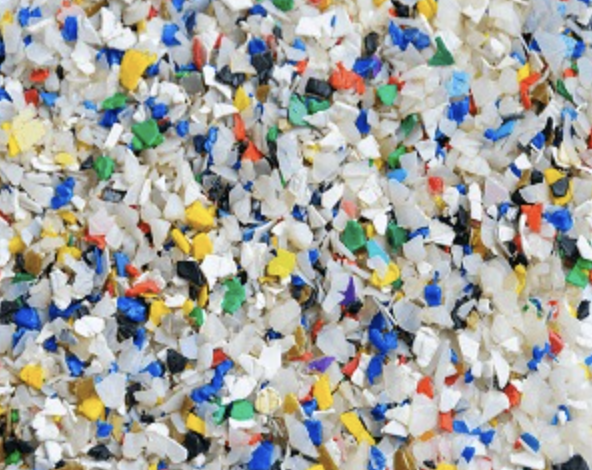
This makes a real difference in recycling economics. Loose regrind from a cutting granulator sells at discount – processors receive a lower raw materials payment for an extra reprocessing step. Pellets from a KSP system re-enter the supply chain at present resin price levels. Those two processes are what make commercial-scale plastic recycling possible.
KITECH’s KSP Series
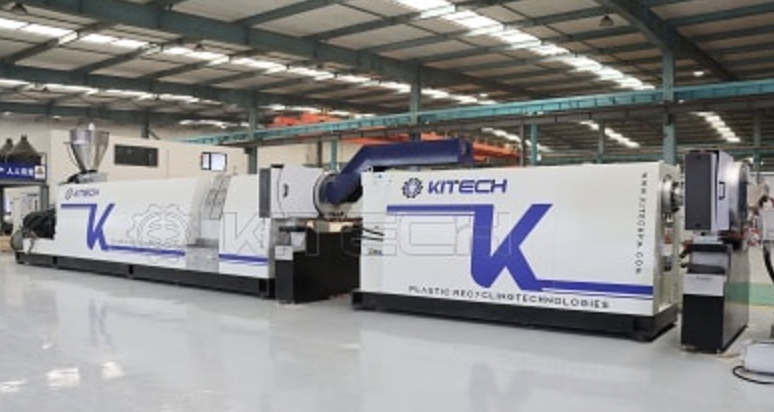
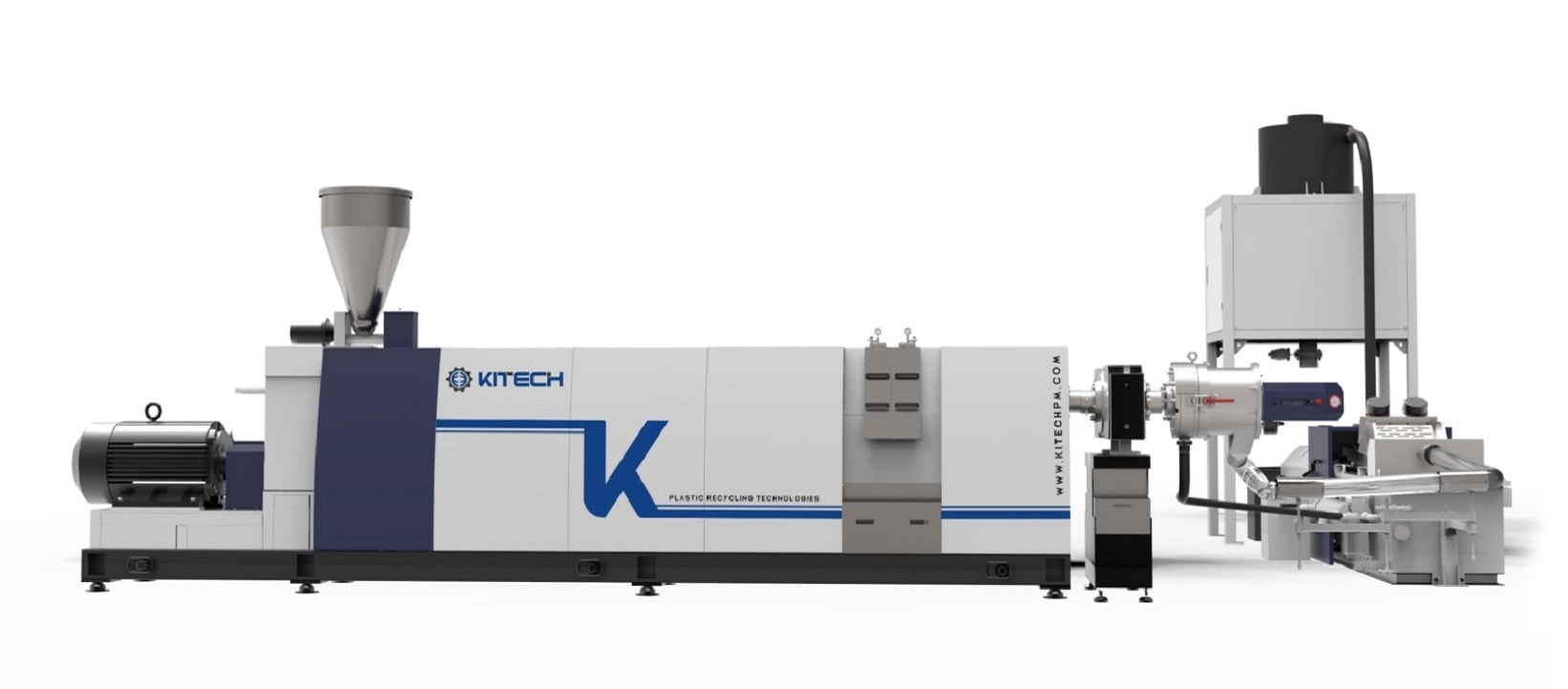
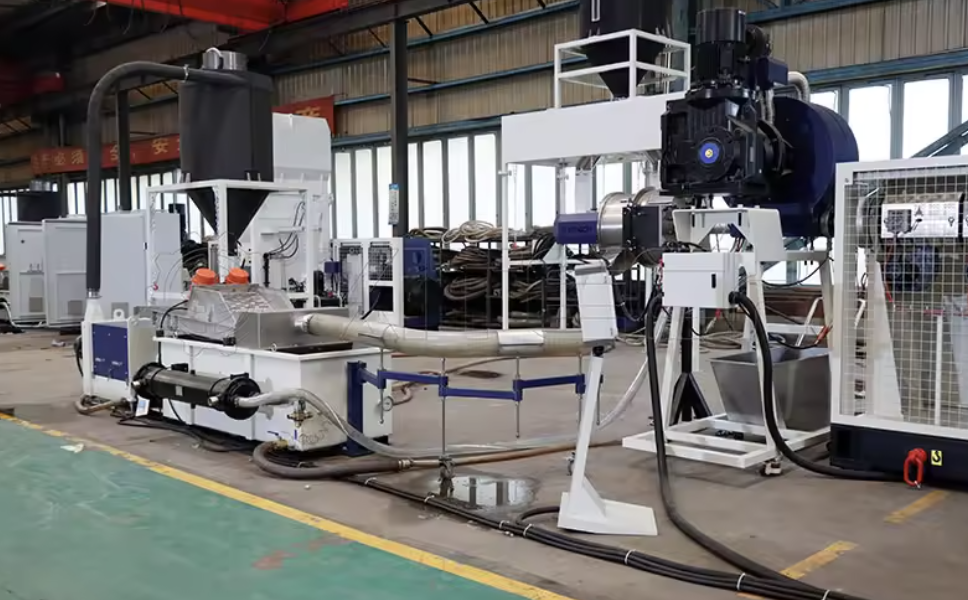
KITECH’s KSP series is a series of rigid flakes pelletizing equipment – constructed specifically for handling post-consumer and post-industrial rigid plastic regrind on an extrusion pelletizing line with industrial automation integrated.
Field Operation Capacity
Designed for rigorous industrial demands, the extruder operates at continuous 24/7 field operation capacity, equipped with remote diagnostics and a comprehensive PLC control platform to ensure maximum uptime and operational efficiency.
Plastic Regrind Granules Making Machine Models & Specifications
KSP has a portfolio of five models, scaled to accommodate the throughput ranges seen in mid-scale and continuously-operated industrial processes. The common KSP platform consists of the single screw extruder (nominal diameter 60mm, 15 kW/55 rpm motor nominal rating) with dual vacuum hole-to-hole degasser; a melt filter and screen unit; the pelletizing head; Siemens PLC control platform. The nominal extruder screw diameter, and the rated motor power, will increase in tandem with system throughput capacity.
| Model | Capacity (kg/h) | Screw Dia. (mm) | L/D Ratio | Main Motor (kW) | Energy (kWh/kg) | System Length (mm) |
|---|---|---|---|---|---|---|
| KSP100 | 300–380 | Φ100 | 25–35 | 90–110 | 0.2–0.3 | 12,500 |
| KSP120 | 400–500 | Φ120 | 25–35 | 132–160 | 0.2–0.3 | 13,800 |
| KSP150 | 600–750 | Φ150 | 25–35 | 160–200 | 0.2–0.3 | 14,900 |
| KSP180 | 800–950 | Φ180 | 25–35 | 250–315 | 0.2–0.3 | 15,200 |
| KSP200 | 1,000–1,200 | Φ200 | 25–35 | 315–355 | 0.2–0.3 | 16,500 |
Source: KITECH KSP Series technical specification datasheet . Production rates are optimized at a working condition using PE regrind inputs having 1% moisture content.
Engineering Note — L/D Ratio Selection
The 25-35 L/D extruder used in KSP suits most of the thermoplastic applications when processing predominantly formaldehyde-free source materials. Material moisture content testing and burn-off/contamination monitoring will inform the selection of that same L/D number in practical terms. In cases where the moisture content is high (above 0.16%) or a material requires a long devolatilization zone (i.e. PET bottle flakes, post-industrial PA regrind), the extruder screw(s) will need to be specified higher (32-35 L/D). Typical film-washed polypropylene and polyethylene is usually fine at L/D 25-28.
KSP Model Selection Guide — Decision Matrix
Determine your processing output requirements against the best KSP combination of daily throughput, feedstock material type, and designated output grade:
| Daily Operating Hours | Target Output (tonnes/day) | Primary Material | Recommended Model | Motor Power Required |
|---|---|---|---|---|
| 20h/day | 6–7.5 t/day | PE, PP film regrind | KSP100 | 90–110 kW |
| 20h/day | 8–10 t/day | PE, PP, PS rigid | KSP120 | 132–160 kW |
| 22h/day | 13–16.5 t/day | PE, PP, ABS mixed | KSP150 ★ Popular | 160–200 kW |
| 22h/day | 17.6–20.9 t/day | PET, ABS, PA rigid | KSP180 | 250–315 kW |
| 24h/day | 24–28.8 t/day | Mixed rigid streams | KSP200 | 315–355 kW |
Procurement Advisory — Sizing Recommendation
Size to 80% of nameplate capacity, not peak volume. A KSP150 rated at 600-750 kg/h should be sized for a target of 500-600 kg/h continuous so there’s headroom to account for material inconsistency, scheduled downtime for cleaning and maintenance, and future line expansion. Oversizing the drive motor can be cheaper in the long run than running a system at its mechanical limit all the time. Model size should be confirmed prior to purchase with a formal system-sizing analysis with your material mix and operating frequency.
These specifications drive down ownership costs. The steady 0.2-0.3 kw/h figures for all 5 models means that no matter what size system is purchased, the energy cost is the same: a consequence of KITECH’s infrared barrel heating design, which avoids when stationary the standby heat loss of conventional resistance band heaters. This energy profile impacts long term processing cost at industrial scale just as much as capital costs.
Plastic Pelletizing Machine Floor Plan

Click to Enlarge
×
![Floor Plan Fullscreen]()
Choosing the Right Plastic Granulation Equipment
The two most often confused categories in the plastics recycling equipment world: industrial granulators — central granulators, beside-the-press units, open rotor systems, and heavy-duty granulator configurations — optimized for cutting efficiency, and extrusion pelletizers designed to turn regrind into pellets. They are complementary parts of an integrated recycling stream, but the two pieces of equipment perform vastly different tasks.
| Parameter | Cutting-Type Granulator / Grinder / Shredder | KSP Extrusion Pelletizing System |
|---|---|---|
| Process | Mechanical size reduction — rotary knife in cutting chamber | Extrusion + pelletizing die — thermal + mechanical |
| Input | Bulky plastic scrap: bottles, pipes, injection runners, thermoforming sheet, extruded profiles, edge trim, purgings | Plastic regrind flakes or washed granulated material (Φ5–30mm) |
| Output | Irregular regrind flakes (jagged edges, variable particle size) | Uniform cylindrical pellets (Φ2–5mm, consistent length) |
| Throughput Range | Typical 50–2,000 kg/h (varies by machine type) | 300–1,200 kg/h (KSP100–KSP200) |
| Material Processing | Cold process — no melting, limited blending capability | Full melt — allows additive dosing, color correction, degassing |
| Output Quality | Regrind — lower market value, variable quality | Pellets — re-enters production supply chain at resin price |
| Position in Line | Upstream — size reduction stage | Downstream — value creation stage |
| Maintenance Focus | Blade/knife replacement (every 300–800 hours, material-dependent) | Screw/barrel wear (4,000–6,000 hours), filter screen changes |
| Control Complexity | Basic: motor speed, screen size selection | Advanced: Siemens PLC, temperature profiles, ERP interface |
Most industrial recycling operations require both a cutting granulator system in the pre-processing granulation process to reduce plastic waste to manageable form for high-volume throughput, and a pelletizer in the final step to create easily transported, sale-ready pellets. KITECH supplies the pelletizing step. Our pelletizers accept regrind from any brand of upstream granulator or grinder as feed input.
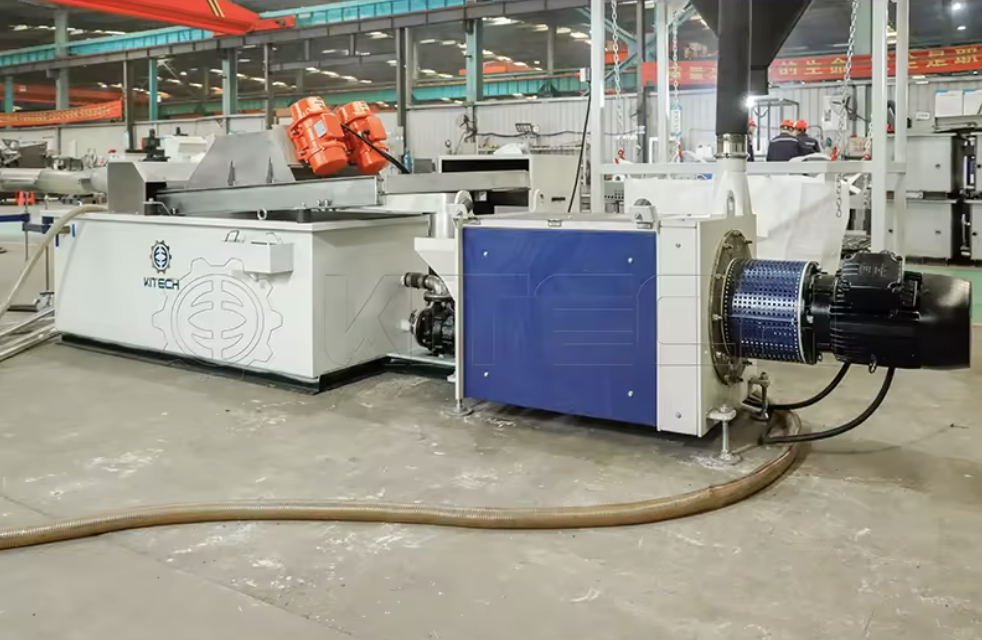
Technical Note — Why Output Format Matters
Regrind from a granulating operation contains edge stress, micro-fines, and porosity that has been introduced by granulation; these factors all increase the randomness of the input flow, which in turn increases extruder wear, melt quality oscillation, and final pellet dimensional variance.
Feeding granulate to a KSP extruder encourages the key heating zone to do its normalizing work, ensuring that the final melt uniformity is unaffected by input variation. Pellets are cut from the die face instead of powdered out of the end of the barrel, resulting in uniform granules — evenly proportioned and consistent in geometry.
Practical take-away for recycling operations:
running at maximum efficiency means converting plastic waste into reusable granules — not settling for regrind economics. A KSP pelletizing step processes that material at safe and efficient throughput rates, reducing raw material costs for downstream buyers while commanding a pellet price premium. This is where the capital investment becomes justified by long-term economics.
4 Pelletizing Head Configurations — Water Ring, Strand, Auto-Strand & Underwater
Head selection defines material compatibility, pellet quality, and ongoing operating costs. 4 head options exist on the KSP line: water ring (optional) standard, strand pelletizer, automatic strand pelletizer, and underwater pelletizer. Material type and desired pellet characteristics should be considered when selecting a head:
| Configuration | Best Materials | Pellet Geometry | Output Quality | Maintenance Level | Relative Cost |
|---|---|---|---|---|---|
| Water Ring Standard |
PE, PP, PS rigid flakes | Lenticular / irregular cylinder Φ3–6mm | Good — suitable for most recycled resin buyers | Low — simple cutter and die plate | Base |
| Strand Pelletizer | ABS, PA, PET, engineering plastics | Cylindrical Φ2–4mm, controlled length | Excellent — consistent size and shape | Medium — strand guide alignment | +15–20% |
| Auto-Strand Pelletizer | PE, PP, ABS — automation-priority lines | Cylindrical Φ2–4mm, consistent length | Excellent — automated strand threading reduces downtime | Medium-Low — auto threading reduces manual intervention | +25–35% |
| Underwater Pelletizer | PET, PA, PC — premium pellet requirements | Spherical / lenticular Φ2–4mm | Premium — cleanest cut, lowest fines | Higher — die face plate, water circulation system | +40–55% |
For most rigid plastics recycling uses processing of PE and PP flakes, the water ring design produces acceptable pellet quality at the lowest operating cost. The strand pelletizer is preferred when customers require cylindrical pellets of consistent diameter (typically ABS, PA, and processing streams of engineering resin where variation of pellet surface area/dimension influences downstream processes). The underwater pelletizer is specified for PET bottle flakes and premium markets where access to low contamination content of the melt water coolant is a concern and pellet surface finish should be kept to a minimum.
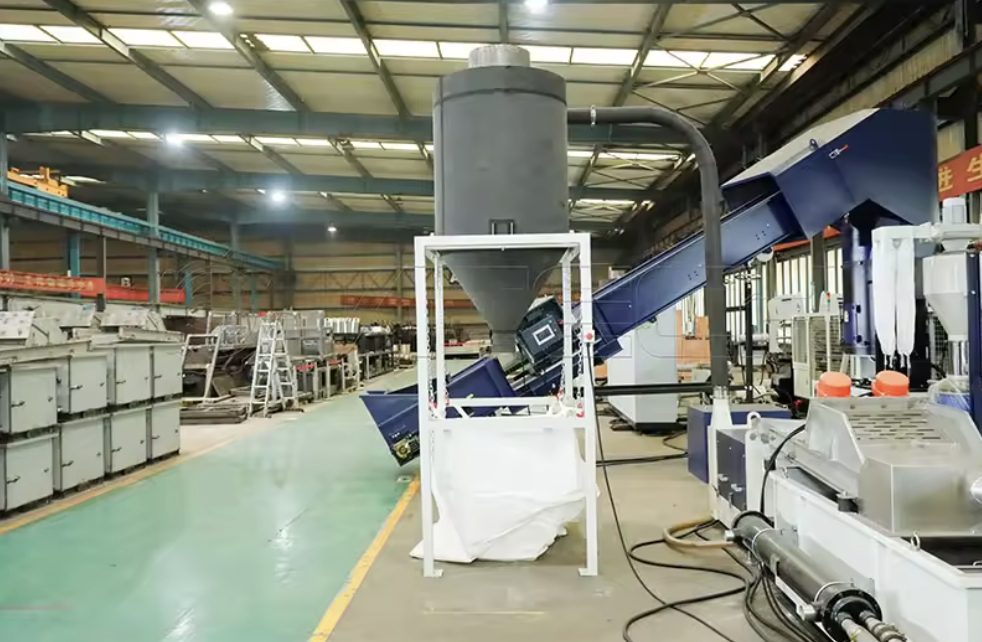
KSP System Architecture — 5-Stage Engineering from Infeed to Final Pellet
01 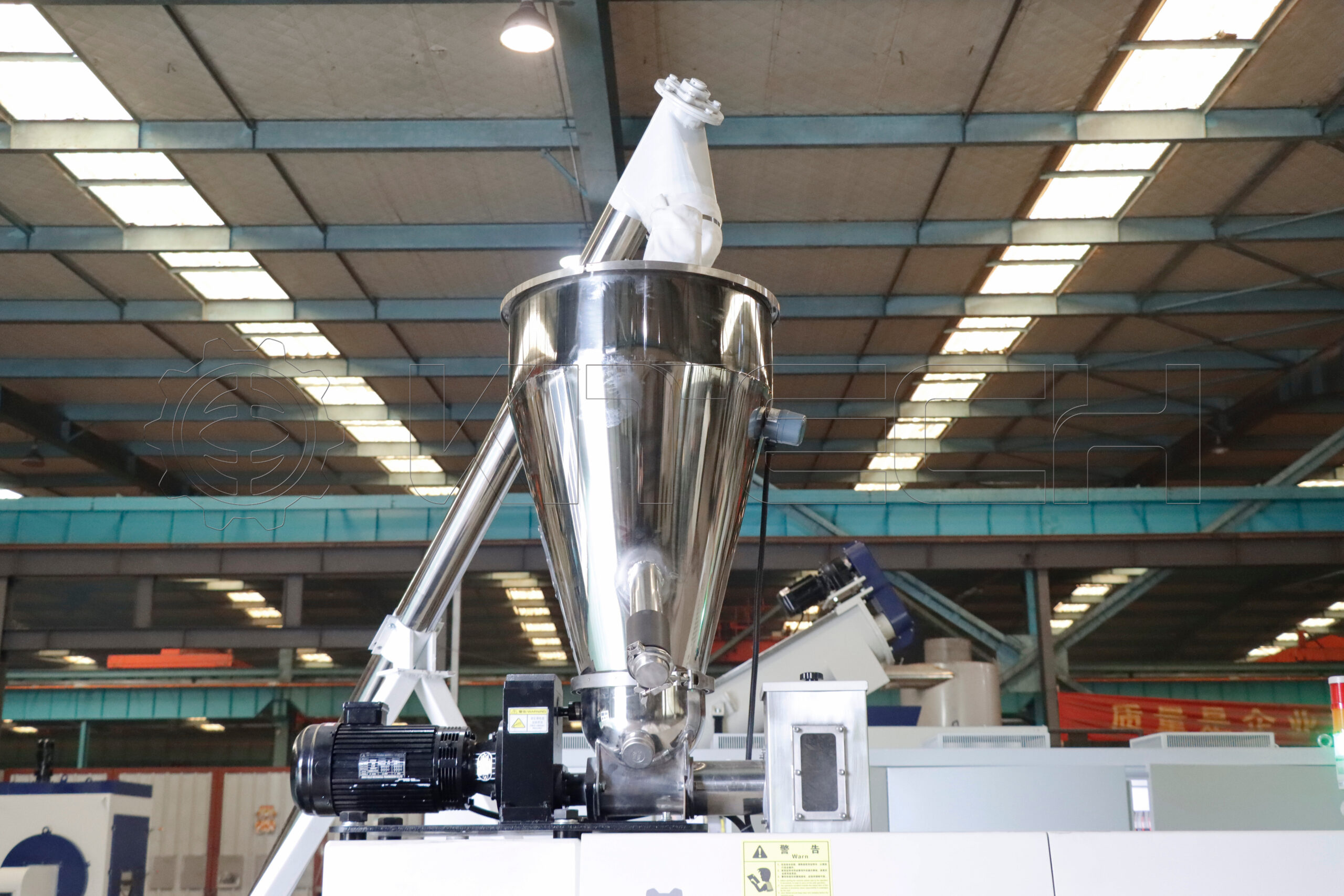
Stage 1: Dosing Feeder System
Frequency-variable over-belt or screw conveyor with built-in ferrous and non-ferrous metal separators. PLC controls metering action. This feature maintains steady input flow to the extractor – absolutely critical for stabilizing the extruder upper pressure and maintaining a balanced melt temperature profile. Metal detection prevents equipment damage from stray contaminants in the input feed stream. The feed system connects directly to the upstream sorting, washing, and size reduction operation.
02 
Stage 2: Single-Screw Extruder
High efficiency, L/D 25-35 screw and barrel constructin. Dual forced-vacuum degassing shaft extract moisture and volatiles from the polymer (this is especially useful for PET and its moisture-sensitive engineering plastic cousins). Infrared based heater band heating with distinct separate temperature zones provides up to 30%+ lower energy consumption that resistance band heater banks ([industry comparison, QUALIFIED]). Plastic pelletizer designed to the rigid plastic granulation/ recycling process needs and can handle variable value/ size input aggregate.
03 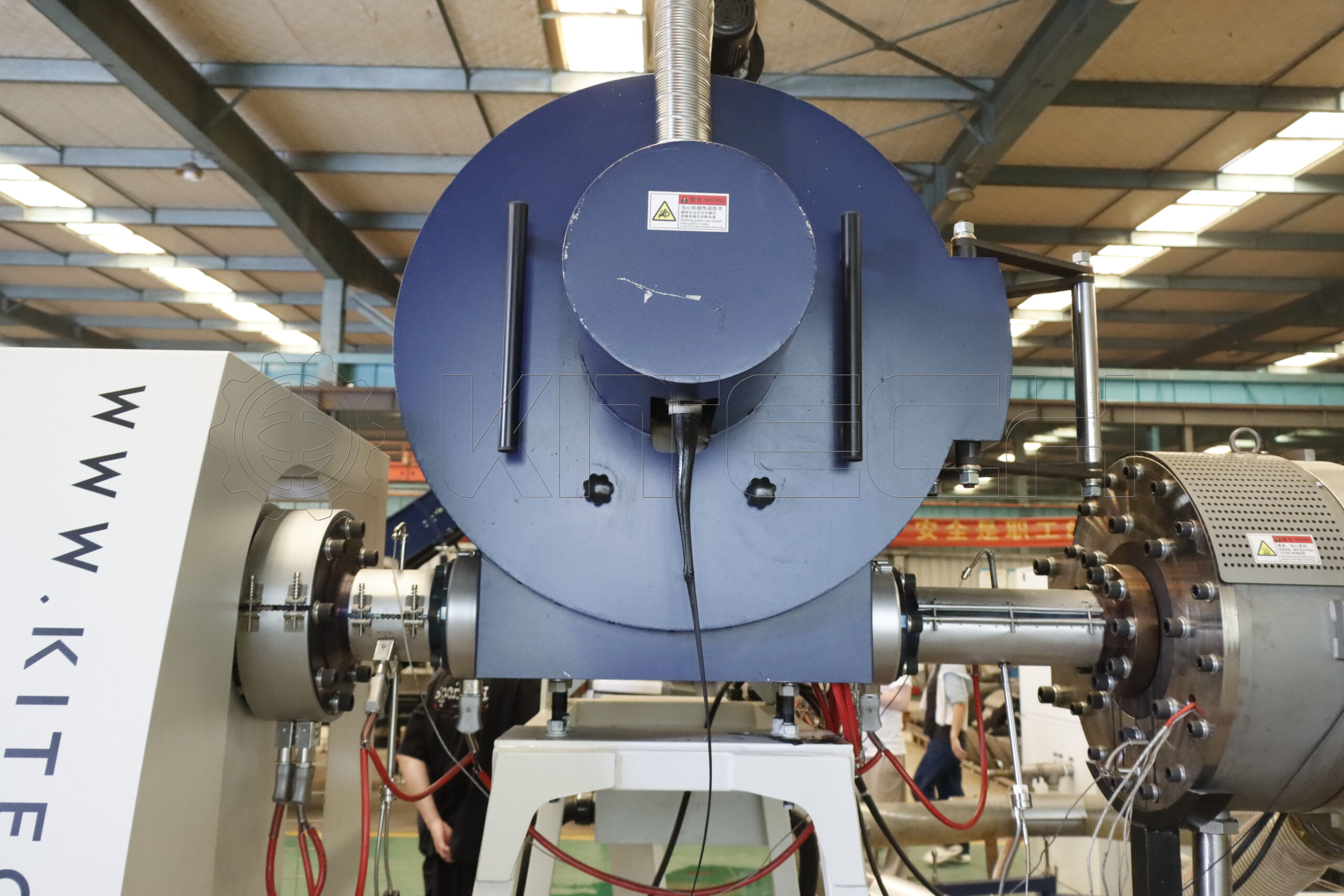
Stage 3: Melt Filtration Unit
Four filter assemblies options to match input contaminate content: plate form (under cost, traditional thermoplastics), two-position piston style (continual operation, average contamination levels), two-position back-flush piston (high contaminate levels, high screen longevity), self-cleaning (premium – minimal operator).
04 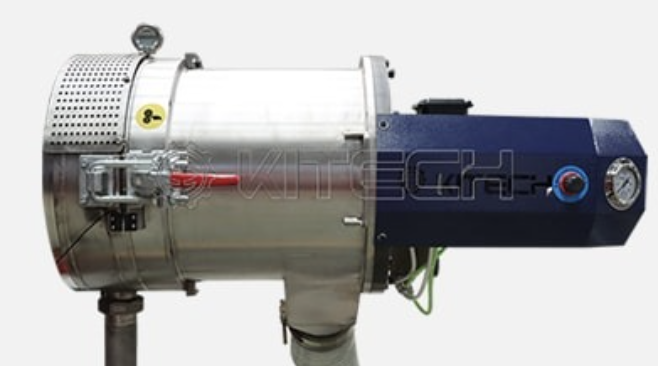
Stage 4: Pelletizing Head
Four liquid cooling options (water ring, strand, auto-strand, underwater – see section H2-04). Die head made to bores with exact bore diameter specifications for the desired pellet size. Tips on pellet size (die head and cutter rotation) and water temperature are all PLC-based management systems, providing consistent output pellet size regardless of fluctuations during demand. Pellet head can be changed out “on the fly”. (that is, without having to shut down and replumb the entire system).
05 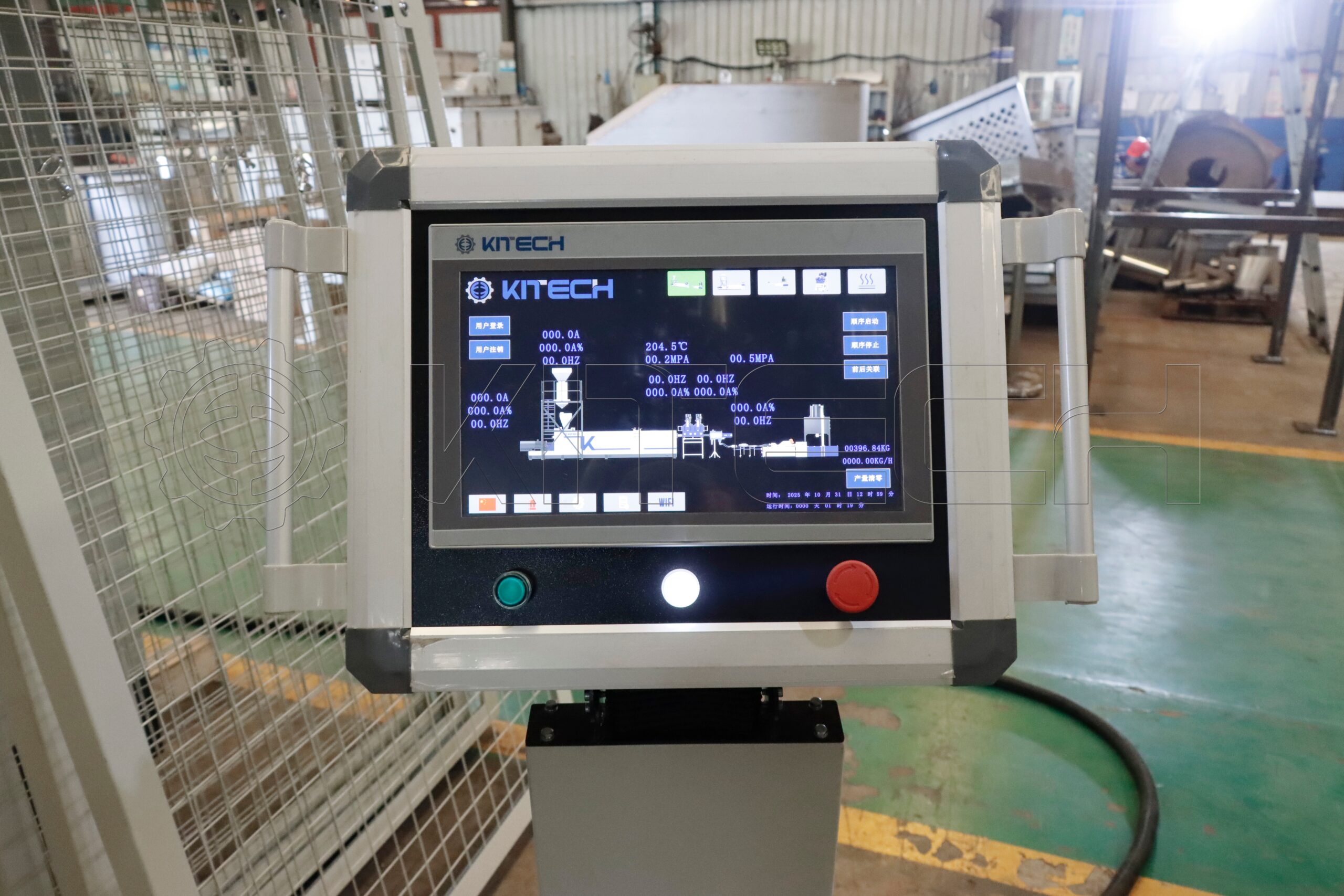
Stage 5: Intelligent Control Unit
Siemens_S300 PLC with Siemens touchscreen HMI. PLC brings automated start/stop, temperature profile control, filter pressure controls, and throughput controls to the operation. Thanks to remote diagnostic options, the KITECH service representative doesn’t even need to be present on-site to determine if the system requires troubleshooting or assistance. With standard industrial communication protocols, the system can be integrated with the existing enterprise resource planning system and long term production schedules. (optional)Weighing and metering system to document and record incremental volume.
Plastic Granulating Machine Certifications & Service
CE Certified
EU Machinery Directive 2006/42/EC
Siemens PLC
SIMATIC S7 Control System
SEW Drives
Main & feed drive systems
ABB Electrical
Motors & switchgear
ISO 9001
Quality management certified
Global Service
Installation, commissioning, training
After-Sales Structure
Warranty
12 months from commissioning date, covering manufacturing defects in mechanical and electrical components. Excludes normal wear items (screw, barrel, die plate, filter screens, cutter blades) subject to material-specific service intervals.
Commissioning
KITECH engineers provide overseas installation supervision, mechanical commissioning, PLC parameter setting, and operator training — standard on all KSP contracts. Typical commissioning duration: 7–14 days on-site depending on model and site preparation state.
Spare Parts
Critical wear spares (screw segments, die plate inserts, filter screens, cutter assemblies) available from KITECH with standard delivery. Siemens and SEW spare parts sourced locally through authorized distributors in most markets.
FAQ — Plastic Granulation Machine
An extrusion pelletizing process line- the KSP type-remelts washed plastic regrind in a heated single-screw extruder, and delivers the resin through a die plate- then cools or cuts the output strand into uniformly sized pellets. Note that this is not a cutting- type of granulator, which shatters whole plastics into flakes- but rather pushes melted resin through a die plate. KITECH’s KSP series is the latter stage in a plastics recycling operation, where flakes are converted into marketable pellets.
In an industrial plastics recycling operation, “plastic granulator machine” is used in two contexts- as size-reduction (cutting a granulator, which reduces scrap to flakes) or as pelletizer (extrusion systems which reduce flakes to premium, inexpensive resin pellets). The KSP addresses the Pelletizer task: turning what has already been washed, shredded, and sorted downstream from the operation into high-quality pellets for sale or internal use in production.
A cutting granulator uses rotary knife blades within a cutting chamber to mechanically shred plastics into flakes- this is a cold process, no extruding process. The KSP takes those flakes as input, then uses an extruder/ filter/ die assembly to produce cylindrical pellets. Both are necessary parts of a complete plastics recycling line- KITECH provides downstream pelletizing equipment, not upstream size-reduction equipment.
The KSP series is offered on the basis of production recovery streams being Ductile, Rigid, or Flimsy thermoplastics: and for the latter case, a slurry or diluted stream versus a relatively clean input stream. Material types include PE(PP, PE-PP blends), PS, ABS, PET, and PA. Parameters such as L/D ratio of extruder, filter type, and configuration can be matched to the material type and contamination profile. Contact KITECH with your material composition for configuration advice.
Yes. Siemens controls upgrade and interfacing options are available with integration to upstream shred/ wash/ sort trains plus downstream pellet bagging/ silo/ conveyor sections. The controls include start/ stop automation sequencing, an enterprise-wide data interface, and remote operation and monitoring capabilities. The setup is as a stand-alone pelletizer/ downstream line segment or a segment of a larger food-grade/ OEM feed line.
Normal operational maintenance schedules focus on: inspecting screw and barrel wear components (for PE/PP, scheduled mills are set at 4,000-6,000 hours of operation- for glass-whisker reinforced material or other high-abrasion streams shorter timings should be scheduled); cyclone/ filter screen replacement; remov and replacement of wear components for the screw head- and die plate maintenance and/or replacement; and cutter- head inspection. The Modular system design, outlined above, allows the individual components to be serviced without the need for a complete plant shutdown.
The standard cylindrical die plates produce cylindrical (or rectangular or flat) pellets which measure between 2 and 5mm in diameter- output length is controlled in the KSP series with the cutter speed via the PLC control. Custom geometries may be manufactured for applications requiring specific pellet dimensions- including underwater pelletizing heads to produce spheroidal and lenticular output.
Five models from KSP100 (300-380kg/hr) up to KSP200 (1,000-1,200kg/hr) are available with energy use constant at 0.2–0.3 kWh/kg for all sizes. Models for production more than 1,200kg/hr are available with two line configurations. Please inform our team of your operating hours per day, so we can recommend the most suitable model.
Pricing for KSP system is dependent on model size, configuration of pelletizing head, type of pellet mill filter and scope of downstream equipment. Typical configurations for a water ring KSP100 form the entry cost for a KSP200 system with fully automatic filter and underwater pelletizer, the high value, premium solution. Please use the fields in the enquiry sheet to send us the details of your material, throughput and site utilities information for an accurate quote. We generally respond with a formal commercial quotation 5-7 working days after receiving your technical input.
Ready to Update to Your Industrial Plastic Granulator?
Please send us the material specification and the throughput target so we can advise you on the most appropriate solution.