Get in touch with Kitech Company

LDW-Series Film Washing Line
PP PE Film Washing Line: Complete Recycling Solution from 300 to 2,000 kg/h
We design and build complete turnkey PP and PE film washing lines that turn contaminated agricultural film, industrial packaging waste, and post-consumer plastic scrap into fresh pelletizer-ready flake. Five capacity sizes. CE, UL, CSA certified. Delivered in 60 days.
300–2,000
kg/h Capacity
5
LDW Models
500+
Clients Worldwide
60
Day Delivery
CE / UL / CSA Certified
80+ Countries Served
European Engineering Principles
60-Day Delivery Guarantee
Overview
What Is a PP/PE Film Washing Line and How Does It Work?

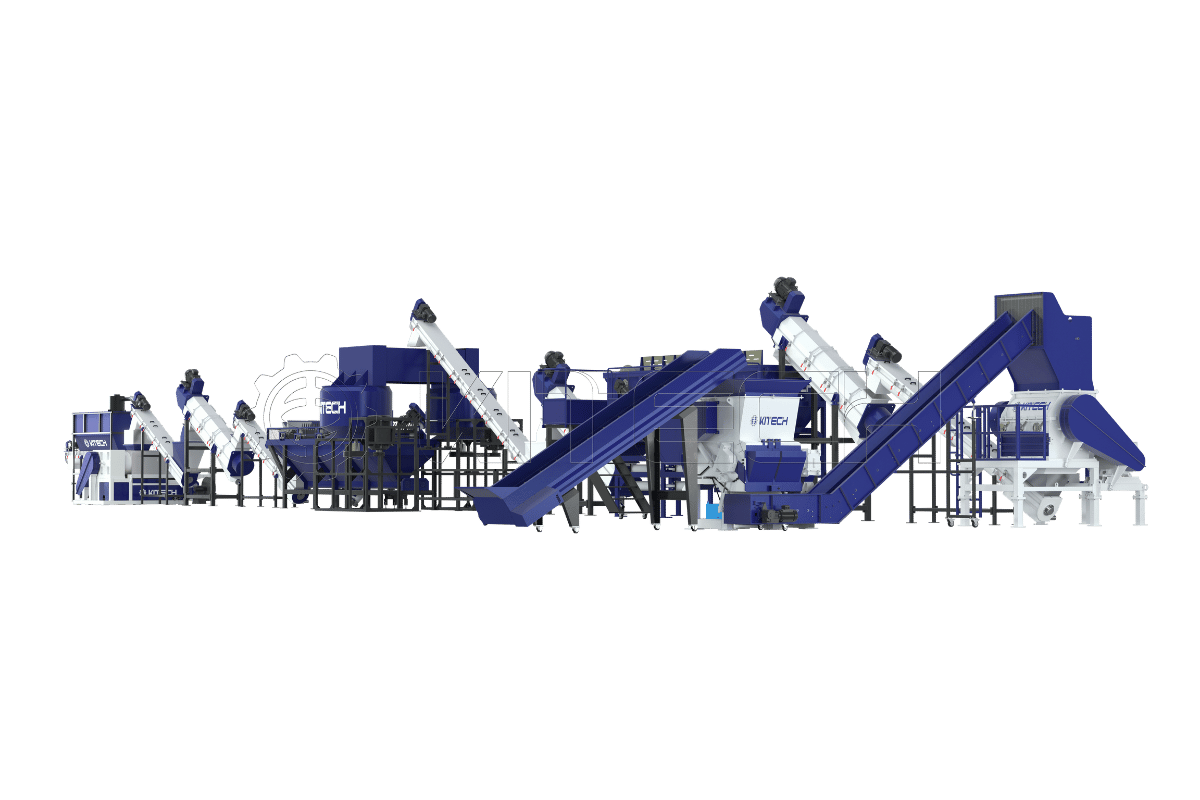
A film washing line is a fully integrated recycling line that receives at input and outputs clean flake pelletized as pelletizing or direct resale.
PP and PE are the dominant polyolefin film streams in the recycling process. pe films include LDPE stretch film, LLDPE agricultural film and HDPE carrier bags. pp films are shown up as woven bags, industrial sacks, and BOPP film packaging. Both families have densities below 1.0 g/cm, meaning they float in water: a key principle exploited in the float-sink contact-free separation stage to remove adherent dirt, clay, sand, glass, and metal debris.
Our LDW series of PP PE film washing lines are a cost-effective means of treating both feedstock families on the same production lines. The classic format follows nine stages: being drop-dried in shredding crushers, scratches are scraped off the surface by the corkscrewing plastic washing cards, and the viscous adhesives and inks are scrubbed off in the friction washing modules with high pressure water.
The setup of this nine-stage outflow over simpler two-tank wash systems is motivated by output purity expectations. Buyers of recycled PE and PP flake demand higher degrees of purity from their batch suppliers in order to access the highest liquid-use markets and diversify sales channels. In other words, image and even optical clarity features matter to the consumers of pelletizing traded in this high point of the value chain. As a result, each layer of dirt, debris, and inks must be stripped away in a separate stage in order to attain the void-free flake clean needed for high-grade pelletizing into virgin-grade recycled.
Operationally, the entire line runs with three to four operators on a 10-hour shift. A PLC panel automates the water temperature, conveyor speeds, chemical application, and grinding sequence. Operators run bag packoff systems and tend to loading boxes at the screen.
Film Recycling Process
Complete Film Washing Process: From Contaminated Bales to Clean Flakes
Nine stages convert a virgin grid of plastic film into pelletizer-ready flake. Every stage tackles a different contamination type.
01
Bale Feeding
A conveyor injects baled, baled film into the intake. Driver is adjusted to match the feed rate to the line capacity.
02
Shredding
A single-shaft shredder granulator slams compacted material into rough strips. The objective at this point is to shred the material enough to expose the surface-heavy contaminated layers.
03
Crushing
A water-cooled crusher granulates the long strips into evenly sized 20-60 mm pieces. At this point, water begins to be injected while the feed is comminuted, opening up the massive matrix to better mill the impurities.
04
Floating Washing
Material enters a float tank where PP and PE fragments (d< 1.0) rise and separate while dirt, stones, glass, and metal sink and are expelled. This is the principal step for removal of heavy impurity from the stream.
05
Friction Washing
high-speed friction washers spin film particles against a perforated screen at a velocity established to provide extensive mechanical scouring action that strips away adhesion, printing ink and embedded surface soiling that mere buoyant action fails to shift.
06
Fine Washing
A final hot-water or chemical rinse eliminates any residual contamination organics. High-pressure steam injection (up to 600kg/hr on our largest unit) can also be used to convert even the most tenacious pesticide glazes and accumulated grease fi lms on the agricultural films.
07
Squeezing
A screw-press squeezer squashes the rinsed film bits against a covered barrel— mechanically removes water. Allowing the moisture content to dry down to approximately 15-20% without thermal power being used is a major efficiency improvement.
08
Thermal Drying
A hot-air dryer is used to get residual moisture content down to about 3-5% which is the minimum standards used by most of the pelletizing lines in order to run clean extrusion. The energy used is the recycled heated air.
09
Packaging / Pelletizing
Dried clean flake can be routed to a bagging station for sale, or can be directly fed into a downstream pelletizing line with an extruder, to produce granulated plastic pellets. Kitech can provide matched capacity, combined turnkey pelletizing systems.
Does the order affect the system?
This is exactly why we place the floating tank before the friction washers. Eliminating large heavy foreign materials initially, prevents severe abrasion of the high-speed friction washer rotors, thereby ensuring long consumption intervals. A large number of competing designs do not practice this sequence and have no floating stage. Their rotors hence wear out rapidly causing increased maintenance costs.
Machinery
Key Equipment Modules in a Plastic Film Washing System
Each recycling machine in the line tackles a particular problem. This is what each modules do and its impact on your results.

Size Reduction
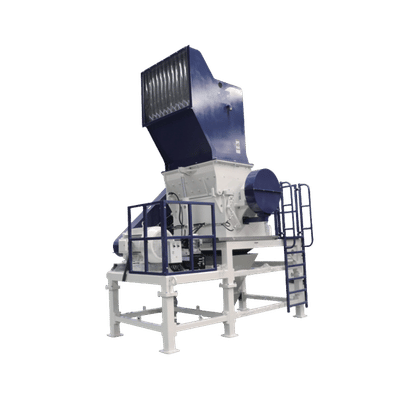
Shredder
One shaft design with hardened D2 steel blades. Handles the film bales, woven bags and tangled scrap without wrapping. Its hydraulic pusher maintains loading at a constant pressure on the rotor. Screen bar controls size of final output.
Size Reduction
Wet Crusher
Reduces shredded strips into 20-60 mm long pieces by water directly injected at time of cutting; wet cutting prevents temperature build up in PE and PP films that can cause fusing and fragment re-agglomeration.
Washing
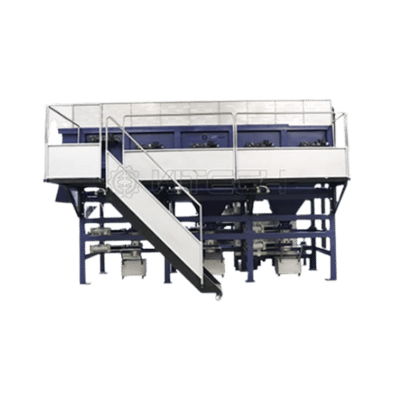
Floating Tank
Stainless steel vessel with paddle agitator. PE and pp films (d< 1.0 g/cm) floats while sand, stones, glass, ferrous metals sink. Heavy contaminants are discharged by bottom screw conveyor.

Washing
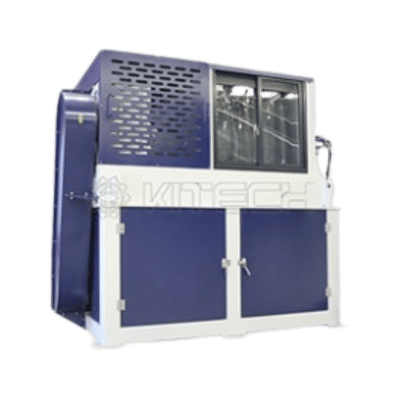
High-Speed Friction Washer
Rotor and 800-1,200 RPM in barrel 3 holes perforated in 3 way perforated barrel, the film pieces rub against the screen surface, the mechanical scrubbing tearing labels, sticking adhesive and printing ink. Series of 2 friction washers installed as standard on all LDW1000 and above:
Dewatering
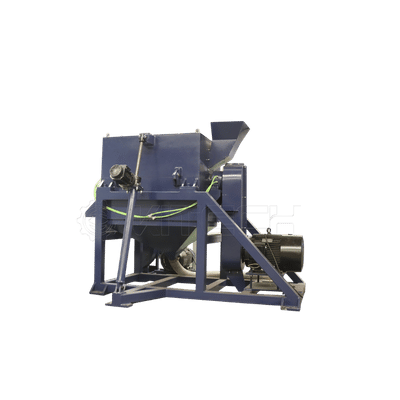
Squeezer — Hydraulic Press Type
High-pressure hydraulic compression is used for processing that requires the removal of the maximum quantity of water prior to thermal drying. This worktype is especially suitable for thick agricultural films and multi-layer laminated film, which usually contain more moisture than the simpler LDPE wrap.
Drying
Thermal Dryer
drying systems forces hot air out, minimizing residual moisture to 3 – 5%. Re-circulating air design uses 40% less energy than conventional once-through dryers. Control of temperature and airflow available for various film thicknesses.
Transport
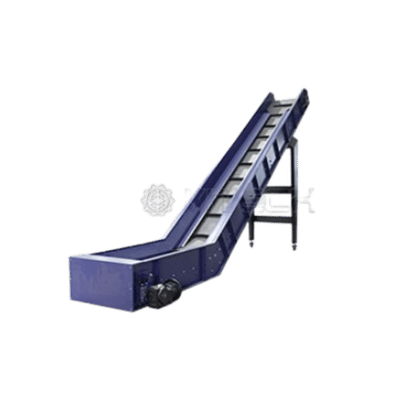
Screw Loaders & Conveyors
Screw loaders and belt conveyors connect each stage. All conveyor rates are modulated from the central PLC panel, enabling operators to equalise flow speed across entire film washing line from a single control station.

Control
PLC Control Cabinet
Centralised automation directs the start up and shut down sequencing of motors, controls water temperate, chemical dosing, and fault detection. Optional IoT gateway module enables remote access the energy usage, throughput, alarm status via any browser.
Applications
Materials Processed: Agricultural Film, Industrial Packaging & Post-Consumer Waste
The LDW-series film washing line processes the full range of polyolefin films and woven materials – from lightly soiled factory scrap through to heavily contaminated field sourced agricultural films.
PE / LDPE / LLDPE
Agricultural Films
Mulch film, greenhouse covers, silage wrap. Usually the most contaminated feedstock – soil content can reach 30-40% of bale weight. Needs multi-stage washing with hot water and steam.
LDPE / HDPE
Industrial Stretch & Shrink Wrap
Pallet wrap, transit packaging, protective film. Are usually cleaner than agricultural sources – primary contamination is labels, adhesive tape, and dust. Single pass friction washing is often sufficient.
PP
PP Woven Bags & Sacks
Fertiliser bags, cement sacks, FIBC bulk bags. Woven PP demands effective shredding in order to separate fibers, and the friction washer removes printing inks from the woven surface. Our bag washing line module handles bag recycling from both agricultural and industrial sources.
MIXED PE / PP
Post-Consumer Mixed Film
Films recovered from municipal recycling facilities (MRFs). Contains a mix of carrier bags, food packaging, and household wrap. Are high in label and organic contamination. Float-sink separation removes non-polyolefin contaminants before heavy duty washing.
PP / BOPP
PP Films & BOPP Packaging
Biaxially oriented polypropylene laminated films, snack packaging, label stock. Needs careful shredding in order to avoid creating fines that pass through the washer screens. Is best suited for LDW500 and above.
What About PE and PP Together?
Since polyethylene and polypropylene both weigh less than 1.0 g/cm, they float together in the washing tank and require no density based separation. This means a single LDW-series line can process mixed PE and PP films simultaneously – you do not need separate lines for pe pp blends. Your downstream pelletizing step decides between producing a blended polyolefin pellet or separating by resin type before extrusion. For customers requiring a single blended PE or a single grade PP pellet, we advise trying an additional NIR sorter module located between the dryer and the pelletizing line.
Materials That Need a Different Approach
PET film and PVC film are not commensurate with the same washing line as PE/PP. PET has a density above 1.0 g/cm (it sinks rather than floats), and PVC releases chlorine compounds during extrusion that damages equipment and the product. If your waste stream has these films, they must be separated before entering the LDW washing line, or be fed into a dedicated system.
Engineering Data
Technical Specifications for LDW-Series Film Washing Lines
Five models from cost effective entry level, to high efficiency industrial scale. All figures below are from our production datasheets.
| Model | Capacity (kg/h) | Dimensions L×W×H (m) | Steam (kg/h) | Chemical (kg/h) | Energy (kWh) | Install Power (kWh) | Operators |
|---|---|---|---|---|---|---|---|
| LDW300 | 250–300 | 29 × 10 × 5 | 0–150 | 0–2 | 120 | 195 | 3 |
| LDW500 | 400–500 | 35 × 12 × 6 | 0–200 | 0–4 | 180 | 290 | 3 |
| LDW1000 | 800–1,000 | 50 × 12 × 6 | 0–300 | 0–8 | 280 | 446 | 4 |
| LDW1500 | 1,250–1,500 | 70 × 15 × 6 | 0–450 | 0–10 | 395 | 530 | 4 |
| LDW2000 | 1,700–2,000 | 90 × 15 × 6 | 0–600 | 0–12 | 490 | 760 | 4 |
How to Read This Table
Throughput is related to cleansed plastic film throughput, not bale size feed. If your agricultural film bales contain 30-40% soil contamination, you need to reflect this weight loss – a 1,000 kg/h bale feed rate on badly soiled material will equal somewhere between 600-700 kg/h of Bajarag output.
Steam and chemical columns are variable because the process depends on contamination take-up urgency. Clean industrial stretch wrap has zero steam and minimal chemical; farmer’s mulch film that is very dirty has the full capacity of steam and caustic dosing. Hot-wash systems are sized for each line based on your preliminary feedstock analysis.
Energy consumption for a given installation is always less than the total power rating of motors on equipment. The motors on a given line will draw less power than their nameplate rating, many of the time or all of the time, and the energy balance is still a value equal to or less than the total. Figures in the table represent the typical power draw for these units during operation.
Selecting the Right Model
We advise a model sized to your target strip wet weight output. Begin with total operating hours, and target tonnage per month, then determine untold operating weight per hour. If mixed cut post-consumer film with high contamination take-up we also suggest skipping one level up from your initial calculation to accommodate for the weight sleet losses that washing creates. Our engineers can run your calculations based off your incoming samples a 20 kg sample can be sent to us, and we will run your feedstock on our pilot line.
Investment Analysis
Film Washing Line Cost Factors & ROI Analysis
Installation cost is only part of the information for selecting a model. Running costs, values received for output, and payback period are what shape a financially feasible investment.
What Drives Equipment Cost?
Throughput Capacity
Larger models will require larger motors, thicker plate steel, larger conveyors, and larger floating tanks. A line totaling 2,000 kg/h will require significantly more steel and much larger motors than a model with 300 kg/h throughput, and will have a greater component weight capacity overall.
Washing Stages
The clean industrial scrap could require only cold washing and a single friction washer. Farmer’s film could require hot washing including steam boilers, Chemical equipment and serial friction washers. Every stage drives cost up in capital.
Automation Level
Basic models are capable of manual bales loading and simple PLC control. Enhancement options include metal and NIR sensors, remote control systems, and water treatment. Newer models with more automation perform with lower labor costs in replacing operator run time, but require higher initial capital investment and complexity.
Downstream Integration
A wash-only model costs less than a complete turnkey package including the pelletizing and water treatment equipment. Many companies opt to start with only a wash system and grow into the other advances as throughput needs increase.
Operating Cost Breakdown
Energy cost (the major portion) of a plastic film recycling plant’s annual operating budget includes electricity, cost for water and sewage, facilities operators (3 to 4 per shift), periodic replacement costs for consumables (such as shredder blades, screens for the friction washer and liners for the squeezer barrel), and hot-washing chemicals/steam. Depending on specification, energy demands are 120 kWh for the LDW300, to 490 kWh for the LDW2000.
ROI Framework
Your ROI on a film washing line is a function of three variables, long term at target throughput utilization: 1. your dilution raw material purchase cost at point of entry into the system (fuel, baled waste plastic film etc.) 2. your target clean output sell price (washed flake or recycled pellets will have a different value depending on resin range, color etc.) 3. your actual throughput utilization rate. Industry data shows that for a recycling facility utilizing post-consumer PE and PP film consistently at optimal throughput utilization, payback can be expected within 18-36 months depending on input raw material costs, and first-run output product market factors.
Project References
Film Recycling Project Case Studies
Sample project case studies from installed base in varied application region, feedstock. Kitech has supplied hundreds of film washing and pelletizing lines from our Zhangjiagang facility into multiple regions using a wide variety of feedstock types.
Case 1 — Agricultural Film Recycling
One example of many is a recycling plant based in Southeast Asia who approached Kitech with a specific problem: the facility had been collecting mulch film and greenhouse film from regional farmers. Their single-tank washing system failed to remove the dense soil and pesticide contamination, despite the washing chemicals, and their flake output was rejected by buyers.
We supplied an LDW1000 film washing line proved configured for heavy-contamination agricultural film processing: our scope of supply included a pre-wash floating tank, dual friction washers, a hot-wash stage with steam injection, and a screw-press squeezer followed by a thermal dryer: three washing stages in sequence, because of a derived 30-35% soil content bill of material weight in the feedstock, requires multi-stage washing to lower the output flake to acceptable levels.
After commissioning, the installation was able to sustain their washed flake met pelletizer feed, while their output moisture content after drying was achieved within the specified 3-5% range. The combination of two friction washers was especially efficient at removing pesticide residue films that their previous equipment has not been able to tackle.
LDW1000
Model Supplied
Agricultural
Feedstock Type
4
Washing Stages
3–5%
Output Moisture
Case 2 — Industrial Packaging Waste
Challenge
plastic recycling plant in Eastern Europe was feeding their new plant with LDPE stretch wrap and shrink film not from their regional warehousing, but from collection points and logistics centers within the country. Their dewatering machines centrifugal were breaking down all the time – shredded bits of flexible film wrap wrapped around the centrifuge rotor every 2-3 hours, stopping it until manually cleared, costing precious uptime and labor.
Solution
We designed a retrofit to install our screw-press squeezer as replacement to their dewatering stage. Our squeezer compresses the film mechanically, without a spinning rotor. Flexible film fragments are fed into the perforated drum, being subject to pressing as they pass through the screw. As a consequence, only pressure is applied and the film does not wrap around the machine. We also installed dual friction washers for their adhesive and label film removal stage.
Outcome
The squeezer ended the downtime caused by turning the centrifuge. Far from a costly emergency maintenance call-out, the plant operators saw their dewatering scheduled maintenance procedures change to scheduled preventative maintenance weekly. Their waste cleaning is relatively low when compared with agricultural reprocess streams, so they do not need a steaming boiler or chemical dosing in the washing process.
Case 3 — Post-Consumer Film Recycling Plant
Bulk supplier of waste packaging film from municipal collection programs: the middle East is not known for having an established recycling industry, but demand for flexible packaging reclaimed from household waste is high. The client’s first plant was running at capacity before the end of the commissioning phase, so a second, larger installation was ordered simultaneously.
| Parameter | Specification |
|---|---|
| Model | LDW1500 |
| Target throughput | 1,250–1,500 kg/h clean output |
| Feedstock | Mixed post-consumer PE/PP film |
| Washing config | Float tank + 2× friction washer + hot wash + fine rinse |
| Dewatering | Screw-press squeezer + thermal dryer |
| Downstream | Kitech pelletizing line with screen changer and strand pelletizer |
| Operators per shift | 4 |
| Water treatment | Closed-loop with settling tank and filter press |
In a full turnkey package, we supplied the washing line, the pelletizing line, as well as the water treatment plant. The water treatment system was designed to circulate around 85% of process water in a closed-loop, only settling out sludge need to be disposed of.
Quality & Support
Quality Certifications & Global Service Support
Every LDW-series film washing line is built at our state-of-the-art Zhangjiagang supply manufacturing facility under documented quality control procedures, and tested prior to shipment.
Quality Certifications
CE Marking
machinery Directive 2006/42/EC. This directive is mandated for all equipment sold into Europe.
UL Listed
North American electrical safety certification is required for all equipment shipped into the North America market. All motor controls, PLC cabinet are protected with North American electrical safety devices.
CSA Certified
Canadian Standards Association approval is a recognized approval for industrial machinery equipment sales and applications across Canada.
Factory Tested
All equipment supplied by Kitech receives a full wet-run at our China facility at no extra charge. Test results are captured in a dedicated test report accompanying each equipment sale.
Global Service Infrastructure
→
Installation supervision – one or more of Kitech’s designing field engineers will visit your facility to supervise foundation construction and machine set-up for optimal equipment operation
→
Operator training – 7 day minimum course covering daily, weekly, monthly operation, cleaning, and scheduled maintenance
→
Pre-tune up commissioning – verify throughput capability and moisture content, and contamination removal efficiencies
→
On-demand spare parts – shipment within 72 hours – wear parts held ready in Kitech Shanghai warehouse
→
Remote troubleshooting – support through internet video call screensharing, remote operator diagnostics, and Kitech engineering support
Capacity Selector
Find Your LDW Film Washing Line
Enter your target throughput and feedstock type to instantly calculate the optimal LDW equipment model, footprint, and energy consumption for your recycling operation.
500 kg/h
100
2500
Post-consumer mixed film is the most demanding feedstock. Effective throughput may be 10-15% lower due to higher contamination levels.
LDW1000
Excellent Fit
Capacity Range
800–1,000 kg/h
Footprint (L×W×H)
50 × 12 × 6 m
Energy Consumption
260 kWh
Installed Power
380 kWh
Steam Consumption
0–300 kg/h
Operators Required
3–4
Capacity Utilization
62%
Your target exceeds the maximum rated capacity of the top-of-line LDW2000. Contact our engineers to discuss a custom dual-line configuration or phased expansion plan.
Get a Custom Quote for LDW1000
Engineering Tools
Interactive System Evaluation
Utilize our advanced calculation models to assess financial feasibility and compare technical specifications across the LDW-series.
Film Washing Line ROI Calculator
Input your target throughput, raw material costs, and operating hours to generate a precise 5-year payback projection and annual profit estimation.
Open Calculator
LDW Model Side-by-Side Comparison
Evaluate multiple LDW-series models simultaneously. Compare footprint dimensions, energy consumption, and maximum throughput to find your optimal fit.
Compare Models
Ready to Build Your Film Recycling Line?
Send us your samples of your material and production targets. Our team of engineers will come up with a PP PE film washing line to perfectly match your feedstock, outputs and investment levels with a full quote in less than 48 hours.
Common Questions
Frequently Asked Questions About PP PE Film Washing Lines
PP (polypropylene) and PE (polyethylene) are both polyolefin plastics, but they differ in density, melting point, and common applications. PE film, including LDPE, LLDPE, and HDPE, is softer and more flexible, used primarily in stretch wrap, agricultural mulch film, and greenhouse covers. PP film is stiffer, has a higher melting point (around 160 degrees versus 120-130 for PE), and is commonly found in woven bags, BOPP packaging, and industrial sacks. In a film washing line, both materials float in water (density below 1.0 g/cm), so they can be processed on the same washing system without density-based separation.
Following screw-pressing (dewatering): approximately 15-20% moisture. Following the hot thermal dryer: approximately 3-5% moisture. Most pelletizing lines need that 3-5% range for clean extrusion. If you sell washed flake instead of pelletizing, the squeezer output at 15-20% may already meet your buyer specs.
Prices for film washing line washers are affected by throughput capacity, the severity of the contamination in your scrap, how many washing modules you choose, and how extensive your downstream pelletizing processing needs are. Smaller LDW systems producing 300 kgh of lightly contaminated industrial film scrap can be found at a lower investment cost, while larger-scale turnkey plants operating 1,500-2,000 kgh throughput, including hot water washing, advanced water treatment, and integrated pelletizing represent a larger capital commitment. Rather than quoting a generic price range that may not match your actual requirements, we recommend sending us your material samples and target output specs, and our engineering team will provide a detailed quotation within 48 hours.
Operator requirements for any five LDW models are similar at 3 to 4 operators per shift. A PLC cabinet centrally hosts the main motor sequencers, water temperature controls, and chemical metering as well as other optional add-ons like automated metal detectors, centralized water purification, and IoT remote access for de-bugging.
Centrifuge dewatering is usually very effective on rigid plastic flakes, but it may be less so on more flexible films where the chip may tend to entangle with the centrifuge rotor. Our integrated approach generates consistent moisture across an easily dewatered frangible film chip by compressing it with a screw-press squeezer (and simultaneously inducing friction heating in the chip) to complete the final moisture removal step prior to entering the thermal dryer, thereby reducing CapEx, Opex, and unpredictability in the moisture target.
Our LDW-series is designed to process the complete spectrum of polyolefin film and woven material—LDPE stretch wrap and shrink film, LLDPE farm Black and greenhouse films, HDPE carrier bags and industrial liners, pp woven bags and bulk. sacks(FIBC), BOPP laminated pack film, and a mix of post-consumer plastic films from the municipal recovery facility. The line is also capable of recycling PP woven bag material—the shredder and friction washer combo effectively separates woven fibers and eliminates the ink from printing. Materials suited to a recycling process are PET film (different density, will need to sink-float separation from PE), and PVC film (must be kept separate to prevent chlorine reaction contamination).
Clean washed film flake could be fed directly into the pelletizing line for conversion into recycled pellets. Kitech offers single-screw and twin-screw extruder systems to feed the washed film into, at 3-5% moisture content. The pelletizing line heats and melts the flake, then passes it through a screen changer to filter any micro-contaminants out, followed by a die to shape the melt into uniform pellet size. The recycled PE or PP pellets are then sold on to garbage bag manufacturers, agricultural producers, injection molded product producers or blended with virgin resin to produce higher grade end product. It is possible to supply the washing line and the pelletizing line as a single complete turnkey system, depending on total throughput required.
Yes. Every LDW-series film washing line ships with on-site installation supervision and hands-on operator training as part of the standard package. Our field engineers travel to your facility, supervise foundation work and equipment positioning, connect all electrical and plumbing interfaces, and run commissioning trials with your actual feedstock material. Operator training runs 5-7 days and includes daily operation procedures, cleaning schedules, common troubleshooting steps, and preventive maintenance routines. After commissioning, our technical support team provides remote assistance and can dispatch replacement parts within 72 hours to most regions worldwide.