Get in touch with Kitech Company

7 Types of Plastic & Their Recycling Codes (Practical ID Guide)

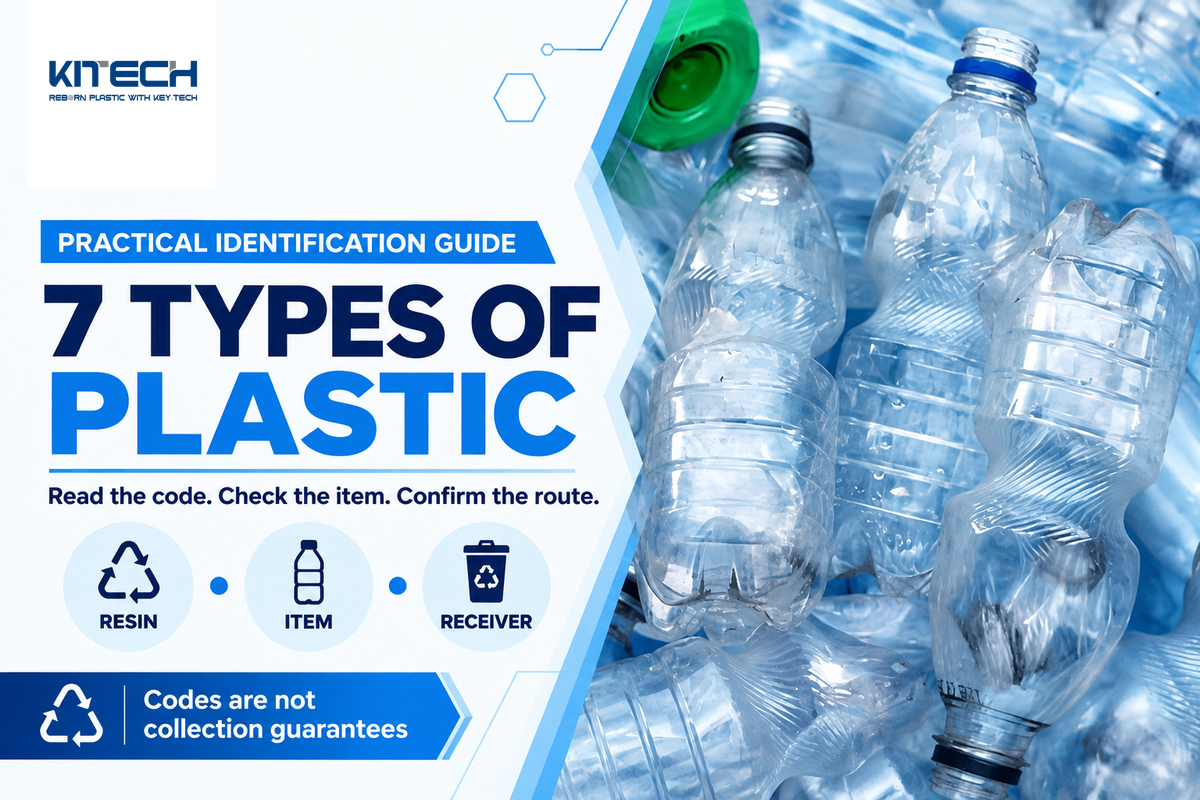
The 7 types of plastic are PET, HDPE, PVC, LDPE, PP, PS and Other, numbered 1 to 7. These identification codes are for material categories. They won’t tell you if a particular bottle, bag, tray or component belongs to your local recycling bin.
A clear shampoo bottle and a clear food tray may look alike. A shopping bag and a plastic bottle may belong to the same family. To sort the actual item you need its material, its form and the receiving program’s instructions. This handbook will give you a reference chart, real local exceptions and a way to sort unmarked plastic.
What Are the 7 Types of Plastic?
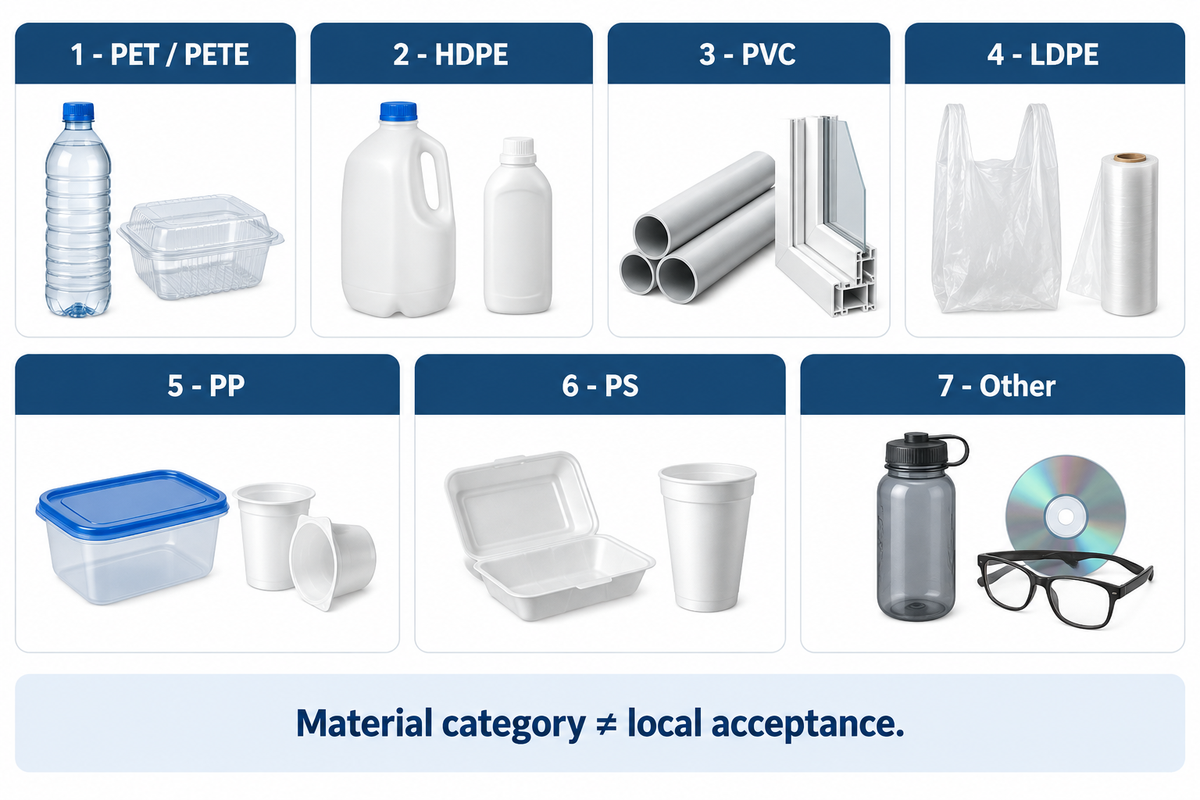
The seven types are six named resin categories plus a residual Other category. PET is code 1; HDPE, 2; PVC, 3; LDPE, 4; PP, 5; and PS, 6. Code 7 covers plastics outside those six categories. There are certainly more than seven plastic polymers in existence.
The NIH resin-code guide links these numbers to more familiar markings. Use the examples below to assist your recognition rather than serve as proof for the composition of an unmarked item.
| Resin category and code | Common item examples | What to check before collection |
|---|---|---|
| 1 — PET / PETE, polyethylene terephthalate | Water bottles, soft-drink bottles, some food packaging | Bottle versus tray; local item list; caps and labels |
| 2 — HDPE, high-density polyethylene | Milk jugs, detergent bottles, shampoo bottles | Previous contents, container form and preparation rules |
| 3 — PVC, polyvinyl chloride | Pipe, blister packaging, some wrapping | The exact product; a pipe and a blister pack can have different routes |
| 4 — LDPE, low-density polyethylene | Flexible bags and wrapping | Named film drop-off acceptance; do not assume ordinary-bin eligibility |
| 4 — LDPE, squeezable-bottle format | Squeezable bottles | The receiver must name this container format; film rules are separate |
| 5 — PP, polypropylene | Food tubs, bottle caps, laboratory tip racks | Tub, cap or flexible package; size and residue restrictions |
| 6 — PS, polystyrene | Solid disposable tableware | Solid versus expanded form; an available item-specific collection |
| 6 — PS, expanded-foam format | EPS packaging blocks, foam meat trays | Check a named EPS collector and its exact clean/dry item list |
| 7 — Other | Products made from other resins or resin combinations | Actual material identity, product documentation and receiver confirmation |
The number is neither a recycled-content percentage nor a score for recyclability. Recycling arrows around older markings can make that distinction easy to miss.
“Resin Identification Codes are not ‘recycle codes.’”
PET and HDPE: Codes 1 and 2 in Bottles and Jugs
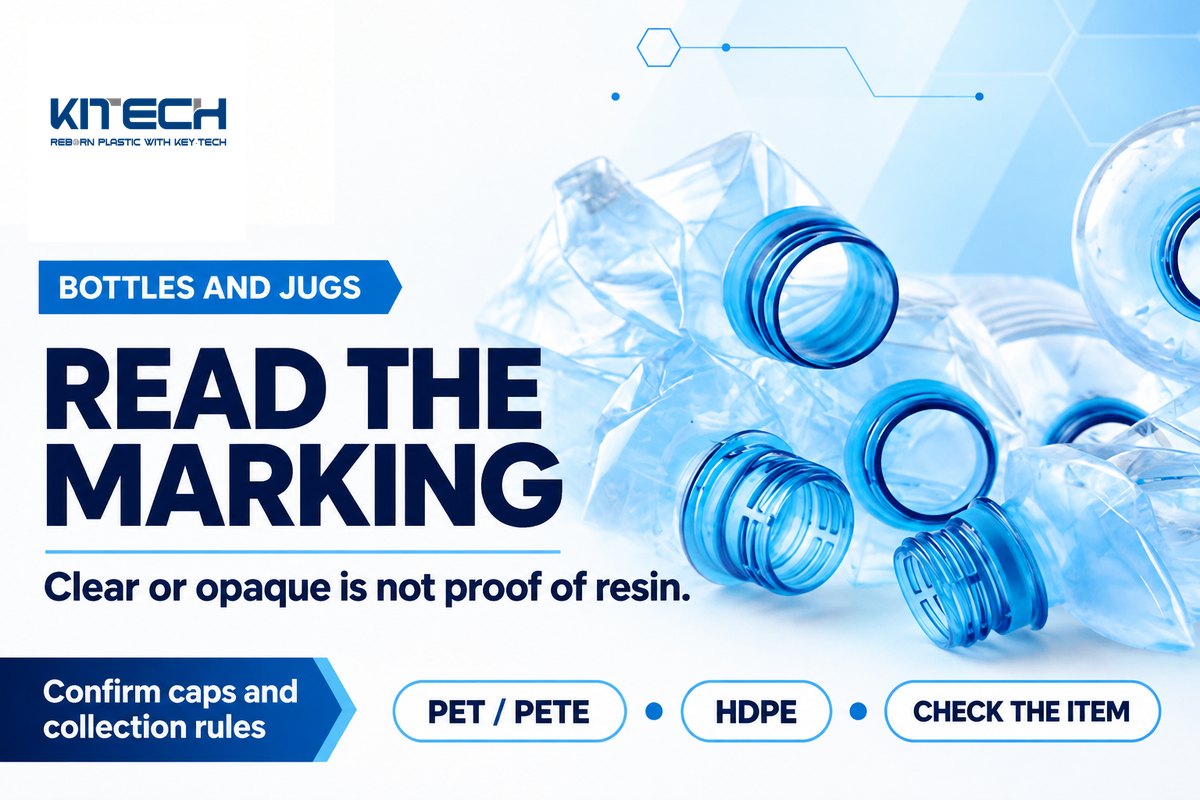
PET and HDPE identify different resins even if they’re in bottle form. PET is commonly found in beverage bottles; HDPE examples include milk jugs and containers of household products. The code can help define material identity. The local program will determine the kinds of bottle shapes, sizes, and previous contents that it will accept.
To identify PET, look for 1 or the abbreviations PET or PETE on a juice or water bottle. To find the code for other plastic containers, such as a detergent jug or milk bottle, look for 2 or HDPE. Clear plastic isn’t automatically PET. An opaque bottle isn’t automatically HDPE. Read the markings on the product.
Check different components, as a cap, pump, or sleeve may be made of a different plastic than the body of the bottle. Follow the receiver’s instructions as to whether to leave a cap on; don’t create a universal rule to be applied to all recycling facilities. The same rule applies to food containers: accepting PET bottles doesn’t mean accepting all PET trays.
Even commonly recycled, widely recycled bottle formats don’t achieve universal recovery. NAPCOR reported a U.S. PET bottle recycling rate of 30.2% for 2024. That’s an industry association’s bottle-specific national measure, not the percentage of all PET plastic packaging that your town accepts.
PVC: Code 3 Collection Depends on the Item
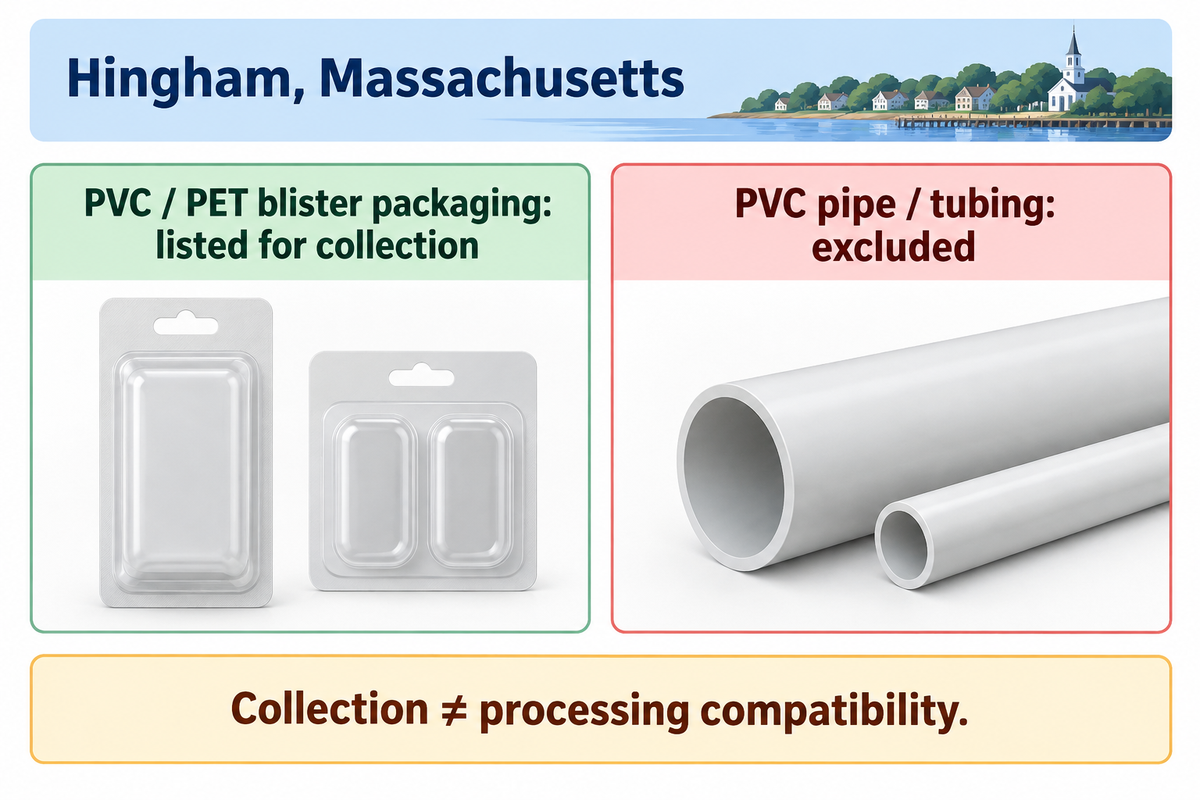
PVC, or polyvinyl chloride, is code 3. It appears in different products, from pipes to blister packaging. Because of this variation, check acceptance by product form, such as blister pack or pipe, rather than by the resin code alone. The program that receives the material may be able to distinguish among PVC products, and the acceptance of collection doesn’t guarantee that the material can be reprocessed with other resins.
An example that supports the existence of useful variations comes from Hingham, Massachusetts. Rigid-plastics instructions allow blister packaging of both PVC and PET, but exclude PVC pipe/tubing as well as vinyl fencing and siding.
When dealing with a PVC product, describe it first (blister, pipe/sheet). Then look for a program naming that form. Do not place it in a PET feedstock batch merely because both items are transparent. For processing decisions, ask the receiving recycler to define its material specification rather than relying on household collection examples.
LDPE and PP: Codes 4 and 5 Beyond the Bottle
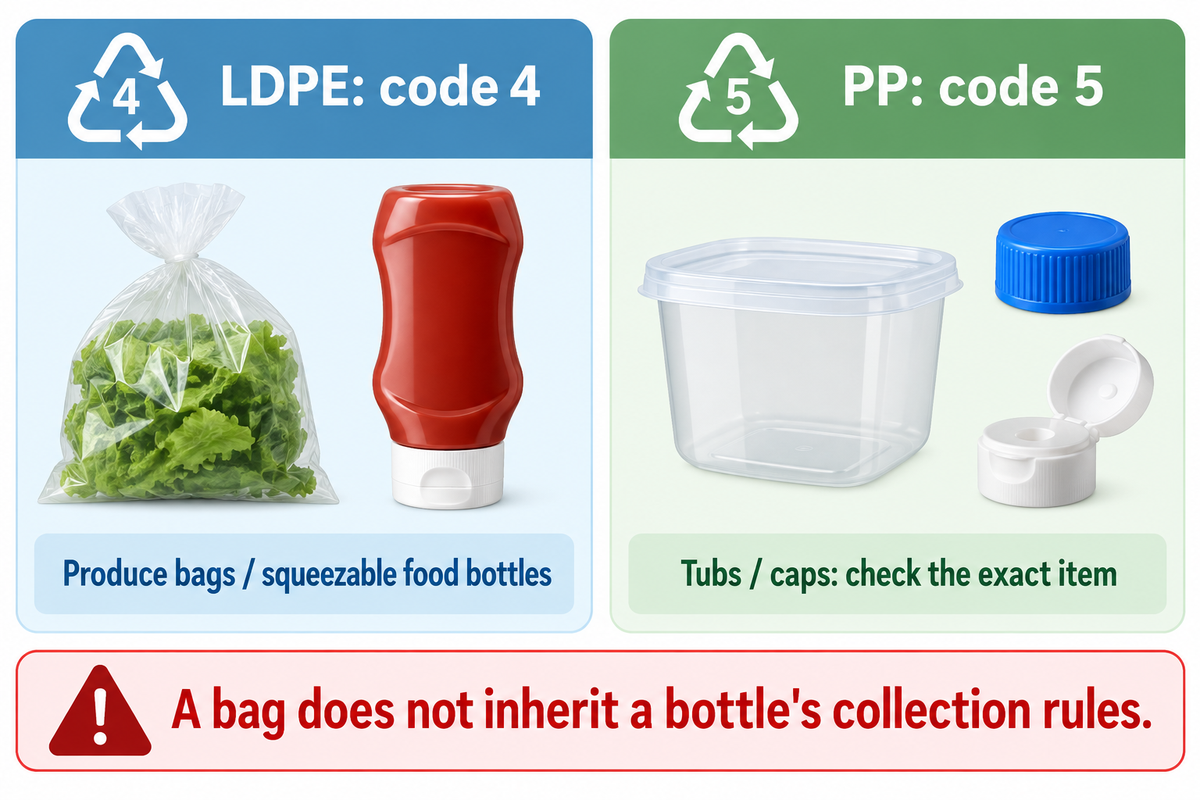
LDPE is code 4 and PP is code 5. Flexibility alone can’t answer identity or collection. A lightweight plastic bag, a squeezable container and a food tub each need to be checked individually. Maintain the integrity of the resin name and the packaging format as separate pieces of information.
What are type 4 plastics?
Type 4 plastics are low-density polyethylene (LDPE). Examples provided by the NIH include produce bags and squeezable food bottles. Some flexible plastic wrapping also falls into this category. However, appearance alone can’t be relied upon to classify an unmarked film. A code 4 bag doesn’t inherit the collection rules of a code 4 bottle.
Plastic bags and film need particular care. Portland’s collection guidance states that bags and stretchy wrapping can jam sorting machinery. If a film collection point is available at a store, confirm the staff’s acceptance of the bags, and check if they’re clean and dry. It’s best to not assume flexible packages are accepted at the collection point.
What does PP 5 mean?
PP 5 is polypropylene, resin code 5. Examples include food tubs, caps and some lab products. Read the container’s own marking and check the receiver’s instruction on what’s accepted and how to prepare it for collection. For collection, determine if the item is a tub, cap or flexible packaging and look up the accepted items.
A PP tub and PP wrapper aren’t interchangeable collection items. Food packaging commonly used in food service may include multiple layers or attached components. In the absence of definitive composition information of a package, consult with the supplier before combining it with a documented single-resin stream.
Polystyrene: Code 6 in Rigid and Expanded Forms
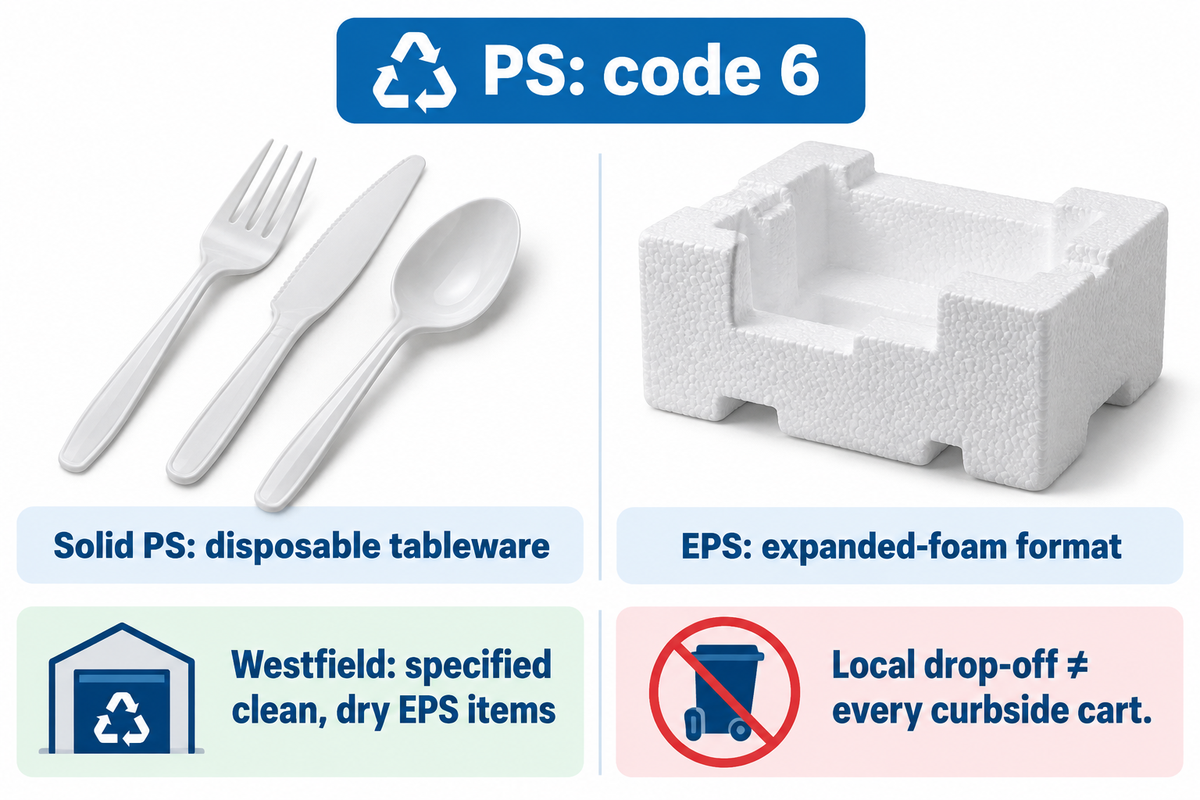
Polystyrene is PS code 6, and includes both solid products and expanded polystyrene foam. Disposable plastic cutlery and protective foam packaging illustrate different forms within the category. “Rigid plastic” is not precise enough to distinguish them, because an expanded foam block can also be stiff.
Foam, in general, doesn’t have a definitive collection answer. The Westfield, Vermont recycling center lists specified clean, dry code 6 EPS items, including coolers, packaging blocks, egg cartons and meat trays. It doesn’t accept flexible foam or packing peanuts. Those are that center’s drop-off rules, not permission to put foam in any curbside recycling cart.
Identify the form as well as the plastic number when asking for advice. “Code 6 expanded foam packaging block” gives a collector more useful information than “plastic.” Keep different foams separate until the program confirms them; a similar cushioning function doesn’t establish the same polymer.
Other Plastics: What Code 7 Does and Does Not Tell You
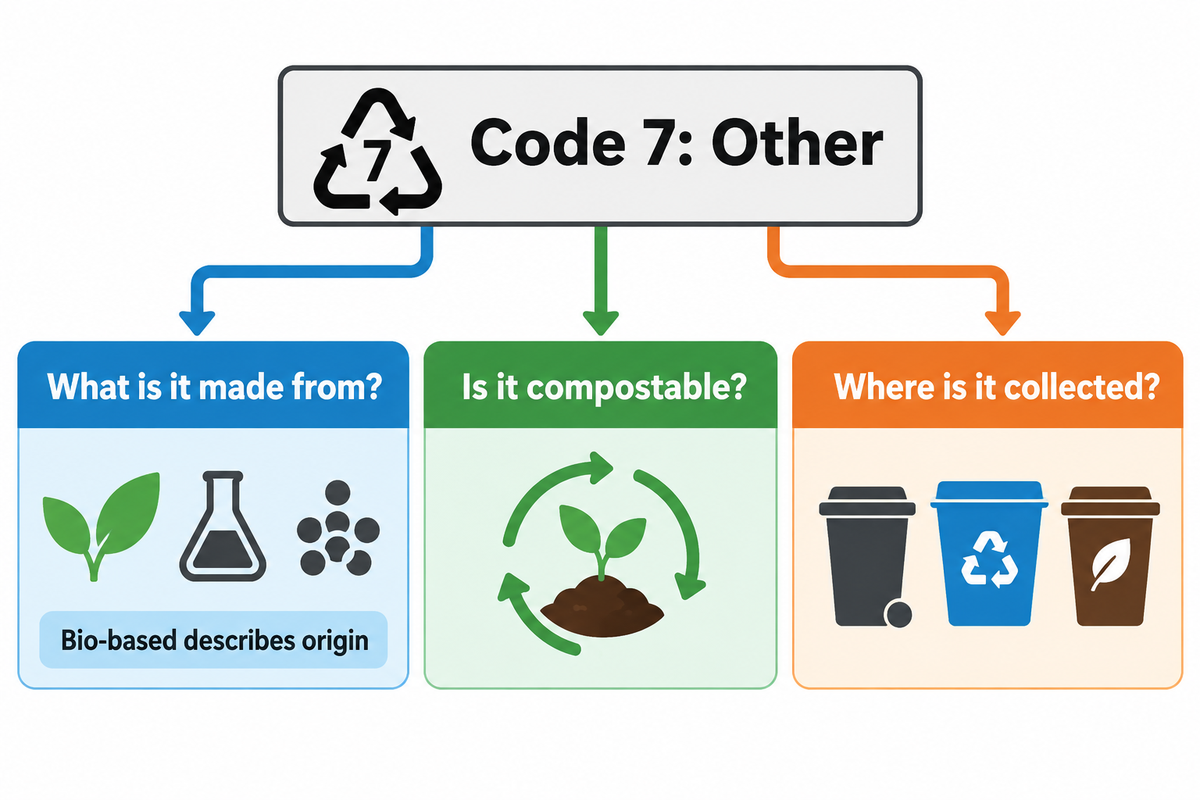
Code 7 is in the Other category, and not a definitive resin with one recycling route. It can mean a material beyond codes 1-6, or a resin combination. For code 7 plastics, the next useful evidence is the named material or product specification, followed by the receiving program’s instructions.
Items such as reusable water bottles, durable plastic and baby bottles may vary with the materials used. Food-contact, heating and reuse limits come from the manufacturer’s instructions for the actual product, not from its resin code.
Three separate questions must be answered: what a product is made from, whether it’s compostable, and where it’s collected. Bio-based describes a material’s origin. Biodegradable and compostable plastics also shouldn’t be treated as an accepted conventional recycling category.
According to the EPA’s common-recyclables guidance, compostable plastics shouldn’t be put in the plastic recycling stream because they can contaminate that stream. A composting claim isn’t adequate if there’s no collection program for that claim. If there’s no confirmed material or receiver, don’t include the item in a known resin batch.
How to Identify Plastic When the Code Is Missing
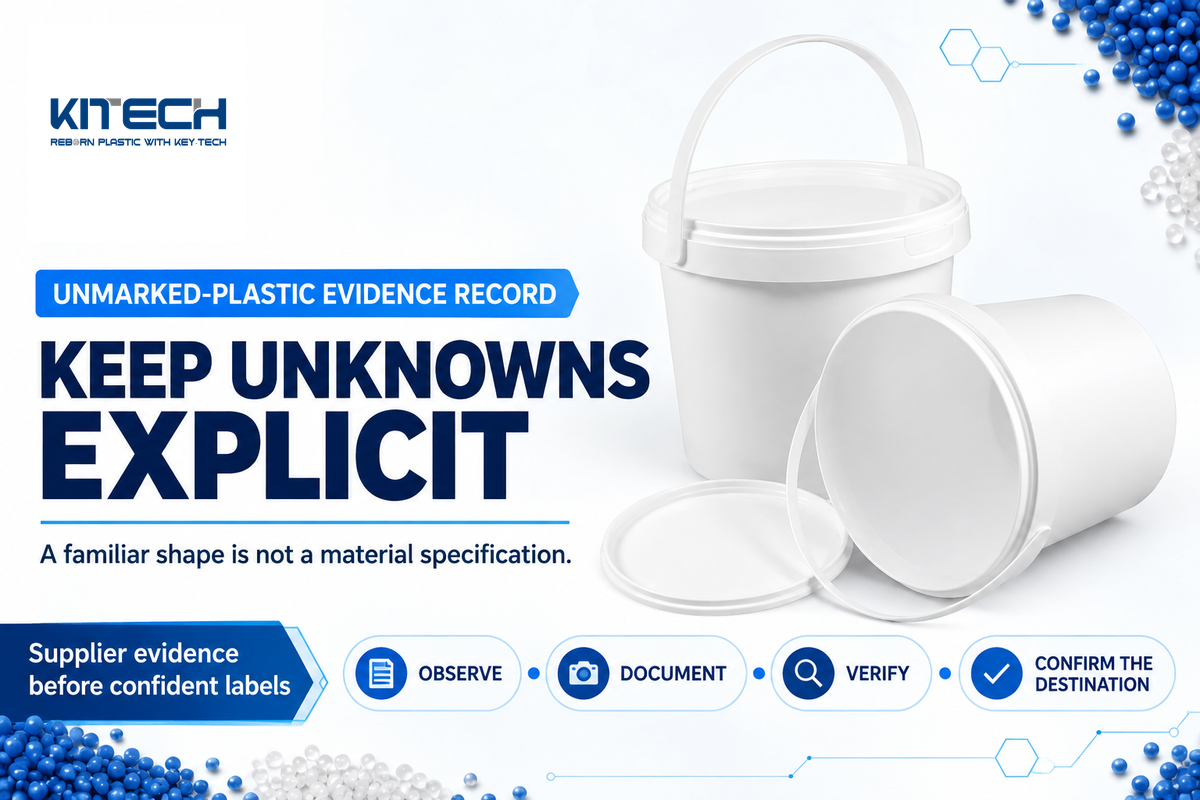
Start with what’s marked on the item. Further information can be found in the product-specific documents. If questions remain, and known confirmation of composition is required, reliance should be placed on qualified product testing.
How can I tell different types of plastic apart?
In the absence of a molded resin code or written material abbreviation, contact the product manufacturer or supplier. Agree on the acceptance criteria with the receiver for an industrial batch. Usually, there are clues as to composition; however, one shouldn’t rely on that information.
The Unmarked-Plastic Evidence Record makes confidence levels visible. It’s a working record for a sorting team, not a laboratory identification standard.
Unmarked-Plastic Evidence Record
- Observe: photograph all markings and identify the item form. Record “unknown” when no resin is confirmed.
- Document: match the exact product to supplier composition information. Keep the document with the batch record.
- Verify: where composition matters, arrange qualified identification and record its limitations.
- Confirm the destination: obtain the receiver’s acceptance for this item and condition before combining or shipping it.
NIST describes using spectral fingerprints to sort plastics, while noting that commercially available equipment can struggle to distinguish HDPE from LDPE. Items of one identified resin can still differ in grade, additives and contamination, so they may not suit the same downstream use.
For example, in place of “LDPE” on a feel basis, the record could state “unmarked flexible packaging material; supplier confirmation requested,” and a purchasing team could act on that record. An unsupported confident label simply transfers the uncertainty to the next person.
Which Plastics Can Be Recycled in Your Local Program?
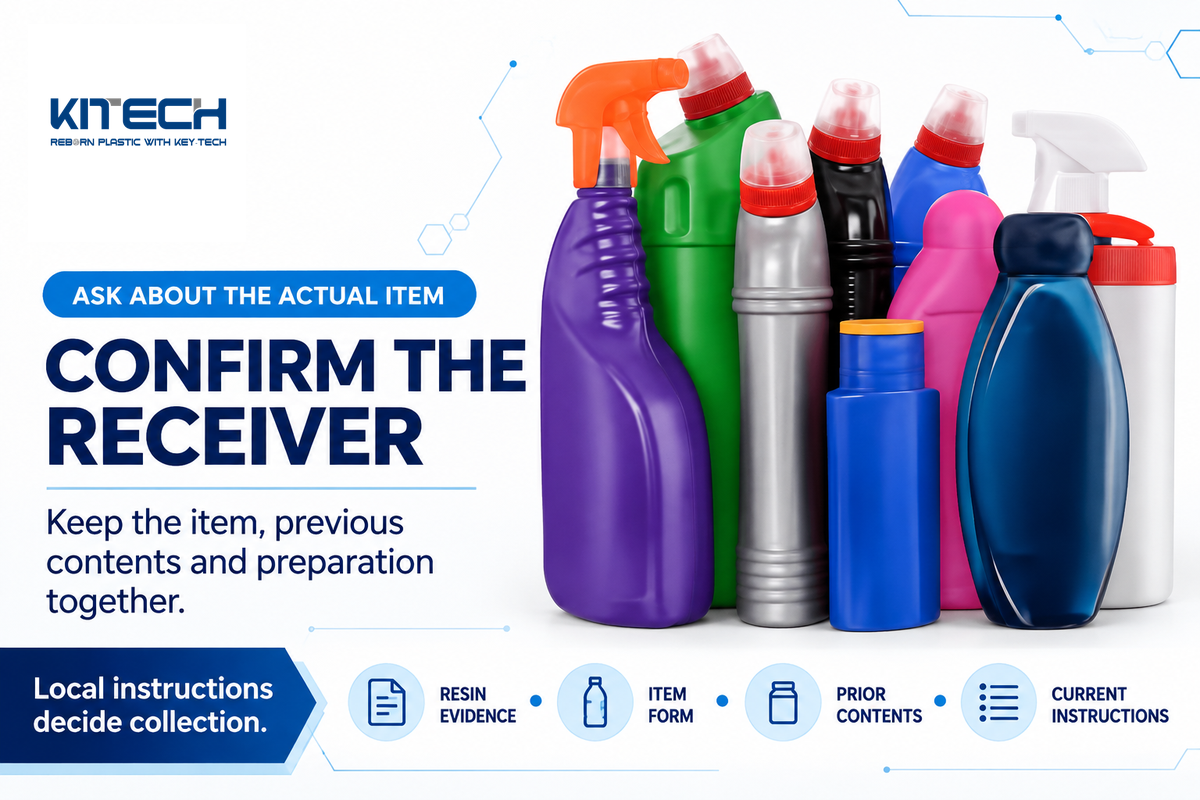
There are communities in the US where PVC and PET blister packs are acceptable, while specified clean, dry code 6 EPS items are acceptable in Westfield, Vermont. Each community has its own items list. Consult your program’s instructions to determine what’s acceptable for collection.
The latest directions from your waste management supplier will probably describe the whole item: bottle, tub, tray, bag or foam block. Check with your local collector when a category is unclear. Outside of the U.S. the same service may be called kerbside recycling, but that name still doesn’t provide a hint about which products it services.
Keep previous contents in the record. HDPE bottles that held household products aren’t automatically equivalent to industrial chemical containers. Pennsylvania’s specialized pesticide-container program, for example, sets participant and container eligibility conditions. Use the relevant specialist program for such containers; this packaging guide doesn’t provide chemical-handling instructions.
A useful collection question
Ask: “Do you accept this code 5 food tub, with this lid, after the preparation shown in your guide?”
Avoid: “You accept number 5, so can all my number 5 items go together?”
Record: resin evidence; item form; prior contents/residue; named receiver and route; confirmation date; preparation instructions.
Collection is one part of recycling plastic. An accepted item still has to be sorted and processed. Conversely, a polymer with limited recycling access may still be technically recoverable. In general, avoid “easily recyclable” labels that hide differences.
Study recycling rates with the same diligence. The EPA’s plastics statistics report 8.7% for plastics in U.S. municipal solid waste in 2018, versus 29.1% for PET bottles and jars and 29.3% for HDPE natural bottles that year. These figures do not establish that all this material was physically recycled in the US in that reporting year. The plastics-wide rate is three million recycled tons measured against all plastics in municipal solid waste, while each bottle rate is measured only against that bottle type.
From Plastic Type to Recycling Equipment
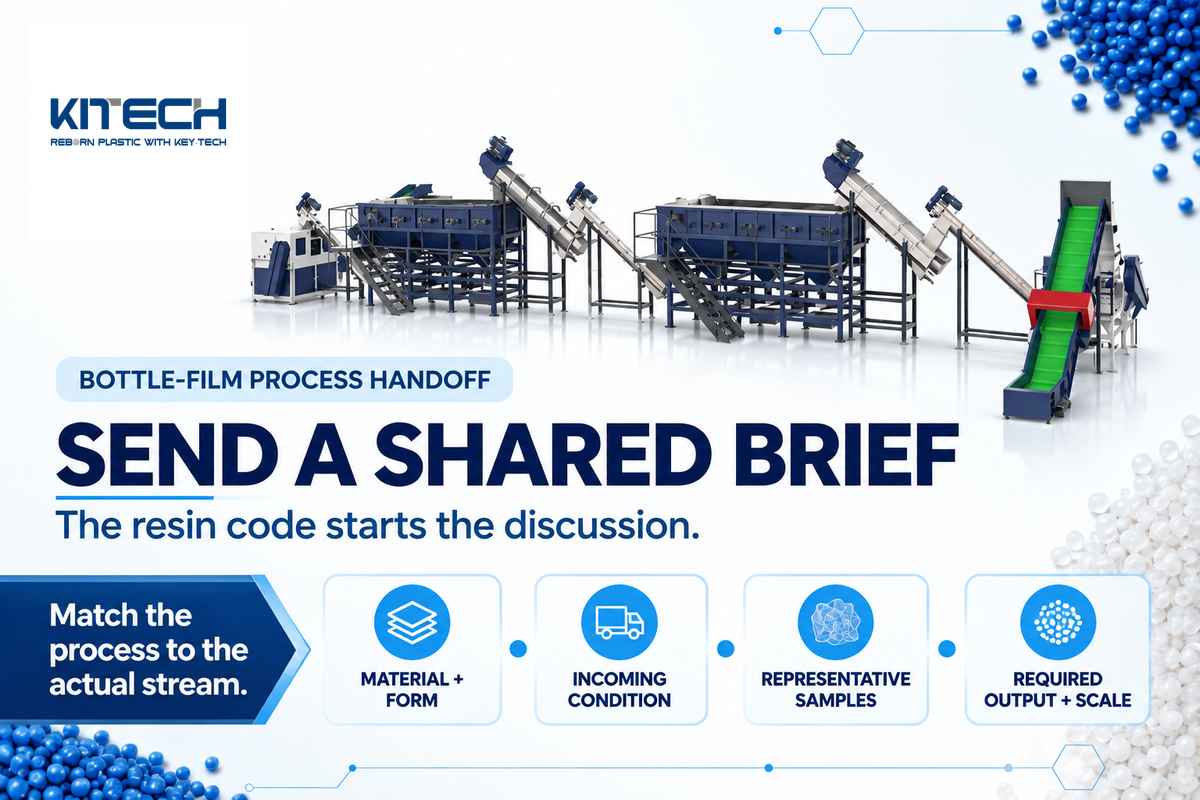
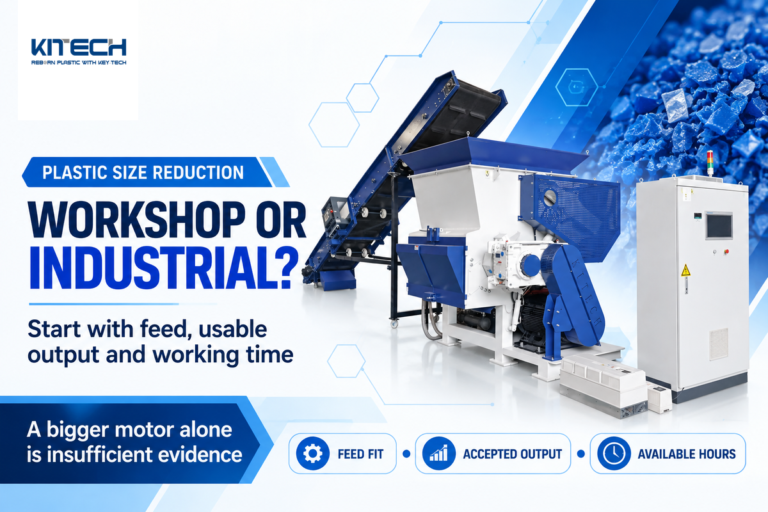
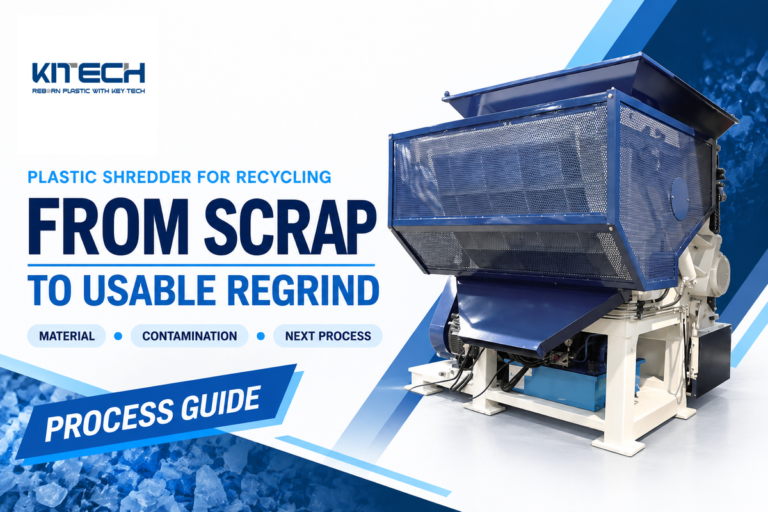
A resin code is an opening bid for equipment discussions, not a specification. A recycler also requires the item’s physical form, contamination, material consistency and intended output. Therefore, despite both starting with collected plastic waste, discussions for a bottle-project and a film-project will differ.
Kitech’s public range includes a PET bottle washing line and a PE film washing line. These establish product-family choices.
Whether or not used plastics could be recycled into an output like plastic lumber depends on the material specification. A code doesn’t determine the end market. Use the Bottle-Film Process Handoff to initiate the conversation.
| Field to send | Bottle-stream example | Film-stream example | Who uses it |
|---|---|---|---|
| Confirmed material and form | PET beverage bottles, with composition evidence | Documented PE film, with source identified | Quality: define what belongs in the batch |
| Incoming condition | Describe caps, labels, residual contents and other items | Describe moisture, dirt, printing and attached materials | Operations: discuss cleaning and handling needs |
| Representative samples | Include the range of bottles actually received | Include the range of films actually received | Supplier and quality: agree what a trial represents |
| Required output and scale | State the intended washed output and measured input quantity | State the intended washed output and measured input quantity | Procurement: compare proposals against the same brief |
A sorting record can be used to create a shared brief for the recycler and machine supplier. A national statistic expressed in tons of plastic shouldn’t be mistaken for the feedstock available to a plant. Measure the actual incoming stream. The plastic used for car parts or for a durable molded component should also be documented. A bottle line description doesn’t cover all products.
See the Kitech resin types and properties guide for more material properties. For the commercial application discussion, use Plastic Recycling Machine Applications by Industry and bring the completed handoff record. The Kitech company overview provides context as a supplier.
What Is Changing in Plastic Identification and Collection?
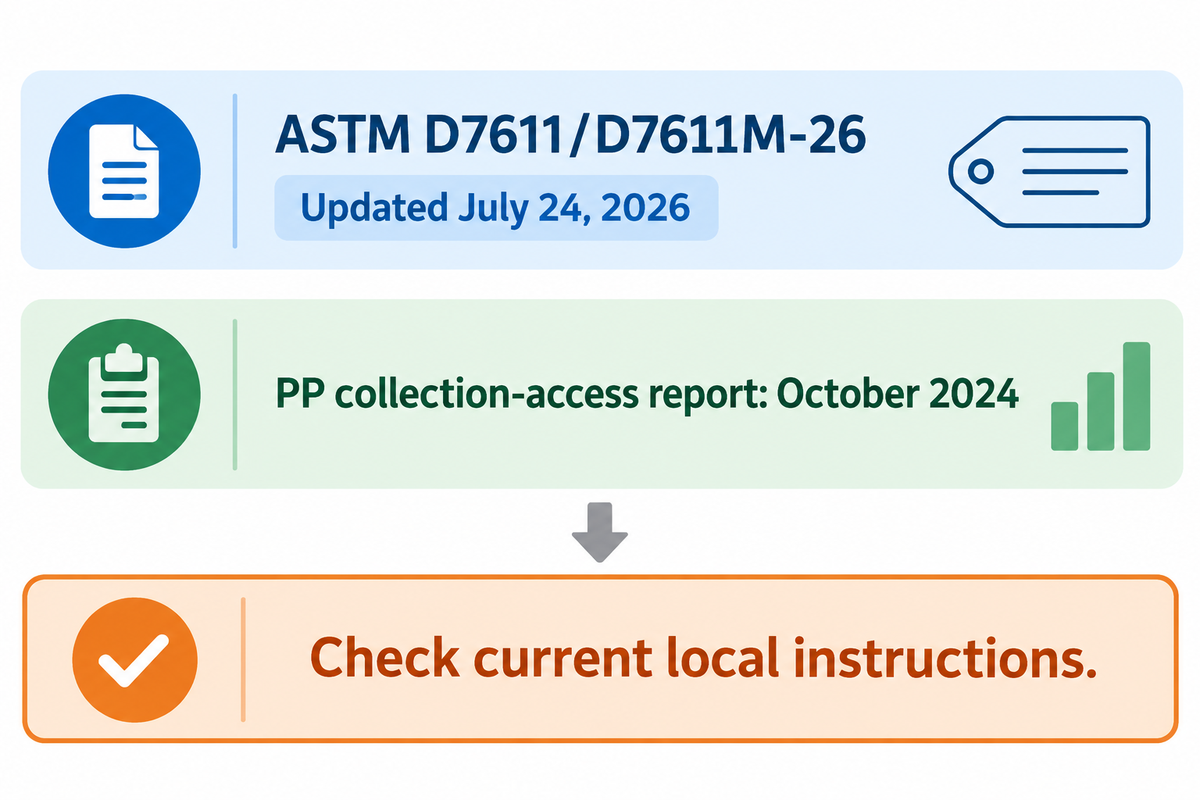
Changes include ASTM D7611/D7611M-26, updated July 24, 2026, and expanded PP collection access reported in October 2024; marking guidance and collection access change separately. Read older research with its original scope, and consult the most recent local directive before following outdated disposal suggestions on a research chart.
ASTM lists D7611/D7611M-26 as the active edition, updated July 24, 2026. That does not mean every older product marking has suddenly become invalid or every community has changed its collection service.
The October 2024 PP program report by the Recycling Partnership notes improved collection access and a goal for further expansion. Improving recycling rates requires a true collection-to-processing route rather than a more aesthetically pleasing symbol.
Recognizing plastic types may help reduce plastic waste through better sorting, but it won’t by itself resolve plastic pollution or make all single-use plastics recoverable. A confirmed disposal route may involve landfill where recovery is unavailable; do not invent a recycling destination. If a receiver cannot confirm a route, prevention and appropriate reuse may reduce plastic demand before disposal becomes the problem.
Keep four facts together: the confirmed resin, the actual item, its previous contents and condition, and the receiver’s current acceptance. A missing fact stays unknown until evidence fills it. That is more useful than memorizing which number is “good.”
How this identification guide was assembled
For readers in the plastics industry and household sorting teams, this guide connects material identification with the information a recycler needs before discussing a process. Resin definitions and collection examples come from the named public sources. The reference sheet and handoff record are editorial syntheses, not results of Kitech laboratory testing. No proprietary trial data or universal recovery claim is presented.
Frequently Asked Questions
How many times can plastic be recycled?
For bottle-grade PET, a peer-reviewed study found that a 75% recycled, 25% virgin blend still met bottle-production quality criteria after eleven simulated recycling cycles, a result specific to that material rather than every plastic product.
The resin, additives, contamination, previous processing and required output all affect whether another recycling step is useful. A code alone can’t establish the number of possible cycles. For a known industrial stream, ask the processor about the actual material history and intended application, and use suitable testing rather than a universal number.
Can different types of plastic be recycled together?
A collection program may accept multiple categories together without processing them as one blend.
Mixed collection and mixed-resin manufacturing are different operations. Follow the collector’s instructions for the actual products, then let the receiving process define any sorting requirements. For an industrial batch, obtain the recycler’s material specification before combining resin streams; a shared bin or matching product shape doesn’t demonstrate compatible downstream processing for the proposed output, even where the items share a collection route.
Is type 7 plastic recyclable?
Sometimes a route exists, but code 7 alone does not identify it.
Other covers multiple types of material, rather than one uniformly accepted resin. Seek the exact composition from the product manufacturer and ask the receiver about that specific item. A material might be technically recoverable while having no accessible local collection. Compostable products need a separate acceptance check and shouldn’t enter conventional plastic recycling.
Does a plastic code mean food grade?
No. A resin identification code is not a food-contact approval.
Food containers require product-specific information about their intended use. Don’t infer suitability for heating, repeated washing or contact with food from the resin number. Consult the manufacturer for the actual item and follow its instructions.
Why can’t plastic film go in the regular recycling bin?
Film can interfere with sorting equipment, and many regular collections exclude it.
Portland’s guide describes plastic bags and stretchy wrapping jamming machinery. That’s why an otherwise identifiable polyethylene film may need a separate collection route. If a store or specialist collector offers film recycling, read its current item list rather than assuming all bags belong there. A PP wrapper, multilayer pouch and documented PE bag may have different eligibility. Keep the bag separate until the named program confirms acceptance and preparation.
Are PET and PETE the same plastic?
Yes. Both abbreviations refer to polyethylene terephthalate, associated with code 1.
The lettering difference doesn’t create a second resin category. Continue to check the actual product form: a program that accepts PET drink bottles may still reject trays or other items made from the same resin.
Can compostable plastics be recycled with ordinary plastics?
Keep compostable plastics out of conventional plastic recycling unless the receiver explicitly directs otherwise.
EPA guidance explains that compostable plastics can disrupt conventional recycling. A composting label also doesn’t mean every composting service accepts the product. Confirm a program designed for that material and follow its instructions. If there’s no such program, ask the local waste authority about the appropriate route. Neither a code 7 marking nor the word bio-based supplies a collection answer on its own.
References & Sources
- NIH Office of Research Facilities, Plastic Resin Codes. Resin categories and representative product examples.
- ASTM International, D7611/D7611M-26 public scope. Identification versus recycling claims; active listing checked October 2026.
- NIST, How recycling facilities sort different kinds of plastic. Measurement methods and limitations.
- U.S. EPA, How Do I Recycle Common Recyclables?. Collection and compostable-plastic distinctions.
- U.S. EPA, Plastics: Material-Specific Data. U.S. 2018 rates with material-specific denominators.
- NAPCOR, 2024 PET Recycling Report release. U.S. PET bottle rate; released December 2025. Industry association source.
- Hingham, Massachusetts, Plastics (Rigid). Local PVC item distinctions.
- Westfield, Vermont, Recycling Center. Local EPS drop-off examples.
- Portland, What not to put in your recycling bin. Plastic-film sorting problems.
- Pennsylvania Department of Agriculture, Plastic Pesticide Container Recycling Program. Example of specialized program eligibility.
- The Recycling Partnership, PP coalition fourth-year report. October 2024 program update; industry-supported nonprofit source.
Local examples were checked in October 2026. Verify the current instructions with your own receiver before collection.
Trending now