Get in touch with Kitech Company


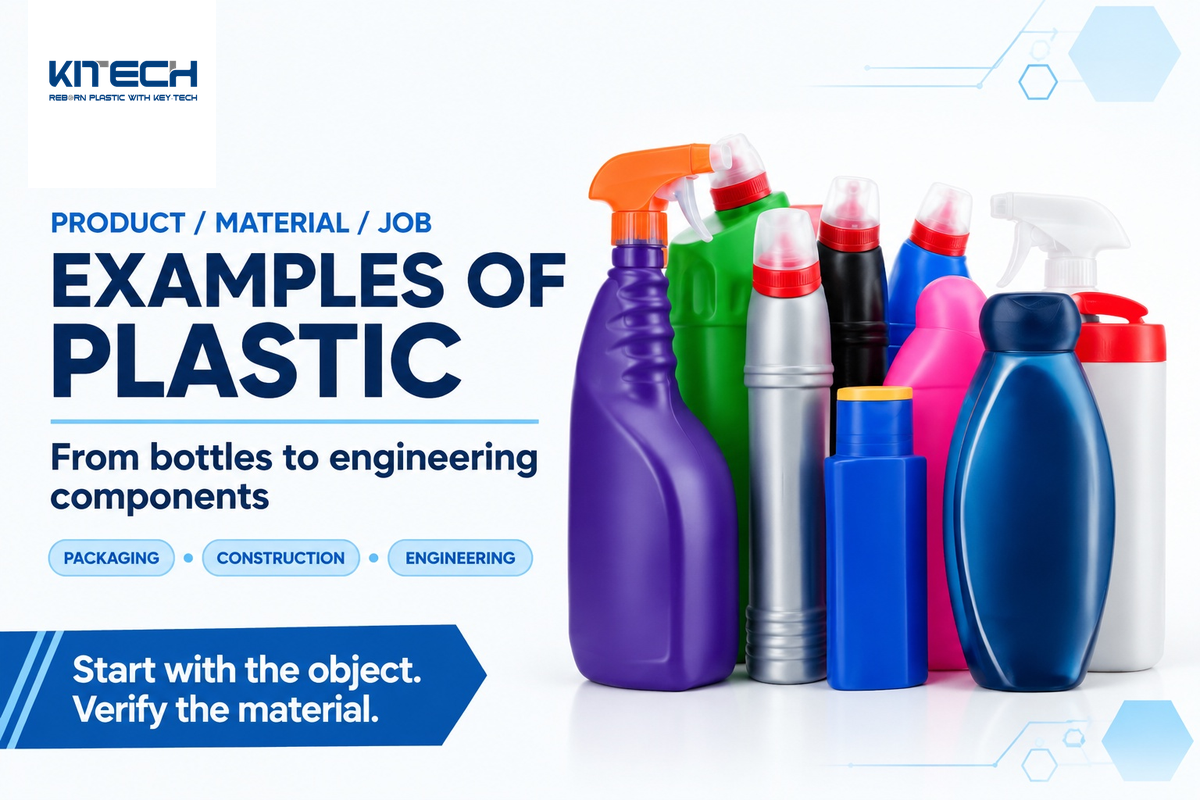
Common examples of plastic include PET drink bottles, polyethylene bags, polypropylene food containers, PVC pipes, acrylic displays, nylon gears, and PEEK aircraft clamps. Plastics appear also as polyester fibers, protective foams and cured resins. Recognizing the object is important; its formulation and construction explain the job it’s meant to perform.
Household items, like a shirt or a bottle, look completely unrelated to an aircraft bracket. Yet each may contain a polymer shaped for a particular purpose. Familiar products, industrial materials and the differences they display are illustrated below.
What are common examples of plastic products?
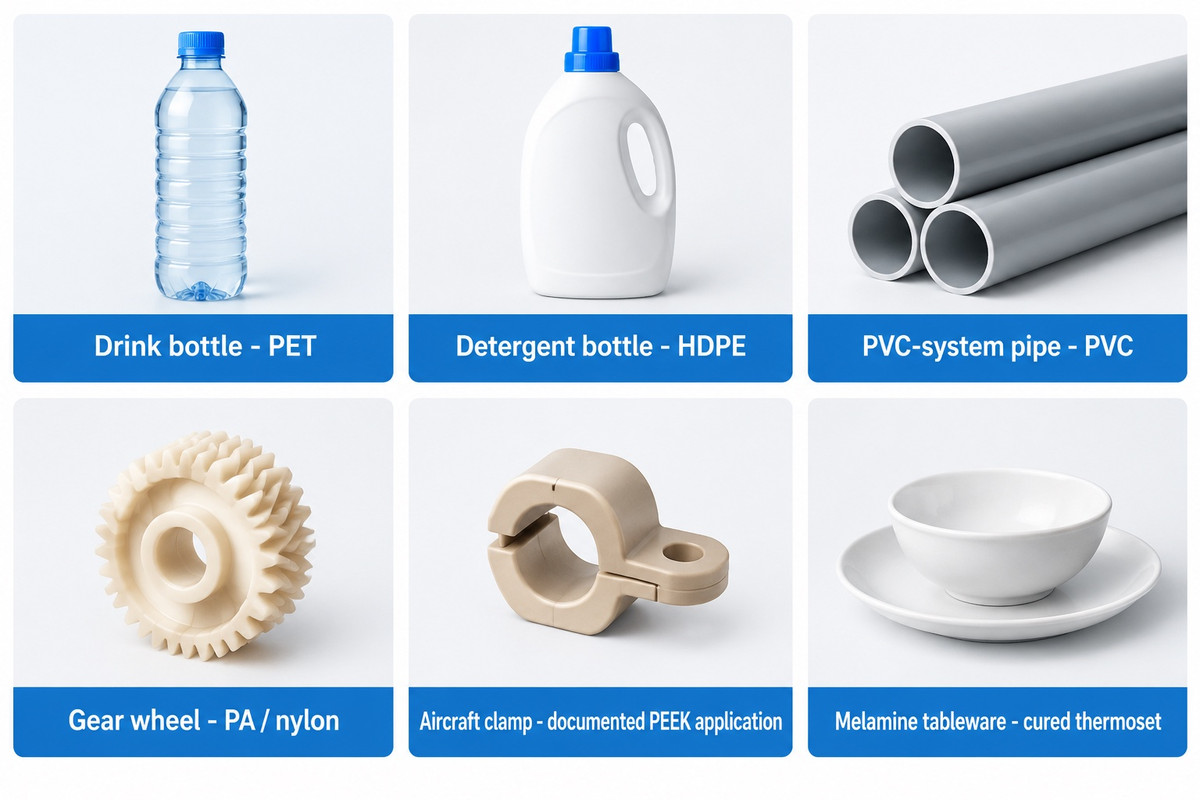
Common plastic includes bottles, bags, tubs, window profiles, electrical housings and bearing bushes. Disposable packaging and components designed for repeated use serve different jobs. The Product-Polymer-Job Atlas classifies examples by their function; individual products may use other grades, blends or constructions.
| Recognizable example | Representative material | Job or product form |
|---|---|---|
| Drink bottle | PET, polyethylene terephthalate | Rigid beverage packaging |
| Detergent bottle or milk jug | HDPE, high-density polyethylene | Moulded container |
| Yogurt tub | PP, polypropylene | Food packaging container |
| Bottle cap | PP in many closure designs | Separate closure component |
| Bread bag or shrink wrap | LDPE, low-density polyethylene | Flexible plastic film |
| Grocery bag | HDPE or LDPE, depending on the product | Flexible carrying bag |
| Foam packaging | Expanded polystyrene in some products | Cushioning rather than a solid sheet |
| Water or drainage pipe | PVC, polyvinyl chloride, in PVC systems | Extruded pipe and fittings |
| Window frame | PVC in vinyl profiles | Building profile |
| Vinyl floor tile or wall covering | PVC in vinyl products | Flexible or rigid covering |
| Appliance or electronic casing | ABS or PC/ABS, depending on design | Shaped housing |
| Automotive headlamp component | PC, polycarbonate | Optical component |
| Sign or product display | PMMA, acrylic | Transparent or coloured sheet, tube or profile |
| Gear wheel or chain guide | PA, polyamide or nylon | Engineering wear component |
| Bearing bush or slide rail | POM, acetal | Sliding mechanical component |
| Aircraft wire-bundle clamp | PEEK in documented Victrex applications | Application-specific aerospace part |
| Polyester clothing or nylon net | Synthetic polymer fibres | Textile or woven structure |
| Melamine tableware | Melamine-formaldehyde resin | Cured thermoset article |
| Cured epoxy adhesive | Epoxy resin | Crosslinked bonding material |
Packaging examples are based on the Common-item guide by the NIH. Construction uses are described by Plastics Europe. The engineering examples are developed in the sections below.
What are the different types of plastics and their uses?
Common plastic includes PE, PET, PP, PVC and polystyrene for packaging and construction, and engineering materials such as nylon and acetal for technical components. Product form cuts across those families; a polymer may appear as a bottle, film, fiber or reinforced part. Cured thermoset resins represent a different class with varied reprocessing behavior.
What is the difference between a plastic product and a polymer?
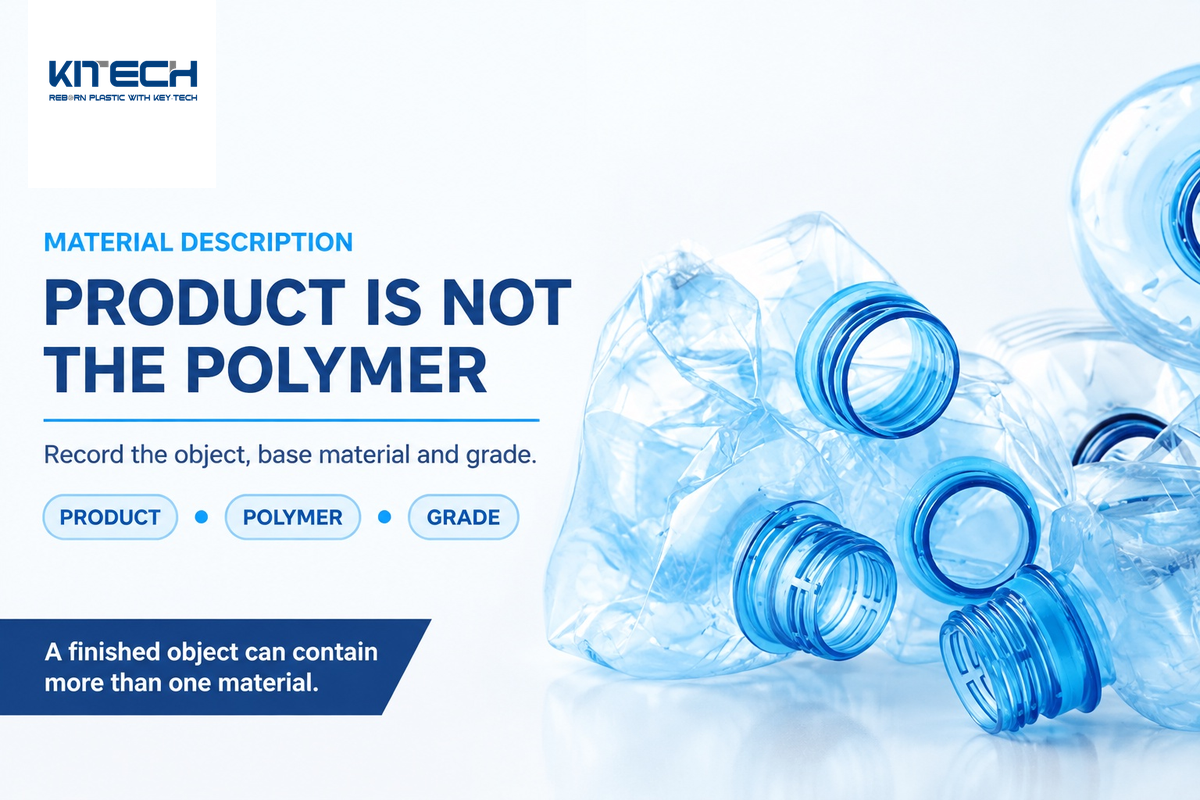
A plastic product is the finished object. The polymer is the base material. A grade describes a more specific formulation of a material. Colorants and additives can change the behavior of the material. For instance, two parts with the same broad resin name can differ greatly.
What is plastic?
Plastic is a polymer-based material that can be formed into useful objects. Some commercial polymer formulations can include colorants and additives that alter flexibility and other properties. Thus, the term plastic includes flexible packaging bags and rigid machine components.
“Even though a bottle says ‘2,’ it’s not just HDPE.”
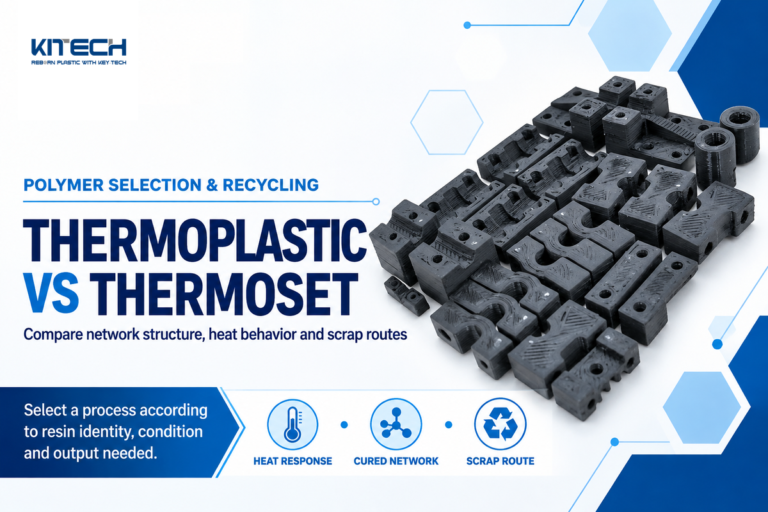
Thermoplastics are plastics that can soften or melt under appropriate conditions. Cured thermosets have a crosslinked molecular network, which won’t simply remelt. The Canadian Conservation Institute’s guide to plastics includes epoxy adhesives and melamine-formaldehyde tableware alongside thermoplastic examples.
Bottles, caps and containers: PET, HDPE and PP
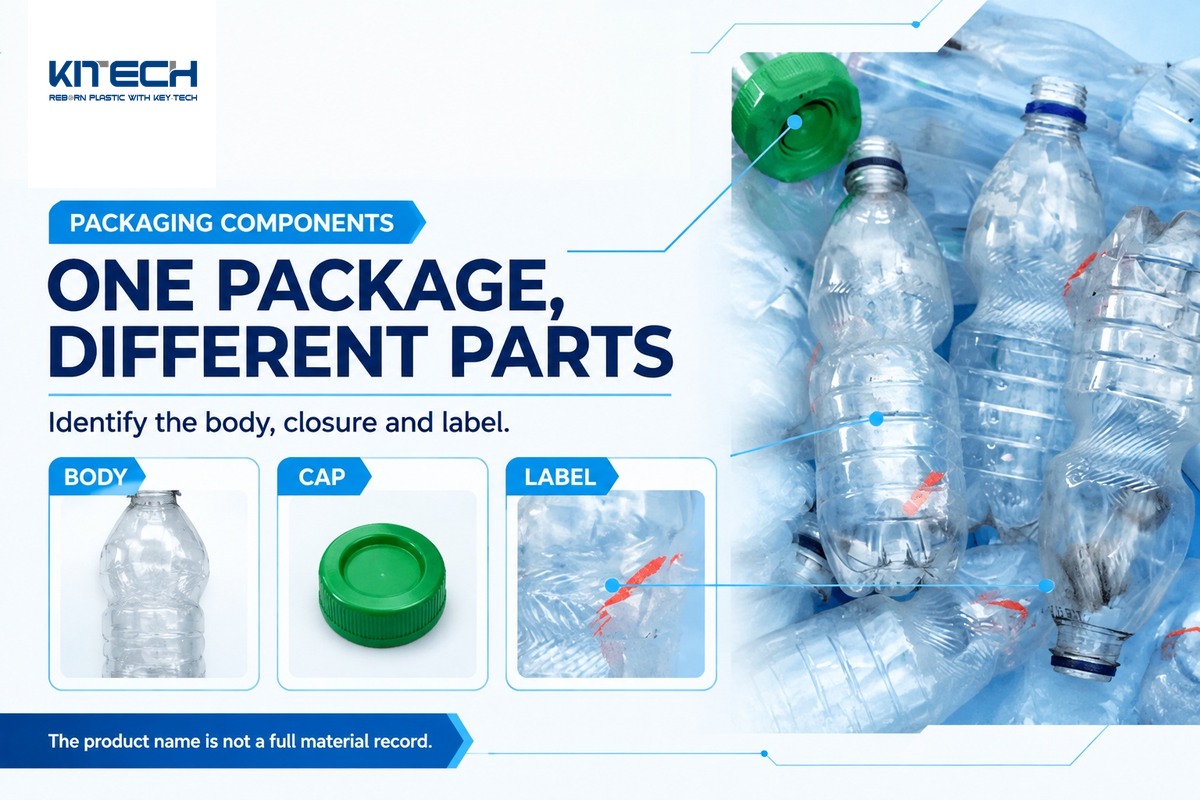
Bottles and containers illustrate how different plastics are used in packaging formats. PET is used in drink bottles, HDPE in laundry detergent containers, and PP in food containers and caps. Single-use plastics and reusable containers can belong to the same resin family, yet serve different functions.
Examples of clear plastic packaging, such as the PET water bottles, vary from milk jugs or bottles of shampoo and conditioner, which may have a different type of construction and formulation. Cosmetic and personal care products, as well, vary in the types of packaging materials, and so the contents labeled may not be a trustworthy resin identifier.
Let’s imagine a batch of beverage bottles with caps and labels still on. Sorting the batch as ‘bottles’ defines the shape, but doesn’t answer what’s contained within that shape (the body, closure, label). Identifying those components would be more useful to a recycler than considering the whole package as a single, homogeneous polymer.
The NIH common-item directory places bottles, bags and tubs in multiple resin categories. For numbering, use the plastic resin identification codes guide. A resin category name, 2 HDPE or 5 PP, for example, describes a category of resins, but not all of the components and additives in a package.
Bags, films and woven sacks: flexible plastic examples
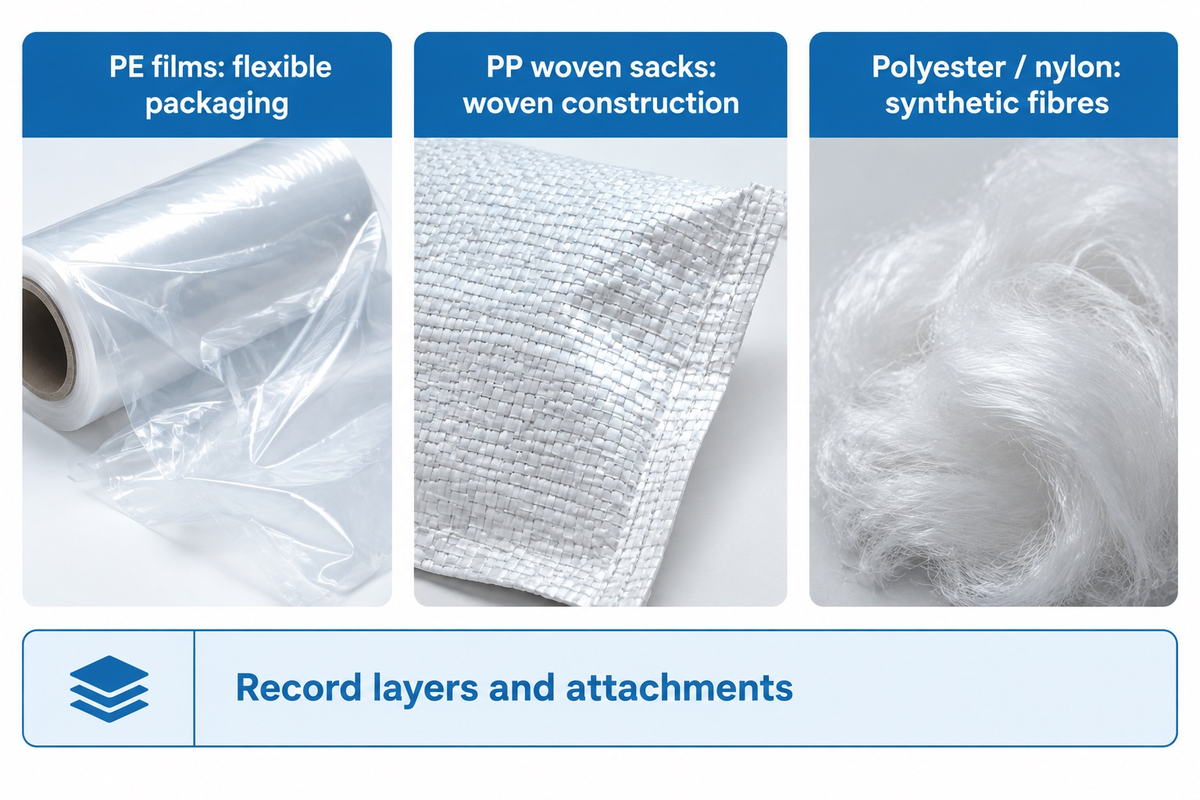
Examples of flexible plastic include bread bags and shopping bags, shrink wrap, woven packaging and synthetic textiles. Polypropylene woven bags and polyethylene films are flexible, but have different constructions. Clothing and fishing nets, among other things, extend the use of plastics beyond packaging, showing how a polymer can be classified as fibre instead of a solid plastic part.
LDPE is associated with many bags and wraps, and HDPE also occurs in grocery bags. Therefore, “plastic bag” is used to describe a product category, not a single type of plastic. The structure of the films is also of importance; a transparent film, printed laminate and a woven bag could present various material separation problems even if they all arrive in the same bale, folded.
NOAA identifies polyester and nylon among the synthetic materials associated with clothing, furniture and fishing gear. These synthetic plastic fibers are easily missed in a limited list of obvious plastic bottles and everyday items such as household containers. Fibers, by nature, are different than a molded part, even if both contain a polymer base.
Packaging layers, of course, add further distinction. Adhesives used in labels and laminates impact recycling, and this is mentioned in the article by H.B. Fuller. A vendor’s description may state, “PE film” for instance, and omit other layers and bonded components that would affect the stream of material recovered.
Pipes, profiles and insulation: plastics in construction
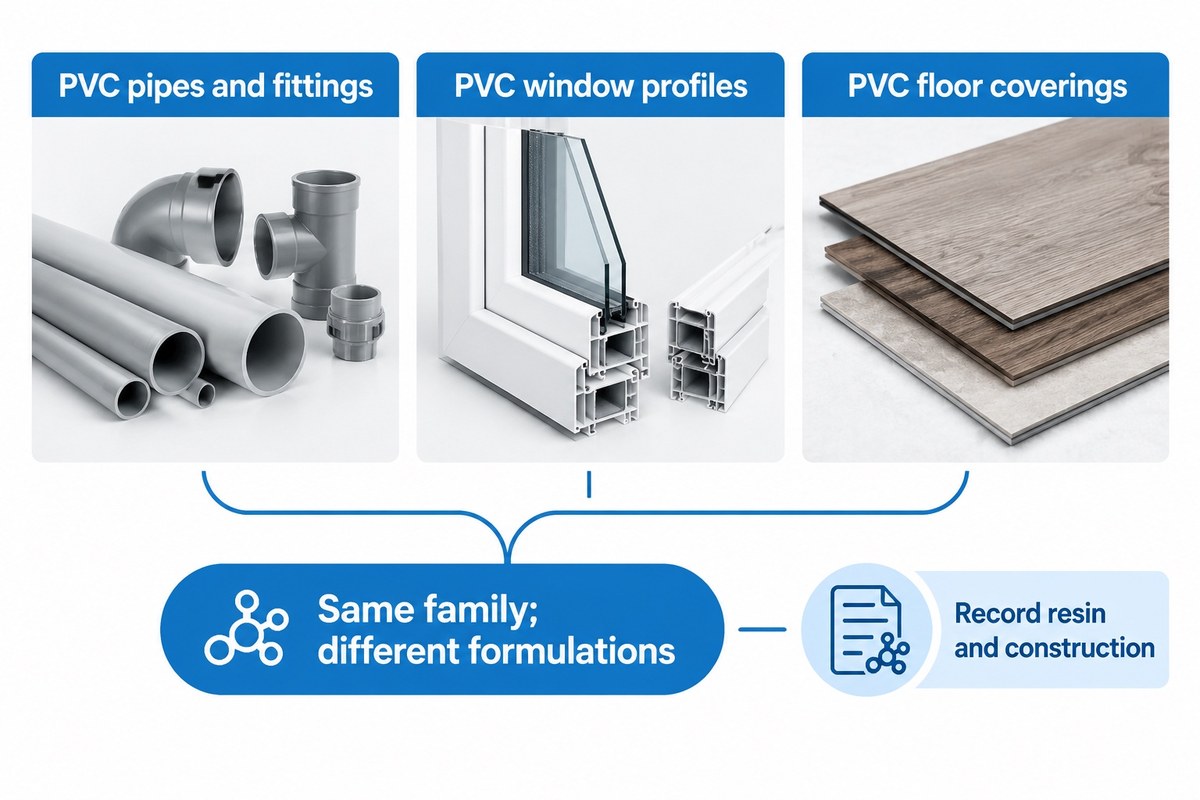
Construction plastics include pipes, window profiles, floor coverings, and insulation and cable coverings. PVC is a good example of a material family that can serve several construction jobs. Depending on the raw materials and additives, the same PVC family can be formulated into rigid or semi-rigid profiles or flexible coverings, thereby determining the shape and specification of the product.
According to Plastics Europe, PVC can be used in pipes and fittings, window profiles, roofing sheets, wall and floor coverings, and other profiles. PVC floor coverings and pipes are related by their base polymer, but they’re very different in formulation and service requirements. Calling both PVC plastic doesn’t make them equivalent or interchangeable.
Let’s assume that a demolition contractor collects mixed flooring and cable scraps while a fabricator collects profile offcuts. Both collections contain polyvinyl chloride, but the demolition collection provides less information on the materials and contamination. By keeping the collections separate, information needed for an appropriate recovery route remains available.
Insulation also requires a specific material description. Foam and rigid sheets are two different forms of plastic, and a broad ‘plastic insulation’ label is too vague to assign a processing route. State the name of the resin, and whether it’s a cured foam, thermoplastic foam or a part of a bonded assembly.
Housings, guards and vehicle parts: ABS, PC and acrylic
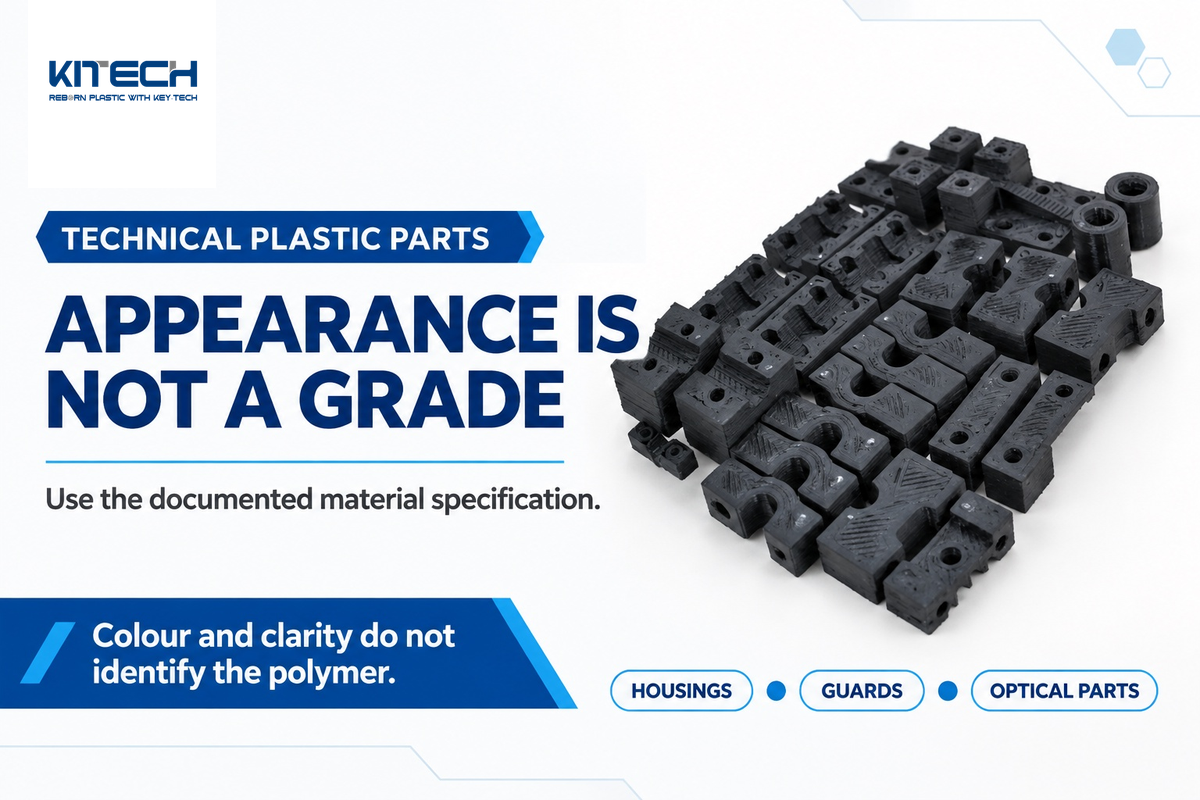
Choices for technical plastics are dictated by application. Electrical housings, transparent panels and vehicle lighting components are primary examples. In housings, examples include ABS or PC/ABS; PC and PMMA appear in other technical components. Transparency and color aren’t decisive.
Covestro’s Bayblend portfolio includes PC/ABS and PC/ASA blends which are applicable across various market segments like appliances, automotive, and electronics. The resin family gives an initial material description; the grade and formulation describe the product in further detail.
Makrolon polycarbonate applications include automotive headlamps and architectural glazing. Meanwhile, the PLEXIGLAS manufacturer page identifies PMMA applications in product displays, signage, lighting and car taillight covers. These are concrete examples of plastic components doing optical or structural jobs, rather than one material replacing all transparent products.
The Canadian Conservation Institute lists PMMA signs and PC panels among some familiar plastic objects. A clear panel removed from a machine should be described by its documented material and grade before it’s replaced. A black plastic electronic housing also requires its own formulation record. Pigmentation and other additives are part of the material.
Gears, bearings and aerospace parts: engineering plastics
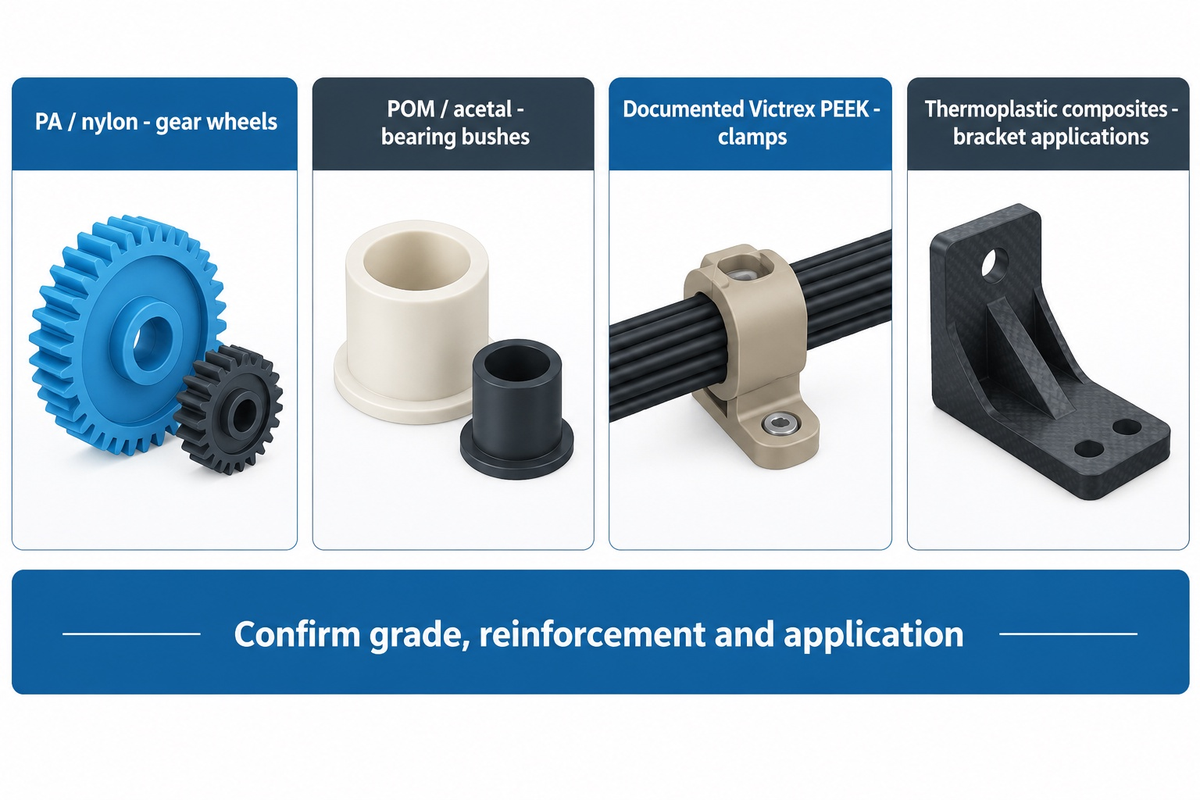
Engineering plastics include those where material is chosen based on wear, load or the operating environment. Nylon gear wheels, acetal bearing bushes and aerospace clamps made of documented PEEK are examples.
Applications of nylon from Ensinger include bearings, bushings, and chain guides as well as gear wheels. Their discussion of material notes that the absorption of moisture varies with type of polyamide and can affect dimensions. A gear example becomes more informative if the type of nylon and working conditions are mentioned.
Ensinger lists POM for sliding applications, e.g. bearing bushes, rollers, and slide rails. Their unfilled and modified grades include a POM GF25 example with 25% glass filling. This example, as mentioned, belongs to the named material and isn’t a property of all Acetal parts.
A few Victrex aerospace examples include injection-moulded PEEK clamps and thermoplastic-composite bracket applications. Reinforced composite plastic structures combine a polymer matrix with fibres. The construction differs from an unfilled moulded plastic part and affects both manufacturing and scrap handling.
A Boeing patent on curved thermoplastic composite parts details a process to make laminates. More recently, Victrex described the Daher thermoplastic wing-rib development for future aircraft. Development and named applications should retain their manufacturer and project context.
NASA’s review of thermoplastic composites describes some development work done on them for use in aircraft structures. Known grade offcuts in plastic production and machining plastic parts retain information that a load of mixed-grade scrap may lack. CompositesWorld’s interview with Spiral RTC gives an example of scrap from thermoplastic-composite manufacturing and evaluation for new applications. The length of the fibers and the destination material are relevant.
Why do similar plastic products need different recycling routes?
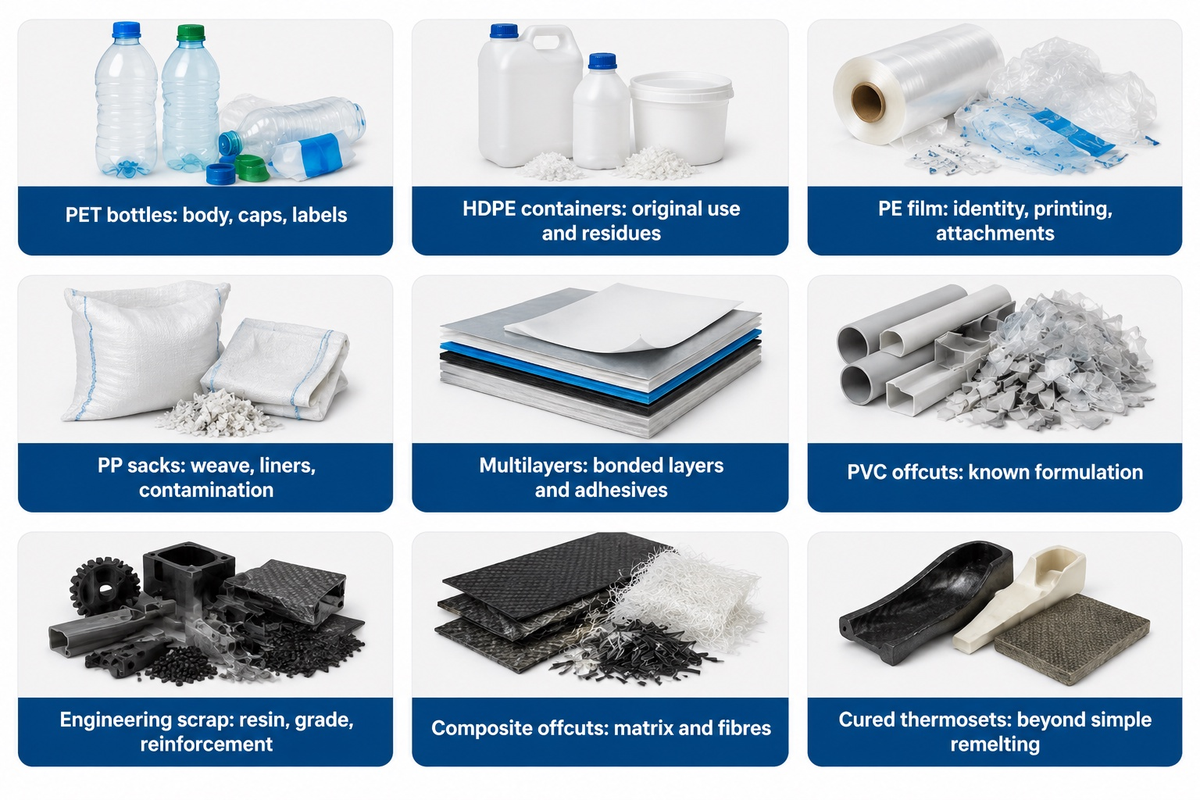
Considerations for route assignment in plastics recycling include the type of material, shape of the product, formulation, and level of contamination. Sometimes, materials looking alike may contain different polymers. Similarly, materials belonging to the same resin category may have different layers, fillers and/or attachments. The distinctions among them are kept in view in the Scrap Separation Branch Guide before a plant or supplier chooses the desired option.
| Incoming example | Separate or record | Next decision |
|---|---|---|
| PET drink bottles | Bottle body, caps and labels | Bottle preparation and washing scope |
| HDPE containers | Resin, original use and residues | Rigid-container stream requirements |
| PE packaging film | Film identity, printing and attached materials | Flexible-feed handling, washing and drying |
| PP woven sacks | Woven structure, liners and contamination | Sack-specific preparation scope |
| Multilayer packaging | Bonded layers and adhesives | Compatibility with the intended recovery route |
| PVC profile offcuts | Known formulation and attached materials | A separate identified PVC stream |
| Engineering moulding scrap | Exact resin, grade and reinforcement | Material-specific reprocessing assessment |
| Thermoplastic composite offcuts | Matrix polymer, fibres and construction | Specialist recovery and destination requirements |
| Cured epoxy or melamine products | Thermoset identity | A route beyond simple remelting |
Precisely describing plastic items is one easy way to support collection programs that aim to reduce plastic pollution. A plant manager may use the first column to describe an incoming plastic waste load. Quality staff fill in details of the resin, grade and contamination. Procurement staff then evaluate an equipment offer versus that described stream, affording finance staff a clearer definition of the process to cost.
Which plastic cannot be recycled?
Cured thermosets can’t be reprocessed via ordinary melt reprocessing like thermoplastics, and no one resin identification label determines if a cured thermoset can be recycled (reprocessed) in all locations. Collection systems and processors have specific materials and product forms that they accept. For an actual item, the accepted specification determines the available route.
ASTM D7611/D7611M-26 distinguishes resin identification from a recycling guarantee. The EPA’s guidance also sends readers to their local recycling program and treats bags and films separately from typical household bin materials. Recyclability concerns the finished product and available recovery process; an unqualified non-recyclable plastic label gives less information than a processor’s accepted-material specification.
How do product examples help select recycling equipment?
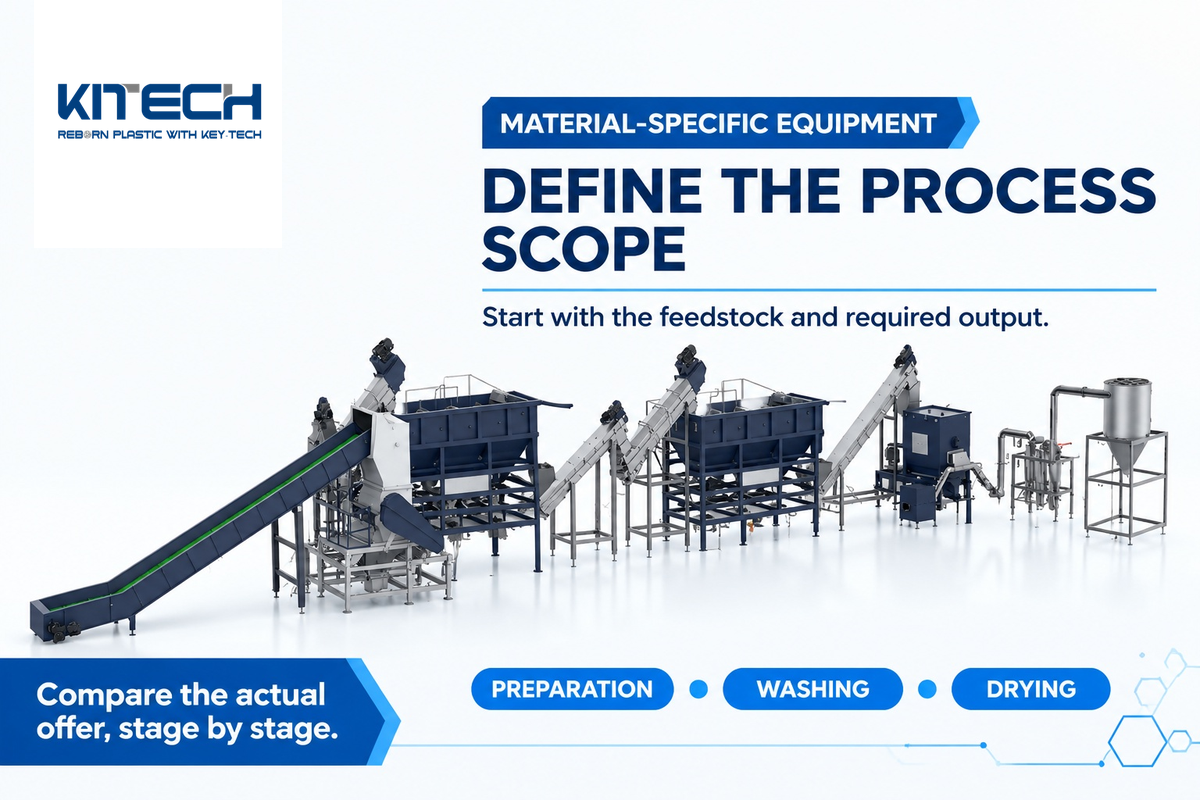
Product examples illustrate possible feedstocks for a recycling line: rigid bottles, loose films, woven sacks, or a defined engineering-plastic stream. Kitech has available systems for both bottle and film preparation. Defining the scope of a material-specific system starts with the incoming material and ends with the desired output; a generic machine description doesn’t give the full process.
A PET bottle system may include bottle preparation, label separation, washing and drying. In contrast, the washing and drying processes of PE films require contamination removal. Kitech describes the above process steps in detail on its bottle preparation and washing stages and handling and drying for flexible-film feedstock pages.
Costs correlate with that process scope. A clean production film stream and a contaminated collected film stream are different projects. Likewise, a basic bottle preparation line and a system with additional separation or a demanding output requirement are different projects. Look at throughput, starting material and finished form in combination with process stages.
Who supplies recycling equipment for PET bottles and PE packaging film?
Kitech offers washing systems for PET bottles and PE film, which include different preparation and washing stages for those feedstocks. A washing line which produces prepared material may be distinguished from equipment that also includes extrusion and pelletizing. Project requirements dictate the best comparison.
A project discussion may begin by providing material photos of representative examples, expected throughput, grade, contamination details and finished form. Start with selection of a recycling line based on the material and then evaluate if the described rigid plastic, film or bottle system meets your requirements.
Frequently Asked Questions
What do the numbers on plastic mean?
Numbers in resin identification codes name material categories, such as PET, HDPE or PP.
They help describe the plastic used in an article, but don’t guarantee local collection or a suitable recycling process. An item’s shape, layers, attachments and the receiving program’s rules still matter when deciding where it belongs.
What is injection moulding?
Injection moulding forms a part by introducing material into a mould and allowing the shaped part to set.
Many thermoplastic housings and closures are made this way. The process name describes how a product is formed; it doesn’t identify its polymer, additives or grade. Those require the part’s material specification.
Plastics are made from what?
Plastics are built around polymers, often combined with pigments, fillers and other additives.
A polymer contains repeated molecular building units. Its chemistry and formulation help determine the material’s properties. The origin of a feedstock and the finished product’s recycling route are separate questions, so a material description should identify more than its general origin.
Are a plastic bottle and its cap made from the same material?
A bottle body and its cap can use different plastics.
PET bottles and PP closures are representative examples of different component materials. Identify the actual body and closure specifications before treating a collected package as one resin or choosing a recycling route.
What are all the plastic fabrics?
Polyester and nylon are familiar synthetic polymer fibres used in textiles.
They can appear in clothing, furnishings, ropes and nets, while a finished textile may combine several fibres, coatings or attached materials. NOAA identifies polyester and nylon among synthetic materials associated with plastic microfibres. A fibre label helps identify the material, while garment or fabric construction remains relevant to its reuse or recovery route.
Are all clear plastic products made from acrylic?
Clear plastic products can use several materials, including PET, polycarbonate and acrylic.
Transparent appearance doesn’t distinguish these polymers. Product markings, manufacturing records or a material specification provide more useful identification than clarity alone, especially when replacing or separating a technical component.
Can plastic film use the same recycling equipment as rigid containers?
Not necessarily: film and rigid containers can require different feeding, size-reduction, washing and drying arrangements.
A line’s suitability depends on the actual material and process scope. Kitech presents separate bottle and film systems because those feedstocks place different demands on preparation and handling.
Connecting plastic products with recycling machinery
Kitech designs and supplies equipment for preparing, washing and pelletizing plastic materials. This article uses public authority and manufacturer sources to explain product examples, including engineering and aerospace applications. Those examples provide material context for understanding scrap streams; equipment selection starts with the particular material, formulation and output required by the project.
Related Articles
References & Sources
- NIH: Plastic Resin Codes representative common products.
- NIST: How recycling facilities sort plastics polymer identity and formulation.
- Canadian Conservation Institute: Caring for plastics and rubbers product examples and material families.
- ASTM D7611/D7611M resin identification scope.
- EPA: Common recyclables collection guidance.
- NOAA: Synthetic textile materials
- NASA: Advances in Thermoplastic Composites
- Plastics Europe: PVC applications
- CompositesWorld: Thermoplastic-composite recycling