Get in touch with Kitech Company


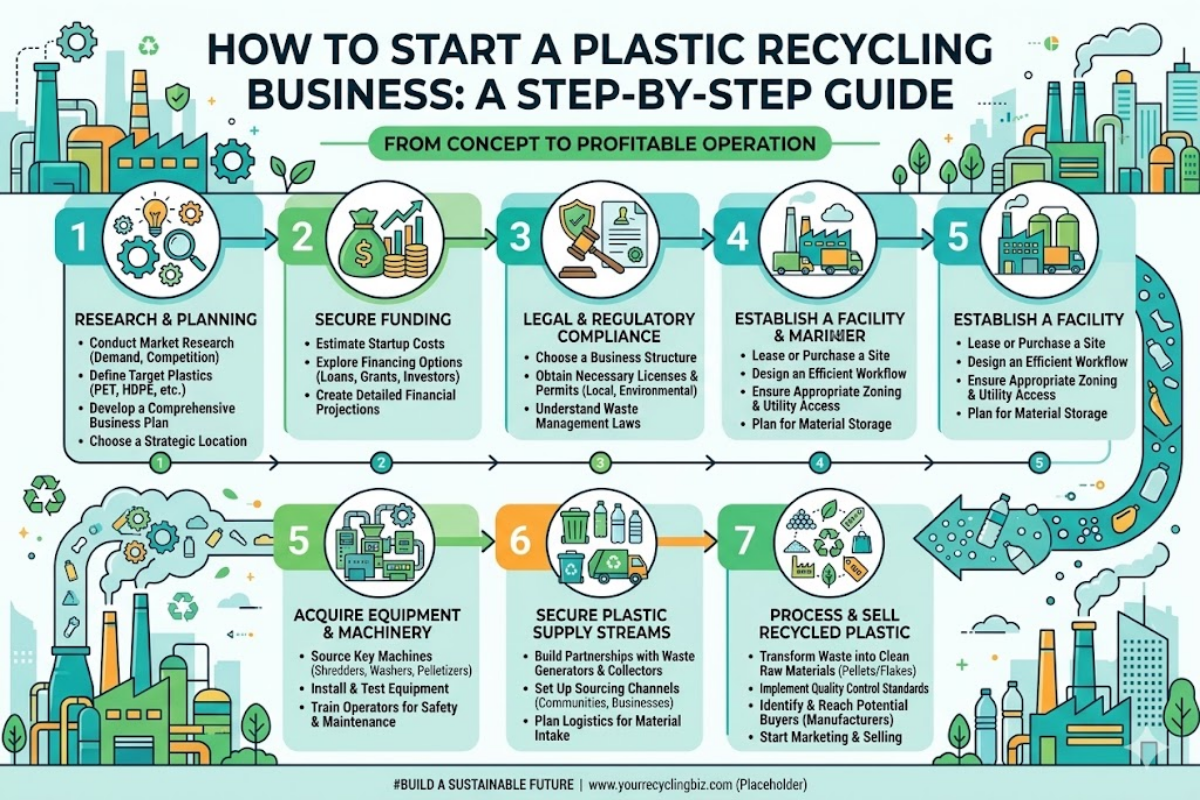
How to Start a Plastic Recycling Business — From Feedstock to First Sale
The market produces about 400 million tons of plastic waste annually and less than 9% of this portion is seen to be recycled, this is according to the OECD Global Plastics Outlook. This characterization of market demand gives the scope of business opportunities available in this gap between waste disposal and reprocessing in the market. For anyone planning to start recycling, the major obstacle is not demand as the world’s producers are inflating their pellet prices as virgin resin supply chains are unpredictable. What constrains the business is the knowledge of the place, order and time to start your first shredder.
This guide addresses the end-to-end process of selecting a feedstock and writing a business plan, choosing the appropriate recycling machines, starting an operation and avoiding shut-down mistakes during the first year of recycling. The cost figures and ranges cited below are extracted from accessible industry reports, data from EPA and from the team with 25+ years in the field of building turnkey plastic recycling lines at KITECH.
Why Plastic Recycling Is a Growing Business Opportunity
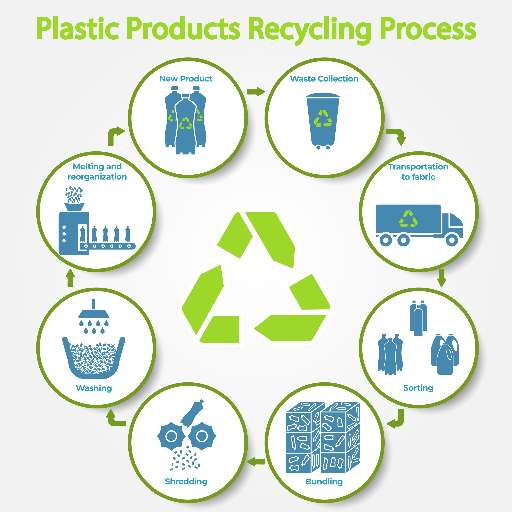
Plastic recycling is a business venture responding to a justifiable shortage of supply rather than a nonprofit concept. The American plastic recycling rate is estimated to be about 13% according to data from the U.S. EPA and each year, 87% of postconsumer plastic waste goes to incineration or landfill. Besides, packaging manufacturers and brand owners have statutorily mandated recycled content goals to achieve- for instance, the EU mandates 30% recycled content in PET bottles by 2030 and all recycled content targets in California are similar.
400M+
Tonnes of plastic waste generated per year (OECD)
<9%
Global recycling rate (OECD Global Plastics Outlook)
20–40%
Typical gross margin on common recycled plastics
This regulatory trend coupled with tight supply conditions of natural HDPE bales had guaranteed that the cost of recycled pellet remains steady even when virgin resin prices fell. A startup venturing into the recycling business will consequently have low revenue risk in the first two years of business.
💡 Pro Tip
Before making a capital investment, analyze your local waste management infrastructure. Areas with poorly developed municipal recycling systems are rife with affordable, high-volume feedstocks and little competition from established recyclers.
Pick Your Feedstock — Which Types of Plastic Waste to Recycle

Variations in the process of plastic recycling needs to be considered in the design of equipment configuration, operating costs and final market selling price. Your choice of feedstock should be based on three factors: its local availability, pellet value and complexity of processing. Fail to align these three parameters with the realities of your chosen market and you may be on a fast lane to operating capital depletion.
| Polymer Type | Common Sources | Supply Availability | Processing Difficulty | Pellet Value |
|---|---|---|---|---|
| HDPE | Bottles, crates, pipes | High (municipal collection) | Low–Medium | High |
| LDPE / LLDPE | Film, agricultural drip tape, bags | High (ag + industrial) | Medium (moisture, dirt) | Medium–High |
| PP | Packaging, caps, auto parts | Medium | Low | Medium |
| PET | Bottles, thermoforms | High (bottle deposit systems) | Medium (IV retention) | High |
Lower density PE film such as stretchwrap, greenhouse covers and drip tape has a regular high demand among available supplies. Agricultural drip tape constitutes large volumes of plastic waste from farms per season and as soil contamination is a factor for recyclers, most of this waste currently ends up in landfills. If it is in your vicinity, it can serve as a competitive advantage for your operations over inflexible recycling producers.
⚠️ Important
Never mix the same polymer type during a run. 2-3% contamination of a different polymer (e.g. PP caps in an HDPE stream) can have a negative impact on the pellet quality, melt flow index and therefore will cost you 30-50% of your final sale value. Do a first sort, then recycle.
Write a Business Plan and Secure Funding
The more detailed a business plan is, the better. It isn’t just a matter of tradition, it makes you realize on a monthly basis how you are going to get your cash flow, where you’re going to spend it and, as critically, when it will run out. Most recycling businesses that get into trouble collapse because they bank on a false break-even point; it’s not the lack of demand that sinks them but the fact that they’d badly miscalculated the time lag between equipment being installed and the first receipts.
That can be anything from 3 to 6 months and every day of it costs money.
What Your Business Plan Should Cover
- ✔
Feedstock sourcing plan — identify at least 3 suppliers and get pricing commitments before you buy equipment - ✔
Equipment specifications — match throughput capacity to your realistic daily feedstock volume (not your dream volume) - ✔
Startup capital breakdown — machinery, facility lease, permits, insurance, 6-month operating buffer - ✔
Revenue projections — conservative pellet pricing strategy with at least two confirmed buyer contacts - ✔
Cash flow timeline — monthly projections for 24 months, marking the breakeven point clearly
Startup Cost Ranges by Scale
| Scale | Throughput | Equipment Investment | Total Startup Budget |
|---|---|---|---|
| Small-scale | 100–200 kg/h | $80,000–$150,000 | $150,000–$300,000 |
| Medium | 300–500 kg/h | $200,000–$400,000 | $400,000–$700,000 |
| Large | 500–1,000 kg/h | $400,000–$800,000 | $800,000–$1,500,000 |
The above cost summary accounts for the entire manufacturing line (from shredder to pelletizer), includes all facility set up, wiring, and a 6-month operating buffer. For funding, consider these sources: equipment financing lenders, SBA 504 loans (which cover machinery and real estate), and state level recycling infrastructure grants. Several states have established grant programs for recycling plant construction in response to EPA’s National Recycling Goal.
Get Permits and Set Up Your Facility
Permits are the quiet timeline killer for new recycling plants. While most founders plan for 2-4 weeks of regulatory approval wait time, it will actually be 3-6 months. Get a permit before you’ve bought your equipment, not after.
Permits Typically Required
- Business registration – a normal registration with your city or county ( $50-$500)
- Waste handler / recycler permit – which is required in most states in the U.S., and varies by jurisdiction ($500-$5,000)
- Environmental / air quality permit – for the emissions coming from the pelletizing machine. State EPA issues these ($1,000-$10,000)
- Stormwater discharge permit – refers to when your washing line uses water & discharges to storm drains
- Zoning approval – Ensure your selected site is located within the industrial-zoned area and used to house the processing of waste
- Fire marshal inspection – plastic storage is a fire risk, and storage and suppression needs to be compliant.
Facility size depends on throughput. For a small plant processing 100-200 kg/h, a facility of 5,000-10,000 sq ft is typical: 60% for the recycling line, 20% for raw material storage, 20% for finished pellet storage and shipping. Budget $2,000-$10,000 total to cover all permits, and allow 3-6 months between first application and approval.
💡 Pro Tip
Make an early appointment with your state environmental protection agency for a pre-application meeting. These are generally no-charge meetings and the reviewing officer will tell you which permits are actually necessary for your operation—saving you time, money and reapplication.
Select the Right Plastic Recycling Equipment

Your recycling equipment choices are central to the whole operation. Picking the wrong machines is the most costly mistake a beginning recycler can make. A typical plastic recycling line consists of five to seven machines connected in a series: shredder, crusher, rinsing system, dryer, extruder (pelletizer), pellet cooling, and packaging.
Core Equipment and Functions
| Machine | Function | Standalone Cost (est.) |
|---|---|---|
| Single-shaft shredder | Reduces bales or loose plastic waste to 20–50mm pieces | $15,000–$60,000 |
| Crusher / granulator | Further reduces shredded material to uniform flake size (8–12mm) | $10,000–$40,000 |
| Friction washer + float-sink tank | Removes soil, labels, and contaminants; separates by density | $30,000–$120,000 |
| Centrifugal dryer | Removes moisture from washed flake to below 3% | $8,000–$25,000 |
| Pelletizer (extruder + die face cutter) | Melts flake and pelletizes into uniform pellets | $40,000–$150,000 |
| Melt filtration system | Filters contaminants from molten polymer during pelletizing | $5,000–$30,000 |
Purchasing the individual machines from three different machine vendors by parts could be 15-25% more expensive than purchasing a turnkey recycling line from one manufacturer. In addition, the entire production line arrives pre-wired and pre-tested, which reduces commissioning time from 6-8 weeks to 2-3 weeks. The corresponding disadvantage is less ability to mix the best components by various manufacturer.
From our experience designing recycling lines for more than 300 clients spanning more than 50+ countries, the single biggest equipment mistake is oversizing the equipment to the amount of feedstock you have available to process. Running a 500 kg/h line at 40% utilization is more costly-per kg-than running a 200 kg/h line at 85% utilization.
— KITECH Engineering Team, 25+ years in plastics machinery
With PE film and agricultural drip tape recycling specifically, the washing stage is where the process line is earning or costing you money. Soil-contaminated film requires multi-stage filtration agitation, water rinsing, and a high-rate centrifugal dryer. KITECH’s drip tape recycling line, for example, incorporates a self-cleaning laser filter in the pelletizing stage to make the high contamination levels of field-collected irrigation tape manageable. That single component eliminates the need for expensive screen changes and keeps automation running with less labor – operating cost savings that really pay off when scaled across thousands of hours of operation.
Equipment Selection Factors
- Scale your line to your proven daily feedstock volume
- Evaluate energy use rate/kWh per kg of output, one of your single largest ongoing operating expenses
- Ask for references for clients processing the same polymer type with the same level of soil contamination.
- Verify the manufacturer offers installation, operator training, and spare part support.
Launch Operations and Find Buyers for Recycled Pellets
Producing pellets is only half of the recycling equation – marketing and capturing a worthwhile price point is the other half. Before running your first batch, you should already have at least two confirmed buyer relationships. Demand for recycled plastic is strong, but buyers pay based on pellet quality, and quality depends on process control.
Pellet Quality Grading
Recycled pellets are graded by color uniformity, melt flow index (MFI), and contaminant presence. Matching up your quality to that price point directly affects your profit per pound:
| Grade | Characteristics | Typical Buyers | Price vs. Virgin |
|---|---|---|---|
| A (Prime) | Natural color, consistent MFI, <50 ppm contaminants | Injection molders, film extruders | 80–95% of virgin |
| B (Standard) | Mixed color, acceptable MFI range, <200 ppm | Pipe makers, non-critical products | 60–80% of virgin |
| C (Off-spec) | Dark/mixed, variable MFI, >200 ppm | Construction products, lumber alternatives | 40–60% of virgin |
Revenue difference between a Grade A and a Grade C pellet can be as much as $0.15-$0.25 per lb in revenue ($3000-$5000 per month on a 300 kg/h line), so investing early in filtration and quality control during the pelletizing stage definitely pays for itself in the long run.
Where to Find Buyers
- Sell directly to manufacturers – plastic products companies using processed plastic offer the highest margins, but require consistent quality and volume commitments.
- Work with resin brokers and traders – they handle logistics and buyer matching for a commission, giving you faster cash flow and less labor on sales.
- Tap export markets – Southeast Asian and South American manufacturer demand remains strong, although Basel Convention export compliance does involve some additional paperwork.
- List on online marketplaces – platforms like RecycleInMe and Plasticker connect recyclers with global buyers.
💡 Pro Tip
Negotiate off-take agreements for your pellets before your line is even installed, a letter of intent from a pellet buyer makes it much easier to secure funding and gives you a guaranteed floor price for your first 6-12 months of operation.
Mistakes That Sink New Plastic Recycling Businesses
How do you start a plastic recycling business that makes it through its first year? In a word, dodge the killers. The recycling business has an abnormally high failure rate among first-timers. Not because the economics are bad, but because operational errors erode profits until they’re negative. The top five:
- They buy equipment before agreeing on feedstock input. An output line of 500kg/h is useless if your supply is 200kg/h. Run your plant over 80% utilization or cost per kg of output will be uncompetitive. Sign supply contracts before buying machines.
- They ignore contamination economics. Heavily contaminated material has a lower purchase price but costs more to process. Moisture, dirt, and mixed polymers cut your yield from 82% to 50-60%. Always weigh possible cost reduction of feedstock against additional wear parts, energy, and water needed to clean it.
- They skip the 6-month cash reserve. Equipment installation, setup, and licensing delays mean you’ll burn through 3-6 months of cash before selling a pound of product. Industry veterans recommend holding $50,000-$100,000 in working capital after your equipment and facilities budget.
- Treating quality control as optional. Buyers test your pellets. One off-spec shipment can end a relationship permanently. Invest in an MFI tester ($3,000–$8,000) and run batch quality checks from day one. Consistent quality is what turns a one-time buyer into a long-term contract.
- They underestimate the costs of environmental compliance. Plastic recycling discharges wastewater, VOC exhaust, and solid waste (non-recyclable rejects). Neglecting to plan for drainage permits and waste disposal risks EPA intervention that can close your recycling plant entirely.
Successful plastic recycling hinges on unglamorous basics: dependable feedstock, appropriately-sized machinery, careful quality standards, and enough cash to sustain the startup stage. The glamour – quadrupling scale, blending more polymers, finding new markets – comes after you master the basics.
FAQ — Starting a Plastic Recycling Business
Can I make money from recycling plastic?
View Answer
Yes. Recycled pellets fetch 60-95% of virgin resin prices. Gross margins of 20-40% are common on HDPE and LDPE when feedstock cost, energy rates, and pellet quality are tightly managed.
Which type of plastic recycling is most profitable?
View Answer
HDPE and PET normally deliver the highest margins because of strong buyer demand and established collection systems. LDPE film recycling (including agricultural film and drip tape) can also be highly profitable due to low feedstock costs in farming regions where waste collection infrastructure is weak. Local supply is the key factor – the most profitable polymer is the one you can source cheaply and consistently in your area.
How much does it cost to start a plastic recycling business?
View Answer
A small-scale operation (100-200 kg/h output) usually needs $150,000-$300,000 in total startup capital, including recycling equipment, facility lease, permits, and a 6-month operating buffer. Medium-scale plants (300-500 kg/h) run $400,000-$700,000. Equipment alone accounts for roughly 50-60% of the total budget.
What equipment do I need for a small-scale plastic recycling plant?
View Answer
You need at minimum a shredder, a crusher or granulator, a washing system (friction washer plus rinse tank), a centrifugal dryer, and a pelletizer (extruder with die face cutter). For film recycling, add a float-sink separation tank and a melt filtration system. A forklift and bale breaker are needed for material handling. Many recyclers start with a turnkey recycling line from a single manufacturer to reduce installation complexity.
How do I find buyers for recycled plastic pellets?
View Answer
Start by contacting local plastic product manufacturers directly – injection molders, film extruders, and pipe makers within 200 miles of your plant. Resin brokers can help match producers and buyers and organize transportation on commission. Other useful channels include B2B platforms such as RecycleInMe, Plasticker, or attending industry trade shows such as NPE or the Plastics Recycling Conference to establish relations with potential buyers. Secure at least one off-take agreement prior to commissioning production.
Do I need a license to recycle plastic?
View Answer
Yes – most U.S. states require a waste handler or recycler permit plus a standard business license. Pelletizing equipment triggers air quality permits, and washing lines need stormwater discharge permits. Requirements vary by state, so contact your state environmental agency early. Budget $2,000-$10,000 for permits and allow 3-6 months for approvals.
Are you ready to start designing your recycling line? Contact KITECH now for a custom equipment quote!
About This Guide
This is an informational publication from the KITECH technical content team, based on 25+ years of manufacturing plastic recycling equipment for customers in over 50 countries. The startup cost ranges, equipment pricing, and operational data referenced here reflect market conditions as of 2025-2026. We manufacture plastic recycling equipment for agricultural film and other PE waste streams – where relevant, we have noted how our products address specific recycling challenges.
References & Sources
- Global Plastics Outlook — Organisation for Economic Co-operation and Development (OECD)
- Plastics: Material-Specific Data — U.S. Environmental Protection Agency (EPA)
- U.S. National Recycling Goal — U.S. Environmental Protection Agency (EPA)
- Plastic Pollution — United Nations Environment Programme (UNEP)
- Platts US Recycled HDPE Price Assessments — S&P Global Commodity Insights