Get in touch with Kitech Company


Updated October 2026
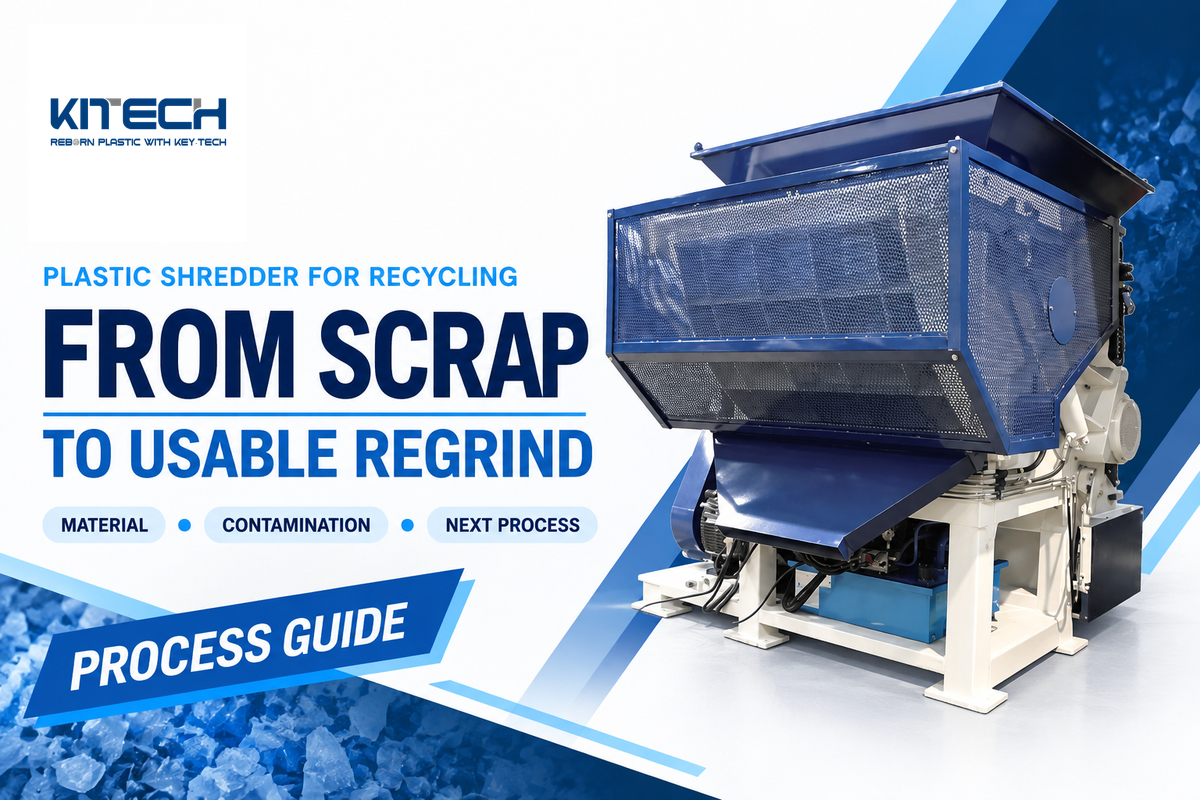
A plastic shredder for recycling cuts bulky scrap into pieces that a recycling line can handle. The pieces still need to have the right composition, cleanliness, and shape for their next use. A drum becoming smaller is easy to see; whether the shredded material can become a useful product requires a closer look.
When planning a size reduction and/or size separation system, think about the end product. Is it a feedstock for an extruder? Regrind for a molding process? Is it washed flakes? Whatever the case may be, work backwards. For PP and PE rigid scrap, film and production lumps, recycling plastics successfully starts with an outlet for the recovered material.
Before choosing the machine
Identify the polymer and previous contents, describe the largest feed pieces, and define the next process’s accepted material. Throughput is useful only when the discharged material remains usable at that stage.
What a Plastic Shredder Does in Recycling
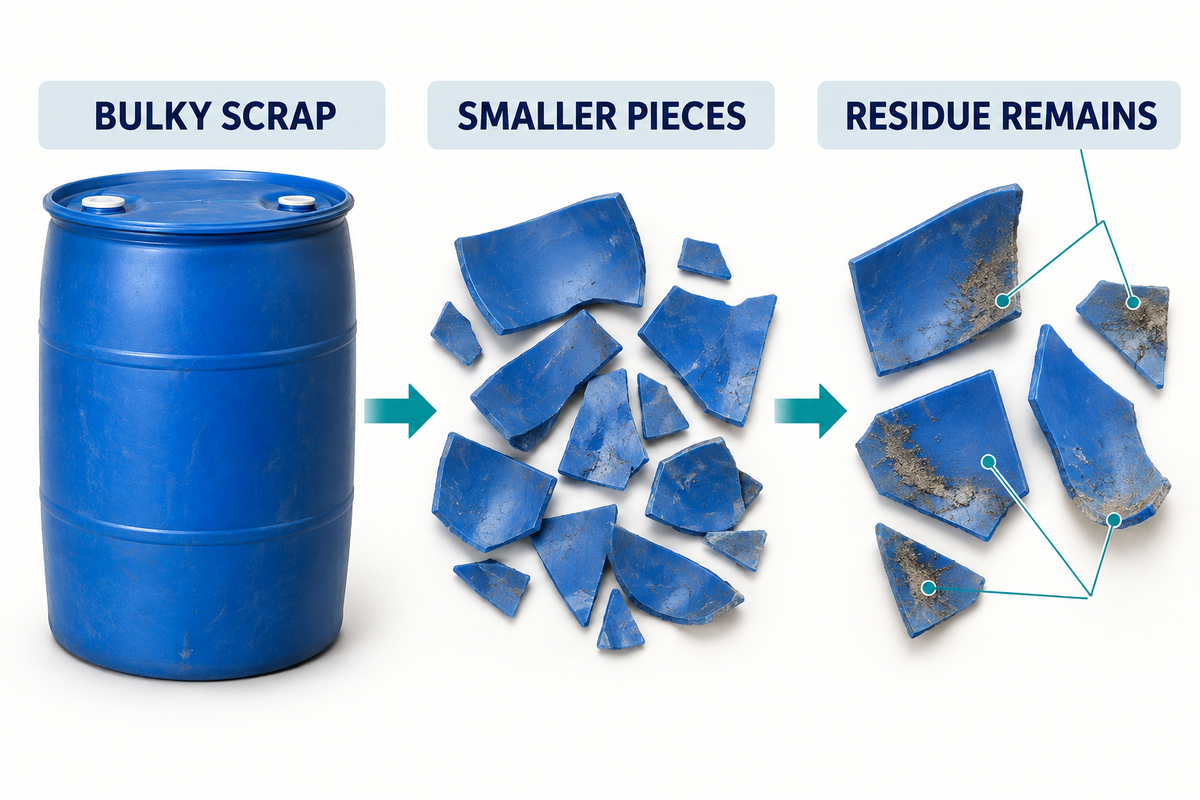
Shredding plastic is a means of size reduction. It can be used to ease conveying and processing bulkier materials. Shredding (or tearing) is accomplished by cutting the feedstock. Extrusion can melt the feed. A shredder performs a different task from each of those operations.
In a typical plastic shredder machine, a driven rotor and cutting tools engage the feed. Some designs use a ram to push the material to the cutters. Where a screen is present, it holds the material in the cutting chamber until it can pass through an opening.
Consider a rigid HDPE barrel. Breaking its shell into manageable pieces can make subsequent wet cutting and washing practical. Labels, caps and residue from the barrel’s previous contents don’t disappear when the shell is cut. The British Plastics Federation’s recycling overview describes washing as a separate operation for removing adhesives, residual contents and other contamination.
For a recycling business, the right question is how much acceptable feed reaches the next machine. A large pile of mixed shreds may reduce waste volume while still leaving costly sorting work. See KITECH’s plastic shredder equipment for machine configurations. The process route below shows where those machines fit.
Shredder, Granulator and Pelletizer: Where Each Fits
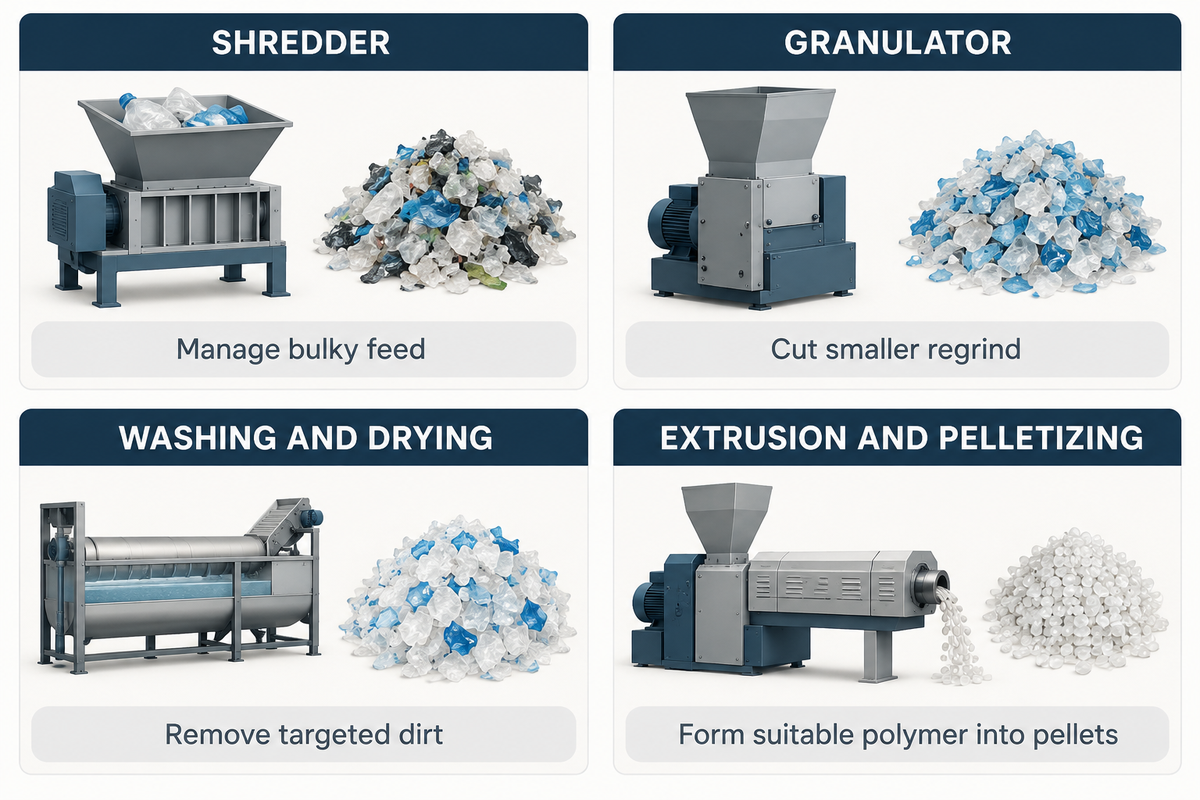
A shredder may be used to process bulky and difficult feed, followed by a granulator to regrind the scrap to smaller size, and a pelletizing system to pelletize the polymer. A line may use all of them. Sometimes production scrap, if clean and manageable, can be directly charged to a properly specified granulator and avoid an extra step.
| Stage | Main task | What still needs attention |
|---|---|---|
| Shredder | Open up bulky pieces and prepare manageable feed | Mixed polymers, residue and broad piece sizes |
| Granulator or crusher | Cut compatible feed into smaller regrind | Fines, longs, contamination and downstream limits |
| Washing and drying | Remove targeted dirt and separate selected fractions | Residual moisture, attached material and co-floating polymers |
| Extrusion and pelletizing | Melt, process and form suitable polymer into pellets | Blend quality, degradation and final application requirements |
Equipment names tend to overlap. A supplier may name a cutting granulator as either a plastic grinder or a crusher. When in doubt, ask what physically goes in and comes out. Is it a large, irregular lump of feed, a screened flake or a pellet? The term “granule” by itself doesn’t help in writing a purchase specification. Instead, determine the functions of various equipment before comparing their names, and then compare equipment of the same function.
In Plastics Technology’s machine-role comparison, Vincent Carpentieri discusses the direct granulation of suitable sprues and runners, as well as the shredding of bulkier scrap. This helps to distinguish between types of injection molding scrap: an actual feeding problem should be solved by the addition of an extra shredder, as opposed to the standard purchase of a shredder regardless of the material.
Compare the single-shaft and dual-shaft arrangements against the same feed and required discharge. A heavy duty label doesn’t answer those questions. The separate shredder versus granulator guide covers the differences in equipment in more detail.
From Plastic Waste to Shreds: The Process
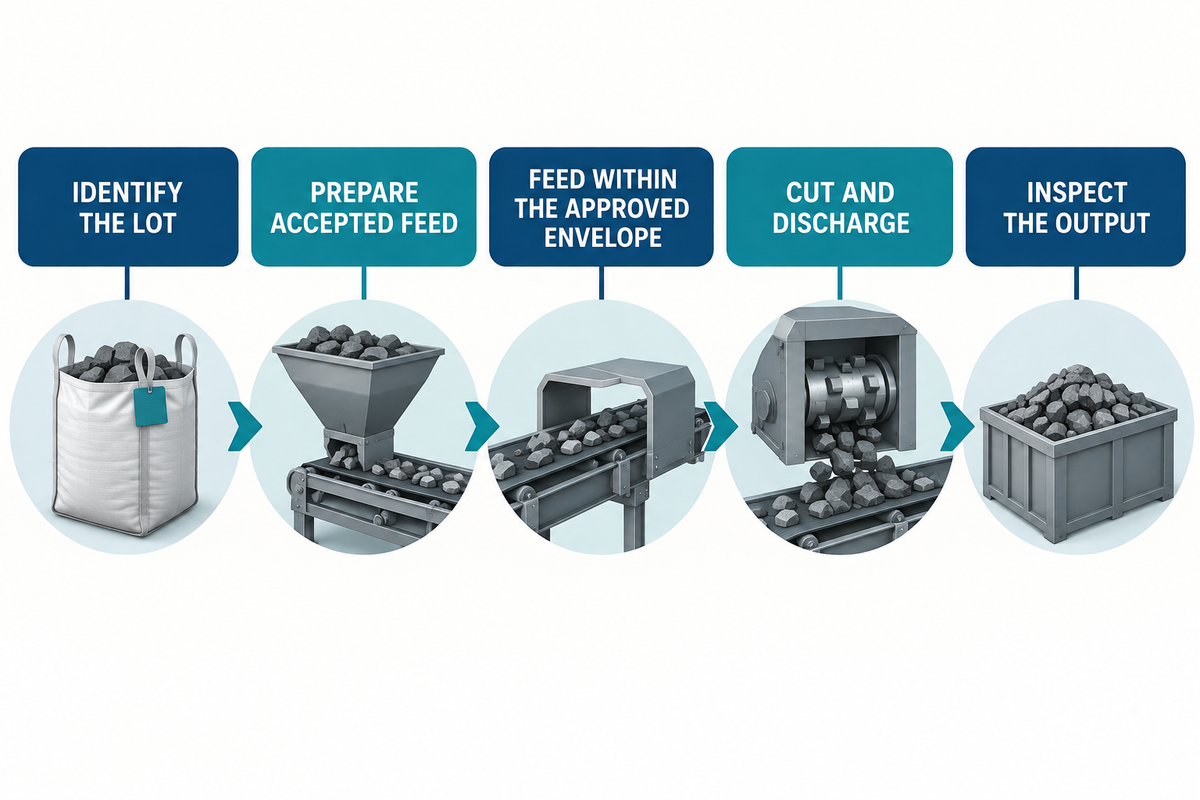
A workable shredding route starts with an identified and accepted feed, continues with controlled feeding and cutting, and ends with an inspection of discharge. This protects the equipment and the scrap being recovered. The order of washing and cutting depends on the type of contaminant and the equipment being used.
How can you shred plastic?
Purpose-built equipment should be used to process plastic according to its form, thickness and contamination level. Identify and sort the material, remove prohibited objects, feed it through the designed loading system and collect the discharge for the next process. Guards and interlocks should remain functional. Isolate the machine using the authorized procedure to remove a blockage. Don’t reach into the hopper.
- Identify the incoming lot. Record polymer, source, previous contents and visible contamination before mixing lots.
- Prepare accepted feed. Remove foreign objects and route unsuitable or regulated material away from ordinary recycling.
- Feed within the approved envelope. Match piece dimensions and loading method to the installed machine.
- Cut and discharge. Keep feeding, cutting and evacuation balanced so material does not accumulate between stages.
- Inspect the output. Check size distribution, composition and suitability for the intended washing or reuse route.
The Association of Plastic Recyclers’ process description places grinding before washing, followed by rinsing, drying and extrusion. Others precede the reduction with washing to get rid of dust and other impurities. These are configured sequences, so copying a diagram without considering dirty feed can lead to grit and other unsuitable materials being fed into the cutting chamber.
Maintain the original lot identity with its output bin. If a batch is producing extreme contamination or odd melt behavior, traceability allows the plant to isolate the batch instead of blending the issue with the good batches. Record the observed shred size with that batch, as opposed to nominal settings on the bins.
How HDPE, PP, Film and Lumps Behave
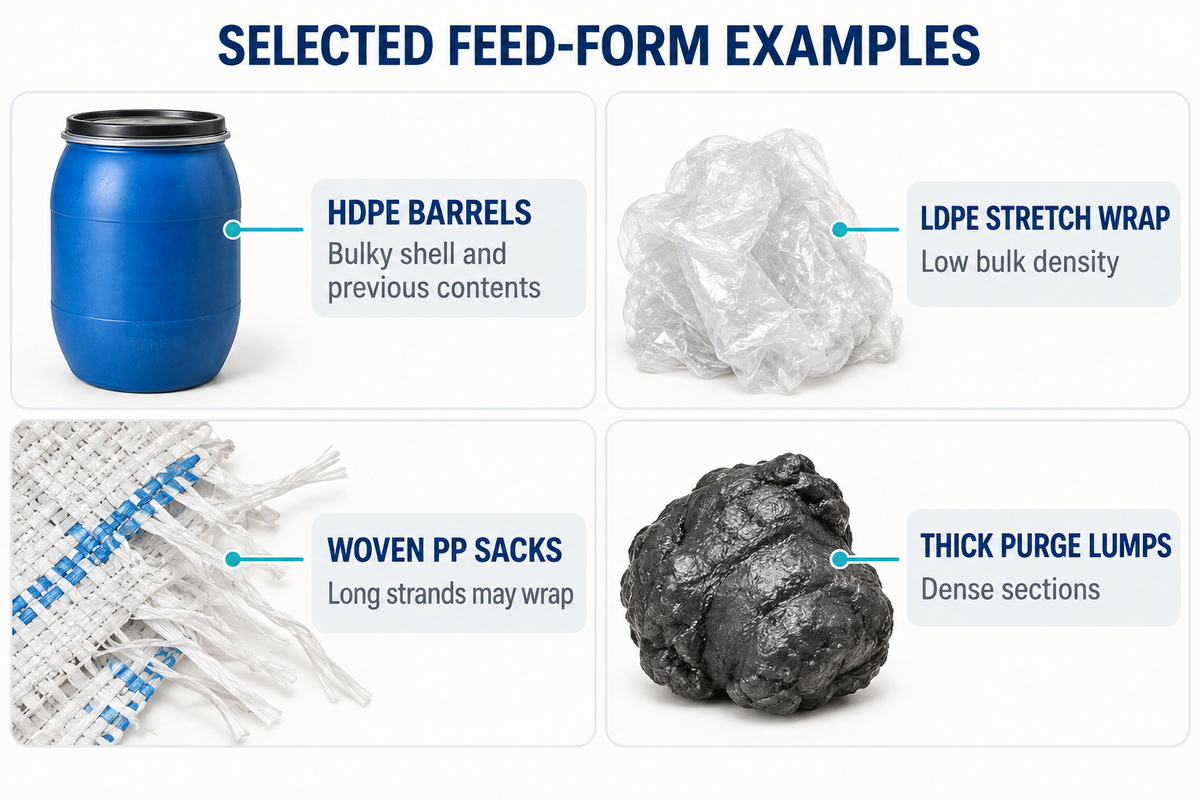
The forms that a polymer takes affect how cutters interact with it. Flexible film and purge can be from the same polymer family as rigid containers, but behave very differently in a hopper. State both the polymer and the object being scrapped. “Polyethylene scrap” is nondescriptive and leaves out info required to pick an optimal route.
| Incoming material | Issue to address | Route to consider |
|---|---|---|
| HDPE barrels | Bulky shell and previous contents | Acceptance check, coarse reduction, configured washing |
| PP crates and baskets | Ribs, handles and attached foreign parts | Remove foreign parts; reduce and clean rigid scrap |
| PE bottle caps | Mixed colors, liners and other cap polymers | Sort composition before defining regrind use |
| PP caps mixed with HDPE | Both may remain in a floating fraction | Polymer sorting and an agreed blend specification |
| LDPE stretch wrap | Low bulk density and variable compaction | Film feeding system with suitable cutting and discharge |
| Woven polypropylene sacks | Long strands may wrap | Evaluate strand handling with representative feed |
| Thick purge lumps | Dense sections and intermittent cutter load | Coarse reduction before further cutting when required |
| Clean sprues and runners | Piece dimensions and resin consistency | Direct granulation where the equipment permits |
| PET bottles | Labels, closures and a different polymer stream | A dedicated PET sorting and washing route |
| Separated PLA print waste | Known resin, additives and reuse destination | A dedicated small-scale recovery route |
| Nylon or polycarbonate scrap | Grade identity and downstream conditioning | Keep separate from commodity PE/PP streams |
| Unknown mixed industrial plastic waste | Uncertain composition and contamination | Characterize and approve before processing |
Film shredding shows that a polymer name isn’t sufficient. In a sponsored technical article, Greg Parent of Vecoplan mentions that stretch wrap can compact to material that the rotor can engage, while woven strands can be difficult to cut and may wrap. His form-specific film discussion is more helpful than assuming that every flexible plastic needs identical feeding equipment.
Keep PET bottles and HDPE containers in their intended sorting routes. Polyethylene terephthalate is a different resin from polyethylene; a wide variety of materials entering one hopper doesn’t result in a broadly reusable blend. PET bottles and packaging made from another resin therefore require a separate acceptance decision. For the machine selection questions raised by these feed types, use the existing plastic shredder selection guide.
What Shredding Leaves in the Plastic
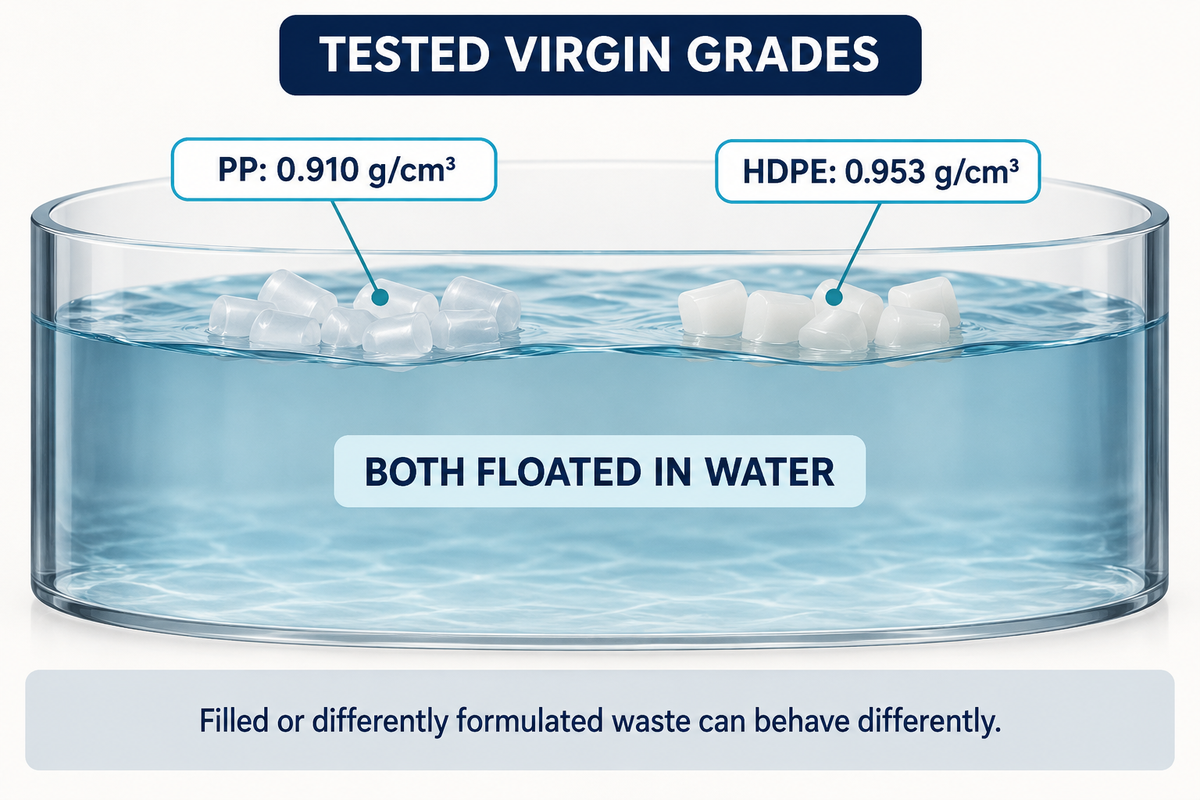
In many cases, cuttings contain a lot of contaminants. Metal removal, washing and separation accomplish different goals and require a specific target. A flake can look clean but still contain the wrong resin. In particular, the floating fraction from a water tank can contain regular HDPE and/or PP.
In a published density-separation experiment, the tested PP grade had a density of 0.910 g/cm³ and the HDPE grade was 0.953 g/cm³. Both floated in water. These measurements are for the experiment’s virgin grades; filled or differently formulated waste can behave differently.
APR’s HDPE packaging design guidance recognizes floating PE and PP components and states that sufficiently filled HDPE can sink. For a buyer interested in an HDPE-rich flake, removing sinking dirt is only part of the job. Polymer sorting and a composition specification are still needed.
Do
- Keep known polymer streams identifiable.
- Separate metal, labels and dirt by their appropriate removal methods.
- Specify acceptable residual contamination with the receiver.
Don’t
- Treat floating material as pure HDPE.
- Blend unidentified scrap into an accepted lot.
- Assume a smaller flake has become chemically clean.
PVC or polyvinyl chloride requires its own acceptance decision as opposed to being casually combined with PE or PP. Regulated contamination can also determine if material recycling is permitted at all. For example, England’s Environment Agency guidance requires that separated materials containing regulated persistent organic pollutants be destroyed. Route unknown or restricted feedstock through the applicable waste management assessment prior to shredding.
From Shredded Pieces to Usable Regrind
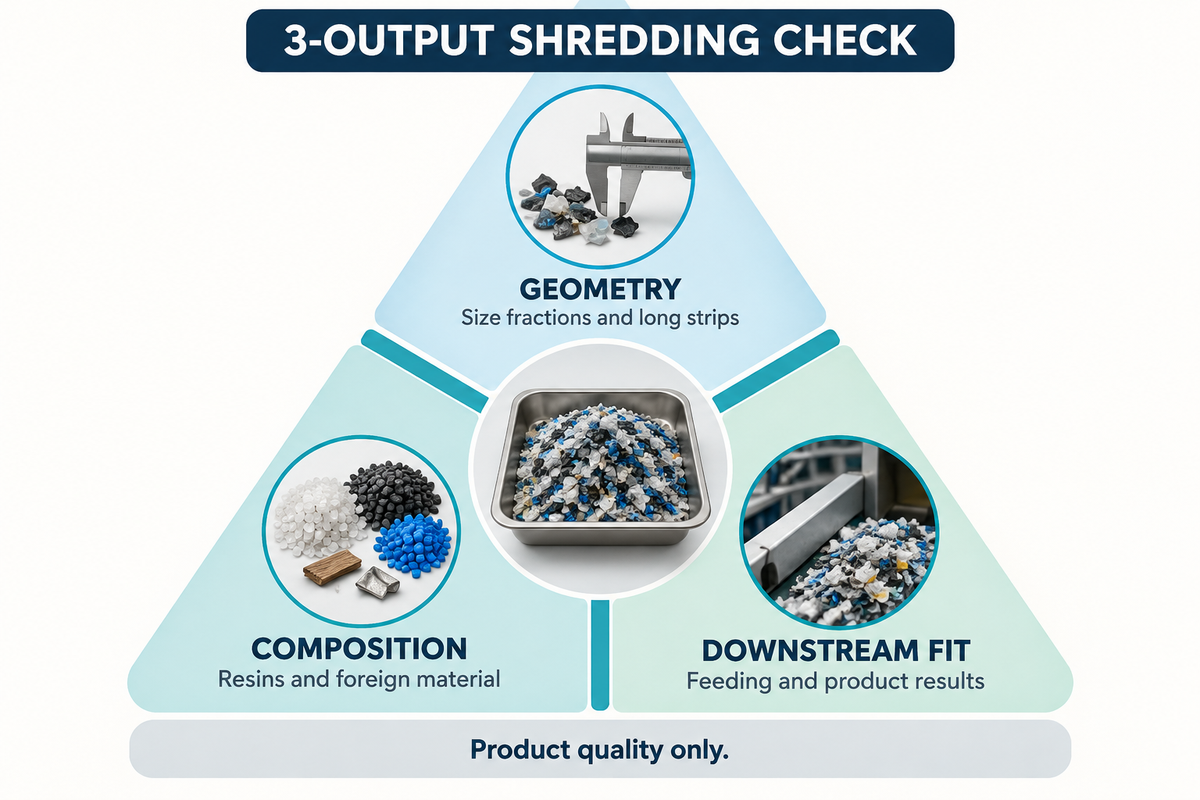
Usable regrind meets the next process’s requirements for geometry and composition and other handling characteristics. Determining if regrind meets specification typically requires an inspection. Inspect a representative discharge sample, measure and assess size fractions and contaminants, and compare to the receiving process specification. Water can increase the apparent mass of the regrind so ensure mass is determined on a consistently dry basis.
3-Output Shredding Check
The 3-Output Shredding Check compares particles’ geometry and composition and downstream fit prior to a shredded batch entering its next process.
This is a check for product quality. For other regulatory and legal requirements (i.e. safety, emissions, and legal waste disposal) their own assessments are required. Use the following to evaluate what needs attention.
| Check | Record from the batch | Decision it informs |
|---|---|---|
| Oversize pieces | Retained mass in the agreed upper size fraction | Further cutting or a changed discharge arrangement |
| Fine fraction | Mass below the receiver’s lower size limit | Fines separation and cutting-condition review |
| Long strips | Shape and longest dimensions alongside sieve results | Whether flakes will bridge or pass downstream equipment |
| Polymer composition | Identified resins and permitted blend | Keep separate, sort again or use an approved application |
| Foreign material | Metal, paper, grit and other visible residues | Targeted separation or washing |
| Moisture | Measured value at the receiving stage | Whether additional drying is needed |
| Bulk handling | Feed stability and apparent bulk density | Hopper, conveyor and dosing compatibility |
| Retained dry mass | Accepted output relative to dry input | Yield and disposal-cost accounting |
| Rejected fractions | Separate masses and destinations | Recovery opportunities and lawful disposal |
| Next-process trial | Feeding and product results against agreed criteria | Release, reprocess or hold the batch |
A 2023 bottle-cap recycling study measured flake distributions using 2.0 mm, 4.0 mm, 8.0 mm and 11.2 mm sieves. Those were experimental measurement sizes, not universal acceptance limits. The practical lesson is to measure a distribution instead of reporting only a machine’s screen opening. Detailed aperture choices belong in the screen-size selection guide.
Illustrative dry-mass balance
Assume 1,000 kg of dry incoming scrap, 50 kg removed during presorting and 100 kg rejected later. Retained output is 1,000 − 50 − 100 = 850 kg. The retained fraction is 850 ÷ 1,000 × 100 = 85%.
These assumed values demonstrate accounting, not KITECH performance. If the retained output fails the buyer’s composition requirement, it still can’t be counted as saleable material for that order.
In business, distinguishing disposal costs from recovered-material revenue will benefit purchasing. Operations needs a stable feed. Quality needs an acceptable composition. Finance needs the mass actually released to the chosen outlet. An attractive nominal throughput can’t make up for these.
A real-world application of a circular economy requires recovered plastic materials to replace suitable feed. To reduce plastic sent to landfill, determine a suitable outlet and account for rejects as well as retained product. This makes sustainable waste management a material-routing task, rather than a claim based on the amount of scrap cut.
Plastic Shredding Problems and Their Causes
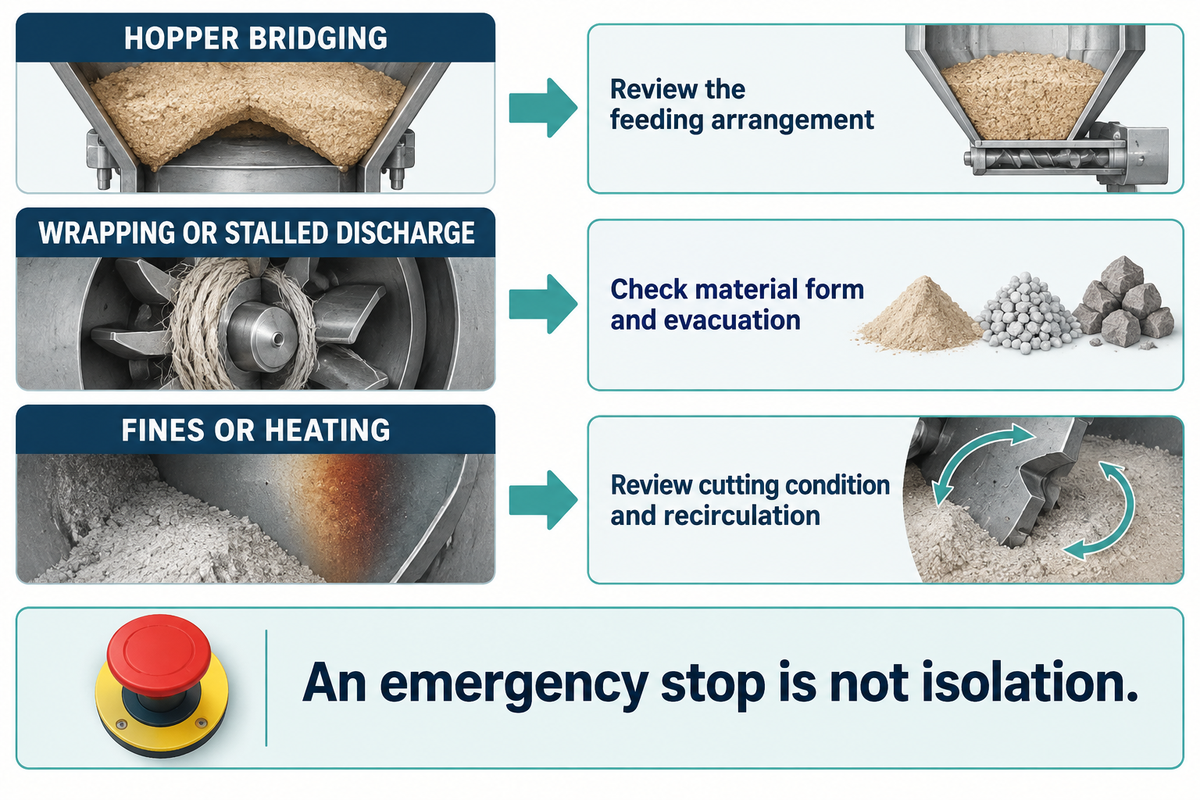
In general, factors resulting in unstable feeding, wrapping, heat and fines can occur due to multiple mechanisms. Therefore, changing a screen or adjusting feed pressure won’t always solve the problem. Compare the condition of the incoming material against the approved duty of the machine. Inspect the cutting condition and discharge through the authorized maintenance procedure. Treat a jam as a controlled situation.
- Hopper bridging: light or awkward pieces may not reach the rotor consistently. Review the feeding arrangement before assuming the motor lacks power.
- Wrapping or stalled discharge: long film strands and an unsuitable evacuation path can interrupt flow. Match the remedy to the actual material form.
- Fines or heating: inspect shredder blades, cutting clearances and recirculation according to the manufacturer’s procedure. Repeated cutting can change output quality.
Fines and Longs are discussed with respect to the geometry of screens and sieves in a 2025 Plastics Technology article by Paige O’Meara of Wittmann. Consistent particle size is a measured outcome, not a reason to continually reduce the screen opening and not check the resulting fractions.
“Push buttons, selector switches and other control circuit type devices are not energy isolating devices.”
For servicing and jam clearing, authorized personnel must follow the appropriate hazardous energy control procedures. An emergency stop isn’t a substitute for isolation. Keep machine guarding intact during normal operation.
Dust also needs its own control plan. Swinnerton and colleagues’ 2024 experiment observed increased airborne particle counts while shredding PET, PP and HDPE. Good retained mass alone therefore can’t establish low airborne emissions; assess capture and worker exposure for the actual installation.
Connecting Shredding to a Washing Line
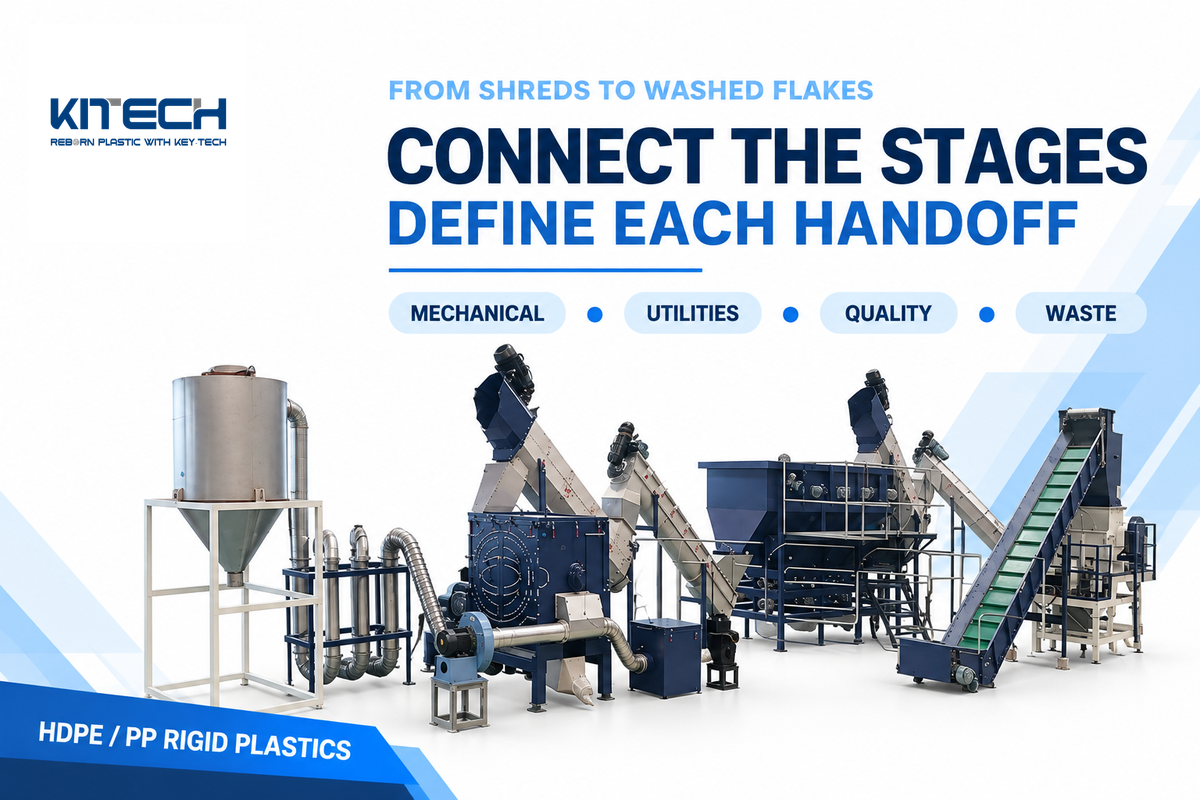
Connect a shredder to washing by agreeing on the material that each stage receives and delivers. Coarse shreds may require further wet cutting, prior to rinsing and drying. While assessing the transport and buffer storage systems, also evaluate water treatment and reject handling, as well as the overall system’s capacity. A restriction at any point can potentially limit useful output from the entire system.
KITECH’s public AGS single-shaft shredder table offers 40-100 mm screen options, while their HDPE/PP rigid washing-system page offers 8-15 mm final flakes. Keep in mind that these values indicate different stages of a process. The complete line includes further processing. The final-flake listing shouldn’t be interpreted as the specification for the primary product discharge of a shredder.
For barrels, crates, baskets and lumps, the relevant line context for KITECH’s HDPE/PP rigid plastic washing system is available in the aforementioned product description. Send the dimensions, composition and previous contents of the feed, as well as the required output destination, so the proposed stages address the same material.
- Mechanical interface: conveying method, discharge height, buffer capacity and access for maintenance.
- Utilities: available electrical supply, water circuit, drainage, drying demand and dust extraction.
- Quality interface: accepted size fractions, polymer composition, contamination and moisture at each handoff.
- Waste interface: captured solids, wastewater particles, filter residues and their approved destinations.
Washing removes contaminants from the product and the removed material needs to be discharged somewhere. In one of the studies by Brown and others (2023), wash water from a UK facility contained microplastics. Also, filtration performance was size dependent. Don’t assume that clean-looking product means discharge water is clean.
What is the price of a shredder machine?
The price is configuration-specific: A standalone machine and an installed shredding-and-washing system have different supply scopes. Compare quotations for the same feed, accepted output, conveying, controls, and commissioning. Include consumables and rejected material handling in your calculation for operating cost. KITECH’s industrial shredder cost guide summarizes the primary cost items.
Check the feed and output acceptance tests based on samples representative of the feed and output agreed upon in the Contract. The recycling equipment trial and acceptance guide provides information on this procedure. For EU projects, consider the responsibility for integrating machinery within the framework of the general application of Regulation (EU) 2023/1230 from 20 January 2027.
Frequently Asked Questions
The most practical route to recycling depends on the nature of the material and who can beneficially use the material after recycling. Small scale print waste, clean production scrap and mixed post consumer packaging require different technologies and outlets. The questions below address how to shred and recycle material without treating every piece of shredded plastic as ready for a new product.
What is the best way to recycle plastic at home?
Follow the accepted-material rules of a local collection or specialist recovery service.
Why the outlet comes first
Identify the resin and keep it separate from other waste. Ask the receiving service whether it accepts that item in its current form before reducing its size. A local program may sort whole containers more readily than loose fragments, and specialist print-waste collection may accept materials excluded from household collection. Buying a shredder for home use does not create a market for its output.
Can a paper shredder shred plastic?
Only process materials explicitly permitted by that paper shredder’s manufacturer.
Why plastic recycling needs different equipment
A permission to destroy certain cards is not approval to process containers, thick scrap or continuous loads of waste plastic. Cutting forces, feeding arrangements and guarding differ. Do not defeat an interlock or adapt an office machine to accept material outside its instructions. For a planned recycling activity, use purpose-built equipment and an agreed downstream route, or send the material to an appropriate recycler.
What can you do with shredded plastic?
Send it to a compatible washing, extrusion or molding route after checking its acceptance requirements.
What determines a usable destination
Known clean production scrap may be suitable for controlled regrind use, while dirty post-consumer material often needs further sorting and washing. The receiving process determines acceptable polymer composition, size, moisture and contamination. Keep the output labeled by source and resin. Shredding alone does not make mixed waste suitable for food-contact packaging, reliable plastic products or a particular molding recipe; those applications need their own qualification.
Can 3D print waste become new filament?
Yes, in a suitable controlled process; grinding is only an early step.
Check the intended printing route
Separate polymers and control contamination. A Michigan Technological University study demonstrated granulated feed for specific distributed recycling and 3D printer routes. Filament extrusion still needs its own material and dimensional controls.
Where can I buy industrial plastic shredders?
Approach equipment manufacturers or recycling-line integrators with a defined feed and output requirement.
Prepare the enquiry
Include photos, largest piece dimensions, polymer composition, contamination and the intended next process. Compare complete supply scopes before comparing prices.
Is all shredded plastic recyclable?
No. Size reduction can’t resolve every material, contamination or market limitation.
Check the limiting condition
Mixed resins, degradation, restricted contaminants and an absent recovery outlet can prevent useful recycling. Establish acceptance before producing more shreds.
Plan the route from your scrap to its next use
KITECH supplies plastic recycling equipment for size reduction and downstream processing. For a rigid-plastic project, share the material form, contamination and intended output, then discuss how shredding connects to washing and drying. Bring representative feed information so the proposed line addresses the material you’ll actually process.
References & Sources
- How Is Plastic Recycled? A Step-by-Step Guide to Recycling British Plastics Federation.
- Granulate or Shred: Which Makes Sense for You? Vincent Carpentieri, Conair, in Plastics Technology, 2014.
- The Plastic Recycling Process Association of Plastic Recyclers.
- Shredding Thin Film: How to Do It Right Greg Parent, Vecoplan, sponsored article in Plastics Technology, 2026.
- Density-separation experiment with virgin plastic polymers Meneses Quelal and colleagues, original research available through PubMed Central.
- HDPE Rigid Colored Design Guidance Association of Plastic Recyclers.
- Manage Waste Containing Persistent Organic Pollutants Environment Agency, England.
- Bottle-cap recycling and flake-characterization study Original research, 2023, available through PubMed Central.
- Granulator sizing and scrap-reuse guidance Paige O’Meara, Wittmann, in Plastics Technology, 2025.
- 29 CFR 1910.147: Control of Hazardous Energy Occupational Safety and Health Administration.
- The Emission and Physicochemical Properties of Airborne Microplastics and Nanoplastics Generated During the Mechanical Recycling of Plastic via Shredding Swinnerton, Su and Tsai, Scientific Reports, 2024.
- The Potential for a Plastic Recycling Facility to Release Microplastic Pollution and Possible Filtration Remediation Effectiveness Brown and colleagues, Journal of Hazardous Materials Advances, 2023; University of Strathclyde repository.
- Machinery Safety Requirements EUR-Lex, European Union.
- Open Source Waste Plastic Granulator Ravindran and colleagues, Technologies, 2019; Michigan Technological University repository.