Get in touch with Kitech Company

HDPE Recycling Process Control: A Practical Guide to Cleaner Flakes

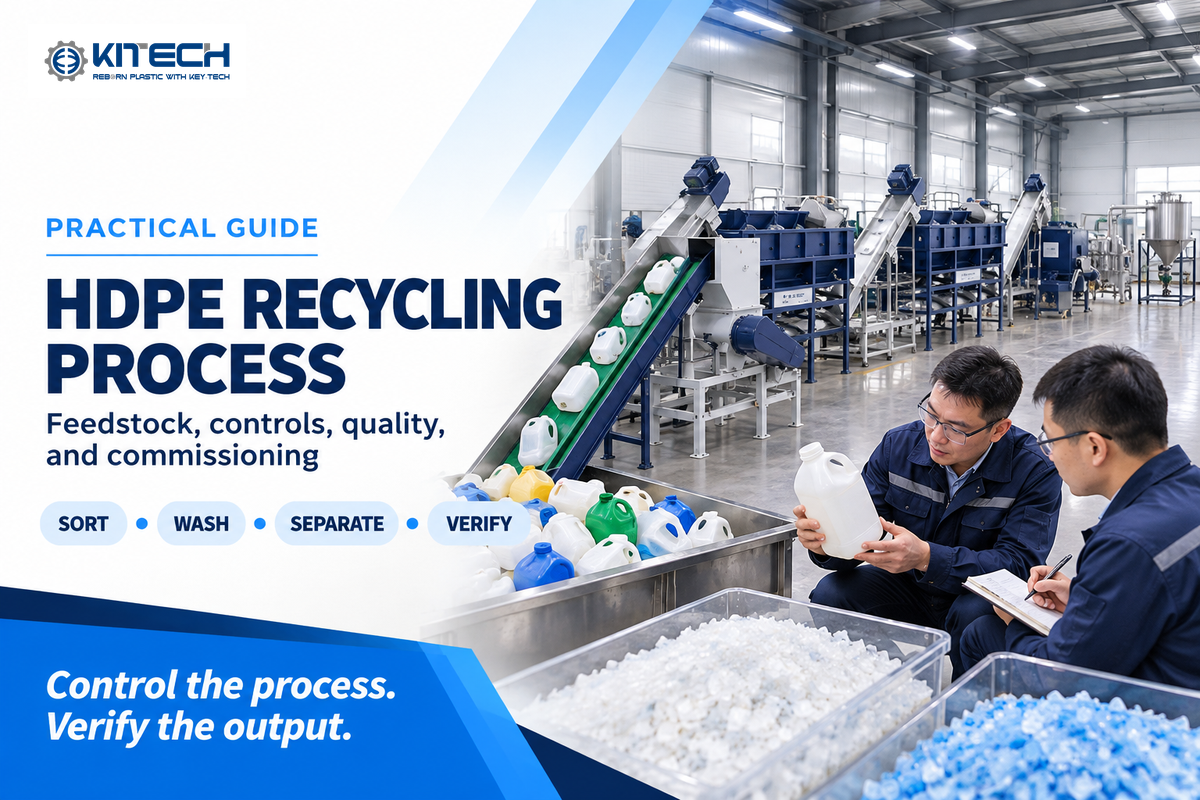
The HDPE recycling process is an industrial route that converts sorted bottles, milk jugs, detergent containers, and drums into washed flake or recycled pellets. A typical process includes receiving and sorting, size reduction, washing, density separation, rinsing, dewatering, drying, and (if required by the customer) extrusion, melt filtration, and pelletizing.
HDPE plastic is high-density polyethylene, a thermoplastic widely used for rigid packaging. Milk jugs and detergent bottles are familiar examples, but their closures, labels, colors, and residues still change the recycling task.
Other HDPE containers and plastic containers may enter the same collection stream. Sorting must keep PET, PVC, LDPE film, and plastic bags out of the rigid HDPE fraction before workers shred the accepted material for reuse.
Pipe and cutting boards can also be made from HDPE, while plastic lumber may accept a different color or property range. Those products shouldn’t be used to justify a specification for bottle-derived recycled plastic without a buyer trial.
Compared with virgin HDPE made from crude oil feedstocks, recycled materials carry a process history and a variable mix of additives, color, and contamination. Plastic recycling operations therefore qualify used plastic by lot.
A cost-effective route doesn’t assume every item made of HDPE has the same melt behavior, chemical resistance, or use boundary. It measures the physical property that matters to the buyer, protects the HDPE resin, and keeps incompatible plastic waste out of a non-food-grade batch.
Closed-loop recycling and food-grade claims need additional evidence. Recycling technology can produce recycled content for many recycled products, but pelletizing alone doesn’t prove food-contact suitability or erase polymer degradation. Extended producer responsibility rules may influence collection and recycled-content demand; they don’t replace the plant’s quality specification.
Describing the process steps is relatively easy. Controlling the process is difficult. A minor change in incoming color mix, labels, closures, residue, dirt or wall thickness can significantly affect the output. A useful plan for a process would start with an identified output and work backwards to determine the feedstock and the process controls.
The operating rule: do not treat temperature, chemical dose, residence time, throughput, or final moisture as universal settings. Qualify them against representative material, the downstream conversion route, and the buyer’s test method.
This manual is concerned with process control of post consumer rigid HDPE. Kitech’s general HDPE recycling guide is more encompassing and provides information on markets, definitions, and recycling of other HDPE products. Kitech has been able to answer a broad range of questions regarding HDPE recycling by separating concerns with rigid HDPE from those with other categories of HDPE.
Start with the Output Specification, Not the Machine List
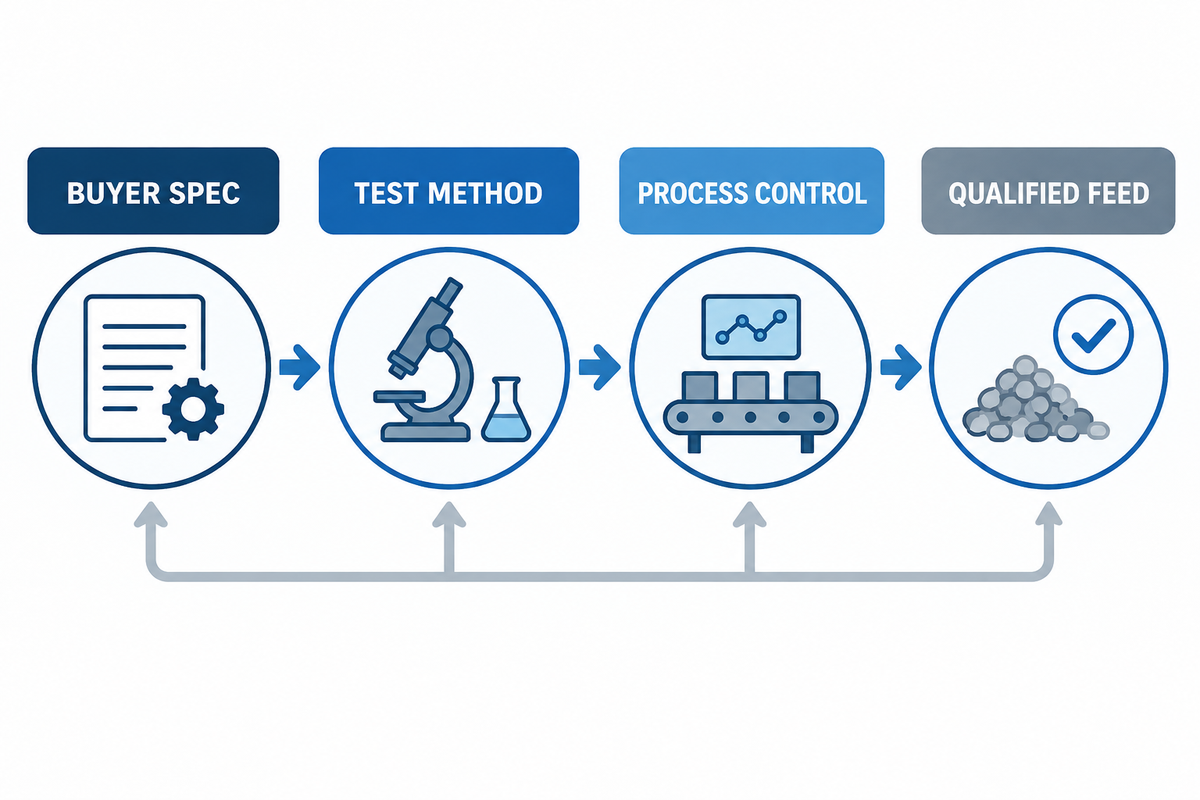
For a compounder, “acceptable” output may meet requirements for polymer identity, color, and moisture content, and may be free of labels, fines, and other contaminants and have an acceptable odor. A molding customer may also require the correct melt flow, freedom from fines and contaminants, and pellet geometry that meets the agreed specification.
Write the customer’s requirements as measurable outputs. Define the sample size, the test method, how often the test will be performed, the limit, and the action that will be taken if the requirements aren’t met. The EPA’s recycling-system framework is a useful reminder that processing and remanufacturing are connected: the accepted output, not an isolated machine, defines success. The statement “flakes should be clean and of high quality” won’t help resolve a dispute. A signed specification will.
| Decision | Define before equipment selection | Why it changes the line |
|---|---|---|
| Output form | Washed flake, compounded pellet, or application-qualified resin | Determines whether extrusion, filtration, blending, and pelletizing are included |
| Color route | Natural, white, mixed color, or separate campaigns | Changes sorting, storage, cleanout, and lot-release controls |
| Contaminant limits | Wrong resin, metal, labels, fines, moisture, odor, and residual chemicals | Sets the necessary removal stages and inspection points |
| Downstream trial | Extrusion, molding, or compounding acceptance | Reveals defects that a visual flake check can miss |
Qualify Incoming Bottles and Drums Before Size Reduction
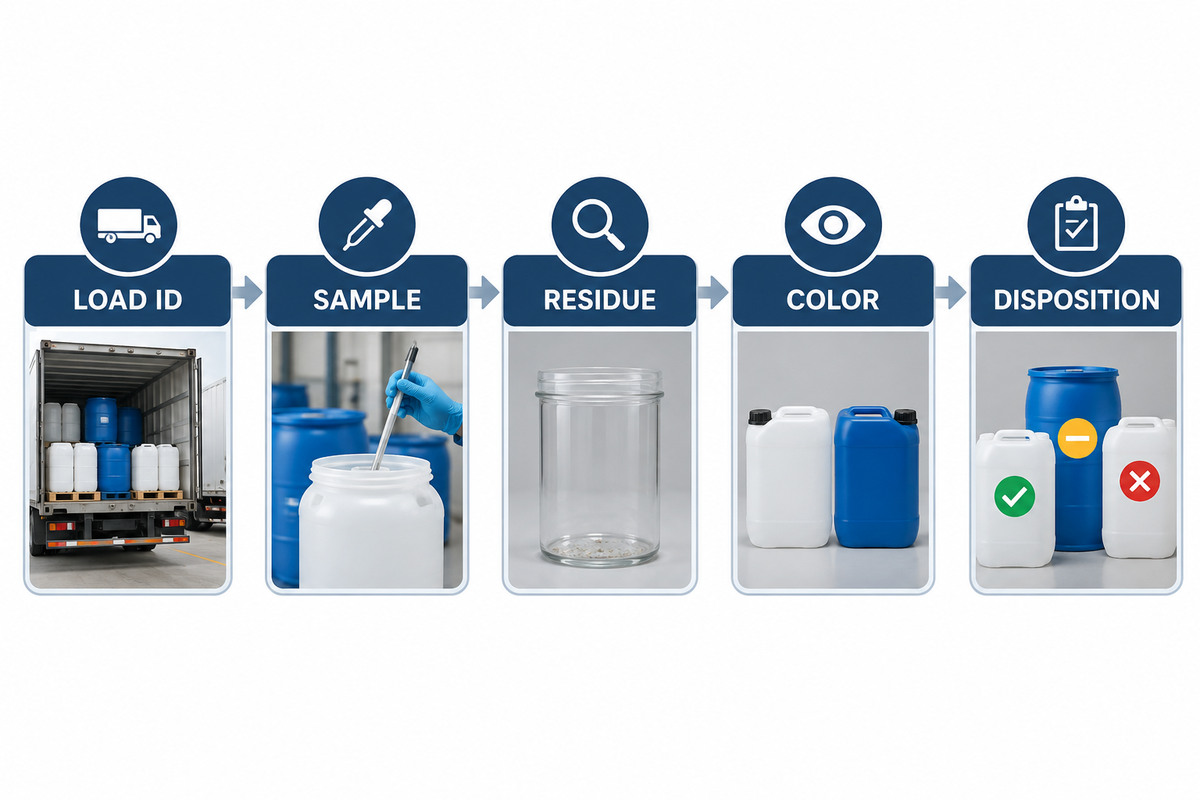
Receiving is the first control stage, and isn’t a storage activity. The EPA notes that processing can require sorting, cleaning, and further decontamination, so the incoming load must be characterized before it is cut. Assign a load ID, identify the supplier, container family, natural/colored fraction, obvious non-HDPE, attached components, dirt, residual liquids, and odd odors. Photograph samples and the fraction that’s rejected. This documentation supports the tracing of process changes to real material conditions.
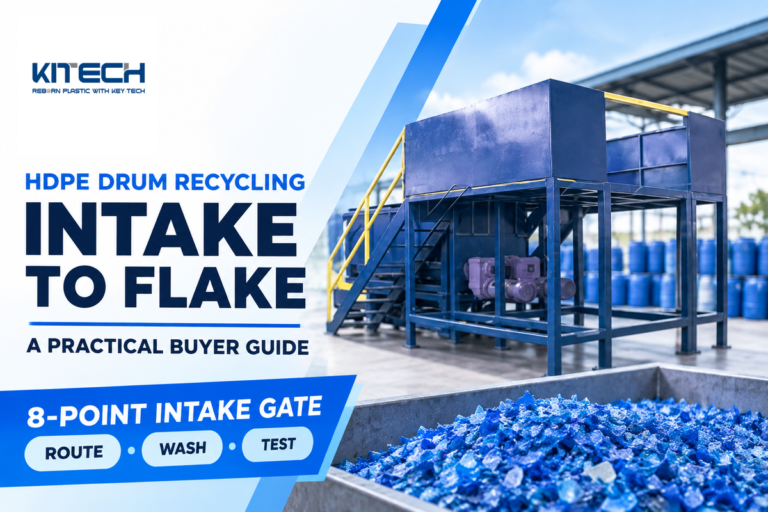
Milk bottles, household chemical containers and heavy wall drums shouldn’t be assumed to be in the same recipe. Their residue, label construction, geometry and required cutting energy may differ. Drums of uncertain previous contents should be documented as empty, and EHS site acceptance should be documented before processing. Washing isn’t a substitute for the control of hazardous material.
Use sampling techniques that target the load average, and not just the top surface. If bales or loads vary by supplier, or season, retain the information from incoming shipments by campaign. This information helps the team distinguish between a problem in the material and a problem in the machine.
Match Each Contaminant to the Right Removal Stage
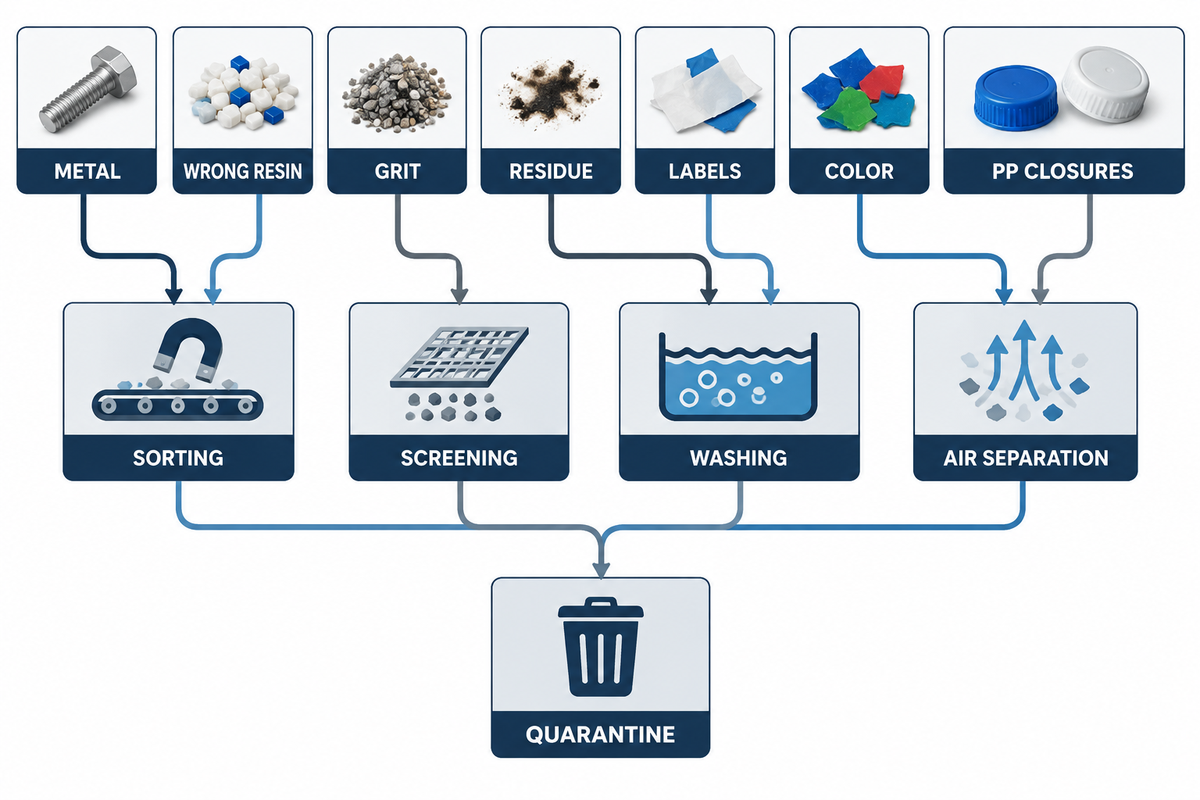
Not all contaminants can be assumed to be removed by more washing. Each contaminant should be removed at the stage where it is easiest to identify and least likely to damage equipment or contaminate the water circuit.
| Contaminant category | Primary control stage | Release evidence |
|---|---|---|
| Ferrous metal and bale wire | Magnetic protection before cutting, plus reject inspection | Logged reject weight and equipment inspection |
| PVC, PET, and other wrong resins | Manual or optical sorting before granulation; verify again downstream | Resin-identification sample and wrong-resin count |
| Loose soil, grit, and fines | Dry screening or pre-wash before intensive washing | Screen rejects and wash-water solids trend |
| Milk, detergent, oil, or organic film | Validated pre-wash, friction, and hot-wash campaign | Odor, visual residue, water condition, and downstream trial |
| Paper or film labels and adhesive | Mechanical release, friction/hot wash, rinse, and air separation | Residual-label inspection and melt-filter loading |
| Color cross-contamination | Source segregation, optical/manual sort, and campaign cleanout | Color measurement or approved visual standard by lot |
| PP closures | Source control and sorting; do not rely on water density alone | Polymer analysis of the floating product fraction |
| Fumes or unusual chemical odor | Quarantine before shredding; review previous contents and site EHS controls | Documented disposition, retained sample, and approved safe-handling route |
Remanufacturing, as defined by the EPA, includes additional sorting, separation, and decontamination. The implication is that no single step in a separation chain can prove final quality. Removal performance must be checked at the step, and confirmed in the final product.
Control the HDPE Recycling Process Stage by Stage
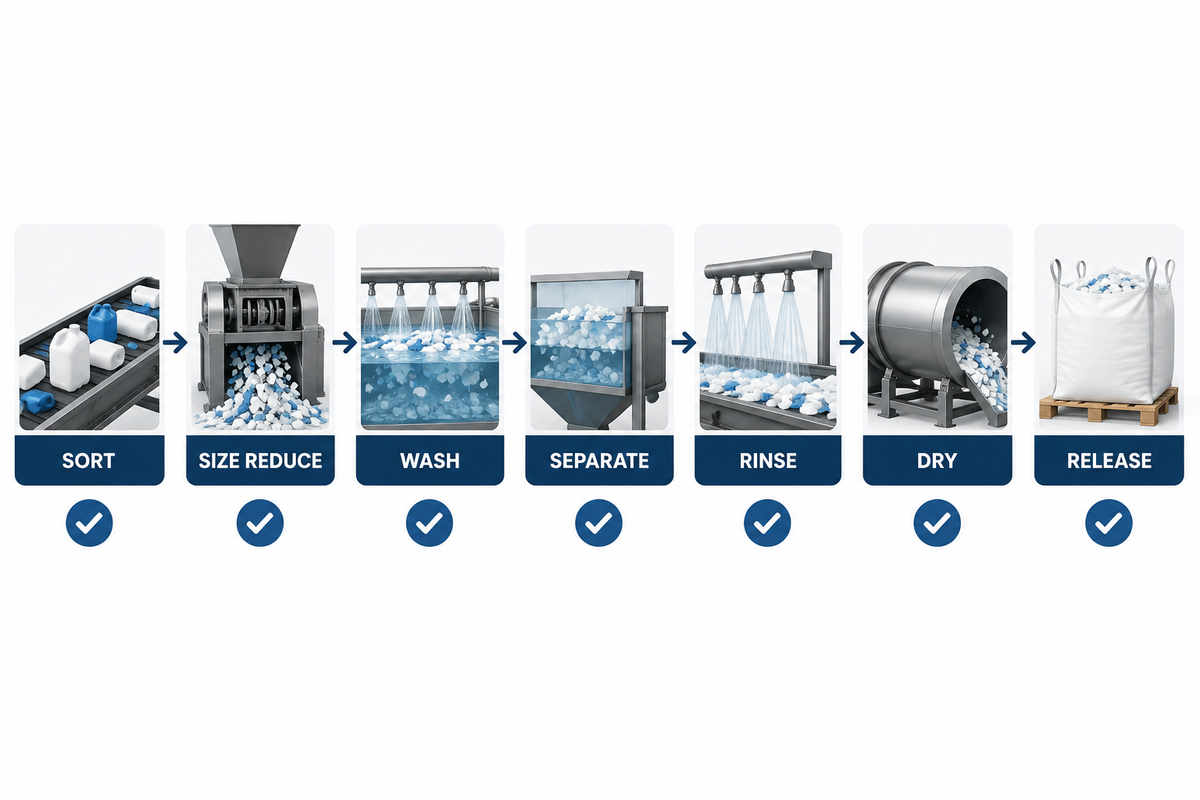
- Sort and protect the cutting system. Separate incompatible resins, hazardous items, metals, and unsuitable colors. Monitor the reject stream, don’t assume the sorter is stable.
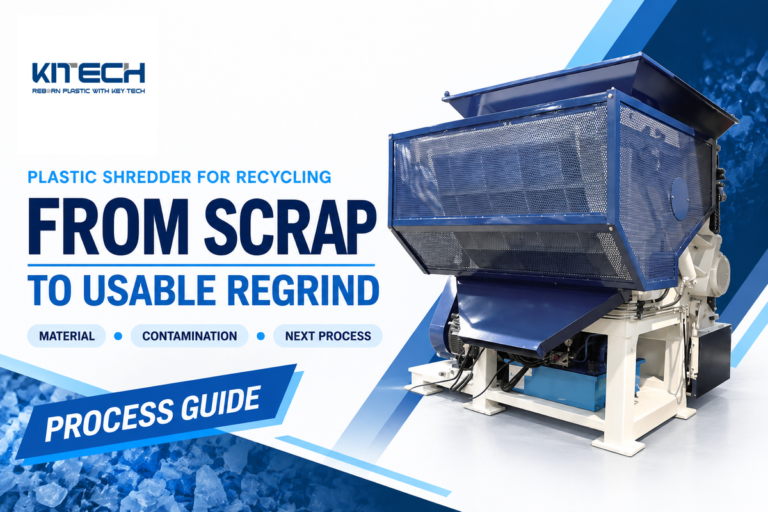
- Sort and reduce the size of the material. Heavy drums may need to be coarsely shredded prior to being granulated. Track the condition of the knives, motor load, the screen, oversize and fines. The correct flake size is the size that washes, conveys, dries and feeds consistently in the system being evaluated; this may vary system to system.
- Wash and treat according to contamination level. Use screening and pre-washing to remove solids. Set friction intensity, temperature, chemical dosage, and residence time only at levels established by representative samples and permitted by wastewater constraints and material safety data.
- Limitations of density separation apply. Dense foreign material is removed while the floating and sinking fractions are inspected. Density separation supports upstream resin sorting.
- Rinse to remove contamination from the flake. Track water condition and carryover. A powerful wash followed by a dirty final rinse can return loosened soil or chemistry to the flake surface.
- Dewater and dry for the next process. Mechanical dewatering reduces the thermal load. Measure moisture at the point that matters—sale, storage, or the extruder feed—not only at the dryer outlet.
- Remove light label fragments and release the lot. Air separation can be effective at removing paper and film fragments, but the final release decision should be based on a visual inspection of the polymer, tests for moisture, fines, and odor, and downstream test results.
Kitech’s HDPE milk bottle and drum washing system gives one example of a commercial configuration. Their system should be evaluated based on the temperatures, chemical ranges, capacity, and utilities compared with your feedstock and acceptance tests.
Understand the HDPE and PP Float-Sink Limitation
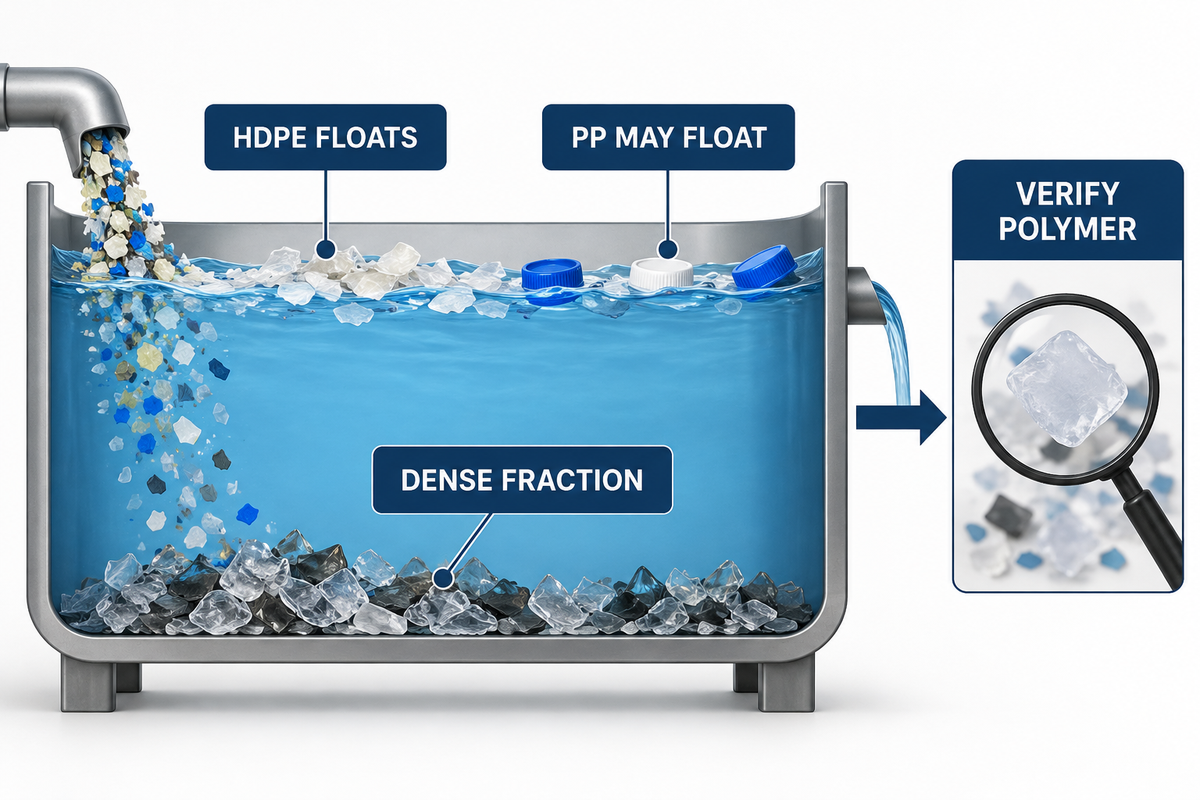
HDPE flakes are less dense than water, so they normally float while denser materials such as PET, PVC, metal, and grit sink. However, PP also commonly floats. The density stage shown in Kitech’s HDPE bottle and drum washing process is therefore useful for removing dense contaminants, but it is not, by itself, a complete HDPE-versus-PP separator.
Real parts make things more complicated. Fillers can increase density. Attached labels, trapped air, dirt, and incomplete wetting can affect the behavior. A closure on a fragment of a bottle behaves differently from a clean laboratory coupon.
Do not specify “PP caps removed by float-sink” without a test method. Define the incoming closure mix, sample both fractions, identify the polymers, and set an accepted residual level with the buyer.
Choose the Output Route: Washed Flake or Recycled Pellets
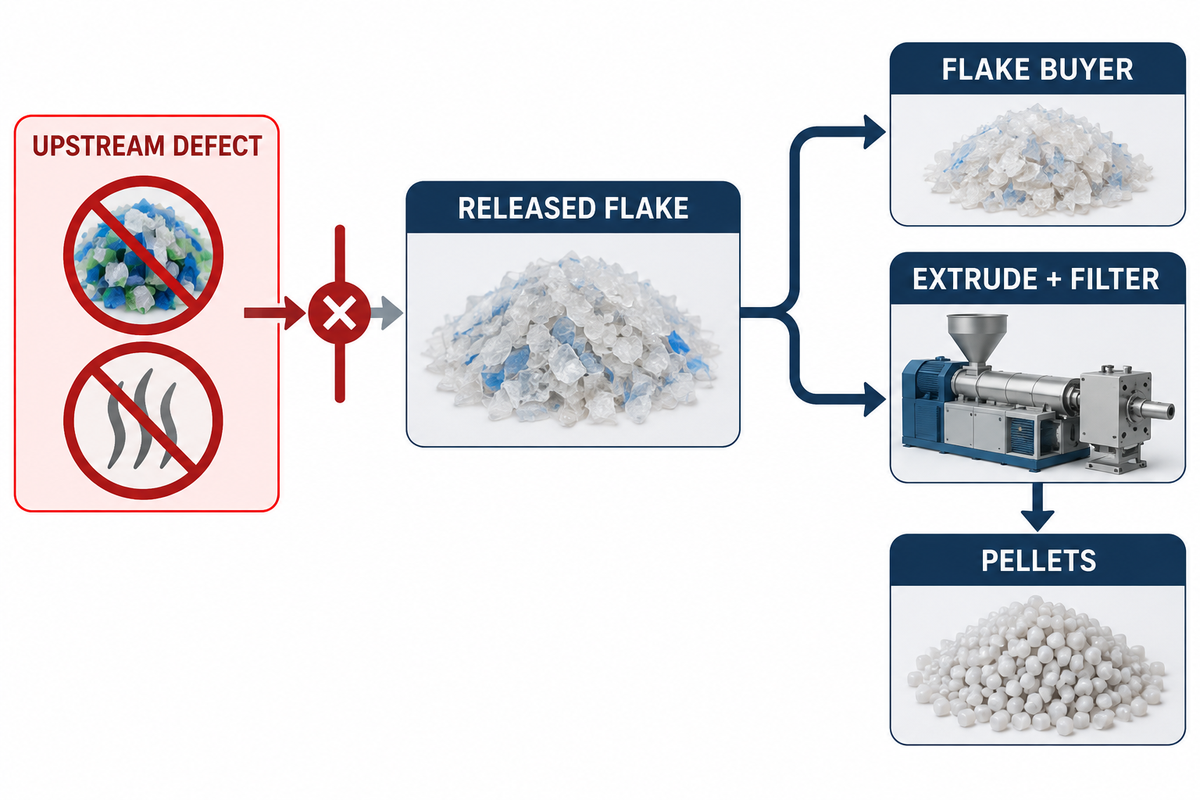
Washed flake is a reasonable product when a qualified buyer can receive it, the lot meets the agreed contaminant and moisture limits, and the buyer performs the extrusion and filtration steps. It eliminates another heat history and reduces the burden on the reclaimer’s equipment and energy. Kitech’s commercial washing-line sequence illustrates where clean flake can hand off to an optional pelletizing route.
Pelletizing can add value when the buyer requires a denser, more uniform feed, melt filtration, blending, compounding, or controlled pellet geometry and melt flow. It also adds capital, energy, and maintenance costs and can reduce yield.
| Question | Favor washed flake | Favor pelletizing |
|---|---|---|
| Buyer capability | Buyer has suitable extrusion and filtration | Buyer needs ready-to-feed resin |
| Product consistency | Lot variation is accepted and documented | Homogenization and controlled pellet feed are valuable |
| Residual solids | Buyer manages filtration | Reclaimer must deliver filtered melt |
| Economics | Pellet premium does not cover conversion cost | Qualified demand covers power, labor, screens, downtime, and yield loss |
Extrusion can’t fix a wrong polymer, an unpleasant odor caused by a residue, or major color mixing. Melt filtration doesn’t change incompatible polymers to HDPE. Correct upstream defects before they reach the extruder.
Turn the Process into an Acceptance Plan
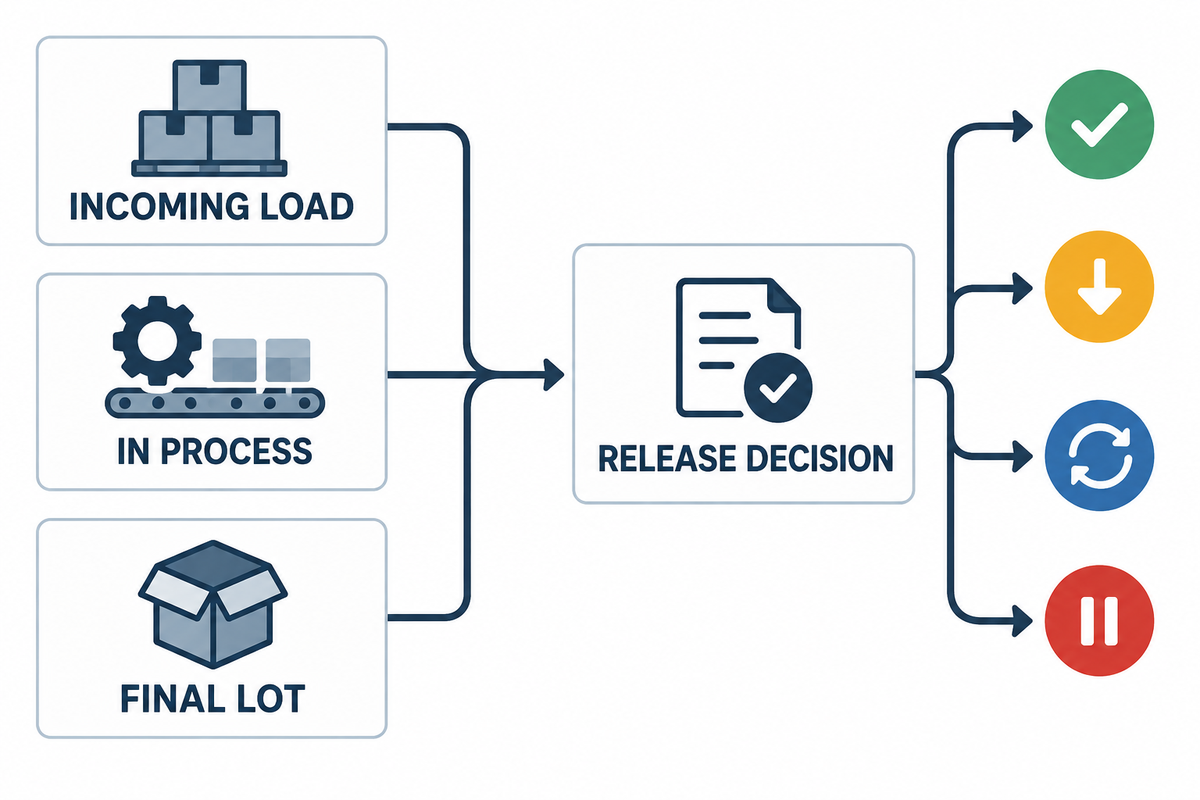
An acceptable plan has three elements. The first element protects the plant from a feed that the plant isn’t designed to process. The second element shows if each removal stage is performing its function. The third element protects the buyer and gives the recycler a repeatable release criterion.
| Layer | Record | Buyer action |
|---|---|---|
| Incoming | Load identity, container mix, color, wrong resin, metal, residue, dirt, odor, photos | Accept, segregate, reprice, or reject the load |
| In process | Reject streams, flake size, motor load, water condition, temperature, chemical addition, float/sink split, moisture trend | Correct the stage before a whole lot is lost |
| Final lot | Polymer mix, color, metal, labels, fines, moisture, odor, melt behavior, retained sample | Release, downgrade, reprocess, or hold for investigation |
Run a range of feedstocks including difficult ones during factory and site acceptance testing. For a stable run, agree on the mass-balance boundary, sampling plan, run duration, treatment of downtime, and utility measurements. Document rejects, chemicals and water consumption, operator interventions, screen changes, final product quality and throughput.
This is the hidden bottleneck in many line comparisons: nameplate input capacity is not the same as accepted output per hour. A line that feeds quickly but produces off-spec flake, excessive rejects, unstable water conditions, or frequent stops has not met the commercial objective.
Troubleshoot Symptoms Without Guessing
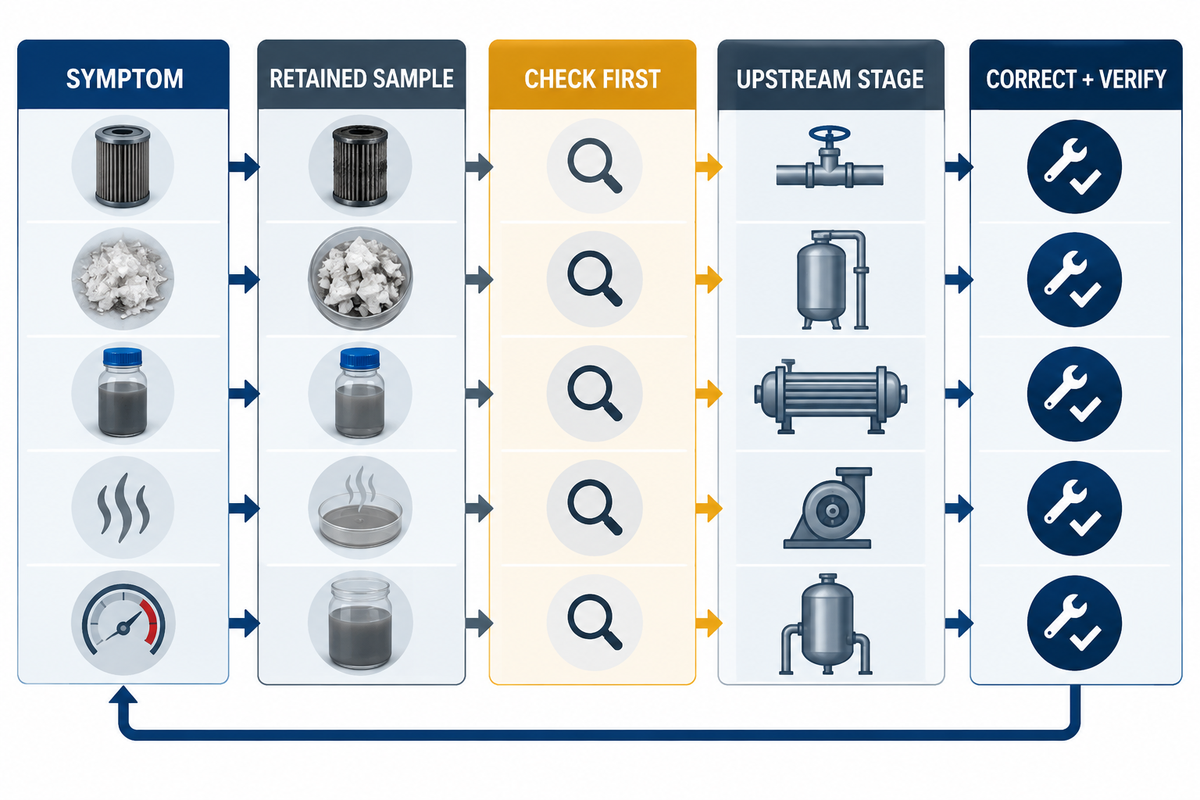
Use the same stage boundaries described in the HDPE washing-system process to trace each symptom upstream; changing the extruder cannot correct a sorter, wash-water, or drying failure.
| Symptom | Check first | Likely upstream response |
|---|---|---|
| Frequent melt-filter changes | Retained flake for labels, paper, grit, metal, and degraded material | Trace the solids to sorting, washing, rinse, or air separation before changing the extruder |
| Wet flake at the extruder | Sampling location, moisture method, dewatering load, air temperature, residence time | Stabilize feed and mechanical dewatering before adding thermal energy |
| Natural product turns gray | Incoming color mix, prior campaign, dead zones, conveyors, bins | Strengthen segregation and validate the cleanout procedure |
| Persistent odor | Supplier, previous contents, retained sample, water condition, storage | Segregate the source and run a controlled wash trial; do not mask the cause with heat alone |
| Unstable throughput | Container geometry, wall thickness, feed metering, knife condition, motor load | Separate heavy-wall campaigns and correct the actual bottleneck |
Do Not Treat Process Settings as Universal Recipes
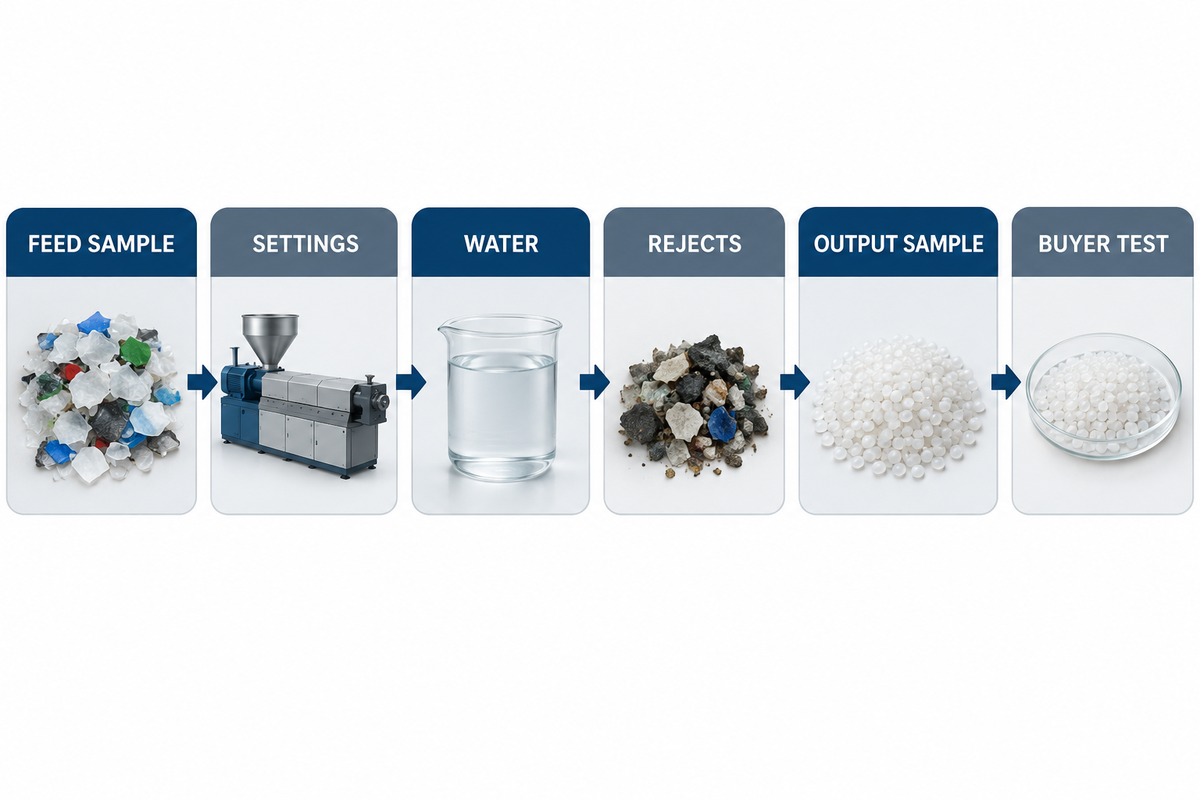
Published washing temperatures, caustic concentrations, surfactant doses, flake size, moisture content, and throughput can be useful starting points. They aren’t absolute limits. Even Kitech’s current product page and broad article show example ranges, which demonstrates that configuration and context are important.
Before recommending a line, a supplier should request representative feedstock samples, monthly composition ranges, container dimensions and wall thickness, contamination photos, previous contents, color strategy, required output form, buyer test methods, local utilities, wastewater constraints, available space, and operating schedule. The proposal should state which claims were demonstrated, calculated, assumed, or left for site confirmation.
During trials, only one variable should be changed at a time. The baseline or starting condition should be maintained. Document the incoming and outgoing product samples, operating settings, water conditions, rejects, and downstream test results. This approach is more useful than a blanket claim of purity.
Use Current Design-for-Recycling Guidance Carefully
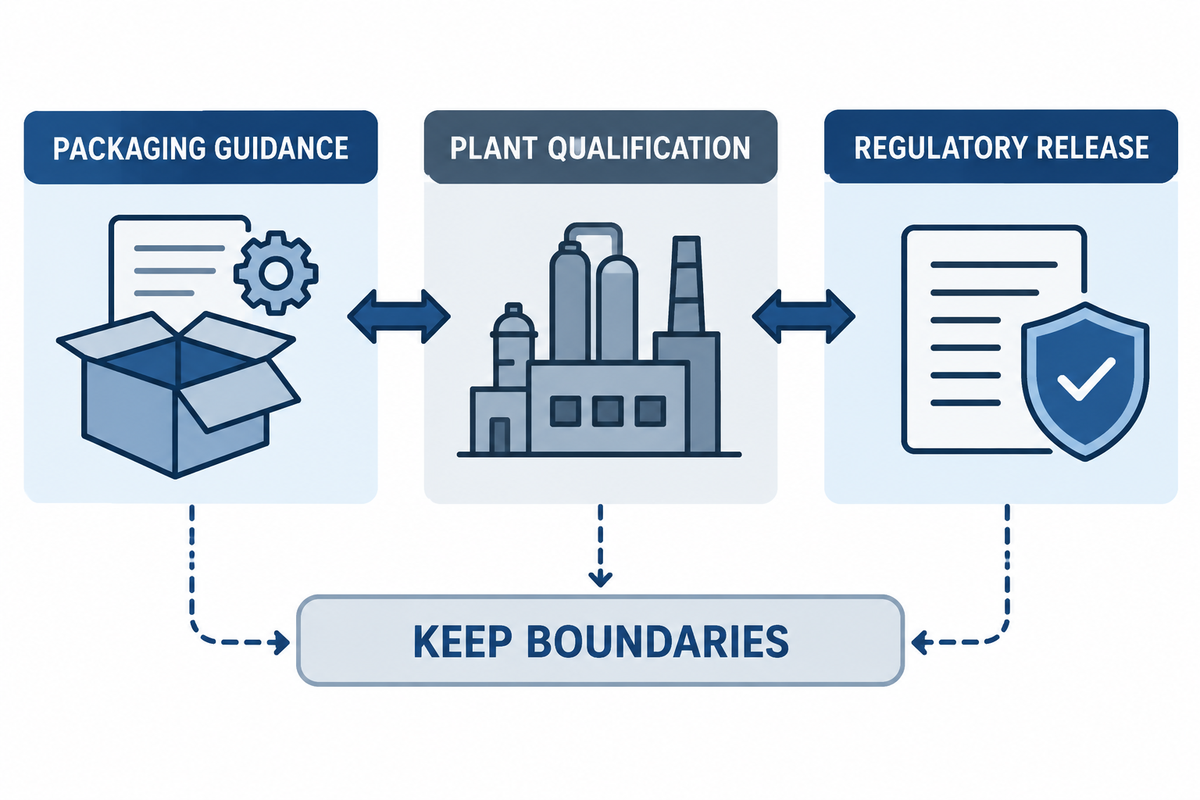
The design-for-recycling guidelines and evaluation methods cited in this article for packaging features such as adhesives, barriers, closures, and labels are published by APR and RecyClass, respectively. The current RecyClass packaging guidelines use compatibility categories and route uncovered features to evaluation protocols. RecyClass notes that its guidance is revised through test campaigns and technology approvals.
These guidelines are to help determine compatibility of packaging with a recycling stream, and aren’t meant to replace a recycler’s feedstock agreement, wash-line trial, final-resin specification, or jurisdiction-specific legal review. A package that’s designed for recyclability doesn’t automatically create a food-contact recycled resin.
Food contact use is a separate qualification boundary. Cleaning a polymer fraction by hot washing or pelletizing doesn’t, in and of itself, guarantee food contact use. The recycler and converter need an authorization route, controlled feedstock, and traceability, as well as a validated decontamination and release process by the buyer for the target market, to create food contact recycled resin.
Frequently Asked Questions
What are the main steps in the HDPE recycling process?
The common industrial route is receiving and feedstock qualification, resin and color sorting, metal protection, shredding or granulation, pre-washing, friction or hot washing as needed, float-sink separation, rinsing, dewatering, drying, light-label separation, and final quality release. Extrusion, melt filtration, and pelletizing are optional stages chosen according to the buyer’s product specification.
Can float-sink separation remove PP caps from HDPE?
Not reliably by itself. Clean HDPE and many PP closures are less dense than water, and therefore can be part of the floating fraction. Fillers, dirt, labels, and trapped air add uncertainty. Use source control and sorting, and verify the final floating product using a polymer identification method agreed upon by the parties.
Does every HDPE bottle stream need hot washing?
No. Hot washing is justified by certain contaminants such as adhesives, oil, organic residue, or other film that a validated cold process is unable to remove. Temperature, chemistry and residence time should be established by representative trials. Additional heat or caustic isn’t evidence of better output unless release data shows an improvement.
Should a recycler sell HDPE flake or pellets?
Sell flake to a qualified buyer who accepts its measured quality and has the appropriate extrusion and filtration equipment. Pelletize when a customer requires a uniform, ready-to-feed product and the additional value justifies the conversion cost and yield loss. Make this decision with buyer specifications and trials rather than assuming pellets are always the higher value product.
What purity or moisture level should HDPE flake meet?
There’s no limit for every application. For polymer conversion, the buyer and recycler should agree on polymer type, color, foreign material, labels, fines, moisture, odor, and test methods. Sampling location and method matter: a sample from a dryer outlet may not represent flake after storage and transport.
Does pelletizing make recycled HDPE food-contact compliant?
No. Pelletizing changes form and homogenizes the melt. It can filter some solids, but doesn’t by itself demonstrate decontamination or regulatory acceptance. Food contact use requires an applicable jurisdictional pathway, controlled feedstock, traceability, and validated processing and release for that application.
What should an HDPE washing-line commissioning test prove?
Stable-state operation should be demonstrated with representative clean, average, and difficult feedstock, with throughput meeting agreed acceptance criteria and reported as a mean with a standard deviation, and utility consumption measured. Controls should be applied at each process stage. Final output should be free of specified contaminants and pass tests against the specification. The test protocol should describe the sampling strategy and define stable run duration, downtime and failure response.
Build the Line Around Evidence
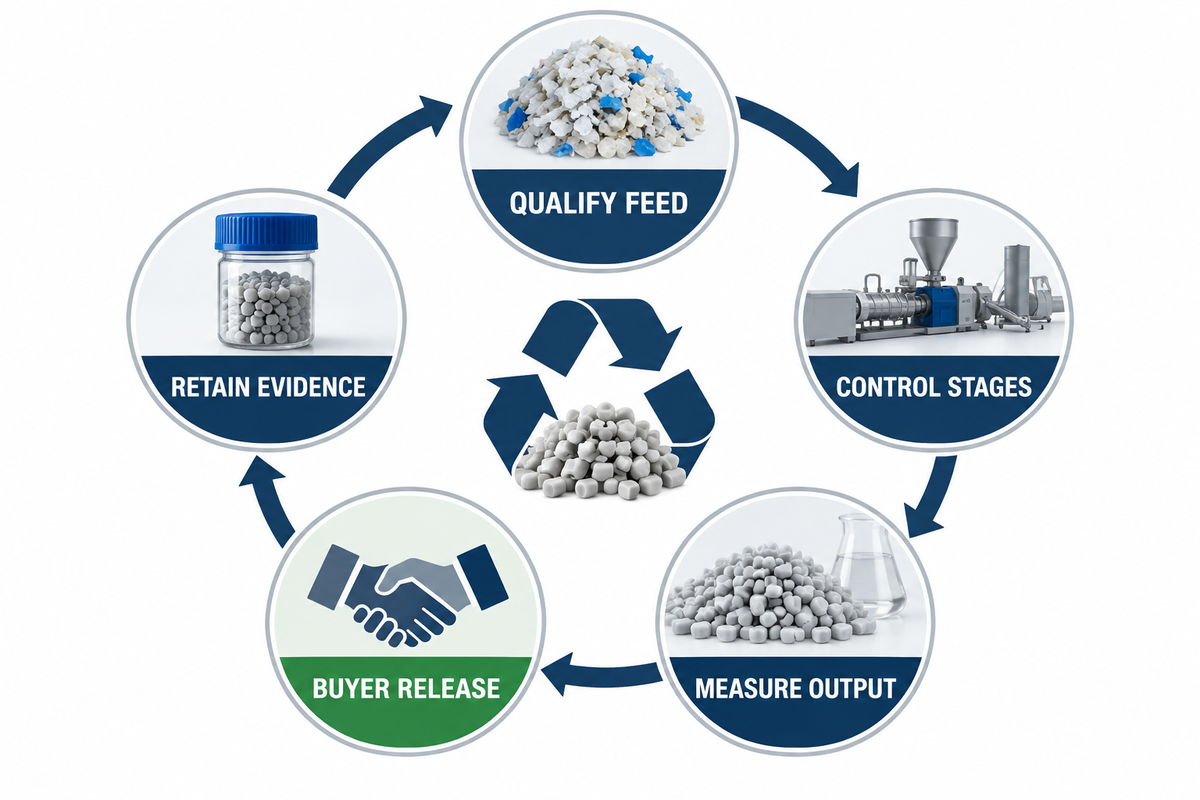
Recycling HDPE isn’t simply a matter of arranging machines in a continuous line. It’s the control of a process from a known incoming load to a released product. That approach aligns with the EPA’s collection-processing-remanufacturing chain. First determine what the released product will be. Next, decide where each contaminant will be removed and measure if that process is working. Finally, test the end product to ensure it meets the requirements of the downstream purchaser.
When designing a rigid HDPE washing project, provide Kitech with your bottle and drum mix, contamination profile, color strategy, target output, tests, utilities, site constraints, and any other relevant project information before requesting a configuration. This information gives Kitech and any other supplier the basis for a process proposal. It also provides your team the basis for project acceptance.
Discuss your feedstock and acceptance target. Bring representative material data, output requirements, and site constraints to the conversation. Contact Kitech about an HDPE washing-line assessment.
References & Sources
- U.S. EPA, The U.S. Recycling System
- RecyClass, Packaging Design for Recycling Guidelines
- RecyClass, HDPE Container Testing Protocols
- RecyClass — Design for Recycling Guidelines
- U.S. FDA, Recycled Plastics in Food Packaging
- Recycling, Rethinking PE-HD Bottle Recycling
- Association of Plastic Recyclers, HDPE resources