Get in touch with Kitech Company


The plastic film recycling process cleans up a low-density, high-contamination stream to provide clean flakes or filtered pellets. Unlike rigid plastic bottles and other plastic products made from new plastic or virgin plastic, a plastic bag or wrap is light enough to bridge and wind around ordinary sorting equipment. An established plastic recycling route verifies the plastic materials in the feedstock, opens bales, meters and shreds the film, removes loose contamination, washes and separates the material, squeezes and dries it, establishing the controlled conditions under which plastics are recycled and recycling rates can be reported consistently. If the end market requires it, the plastic resin is introduced to pelletize the polymer into plastic pellets.
This process seems linear, but there are other interactions occurring within and between the various stages. The condition handed from one stage to the next determines whether the line runs steadily and whether the output has a buyer. These other interactions and the types of equipment used are explained in this guide, including when film is sorted by type or kept as a single type.
A recycling line is only as stable as the material state handed from one stage to the next, including at recycling facilities where a recycling plant produces resin sold as raw material.
What the Plastic Film Recycling Process Must Achieve
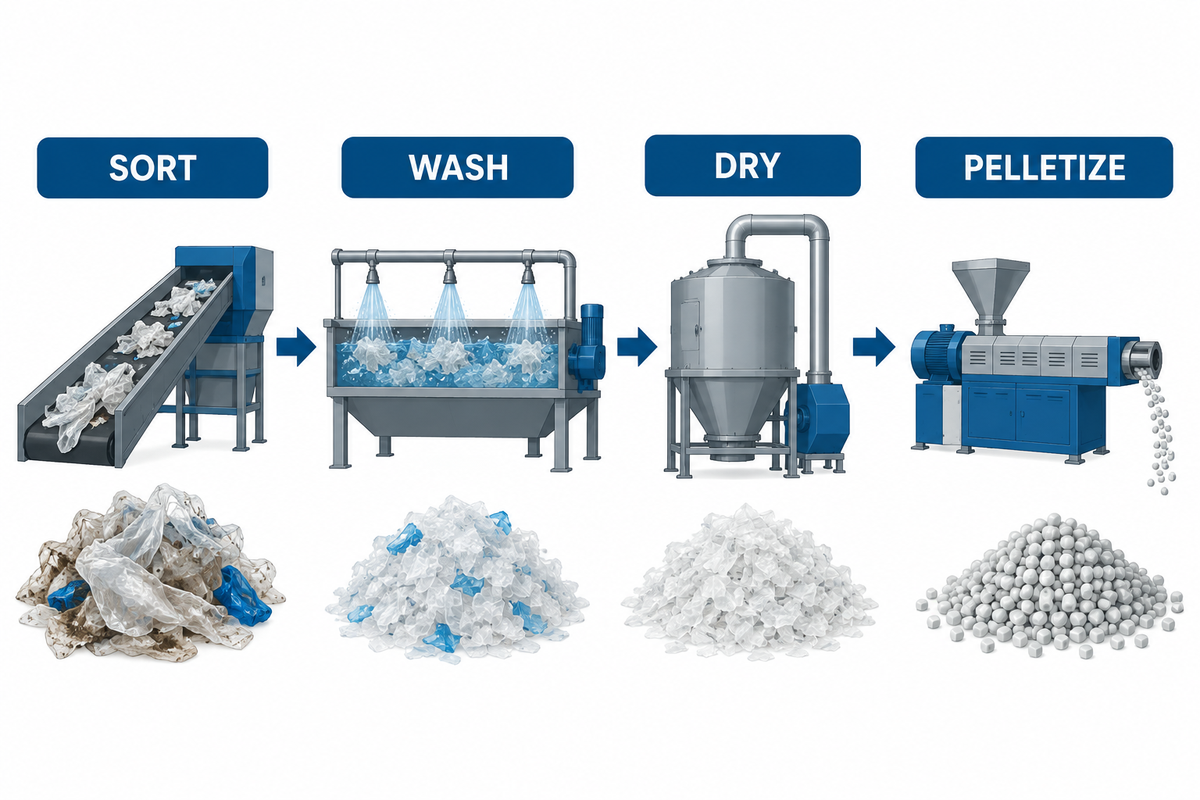
In the case of Mechanical recycling, plastic waste, also called waste plastic, is converted to a secondary raw material through the recycling of plastic, whereby the chemical structure of the polymer isn’t altered as it may be in chemical recycling. For film, including high-density polyethylene film, the usable output may be washed, densified flake or pellets made by melting, filtering, and cutting the polymer. Generally, pellets are denser and easier to meter, convey, blend and dose to downstream equipment.
Within a waste management system, the line has four responsibilities: remove incompatible polymer materials, make the film physically manageable, preserve the target polymer compared to virgin resin requirements, and deliver a consistent output. In many cases, a machine can perform an individual function and a process can fail altogether. For example, a washer can remove dirt but leave too much water which isn’t stable for extrusion. A dryer can remove moisture but leave fines and labels. An extruder can remelt the film through remelting but can’t restore the integrity of the polymer lost due to incompatibility and excessive thermal history.
Does plastic film actually get recycled?
Yes, but there are challenges. In the US, most bags, wraps and films don’t belong in a typical recycling bin, because their collection and recycling solution differs from the rigid-bottle route used to make recycled PET. Eligible polyethylene film often uses retailer or commercial collection channels that reflect these specific uses of plastic. Once accumulated into a suitable stream, recyclers can sort, wash, dry, and reprocess it into recycled material. Local acceptance rules and true type of plastic control whether an item is recyclable in that stream, because the plastic type determines which different plastic recycling route fits a hard-to-recycle plastic.
Step 1: Qualify and Sort the Incoming Film
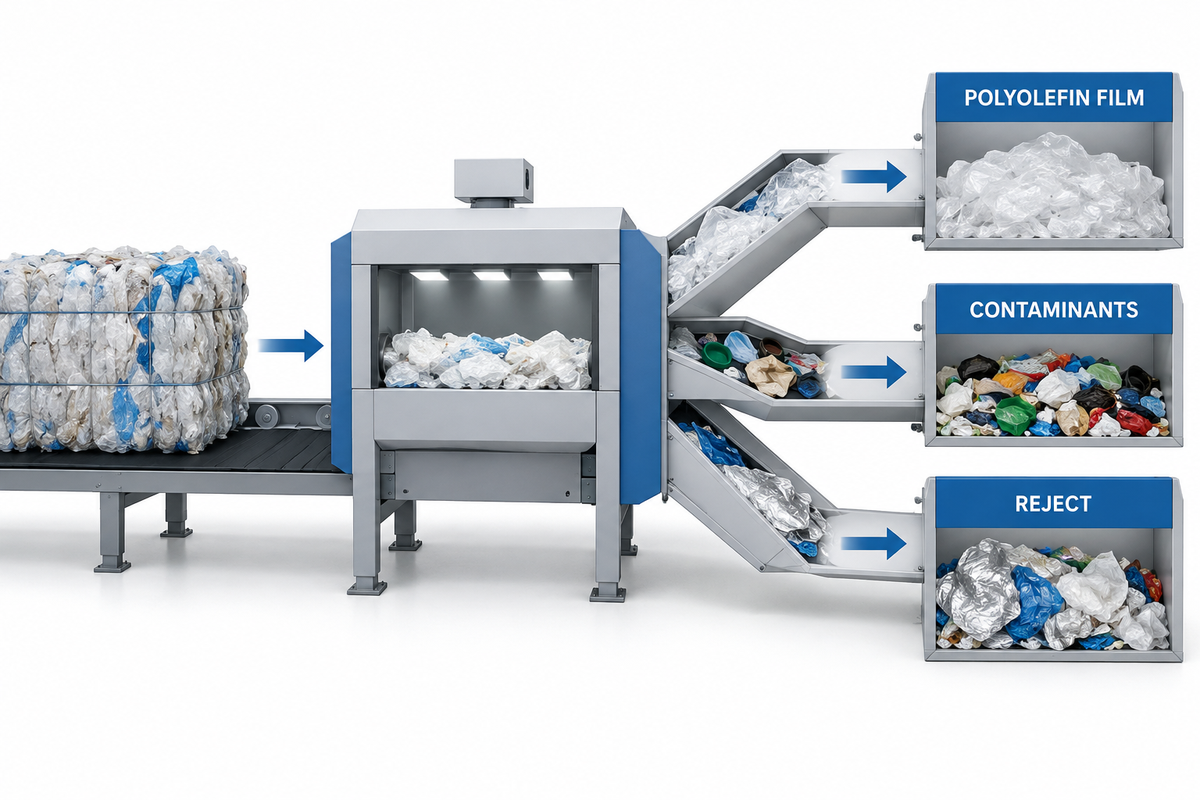
Designing a process to separate polyethylene films begins even before the bale opener. Write down the polymer family, product origin, color, printing, adhesives, moisture, soil, organics, metals, paper, incompatible films, and whether the output is intended for plastic production or to be molded into new products. A sample from the top of the bale, or even a picture, isn’t that helpful. Sample across the lot and report composition by mass where practical.
In the waste recycling industry, “film” is a term used to classify many different types of materials and different types of plastics. Multilayer structures, PVC, PET from a pet bottle stream, and aluminum layers may require separation, different outlets, or rejection. The RecyClass PE film protocol supports an important consideration, which is that recycling-stream compatibility and sortability are part of recyclability, not add-ons.
| Feedstock | Typical concern | Process emphasis | Boundary |
|---|---|---|---|
| Clean industrial stretch film | Low bulk density, cores, labels | Stable feeding, metal removal, densification | Confirm polymer and label compatibility |
| Post-consumer bags and wraps | Mixed items, food, paper, printing | Receiving inspection, sorting, washing | Local collection does not prove process compatibility |
| Agricultural film | Soil, sand, moisture, organics | Pre-cleaning, staged washing, water and wear control | Dry weight and contamination can vary widely |
| Printed or multilayer film | Ink, odor, barriers, incompatible layers | Qualification trials and end-market review | Do not assume a PE-looking package is a mono-material stream |
Step 2: Open Bales, Meter Feed, Shred, and Pre-Clean
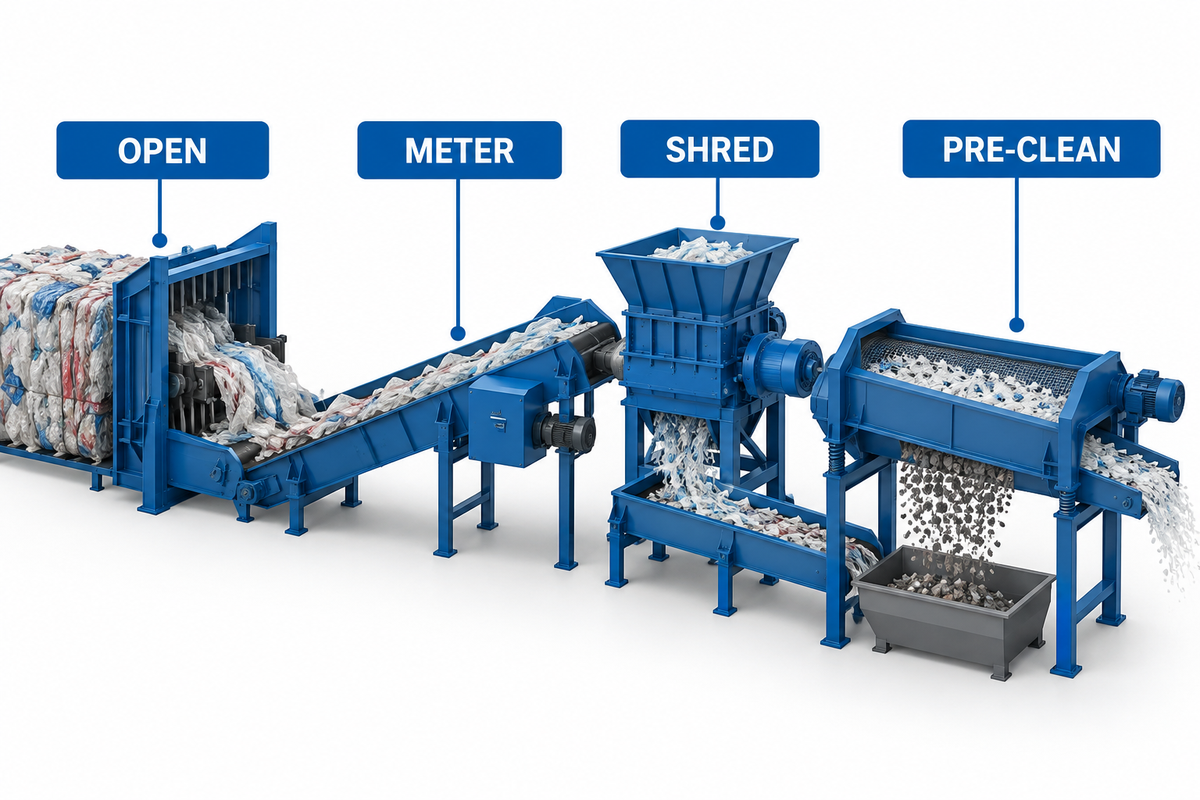
Bale opening separates compressed films so downstream equipment receives a controllable layer rather than dense lumps. A surge of light material can overload a shredder while starving the washer moments later. Therefore, a system of controls should be implemented.
A purpose-built plastic film shredder makes size reduction, washing, and conveying processes more predictable. The ideal target size allows for separation and cleaning without generating excessive fines. Magnets, and other metal controls, are used to protect rotating equipment before wet washing. Loose soil, sand and debris, such as paper, can be removed by means of screens, air separation, or mechanical pre-cleaning before heat and contamination affect mechanical properties. A peer-reviewed review of multilayer film recycling likewise identifies pre-treatment as necessary where film and cardboard can obstruct sorting equipment.
Why does thin film wrap and bridge in recycling equipment?
Film is very lightweight and can fold or bunch up. It’s very easy for film to get caught up in rollers or shafts and obstruct machinery. It also can stick to equipment via static electricity and bridge over gaps. Stable operation usually depends on controlled opening, metering, cutter geometry, anti-wrap details, and balanced transfer between stages. Merely increasing the horsepower of a drive doesn’t correct the issue of inconsistent material presentation.
Step 3: Wash, Separate, and Rinse Without Carrying Contamination Forward
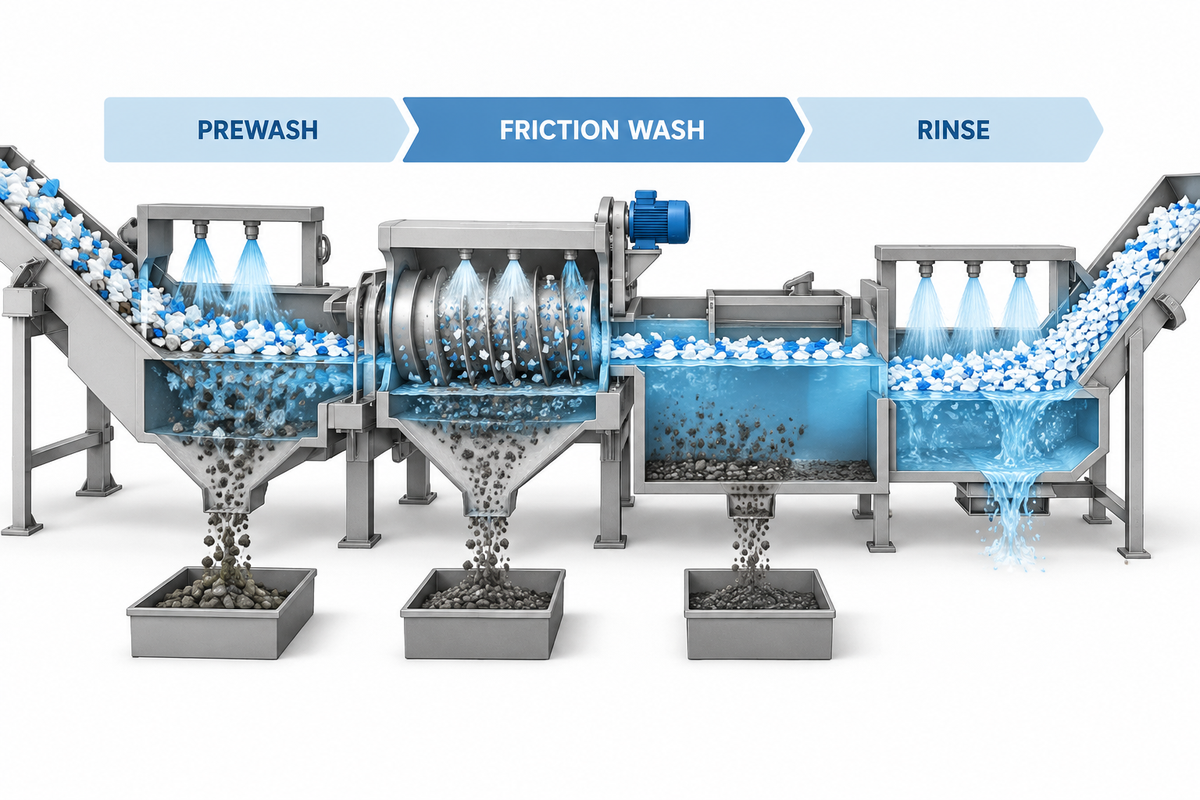
Washing is a series, not a single-tank operation. Soil and surface contamination are loosened by a prewash. Mechanical action is used by a friction wash. Float-or-sediment separation uses differences in material density of a system. Hot water and detergent can help break down oils and adhesives, if needed. Rinsing prevents loosened dirt and solids from being carried over with the clean film.
Among recycling methods for flexible plastic packaging and other plastic items, the method described by the Association of Plastic Recyclers for hot-water and detergent washing removes surface dirt and label adhesives. Residence time, chemistry, mechanical action, and temperature must be justified for the feedstock and the output. Treating the feedstock beyond what’s justified increases cost and creates wastewater, and may degrade the polymer. Inadequate treatment allows dirt, odor, adhesive and/or ink to remain on the product.
Water recirculation through a closed-loop water recycling system changes the control problem. Reused water saves fresh water only if solids, oils, organics, and dissolved contaminants are managed. Continuously monitor water quality at point of use. Otherwise, a nominally clean rinse can contain untreated contamination.
Step 4: Squeeze and Dry Without Losing Stable Feed
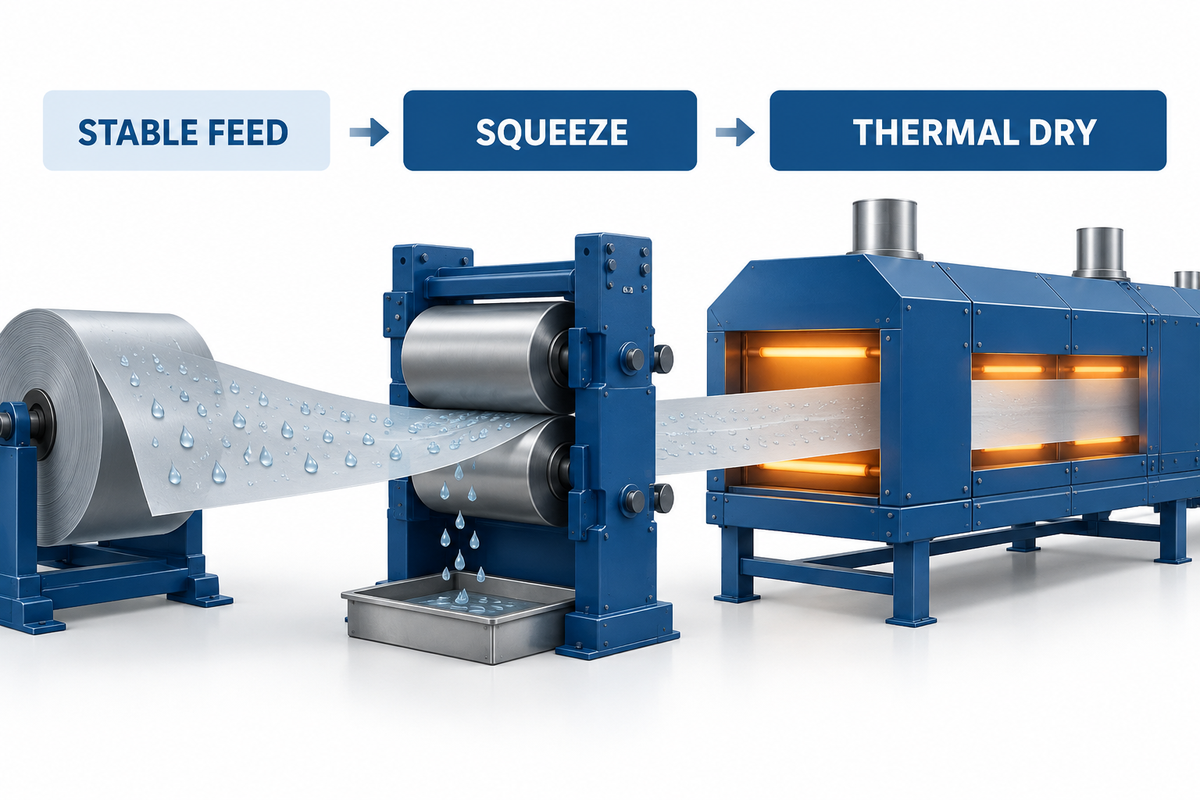
Wet film is a combination of free and bound water. Bound water is water that’s located between the layers of film. Mechanical dewatering with a plastic squeezing dryer should remove as much free water as practical before thermal drying. Thermal drying is used to remove the remaining moisture. In some cases, the film may be too thick and a press may be used to compact the film, thus reducing the heat load. This flexible packaging recycling reference also discusses the sequencing of operations.
Dry looking film isn’t necessarily extrusion ready film. The next process determines the acceptance limit. For example, a flake buyer may state a moisture range and an extrusion system may require a different range. Residual moisture content of the product must be measured with a defined sampling method and interval. Fines, bulk density, and storage temperature may also affect the product.
How dry must recycled film be before extrusion?
There’s no single acceptable level for all film streams and extruders. The acceptable level is determined by the polymer, contamination, degassing, filtration, and the downstream product. This level may also be set by the supplier and determined by representative tests. Finally, this may be connected to pressure stability, bubbling, pellet consistency and performance of the final part.
Step 5: Agglomerate, Extrude, Filter, Degas, and Pelletize
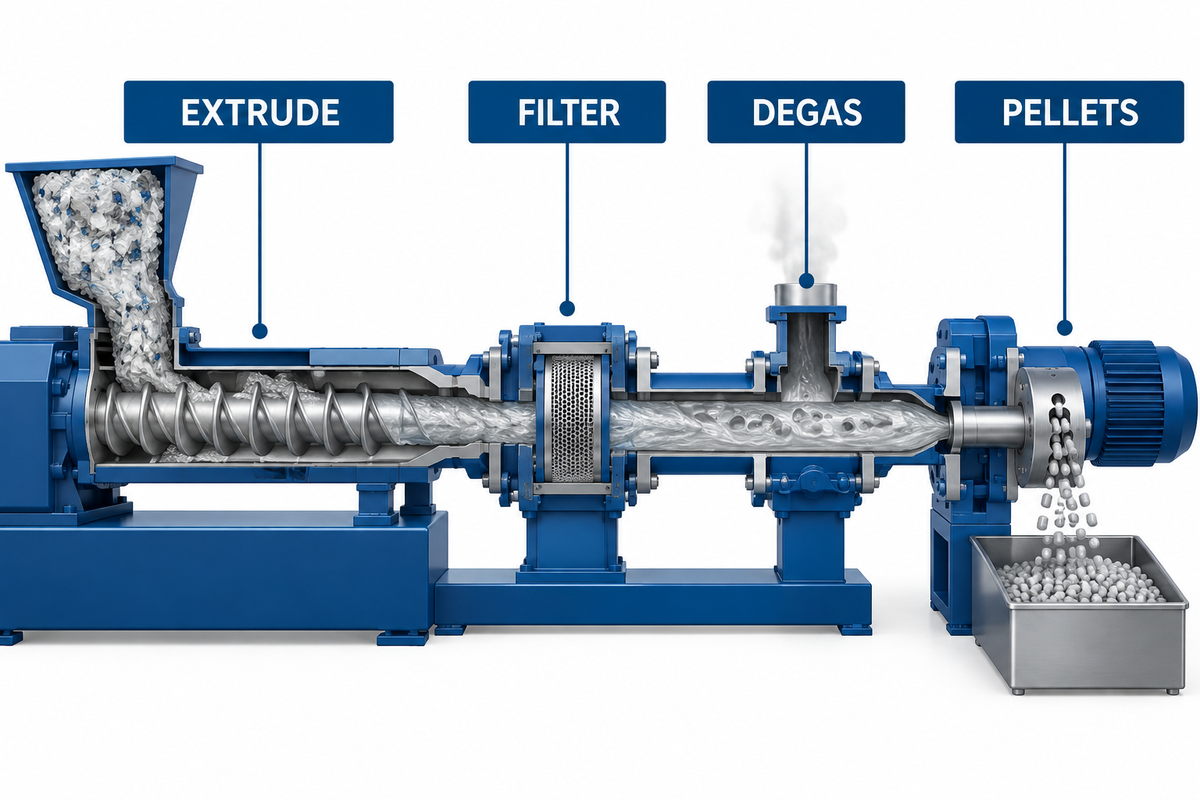
Markets typically define this input material as either washed film flake or pellets produced by a plastic film pelletizing machine. Increased bulk density and improved flow properties of film can be achieved through agglomeration or compaction. In an extruder, film is melted and mixed. If solids aren’t sufficiently removed during melt filtration, they can be entrapped in the molten polymer. Degassing removes entrained air and some volatile material. The melt is extruded and cooled to form pellets. The APR glossary defines extruded, chopped polymer that’s better suited for bulk handling than flake as pellets.
There are many upstream sources of variation. Bubbles in the melt can indicate volatiles or moisture. The type of feedstock, its history, and the degree of washing can result in varying levels of color, odor, or sorting. Color variation may reflect sorting, printing, degradation, or mixing. Printing on film may also occur. The presence of contamination or other foreign matter can occur if poor processing or filtration practices are used. It’s best to look backward and analyze these variables as evidence to help determine the root cause of the problem.
The main variable determining the feasibility of the process is the buyer. Pellets improve handling and dosing, but they add energy, filtration, thermal exposure, and capital. If a qualified buyer can use clean flake, pelletizing is not automatically the superior route.
The 6-Checkpoint Film-to-Resin Control Loop
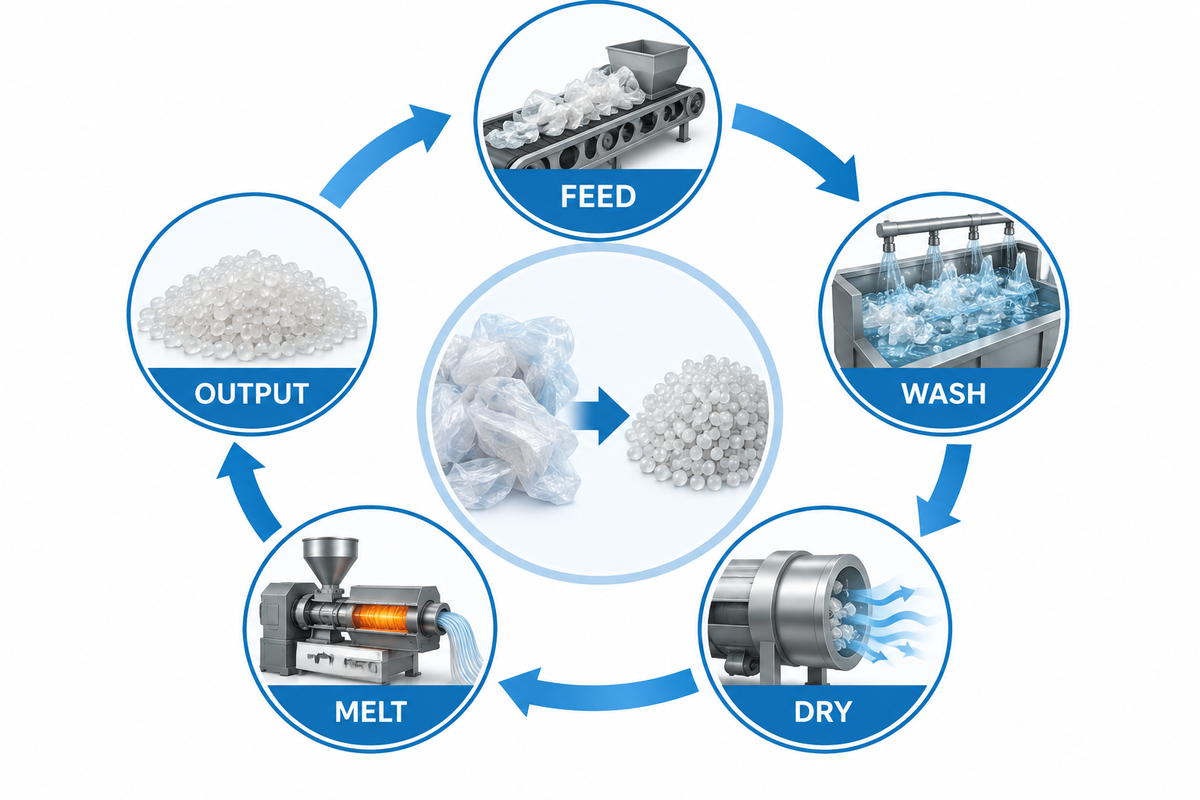
There are 6 key steps to the process. Each checkpoint needs a sample, method, limit, record, and disposition. The limits are project-specific and the framework isn’t an industry standard. Of note, the framework places a strong emphasis on traceability and chemical quality, which echoes the broad and general quality concerns of the OECD review of recycled-plastics validation.
| Process category | Control question |
|---|---|
| Bale feeding | Is compacted film opened and metered consistently? |
| Shredding | Does size reduction expose surfaces without excessive fines? |
| Crushing | Is the material form suitable for the selected wet stage? |
| Floating washing | Are density separation and water condition controlled? |
| Friction washing | Is mechanical action removing attached contamination? |
| Fine washing | Is loosened contamination carried away before rinsing? |
| Squeezing | Is free water removed before thermal drying? |
| Thermal drying | Does the material meet the next-stage moisture requirement? |
| Packaging or pelletizing | Does the output form match the buyer specification? |
- Feed identity: Lot traceability, origin, color, structure, polymer family, and degree of contamination.
- Contamination load: Soil, organics, paper, metals, labels, incompatible polymers, and moisture.
- Wash effectiveness: Residual surface contamination and evidence that rinse water isn’t carrying dirt forward.
- Drying stability: Moisture, fines, bulk density, and feed behavior at next process step.
- Melt cleanliness after cleaning the material: Filter pressure behavior, screen life, gels, unmelted materials, off-gas, and odor.
- Output acceptance: Flake or pellet specification tied to a real downstream application.
| Symptom | Likely upstream questions | Evidence to collect |
|---|---|---|
| Unstable throughput | Is bale opening or metering inconsistent? | Feed rate trend, bulk density, bridge events |
| Dirty dried film | Was contamination loosened but carried through? | Wash and rinse samples, solids load, visual grading |
| High dryer energy | Is mechanical dewatering underperforming? | Moisture before and after squeezing, airflow, temperature |
| Frequent screen changes | What incompatible solids or polymers remain? | Screen residue, pressure trend, incoming composition |
| Bubbles or porous pellets | Is moisture, air, or volatile contamination present? | Moisture, vacuum trend, odor and pellet inspection |
How Feedstock Changes the Process Design
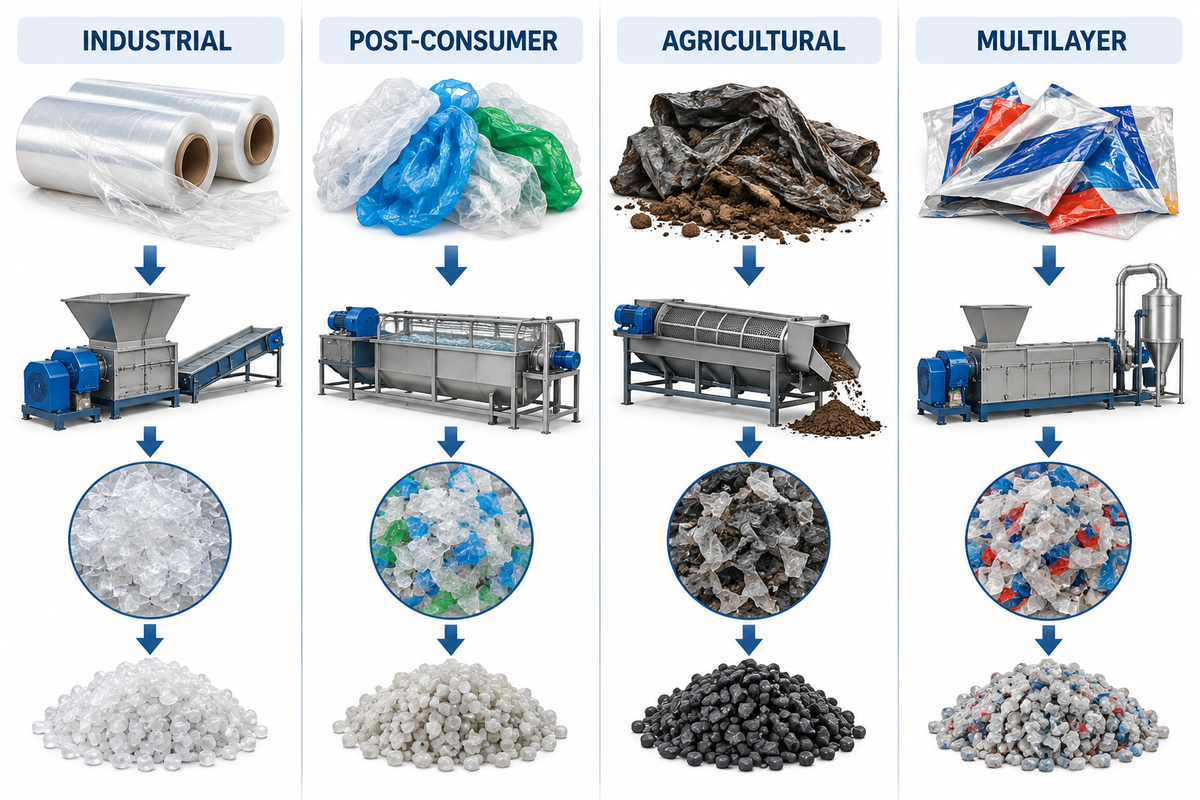
Clean industrial film normally focuses attention on feeding, label removal, densification, and controlled extrusion. Post-consumer plastic bags, especially food packaging, add collection uncertainty, food or product residues, and mixed colors, labels and wrong items. Agricultural films often have the highest burden of soil, sand and moisture. Printed and multilayer films create questions about color, odor and end market that washing can’t answer; an EU agricultural-plastics report documents the yield penalty from heavily contaminated, thin films.
Design the route from the worst representative feed expected under the supply contract, not the cleanest sample shown during sales. With a wide variability, differentiate feedstocks with different operating rules and acceptance criteria. Deliberate bypass, pre-cleaning or separation into distinct campaigns may be more stable than attempting to process all feedstocks through the same settings.
Utilities, Water Treatment, and Line Integration
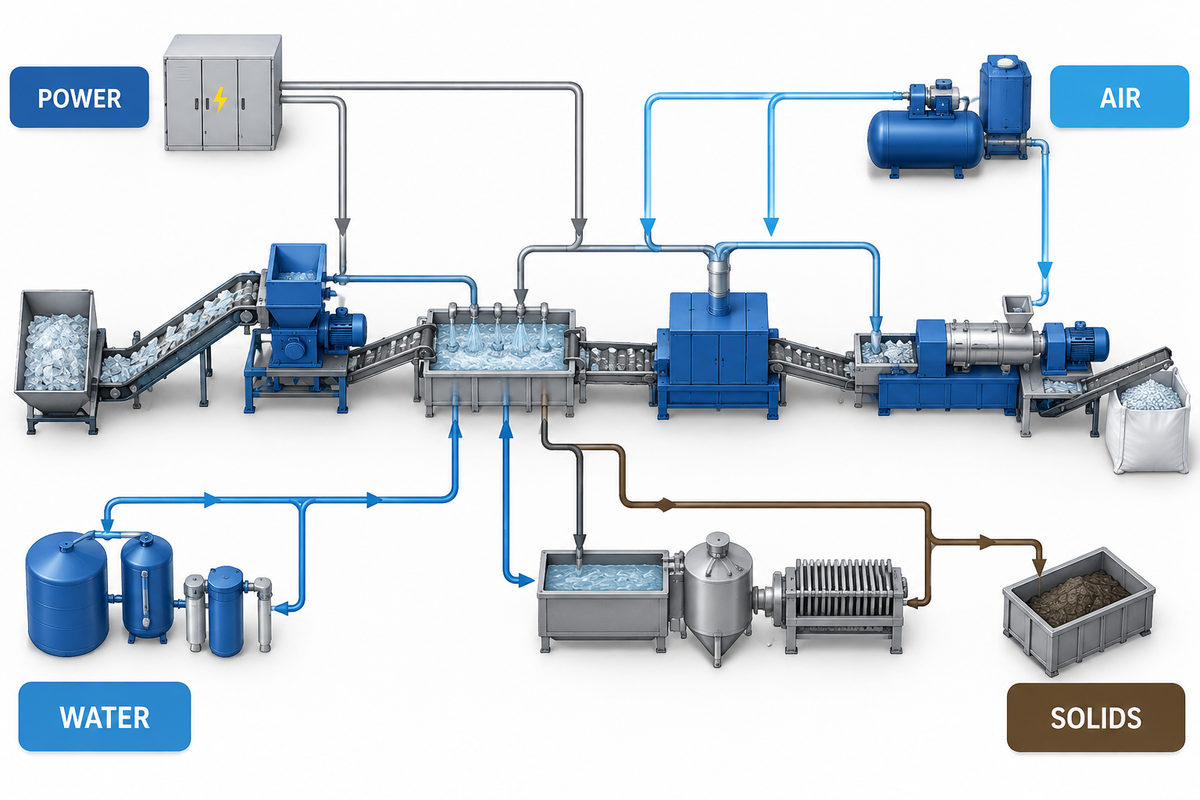
A complete process is made up of more than the machines that touch plastic. Confirm electrical supply and connected load, water source and recirculation, heat source, compressed air, drainage, sludge handling, ventilation, fire and guarding requirements, storage, material transfer, controls, and maintenance access. The final design will satisfy the requirements of the local environment and the welfare of the workers. Contamination and the associated impacts on infrastructure are considered at the system level in the US EPA plastic Pollution Strategy.
Capacity is a system balance. State whether the requested rate refers to wet incoming film, dry input, clean flakes, or pellets. Then test the constraint at each stage. A nominal 1,000 kg/h shredder doesn’t make a 1,000 kg/h line if contaminated film, drying, screen changes, water treatment or packaging limits sustained output.
What to Specify Before Requesting a Recycling-Line Proposal
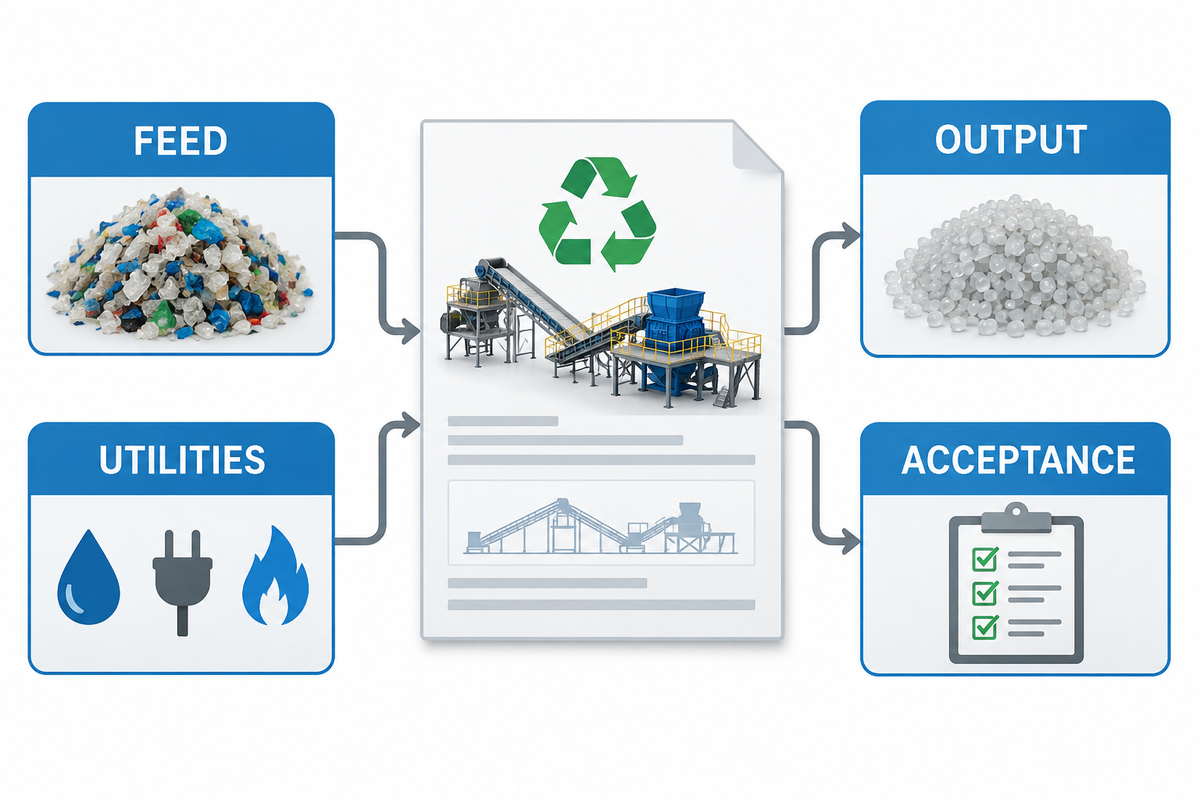
Provide representative feed samples and a mass-based composition estimate; photos are not sufficient. Identify the source, polymer mix, contamination, moisture, bale form, printing and labels, expected input rate, operating hours, desired flake or pellet, downstream use cases, available utilities and constraints, labor, water and waste constraints, and required acceptance tests. ASTM’s D5577 contaminant-identification guide is a reminder that incompatible plastics and other contaminants can impact both processing and reuse quality.
Ask each supplier to use the same basis. Define where capacity is measured, what feed condition applies, which consumables are included, how rejects and water are accounted for, and which quality results warrant acceptance. Buyers ready to translate that process basis into equipment can review Kitech’s PP and PE film washing system as a commercial implementation path.
Frequently Asked Questions
How do you recycle plastic waste film?
Recyclers qualify film by polymer, structure, color, and contamination when recycling polymers. To protect the quality of recycled output, operators open, meter, and load bales. Film is then shred or crushed, loose dirt and metal are removed, washed and separated. It’s then squeezed and dried. Based on the buyer’s specification, it’s dried and densified or passes through further processing for removal of volatiles and pellet cutting.
Can PP and PE film be recycled together?
Though both are polyolefins, that doesn’t mean every mixed stream is suitable for the same product. Melt behavior and density, additives, printing, and end use are also considerations. Define the target output and sample the mix to confirm the buyer’s tolerance. In cases where purity is required, it may be safer to assume incompatibility.
Why is plastic film difficult to recycle?
Film is lightweight and flexible. Because of these properties, film can easily bridge in feeders and wrap around shafts. Soil and other contaminants, such as food, labels, and ink, can also be carried on the film. Film may also contain incompatible multilayer structures. As a result, stable feedstock recycling of film requires control of the feedstock, staged processing, washing, drying, filtration, and an objective specification of output.
Is washing always required?
Not all clean industrial scrap film requires the same washing intensity as post-consumer and agricultural film. The required washing intensity depends on the requirements of the downstream user, such as the presence of labels and odor. A recycler should prove that any reduced-wash route still meets downstream cleanliness, odor, processing, and product requirements.
What is the difference between washed flakes and pellets?
Washing film reduces the size of the film and uses staged cleaning to remove contaminants, dirt, and other unwanted material. Pellets are produced after the polymer is melted, filtered, homogenized, and cut into a denser form. Metering and blending pellets is easier than film; however, pelletizing increases the cost of the product and creates a thermal history.
How do recyclers handle dirty agricultural film?
They first assess soil, sand, moisture, crop residue and polymer content. Further processing may require improved dry pre-cleaning, staged washing and the use of abrasion resistant components, improved solids removal and better water management. Representative trials are essential because contamination can vary sharply by crop, collection method, weather, and storage.
Can multilayer film use the same process?
Multilayer structures may be compatible for recycling, or they may contain adhesives, barriers, metals or polymers that reduce output quality. Determine the full structure and evaluate against target stream and end market. Not all packages that look like polyethylene films are mono-material polyethylene.
Final Takeaway
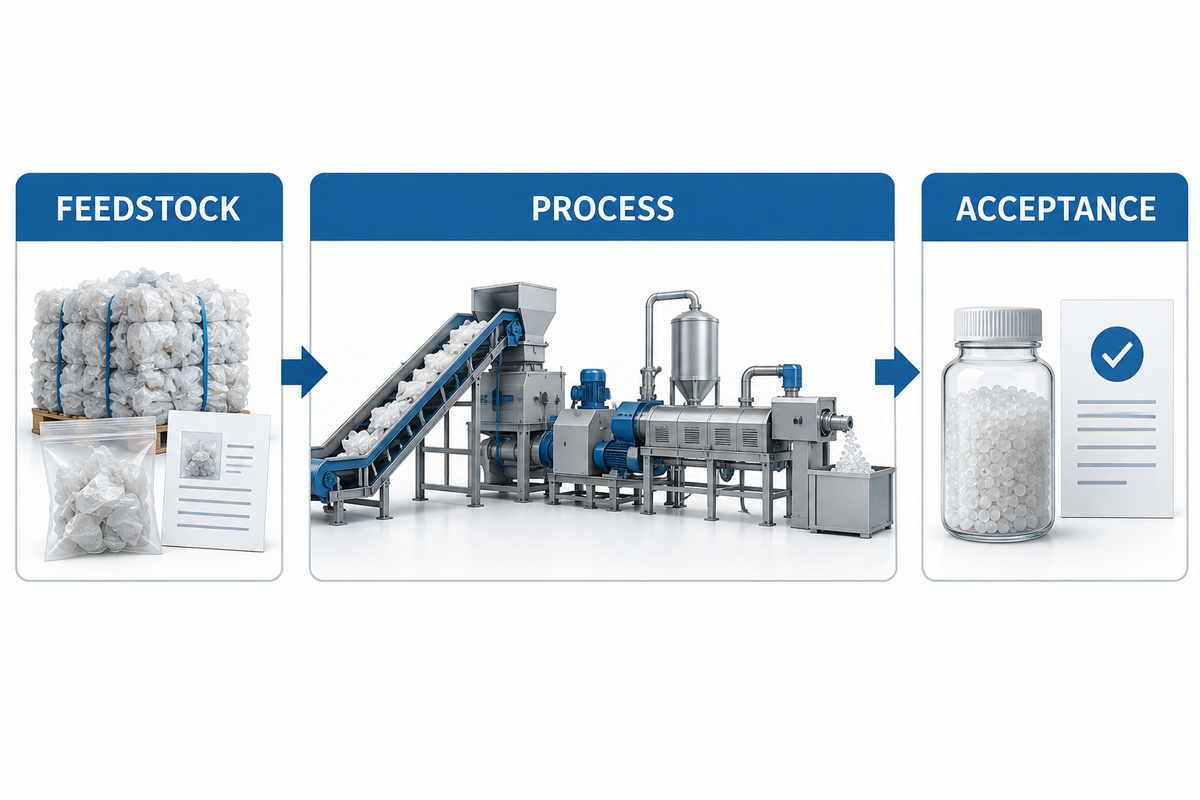
As the Association of Plastic Recyclers process overview shows, a plastic film recycling process requires a defined feedstock and a defined buyer specification. Machines in between must identify, clean, dry, filter and check. Representative samples are required and six key steps must be recorded. Make all capacity and quality claims with measurement basis.
Reviewed by Kitech’s technical team. This guide describes a process. Project settings and acceptance limits require feedstock testing and local engineering review.