Get in touch with Kitech Company

5 Types of Plastic Recycled (And the Two Codes That Need Separate Streams)

The 5 types of plastic are PET (#1), HDPE (#2), LDPE (#4), PP (#5), and PS (#6) in this recycling guide, five thermoplastics that industrial reclaimers sort by ASTM D7611 resin code and material form. Across all reported categories of post-consumer plastic waste, APR reported 5.1 billion pounds of post-consumer plastic recovered for recycling in the United States, while Europe reported 13.5 million tonnes (Mt) of installed plastic recycling capacity and has dedicated streams for PVC (#3) and some Other (#7) materials.
Key Engineering Takeaways:
- Of the seven types of plastic stamped with a number from 1 to 7 under ASTM D7611/D7611M-26, there is also commercial focus on mechanical recycling of five thermoplastics: polyethylene terephthalate (#1), high-density polyethylene (#2), low-density polyethylene (#4), polypropylene (#5), and polystyrene (#6).
- According to U.S. EPA material-specific data and the NAPCOR 2024 PET Recycling Report, U.S. bottle recycling rates were 30.2% for PET (#1) in NAPCOR’s report, while the EPA’s 2018 rates were 29.1% for PET bottles and jars, 29.3% for natural HDPE bottles, and 8.7% for all municipal plastic waste, and Plastics Recyclers Europe reports that flexible polyolefin films, including #4 LDPE/LLDPE, represent the single largest share (26%) of Europe’s 13.5 Mt of installed recycling capacity.
- Per U.S. Department of Energy OSTI Report 2352421, as little as 100 ppm of polyvinyl chloride (#3 PVC) contamination can degrade and discolor PET (#1) during extrusion.
- Low-density, flexible films (#4 LDPE, #5 PP woven sacks) often run on 3-in-1 cutter-compactor pelletizing systems (150 to 2,000 kg/h), while rigid flakes (#2 HDPE drums, #5 PP tubs, #6 PS regrind) can run on single-screw pelletizing systems with continuous laser melt filters matched to contamination.
What Are the 5 Types of Plastic Recycled in This 7-Code Guide?
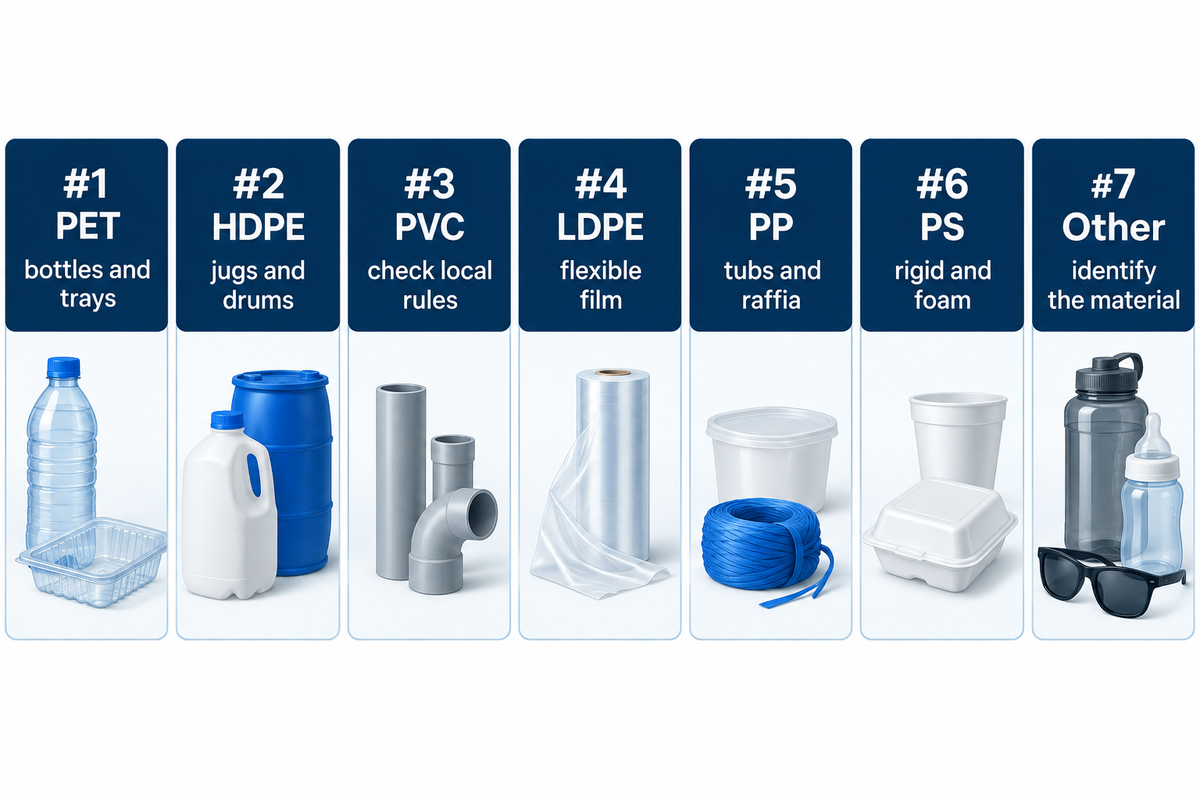
A preliminary understanding of different types of plastic begins with recognizing that though packaging displays plastic number from 1 to 7 in a triangle, wide-scale mechanical reprocessing depends on resin category and collection volume. Under ASTM D7611/D7611M-26, Resin Identification Codes describe the base polymer resin used in a particular product rather than ensure its acceptance in the curbside stream.
What is plastic? What are the 7 main types of plastic? Each synthetic plastic polymer is made of petrochemically or bio-based monomers, e.g., ethylene, propylene, styrene, vinyl chloride, terephthalic acid, linked together by industrial plastic production to form long macromolecules. Because of their low weight and chemical affinity, plastics are used in a wide variety of products, e.g., rigid piping, medical devices, and other products of everyday use. While thermoset polymers irretrievably cross-link and char when heated, many of the 7 types of plastics covered by the NIH Plastic Resin Identification Codes are thermoplastics and are designed to soften and flow above their glass transition temperature or melting point. The five major resin streams make up the backbone of the commercial recycling and reuse and help reduce plastic pollution and environmental impact.
- PET or PETE (#1, Polyethylene Terephthalate): The clear and tough polyester resin that is widely selected for use in food packaging, beverage and food bottles, as well as thermoformed trays.
- HDPE (#2, High-Density Polyethylene): The stiff, chemical-resistant linear polyolefin, which is used to make milk jugs, shampoo bottles, and other types of industrial and drum containers.
- LDPE (#4 — Low-Density Polyethylene / LLDPE): The ductile, branched polyolefin used in plastic bags, pallet stretch film, agricultural mulch, and squeeze bottles.
- PP (#5 — Polypropylene): The heat-resistant, versatile plastic polyolefin used for microwaveable food containers, bottle caps, automotive parts, and woven raffia sacks.
- PS (#6 — Polystyrene / Expanded Polystyrene): The rigid or foamed styrenic polymer used in protective packaging, appliance housings, insulation boards, and disposable food service ware.
By contrast, the remaining two codes—PVC (#3, Polyvinyl Chloride) and Other (#7, mixed, multilayer, and specialty resins)—are accepted only where municipal curbside recycling programs explicitly list the product form. While U.S. EPA data records an overall municipal plastic recycling rate of 8.7% (3,090 thousand tons recycled out of 35,680 thousand tons generated across all durable goods, films, and multi-material items), that aggregate figure masks strong recovery among clean mono-material streams. Across European reclamation plants, Plastics Recyclers Europe documents 13.5 Mt of installed mechanical recycling capacity distributed across polyolefin films (including #4 LDPE/LLDPE) at 26%, PET (#1 at 24%), rigid PP (#5 at 14%), rigid HDPE (#2 at 13%), PVC (#3 at 8%), and PS/EPS (#6 at 2%).

Polymer Density, Melting Point & Recovery Rate Matrix for the 5 Recyclable Plastics
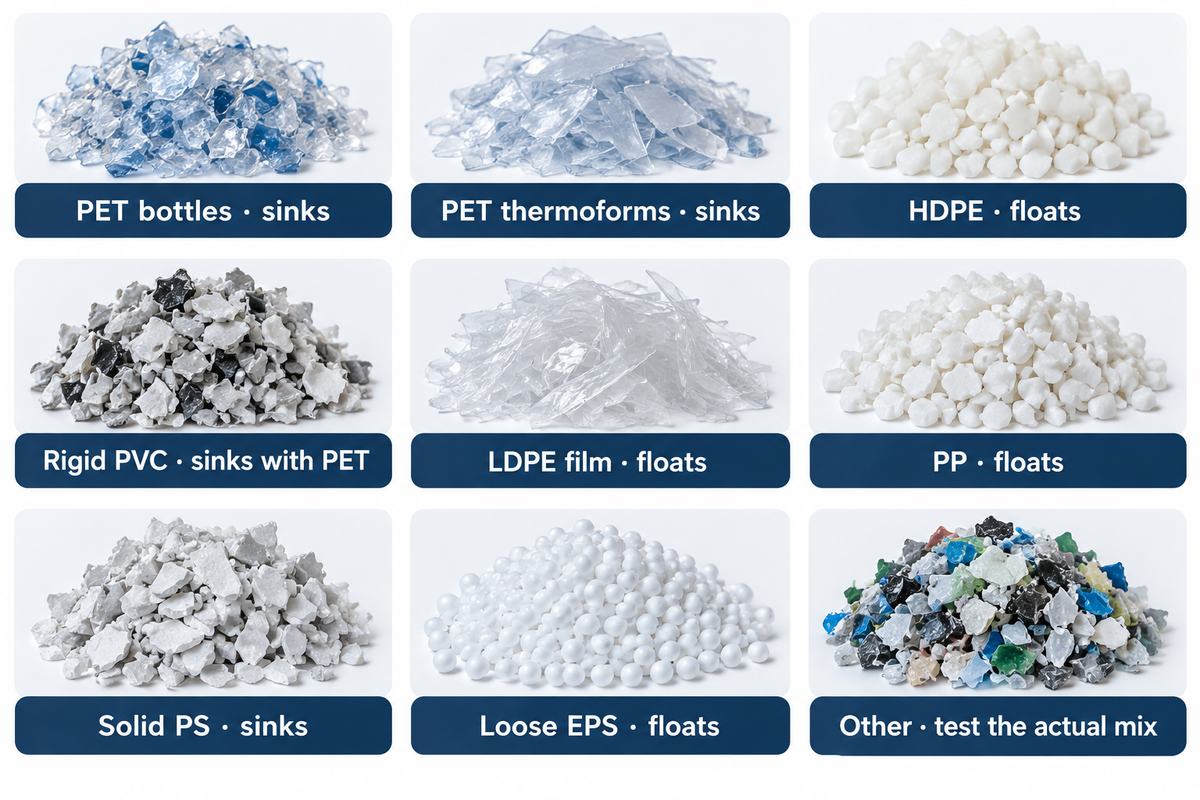
For plant engineers and procurement teams evaluating different plastics, recyclability is governed by three physical parameters: specific gravity (which dictates whether flakes float or sink in a 1.00 g/cm³ water bath), melting temperature window (which prevents cross-polymer thermal degradation in the extruder barrel), and Minimum Selling Price (MSP) economics. According to the Association of Plastic Recyclers (APR) 2024 U.S. Post-Consumer Plastic Recycling Study, 5.1 billion pounds of U.S.-generated post-consumer plastic were recovered for recycling in 2024—an increase of 114.9 million pounds (+2.3%) over 2022—with 94% (4.8 billion pounds) processed by North American reclaimers.
Lifecycle cost modeling in NIST Report AMS 100-64 also explains why mechanical pelletizing dominates over chemical depolymerization: mechanical recycling achieves Minimum Selling Prices of $0.38/lb for PP (#5), $0.46/lb for LDPE (#4), $0.54/lb for PET (#1), and $0.63/lb for HDPE (#2)—all substantially lower than both virgin resin prices ($0.79/lb to $1.19/lb) and other modeled recycling pathways ($0.73/lb to $2.01/lb). The 1.00 g/cm³ water sink-float cut in Table 1 applies to unfilled polymers, so test whether calcium carbonate (CaCO₃) or talc filler makes the specific gravity of a compounded #5 PP or #2 HDPE feed high enough to sink alongside heavy resins.
| Polymer Type & Resin Category | Recyclability Tier & Status | Specific Gravity (dimensionless) or Density (units shown) | 1.00 g/cm³ Water Bath | Melting / Softening Temp (°C) | U.S. / EU Recovery & Capacity Benchmark | NIST Mechanical MSP ($/lb) | Primary Recycled Output & End Uses |
|---|---|---|---|---|---|---|---|
| #1 PET / PETE Bottles (Beverage & Food Jars) | Recycled Tier 1 (Plastic #1 of 5) — Curbside & Deposit | 1.33–1.38 | Sinks | 250–260 °C | 30.2% U.S. bottle rate (NAPCOR) | $0.54/lb (vs. $1.19 virgin) | Washed hot-caustic flakes, SSP-treated rPET pellets, polyester staple fiber, strapping |
| #1 PET Thermoforms (Clamshells & Blister Trays) | Recycled Tier 1B (Sub-stream of #1) — Optical Sort | 1.33–1.38 | Sinks | 245–255 °C | Non-bottle PET modeled as a separate stream (U.S. EPA model) | $0.54/lb (NIST PET baseline) | Sheet-grade rPET thermoform trays, fiberfill, and SSP viscosity-upgraded bottle resin |
| #2 HDPE (High-Density Polyethylene) | Recycled Tier 1 (Plastic #2 of 5) — Curbside & Industrial | 0.94–0.97 | Floats | 125–135 °C | 29.3% U.S. natural bottle rate (EPA); 13% of EU 13.5 Mt | $0.63/lb (vs. $0.79 virgin) | Single-screw strand/water-ring pellets for corrugated drainage pipes, pallets, crates, non-food bottles |
| #3 PVC (Polyvinyl Chloride) | PVC category: check local curbside acceptance | 1.30–1.45 (rigid) | Sinks (co-sinks with PET) | 140–170 °C (degrades >200 °C) | Negligible U.S. MSW recovery; 8% EU capacity (includes construction profiles) | N/A (contaminant in MSW) | Dedicated pipe, window profile, and siding recycling loops, plus flooring and cable streams |
| #4 LDPE / LLDPE (Low-Density Polyethylene) | Recycled Tier 2 (Plastic #3 of 5) — Commercial & Drop-Off | 0.91–0.94 | Floats | 105–115 °C | Polyolefin films as a group: 26% of EU 13.5 Mt capacity (PRE, largest EU stream) | $0.46/lb (vs. $0.81 virgin) | Cutter-compactor water-ring granules for trash bags, agricultural film, construction sheeting, plastic lumber |
| #5 PP (Polypropylene Rigid & Raffia) | Recycled Tier 1 (Plastic #4 of 5) — Curbside & Commercial | 0.89–0.92 | Floats | 160–170 °C | 14% of EU 13.5 Mt for rigid PP and +48M U.S. residents via PP Coalition | $0.38/lb (vs. $0.86 virgin) | Compacted raffia/film pellets and rigid injection-molding granules for automotive battery cases, totes, paint buckets |
| #6 Solid PS (HIPS / GPPS Rigid Polystyrene) | Recycled Tier 2 (Plastic #5A of 5) — Rigid Regrind | 1.04–1.06 | Sinks | 180–240 °C (Tg ~100 °C) | 2% of EU 13.5 Mt combined styrenics (PRE) | Not modeled in NIST AMS 100-64 | Single-screw extruded HIPS/GPPS pellets for appliance housings, spools, picture frames, coat hangers |
| #6 EPS Foam (Expanded Polystyrene) | Recycled Tier 2 (Plastic #5B of 5) — Cold/Thermal Compaction | 15–30 kg/m³ (bulk) | Loose foam floats, test densified feed | 180–240 °C | 40:1 to 50:1 compaction into 300–600 kg/m³ blocks | Not modeled in NIST AMS 100-64 | Densified EPS ingots re-extruded into XPS thermal insulation boards and architectural moldings |
| #7 Other (PC, ABS, PA, PLA, Multilayer) | Other category: check local curbside acceptance | 1.04–1.25 (varies) | Sinks | Immiscible / multi-melting | No #7-only share in modeled MRF inbound (US EPA model) and multilayer pouches need dedicated recycling routes | N/A (heterogeneous mix) | Post-industrial PC/ABS/PA sorted in WEEE/ELV plants; multilayer pouches replaced by mono-PE (#4) |
Rigid Bottle Workhorses: PET (#1) and HDPE (#2) Collection, Sorting & Washing
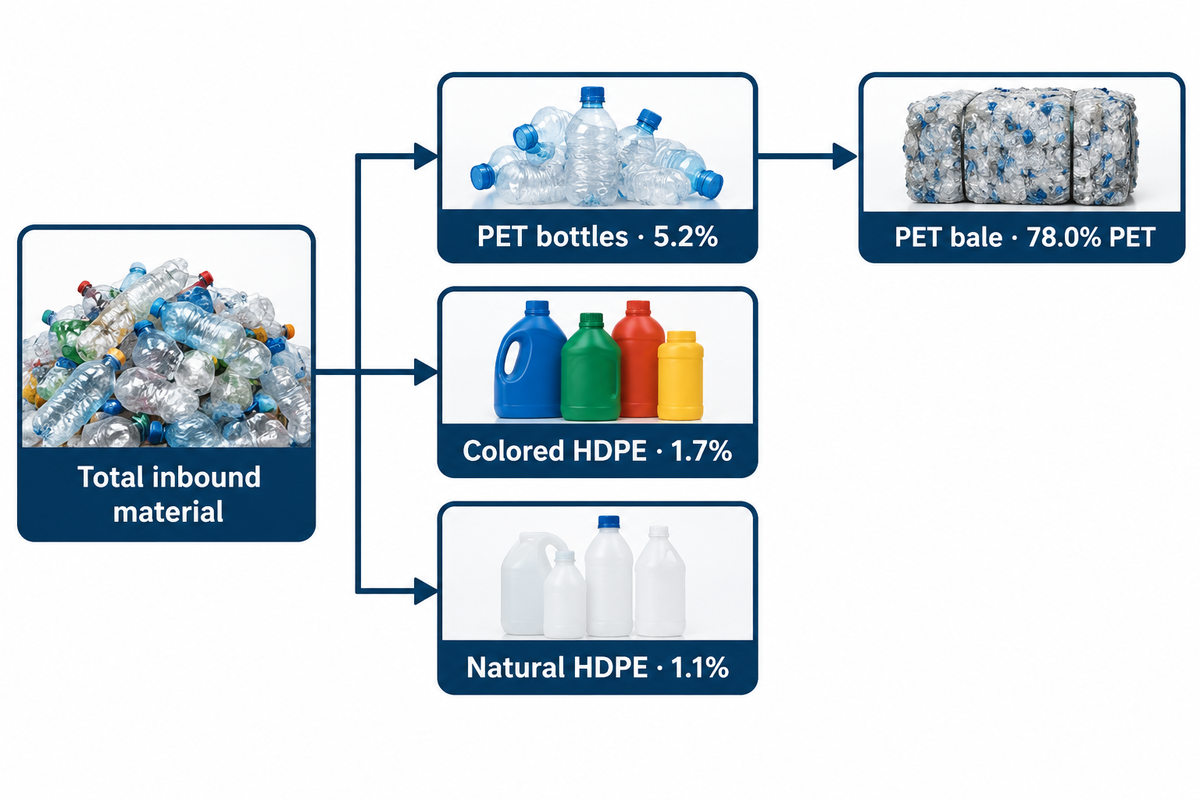
Plastic Grade 1 and Grade 2 Material Flows in Single-Stream MRFs
Municipal waste management considers polyethylene terephthalate (PET or PETE) to be “plastic grade 1” resin (highest-value post-consumer resin in curbside collection) followed immediately by high-density polyethylene (HDPE), grade 2. Material flow modeling by the US EPA (EPA study, PMC9004285) estimates that total incoming material at modeled US single-stream MRFs includes 5.2% PET bottles (548,000 metric tons/year), 1.7% colored HDPE bottles (177,000 metric tons/year) and 1.1% natural, unpigmented HDPE bottles (115,000 metric tons/year). Since the widespread use of plastic in standardized blow-molded plastic products lends predictable rheology, optical sorters and mechanical reclaimers use effective waste management to process suitable collected plastic bottles into post-consumer resin (PCR), with yields depending on contamination and process losses.
Nevertheless, baled bottles still need decontamination before extrusion. The modeled PET content of post-MRF PET bales is 78.0% (as reported in the EPA material-flow study (PMC9004285)). According to the EPA model, the rest of a post-MRF PET bale includes 7.2% polyethylene (from HDPE/LDPE closures), 3.3% polypropylene (from bottle caps and BOPP labels), 0.9% EVA cap liners, and 6.1% dirt and moisture. For each metric ton of PET bale feed, the EPA model estimates 251.7 kWh of electricity, 0.0047 metric tons of sodium hydroxide (NaOH) for hot caustic label and adhesive stripping, and 0.188 metric tons of process water.
With rigid bottle recycling, reclaimers may separate sub-streams according to the buyer’s bale specification.
- Blow-molded beverage bottles (#1 PET bottle grade) use high-intrinsic-viscosity copolymer PET (IV 0.72–0.84 dL/g), whereas berry clamshells and blister trays (#1 thermoform PET) use lower-IV sheet resin (0.60–0.68 dL/g) often coated with silicone release agents and aggressive acrylic pressure-sensitive adhesives. When mixed with thermoforms in bottle flake, check the buyer’s bale specification and melt viscosity requirements before assuming solid-state polycondensation (SSP) will make the blend suitable.
- Translucent homopolymer milk and water jugs (#2 natural HDPE, melt flow index 0.7 to 0.9 g/10 min) sell for a higher price than copolymer detergent, motor oil, and shampoo bottles (#2 pigmented HDPE, MFI 0.25 to 0.40 g/10 min) for several reasons. Natural rHDPE can be colored in any way to create packaging for personal care products. Mixed color HDPE, on the other hand, is blended into dark gray or black pellets to make corrugated drainage products such as pipes and industrial pallets.
Flexible Films, Rigid Tubs & Foam: LDPE (#4), PP (#5), and PS (#6) Recycling Streams
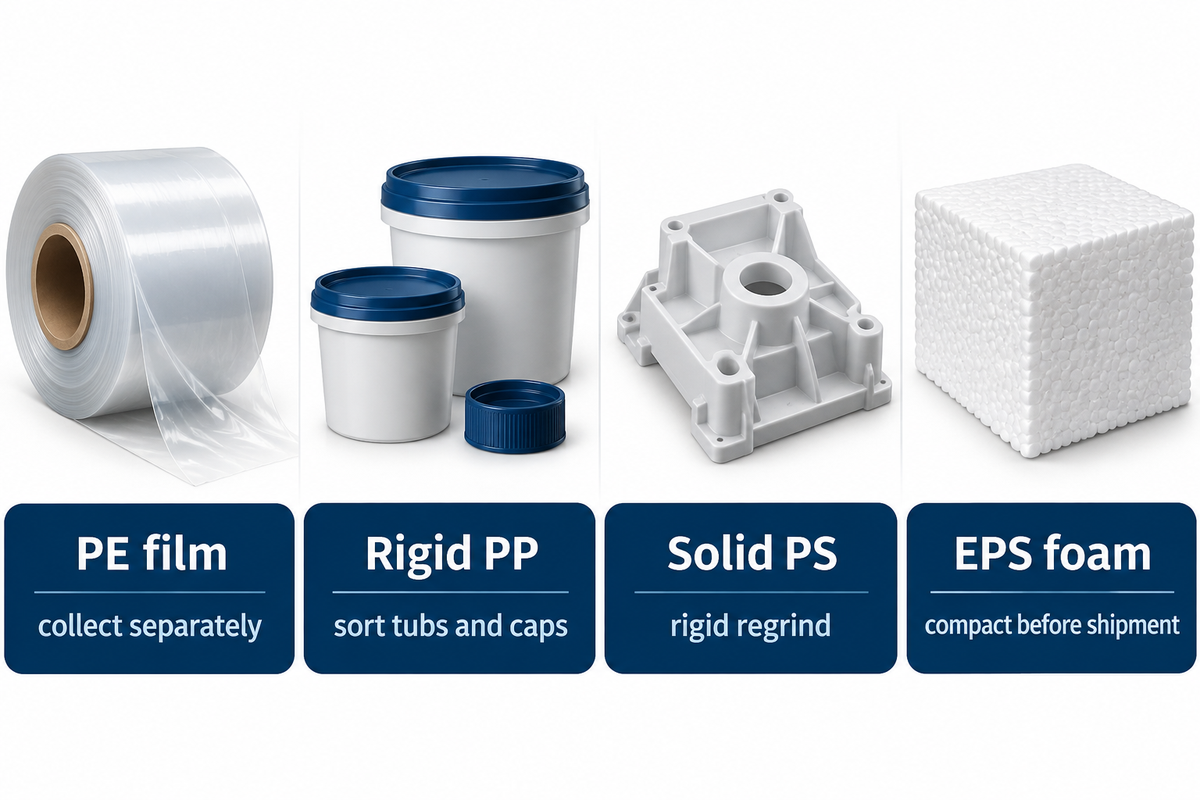
PP 5 Thermal Stability, LDPE Film Capacity & EPS Compaction
When packaging engineers evaluate “PP 5” on rigid tubs and closures, the code designates polypropylene (#5), one of the most common and fastest-growing recyclable polyolefins alongside low-density polyethylene (#4 LDPE). As a common plastic across industrial and consumer markets, PP #5 has a low density (0.89–0.92 g/cm³) and a high crystalline melting point of 160–170 °C, allowing selected grades to withstand hot-fill food packaging and microwave reheating when the finished container is rated for the intended use and migration of potentially harmful chemicals has been assessed. Through equipment grants funded by The Recycling Partnership’s Polypropylene Recycling Coalition, more than 48 million Americans have gained curbside PP recycling access, improving collection of post-consumer PP tubs, caps, and containers each year.
A frequent misconception in consumer guides is that #4 LDPE and linear low-density polyethylene (LLDPE)—used in plastic bags, shopping bags, shrink overwrap, and agricultural film—are rarely recycled because municipal curbside bins reject loose film. Curbside MRFs reject plastic bag waste only because thin flexible forms wrap around rotating disc and star screens engineered for rigid cardboard and bottles. Once collected separately through commercial distribution centers, agricultural collection schemes, or retail drop-off programs, polyolefin films, including #4 LDPE/LLDPE, constitute 26% of all installed plastic recycling capacity in Europe (approximately 3.5 million tonnes out of 13.5 Mt per Plastics Recyclers Europe)—surpassing even PET (24%). Trade verification published by Plastics Today describes trials using recycled PE film in selected non-food applications, with performance depending on the recovered material and intended use.
Meanwhile, polystyrene (#6 PS) is found in two distinct physical forms: solid high-impact or general-purpose polystyrene (HIPS/GPPS, density 1.04-1.06 g/cm³) recovered from appliance liners, electronics housings, and yogurt cups, and expanded polystyrene (EPS) foam used in fish boxes and cushioning in white goods and building insulation. EPS is comprised largely of trapped air and, therefore, has a low bulk density of 10-30 kg/m³, making the transport of loose EPS not economical. Industrial recyclers solve this by running cold screw compactors or thermal densifiers at collection depots, compressing EPS at a 40:1 to 50:1 ratio into 300–600 kg/m³ ingots that feed directly into single-screw polystyrene pelletizing lines.
Why the Two Other Codes, PVC (#3) and Other (#7), Need Separate Recovery
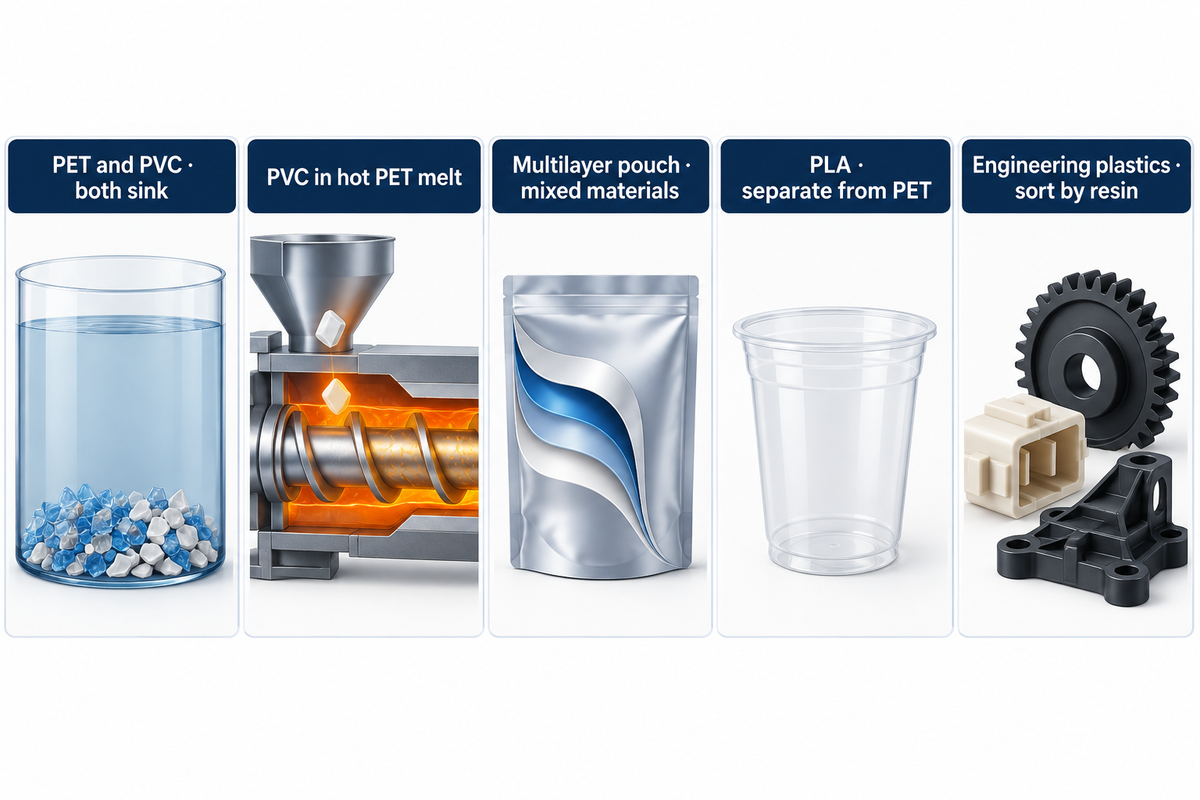
Waste management facilities often keep polyvinyl chloride (#3 PVC) and mixed Other (#7) separate from standard recycling loops for containers, films, and commercial streams. Even among widely used plastics, recovering valuable materials from mixed packaging materials requires strict control over polymer degradation chemistry and phase separation in industrial extruders to prevent environmental pollution during melt reprocessing.
First, #3 (PVC) is a chlorinated polymer (~57% chlorine by weight) widely used in construction materials, window profiles, medical tubing, wire jacketing, and shrink sleeves. In a post-consumer MRF, PVC poisons #1 (PET) recycling for the following two reasons:
- Rigid PVC has a specific gravity of 1.30-1.45 g/cm³, which overlaps with PET (#1) at 1.33-1.38 g/cm³. Inside a standard 1.00 g/cm³ water float-sink tank, both polymers sink to the bottom together, meaning density separation alone cannot be used to distinguish or remove PVC from PET bottle flakes.
- While PVC softens and processes at 140–170 °C, PET requires extruder barrel temperatures of 260–280 °C. As documented in U.S. DOE OSTI Technical Report 2352421 and peer-reviewed PET extrusion research, PVC undergoes rapid autocatalytic dehydrochlorination above 200 °C, releasing corrosive hydrochloric acid (HCl) gas. Because of this, PVC is recycled in dedicated closed-loop streams for construction profiles, pipes, flooring, and cables, away from mixed curbside streams.
Second, code #7 (“Other”) covers resins outside codes #1 through #6 and some laminated structures. Within the post-consumer waste streams, number 7 plastics fall into three incompatible groups.
- Stand-up food pouches (PET/Alu/PE or PA/EVOH/PE) laminate dissimilar polymers that have positive Gibbs free energy of mixing. During fusion, PET and polyethylene phase-separate into distinct domains that can weaken mechanical strength. To eliminate this waste stream, packaging converters are shifting to recyclable mono-PE including BOPE, and mono-PP including BOPP, barrier films—a market expanding from USD 4.45 billion in 2025 to USD 7.21 billion by 2035.
- Visually identical to clear #1 PET cups, #7 PLA (polylactic acid bioplastic) melts at 150–160 °C and degrades into lactic acid at PET drying and extrusion temperatures, turning washed rPET flakes cloudy, yellowed, and unusable even at trace contamination levels.
- Thermoplastics, such as polycarbonate (which historically raised human health concerns, over bisphenol A leaching into food contact) and PA/Nylon, have good mechanical properties and value, but are only economically viable in dedicated dismantling lines of WEEE and ELV, and not in household waste.

Sink-Float Density Separation & NIR Optical Sorting Across the 5 Plastic Types
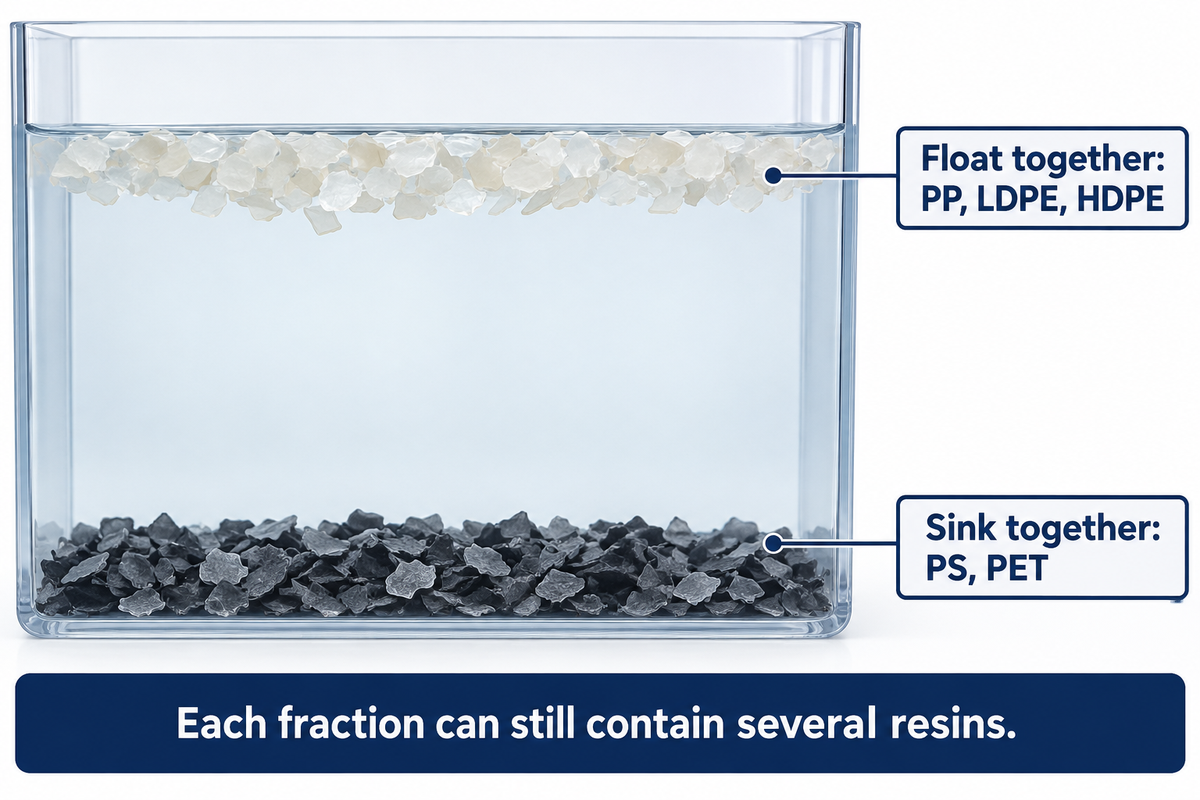
Why can’t different types of plastic simply be shredded and melted together in a single extruder? As materials scientists frequently note in polymer thermodynamics discussions, high-molecular-weight polymers are thermodynamically immiscible: blending nonpolar semicrystalline polyolefins (#2 HDPE, #4 LDPE, #5 PP) with polar polyesters (#1 PET) or aromatic styrenics (#6 PS) produces weak interfacial boundaries that crack under minimal stress, while polymer melting temperatures span from 105 °C (LDPE) to 260 °C (PET). To achieve high single-resin purity, a rigorous multi-stage physical and spectroscopic sorting process is required.
Modern reclamation plants can separate incoming bales through sequential stages of mechanical and optical separation, as illustrated by the EPA PET process model.
- Rotating trommel screens eliminate fines (<15-25 mm) such as glass, grit and bottle caps, while paddles oscillate in the ballistic sense, bouncing rigid 3D containers (e.g. #1 PET bottles, #2 HDPE jugs, #5 PP tubs, etc.) and allowing 2D flexible materials (e.g. #4 LDPE film and paper) to pass.
- High-speed conveyor belts pass under Near-Infrared (NIR) sensors that read molecular absorption bands to identify target resins such as PET (#1), HDPE (#2), PVC (#3), LDPE (#4), PP (#5), and PS (#6), while X-Ray Fluorescence (XRF) sensors can detect elements such as chlorine in PVC and sorters can use compressed air jets to eject flagged material.
- After wet granulators size-reduce the sorted plastics into 10–14 mm flakes, the regrind enters a sink-float separation tank filled with water (density 1.00 g/cm³). Because polyolefins have densities below water—PP (#5) at 0.89–0.92 g/cm³, LDPE (#4) at 0.91–0.94 g/cm³, and HDPE (#2) at 0.94–0.97 g/cm³—all three float to the surface skimmer paddles. Conversely, PS (#6) at 1.04–1.06 g/cm³ and PET (#1) at 1.33–1.38 g/cm³ sink to the bottom screw conveyor. This single density cut automatically strips floating PP/HDPE bottle caps and labels away from sinking PET bottle flakes, and conversely drops heavy PET, PS, metal, and stone out of floating HDPE/PP/LDPE streams.
- When rigid PP (#5) and HDPE (#2) flakes are co-mingled in the floating fraction, or when PS (#6) must be separated from ABS/PET in the sinking fraction, reclaimers use hydrocyclones, calibrated salt/media baths (1.05–1.20 g/cm³), or triboelectric flake sorters alongside colour/NIR flake sorters to isolate clean mono-polymer streams.

Industrial Washing & Dewatering Differences: Rigid Flakes vs. Flexible PE/PP Films
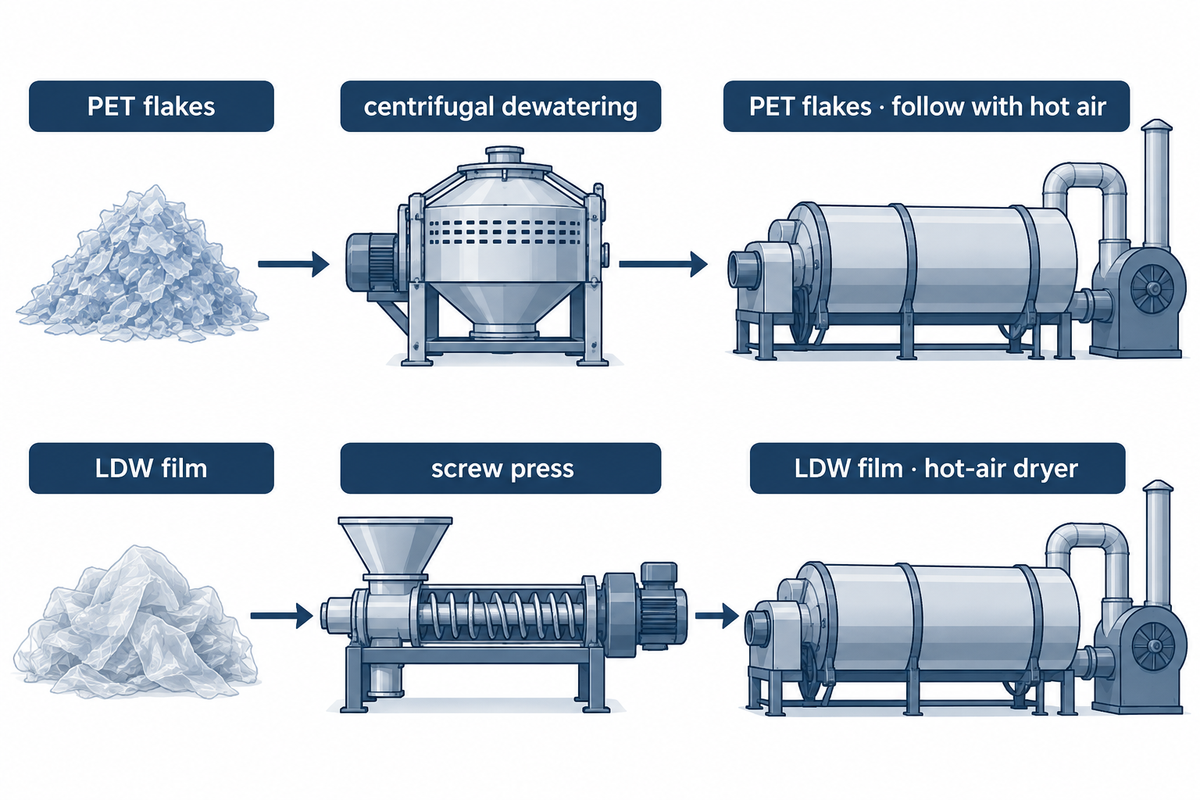
Once the resin code has done its sorting of recyclables, five different types of plastics become apparent. Two mechanical systems for washing and drying predominate: rigid flake washing systems (#1 PET bottles, #2 HDPE drums/milk jugs, #5 PP tubs, #6 rigid HIPS) and flexible film washing systems (#4 LDPE/LLDPE stretch/agricultural film and #5 PP woven jumbo bags). Running film through a system for rigid flakes can cause screen blinding, incomplete adhesive removal, and excessive moisture carryover to the extruder.
Within a rigid flake washing line, 10–14 mm crushed flakes have low surface-area-to-mass ratios and can carry stubborn waterproof casein, hot-melt, or acrylic label adhesives, residual sugars, oils, and dirt. After cold pre-washing and wet granulation, rigid PET (#1) flakes may enter a steam- or electric-heated hot caustic washer with sodium hydroxide and low-foaming surfactant to remove residues. High-speed friction washers remove loosened glue and pulp from the flake surfaces. A centrifugal mechanical dryer removes surface moisture from rigid flakes before hot-air drying and any further drying required for extrusion or solid-state polycondensation.
Conversely, a flexible film washing line for #4 LDPE shopping bags, pallet wrap, and #5 PP raffia processes thin film that traps water between folded layers and can carry sand, soil, and paper label pulp. Centrifugal spin dryers alone can leave too much moisture in washed LDPE film for stable extrusion. As documented by Plastics Technology and Kitech Machinery’s industrial plastic washing and recycling lines, high-output film lines use heavy-duty pre-shredders, floating wash tanks with paddle drums that gently unfold the film to release trapped grit, high-speed friction washers, and a heavy-duty screw press squeezer dryer. Inside the squeezer, a tapered compression screw mechanically wrings water out through perforated barrel screens, leaving film flakes at about 15–20% moisture after squeezing and about 3–5% after hot-air drying ahead of cutter-compactor pelletizing on Kitech’s LDW film line.

Selecting Pelletizing & Continuous Melt Filtration Equipment by Plastic Type
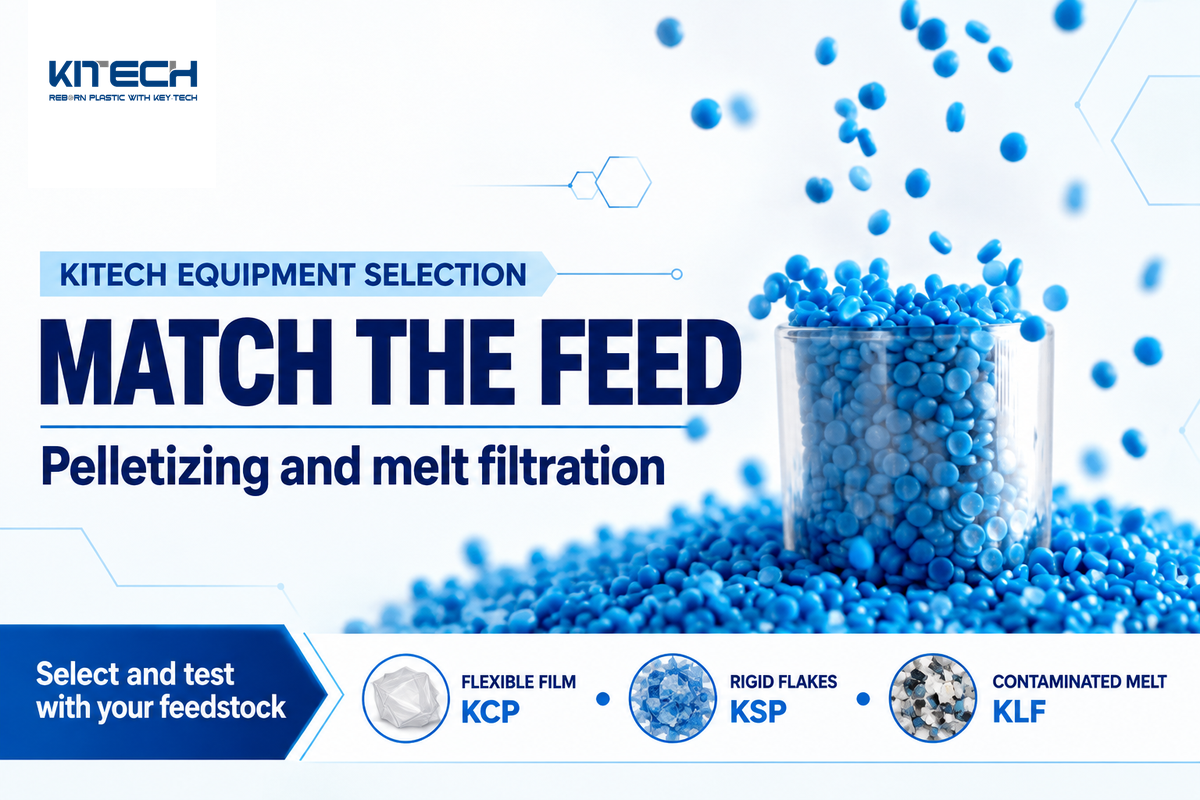
Recycled Plastic Granule Geometries and Extruder-Filter Matching
At the end of mechanical reclamation, washed flakes and squeezed films must be homogenized, degassed, melt-filtered, and cut into uniform recycled plastic (regranulate) for consistency in MFI and bulk density. Industrial regranulate output is classified by both polymer family and pellet-cutting geometry:
- Smooth, lenticular polyolefin (#4 LDPE, #2 HDPE, #5 PP) granules are cut directly at the die face by a water cooled rotating ring for blown film, pipe and profile extrusion and injection molding.
- Strand-cut cylindrical pellets (#2 HDPE, #5 PP, #6 PS, and ABS) are extruded as molten strands cooled in a water bath, chopped by a rotary pelletizer, and pellets formed into 3×3 mm cylinders. These pellets are used in stiff, rigid regrind, in compounded masterbatches, and in polymers (styrenic).
- Underwater-cut spherical pellets are cut inside a pressurized water chamber, and crystallization and solid-state polycondensation can restore intrinsic viscosity in rPET (#1 PET) for end uses such as polyester yarns or separately validated food-contact bottles.
Selecting the wrong extruder feeding mechanism or screen changer for your target resin leads to screw starvation, volatile gas porosity, or constant screen-change downtime. Across plastic recycling machine applications by industry, Kitech Machinery’s engineering and manufacturing team builds three specialized plastic pelletizing and laser melt filtration systems matched to the rheology and bulk density of the 5 commonly recycled plastics:
- Loose washed #4 LDPE/LLDPE film and #5 PP woven/nonwoven scrap have a bulk density of only 20–50 kg/m³ and bridge in conventional hoppers. The Kitech KCP Series 3-in-1 Pelletizing System (150–1,300 kg/h, specific energy 0.30–0.40 kWh/kg) and high-output 5G KCP Plus (600–2,000 kg/h, L/D 50:1, specific energy 0.32 kWh/kg) integrate a vertical cutter-compactor drum directly onto the single-screw extruder tangential feed port. High-speed rotor blades cut, friction-heat, pre-dry, and densify the film at 80–110 °C (just below its melting point), force-feeding densified material (350–450 kg/m³) into the screw while double-chamber vacuum degassing strips printing inks and moisture.
- Crushed rigid #2 HDPE, #5 PP, and #6 PS/HIPS flakes or separately sorted ABS from drums, crates, shampoo bottles, and densified EPS already have a relatively high bulk density (300-500 kg/m³). The Kitech KSP Series Single-Screw Pelletizing System (300-1,200 kg/h, specific energy 0.20-0.30 kWh/kg) uses a precision metering screw feeder and can be configured with two-stage extrusion, vacuum venting, and strand or water-ring pelletizing.
- Post-consumer streams containing paper, aluminum, and rubber contaminants can clog conventional piston or plate screen changers frequently—a bottleneck analyzed in Plastics Technology and Recycling Today. Kitech’s KLF Series Continuous Laser Melt Filter (KLF350 for 200–1,000 kg/h, KLF500 for 1,000–2,500 kg/h, and KLF700 for 2,500–4,000 kg/h) replaces wire mesh packs with laser-drilled discs rated up to 30 MPa on the integrated KCP Plus line. Rotating scraper blades wipe contaminants off the disc surface and discharge them via an auger screw to limit polymer melt loss.
Note that all stated throughput ratings—150–1,300 kg/h on the KCP Series, 600–2,000 kg/h on the 5G KCP Plus, and 300–1,200 kg/h on the KSP Series—are published ratings, with actual throughput depending on upstream washing and dewatering, infeed moisture for films or rigid flakes, and the required pellet quality at the extruder. If your facility is planning a new washing and pelletizing line or upgrading melt filtration for post-consumer resins, contact Kitech Machinery’s engineering team with your target polymer mix, contamination profile, and hourly throughput requirements for a customized material trial and line configuration.

Frequently Asked Questions
What does “PP 5” mean in the context of plastics?
“PP 5” represents polypropylene under Resin Identification Code #5 (ASTM D7611), a low-density (0.89-0.92 g/cm³), heat-resistant thermoplastic, which melts at 160-170 °C. PP 5 is found in food containers, including some rated for microwave use, and in bottle caps, automotive battery cases and woven sacks. It is recycled across the curbside and commercial polyolefin streams.
What does “plastic grade 1” mean?
“Plastic Grade 1” identifies polyethylene terephthalate (PET or PETE) stamped with Resin Identification Code #1 inside the ASTM D7611 solid triangle. PET is a clear, strong polyester thermoplastic with a specific gravity of 1.33 to 1.38 g/cm³ (meaning it sinks in a 1.00 g/cm³ water float-sink tank) and a crystalline melting point of 250 °C to 260 °C.
Why are PVC (#3) and Other (#7) sorted separately from commonly recycled plastics?
Curbside recycling for PVC (#3) and Other (#7) depends on the local program and product form, because these materials can disrupt mechanical melt extrusion in mixed streams. Rigid PVC shares PET’s density (1.30–1.45 g/cm³) and co-sinks in water baths, but degrades above 200 °C inside 260–280 °C PET extruders, releasing corrosive hydrochloric acid gas as it degrades, while #7 multilayer pouches combine immiscible polymers.
What are the different types of plastic granules produced in industrial recycling?
Recyclers make recycled plastic granules from common types of plastic. Flexible polyolefins such as #4 LDPE film and #5 PP woven bags are typically processed on 3-in-1 cutter-compactor extruders (like the Kitech KCP Series) into lenticular water-ring cut granules. Single-screw extruders (like the KSP Series) can make water-ring or strand-cut pellets from rigid flakes like #2 HDPE drums, #5 PP tubs, and #6 solid or densified PS, after size reduction and continuous melt filtration selected for the feedstock.
Can flexible LDPE (#4) bags and rigid HDPE (#2) bottles be washed in the same recycling line?
Typically they run on separate lines because, although both are floating polyolefins, rigid HDPE flakes suit a centrifugal dryer, whereas thin LDPE film often needs a screw press squeezer and a downstream hot-air dryer before cutter-compactor extrusion.
References & Sources
- U.S. Environmental Protection Agency (EPA) – Plastics: Material-Specific Data (Municipal Solid Waste Generation and Recycling Rates).
- US Environmental Protection Agency: Recycling of Plastics in the United States: Plastic Material Flows and Polyethylene Terephthalate (PET) Recycling Processes (PMC9004285).
- National Institute of Standards and Technology (NIST) – The U.S. Plastics Recycling Economy: Current State, Challenges, and Opportunities (NIST AMS 100-64).
- National Institutes of Health (NIH) Office of Research Facilities — Plastic Resin Identification Codes (#1-#7 Polymer Classification)
- ASTM International
- U.S. Department of Energy (DOE) Office of Scientific and Technical Information (OSTI)
- Association of Plastic Recyclers (APR)
2024 U.S. Post-Consumer Plastic Recycling Study (5.1 Billion Pounds Recovered)
- National Association for PET Container Resources (NAPCOR)
2024 PET Recycling Report (30.2% U.S. PET Bottle Recycling Rate)
- Plastics Recyclers Europe (PRE)
Plastics Recycling Industry Figures 2024/2025 (13.5 Mt Installed European Capacity by Polymer)
- The Recycling Partnership
- Plastics Technology
Finding the Right Melt Filtration System for Post-Consumer Recycling
- Recycling Today
Plastics Melt Filtration Systems for Post-Consumer Reclaimers
- Plastics Today
Study Finds Recycled LDPE Film Viable for Non-Food Commercial Applications
- Google Patents / WIPO
WO2023104820A1: Recycling Process for Polyethylene from Laminated Carton Waste Streams
Related Posts
Trending now