Get in touch with Kitech Company



Plastic types do not fit on one shelf. Some can bend, some can shatter, some melt at 110C, some can survive a pot of 250C. Some leave nothing but fresh bottles after a single pass on the wash line; some stay a little longer as downcycled park benches; a few leave no manufacturing trail at all. This guide separates the field into three working tiers- consumer resins, industrial engineering plastics, and specialty polymers- then lays them back onto recycling-line decisions that a processor needs to make. The result is a reference sheet that can answer, “What is this plastic?” and “What do I do with it now?”
Quick Specs
| Three working tiers | Consumer resin codes 1–7 · Industrial engineering plastics · Specialty high-performance polymers |
| Thermal split | Thermoplastics (re-melt & re-form) vs thermosets (cross-linked, no re-melt) |
| Resin code standard | ASTM D7611 / ISO 104³ — identification only, not a recycling guarantee |
| Best-established streams | PET bottles, HDPE rigid, PP rigid, LDPE/LLDPE film where collection e×ists |
| Specialty cost premium | PEEK, PEI/ULTEM, PEKK — typically 12–³0× commodity polyolefin (bulk basis) |
| Bio-polymer rule | Most PLA needs 58°C industrial composting for 90–180 days — home compost piles will not break it down at any useful rate |
| Equipment bridge | Each plastic family maps to a specific Kitech line: PET washing, PE/PP film washing, rigid plastic, PP woven bag, agricultural film, drip tape, or pelletizing |
How Plastics Are Actually Grouped — Three Classification A×es

A chemist, a recycler, and a prospective buyer will each see a single bottle through three different filters. Chemist eyes cover “PET, an aromatic polyester,” recycler sees “Code 1 bottle stream,” and a buyer views “clear, shatter resistant, food grade plastic.” None of them is wrong; they are just three perspectives.
The first perspective is thermal. Thermoplastics soften when heated and are remelted when cooled; thermoplastics do not. Thermosets in contrast cross-link permanently as part of their curing process and-cannot-be melted down. That single distinction is what determines whether a plastic can be subjected to a mechanical recycling process.
The second perspective is source family. Each plastic begins as monomer units which are linked through a polymerization reaction. Polyolefins (PE, PP), polyesters (PET, PBT), polyamides (PA/nylon), polycarbonates (PC), and styrenics (PS, ABS) form a total of five stable and sequential chemistry families that will all be engineered to behave in similar ways. Production numbers are added up for plastics Europe, as a measure of global output;
And the third perspective is application tier, the one that organizes this guide. Consumer plastics are the seven resin codes found on bottles, trays, and bill-boards. Industrial engineering plastics are the loadbearing thermoplastics specified by mechanical and product engineers: ABS, PC, PA, POM, PMMA, PPS, PPO. High-end specialty plastics survive the airline, the lab, and the steel-melt: PEEK, PEI/ ULTEM, PEKK, fluoropolymers.
Through that third perspective they all overlap. PET is a consumer thermoplastic polyester. PEEK is a high-end specialty polyketone thermoplastic. The table above can be found at the cross-section of all three perspectives. This guide will follow them one at a time, beginning with the therma axis – because the thermal perspective determines whether any of the other two ever arises.
Thermoplastic vs Thermoset — The Fundamental Split

What is the difference between thermoplastic and thermoset?
A hundred level view of thermoplastics and thermosets. Polymers whose long chains slide over each other when heated. Melt, flow, re-solidify with no permanent chemistry change- thus, a “thermoplastic” bottle can be ground, washed, melted, filtered, re-pelletized into another product. Cross-linking requires a covalent bond to form between two polymer chains to create a network. Once cured, the network is set- heat will ultimately char rather than soften the part. Epoxy boards, polyurethane foams, vulcanized tire rubber, and silicone gaskets are all thermosets. They are dimensionally stable, high-heat resistant, but cannot be melted back into raw stock like thermoplastics can.
Mechanical-split-This one property is by far the most important feature in the plastic streams discussion. Thermoplastic streams are potential candidates for mechanical recycling- they can be melted, remelted, extruded, and re-formed into new pellets. Thermoset streams are not. The best a recycler can do with most thermosets is grind them for use as filler,send them to energy recovery, or feed them into a chemical (advanced) recycling process that breaks the network back to monomers.
| Dimension | Thermoplastic | Thermoset |
|---|---|---|
| Heat behavior | Re-melts repeatedly without chemistry change | Cross-links once; heat eventually chars it |
| Polymer chain | Linear or branched, no cross-links | Three-dimensional cross-linked network |
| Common examples | PET, HDPE, LDPE, PP, PS, PVC, PC, ABS, PA, PEEK | Epoxy, phenolic, melamine, polyester resin, polyurethane, vulcanized rubber, silicone |
| Mechanical recyclability | Yes — the standard route. Shredding, washing, pelletizing. | No. Grind-as-filler, energy recovery, or chemical / advanced recycling only. |
| Typical applications | Bottles, film, containers, engineering housings, electronics | Tire rubber, fiber-reinforced composites, casting resins, electrical encapsulation |
| Repair-ability | Weldable, re-formable | Adhesive bond only; structural repair is unreliable |
📐 Engineering NoteMechanical-recycling is not lossless. Industry specialists have observed that each thermal cycle shortens the average polymer chain in a thermoplastic, and thus reduces the tensile strength and impact performance of the recylced pellet. Recylced HDPE seldom approaches virgin properties- downcycling into pipe, lumber, or non-structural products is the norm. Closed loop bottle-to-bottle recylcing is only common for PET, and even then it presupposes rigorous wash-line decontamination.
This discussion of the plastics industry encounter with recycling is a discussion of what’s in the resin codes below- almost all of them are thermoplastics. The seven codes were established to support recycling, and a thermoset would be counterproductive. Industry reference databanks such as the EPA’s plastics material-specific data catalog all seven codes as thermoplastics. For a sampling of flow of specific resin streams in operation in a recycling plant, see our guide to Thermoplastic recycling streams.
Consumer Plastics — The 7 Resin Identification Codes
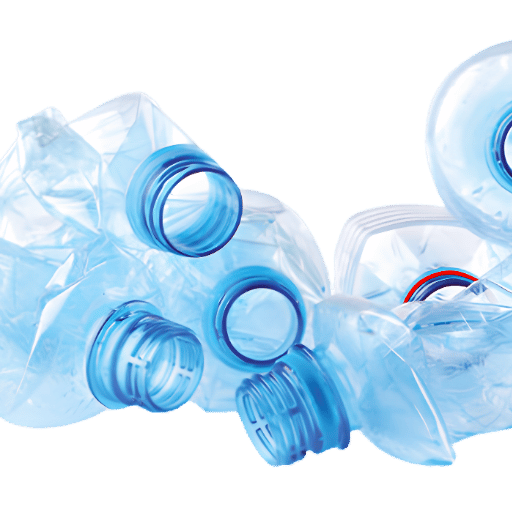
Intriculated by the Society of the Plastics Industry in 1988 and ratified as ASTM D7611, the resin identification codes are six symbols surrounded by an arrow triangle placed on the bottom of a bottle or tray to indicate the polymer family- nothing more. The ASTM definition states the code is merely a way to identify[..]and does not guarantee the article will be recycled.
| Code | Resin | Density (g/cm&sup³;) | Typical products | Curbside recyclability |
|---|---|---|---|---|
| 1 ♻ | PET / PETE | 1.³8–1.40 | Beverage bottles, trays, polyester fiber | Widely accepted |
| 2 ♻ | HDPE | 0.94–0.97 | Milk jugs, drums, crates, caps, piping | Widely accepted (natural > pigmented) |
| ³ ♻ | PVC | 1.³0–1.45 | Pipe, profiles, cable insulation, flooring | Rare in curbside; specialist streams only |
| 4 ♻ | LDPE / LLDPE | 0.91–0.9³ | Film, bags, shrink wrap, squeeze bottles | Limited curbside; store drop-off common |
| 5 ♻ | PP | 0.89–0.91 | Food containers, caps, woven bags, auto parts | Increasingly accepted in U.S. programs |
| 6 ♻ | PS | 1.04–1.06 (foam: ~0.905) | Foam packaging, cups, trays, insulation | Mostly excluded; some EPS densifier facilities |
| 7 ♻ | Other | varies | PC, ABS, PMMA, PLA, multilayer, bio-plastics | Lab review required — no single answer |
Code 1: PET / Polyethylene Terephthalate
PET (polyethylene terephthalate) is the polyester behind the majority of clear bottles of beverage products, polyester textile fiber and an increasing proportion of thermoformed trays. At a density of approximately 1.³8g/cm PET is the property a wash line will use to establish its sort logic: PET sinks in water, PE and PP caps and label fragments float. In 2024 the U.S. PET bottle recycling rate was ³0.2% according to NAPCOR (National Association for PET Container Resources), after peaking at ³2.5% in 2023- the highest average of any consumer resin because the collection and end-market infrastructure for PET bottles has been established for so long. A clean stream of PET bottles, fed through a PET bottle wash line, produces flake that the food-grade recycled PET converters will pay a premium for. For the complete process detail, see the PET recycling full guide.
Which type of plastic is most commonly recycled?
By rate, PET bottles are leading the U.S. and European consumer streams- around 30% in the U.S. and even higher in deposit return countries. By tonnage, polyethylene (HDPE + LDPE) is beating PET in global production but HDPE is divided across a range of sub-streams (rigid bottles, blow-molded drums, flexible films, agriculture film),each with their own collection and end-market recycle rate so the straightforward answer depends whether you are asking for “highest recycled percentage” (PET bottles) or “largest absolute tonnage by volume recycled” (HDPE rigid + PET bottles).
Code 2: HDPE / High-Density Polyethylene
HDPE, (high-density polyethylene) is the backbone of rigid plastics: milk jugs, laundry and cleaning product bottles, drums, crates, and pressure piping all originate as HDPE resin. Density values clock 0.94-0.97g/cm- just under water, which explains how HDPE caps float in a PET bottle wash tank. The U.S. HDPE bottle recycle rate in 2018 was 29.3% per EPA and natural (non-pigmented) HDPE sells for a premium in the recycler’s market because the colorant oils are burned off in the melt and they limit the next application to use a natural color palette. A mixed rigid- HDPE / ABS / PS / P C core goes into a rigid plastic recycling line with a shredder, washer and pelletizer in series.
Code 3: PVC / Polyvinyl Chloride
PVC, (poly vinyl chloride) exists in two forms- rigid (window profiles, pipe, fencing, siding) and flexible (cable jacketing, flooring, medical tubing, blister packs). Density in the 1.30-1.45g/cm range means these resins sink just like PET, so a mislabeled PVC part in anotherwise PET bottle bale is a common contamination warning sign. Flexible PVC displays plasticizers that alter processing characteristics. The recycling rule is clear: don’t allow PVC into PET or polyolefin concentrates except into a line specifically designed to process PVC. See our PVC pipe recycling process guide for information on the end-market details specific to pipe-grade PVC.
Code 4: LDPE / Low-Density Polyethylene (and LLDPE)
LDPE and its close relative LLDPE are the mid- to low-density film grades: produce bags, dry cleaning bags, shrink wrap, six-pack rings, squeeze bottles, and most plastic shopping bags. Density is less than water (.91-.93g/cm). Film is the difficult part of consumer recycling because it is thin and lightweight, contaminated (print, food, labels), and enmeshes open-processor single-stream sorting equipment. APR publishes the unique bale standards for clear PE, colored, and furniture-mix film; consumers value them as a down-material. Dedicated PE film washing line equipment converts the moisture and grit burden that single-stream MRFs produce.
Code 5: PP / Polypropylene
PP is the second largest plastic by globally-traded tonnage after polyethylene. It is the resin in yogurt tubs, deli containers, medical syringes, automotive bumpers, woven polypropylene sacks, and most beverage caps. Density is about .90g/cm, meaning that other PP goods float too. PP has a significantly higher heat-deflection temperature than the other polyolefins. As a result, it survives dish washers and autoclaves. PP recycling has grown rapidly in the U.S. since 2020 as more MRFs added optical sorters to produce a market. Woven PP sacks and bulk bags run on a woven PP bag recycling line that deals with the rope and fiber contamination typical of those feedstocks.
Code 6: PS / Polystyrene
PS is starch-blown, transparent, in its thermocured form. It is the substrate of expanded polystyrene foam (EPS) used in cups, take-out containers, packing foam, and building insulation. Solid PS has a density around 1.05g/cm; foamed PS falls below 0.05g/cm. PS is often excluded from curbside programs in the U.S. and EU: the foam form is heavy, drippy, and contaminated, and the solid form has limited end-market applications. Dedicated EPS densifier facilities exist regionally, but the resin has no end-market infrastructure on the scale of PET or HDPE.
Code 7: Other
Code 7 is a miscellany: polycarbonate (PC), acrylonitrile butadiene styrene (ABS), PMMA, multilayer barrier films, polylactic acid (PLA), and any plastic not falling under 1-6. The code 7 symbol is not a recycling directive. It is a sign to investigate. A solid sheet of PC from an electronics housing has an end-market; a multilayer juice pouch generally does not. The U.S. Plastics Pact reports the national plastic packaging recycling rate at 13.3%; most of that gap sits in Codes 3, 6, and 7.
📐 Engineering Note — PET vs PE/PP SeparationThe resin-density point controls a PET bottle wash line. PET sinks in water at just over 1.00g/cm; PE and PP caps and labels float below 0.95g/cm. Float-sink tanks perform the 180-degree gravity separation that an optical sorter cannot. This is also why a PET bottle washer won’t double as a PE film line: film does not sink or float, and a film line will skip the high-temp caustic wash that PET needs to degum labels.
⚠️ Common MistakeAlmost all PET bottles will have a cap of PP (Code 5) not PET (Code 1). The cap and tamper ring have to be ground and separated by float-sink before the PET flake goes down stream as otherwise the pellet has visible contamination by the PP and fails IV specifications, the contaminating label adhesive glue remains a concern for recyclers as the other top two irritation points for recyclers are two of the low value commodities, namely waste plastics and waste paper.
Industrial Engineering Plastics — Beyond the 7 Codes

Engineering plastics are the resins that mechanical, product and electrical engineers specify when the commodity polyolefins cannot deliver the required dimensional stability, mechanical performance or thermal properties for a component. The range lies between commodity plastics for less than about $2 per kilogram and the specialist polymers such as the super high temperature materials which will often cost more than $25 per kilogram. It should be noted that most don’t have a resin identification code number on a finished part, the resin ID code system being designed for packaging not engineered parts, though the resin family is documented on the supplier part datasheet.
What are engineering plastics?
The engineering plastic is a high performance thermoplastic that has a combination of high thermal stability and high mechanical performance to allow it to be used in mechanical load bearing or dimensionally load-stable applications such as gearbox housings, wheel bearings, structural panels, medical devices, electrical connectors, and automotive interior trim. The defining properties are an HDT normally above 100C, a tensile strength in the range of 40-100MPa, and a predictable creep profile under sustained load.
| Resin | Density (g/cm³) | Tg (°C) | Tensile (MPa) | Typical use |
|---|---|---|---|---|
| ABS | 1.04–1.06 | ~105 | 40–50 | Appliance housings, automotive interior, LEGO |
| PC (Polycarbonate) | 1.20 | ~147 | 55–75 | Safety lenses, electronics housings, glazing |
| PA 6 / PA 66 (Nylon) | 1.13–1.15 | ~50–70 | 70–85 | Gears, bearings, cable ties, automotive under-hood |
| POM (Acetal) | 1.41 | ~-60 (semi-crystalline) | 60–75 | Precision gears, fuel-system components, valves |
| PMMA (Acrylic) | 1.18 | ~105 | 60–75 | Signage, display cases, optics |
| PPS (Polyphenylene Sulfide) | 1.35 | ~85 | 70–80 | Chemical pumps, automotive coolant, electrical |
ABS – the appliance standard, the automotive standard. Acrylonitrile butadiene styrene blends the impact resistance of rubber toughened polybutadiene with the rigidity of styrene-acrylonitrile. The machineability, solvent welding capability and the electroplatable surface makes ABS the preferred acrylic resin for refrigerator interior trays, car interior dashboard substructure and most consumer products. ABS can be recycled using rigid plastics lines if manually separated from PC/ABS blends — see our ABS plastic recycling guide.
PC – transparent and impact resistant. Along with optical clarity and heat resistance polycarbonate also provides outstanding toughness, which has made it the default resin for safety guards, riot shields, electronics housing and specs. The Izod impact range sits around 600-850J/m, several orders of magnitude higher than PMMA because the carbonate linkages between the rings act as shock absorbers rather than propagating a crack.
PA (Nylon) – the load bearing thermoplastic. The standard gear, bearing and structural fastener thermoplastic as PA 6 & PA 66 they absorb moisture although this is an advantage in absorb impact in dry conditions, or another disadvantage if the component cannot be kept dry. The most common metal replacement thermoplastic in automotive under bonnet parts is glass reinforced nylon, PA +30% glassfibre.
POM – precision in motion. The gear material of choice when ABS or Nylon cannot hold dimension or distort under load. The lowest moisture absorption thermoplastic, the lowest coefficient of friction thermoplastic, the most stable thermoplastic at high temperature, up to 100 C, make POM the correct choice for fuel system components, high performance valves and zipper teeth.
PMMA – optical and signage. Acrylics give 92% visibility, which is higher than main stream sheet glass, with much lower density and better impact performance. Acrylics, which also go by the Trade name ‘Plexiglas’ are used in illuminated signage, aquarium walls, and helicopter viewing canopies.
PPS – chemical and heat resistant. Polyphenylene sulfide has a continuous service temperature of around 200 C and an excellent resistance to most solvents, making it a good engineeringcyber pyromaterials boundary material, often found in coolant components, chemical pump bodies and electrical connectors.
Specialty & High-Performance Polymers — When Standard Plastics Fail

One tier below the engineering polymers are the specialty polymers that will survive continuous service in conditions that melt, dissolve, degrade, or fatigue commodity plastics: aerospace structures, downhole oil-and-gas equipment, semiconductor processing, medical implants, and virtually anything in continuous service above ~150C. Such specialty polymers meet those demands but at a cost often still over 10 x per-kg than the commodity tier.
| Service tier | Continuous temp | Example resins | Relative cost (bulk) |
|---|---|---|---|
| Commodity | <80°C | PE, PP, PS, PVC, PET | 1× baseline |
| Engineering | 80–150°C | ABS, PC, PA, POM, PMMA, PPO | 3–5× |
| High-performance | 150–250°C | PPS, PEI / ULTEM, PPSU | 10–20× |
| Specialty (peak) | >250°C | PEEK, PEKK, PAI / Torlon, PI, fluoropolymers (PTFE, PFA) | 30–100×+ |
PEEK / Polyetheretherketone. PEEK maintains its properties through continuous service up to 250C without much change, and survives many hostile chemistries. It is the polymer behind aerospace brackets, implant trays, and oil-and-gas seals. Factor in distributor pricing and PEEK sells in the $80-150/kg while processed (“3-D+ load” filament, machined billet) tends to be far higher.
PEI / ULTEM and PEKK. Polyetherimide is a step below PEEK on the service temperature ladder yet well above most plastics, with continuous service to around 170-80C. Distributor pricing information lists bulk ULTEM in the range of $25-30/kg, with premium processed systems approximately an order of magnitude higher; PEKK is a related ketone polymer suitable for additive manufacturing.
Specialty Polymer Selector — A Quick Decision Path
- Service temperature > 250C continuous + aggressive chemistry PEEK, PAI / Torlon, or a fluoropolymer.
- Service temperature 170-220C, transparent or flame-retardant needed PEI / ULTEM.
- Hydrolysis resistance + autoclave cycles → PPSU (medical-grade).
- Friction / wear at 150–200°C → PPS or PEEK.
- Flexible service < 80C, abrasion resistant TPU (thermoplastic polyurethane) – the high-performance bridge into the elastomer family.
Which plastic has the highest temperature resistance?
Of engineering plastics, only Polyimide (PI) and polyamide-imide (PAI / Torlon) sustain the highest continuous-service temperatures – PI can handle 300C parts with shorter runs even hotter, PAI handles 260C endurance under heavy loads. PEEK is the engineering-high-temperature leader because it’s the engineering-grade plastic that can melt and be shaped (PI is often a thermoset, complicated to mold). Fluoropolymers like PTFE have even higher temperature ranges but experience heavy cost and mechanical penalties.
TPU & TPE – the elastomer bridge. Thermoplastic polyurethane(TPU) and thermoplastic elastomer (TPE) groups fill the distance between hard plastics and rubber. They combine tremendous abrasion resistance with work-a-day elastomeric performance. TPU is used in shoe soles, mobile phone cases, and assembly line flooring. Unlike vulcanized rubber, both TPU and TPE are thermoplastic, and re-usable.
Biodegradable & Bio-Based Polymers — What Actually Breaks Down

“Biodegradable plastic” is a sales statement that obscures three things: commercially compostable resins which demand intimate facilities conditions, home-compostable resins that work in your yard, and oxo-debreacting plastics that break down into little pieces rather than truly biodegrading. The takeaway here is that incorrectly handled “biodegradability” conditions means that a “degrading” synthetic takes the same amount of time to rot away in a landfill as the one you threw away yesterday.
| Bio-polymer | Source | Degradation conditions | Typical end-of-life |
|---|---|---|---|
| PLA (Polylactic Acid) | Corn / sugarcane fermentation | ~58°C, controlled humidity, 90–180 days (industrial compost) | Industrial composting only; ASTM D6400 / EN 13432 |
| PHA (Polyhydroxyalkanoates) | Microbial fermentation | Ambient soil and marine; biodegrades without industrial heat | Marine + soil biodegradable; the only major bio-polymer with both |
| PBS (Polybutylene Succinate) | Bio or petro-feedstock | Industrial compost similar to PLA; some home-compostable formulations | Industrial compostable; blends with PLA to improve flexibility |
| Starch-based blends | Corn / potato starch + polyester | Variable — depends on the polyester partner | Often labeled “compostable” but check the specific certification |
⚠️ Common MistakeCompostable does not equal home-compostable. The compostable stamp of approval (ASTM D6400 in the US, EN 13432 in the EU) refers to an industrial composting plant which holds the feed at 58C with moisture and microbial supplementation for 90-180 days. Backyard compost piles simply do not get above 40C and never hold it. An “industrial” compostable PLA bottle left in a backyard pile will still be intact two years later. Home-compostable standards exist separately (TUV Home OK Compost, for example) and are applied to resins that truly biodegrade at room temperature.
From a Recycling-line perspective, bio-polymers are a contaminant far more than a value-added feedstock. PLA’s density (1.24g/cm) is close enough to PET (1.38) that float/sink separation does not clearly separate them, and PLA’s lower melting temperature (~155C) means that in a PET extrusion run, PLA contamination will carbonize and gel in the melt. Many recyclers who run PET lines actually machine the incoming bales for PLA at the optical sort, not the wash, stage. For a detailed view of standards and what each bio-polymer realistically delivers at end of life, see our guide to biodegradable plastics standards and end-of-life.
Bio-polymers currently account for circa 1-2% of the global plastics market (by volume) – significant in narrow application categories (food contact, agricultural mulch film) but a trivial share against commodity polyolefins. That share is still growing, mostly in single-use food contact under EU regulation.
Recyclability by Plastic Type — The Plastic-to-Recycling-Line Map

For the re-processor, the resin identification code is a data point, not a concrete diagnosis. The real question operationally is what machinery yields a market-ready pellet from the particular input. different plastics – rigid, film, woven, foam – require different process paths even within the same resin family. We call the equipment pairings on the plastic-to-recycling-line diagram below. It matches each popular plastic stream with the design that will process it profitably.
| Plastic stream | Pre-shred? | Wash type | Float-sink? | Recommended line |
|---|---|---|---|---|
| PET bottles | Yes | Hot caustic 60–85°C | Yes — remove PE/PP caps and labels | PET bottle washing line |
| HDPE rigid bottles / drums | Yes | Friction wash, optional warm | Optional — for color sort | Rigid plastic recycling line |
| PE / PP film | Yes — with film-specific shredder | Friction, no caustic needed | No | PE film washing line |
| PP woven sacks / FIBC | Yes | Multi-stage friction | No | PP woven bag recycling |
| PVC rigid | Yes | Dedicated PVC line | Limited applicability | Specialist PVC stream — not mixed with PET |
| PS solid / foam | Foam: densify first | Optional | No | EPS densifier + rigid line for solid PS |
| Mixed rigid (HDPE / ABS / PS / PC) | Yes | Friction + optional caustic | Yes — color and resin sort | Rigid plastic recycling line |
| Agricultural film / drip tape | Yes — high contamination shredder | Friction + sand/soil removal | No | Agricultural film recycling line + drip tape line |
“Recyclability is a system issue, not a resin code issue. The product, the additives, the level of contamination, and the local collection infrastructure all impact the odds that a marked code 1 bottle will be recycled or landfilled.”
— Association of Plastic Recyclers, APR Design Guide overview
📐 Engineering Note — Wash Temperature SelectionA 60-85C hot caustic wash dissolves the adhesive layer on PET bottle labels and washes away residual sugars and grease. Using the same temperature on PE or PP film adds capital costs and energy load with no real increase in throughput or pellet quality – film simply doesn’t have a label-adhesive problem to solve. Specifying a hot-wash for a film line inflates the cost by 1.0-1.5 that of a similar friction-only line. Match the wash chemistry to the likely contaminant, not to a vague rule-of-thumb.
Key operational variables affecting output quality on a Kitech line: the friction washers run at 900-1,200RPM to mechanically wear away surface contamination; the melt filters use 80-120mesh screens to trap any residual particles too small for the human eye to see; and the centrifugal / squeeze dryer reduces the residual moisture below 3% before the extruder the point where injection molders and film blowers will purchase the pellet without redrying. Market-side, PET flake tends to retail in the$0.930-$0.60/lb range and HDPE pellet in the$0.40-$0.70/lb range in the 2025-2026 U.S. spot market, with pellets commanding a 20-40% premium relative to the price of equivalent flake. For the larger chemical-vs-mechanical choice, see our chemical / mechanical recycling decision guide, and for component-specific equipment options, our plastic recycling solutions overview discusses full-line configurations, plastic shredder configurations discusses size reduction, plastic washing systems discusses wash hardware, and plastic pelletizer types discusses strand, water-ring, and underwater pelletizing.
How to Identify Plastic Type — Codes, Markings, and Field Tests

Identification of an unlabelled plastic – like an old appliance enclosure, a fence trim section, a random fragment of shrapnel – can generally be obtained to it’s resin group in around ten minutes in the field with only a few simple tools: water, a source of flame and a small solvent kit. The technique described below is the field equivalent of what a laboratory would do in five minutes with FTIR: it gives a “family confidence” result, rather than a detail grade.
- Identify the resin code. The answer is the triangle-with-a-number—or any number in the triangle—found on the bottom of a consumer product. The ASTM D7611 identifies seven categories.Industrial parts rarely have the code; check the supplier datasheet or stamped part marking.
- Water density test. Fissure a tiny chippy that contains no metal inserts. Dips into plain tap water.Dip sinks quickly=PET, PVC, POM, PA-filled, PC, ABS (some). Dip floats=PE, PP, PS solid. Dip floatspoke=PP.Dip floats down/neutral= PS.
- Burn test (ventilated, safety glasses). Take a thin sliver. Light it.PE / PP burn with a candle like flame and sputter, smell like a beeswax candle. PVC self-extinguishes and give off a distinctive, irritating, sharp HCl smell. PS will give off black smoke.ABS has strong rubber like odor. PC self-extinguishes. PEEK and PEI barely catch.
PA give off a not unpleasant burnt hair / wool smell.
- Solvent reaction. A drop of acetone will soften or dissolve ABS, PS and PMMA but wont have any effect on PE or PP. A drop of methylene chloride will swell PC and PMMA.
How do I identify plastic type from the recycling code?
The recycling code is read by family 1= PET, 2=HDPE, 3=PVC, 4= LDPE / LLDPE, 5=PP, 6=PS, 7=do-anything else. What it does show is simply the family the polymer belongs to. It does not mean that part is recycled anywhere near you locally in time or space, food safe at that end-time or BPA free, or even recycled in the first place. 1 on a deposit-return PET bottle from a working bottle-stream city is very different from a 1 on a multilayer-barrier PET tray with an EVOH layer and a PS label and a polyamide barrier between lid and bottle-body. For the polymer family identification standard (ASTM D7611); for the standard symbol and abbreviation system used on industrial parts (ISO 1043 is the parallel international reference) see.
⚠️ Common MistakePursuing a code 7 Other indication does not mean “unrecyclable”. It is an indication “this resin does not fit the Codes 1-6 so look closer”. A solid polycarbonate housing carrying a Code7 has a concrete recycling route through a rigid plastic line: a multilayer barrier pouch with the same Code7 generally does not. Treat Code7 as an indicator to identify the specific resin before discarding or accepting the bale.
What’s Changing in Plastics — 2026 Industry Outlook
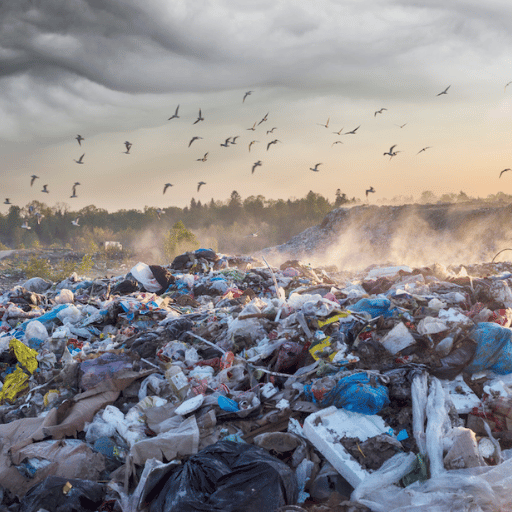
Four forces are reshaping which plastics get specified, bought, recycled through 2026-2027. None of them is “more plastic” the trend across regulators, brand owners and recyclers is toward tighter input specifications, higher recycled content and clearer end-of-life accountability.
- EU regulatory tightening (2025-2030). The EU Single Use Plastics Directive 2019/904 banning and restricting a list of items in 2021. The follow-on EU Packaging and Packaging Waste Regulation (PPWR 2025/40) entered into force on 11 February 2025 and applies from 12 February 2026. It introduces minimum recycled content in plastic packaging beginning 1 January 2030. Brand owners selling into the EU should plan their resin and supplier choices around the 2030 mandate now, not in 2029.
- Advanced (chemical) recycling capacity build out. Global chemical recycling capacity is growing rapidly. Industry market research forecasts the chemical recycling market to expand from approximately US$1.5 bn in 2026 to US$12.7 bn approximately by 2033; 20%+ CAGR. Pyrolysis and depolymerization technologies are targeting the streams mechanical recycling cannot handle – mixed films, multilayer packaging and contaminated polyolefins. For an operational comparison of where each route makes sense our mechanical vs chemical recycling decision guide covers the trade-offs.
- Food-grade rPET acceptance broadening. The U.S. FDA’s letters of no objection for food-contact rPET have grown faster in 2024–2025 than at any prior point, and EFSA in Europe has approved a parallel set of decontamination technologies for bottle-to-bottle recycling. The market response is a steepening price premium for clean, decontaminated rPET flake vs. mixed-color or contaminated streams. See our food-grade rPET FDA / EFSA regulations reference for the certification roadmap.
- Recycled content visibility and traceability. Extended Producer Responsibility (EPR) regimes are migrating into U.S. states (California, Colorado, Maine, Minnesota, Oregon) and EU Member States (via PPWR transposition)…Recycled-content claims that worked on a marketing slide in 2022 now require third-party chain-of-custody documentation. This backward flow to recyclers is a demand for specification-grade, traceable, consistent “chains” of recycled resin production – not “as received” or “presumed clean” input feed. The closed-loop system with input stream documentation is not a ‘selling point’, but a necessity. The bigger picture lives in our overview of circular economy in plastics.
If you’re setting resin specs for a 2026 or 2027 product launch, the practical heads-up is two-step: (a) confirm your supplier’s certified recycled-content claim against the rules that apply in your destination market, and (b) check that the resin actually flows through the recycling infrastructure where the product is sold. A “compostable” or “high-recycled-content” claim that does not match the real end-of-life path in your sales geography ends up as a reputational risk, not a sustainability win.
FAQ — Different Types of Plastic
Q: What are the 7 different types of plastic?
View Answer
The seven main types of consumer plastic are PET (1), HDPE (2), PVC (3), LDPE/LLDPE (4), PP (5), PS (6), and Others(7). ASTM D7611 resin identification codes show the official number.
Q: What is the difference between thermoplastic and thermoset?
View Answer
Thermoplastics get soft when heated and then re-harden without chemical change – so that those plastics can be mechanically reprocessed. Thermosets are polycondensation or polyaddiction chemistries which “crosslink”, once, arangeings the molecules into a permanent 3-D network; a factory can then “cure” it by heat to set the dimensions but the chemistry won’t get back to a flow state and be “re-melted”. The split in codes energizes the dry-area routes…
Q: Which plastics are most commonly recycled?
View Answer
The most-developed collection-end-market suite happens with PET bottles and natural HDPE bottles. The U.S. PET bottle rate was 30.2% in 2024 (NAPCOR); HDPE natural bottles 29.3% (EPA 2018). The latter figure has been trending up steadily since 2020. PP collection infrastructure and end markets developed much more recently. Codes 3, 6 and 7 have less mature routes to market.
Q: What are engineering plastics?
View Answer
Engineering plastics – whose TC- and application specific grades are specified for load bearing or dimensionally stable load-bearing applications – tend to specify moderate to very high heat-deflection and tensile strength. Examples include ABS, PC, PA / nylon, POM, PMMA and PPS.
Q: Which plastics are food-safe?
View Answer
Food contact in the U.S. is regulated by the Food and Drug Administration under 21 CFR 174-179. PET, HDPE, LDPE, and PP are widely permitted for food and beverage contact and carry food-grade resin certifications under that framework. PC is permitted as well, but bisphenol-A concerns have pushed many converters toward BPA-free copolyesters. PS is permitted for many food-contact uses but is excluded for hot fatty foods in some jurisdictions. PVC for food packaging needs a specific plasticizer chemistry. The resin family on its own does not certify food safety – the specific grade, the additive package, and the converter’s compliance with 21 CFR or the EU equivalent do. Always ask the supplier for a food-contact compliance letter that names your destination market.
Q: Are biodegradable plastics really biodegradable?
View Answer
Only under the one of several conditions that are named on it. Industry standard “compostable” PLA (poly-lactic acid) only biodegrades meaningfully if industrially composted for 90-180 days at 58 C (ASTM D6400, EN 13432). Backyard compost bin will never attain this temperature. PHA (poly-hydroxy-butyrate) biodegrades in the ambient marine and soil environments; it is the sole biodegradable plastic listed on the EU SNF database. These “oxo”plastics contain an additive which dramatically accelerates current size reduction but does not biodegrade and the EU banned oxo additives via the SUP Directive 2019/904.
Q: How do I identify plastic type from the recycling code?
View Answer
The triangle-with-a-number on consumer products identifies the resin family per ASTM D7611:
1 = PET 2 = HDPE 3 = PVC 4 = LDPE 5 = PP 6 = PS 7 = Other
A water density test and careful burn of an unmarked part will identify the family in less than ten minutes.
1 = PET 2 = HDPE 3 = PVC 4 = LDPE 5 = PP 6 = PS 7 = Other
A water density test and careful burn of an unmarked part will identify the family in less than ten minutes.
Q: Which plastic has the highest temperature resistance?
View Answer
Polyimide (PI) and PAI/Torlon have the highest continuous service temperature of all commercial thermoplastics – up to 260-300C. PEEK, the highest-temperature general engineering plastic today, is about 250C as it can be melt-formed. Fluoropolymers withstand yet higher temperatures but come with mechanical trade-offs.
About This Analysis
Kitech engineers have built PET, HDPE, PE film, PP woven, and rigid-plastic recycling lines in more than 80 global markets. We have installed the plastic-to-recycling-line matrix and wash temperatures advice in this guide in processes running more than 500 situations through Q1 2026. The advice is supported by public sources from EPA, APR, ASTM, and Plastics Europe. Recommended bulk pricing figures for the 2025-dated catalysts are sourced from current distributor listings, which are thus proxy values for the supply chain. Do not treat them as that order level; knowledge of grade and volumes can produce highly variable values, hard to predict in advance.
Match Your Plastic Waste Stream to a Recycling Line
OR try out the Plastic Material Recycling Comparison Tool and examine different lines side by side.
Related Articles
- Thermoplastic Recycling — Complete Guide to HDPE, PP, PVC, ABS and PS
- PET Recycling — Process, Codes, Markets and Equipment Explained
- Recyclable Plastics — Which Resins Actually Recycle
- Biodegradable Plastic — Standards, Materials, and End-of-Life
- Mechanical vs Chemical Plastic Recycling — Which Wins Where
References & Sources
- ASTM D7611 / D7611M Standard Practice for Resin Identification-ASTM International
- Plastics: Material-Specific Data – U.S. Environmental Agency
- Single-Use Plastics Directive 2019/904 – EU DG Environment
- ISO 1043 — Plastics, Symbols and Abbreviated Terms — International Organization for Standardization
- ASTM D6400 — Standard Specification for Labeling of Plastics Designed to be Aerobically Composted — ASTM International
- APR Design Guide Overview — Association of Plastic Recyclers
- A Large Family of Plastics — Plastics Europe
- 2024 PET Recycling Report — NAPCOR (National Association for PET Container Resources)