Get in touch with Kitech Company

Single-Shaft vs Twin-Shaft Shredder for Rigid Plastic: How to Choose the Right Shredder

Selecting a proper shredding machine for hard plastics is essential as it can greatly affect the operational efficiency, the quality of the plastics produced, and the productivity of an organisation, among other factors. Single-shaft and twin-shaft shredders are most common in the plastic industry, with each type having its own set of merits depending on the use and material. However, which is the most effective for you between the two?
In this regard, this paper analyzes single-shaft vs twin-shaft shredders, focusing on the basic composition, advantages, and appropriate application of each type of shredder. At the end, the reader will have gained the necessary information enough to propose the most appropriate shredder for their detailed plastic shredding operations.
⚙️
Understanding Shaft Shredders
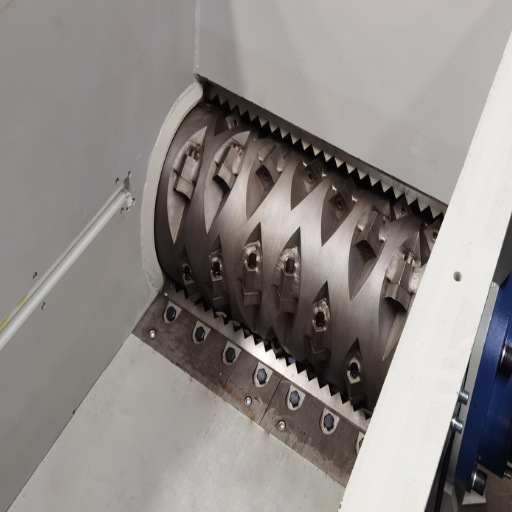
Another type of shredder, known as a single-shaft, utilizes a distinct feature in the form of a single rotating cutter shaft where materials are sliced or crushed soundlessly by cutting blades (which are easily replaced). Such materials have uniform and lightweight physical properties, which can be avoided as a throw-off as it appears in a single-shaft shredder. As a result, these machines are mostly found in situations where there is a need to contain shredded materials of particular sizes.
Twin-shaft shredders function quite inversely with two adjacent rotating knife shafts. For this reason, they may be best for long-lasting materials, for instance, extensive quantities of heavy plastics or even massive objects. The mechanism is quite heavy and abrasive. Therefore, it is suitable to use for any application that needs flexibility combined with aggressive grinding and tearing.
🔩 Single-Shaft Shredder
One rotating cutter shaft with easily replaceable blades. Produces uniform particle sizes. Best for lightweight, consistent materials such as plastics, wood, and paper. Ideal where precision particle sizing is critical.
🔩🔩 Twin-Shaft Shredder
Two adjacent rotating knife shafts that tear, shear, and crush. Built for heavy, resistant materials. High torque, low-speed operation. Preferred for aggressive grinding where volume and material diversity are priorities.
🏭
Shredder Types: Definitions and Mechanisms
What is a Single Shaft Shredder?
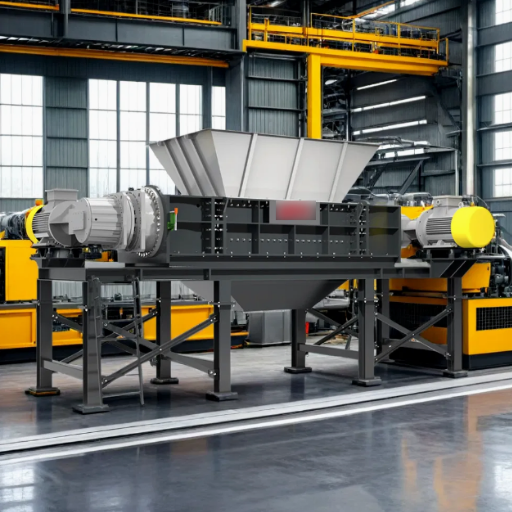
A single-shaft industrial shredder, on the other hand, is a piece of machinery that helps to shred materials into very small parts for their convenient size reduction. It is comprised of a horizontal rotor with blades on it, which is always used along with a further cutter located attached to the shredder base with cm blades coming out of it to stress cut the materials in an action similar to that of a hyacinth cutting. Most designs have a hydraulic device making a pusher employ force to push material, which pushes it towards the rotor in order to trigger the cutting process.
A single-shaft shredder, due to its simple design and no mechanical failures, is one of the best machines for shredding material such as plastics, wood, paper, and soft metals. They also do well in activities that require achieving the same size of particles and are very common in recycling, waste management, and industrial production.
What is a Double Shaft Shredder?
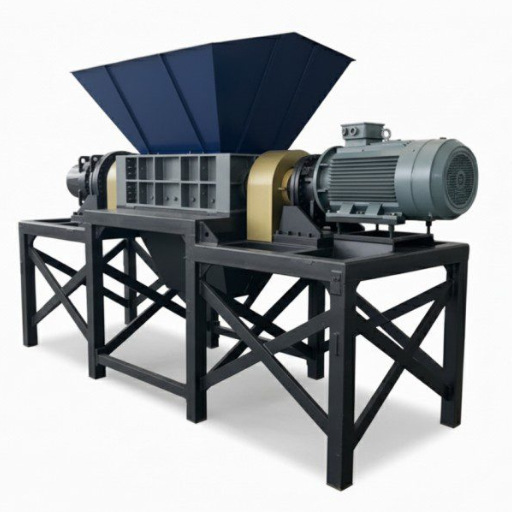
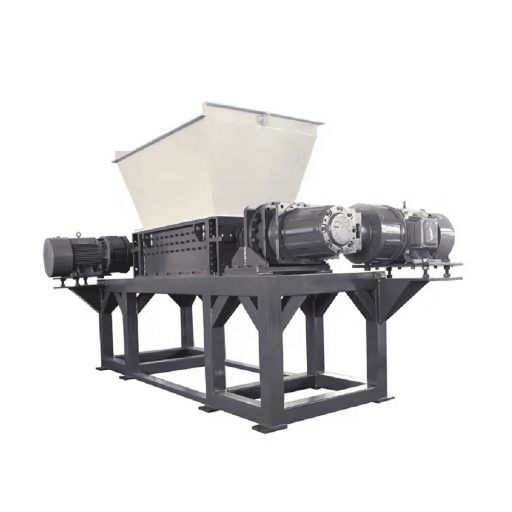
A dual shaft, or a double shaft, is typically a machine thought of as intended to shred anything and everything within its path using a two-shaft shredding system. The two opposing shafts have cutting knives or hooks to rotate in different directions and thus, tearing, shearing, and crushing of objects is realized. This type of construction is most effective in the treatment of heavy and resistant materials like rubber, electronics, steel drums, and industrial waste.
The use of a double-shaft shredder allows for high torque, low-speed operations, which ensures minimal wear on the machine components and saves energy. Such devices find great usage in industries such as recycling, production of electric and heat energy from waste, metal processing, and also environmental cleaning works, where strength, performance, and process adherence to diverse materials are important.
Introduction to Four-Shaft Shredders
Used in many sectors, four-shaft shredders primarily cater to those demands where data destruction of bulky material is required with efficiency in size. Every four-shaft shredder has two primary and two secondary cutting shafts, which provide control over the material handling since the multi-stage process of shredding takes place. In this design, all cutting tasks, such as the coarse and fine cutting processes, are completed in one and the same cycle, thus output materials of consistent sizes are produced such that they meet the requirements of any succeeding operations.
Robust and reliable, four-shaft shredders enable the processing of hard materials such as metals, e-waste, fabrics, and plastic wastes with ease. The quality of the shred changes due to the factory-fit screens sitting behind the cutters, so that the sizes of particles produced are controlled. Some, if not most, have overload protection and self-diagnosis/maintenance reverse mechanisms that help to avoid permanent damage caused by overworking the shredder.
A variety of industries, such as recycling, waste disposal, and manufacturing, find great utility in the use of four-shaft shredders. Due to their effective design and the availability of various modules to meet the overall interface requirement, they become very useful where the task to be performed requires highly efficient throughput, low maintenance, and versatile functions for the attainment of industrial or environmental targets.
Shredder Types — Quick Comparison
| Type | Shafts | Best Materials | Key Strength |
|---|---|---|---|
| Single-Shaft | 1 rotating rotor | Plastics, wood, paper, soft metals | Uniform particle size; high precision |
| Double / Twin-Shaft | 2 counter-rotating shafts | Metal, tyres, rubber, electronics, heavy waste | High torque; handles tough, mixed materials |
| Four-Shaft | 2 primary + 2 secondary shafts | E-waste, metals, plastics, fabrics | Multi-stage; controlled particle output |
🔄
Differences Between Single Shaft and Double Shaft Shredders
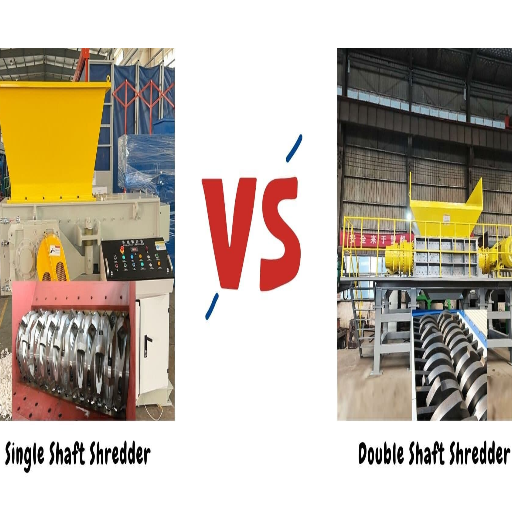
Manufacturers of a single-shaft shredder offer machines that contain a single rotating blade that shreds any given input into almost the same size. Thus, such a machine is good for processes that require the same production outcomes at all times, which usually include plastics recycling, textile, and wood operations. In contrast, over a double-shaft shredding machine, there are two opposing shafts, and they are fitted with disc cutters for breaking down very tough, large, or uneven items like tires, metal, or municipal waste. While the single-shaft shredder provides excellence in deadliness and easy disposal of particles of much smaller sizes, the dual-shaft counterbalances less in power and sturdiness, and much more of the volume and types of materials processed. When comparing the single-shaft vs twin-shaft shredder, the decision will be determined by the properties of the material and the purpose of the treatment.
Operational Mechanisms
Double-shaft shredders work based on two rotors with cutters or cutting discs, which rotate in opposite directions. The materials also enter the chamber through the loading hopper, and are held and pulled in by the knives, cutting them into small pieces. This is assisted by the force produced from the electric motors to enable the hash to be applied to compact or assimilated materials. Many of these systems are installed with automatic reversing systems to ensure that the machine does not clog. Further, the positioning of the blades can be reconfigured based on the incoming materials and the preferences of the users for output, making such machines very versatile. Otherwise, their serious frame and capability of assuming bigger, more intricate loads make them applicable in the field of waste treatment and recycling, as well as in various industries.
Efficiency and Throughput
Two important parameters, known as efficiency and throughput, are used in the assessment of the performance parameters of the shredding systems in industries and waste management services. Efficiency refers to the extent to which the system reduces idle time and electric power consumption levels, keeping the blades in working condition and the motor in running condition. Most of the current designs incorporate high/low speed drives and energy-saving motors to boost the system’s functionality. Throughput, on the other hand, explains the amount of work that has been done within a specified period of time and depends on factors like the feed level, shredding type, and nature of the material. Large-scale models can handle several tons with alterations, where the most efficient characteristics can be used depending on the material. Moreover, intelligent sensors and automatic controls integrated into the system enhance the operation rate and also cut down the manpower requirement, thus increasing the efficiency of the whole system.
Single-Shaft vs Twin-Shaft — Performance Comparison
| Parameter | Single-Shaft | Twin / Double-Shaft |
|---|---|---|
| Particle Size Uniformity | High — precise, consistent output | Moderate — variable, coarser output |
| Torque / Power | Moderate — suited to soft/medium density | High — handles dense, tough materials |
| Material Versatility | Limited to soft-medium materials | Very high — mixed, heavy, complex materials |
| Energy Efficiency | High — simpler mechanism, less wear | Moderate — low-speed but high torque draw |
| Anti-Clog / Reversing | Screen-based size control | Automatic reversing systems standard |
📦
Applications for Each Type
🔬
Low-Capacity Systems
Systems with low capacity are advantageous for small applications such as laboratories, percolation tanks, and bulk material handling facilities with plastics, green waste, or light industrial scrap. They are also utilized by various applications in the healthcare, agricultural assessment, and electronics management sectors, where precision is required.
🏗️
Medium-Capacity Systems
System medium capacity is utilized in mid-sized industrial facilities that handle average construction wastes, municipal solid waste, and commercial wastes. These systems are used in recycling centers, manufacturing machines, and other businesses in need of a comprehensive approach to throughput as well as endurance.
⚒️
Large-Capacity Systems
Heavy-duty sectors where voluminous and dense materials output is key to the success of the processes, such as the scrap metal industry, waste removal, and building rubble processing, rely on high-capacity systems. Such systems are highly essential when it comes to eliminating the inefficiencies experienced during the execution of processes for industries with high throughput needs. They are combined with advanced automation to allow for the smooth implementation of the functional processes and evolution of the structure.
Industries That Benefit from Single Shaft Shredders
Single-shaft shredders are widely used for different purposes based on their versatility, accuracy, and ability to work with a variety of materials. For instance, these machines may be employed to break down plastic rejects into similar sizes for re-use purposes in the production of various materials within the plastics field. Likewise, a similar function applies to the wood industry, where they reduce wooden scrap, pallets, or other remnants, which can be used for such activities as the production of particleboard or biomass fuel. Besides that, it should be mentioned that in the paper and packaging industries, the single-shaft shredders are employed for document shredding and segregation of paper waste. Textiles, electronics, and many other areas also include these devices as solutions for recycling materials and disposing of waste properly. For material recovery and retention of processing waste, these particular shredders are almost irreplaceable because they allow accommodation of different methods and processes for various kinds of waste.
Use Cases for Double Shaft Shredders
Among the many variants of shredders available in the market today, double-shaft shredders are the most versatile machines meant to be used in the most demanding sectors, dealing with difficult-to-process materials that a single-shaft shredder would not ordinarily cope with. For instance, materials like large-sized waste, metal, tyres, and plastics, among others, are commonly shredded. For instance, motor vehicle industries, where ELV recycling is performed, or WTE factories, where constructions, like sofas, beds, and other such furniture/mattresses, are shredded for further processing. In addition, double shaft shredders play an important role in the destruction of industrial wastes and such items as hazardous wastes, enabling them to be disposed of safely and meeting environmental requirements. With their solid construction and high torsional rigidity, their mechanical resistance covers the problem of tough material handling, especially in waste material handling, particularly in large-scale operations.
Comparative Analysis of Performance in Different Applications
The efficacy of any double shaft shredder, which may be employed in any operation from heavy-duty car shredding to the breakdown of household goods, is contingent upon how well the shredder can be adapted, its level of energy expenditure, and how long it will last. Regarding recycling efforts, particularly the activities of plastics and metals compaction for onward conveyance within the single-shaft vs twin-shaft shredder context, it implies that they are efficient because they can effectively manage or process any type of material that they are presented with. They are capable of making cuts to a predetermined size, ensuring uniformity in dimensions for further processing and separation of the product.
With industrial waste disposal, such as controlled disposal of lids from hazchem drums, it is safe to remove even elaborate waste such as highly sensitive simple e-waste, drums, and construction waste. This is possible because these shredders have enormous torque, as well as reinforced sturdy blades, which do not give way easily even when they’re under significant stress or abrasively assaulted, thereby saving the cost of halting the business activity or undergoing frequent repairs.
What’s more, these shredders are specialised in potentially energy-generating as well as composting applications, processing different types of input materials including timber, green waste, agri-waste, etc., to produce small particles suitable for the respective purpose. Succulent, moist, sagging, stringy, and chalky materials in average and above average amounts are easily reduced in twin-shaft shredders for the purposes of preparing biofuel and ensuring sustainable growth.
In summary, it is clear that this highlights the universal usefulness of double shaft shredders and their natural state in deployment in waste as well as recycling facilities or systems.
Single-Shaft vs Double-Shaft — Application Summary
| Industry / Use Case | Single-Shaft | Double-Shaft |
|---|---|---|
| Plastics Recycling | ✔ Excellent — precise size reduction | ✔ Good — handles heavy/mixed plastics |
| Wood / Biomass | ✔ Ideal — pallets, scrap, particleboard | ✔ Good — bulk timber, green waste |
| Metal / Tyre Recycling | ✗ Not recommended | ✔ Excellent — high torque required |
| E-waste / Hazardous Waste | Limited — smaller electronics only | ✔ Excellent — safe, high-security shredding |
| Paper / Packaging | ✔ Excellent — document & carton shredding | ✔ Suitable for bulk volumes |
🎯
Choosing the Right Shredder for Your Specific Needs
In choosing the right shredder, several things should be scrutinized before settling on a shredder, with consideration given to the machine’s features vis-à-vis your practical needs:
- 1
Material to be Shredded — Identify the types of material, for example, plastic, metal, paper, or mixed waste, which will be processed. Different materials require different cutting technologies and different feed rates in order to work properly. - 2
Volume Requirements — Calculate the volume handled in one routine. Low to medium-level shredders will do for small-sized programs; a high-capacity gearbox is required for larger or industrial facilities. - 3
Particle Size Requirements — Focus on the output specification in terms of the size of particles, depending on your applications. For fine shredding, intricate systems are used, whereas for rough shredding, this may be enough to utilize the respective functions at pre-stage levels. - 4
Space & Power Requirements — Assess the available floor space and the available electric power to match the shredder’s dimensions to the energy it will need. - 5
Integration and Automation — Address if the shredder needs to connect with any other equipment that may be in place already (such as, for example, conveyors, balers, etc.). It is important to examine automation capabilities that aid in achieving smooth and scalable operations.
An analysis comprising these factors is necessary to ensure a good product selection so that the shredder you use performs at the best possible level according to the nature of processing expected.
Assessing Material Types
The performance and capability of a shredder largely depend on the type of material that is to be treated with the shredder. Each type of material poses different constraints on the equipment. Plastics and textiles need shredders engineered for pliability and high tensile property, while metals need high torque, low-speed machines that can resist abrasive materials. There is also no compromise on materials such as paper or cardboard, which require precision-built cutting design shredders to perform efficiently using uniform cuts.
The most important criteria are the density, characteristics, and dimensions of the material. If possible, bulky material should be shredded using heavy-duty industrial equipment that is fitted with strong cutters or stress diffusers, while composite materials with multiple layers would refer to a double-shaft or cross-shaft shredder for mixed-filled material. Every shredder will last longer if it is used in accordance with the designed purpose, utilizing less power and working more efficiently.
Evaluating Volume and Capacity Requirements
In order to choose the correct shredder for a given organization, the first stage is to determine the volume and capacity requirements. Such factors will include the expected material processed per hour through weight or volume, and the maximum possible working loads. Other considerations should include productivity based on the type of shredder, as it is well known that industrial shredders have generally larger hoppers with higher horsepower for heavy-duty operations. Smaller works may not require such high-power units. Furthermore, it is necessary to ascertain how often the client will be operating the machine, as such machinery for continuous operation, mainly those responsible for processing a steady flow of materials, sometimes require capabilities that prevent overheating or wear out of the machine. It is possible to sustain the performance of the shredder and keep maintenance costs low by predicting the material flow as precisely as possible. This will ensure that the machine is appropriately utilized and not spring or bust.
Cost Considerations and Budgeting
When considering the expenses associated with buying a shredder, it is important to focus on a few points so that they do not reach over/under the limit or challenge the work requires. The first element of the cost is the purchase price, which is different depending on the capacity, size, and other features such as automation and improved safety. With increased functionality, those of high capacity, such as industrial machines, will cost more, whereas the small ones may be available at less cost, meeting the limits set.
The purchase price of such is, at most times, only the prospect. Energy use, upkeep, and wear and tear spare parts can prove to be quite expensive. There can be a financial efficiency attached to buying energy-saving models because the costs of energy will be dramatically reduced in the long run, while the material used for construction and the easy access to such materials are positive factors in terms of maintenance.
Organizations with financial challenges that cannot purchase equipment may lease it or opt to finance payment over a period of time without compromising on the equipment’s performance. This being the case, there is a need to assess the warranties and service agreements available, and for the different manufacturers, as in many cases, the aggressive feature is used to reduce the device’s repair cost. Lastly, making sure there is an involved evaluation when cost and savings are factored in, the shredder purchased is one that is most relevant to the needs of the users.
🌿
Environmental and Industry Benefits of the Correct Shredding Solution
Choosing appropriate shredding equipment has significant economic and environmental advantages. Environmentally, studies have shown that there is limited waste produced by efficient shredder machines because they perform excellent downsizing of materials, which makes them easier to recycle and convert into useful materials such as biogas or compost. This reduces the amount of waste going to landfill, helps in reducing the emission of greenhouse gases, and conserves natural resources more efficiently.
From the economic perspective, the appropriate shredding equipment optimizes productivity by reducing the cycle time and enabling a broader range of residues, including metals and plastics, to be processed. It contains measures to moderate waste management practices in industries to achieve green benchmarks at the lowest possible cost. Institutions wishing to address ecological and cost reasons will achieve this by incorporating appropriate shredding machinery into the system.
♻️ Circular Economy
Modern shredding technologies make the reduction of materials into pre-determined sizes and shapes easier and more accurate. This ensures that the different components can be easily sorted, segregated, and collected together. As a result, it is easy to overcome contamination, improve the quality of the recycled products, and enhance the use of resources through the re-entry into the production processes. On top of that, shredding equipment cuts down the amount of waste going into the landfill by breaking down structurally unrecyclable items, i.e., electronic trash, tyres, and various composites, making sure that most, if not all, of their parts can be put to good use. Moreover, the inclusion of shredding as an element of recycling processes is well in line with the essence of a closed-loop economy, as it seeks to maintain the use of products, prevent waste, and encourage the reuse of resources.
🗑️ Landfill Reduction
Decreasing the amount of discarded material is an essential measure in effective landfill use. With state-of-the-art shredders reducing the bulk of waste, enhancements to landfill utilization follow, together with an extension of their lifespan, and less environmental damage from excess accumulation. This measure facilitates the disposal of waste in a sustainable manner without compromising environmental or economic aims.
⚖️ Regulatory Compliance
To ensure proper waste management techniques are employed, one prerequisite is that the environmental laws or guidelines adhered to are followed to the letter. Compliance means that such facilities abide by the laws of those jurisdictions, in the case of the United States, the EPA. This regulates many aspects of landfills, including emissions and water contamination. An example of an important standard nurtured to reduce the threat of pollution is the RCRA and its supplementation, which dictates the socially acceptable way of disposing of both hazardous and non-hazardous wastes. Adherence to specific standards requires the establishment of adequate oversight measures, effective record keeping of the disposal processes, and utilization of clean technologies. Although operating within the limits of such frameworks may protect them from sanctions, it also encourages public confidence as well as helps in achieving larger environmental and sustainable development objectives.
Summary & Conclusion
Making the Right Shredder Investment for Your Operation
Single-shaft shredders excel where precision, particle uniformity, and softer material processing are required — making them the preferred choice for plastics recycling, wood processing, and document destruction. Twin-shaft shredders, by contrast, are the workhorses for heavy, mixed, and resistant materials — tyres, metals, industrial waste, and e-waste — where torque and volume matter most.
By carefully evaluating material type, throughput requirements, particle size output, energy costs, and regulatory compliance, any organization can identify the shredding solution that maximizes operational efficiency, reduces environmental impact, and delivers the strongest long-term return on investment.
Reference Sources
Redesigning an Appropriate Technology Shredder for Manufacture in a Developing Country (2006)
Frequently Asked Questions (FAQs)
How do the two constructions – single-shaft vs twin-shaft – differ from each other the most?
The fundamental distinction between a single-shaft shredder and dual shaft shredders (commonly also known as twin-shaft shredders) relates to their construction more than their operation: a single-shaft shredder contains only one shaft with rotors that is typically housed on a bedded and hence guarded to control the size of the particles, whereas dual-shaft shredders typically consist of two shafts which twist relative to each other with the help of holders positioned on the opposite shaft. Where manufacturers need accurate resizing and better-looking RDF, single-shaft machines are the perfect fit thanks to the screens, but dual-shaft units are much more convenient with larger and also more stringy materials that have been organized in layers like tires and chemical drums that contain glimpse as well.
In which applications are dual-shaft shredders preferred over either single-shaft or four-shaft configurations?
For applications that require critically reducing voluminous or tough materials such as tires, wood pallets, or municipal solid waste, dual shaft shredders are the best candidates, especially since double rotational shafts promote effective pulling and torque shearing. Quad shaft shredders are more area specific and provide a higher reduction ratio and even distribution of output in most worksites, in contrast to the dual shredders, whose tariffs in terms of input-output time and maintenance are the lowest for heterogeneous streams; they are the most suitable of all triage shredders. It needs to be a single-shaft vs twin-shaft shredder when there is a screen looking for a certain particle size, as well as machines with high capacity for pre-sorted or softest materials.
What influence is there on the output with different sizes of rotors, blades, and rotary blades?
The functioning of the rotor and the blades largely influences the mode of operation of a shredder and the sizes of particles that are generated during the process, as determined by the type of shredder and the material being shredded. The single-shaft waste choppers working units hold many knives on the rotor and rotate while cutting against a stable counter knife or grate so as to achieve perfect sizes, which are predetermined by the bottom screens. Additionally, there are dual-shaft waste choppers that can be described as two rotating blades that turn in different but opposite directions and are used for cutting and ripping materials into different sizes of particles, leaving possibilities of further screening and tailoring for homogenous particle sizes. The effectiveness of throughput and the quality of the end product are affected by the design, spacing, and attrition of the blades and knives.
How do the maintenance and operational aspects compare between the single-shaft vs twin-shaft shredder types and the four-shaft shredders?
The costs and complexity for maintenance depend on the shaft count and arrangement of blades. Single-shaft shredders have a very simple mechanism as they have fewer moving parts, therefore easy and low cost in maintenance, unlike dual-shaft ones, where two sets of blades need to be inspected and replaced, as well as properly synchronized clearance of the blades, where they are used to shred hard materials more easily. The use of four shafts enhances complexity and thus may result in increased service requirements, although they are capable of achieving excellent performance in size reduction with certain kinds of materials. In conclusion, the choice will be influenced by the type of material, the expected throughput, and the intended size of the product formed.
Can the dual-shaft and the single-shaft shredders be used for the shredding of metals, tyres, and wooden pallets as well?
Actually, both types are mentioned when referring to challenging boards; however, some outlining of boundaries is a necessary consideration. Furthermore, when shredding applications with very high loads or heavy cables like tyres, pallets, or composite steels, dual-shaft machines work properly because an extra pair of rotating shafts enhances shear. On the other hand, a single shaft shredder can also take such materials once fitted with rigid rotors having unyielding knives and compatible screens, among others, although that depends on the desired degree of evenness and particle sizing for waste-derived fuel production. Metals and foreign materials that are not suitable for shredding employ a slow-speed, high-torque system to minimize dust generation and component wear and tear.
In what way do each of these shredder types differ in output size, uniformity, and process scale?
The output is different: single-shaft machines, which have holes all around the shaft, make particles of the same size, which is useful for recycling and RDF manufacturing, hence facilitating the next process. Twin-shaft machines, on the other hand, give a wider distribution of the particles and are primarily used at the preliminary grinding stage before sieving or enhanced comminution. The four-shaft system helps to achieve finer and more uniform particle size distribution when there is a need. The equipment must be selected in accordance with the material, size, and types of size reduction and consistency in processing.