Get in touch with Kitech Company

Post Consumer Recycled Plastic: The Future of Sustainable Packaging


Ecological strategy came to the forefront of the entire human consciousness thanks to the new separable structure of packaging waste, which features positive correlations with the cyclical structure of the economy. This present document presents a minute part of that history that is post-consumer recycled plastic. Every owner of a company that fits within ecological frameworks seeks a rationalization of their practice, and every packaging company representative who looks for modification of packaging will find helpful answers in this thrilling explanation as to how post-consumer recycled plastic has now become almost synonymous with green packaging.
♻️
Introduction to Post-Consumer Recycled Plastic
Plastic that is commonly referred to as Post-Consumer Recycled (PCR) is a plastic material that has been formed from products that have been consumed and thrown away by users, such as plastic bottles. Recorded materials are cleaned, washed, and worked on to convert them back to plastic. Making use of plastic that has already been recycled as post-consumer waste helps to cut back on the manufacturing of new plastics and saves resources, as well as reducing the amount of plastic that can accumulate in landfills and other environments. This proves to be an effective approach for mitigating the environmental impact for the industries that are waiting to go green.
Current Trends in Recycling and Sustainability
The recycling industry is currently evolving with innovation and technological advancement spurred in part by aware consumers and regulations that are ever promoting the ecological agenda. A notable trend has been the surge of chemical recycling, which is essentially the process of molecularly disintegrating plastic material into the production of very fine recycled components. Such processes are in addition to the conventional mechanical re-uptake approach and are heavily utilized to include mixed or tainted plastics that are otherwise hard to redeem.
A subsequent trend worth mentioning is that of developing a circular economy and bringing it into industries by focusing on recycling-friendly and reusable ways of designing products and their packaging. In this regard, there is a growing tendency for brands to pledge the use of recyclable materials in their wares. To this end, some global targets become more frequent. For example, by 2030, a product must comprise at least 30% post consumer recycled plastic.
📊 Global Target
By 2030, products must comprise at least 30% post-consumer recycled plastic under several emerging global mandates — reflecting a fundamental shift in the packaging industry’s sustainability obligations.
Importance of Using PCR in Packaging
The implementation of Post-consumer resins (PCR) is an effective way of reducing environmental impacts related to the packaging industry. PCR is manufactured from post-consumer recycled plastic or used plastics. This helps in avoiding and cutting down dependence on traditional sources, as well as decreasing the energy needed for production. By packaging using PCR, it helps in reducing this particular carbon footprint as it converts the plastic waste that would have been set in landfills or in the water, back to the manufacturing cycle. This kind of circular strategy not only takes part in recycling the world but also in compliance with the acts of authorities and companies for sustainable development. Also, PCR in packaging fosters brand image as it illustrates that an organization strives towards environmental awareness, which satisfies the demand of the industry and the will of the public for sustainable practices.
Overview of the Recycled Plastic Market Demand
There is a rapid growth in the demand for recycled plastic, fueled by stringent policies of the governments, increasing consumer awareness, and demand for corporate sustainability. Among them, one of the most influential factors pertains to the global need to reduce the challenge of plastic waste and its ambitious recycling targets, especially due to the regulatory requirement in packaging to include some percentage of recycled materials in regions like Europe and North America. In addition, the economic drive towards the packaging industry, the automotive sector, and the construction industry also tends towards the use of recycled plastics because such plastics offer less environmental degradation and are more economical than virgin materials.
Furthermore, the consumers hold much sway, since they want any product they buy to be friendly to the environment. Therefore, popular industries have started to include recycled materials in their packages and other merchandise to attain sustainability. The development of government and private industries’ closed-loop recycling systems, for instance, chemical recycling, has increased the range and quality of products possible using recycled plastic, in that they fit high-value product use. All three trends combined emphasize the recycled plastics market and demand for eco-friendly materials globally.
🔬
Understanding PCR Plastic
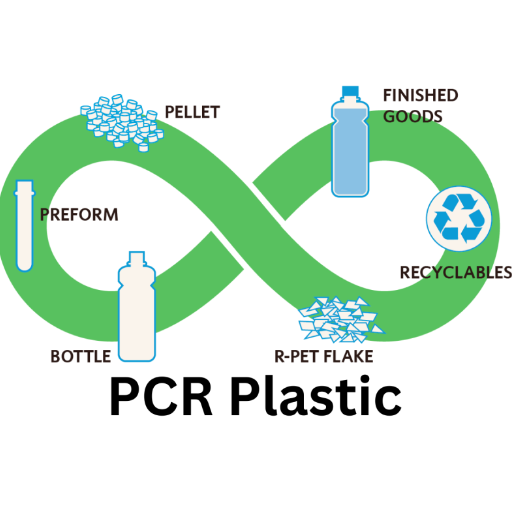
The term post-consumer recycled plastic (PCR plastic) is applied to elucidate plastic that has been reclaimed after secure disposal of bottles, containers, packaging, or any other objects. The material is then re-processed. Normally, the steps in this process consist of collection, sorting, cleaning, and finally re-melting into usable form, such as pellets or flakes. PCR plastic is most often oriented towards curbing the dependence on raw plastic, saving natural resources, and alleviating the burying of waste or littering the atmosphere. For traditional applications, there is processing of virgin materials to usable articles, most notably packaging for consumer products or other long-aging items. Therefore, it has become possible to produce conventional materials of quality and performance that match such materials.
Definition and Process of PCR Plastic
One such type of plastic that has been recycled from materials once used by consumers is called post-consumer recycled plastic. In this method, plastics that have been extensively used are taken, and the first step is sorting them according to kind and quality. The contaminants are then removed before they are ground, melted, and extruded to form new raw materials in the form of pellets or flakes. The products produced from these materials include, but are not limited to, packaging material, cloth material, and hard products.
PCR Plastic Processing — Step by Step
- 1
Collection — Plastics are gathered from consumer disposal streams, such as curbside collection, drop-off points, and deposit return systems. - 2
Sorting — Materials are sorted according to kind and quality using manual and automated techniques, including NIR spectroscopy. - 3
Cleaning — Contaminants are removed through washing and filtration to ensure purity and quality of the recovered material. - 4
Grinding & Melting — Cleaned materials are ground down and melted under controlled conditions to prepare for extrusion. - 5
Extrusion into Pellets / Flakes — Final raw material is formed into pellets or flakes, ready for use in new packaging, textiles, or hard products.
Thus, the advantages that come with the use of post-consumer recycled plastic are numerous. It helps in cutting down the use of virgin plastic, which helps in the conservation of resources, especially petroleum, which is not renewable. Besides, the more waste is kept out of the landfill, the less pollution is generated. Moreover, it should be noted that the use of PCR materials results in the climate change agenda of the industries, as the energy demands for production are usually reduced.
Despite the advancements in the polymer industry, PCR plastic exhibits some challenges in its processing. One of the problems that may occur concerns the difference in the quality of the materials collected, contamination, and also the lack of recycling channels for such materials. The advancement of technology and imposition of laws assist in solving such impending issues, and they help to ensure that post-consumer recycled plastic is as safe and strong enough to be used in other products.
Types of Materials in PCR
All post-consumer recycled plastic includes, but is not limited to, the following materials that have been used once in products for consumption and then successfully retrieved through the recycling system:
Common PCR Plastic Types at a Glance
| Plastic Type | Common Source | Recycled Into |
|---|---|---|
| PET | Bottles, food packaging | Bottles, fibers, bandings |
| HDPE | Milk crates, cups, drainpipes | Bottles, construction boards, waste lumber |
| PP (Polypropylene) | Yogurt containers, bottle caps, auto parts | Reusable goods, textiles, industrial items |
| PS (Polystyrene) | Take-away containers, packaging | Insulating products, foam separators |
| Plastic Mixtures (“Other”) | Composite / multi-layer plastics | Inferior-grade products via advanced methods |
PET (Polyethylene Terephthalate) is a well-known type of plastic used for bottle and food packaging purposes. Recycled forms of PET are sought after due to their toughness and versatility. This kind of plastic is usually recycled into bottles, fibers, or even built-up bandings.
HDPE (High-Density Polyethylene) as well as Polypropylene (PP) are pretty much common. These plastics are easy to recycle because of their strong and anti-corrosion features, such as in milk crates, cups, and cutlery, buried drainpipes for sewage, etc. This kind of plastic is also used quite often in manufacturing more bottles, construction boards, or waste lumber.
Polypropylene (PP): With its low density and high resistance to temperatures, PP is widely obtained from recycled plastic products such as yogurt vessels and containers, bottle stoppers, and automobile parts. Recycled PP is mainly used for making reusable goods, textile as well as industrial items.
Polystyrene (PS): While this material is refrained from recycling arrangements because it is hard to collect and even harder to process, materials such as PS, even in take-away containers and packages, can be recycled into goods such as insulating products and foams as separators.
Plastic Mixtures Involving Different Types of Plastics (Plastic Other): Materials referred to as “Other” plastics are typically composed of several plastic layers or composite plastics and thus require different recycling methods. Although their processing may be more exacting, there are new innovations and technologies in place that make it easier to recycle more of these types of materials and put them to good use in the form of inferior products.
The variety of the materials used in PCR poses a challenge for the development of stream-lined collection, sorting, and processing system that will maximize efficiency and ensure the production of quality recycled products is achieved.
Comparison with Other Recycled Plastics
There is an important distinction between post-consumer and post-industrial plastic recycling. Post-consumer recycled plastic is made from high-density polyethylene (HDPE) bottles, polypropylene (PP) tubs, pots, and trays, which have been used and then recovered by the consumer, while post-industrial scraps or wastes arise particularly in the manufacture of plastic products.
The chemical recycling of plastic waste is an alternative to mechanical recycling, as there is the possibility of recovering the basic components of plastic materials. In chemical recycling, plastic molecules are converted to small molecules. These small molecules may be transformed into polymers with similar mechanical properties to virgin plastic, even if they are obtained from very dirty and contaminated waste. Nonetheless, it is much more expensive and energy-consuming and consequently less practiced.
Furthermore, issues related to contamination and material quality are more pronounced in post-consumer recycled plastic than post-industrial recycled plastic or virgin plastic. However, all forms of recycled plastics play a major role in reducing the consumption of fossil-fuel-based polymer synthesis and aid in environmental goals. How well the PCR and other recycled materials can be used without losing much of the performance will only happen with the improvement in the collection system, sorting techniques, and recycling technology.
PCR vs. Post-Industrial vs. Virgin Plastic — Comparison
| Factor | Post-Consumer (PCR) | Post-Industrial | Virgin Plastic |
|---|---|---|---|
| Source | Consumer-used products | Manufacturing offcuts/scrap | Raw fossil fuels |
| Contamination Risk | Higher — varied consumer streams | Lower — controlled factory waste | None |
| Environmental Benefit | High — diverts waste from landfills | Moderate | None — resource extractive |
| Material Quality | Variable; improves with tech | More consistent | Highest consistency |
| Regulatory Preference | Strongly mandated in key regions | Recognised but less targeted | Being phased out in many sectors |
🌿
Benefits of Post-Consumer Recycled Content

The incorporation of post-consumer recycled plastic (PCR) content has various critical advantages related to ecology and economy. The introduction of PCR content into manufacturing results in the diminution of the production of virgin resources, which in turn takes pressure off natural habitats and lessens the extraction of primary resources. The recycling of content like PCR also contains a process of reducing the emission of greenhouse gases, as it diminishes the energy-consuming methods of producing fresh materials. As a matter of fact, this content adds to the waste management attained by preventing waste from going to landfills and promoting recycling systems, which encourage the return of former products to the production process in the form of materials. All these benefits make the incorporation of PCR content inevitable in the pursuit of all organisational sustainability targets. Additionally, ensuring the mitigation of environmental protection in several commercial products and industrial activities.
🌍 Environmental Impact
Employing post-consumer recycled (PCR) materials results in a positive impact on the environment. Through the recycling of materials, the consumption of fresh raw materials is decreased, thus helping to preserve the environment, for instance, the use of petroleum or wood in the manufacture of various products such as plastics, paper, or metals. Also, it can be said that recycling saves much of the greenhouse gas emissions associated with the manufacturing of virgin materials since the recycling process uses relatively lower energy, which means less strenuous activities. An important advantage of PCR is that it prevents the filling up of landfills. Avoiding disposal of waste to landfill areas not only improves the usable life of a landfill but also reduces the emission of a powerful greenhouse gas — methane, which is released from rotting waste. Thus, with the corporeal use of PCR-produced items, reusing and recycling waste material with more effective resource usage and lesser waste generation becomes possible. At the same time, PCR enhances the sustainability efforts of the industries and ensures compliance with regulations while meeting the increasing appetite for green products from the public. Though there are issues of energy consumption in both collection and reprocessing, the benefits of PCR, such as less dependency on virgin resin and GHG emissions, outweigh the disadvantages. For this reason, PCR becomes a critical approach for businesses that focus on the reduction of their carbon footprint.
💼 Economic Advantages
One of the benefits businesses obtain from integrating post-consumer recycled plastic into their manufacturing processes is economic in nature. With the inclusion of PCR material in products, many companies passively reduce their costs of raw materials’ acquisition, especially as the demand for environmentally friendly products increases, and there is more volatility in the availability of virgin plastics. Furthermore, the use of PCR also helps in minimizing the waste disposal costs because of the provision of incentives in recycling, driving the re-use of materials. Moreover, the appeal of eco-friendly brands in the contemporary consumer market implies that incorporating post-consumer recycled material in product offerings can very well expand their market reach due to increased competition. In addition, several such corporations are able to avail of fiscal privileges and activities from governments across the world in the form of tax reliefs, grants, and/or subsidies due to sustainable projects. As time goes by, firms that focus on incorporating PCR will work on their image and reputation, thus resulting in long-term profit and enabling the promotion of the closed-loop economy as well.
👥 Consumer Perception
Nowadays, the perspective of consumers regarding the sustainability of the goods they are planning to buy is changing for the better as the citizens of the world become more environmentally conscious. Consumer surveys from credible entities found that there is a sizable number of individuals who are actively on the lookout for green products, more so among the youth or the Millennials, together with Generation Z. Such people would rather spend money on products that incorporate their beliefs and values, such as products made out of old materials or those with lower emissions. Moreover, organizations that embrace sustainability often enjoy an edge over the competition since customers appreciate and prefer companies that show responsibility and ethical promises. Similarly, it has also been observed that the display of such information with clarity and certification contributes substantially towards developing confidence, as such measures amplify the product’s sustainability assertions. With the changing dynamics, turning sustainable in the production of the good in question is a key factor since non-sustainable products will not satisfy the wants of the customers and create their loyalty to the brand.
⚠️
Challenges in the Use of Post-Consumer Recycled Plastic

The adoption of post-consumer recycled plastic is associated with a number of hurdles. One major issue is the quality of post-consumer recycled plastic since waste collection and segregation practices do not enable the production of high-quality material. Poor recycling streams affect the material in such a way that it cannot be used effectively unless extensive and costly cleaning lines are used. Another issue is that post-consumer recycled plastic, over time, possesses less desirable mechanical properties as the recycling process is repeated and therefore cannot be employed in the production of certain items. Also, using post-consumer recycled plastic for products takes some adjustment of existing technologies, which in turn entails additional costs and difficulties. Finally, feasibility is affected by variations in the price and demand of recycled materials, which has a discouraging effect in the long run and makes widespread PCR plastic usage impossible.
- ✗
Material Quality Inconsistency — Variable collection and segregation practices limit production of consistently high-quality PCR material without costly processing. - ✗
Degraded Mechanical Properties — Repeated recycling cycles progressively reduce the structural integrity of PCR plastic, limiting high-performance applications. - ✗
Technology Adjustment Costs — Adapting existing manufacturing technologies to accept PCR materials introduces additional capital and operational complexity. - ✗
Price and Demand Volatility — Fluctuations in the availability and cost of recycled materials reduce long-term feasibility for widespread PCR adoption.
Manufacturing Challenges with PCR Materials
The complexities associated with the use of post-consumer recycled plastic require adopting various approaches and effective methods for enhancing efficiency and building sustainability. This aspect of the decrease in the quality parameters of the material can be avoided by using sophisticated sorting and cleaning systems, which purge the recycled plastics and improve their performance. In this way, the PCR is able to blend with virgin plastic to produce strong and durable articles in a prescribed ratio, and hence, the practice of sustainability is practiced.
In an effort to curb the challenges posed by PCR incorporation in production processes, companies have the option of investing in technology upgrades as well as innovation of the processes, for example, extrusions to make them more suitable for this purpose. And this is aided through training within the organization, thereby facilitating change and reducing the total expenses.
One final point in this vein is that sustaining collaboration along the supply chain and enacting policies that would facilitate the commercial recycling of materials would help to stabilize market demand and supply forces. Further, employing strategies of market forecast that rely on the dual reference isolation data of PCR enables and increases the use of long-term contracts for PCR supply, which helps ensure that the PCR arises on a more level basis in terms of cost and incorporates itself better in the manufacturing processes.
⚖️
Regulatory Trends Affecting PCR Usage
Several countries have started channels for incorporating post-consumer recycled plastic, especially due to the increasing strictness of environmental standards and sustainability core agendas. Relevant examples are global policy drivers, such as the Single-Use Plastics Directive by the European Union, which set minimum recycled content percentage in plastic production, resulting in more incorporation of PCR. Likewise, there are Extended Producer Responsibility (EPR) systems, which are used to ensure that companies are responsible for the entire lifecycle of their products, including the recycling aspect.
In the U.S.A., the regulations have flourished into something different, with states such as California, which has SB 54, a law that mandates at least 30% post consumer recycled plastic packaging be used by 2030. Elsewhere in the world, there has been an increase in the introduction of measures that support the achievement of smart growth in line with the objectives of the United Nations sustainability initiatives. These digitalized regulations call for greater supply chain clarity, coordinated documentation, and advancement in recycling technology so as to adhere to the specifications of PCR material quality and characteristics.
Key Regulatory Milestones for PCR
| Regulation / Policy | Region | Key Requirement |
|---|---|---|
| Single-Use Plastics Directive | European Union | Minimum recycled content % in plastic products |
| EPR Systems | Global (various) | Producer accountability for full product lifecycle incl. recycling |
| SB 54 | California, USA | ≥30% PCR plastic in packaging by 2030 |
| UN Sustainability Initiatives | Global | Smart growth objectives and supply chain transparency |
Quality Control and Consistency in PCR Products
Maintaining strict quality standards and homogeneity in output with regard to products that utilize post-consumer recycled plastic is of great difficulty due to the numerous factors involved. Key to this issue is the differences in source materials since PCR materials used inevitably come from multiple streams, resulting in variation in factors such as color, composition, or melt flow properties. This can be overcome by very good sorting, cleaning, and preprocessing methods, like material identification using near infrared (NIR) methods and advanced filtration techniques to rid the contaminants. Less rigid testing within specified parameters, such as tensile strength, impact allowances, and chemical content, should be able to enforce the performance requirements and maintain the purity levels.
Moreover, the performance of the items is not changed when post-consumer recycled plastic is incorporated since the PCR materials are not used simply but blended with some portion of virgin resin. During the fabrication process, manufacturers use more statistical process control (SPC) techniques and even modern approaches to process defect analytics and improvement. Integration of every aspect of the value chain, from plastics collector to product designer, is critical in ensuring accountability, upgrading the quality of materials, and meeting one regulation or another. Also, league tables at the regional, national, and global levels that are set up by the standardization agencies and certification bodies, such as Global Recycled Standard (GRS), also facilitate reaching common ground on the level of quality of the PCR products across markets.
🚀
Future Trends in Post-Consumer Recycled Plastic

The prospects of post-consumer recycled plastic depend mainly on technological advancements, the evolving regulatory landscape, and shifting consumer focus towards more eco-friendly materials. For example, chemical recycling infrastructure is a new generation of technology that makes it possible to decompose plastics into monomers with the aim of returning them to the production cycle in excellent quality. In this regard, such methods will be employed holistically with the traditional mechanical recycling methods to recycle certain plastics that are more complex and have been contaminated. Furthermore, the adoption of hi-tech separation systems, including AI-assisted equipment and fundamental use of near-infrared (NIR) spectroscopy, will enhance the effectiveness and precision of the recovery or retrieval of materials.
Stronger regulations, particularly EPR and minimum recycled material content, have made the need for companies to incorporate more PCR materials into their products. Also, it is expected that the growing preference for green products among consumers will fuel more activities in producing plastic with post-consumer recycled plastic and practice closed-loop operations. Furthermore, to make such changes cost-efficient in terms of effect and benefit, inter-industry coordination with the aid of technology and practices in governance will be a key factor.
Innovations in PCR Technology
Most recently, efforts regarding post-consumer recycled plastic technology have involved enhancing sorting methods, the quality of recycled plastics, and the processing efficiency. New artificial intelligence (AI) and machine learning technologies have improved sorting technologies with the added benefit of precisely discriminating and separating various types of plastics. Other techniques, such as chemical recycling, where polymers are broken down to their constituent monomers, introduce the possibility of recycling even low-quality or very dirty plastics, which would otherwise not be possible with mechanical recycling. In addition, progress in decontamination technologies guarantees that recycled materials can be safely used in food-grade and high-performance products. All these technological advances, coupled with government policies and private sector initiatives, are bearing fruit towards sustainable closed-loop recycling processes.
🤖
AI Sorting Systems
ML-powered equipment precisely discriminates and separates plastic types in real time
⚗️
Chemical Recycling
Decomposes polymers to monomers, enabling recycling of contaminated or complex plastics
🔭
NIR Spectroscopy
Near-infrared identification enhances material recovery accuracy and stream purity
🧼
Decontamination Tech
Advanced processes enable PCR use in food-grade and high-performance product lines
Market Projections for PCR Packaging
Post-consumer recycled plastic (PCR) packaging is going to flourish greatly over the next few years. The reasons that are contributing are a greater number of laws in favour of recycling, consumer expectations, and companies trying to go green. These will each drive the growth of the PCR packaging industry. The most robust segment wherein PCR can be observed is food and beverage, personal care, and retail e-commerce. The introduction of technologies or resources that ease processes and logistics would again push this curve further up along PCR packaging, which has become critical in the context of a circular economy.
Collaboration Opportunities in Sustainability
Sustainability partnerships are built on different sectors, including industries, governments, and communities, working towards the most effective methods of reducing environmental burden. Some of the areas that offer opportunities for collaboration are the development of new materials, such as advanced biodegradable materials, and the mass usage of post-consumer recycled plastic for manufacturing. Information pertaining to resource utilization or reduction of waste can also be shared in order to avoid misconduct and address gaps within a supply chain. It is possible to collaborate with relevant authorities in order to develop best practices on sustainable actions that are both applicable and curtail deviance to enforce sustainable solutions over a wide scope. Lastly, instead of singular approaches, such unification catalyzes positive transformation towards the global goals of sustainability with attendant consideration of available expertise.
Summary & Conclusion
PCR Plastic — The Cornerstone of Green Packaging
Post-consumer recycled plastic is no longer an optional enhancement — it is fast becoming the foundational material of responsible manufacturing and packaging. From regulatory mandates across Europe and North America to growing consumer demand for sustainably produced goods, the trajectory for PCR is one of accelerating adoption and deepening innovation.
Companies that invest in PCR integration today — through technology, supply chain collaboration, and quality control — will be best positioned to lead in tomorrow’s circular economy, building both brand resilience and measurable environmental value.
Reference Sources
“Submissions on Post-Consumer Recycled (PCR) Plastics for Food Contact Applications”
This FDA resource provides a list of submissions and favorable opinions on processes for producing post-consumer recycled plastics, particularly for food contact applications.
“Can we responsibly source post-consumer recycled plastic?”
Published by the World Economic Forum, this article discusses responsible sourcing of post-consumer recycled plastics and the importance of balancing recyclable and non-recyclable plastics.
Frequently Asked Questions (FAQs)
How Effective Is PCR In The Reprocessing Of Plastic Wastes?
Littering of the environment with post-consumer recycled plastic is one of the main disadvantages of plastic. Overreliance on original plastics and their products is eschewed, and concerns related to mountains of garbage being poured into landfills can be eased to a certain extent. These are positive aspects of the use of post-consumer recycled resins. Furthermore, processed materials used in production, like PCRs, which are a far superior alternative to plastics, reduce energy and emissions associated with the elaboration of new plastics, thus relieving the burden on the economy and enhancing the level of recycled components in plastics and plastic packaging in general.
What are the advantages of PCR bundles as compared to the conventional plastic containers?
Post-consumer recycled plastic (PCR) provides the advantage of reducing carbon footprint as the introduction of additional sources of processing eliminates scope of filling land sites with consumer products, reducing the demand for raw material to make plastics, and creating entirely new products out of it. Therefore, plastics with the use of PCR in the production process help decrease, instead of eliminate, energy required to manufacture plastics, decrease relatively the carbon dioxide emissions, help foster the concept of a circular economy, and enhance the amount of recycled materials already present in plastic wraps and many other such plastic materials.
How can packaging created with post-consumer recycled carpet be different from old polyethylene packages?
Advantages of PCR packaging entail the incorporation of post-consumer feedstock and post-consumer recycled material for the creation of recyclable/ recyclable-ready plastic packaging, such as plastic bottles and food packaging. Such packaging, among others, made with recycled content helps reduce the use of green and virgin plastics, assists the brands in reaching the set recycled content targets, and enhances local recycling schemes, including recycling if eco-designed.
Can post-industrial plastic recycling be integrated into a product with post-consumer plastic?
Yes, post-industrial recycled material and post-consumer recycled material are usually mixed. Pre-consumer scrap and post-industrial recyclables are derived from production residue and production scrap, whereas post-consumer recycling source is, on the other hand, collected plastic after use by the consumer community. Blending these two means will promote recycled content accomplishment in recycled plastic products, though not sacrificing the level of quality required during the production stage.
Are PCR products comprehensively reusable, or what makes them such?
Most products composed of PCR do not restrict recycling, provided that they adhere to certain plastic materials, such as PE and PET, and do not contain harmful substances. Factors of recyclability include: how the product is made, whether it fits the recycling scheme of the local authority, and how the product is labeled. A product can be recycled depending on the scope and extent of the recycling processes, structural design, examination of additives and multilayers, and the ability of the local facilities to sort the materials.
Are there practical issues with PCR when it comes to processing and recycling chains?
There are issues related to PCR, such as wide variation in feedstock that comes from various sources of plastics, contamination from the food containers, films, etc., scarcity of good-quality post-consumer recycled plastic waste, and instability of the market for PCR. Common technical and legal difficulties include food contact safety compliance, variation in uniformity of recycled content, and plastic recycled to what applies to manufacturing.
In what ways are post-industrial scrap and post-consumer plastics different in terms of their aftereffects on the ecosystem?
Post-industrial materials are derived internally from the manufacturing cycle as opposed to post-consumer world plastics, which are laced with contaminants and need to be extracted, if not purged, and sorted before the process can commence. Post-consumer recycled materials, unlike post-industrial re-granulated plastics, which encourage greening through reuse directly, reduce scavenging while generating at the same time a stronger bottom line as they end up in the goods used by stakeholders after the use, helping to eliminate acycle.
Would you call utilizing “natural plastic” or biodegradable material instead of post-consumer recycled plastic as an alternative?
Natural and/or biodegradable alternatives help with the reduction of environmental impact in general. In several applications, they are not a substitute for PCR. Making use of plastic that has gone through recycling rather than producing new ones lessens the impact of the activity and promotes the aims of recycling towards a circular economy. There are also biodegradable options that have distinct end-of-life conditions, and these options may not be compatible with food stuff or prevailing recycling systems. Deciding between the optional systems of the two materials depends on the available infrastructure, the products made, the post-consumer recycled plastic used, and the environment.
Related Posts
Trending now