Get in touch with Kitech Company


Zero Waste Lifestyle: A Practical Guide to Reducing Waste and Living Sustainably
Quick Specs
| US Municipal Solid Waste | 292.4 million tons/year |
| US Recycling + Composting Rate | 32.1% (94 million tons) |
| Plastic Ever Recycled (Global) | 9% of all plastic ever produced |
| US Family Food Waste Cost | $1,500/year (family of 4) |
| Global MSW by 2050 | 3.8 billion tonnes (up from 2.1B in 2023) |
What Is a Zero Waste Lifestyle — and Why It Matters in 2026

A zero waste lifestyle is the intentional effort to throw as little trash as possible into landfills and incinerators. You keep track of everything you send to landfill, replace disposables with reusables, compost your organic waste, and slowly kind of like Chipotle by opening the bag a little less each week—decrease the amount of garbage you put out for pick up. The word “zero” is more aspirational than literal; Bea Johnson, the woman who popularized modern zero waste living by stuffing her family’s trash into a mason jar each year, still produces a tiny amount of waste. It’s about directional progress toward less waste, not mathematical perfection.
Why does this matter more in 2026 than it did in 2021? Because the trend is in the wrong direction. The United States produces 292.4 million tons of municipal solid waste each year, and only 32.1% of that gets recycled or composted, meaning the other 199 million tons are landfilled or incinerated. Scaled globally, the United Nations Environment Programme estimates that in 2023, world municipal solid waste will total 2.1 billion tons, and will jump to 3.8 billion tons by 2050 subject to current usage.
The most startling fact is that for most people, according to the USDA, it’s not plastic water bottles or disposable shopping bags, it’s food. Decomposition of food in landfills produces the greenhouse gas methane, approximately 80 times more powerful than CO over a twenty-year period. Zero waste isn’t just about saying no to plastic straws; it starts with your food scraps.
💡 Key Insight
The EPA’s definition of zero waste is 90 percent diversion from landfill and incinerators by 2040, and many towns, such as San Francisco or Kamikatsu, Japan, have already achieved over 80 percent diversion, demonstrating the approach at the municipal scale.
The Five R’s of Zero Waste: Refuse, Reduce, Reuse, Recycle, Rot

The ordering, which is not random, is deliberate: each R eliminates a category of material that the next cannot.
- Refuse Say no before waste enters your life. Refuse the plastic bag at check out. Refuse to accept promotional branded carryall tote you already have five of at home. Refuse receipts when offered. The more things you refuse, the less waste you will need to deal with.
- Reduce Purchase less, buy with intention. Cancel subscriptions you purchase but rarely consume. Place value on durability rather than disposability, such as a single cast-iron pan that can last a lifetime over a string of disposable frying pans that will end up at the dump every few years.
- Reuse Make what you have last longer. Mend a torn jacket instead of discarding it for something new. Use glass jars from yogurt or pasta sauce as home canning containers. Sometimes, the greatest change is taking on the philosophy; a user on Reddit remarked that “Life-changing was not really a purchase, but the mindset of living zero waste.”
- Recycle Only after refusing, reducing and reusing. Know your local recycling rules—an over-stuffed recyclable can be rejected if even a single item is contaminated (its greasy pizza box or food-coated container). Ensure it’s properly cleaned and sorted.
- Rot – Compost your organic waste. A backyard compost pile, a counter top composting system, a City Program all work. Keep food scraps out of the landfill where they produce methane and do not become earth.
What Are the Five R’s of Zero Waste Living?
The Five R’s are refuse, reduce, reuse, recycle, and rot, in that order. Refuse prevents waste from ever entering your home. Reduce cuts down on how much you consume. Reuse prolongs existing products and keeps new products out of your home. Recycle processes items that have survived the first three R’s, and composting (rot) makes nutrients from organic matter that cannot be refused, reduced, reused, or recycled. Learn the one mistake that gets 80% of beginner zero waste persons out in the first month; start at refuse and work forward, refusing first, and recycling as a last resort.
Your 4-Week Zero Waste Starter Roadmap
⚠️ Important
Beginners attempting to change everything immediately run out of steam fast. Zero waste is best approached as a four-week trial, concentrating on changing one room, one room, one habit over the course of four weeks.
| Week | Focus | Actions |
|---|---|---|
| Week 1 | Audit | Sort one week of garbage into piles: food, plastic packaging, paper, other. Photograph each pile. Identify your top 3 waste sources by volume. |
| Week 2 | Switch | Replace your top 3 single-use items: reusable water bottle, cloth shopping bags, and a metal or glass food container for lunches. |
| Week 3 | Kitchen | Start composting food scraps (countertop bin or yard pile). Buy in bulk where possible. Replace plastic wrap with beeswax wraps. |
| Week 4 | Bathroom | Swap liquid shampoo for a bar. Switch to a bamboo toothbrush. Try reusable cotton rounds instead of single-use pads. |
Where to Start Based on Your Living Situation
- House with yard – begin composting one week. Food waste is the largest category of landfill waste, and your home yard offers the space.
- Apartment – begin with refuse and reduce. Food waste from the grocery store may be composted; consider neighborhood compost drop-off and a composting system on your countertop called bokashi.
- Shared housing – begin with controlling your own bathroom and groceries (shopping is better than cleaning). Shared kitchens are more difficult to change.
The Plastic Problem: Why 32% Recycled Does Not Mean 32% Saved
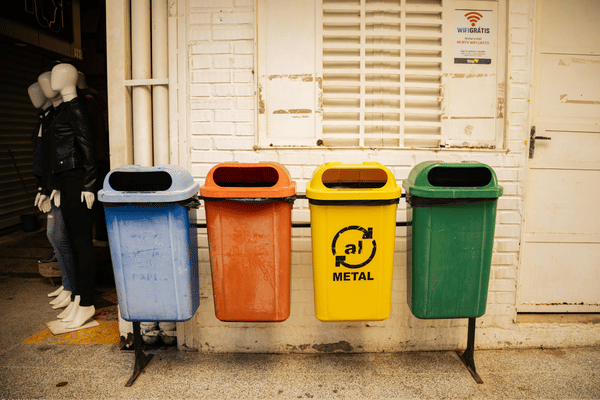
People believe if they deposit something into the recycling bin that it will be recycled. Sometimes that is true, but there is a big gap between what is deposited into the bin and what is fabricated into a new component from a processed material, and that gap is an important understanding any zero waste advocate must master.
According to the EPA, the all-municipal waste recycling rate in the United States is 32.1% for all municipal solid waste, and then outperforms at 68.5 % for all waste. That is what we produce in our homes in terms of recyclable material; the number for what actually turns into a new product is much lower. Contamination, sorting errors, economic considerations all create losses. An article published in Nature in 2024 found that plastics suffer and processing as much as a 30% material reduction. The end-to-end recycling rate from you to a product is much lower than the headline rates suggest.
What really happens when you put yogurt container in the recycling bin? You rinse, check the resin code, and set it aside in your curbside bin. It gets to the Material Recovery Facility (MRF). An optical sorter scans for that resin code – and misses it. The national rate of recycling PP is a mere 1.7%. Your MRF accepts it, but there isn’t a place for it to go (buyer’s market). The virgin material is so much cheaper than PP that the flakes are a waste product, and do not get recycled into a new yogurt container.
So, only 9% of all the plastic ever made has been recycled. All that remains of everything else is landfill, incineration or leakage back into the natural environment. New research from the National Institute of Environmental Health Sciences presents the first evidence of microplastics in human blood, lung tissue and reproductive organs – but the health consequences are still being studied.
9%
of all plastic ever produced has been recycled
29.1%
PET bottle recycling rate (highest among plastics)
1.7%
PP recycling rate (yogurt cups, bottle caps)
“In a circular economy, products and materials are kept in circulation through maintenance, reuse, refurbishment, remanufacture, recycling and composting.”
— Ellen MacArthur Foundation, Circular Economy Overview
This is why the first three R’s: Refuse, Reduce, Reuse – matter more than Recycle. Every plastic item you refuse is one less contributing to the 91% where it still exists in a landfill, through an incinerator or in our oceans. The choices you make as a consumer create demand signals that encourage brands andfrastructure to invest in better solutions. global-commitment-2025“>EMF’s Global Commitment 2025 report showed that member signatories achieved a 6% reduction in virgin plastic use against 2018 baselines – driven in part by consumer demand for sustainable solutions.
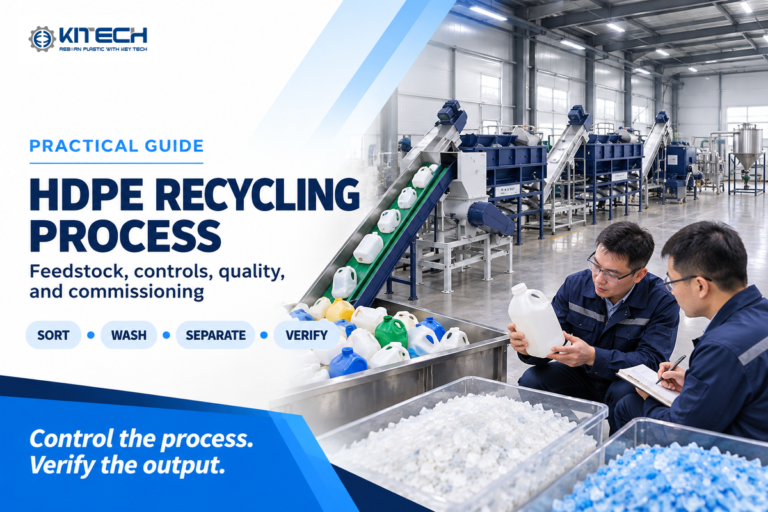
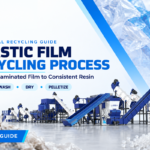
But what happens to all of the plastic that does get collected and sorted? In the absence of suitable waste streams, plastic goes through the following process; pre-wash, shred, wash, dry, re-pelletize into raw material.
What Actually Happens When You Recycle Plastic? Inside the Process

On entering a Material Recovery Facility processing line, or a dedicated recycling plant, sorted plastic that passes quality control under goes these stages. Each one is designed to address a specific contaminant and avoid the production of unusable output.
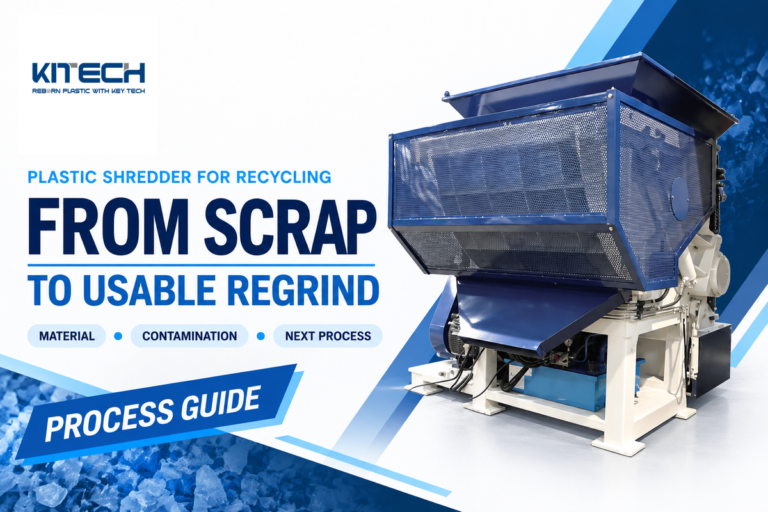
- Shredding and Size Reduction — Single-shaft or dual-shaft plastic shredders reduce baled plastic waste into uniform pieces measuring 10–50 mm. Motor power ranges from 15 kW for light film to 200 kW for thick-walled HDPE drums. Uniform particle size at this stage directly affects washing efficiency and final pellet quality down stream.
- Washing and Contaminant Removal — Shredded flakes enter hot caustic wash tanks at 60–85°C, where adhesives, labels, and organic residue dissolve. Friction washers spinning at 900–1,200 RPM mechanically scrub surface contamination. For PET bottle recycling, float-sink tanks separate materials by density: PET sinks (density above 1.0 g/cm³) while PP and PE caps float — enabling automated sorting without manual labor.
- Drying — Centrifugal dryers reduce moisture content from approximately 40% down to below 3%. This step matters more than most people realize: excess moisture causes bubbling during extrusion and produces weak, porous pellets that manufacturers reject.
- Pelletizing — Clean, dry flakes feed into plastic pelletizer extruders equipped with 80–120 mesh melt filters that remove remaining micro-contaminants. The extruder melts the plastic, filters it, and cuts the output into uniform pellets ready for injection molding or film blowing. The finished pellets are indistinguishable from virgin resin in most applications.
Imagine this: a plastic recycling machine line is rated at processing 1,000 kg/h of post-consumer material, almost 50,000 PET water bottles – every hour, the daily consumption of a small city. Kitech alone has installed over 500 such systems – each one processing waste 24/7 and converting it into PET raw material once again.
| Plastic Type | Resin Code | US Recycling Rate | Common Products |
|---|---|---|---|
| PET | #1 | 29.1% | Water bottles, food containers |
| HDPE | #2 | 29.3% | Milk jugs, detergent bottles |
| PP | #5 | 1.7% | Yogurt cups, bottle caps |
| PS | #6 | <1% | Styrofoam, disposable cutlery |
Can You Recycle All Types of Plastic?
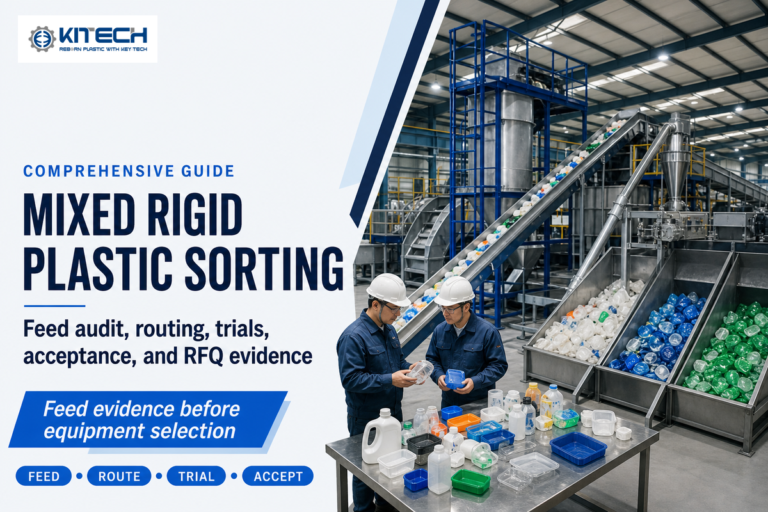
No. Plastics only carry 7 resin codes from 1 – 7, but the re-processabiltiy of that resin varies dramatically. PET (#1) and HDPE (#2) have well-established PET bottle and HDPE reprocessing routes with recycling rate avg 29%. PP (#5) may be recyclable, but only 1.7% currently is due to limited opportunities. PS (#6, Styrofoam) and Miscellaneous plastics (#7) rarely are. Consult your municipal recycling guide lines: acceptance criteria often differ city by city, and contaminations carry negative consequences.
The capacity story is improving. The associations suggests that US and Canadian volumes increased significantly in 2025 with PET processing capacity increasing 36%, and PP capacity increasing 42%. As processing of mixed recyclates improves and end market demand increases, the delta between consumer sorting and usable output will improve.
Zero Waste at Home: Kitchen, Bathroom, and Shopping Swaps That Work
Having finally established where waste actually ends up—and how pitiful the recycling rate is—here are the changes that make the greatest difference per effort in your own house…
Kitchen: Where 60% of Household Waste Starts
Using USDA estimates of the average four-person U. S. family, you spend $1,500 per year on uneaten food. That’s not typo. Fifteen hundred bucks on purchased food, stored badly, left behind in the back of the fridge and tossed away. Halving food waste makes a $750 difference each year—more than enough to cover every reusables purchase on this list.
A zero waste hack from the frugal crowd: place an “eat me first” box in the fridge—a transparent container at eye level where you put anything that has to be eaten in the next couple of days. Paper towels from Tuesday’s dinner, half an avovadp from breakfast, yogurt getting old, etc. I have a friend who got her family to cut out more than 40% of their food waste, without altering using or eating habits, by simply doing this.
| Single-Use Item | Reusable Swap | Annual Cost (Single-Use) | One-Time Cost (Reusable) |
|---|---|---|---|
| Plastic wrap | Beeswax wraps (3-pack) | $30–$45/yr | $18 |
| Paper towels | Cloth napkins (12-pack) | $100–$150/yr | $25 |
| Zip-lock plastic bags | Silicone bags (4-pack) | $40–$60/yr | $15 |
| Disposable water bottles | Stainless steel bottle | $200–$400/yr | $25 |
| Plastic produce bags | Mesh produce bags (8-pack) | $10–$15/yr | $12 |
Money saved in the first year by switching to all five items, $300-$570,isavings (compared to a purchase cost of roughly $95). Together, these reusables pay for themselves in three to four months’ time. Use mason jars instead of plastic boxes—these close airtight, stack easily, and show up most leftovers clearly.
📐 Engineering NoteDecomposting is optimum at a 30:1 carbon-to-nitrogen ratio–about 30 parts dry leafs, paper, cardboard to 1 part peels, grass clippings, coffee grounds. A bad smelling, slimy compost pile takes more browns. A whole lotta’ uneaten or wasted food in the compost bin signals the need for greens. A hot compost bin hits 55-65C all over, kills weed seeds and most diseases.
Bathroom: The Second-Largest Source of Household Plastic
How many plastic bottles of shampoo, body wash, and conditioner do you use all told in a year? (Lifespan 12-15 bottles per person). (Tip: these pump bottles are not recyclable because the bottle and pump are made of dissimiliar material).
Swaps to make a positive impact: use shampoo bars (roughly -0.5kg plastic/person/year compared to liquid shampoo in a pump, to switch to bar soap instead of body wash (blows your plastic use by -0.4kg) and switch to a safety razor with repliable metal blades instead of a daily-use plastic that gets thrown away (saves -0.3kg). For four people, that’s almost 5kg of plastic in the garbage/landfill every year.
On the other hand, if you are in a really hard water location, shampoo bars don’t lather well. Use an apple cider vinegar rinse by diluting a tbsp of vinegar in a litlle bit of water (1tbsp per 1 cup of water) if you have a hard water location with a packet of free, drug store water strips on hand.
Shopping: Your Zero Waste Kit
- ✔ Tote bag (cotton or heavy-duty reusable)
- ✔ Mesh produce bags (set of 6–8)
- 12-15 plastic bottles worth of basic toiletries every year.
- ✔ Reusable water bottle and straw
- ✔ Travel cutlery set
Search “bulk store” or “zero waste store” plus your city name. Apps like Litterless (US) and the Bulk App (Europe) list package free shops in your area. Farmer’s markets also often offer food without packaging — bring your own bags. If not near a bulk store, buy the largest size you can find to minimize packaging waste per unit, and opt for glass and metal rather than plastic containers whenever possible.
Zero Waste Myths and Mistakes: What No One Tells You
The zero waste movement has a positivity problem. Social media is full of mason jars of trash and pristine eco-conscious kitchens, but not the frustration, the guilt, or the systemic changes that make zero waste really hard. Here are the myths that mislead people—and the truths behind them.
⚠️ Myth: “You need to buy all new eco-friendly products.”
Buying a new bamboo container to replace an existing plastic one is a waste to avoid waste. The most sustainable thing you own is the one you already own. Use it until it’s done, then replace it with a durable material. One Reddit user simply stated, “Buying new ‘eco’ products in order to replace working items defeats the purpose. Green consumerism in shiny packaging is still consumerism.”
⚠️ Myth: “Zero waste means literally zero trash.”
The name points to our aspiration, not reality. It is not possible to reach absolute zero waste, as some things simply cannot be avoided—certain health procedures, some grocery items, and the limitations of infrastructure make it out of reach. However, taking our smallest steps consistently can result in a 70-90% reduction of household waste.
⚠️ Myth: “You can just bring your own containers every where.”
This is probably the number one barrier I hear zero waste advocates talk about, as it gets the least attention in blog posts. In many countries and 33 US states, existing local health codes prevent or limit the use of consumers’ own containers in deli counters, bakeries, and grocery stores with bulk foods and prepared foods. COVID-19 has stifled many of those programs—call in advance. Legislative change is key to establishing a culture of reuse.
⚠️ Myth: “Recycling solves the plastic problem.”
According to the Ellen MacArthur Foundation, only 9% of all the plastic ever produced has been recycled. Recycling can go a long way, but it is the fourth R, not the first. It comes after refuse and reduce—before the reliance on a system where 91% still makes it into a landfill. Infrastructure is increasing (up 36% PET, 42% PP in 2025) but not fast enough.
The neutral truth: zero waste living can make you miserable if you treat it as a black-and-white lifestyle. A r/ZeroWaste post called “Feeling miserable – am I doing this right?!” was so popular because it articulated something many of us feel but seldom put into words: the guilt of not being perfect, the fatigue of having to always be vigilant, and the solitude that comes with caring about something that most others lack awareness of.
Practitioners with relevant experience offer the same advice: do what is feasible, be kind to yourself, and celebrate the changes that stay rather than the ones that burnt out your soul. A library card instead of an Audible subscription. Bar soap instead of liquid. The reusable bag that lives in your car. Sustainability is working within the limits of your real life, not beating yourself up for deviations from someone else’s IG feed.
The Circular Economy and Zero Waste: What Is Changing in 2026

The circular economy and the zero waste lifestyle are merging. While individual zero waste living strives to change personal consumption behaviors, the circular economy redesigns whole supply chains to eliminate waste at its very origins. In 2026, three , forces are adding momentum to the zero waste movement.
Regulatory friction: The EU Packaging and Packaging Waste Regulation (PPWR) came into force in February 2025 and will be fully applicable from August 12, 2026. This legislation has set minimum levels for recycled content, prohibits some single-use plastic formats, and applies producer-funded end-of-life collection obligations. In the United States, Extended Producer Responsibility (EPR) legislation is gaining ground at the state level – still no federated legislation, but policy is headed in the same direction.
Technology innovation: TOMRA powered systems now use AI to identify plastics based on resin type with 95%+ accuracy, saving tons in contamination in post-consumer streams. Chemical recycling – which turns plastics back into molecular raw material – is forecast to expand from 0.63 million tons in 2026 to 5.39 million tons by 2035 (26.68% CAGR). It can treat polyolefins and multi-layer packaging that mechanical recycling cannot.
Market pressure: Recycled plastics sales (86.1 billion in 2025) are expected to grow to 190.25 billion by 2035. Market forces for recycled plastics exist now to support your individual zero waste actions. (The plastic recycling industry is scaling additional capacity right now. For agricultural plastic recycling – mulch film, drip tape, greenhouse covers – dedicated facilities are now being built that were not a few years ago, helping you live less waste from that dimension. And those operating recycling lines will be able to do so cheaper in less time through the adoption of new motor and heat recovery equipment).
What does this mean for your zero waste lifestyle in 2026? Every plastic item you divert from landfill and into a properly sorted recycling stream has a better chance of actually being recycled than it did even two years ago. The infrastructure your efforts depend on is catching up. Recycling plastic produces a 30–50% smaller carbon footprint than manufacturing from virgin material. Your individual choices and the industrial circular economy reinforce each other.
Frequently Asked Questions
Q: What is the zero waste lifestyle?
View Answer
A zero waste lifestyle equates to minimize what is picked up and delivered to landfills by doing your best to adopt the Five R’s – Refuse, Reduce, Reuse, Recycle, Rot – in that order.
Q: What are the best strategies for zero waste living?
View Answer
Begin with a one-week trash audit to find the biggest sources of your waste stream. Then eliminate that waste stream by swapping disposable items for reusables cloth shopping bags, stainless steel water bottle, beeswax wraps. Compost food scraps to compost your organic waste instead of putting it in the trash. Buy in bulk to minimize packaging material use. Shop secondhand through thrift stores rather than new. Each of these activities addresses a different waste stream. When paired, they reduce the most waste.
Q: Is a zero waste lifestyle actually possible?
View Answer
absolute zero, an absolute goal, is not feasible excess material in some food packaging, service industries that can’t every single trash stream out of the house is not viable. However, eliminating 70-90% of household trash through sustained activity is. Many zero wasters fit an entire year of non-recyclable, non-compostable trash into a single mason jar. The goal is not to measure yourself to another household’s great success. It is additional movement in the right direction based on your specific limitations and capabilities. Your available resources, size of your household, and local recycling infrastructure all affect your definition of “near zero.”
Q: How can we promote a zero waste lifestyle in our community?
View Answer
Encourage neighbor swap-a-thons! Get your community to push for curbside composting! Facilitate community bulk-buying clubs! Hold classes on composting, sewing, reusing, or other sustainable behaviors! Cameras and other people will normalize the behavior – people like to emulate how others are living, especially those they respect. When others see you carrying your stainless water bottle or using a reusables, zero waste will seem even less extreme to them.
Q: Can zero waste living work in urban apartments?
View Answer
Yes. For composting – the main challenge if you lack a yard – try a countertop bokashi bin, a worm composting set-up (vermicomposting), or a community compost drop-off service. Many municipalities now allow curbside collection of organic waste at apartment buildings. The first three R’s (Refuse, Reduce, Reuse) can be practiced even in the tiny apartment with no yard and are highest impact activities.
Q: Does a zero waste lifestyle save money?
View Answer
For most house holds: Yes. Transitioning disposable kitchen chemicals to reusables results in annual savings of $300-$570 based on average market values. Cutting food waste in half yields an additional $750 saved annually based on USDA figures for $1,500 lost per four-person household. Initial purchases of a basic homemade sustainable kit-approximately $80-$120-save their costs in 3-4 months of use.
Want to See How Plastic Recycling Works at Industrial Scale?
Kitech designs and produces a complete line of plastic recycling equipment-from shredders to pelletizers-for reclaimers in 80+ countries.
Our Perspective on Zero Waste
Kitech manufactures industrial plastic recycling equipment — shredders, washing lines, and pelletizers — used by recycling facilities in over 80 countries. We wrote this guide because zero waste starts with individual choices, but scaling those choices requires the recycling infrastructure we help build. The recycling process data in this article comes from our engineering specifications and 500+ installation projects worldwide. We have no financial relationship with any consumer product brand mentioned in this guide.
References & Sources
- National Overview: Facts and Figures on Materials, Wastes and Recycling — U.S. Environmental Protection Agency
- Plastics: Material-Specific Data — U.S. Environmental Protection Agency
- Global Waste Management Outlook 2024 — United Nations Environment Programme
- Food Loss and Waste: Consumers — U.S. Department of Agriculture
- Global Commitment 2025 — Ellen MacArthur Foundation
- 2025 Plastic Recycling Capacity Report — Association of Plastic Recyclers
- Plastic Recycling: A Panacea or Environmental Pollution Problem — Nature
- Understanding Exposures to Microplastics and Nanoplastics — National Institute of Environmental Health Sciences