Get in touch with Kitech Company



A self-cleaning laser filter for plastic recycling efficiently eliminates paper, wood, metal, rubber, aluminum and unmelted particles as it can be fed continuously, while the traditional extrusion line keeps running. Its business case is not to claim “better filtration”; buyers need to know whether continuous laser filtration maintains pellet characteristics, steady pressure and line uptime better than a manual or piston screen changer.
This guide discusses laser filters for buyers comparing filter systems before a quote request. Use this article with the main auxiliary machines for plastic recycling lines page and the Kitech laser self-cleaning filter product page to understand how Kitech equipment compares with other supplier options.
Quick Specs
| Equipment type | No-mesh self-cleaning melt filter with laser-drilled disc plates |
| Kitech KLF throughput range | 200-2,400 kg/h, model and polymer dependent |
| Working pressure | Up to 25 MPa |
| Filtration range | 100-500 um on Kitech published product data |
| Common polymers | LDPE, LLDPE, HDPE, PP, PS, ABS, POM, PA, PET |
| Best-fit feedstock | Post-consumer or post-industrial material with repeated screen blockage, pressure drift, or mixed solid contamination |
| Scraper speed reference | 1-6 rpm, adjusted after melt-pressure testing |
| Trial data to collect | 30 min pressure trend, kg/h output, pellet appearance, and discharge interval |
| Sizing caution | Confirm 100 um, 300 um, or 500 um openings with real feedstock before purchase |
On real recycling machinery, filter efficiency depends on stable feeding from the screw, steady melt pressure, and the way each impurity is removed through slag discharge automatically. An efficient choice for recycled materials with mixed labels, paper, aluminum, or rubber still needs process testing rather than a catalog-only decision.
How a Laser Filter Cleans Plastic Melt Without Stopping Production

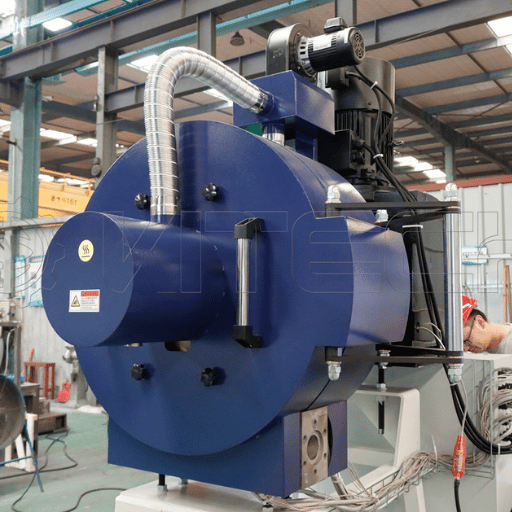
A laser filter applies a fixed plate of metal, not woven mesh. Its name is derived from its manufacturing process: computers punch thousands of tiny holes directly into the screen plate. Melt is pushed through the laser-drilled openings. Check if oversized particles are retained on the upstream face, while the flow and pressure are unaffected on the downstream face; and if scraper blades rotate to use across the disc face before the buildup chokes flow.
Plastics Technology describes this as a material first decision: the filter should be appropriate for the incoming waste stream as well as the performance requirement for the finished pellet. Particle properties matter because paper and wood do not behave the same as rubber, other polymers, metal or glass. A facility using washed post-industrial trim may not use as demanding of a filtration level as one shaping finished agricultural films, contaminated with soil and labels.
- Extruder pressure pushes contaminated melt into the filter body.
- Molten plastic is over hundred holes cut into one surface.
- Accumulating debris on the disc face; scraper blades turn back and forth to pass across the face as buildup chokes flow.
- Debris accumulates on the upstream face of the disc rather than remaining with the clean resin.
- Steady melt pressure as cleaning takes place during operation, not shutdown.
Engineering Note
Kitech’s KLF disc system lists a range of scraper speeds from 1-6 rpm, a maximum pressure of 25 MPa, and a filtration fineness of 100-500 um. Use those as guide line specifications, not ultimate settings. Viscosity, temperature, MFI, shape of debris and even pellet processing use change the optimal setup.
Laser Filter vs Screen Changers: The 4-Pressure Melt Filter Fit Test
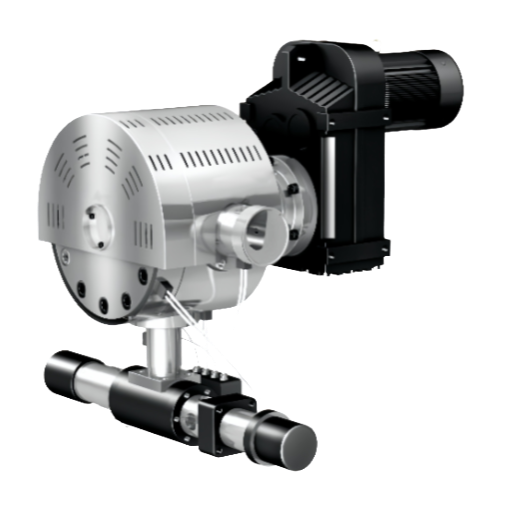
Sometimes a screen changer is the best solution. They are correctly sized for clean material and smaller lines, and fine mesh may be required. Find out when pressure changes in the process flow are significant enough for a self-cleaning laser filter to be preferred.
| Decision Point | Manual / Wire Mesh Screen Changer | Piston / Backflush System | Self-Cleaning Laser Filter |
|---|---|---|---|
| Melt pressure | Rises as mesh blinds; line may stop for screen change | Backflush limits pressure rise in cleaner streams | Scraper keeps holes open during production |
| Contamination pressure | Better for low dirt load and lower-cost operation | Good for moderate contamination and fine mesh needs | Best fit when paper, wood, rubber, aluminum, glass, or foreign polymers repeatedly block screens |
| Downtime pressure | Screen changes can interrupt production | Can run with automatic cycles | Designed for continuous filtration and discharge |
| Cost pressure | Lowest entry price, higher repeat screen handling | Higher machine cost, lower stoppage than manual systems | Higher entry price, best when uptime and contaminant discharge carry the value |
| Main buying risk | Under-buying for dirty material | Buying complexity for feedstock that does not need it | Over-buying for clean, low-volume, or trial-stage lines |
Pure Loop’s classification map provides broad contamination bands around familiar filter options: manual filtering for extremely clean production waste, direct line flow and backflush cameras in the low and medium ranges, and laser filter optics for difficult post-consumer recycling. While not absolute, these examples show how the rougher the stream, the more the buyer should require automated lane contamination removal and steady line pressure.
Which Recycling Streams Benefit Most From No-Mesh Filtration?

Polymer name by itself does not determine suitability. Selection depends on contamination, flow rate, target pellet quality and viscosity. Both HDPE regrind and LDPE film may require filtration, but their behavior is clearly not identical:
| Feedstock | Common Contaminants | Filtration Decision |
|---|---|---|
| Agricultural film, LDPE, LLDPE | Soil, paper labels, plant fiber, metal fragments | Strong laser-filter candidate when screen packs blind several times per shift |
| HDPE and PP rigid regrind | Labels, aluminum, wood splinters, foreign plastic | Choose based on particle type, target pellet use, and line pressure |
| BOPP, CPP, flexible packaging | Ink, adhesive, multilayer fragments, paper | Requires trial data; filtration can help, but material mix can limit final pellet value |
| Cleaner post-industrial trim | Low dirt load, predictable polymer | Screen changer may be enough if downtime and scrap stay low |
Recycle Fit for Film Recycling and Pelletizing Machine Lines
A laser filter system can support film recycling when the upstream wash, drying, and feeding steps already give the extruder a workable raw material. In a waste plastic or waste plastic recycling line, the filter cannot replace cleaning, drying, or sorting; it protects filtration performance after those steps. Buyers comparing a film pelletizing machine, a recycling pelletizing machine, or a complete recycling setup should ask whether the filter helps maintain stable output while removing rigid and semi-rigid contamination.
Plastic film recycling also needs a different discussion from hard regrind. Film may carry fines, ink, paper, sand, or soft inclusions that change melt behavior under pressure. Match the filter to the actual extrusion system, vacuum degassing stage, and pellet end use before treating any one pelletizing machine as the only sizing reference.
A 2022 SPE Polymers study on polypropylene melt filtration gives buyers a useful warning. Glass beads and PET particles do not behave the same way under pressure. Rigid glass beads of a given size can be held by worn screens, while softer PET-like particles may indent the screen cloth and pass unless the opening is finer. Result for a buyer: do not size only by naming contaminants. Particle behavior, shape, and hardness matter.
Cost Logic: When Screen Changes Become the Hidden Expense
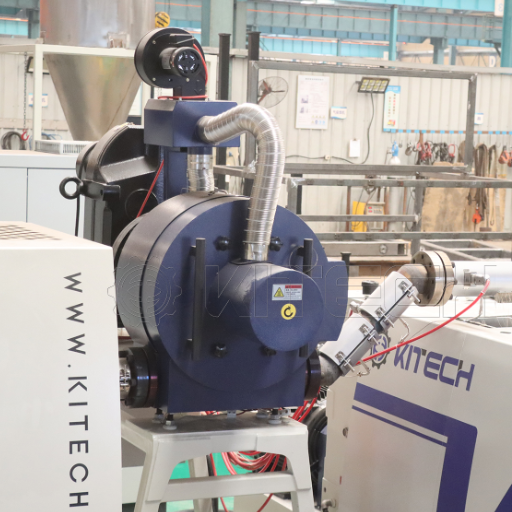
On the shop floor, a cheaper-looking manual screen pack may actually be easier to buy. When line hours and dirty feeds combine, the equation is a little different: test how much operator and maintenance labor 2 or 3 hours of down time can offset. This depends on total, accumulated pressure variation, operator cost, and off-spec pellets sold after restart rather than let run.
Recycling Today covered a more practical version: one compounder purchased a cheaper slide-screen pack with self-cleaning as an inexpensive solution until they compared the self-cleaning screen pack with continuous flow filtering. Continuous flow filtering of course costs more; however, the premium can be recovered within low hours of operation and frequent screen change by increased run time, increased production and lower operator cost.
TCO Worksheet Inputs
- Operating hours per year
- Average screen changes per shift
- Minutes lost per screen change
- Line throughput in kg/h during normal production
- Screen pack cost and labor cost per intervention
- Transition scrap and off-spec pellet mass after restart
In a high productivity line, lost output hours can be the single most important number. Downtime of 20 minutes on a 1000 kg/hr line not only costs personnel and a screen pack, but delays tens of pounds of melt flow and causes potentially high variability in restart melt flow. If this repeatedly causes degradation, your filtration purchase may cease to be a maintenance accessory and become part of the production schedule.
Selection Rules: Fineness, Pressure, Area, and Throughput
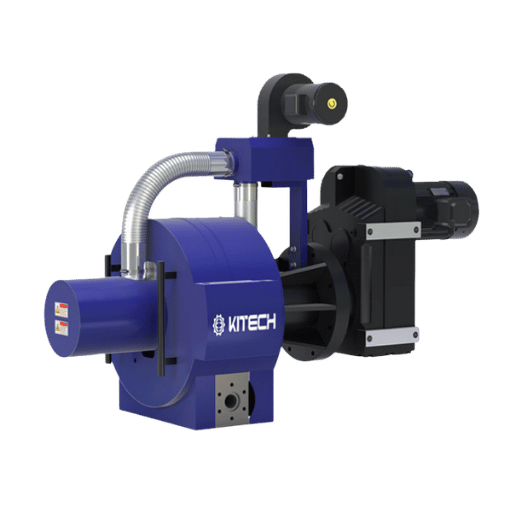
Before requesting a model quotation, prepare four clusters of data. First, throughput in terms of the actual product and intended output, not only the line nameplate. Second, what contaminants are commonly introduced in wash or regrind. Third, define the target filtration finish at the pelletizer based on downstream usage. Fourth, record the pressure behavior before and after each machine.
| Kitech KLF Model | Filter Area | LDPE Throughput Range | Use Case |
|---|---|---|---|
| KLF365 | 1,295 cm2 | 200-700 kg/h | Smaller line, moderate contamination |
| KLF520 | 3,278 cm2 | 700-1,200 kg/h | Mid-capacity pelletizing line |
| KLF365D | 2,590 cm2 | 400-1,400 kg/h | Dual-disc capacity with smaller disc diameter |
| KLF520D | 6,556 cm2 | 1,400-2,400 kg/h | High-volume film or mixed recycling line |
Which self-cleaning laser filter for plastic recycling machine is best?
Choose the smallest machine capable of maintaining pressure, flow, and pellet specification with your actual feedstock. For a formal quotation, provide the following data: polymer type and target kg/hr, contaminant sample or photo, anticipated filtration fineness, present extruder size, temperature, and whether you already have a washing stage, a compaction stage, a vacuum degassing stage, or a pelletizing stage. If you are at the line level, compare this plastic filter design with Kitech’s plastic granulator machine page, plastic pelletizer page, and plastic pelletizing line page.
Where a Conventional Screen Changer Still Makes Sense
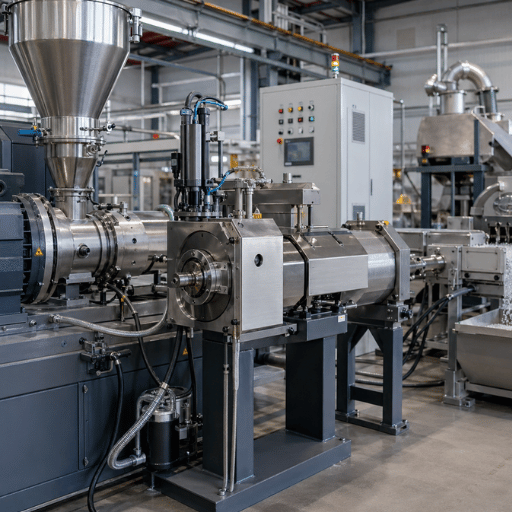
Self-cleaning melt filtration is not always the ideal choice. When contaminated melt is not a frequent burden, and the line is tiny with infrequent screen replacement, a simple screen changer can be a more straightforward purchase, maintenance, and justification.
Advantages of a Laser Filter
- Continuous contaminant discharge during production
- Better suited for high powder throughput, frequent roller change
- Less operator handling during normal production
- Flow stability in demanding throughput situations
Limits to Check First
- Higher purchase price than a simple manual screen changer
- Trial data still matters for soft or mixed contaminants
- A clean in-house stream may not create enough savings
- Keeping the screen cleaner and operating parts available has to remain in maintenance budget
A general guideline to remain grounded in reality- do not buy automation to fix a situation that does not really exist. Buy the automation when screen packs, operator labor, unstable pressure, and pellet quality have become more prohibitive than the automation.
What Is Changing in Melt Filtration for Recycling Lines?
Because of this, filtration decisions matter more when buyers demand higher-quality, more uniform PCR while feedstock quality remains uneven. APR’s 2025 review of North American plastics recycling highlighted policy work, PCR demand, design guidance and capacity data. With that emphasis recycling plants tend to approach melt filtration from a perspective of protecting quality assurance rather than protecting equipment.
EPA’s national recycling goal points in the same direction because it tracks progress toward a 50% recycling rate by 2030. For the manager of a manufacturing plant this does not say which kind of filter to choose but can clarify why recycled pellets are closely examined; improved collection goals are only beneficial if the result can fulfill downstream processing demands.
Procurement Takeaway
If your line is about to transfer from cleaner post-industrial scrap to post-consumer film, mixed rigid plastics, or lower-grade bought-in feed stock, check filtration from the start of the first commercial run. A filter that is geared to the cleanliness of your material will never be able to cope with a simultaneous increase in dirt load, rise in pressure and pellet quality issues.
FAQ
Q: Is a self-cleaning laser filter worth it for plastic recycling?
Show answer
Yes, when screen changes regularly interrupt production or create visible pellet-quality swings. Cleaner in-house scrap may not justify the extra equipment cost.
Q: What contaminants can a laser filter remove?
See details
Laser filters are used for solid and semi-solid contaminants such as paper, wood, aluminum, rubber, metal particles, glass, and foreign polymers. Hard decisions begin after naming the contaminant: buyers still need to know whether it stays rigid, softens, deforms, or smears under melt pressure.
Q: Does a laser filter replace all screen changers?
Open response
No. Manual and piston screen changers still fit many lines.
Q: What filtration fineness should a recycling line choose?
Read note
Start from the pellet’s next use and the real contaminant profile. A finer opening can raise pressure and may not solve soft-particle behavior by itself. For Kitech KLF equipment, published filtration options sit in the 100-500 um range, but the final choice should be confirmed with material samples. Teams should also record melt temperature, extruder output, current pressure rise, screen-change interval, and the visible form of the contaminant before choosing a slot size.
Q: Can a laser filter handle LDPE and HDPE in the same plant?
Check answer
It can be specified for several polymers, but settings and throughput should not be treated as identical. LDPE film, HDPE pipe regrind, PP woven bag material, and PET-related streams differ in viscosity, temperature, and contamination behavior. Share each feedstock separately when sizing the filter.
Q: What information is needed to size a laser filter?
Review list
Prepare polymer type, target kg/h, feedstock photos, expected contamination level, existing extruder model, melt temperature, pressure trend, target filtration fineness, and downstream pellet use. If possible, send washed flake or regrind samples. Filter selection should come from real process data, not from one headline capacity number.
Related Articles
About This Analysis
In the guide, Kitech model information is separated from third party filtration articles so that shoppers can identify costs and benefits listed below as product specifications versus third party (non industry) research data. For this article, no first-party customer case information was provided so operating-cost projections are documented below as inputs to the decision, rather than assured savings.
References & Sources
- Finding the Right Melt Filtration System for Post-Consumer Recycling – Plastics Technology
- Influence of material contamination on polypropylene melt filtration – SPE Polymers / Wiley
- Finessing filtration – Recycling Today
- 2025 Year in Review – Association of Plastic Recyclers
- National Recycling Goal: Recycling Rate Measurement – U.S. EPA
- U.S. Plastic Recycling Economy – NIST