Get in touch with Kitech Company



Biodegradable plastic appears to be a clean answer for plastic pollution. A label on a coffee cup says it decomposes. Marketing copy touts “100% compostable.” Then the cup gets tossed in a curbside bin, hauled to a landfill, and parked there for years emitting methane while indistinguishable from any other plastic product on the conveyor. Most articles skim past the gap between the label and the disposal reality. This guide does not.
Quick Specs — Biodegradable Plastic at a Glance
| Definition (ASTM D883) | Plastic decomposed by microorganisms into water, CO₂ or methane, and biomass under specified conditions |
| Main material families | PLA, PHA, PBS, PBAT, starch blends, cellulose-based, PCL |
| Core compostability standards | ASTM D6400 / D6868 (US), EN 13432 (EU), ISO 17088 |
| Required compost temperature | ≥58 °C sustained for industrial certification (home compost rarely reaches this) |
| US food-waste composting access | ~27% of population (US EPA, 2024) |
| 2025 market split | 57.04% industrial-compostable vs 42.96% home-compostable (Mordor Intelligence) |
What Is Biodegradable Plastic?

A biodegradable plastic is a polymer that microorganisms can decompose into water, carbon dioxide (or methane in oxygen-poor conditions), and biomass under defined environmental conditions. Drawn from ASTM D883 terminology and echoed by Plastics Europe, the definition reads cleanly. The vocabulary around it does not.
Three terms get swapped interchangeably in marketing copy and they don’t mean the same thing. Bioplastic is the loosest label – it can refer to a plastic that is bio-based, biodegradable, or both, and it can include products that contain up to 80% fossil-fuel-derived material. Bio-based plastic means the polymer was made from plant feedstock such as corn, sugarcane, or potato starch. Bio-based does not equal biodegradable; bio-based polyethylene exists and persists for centuries. Biodegradable plastic says the polymer can break apart in the environment, but the term carries no specific timeline. According to Beyond Plastics, that timeline can range from months to centuries depending on the product and disposal pathway.
In other words, a product label tells you something about the material’s chemistry. It tells you almost nothing about what will actually happen to the item once it leaves your hand – that depends on the disposal infrastructure available where it ends up. For a broader primer, see our overview of what recycling actually involves.
Types of Biodegradable Plastic — A Material Taxonomy

About seven polymer families dominate biodegradable plastic on the market today. Each carries a distinct feedstock, end-of-life behavior, and cost profile. Confusing one for another is the most common procurement mistake in this category.
| Material | Feedstock | Typical use | End-of-life |
|---|---|---|---|
| PLA (polylactic acid) | Corn or sugarcane sugars | Cups, cutlery, food trays, 3D printing filament | Industrial compost only (≥58 °C) |
| PHA (polyhydroxyalkanoates) | Bacterial fermentation of sugars or oils | Marine-degradable items, medical, premium packaging | Industrial, home compost, soil, marine (slow) |
| PBS (polybutylene succinate) | Petrochemical or bio-succinic acid | Mulch films, hot beverage cups | Industrial compost; soil-degradable in agricultural film grades |
| PBAT | Petroleum (with adipic acid + butanediol + terephthalic acid) | Flexible films, blended with PLA for toughness | Industrial compost; partial soil degradation |
| Starch blends | Corn, potato, cassava starch | Shopping bags, loose-fill packaging | Home compost (some grades), industrial |
| Cellulose-based | Wood pulp, plant cellulose | Films, sponges, water-soluble pods | Home or industrial compost |
| PCL (polycaprolactone) | Petroleum (caprolactone monomer) | Surgical sutures, 3D printing | Slow biodegrade (months to years) |
What is an example of a biodegradable plastic?
PLA – polylactic acid – is the clearest example. It holds the largest single material share at 33.34% of the biodegradable plastic packaging market in 2025 according to Mordor Intelligence. PLA shows up as the clear plastic in salad-bar cups, the body of compostable cutlery, and as 3D printing filament. PHA is the example most often cited when “true” biodegradability matters – bacteria produce it as a carbon-storage molecule, and other bacteria can break it down in soil, fresh water, or even seawater. PHA growth is also the fastest in the category, projected at a 21.43% CAGR through 2031.
Cellulose film falls into the same bucket but rarely gets called “plastic” in marketing – old-school cellophane is biodegradable too. Once you include cellulose, lignin, and protein-based films, the line between “biodegradable plastic” and “biodegradable polymer” gets blurry, which is why technical sources lean on the term biodegradable polymer instead.
Standards & Certifications: ASTM D6400, EN 13432, BPI

A “biodegradable” claim with no certification number behind it is a marketing claim, not an independently-verified property. Five standards dominate this market. They differ on testing temperature, time-to-disintegration, residue thresholds, and heavy-metal limits.
| Standard | Region / scope | Key threshold | Certifier |
|---|---|---|---|
| ASTM D6400 | US — industrial composting of plastic items | ≥90% biodegradation in 180 days at ≥58 °C | BPI (Biodegradable Products Institute) |
| ASTM D6868 | US — paper or board with plastic coating | Same disintegration threshold, applied to coated substrates | BPI |
| EN 13432 | EU — industrial compostability | ≥90% disintegration in 12 weeks; stricter heavy-metal limits than ASTM | DIN CERTCO, TÜV Austria |
| ISO 17088 | International (harmonized with EN 13432) | Industrial compostability specification | National accreditation bodies |
| OK Compost HOME | EU — backyard composting | Disintegration at 20-30 °C ambient temperatures | TÜV Austria |
Two details matter most when reading a certification label: the standard number cited, and the body that issued it. “Compostable” with no standard number is usually industrial-compostable at best, and possibly nothing at all. Per the USDA AMS 2025 Limited Scope Technical Report on Compostable Materials, ASTM D6400 sets a different bar than EN 13432 – both share a 90% biodegradation threshold but differ on testing timelines and heavy-metal scopes. A product certified to one is not automatically compliant with the other.
⚠️ Greenwashing red flag
The label “100% biodegradable” with no certification number, or the phrase “oxo-degradable,” should raise alarm bells. Oxo-degradable plastics are conventional polyolefins with metal additives that fragment the material into smaller pieces – they were banned in the EU under the Single-Use Plastics Directive from 14 January 2022 because the fragments simply turn into microplastics rather than mineralizing.
Biodegradable vs Compostable vs Bio-based vs Oxo-degradable
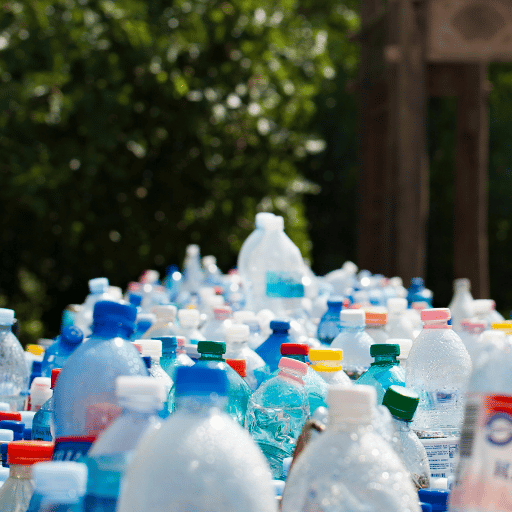
Four labels, four different meanings. Conflating them is the biggest source of consumer confusion in this category, and it also pushes product down the wrong end-of-life stream.
| Term | What it means | What it does NOT mean |
|---|---|---|
| Biodegradable | Microbes can break it down — eventually | No specific timeline; no guarantee at landfill or marine conditions |
| Compostable | Breaks down in industrial composting in ~12 weeks per certified standard | Does not mean home-compost-ready unless explicitly labeled “OK Compost HOME” |
| Bio-based | Made from plant feedstock (corn, sugarcane, starch) | Not automatically biodegradable; bio-PE behaves like fossil-PE at end of life |
| Oxo-degradable | Conventional polymer with additives that fragment it via oxidation | Banned in EU since 2022 — fragments persist as microplastics |
A clean mental model: bio-based describes where the carbon came from; biodegradable describes what microbes can do with it; and compostable describes what conditions it needs to actually break down on a useful timeline. A product can be any combination of these. PLA is bio-based and compostable but not home-compostable; bio-PE is bio-based but not biodegradable; petrochemical PBAT is biodegradable and compostable but not bio-based.
How Biodegradable Plastic Decomposes — and Why It Often Doesn’t
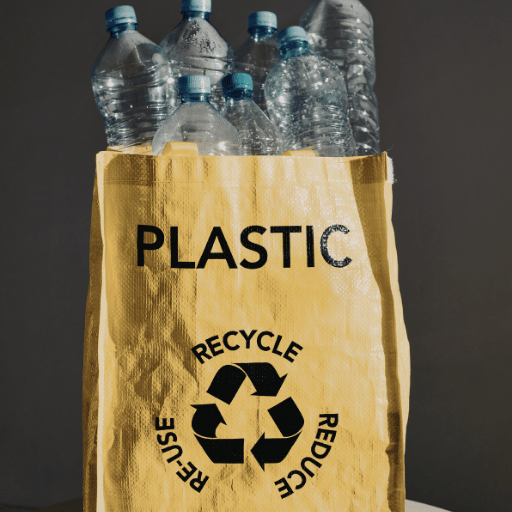
Biodegradation runs on three distinct mechanisms. Hydrolysis breaks polymer chains apart in the presence of water – this is how PLA degrades, and it explains why PLA needs heat plus moisture to mineralize at any reasonable pace. Enzymatic degradation involves microbe-secreted enzymes that cut specific bonds – PHA breakdown depends on bacteria producing PHA depolymerase, which is why PHA degrades in soil and seawater while PLA largely does not. Microbial mineralization is the final stage, where the smaller fragments get assimilated into microbial biomass, CO₂, and water.
Conditions matter more than chemistry. An industrial composting facility holds material at 58 °C or above for sustained periods, with controlled humidity and oxygen, so polymers like PLA mineralize within 90 to 180 days. A backyard compost pile reaches 40-65 °C at peak and cools quickly, which means PLA cups thrown into a home bin can persist as visible fragments for years. Landfilled biodegradable plastic faces an even harsher reality – anaerobic conditions push the breakdown product toward methane rather than CO₂, and methane is roughly 30 times more potent as a greenhouse gas than carbon dioxide per the US Environmental Protection Agency. A “compostable” cup in a landfill is, climate-wise, often worse than a conventional plastic one.
Are biodegradable plastics really biodegradable?
Yes – under specified conditions. No – under most real-world conditions consumers actually have access to. A certification on a product confirms the material can biodegrade. Whether it will biodegrade is determined entirely by where it ends up. Multiple peer-reviewed studies indexed on ScienceDirect document a recurring failure mode: incomplete biodegradation produces fragments smaller than the original product but larger than monomers – biodegradable microplastics. Such fragments meet the colloquial definition of “broke down”; they did not mineralize.
📐 Engineering Note — decomposition timelinesPLA in industrial composting (≥58 °C): ~90-180 days for ≥90% conversion to meet ASTM D6400. The same PLA cup in seawater at 25 °C: persists for decades – closer to conventional plastic behavior. PHA in marine environment: months to a few years for measurable breakdown, depending on PHA copolymer composition. Starch blends in soil: 8 to 24 weeks for visible disintegration; full mineralization timelines vary with soil microbiome and moisture. These are reference values for standardized conditions – actual field performance depends on temperature, oxygen, humidity, and the specific microbial community.
Where Biodegradable Plastic Is Used: Applications by Sector

Biodegradable polymers do not replace conventional plastic in every use case. They earn their place where the disposal pathway aligns with their breakdown chemistry – typically short-life packaging that flows into food-waste streams, agricultural film that stays in soil, or specialty medical products designed to be absorbed.
| Sector | Typical materials | Why it works (or doesn’t) |
|---|---|---|
| Food packaging (29% of revenue, 2025) | PLA, PBAT, cellulose | Short product life; can flow into food-scrap composting where infrastructure exists |
| Foodservice ware | PLA cups, PBS-coated paper, molded fiber + PHA | Closed venues (stadiums, cafeterias) can route to industrial compost; open consumer use rarely does |
| Agricultural mulch films | PBAT/starch blends, PBS | Soil-degradable grades eliminate retrieval cost — strong economic fit |
| Personal care + home care (21.67% CAGR through 2031) | Home-compostable refill pods, PHA jars | Brands marketing low-impact packaging to consumers who lack industrial compost access |
| Medical sutures | PCL, PGA, PLA | Bioresorbable inside the body — established FDA-cleared use for decades |
| 3D printing filament | PLA | Low odor, easy printability — most prints are display objects, not disposed in compost |
| Beverage bottles | Limited PLA, emerging PEF | Oxygen barrier still trails PET; carbonated drinks remain difficult |
Mulch film is the standout success. Soil-degradable PBAT/starch films get tilled in at season end instead of being pulled, baled, and trucked to landfill – a labor cost saving cleaner than the typical biodegradable-plastic pitch. For agricultural waste streams more broadly, see our overview of agricultural plastic recycling, which covers conventional film recovery alongside biodegradable alternatives.
The Recycling Reality — What Happens at End-of-Life

This is the section most articles on biodegradable plastic skip past. Disposal infrastructure decides whether the material’s chemistry matters at all, and that infrastructure remains thin.
According to the US EPA Financial Assessment of US Recycling System Infrastructure (2024), only about 27% of the US population has access to food-waste composting. Mordor Intelligence puts the number of US sites that accept certified compostable packaging at fewer than 200 nationwide. Even where curbside compost programs exist, many municipal composting facilities refuse compostable plastic foodware altogether – Oregon and large parts of California are explicit about this – because contamination from look-alike non-biodegradable plastics ruins the finished compost. The EPA’s national strategy for organics estimates the US needs $36-43 billion of new infrastructure by 2030 to manage organics and recyclables at scale.
For brands and procurement teams, the practical question is rarely “is this product biodegradable” – it’s “where does this product end up.” If the answer is landfill, biodegradable plastic provides no benefit and may produce more methane than the conventional alternative.
Are biodegradable plastics recyclable?
Generally not in the same stream as conventional plastic. Mechanical recycling lines for PET, HDPE, and PP are calibrated for specific resin chemistries and processing temperatures. PLA melts around 160 °C; PET is extruded around 250 °C. PLA fragments that slip through sorting end up as off-spec defects in the recycled PET resin – a contamination risk that Mordor Intelligence explicitly lists as a market restraint, citing penalties in US and Japanese mechanical recycling streams. Operators of industrial plastic pelletizing systems handling mixed inflows have to plan for this – NIR sorting calibrated for PLA detection is now standard on newer rigid-plastic recycling lines.
Current contamination levels run lower than headlines suggest. Industry data reviewed by Futerro indicates PLA penetration in PET-stream waste sits near 0.12% – well below typical processing tolerances of around 3%. Risk here is forward-looking: as bioplastic share grows toward the 10-15% the Mordor forecast envisions for some applications by 2031, dedicated sorting and even separate streams become a procurement reality, not a hypothetical. Operators running PET bottle recovery lines – see our overview of the PET bottle washing line – increasingly include label-removal and density-separation steps that also catch PLA fragments before extrusion.
“Biodegradable plastics can definitely help with plastic waste accumulation and ecotoxicity, but the benefits may not hold if their end-of-life isn’t managed properly. We need to have more infrastructure for the proper treatment of biodegradable plastics, and we need to have good education for how to use them.”
Decision tree — Is biodegradable plastic right for this use case?
- Where will it end up? If the disposal pathway is industrial composting AND the product enters a food-waste stream → PLA, PHA, or PBS are appropriate.
- Mechanical recycling target? If the product is meant to flow into an existing PE / PP / PET recovery stream → biodegradable polymers contaminate the output. Mono-material conventional plastic with post-consumer recycled (PCR) content is the better fit.
- Marine or agricultural disposal possible? PHA performs in seawater and soil; PLA does not. Agricultural mulch grades of PBAT/starch are validated for till-in-place disposal.
- Default landfill? Biodegradable plastic provides no climate benefit in anaerobic landfill conditions and can release methane. Reusable systems beat both biodegradable and conventional disposables here.
An uncomfortable point, consistent with the data: biodegradable plastic is a solution when matched to specific disposal infrastructure. It is a marketing claim with no environmental benefit when not. For mechanical recycling streams, the higher-impact move remains improving recovery and pelletizing of conventional plastics – a topic covered in our thermoplastic recycling overview and across the broader plastic recycling solutions portfolio. Once contaminated PCR resin reaches the pelletizing stage, recovering raw materials at usable quality becomes harder, not easier.
Industry Outlook 2025-2030: Where Biodegradable Plastic Is Heading

Biodegradable plastic packaging is growing faster than conventional packaging, but from a small base and against a tightening regulatory backdrop. Market value is projected to climb from USD 2.86 billion in 2025 to USD 9.04 billion by 2031, a 20.11% CAGR, per Mordor Intelligence. Polylactic acid leads with 33.34% share; polyhydroxyalkanoates are the fastest-growing material at 21.43% CAGR through 2031. Industrial-compostable formats hold 57.04% of the market today, with home-compostable formats catching up at 20.43% CAGR.
Three regulatory developments will shape procurement decisions through 2030. The EU’s Regulation 2025/40 narrows compostable packaging applications to tea bags, coffee pods, and fruit labels – areas where industrial composting infrastructure is established and contamination of organic waste streams is contained. India’s Solid Waste Management Rules 2026 mandate four-stream waste segregation, which favors certified biodegradable formats with consistent labeling. The US has no federal compostability standard; USDA AMS continues to accept ASTM D6400, D6868, and D8410 for organic certification, but state-level rules diverge.
Science is becoming more specific about the trade-offs. The Piao and Yao 2026 Nature Reviews Clean Technology study projects that substituting conventional plastic with biodegradable alternatives could cut ecotoxicity by 34% by 2050, with little change in energy demand. Combined with proper waste management of conventional plastics, plastic waste accumulation could fall by 65% by mid-century. Yet the same study finds biodegradable plastics in landfill could roughly double greenhouse gas emissions versus their conventional counterparts. Benefits are real and conditional – and the conditions are infrastructure and disposal practice, not material chemistry.
For procurement teams planning packaging shifts through 2027, two practical actions matter. Audit incoming bioplastic content quarterly if your facility processes mixed plastic streams – the 0.12% PLA penetration figure of 2024 will not hold as substitution accelerates. And resist single-attribute decisions: a “compostable” label is a starting point, not a destination, and end-of-life pathway audits beat material spec sheets every time.
FAQ — Biodegradable Plastic
Q: What material is 100% biodegradable?
View Answer
Untreated cellulose, plain cotton, plant starch films, and pure PHA come closest to “100% biodegradable in any environment.” Even these depend on temperature and microbial population. Most products marketed as 100% biodegradable refer to performance under industrial composting conditions only – not landfill, not home compost, not seawater.
Q: What is the problem with biodegradable plastic?
View Answer
Three structural issues. Industrial composting infrastructure is unavailable to roughly 73% of the US population. Compostable plastics that fall into mechanical recycling streams contaminate the resin output. And in anaerobic landfills, biodegradable plastic produces methane, a greenhouse gas about 30 times more potent than CO₂. Match the material to the disposal pathway or skip it.
Q: How long does biodegradable plastic take to decompose?
View Answer
In industrial composting (≥58 °C, controlled humidity): PLA reaches 90% biodegradation in roughly 90-180 days; starch films in 30-60 days. In a home compost pile: PLA may persist as visible fragments for several years because peak temperatures rarely sustain the required range. In seawater: PLA can persist for decades; PHA breaks down in months to a few years. In a landfill: anaerobic, often longer than 100 years for PLA.
Q: Do biodegradable plastics create microplastics?
View Answer
Yes, when degradation is incomplete. If temperature, oxygen, or microbial populations are insufficient – typical of landfill, marine, and many soil environments – the polymer fragments before fully mineralizing. Multiple peer-reviewed studies on ScienceDirect document biodegradable microplastic formation under partial-degradation conditions. Industrial composting prevents this; ambient disposal often does not.
Q: Are biodegradable plastics more expensive than conventional plastic?
View Answer
Generally yes, though the gap is narrowing. PLA tends to run 1.5-3 times the price of conventional polyethylene, depending on grade and feedstock-volatility cycles. PHA is higher still – typically 4 to 8 times conventional polyolefin pricing – though Meredian’s 2025 acquisition of Danimer Scientific’s PHA assets points to ongoing investment in cost reduction. Starch blends sit closer to commodity pricing for shopping-bag grades.
Q: Are biodegradable plastic bags compostable at home?
View Answer
Most are not. Generic “compostable” labels almost always refer to industrial composting at ≥58 °C. Home compost piles peak at 40-65 °C and lack sustained heat. Look specifically for TÜV Austria’s “OK Compost HOME” certification or BPI’s home-compost designation – anything else means industrial composting only, regardless of how the front-of-pack copy reads.
About This Analysis
This guide was compiled from peer-reviewed literature, regulatory filings, and industry market data published between 2020 and 2026, including the Yale School of the Environment study by Piao & Yao in Nature Reviews Clean Technology (Jan 2026), the US EPA’s 2024 financial assessment of recycling infrastructure, USDA AMS 2025 Limited Scope Technical Report on Compostable Materials, and Mordor Intelligence’s 2025-2031 biodegradable plastic packaging market analysis. Where data points differed across sources – particularly on PLA contamination thresholds and home-compost timelines – we cite the more conservative figure and flag the uncertainty. Kitech Recycling builds mechanical recycling and pelletizing equipment and has a commercial interest in conventional plastic recovery; we have flagged this where the recycling-stream contamination angle intersects with our equipment context.
Related Articles
- Post-Consumer Recycled (PCR) Plastic — what it is and why it matters more than bioplastic for circular economy
- Thermoplastic Recycling — process flow for the polymers that bioplastic does not replace
- Plastic Pelletizer Guide — how mechanical pelletizing handles mixed and contaminated inflows
- Plastic Recycling Machine Overview — equipment landscape across the recovery chain
- Agricultural Plastic Recycling — conventional film recovery and where biodegradable mulch fits in
- Zero Waste Lifestyle — context for the consumer-side disposal decisions discussed above
References & Sources
- The Environmental Trade-offs of Biodegradable Plastics — Yale School of the Environment (Jan 2026)
- The role of biodegradable plastics in the global plastic future — Piao & Yao, Nature Reviews Clean Technology (2026)
- Financial Estimates to Modernize Material Recovery Infrastructure — US Environmental Protection Agency (2024)
- Importance of Methane — US Environmental Protection Agency
- 2025 Limited Scope Technical Report — Compostable Materials — USDA Agricultural Marketing Service
- Single-Use Plastics Directive — European Commission, Environment
- Demystifying ‘Compostable’ and ‘Biodegradable’ Plastics — Beyond Plastics
- Biodegradable polymer — Wikipedia (academic citations)
- Biodegradable plastics — Plastics Europe
- Biodegradable Plastic Packaging Market Size & Share Analysis 2026-2031 — Mordor Intelligence
- Compounding one problem with another? A look at biodegradable microplastics — Science of The Total Environment, ScienceDirect
- ASTM D883 — Standard Terminology Relating to Plastics — ASTM International