Get in touch with Kitech Company


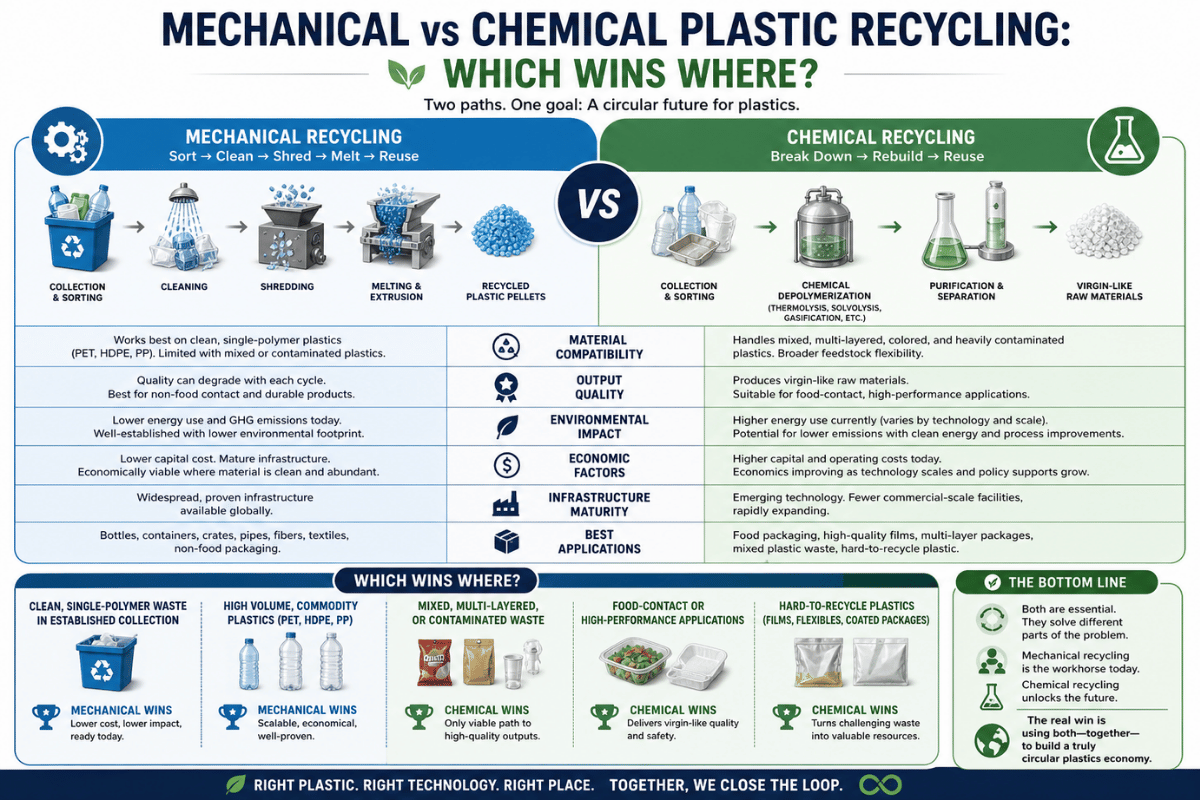
Mechanical vs chemical plastic recycling is not a single winner-takes-all contest. Route choice depends on the plastic waste stream, contamination level, desired output, buyer specification, and whether the aim is to make clean flakes, recycled pellets, monomers, oils, or chemical feedstocks.
Mechanical recycling should usually be the first pathway to test for clean thermoplastic fractions. The chemical route may be worth considering for difficult, complex, or degraded streams if the end market, feedstock profile, life-cycle case, and chain-of-custody claim all survive review.
Quick Specs: Route Selection
| Best first route for clean PET, HDPE, PP, PE | Mechanical recycling, then pelletizing if the buyer needs pellets |
| Best candidate for multilayer or hard-to-recycle waste | Chemical recycling, subject to pre-sorting, offtake, emissions, and certification checks |
| Global plastic waste recycled | 9% in OECD’s Global Plastics Outlook summary |
| U.S. plastics recycling rate | 8.7% in EPA’s 2018 Facts and Figures dataset |
| Plant buyer takeaway | Choose the route by feedstock and output contract, not by the label “advanced” or “traditional” |
| Buyer Term | Plain Meaning | Plant Check |
|---|---|---|
| Mechanical recycling of plastic | Physical recovery through sorting, washing, drying, extrusion, filtration, and pelletizing | Mechanical recycling process includes enough cleaning before melt filtration |
| Chemical recycling of plastics | A chemical recycling process that breaks down plastics into chemical building blocks | Output should serve as feedstock for new plastic products or chemical products |
| Convert plastic waste | Move plastic waste back into useful raw material, not only disposal | Check whether the route can recycle plastic waste into material value |
| Chemical and mechanical recycling | Two recycling methods that may sit in the same plastic waste management plan | Mechanical recycling alone should be tested before harder routes |
| Chemical recycling facilities | Sites built around reaction, purification, or conversion rather than conventional recycling equipment | Ask what range of plastic materials they accept and reject |
| Advanced or molecular recycling | A broader market label often used when chemistry breaks the chemical structure of the material | Confirm whether chemical recycling offers material recovery or plastic waste into fuel |
| Mixed plastic waste | A type of plastic waste that may be unsuitable for mechanical sorting or pellet quality | Mechanical recycling cannot accept every dirty, multilayer, or degraded stream |
| Global plastic waste | The wider plastic pollution problem that drives recycling rates and policy attention | Avoid routes where the main outlet is waste incineration |
Mechanical and Chemical Recycling of Plastic Waste at a Glance
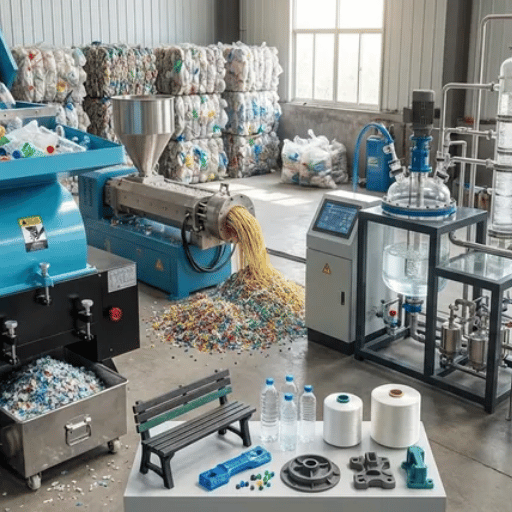
Mechanical recycling keeps the polymer chemistry relatively unchanged. Chemical recycling alters the chemical structure of polymeric waste and turns it back into raw materials, monomers, oils, gases, or other feedstocks that may be used for new plastics or other products.
In some industry literature, molecular recycling is used as a broader label for chemical recycling technologies that return polymer waste to molecular building blocks. That language only supports a circular economy claim when the output becomes high-quality recycled plastic or chemical feedstock, rather than fuel.
| Decision Point | Mechanical Recycling | Chemical Recycling |
|---|---|---|
| Main change to material | Physical processing with little change to chemical structure | Chemical, thermal, or solvent route changes or separates molecular structure |
| Typical equipment chain | Sort, shred, wash, dry, extrude, filter, pelletize | Pre-sort, purify or convert, upgrade output, verify chain of custody |
| Strong feedstock fit | Clean single-resin PET, HDPE, PP, PE streams | Selected mixed, multilayer, contaminated, or degraded streams |
| Common output | Washed flakes, regrind, pellets, PCR resin | Monomers, oligomers, oils, gases, purified polymer, chemical feedstocks |
| Main limitation | Quality loss from contamination, mixed polymers, additives, and heat history | Energy demand, capital cost, yield uncertainty, and output classification |
| Plant-buyer rule | Try first when the waste stream can be sorted and washed into a stable resin stream | Consider when mechanical recycling cannot meet the output specification |
How Mechanical Recycling Works in a Plant
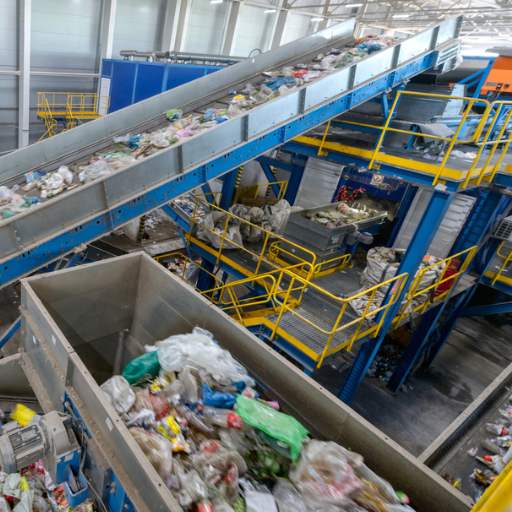
Inside a working plant, mechanical recycling is mostly a discipline of separation and control. Material is collected, sorted, shredded, washed, checked again, dried, melted, filtered, extruded, and cut into pellets or prepared as flakes.
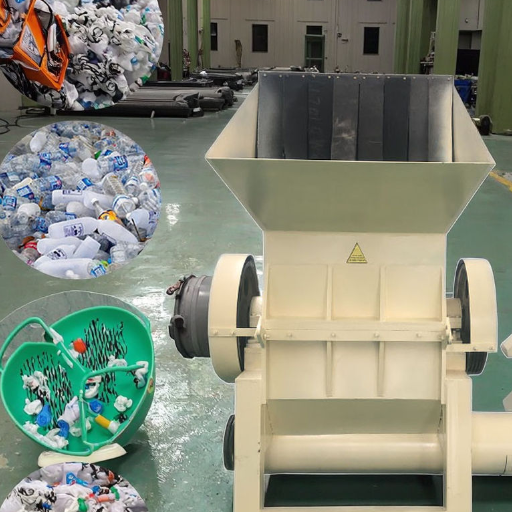
Kitech’s equipment portfolio follows this mechanical path: plastic shredders, plastic washing systems, plastic pelletizers, and complete plastic recycling solutions. A potential purchaser would not ask “Can we recycle?” but “Can this exact waste stream be separated, washed, dried, filtered, and sold as a consistent recycled product?”
Engineering Note
For mechanical recycling, the route choice is often made before the extruder. PET bottles typically require delabeling, float-sink separation, hot washing, drying and flake quality control. PE/PP films require friction washing, squeeze drying, densification and melt filtration.
Rigid HDPE/PP/ABS streams often require size reduction, washing, density separation where necessary, and pelletizing. If the plant misses the right cleaning step, pellet quality is usually lost long before the extruder.
How Chemical Recycling of Plastics Works
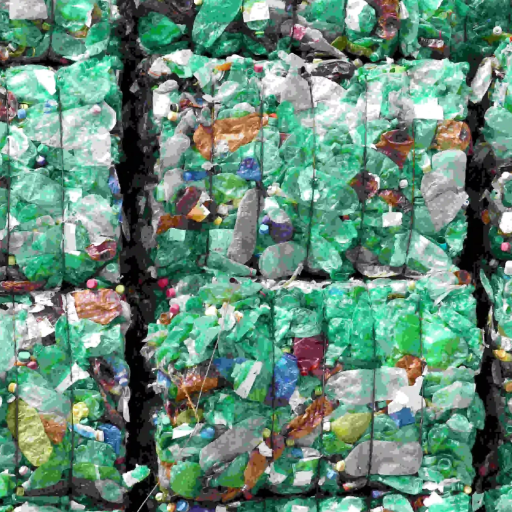
This route is not one machine category. It can include dissolution or purification, depolymerization, pyrolysis, gasification, hydro-cracking, and related conversion routes. Outputs can vary so much that two chemical recycling plants may have less in common with each other than a washing line and a pelletizing line.
| Technology | What It Does | Output Question to Ask |
|---|---|---|
| Dissolution / purification | Uses solvent and low heat to purify selected polymers | Is the recovered polymer qualified for the target use? |
| Depolymerization | Breaks polymers into monomers or oligomers | Is the feedstock specific enough for the reaction? |
| Pyrolysis | Thermally breaks down plastic in low-oxygen conditions | How much output becomes new polymer feedstock versus fuel? |
| Gasification | Uses high temperature and a gasifying agent to make syngas | Is the syngas route counted as recycling or recovery? |
Recycling Methods by Feedstock Fit
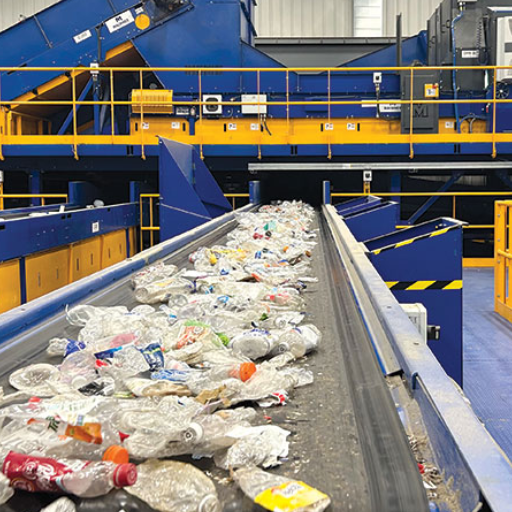
The feedstock determines the road before the mktg language even begins. A clean PET bottles stream, a stiff HDPE crates stream, a PE film/eedback/soiled bundle stream, and a multilayer flexible packaging are in no the same planning bucket.
Mechanical Recycling Advantages
- Best first route for clean, sorted thermoplastics
- Direct link to flakes, pellets, and many PCR markets
- Equipment chain is easier to specify and inspect
- Works well with design-for-recycling guidance from APR
Mechanical Recycling Limits
- Mixed polymer blends can reduce output quality
- Additives, labels, dirt, moisture, and color can downgrade value
- Repeated heat history can degrade some polymers
- Hard-to-recycle streams may need another route after sorting
APR’s Design Guide is useful here because it treats recyclability as a whole-package issue: design, access, acceptance, and markets. To a recycling plant buyer, a resin code may not be sufficient: closures, labels, inks, barrier layers, adhesives, color, and actual demand all affect whether a material can become high-value recycled plastic.
Output Quality, Recycled Content, and End Markets
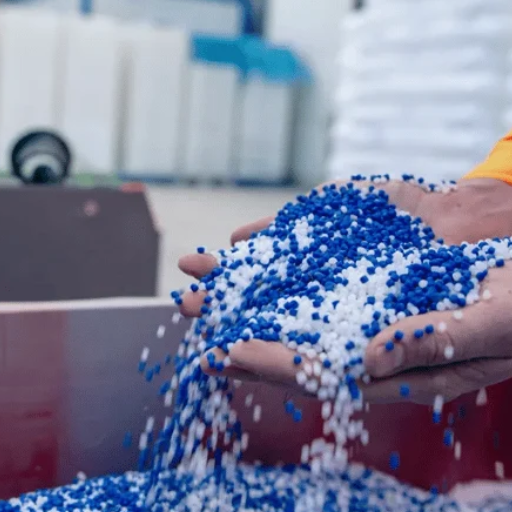
In most cases, mechanical recycling has the advantage when the customer needs washed flakes, regrind, or pellets for a defined use, and when the waste stream can be kept clean. Chemical recycling becomes more relevant when the customer requires new polymer building blocks, food-contact pathways need deeper validation, or mechanical recycling cannot accept the waste stream.
Is chemical recycling better than mechanical recycling?
No. Chemical recycling only beats mechanical recycling in specific cases: the stream cannot be mechanically recycled, the sales outlet is confirmed, the LCA is positive, and the output returns to plastics or chemical feedstock instead of mostly becoming fuel. With clean PET, HDPE, PP, and PE streams, mechanically recycled plastics are usually the first commercial test.
UNEP’s 2023 technical report adds a caution that plant buyers should not ignore: plastics are associated with more than 13,000 chemicals, and more than 3,200 have hazardous properties of concern. That does not make recycling impossible. For plant buyers, feedstock validation, additive screening, and output claims matter more when the target market is sensitive, such as food contact or regulated packaging.
Cost, Energy, and Environmental Impact
A more risk conscious environmental comparison route is by route, feedstock and not by messaging. According to OECD, 9% of the world’s plastic waste is recycled, 19% is incinerated, 50% is landfilled, and 22% is outside of controlled waste management systems. In the United States, EPA’s 2018 dataset reports 35.7 million tons of plastics generated, 3.09 million tons recycled, and 27 million tons landfilled.
Those findings lead to a practical conclusion: the system will require more than a single route, but the first plant investment should still match the material. A plastic recycling line selector or material audit should answer four questions before any route is chosen: resin mix, contamination level, moisture profile, and saleable output specification.
How does chemical recycling affect the environment?
Environmental impact depends on the technology used and on the final destination of the output. Baker Institute notes that chemical recycling may process less homogeneous feedstock than mechanical recycling, although many systems still need effective pre-sorting, steady feed, offtake agreements, and transparent life-cycle assessment. If the output mainly becomes fuel, the circularity claim is weaker than when material returns to new polymer or chemical feedstock.
Differences Between Mechanical and Chemical Recycling in Buyer Decisions

The differences between mechanical and chemical recycling matter most around plastic production, plastic packaging, and manufacturing new products. Mechanical processes keep plastic materials inside a recycling system when plastic can be recycled into flakes or pellets. These chemical methods break down plastics and may handle a wider range of types of waste, but using chemical recycling only makes sense when a chemical recycling plant has stable plastic feedstocks, traceable recycling rates, and an outlet beyond waste incineration. In that role, chemical recycling can complement mechanical recycling; it should not be treated as proof that chemical recycling offers sustainable solutions for every stream. Sustainability teams should also compare recycling facilities, plastic bottles, recycled material yield, new plastic displacement, and manufacturing new products before approving any recycling of plastic route.
6-Gate Recycling Route Scorecard

Use this checklist before requesting a quotation; this will prevent a common planning mistake of labeling “plastic waste” as a single product and choosing equipment prematurely.
| Gate | Mechanical Route Wins When | Chemical Route May Be Considered When |
|---|---|---|
| 1. Resin identity | PET, HDPE, PP, PE can be separated | Mixed or multilayer plastics cannot be separated economically |
| 2. Contamination | Labels, dirt, oil, and organics can be washed out | Contamination blocks pellet quality but process chemistry can tolerate it |
| 3. Moisture control | Drying can hit the pelletizing target | Mechanical drying still leaves the stream unsellable |
| 4. Output buyer | Buyer accepts flakes, regrind, or pellets | Buyer needs monomers, naphtha-like feedstock, or certified chemical input |
| 5. Capital path | Plant can start with shredding, washing, filtration, and pelletizing | Project can carry higher capital, permitting, and offtake complexity |
| 6. Claim validation | PCR output can be tested against buyer specs | Mass balance, chain of custody, emissions, and recycled-content claims can be verified |
| 7. First pilot | Run a material trial through shred-wash-dry-extrude-filtration | Run a feedstock assay plus output-yield and offtake test |
| 8. Failure signal | Pellets fail due to contamination, odor, color, or melt instability | Yield is too low, output goes to fuel, or permitting blocks the site |
| 9. Next action | Ask for a mechanical line test and utility list | Ask for a feedstock acceptance window and life-cycle basis |
After a Kitech buyer identifies the route, options usually narrow by material: PET bottle stream, PE film stream, rigid plastic stream, agricultural film, drip tape, woven bag, or pre-washed flakes. PET bottle washing, rigid plastic recycling, and plastic pelletizing lines solve different plant problems, so the line should follow the material.
Circular Economy Signals in Plastic Recycling Technologies

In the upcoming planning era, chemical recycling seems unlikely to replace mechanical recycling. For now, the transition mainly involves improved sorting, cleaner mechanical routes, enhanced design-for-recycling regulations, more credible recycled-content claims, and increased skepticism around chemical recycling output.
According to Plastics Europe, planned chemical recycling investment is expected to rise from EUR 2.6 billion in 2025 to EUR 8 billion in 2030, with projected recycled plastics production moving from 0.9 Mt in 2025 to 2.8 Mt in 2030. That is a real signal. Buyers should still ask sharper questions: which resin, which output, which buyer, which claim, and which environmental boundary?
Plant Buyer Action List
- Prioritize mechanical recycling when the stream can be sorted and washed, and when pellet buyers already exist.
- Inquire to chemical recycling vendors about feedstock acceptance limits; feeding basis and products to be sent and emissions basis.
- Apply APR-type of design checks before entering the plant to cut down on contamination to the maximum extent possible.
- Use the plastic material recycling comparison tool to map internal equipment requirements before fixing the process route.
FAQ
Q: What is mechanical recycling?
View Answer
Mechanical recycling processes plastic waste through sorting, size reduction, washing, drying, extrusion, filtration, and pelletizing without significantly changing the polymer’s chemical structure.
Q: What is chemical recycling?
View Answer
Chemical recycling changes or separates the chemical structure of plastic waste through routes such as dissolution, depolymerization, pyrolysis, gasification, or hydro-cracking. Outputs may include purified polymers, monomers, oils, gases, fuels, or chemical feedstocks.
Q: Can chemical recycling replace mechanical recycling?
View Answer
Not in most plant decisions. Chemical recycling can complement mechanical recycling for streams that mechanical systems cannot handle, but clean PET, HDPE, PP, and PE streams should normally be tested through mechanical routes first.
Q: What is pyrolysis of plastic waste?
View Answer
Pyrolysis heats plastic waste in low-oxygen conditions to produce liquids, gases, waxes, char, or hydrocarbon products. Whether it counts as circular depends on how much output returns to new polymer or chemical feedstock rather than fuel.
Q: Which recycling method is better for a new plant?
View Answer
Start with the feedstock. If the stream can be sorted, washed, dried, filtered, and sold as flakes or pellets, mechanical recycling is usually the practical first route. If the stream cannot meet pellet quality and has a verified chemical outlet, chemical recycling may be reviewed. Capacity, moisture, odor, color, melt stability, and buyer specifications should all be checked before the route is fixed.
Related Articles
- 7 Types of Plastic Explained – resin codes and recycling fit.
- Thermoplastic Recycling – HDPE, PP, PVC, ABS, and PS routes.
- Plastic Recycling Machine Types – equipment choices and cost planning.
- Post-Consumer Recycled Plastic – PCR feedstock and end-use context.
About This Comparison
This note is written for the recycling plant buyer comparing a mechanical recycling process against a new chemical recycling route. Kitech supplies mechanical recycling equipment, including shredding, washing, drying, filtration, and pelletizing stages. Chemical recycling claims in this note are assessed by material fit, output destination, and evidence quality.
References & Sources
- Plastic pollution is growing relentlessly as waste management and recycling fall short – OECD
- Plastics: Material-Specific Data – U.S. EPA
- Mechanical and chemical recycling of solid plastic waste – EPA HERO / Ragaert, Delva, Van Geem
- Mechanical recycling – Plastics Europe
- Chemical recycling – Plastics Europe
- From Controversy to Context: Evidence-Based Insights on Chemical Recycling – Baker Institute
- Chemicals in Plastics – A Technical Report – UNEP
- APR Design Guide – Association of Plastic Recyclers
Need a Mechanical Recycling Route Check?
Share your plastic type, contamination level, target output, and required capacity. Kitech can help map the route to shredding, washing, drying, filtration, and pelletizing equipment.