Get in touch with Kitech Company



A plastic pellet is the 1-5mm cylindrical, ovoid, or spherical bead of polymer resin that is used as the raw material for virtually every plastic product made on the planet; from your milk jug to your car bumper to your laptop housing. So what exactly is a plastic pellet in plainer terms? It is the unit in which the petrochemical industry delivers polymer to the converter, and the unit in which the recycling industry returns reclaimed polymer to the converter. Almost any plastic object you have ever encountered originated as a plastic pellet.
If you have heard the terms nurdle, resin pellet or pre-production pellet, they all refer to the same object. This guide explains what plastic pellets are, how they are manufactured, the seven major resin families you will encounter on datasheets and tender documents, the industry uses they serve, the recycled-content (PCR) pellets reshaping the supply chain, the nurdle-spill problem documented since 1972, and a five-pillar decision matrix for picking the right pellet for your application. The 2026 market outlook closes the article.
Quick Specs — Plastic Pellets at a Glance
| Size | 1–5 mm diameter (about the size of a lentil) |
| Shape | cylindrical, spherical, or lenticular (disc) |
| Bulk density | 0.55–0.95 g/cm³ depending on resin family |
| Major resin families | PE (LDPE / HDPE), PP, PET, PVC, PS, ABS, PLA, TPU |
| Annual market | ~US $8.9 B (2025); 5.2 % CAGR projected to 20³2 |
| PCR demand growth | ~9 % per year (recycled-content pellets) |
| Synonyms | nurdles · resin pellets · pre-production pellets |
What Is a Plastic Pellet?
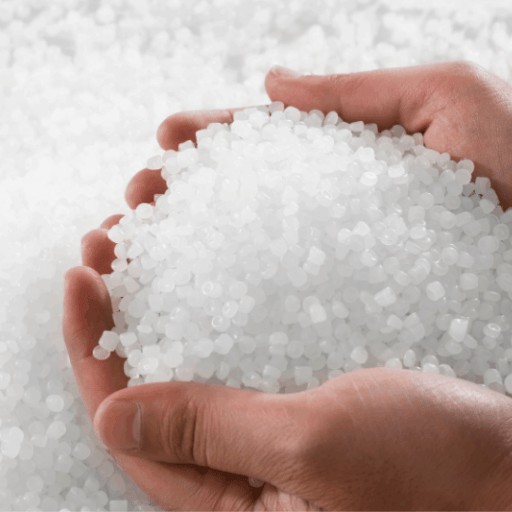
A plastic pellet is a small bead of a polymer resin that can be melted then reshaped into a finished plastic object. According to the Marine Debris Program of the U.S. National Oceanic and Atmospheric Administration, pellets are pre-production “size from 1 to 5 mm” and “prepared from raw resin and sold as resin … to be melted, processed and made into various plastic products on the market” (pre-production-plastic-pellets“>NOAA Marine Debris Program).
The same size range is listed in the EPA NEPIS document, which adds that pellets may be “spherical, ovoid, or cylindrical” and come in many colors. Here we have the most reliable fact for the entire debate about pellets.
What does a plastic pellet look like?
Freshman mistake: if you’ve ever picked up a handful of coarse beach sand near a port and noticed that it felt just a little bit too uniform in granules, you were probably holding nurdles. An r/askscience thread had a good layman framing: nurdles are basically plastic sand used as feedstock for all sorts of industries. They look like pistachio or aspirin tablets when cylindrical, fish-roe when spherical, and flattened orange seeds when lenticular.
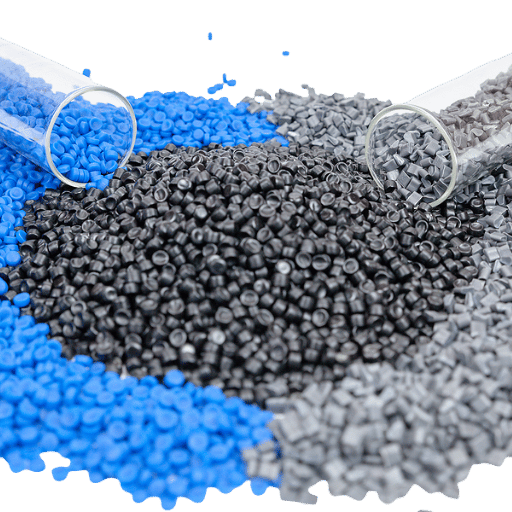
The color depends on whether the bead is virgin polypropene (usually white, off-white, or ordinary translucent, perhaps slightly bluish due to inherent chromophore), masterbatched (contains a colorant, or masterblend within a bead of virgin material), or recycled (often black, grey, or in a specked combination because of varying input streams).
A plastic pellet is functional at the ‘up’ end of the supply chain, and structural at the ‘down’. By the time a customer receives the finished article made from a plastic particle, the particle shape is irrelevant – it has melted into a bottle, a film, a fibre, a moulded case. It exists because it is the most economic way of transporting bulk polymer between a polymerization facility, and an injection-moulding factory.
Plastic Pellets vs. Nurdles vs. Granules — Are They the Same?

In a nutshell: yes, with some reservations.Each term designates the same physical object being perceived (as is) by three different professional lenses.
| Term | Typical user | Typical context | Alternate names |
|---|---|---|---|
| plastic pellet | converter / buyer | datasheet, BOM, purchase order | resin pellet, plastic resin pellet |
| nurdle | scientist, environmental NGO, journalist | marine pollution research, beach cleanup | pre-production pellet |
| granule | recycler, compounder | post-shred regrind or finished recycled pellet | small granule, recycled granule |
| resin pellet | polymer engineer, chemist | technical literature, polymer-grade selection | pre-production plastic pellet |
The exception to be aware of: in some granulator recyclers, granule refers to the “upstream” re-grind that had been through a shredder producing irregular flakes in the 5-15mm range, prior to being re-extruded into final pellets. If you are reviewing a recycling-line specification sheet, look out for whether “granule”refers to the re-grind step or the ultimate pellet. Wikipedia documents the bead form of a nurdle as originating in the 1990s, when researchers studying ocean-pollution needed a one-word answer to describe what they were discovering by the kilogram on beaches (Wikipedia: Nurdle (bead)).
How Plastic Pellets Are Made — From Polymer to Pellet
Currently, two similar pellet-production flows run in parallel worldwide: one involves petrochemical polymerization, and the other begins with sorted plastic waste. The end product is the same — a free-flowing 1–5 mm bead — but the steps in between differ significantly.
How are plastic pellets made? The virgin route
For virgin process streams, the monomers – ethylene becomes polyethylenes, propylene becomes polypropylenes, vinyl chloride becomes PVC, styrene becomes polystyrene, terephthalic acid+glycol becomes PET, lactic acid becomes PLA – react in a polymerization reactor to form polymer chains big enough to be generally called long-chain polymer, which can be obtained in powder form, melt form, or slurry form. These are then fed into a twin- or single-screw extruder and pumped through a die in a molten state, homogenized with any additives, and pushed through a die. The product then falls either as strands into a water bath (strand pelletising, with a downstream chopping head), or is cut by the die face itself by rotating knives flood with water (underwater pelletising).
The dry pellets are then separated from any fines by screening and put into bags or bulk containers.
The recycled (PCR) route
In the recycled route, such post-consumer or post-industrial plastics are fed as bales into a recycling line. Bales are opened, sorted by polymer class (PET from HDPE, films from rigid containers, etc..), shredded into flakes, washed clean of labels and of all food-related and adhesive impurities, dried and fed into an extruder which includes a melt-filtration unit (e.g. a screen-changer or a self-cleaning laser filter that filters out the contaminate fines that stay in suspension). This melt is pelletized through the same equipment used in the virgin pathway yielding recycled-content pellets for the next conversion step.
Industrial pelletizer lines for recycled film, rigid plastics and PET are commonly sized in 200–2,000 kg/h ranges (configuration-dependent). For a deeper look at line layout and capacity sizing, see this industrial plastic pelletizer line reference. The terminology can be confusing: a granulator vs pelletizer comparison clears up where each machine sits in the workflow.
📐 Engineering Note
Pellet cut-length tolerance on a strand line is normally ±10 % of nominal (a 3 mm nominal pellet finishes at 2.7–3.3 mm). Underwater pelletizing produces tighter spheroidal geometry but requires careful die-face temperature control and water-ring flow control to prevent “tail” formation. Strand pelletizing is mechanically simpler and is the default choice for many recycled-content lines, especially film and rigid PE/PP.
Common Types of Plastic Pellets — PE, PP, PET, PVC, ABS, PS, PLA, TPU
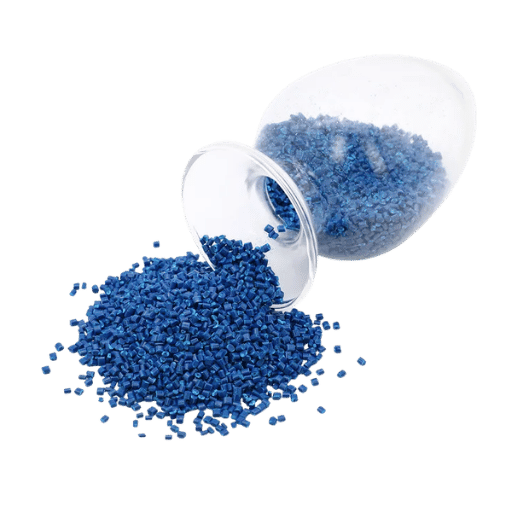
The world of plastic pellets in industrial commerce is dominated by only seven resin families. All of these families have unique density,density/temperature window,.and believed end-use. The table below lists the polymer engineering values you will see in a datasheet, and a number of optimal end-uses.
Because density varies with copolymer ratio, additives, and crystallinity, the values listed are ranges. Additionally, because flow temperature varies with the molding process used, the listed melt-temp values are ranges. For a broader catalogue of polymer families and recyclability, see this complete plastic-resin guide.
| Resin (code) | Density (g/cm³) | Melt range (°C) | Typical pellet appearance | Top end-uses |
|---|---|---|---|---|
| LDPE (PE-LD, code 4) | 0.91–0.93 | 105–115 | milky white, soft | flexible film, shrink wrap, squeeze bottles |
| HDPE (PE-HD, code 2) | 0.94–0.97 | 120–135 | opaque white, harder | milk jugs, drums, pipes, agricultural film |
| PP (code 5) | 0.90–0.92 | 160–166 | off-white, translucent | bottle caps, automotive parts, woven bags, food tubs |
| PET (code 1) | 1.38–1.40 | 245–260 | clear chips or flake, often blue-tinted recycled | beverage bottles, polyester fibre, food trays |
| PVC (code 3) | 1.38–1.41 | 100–260 (compound-dependent) | grey, white, or natural | pipe, window profile, cable insulation, medical tubing |
| PS (code 6) | 1.04–1.06 | 170–280 (process-dependent) | clear or pearly | disposable cutlery, EPS foam, CD cases, insulation |
| ABS (code 7-Other) | 1.04–1.06 | 220–240 (extrusion) | ivory, black, or coloured | automotive parts, electronic housings, LEGO bricks, appliances |
| PLA (bioplastic) | 1.24–1.27 | 150–160 | clear or translucent | compostable cutlery, 3D-printer filament, food packaging |
| TPU (thermoplastic polyurethane) | 1.10–1.25 | 190–230 | clear, amber, or coloured | phone cases, flexible tubing, footwear, technical film |
A good starting point for distinguishing PE from PET is the simple float test: Fresh water (density < 1.00 g/cm) is able to float PE and PP pellets while PET, PVC, PS, ABS, PLA, TPU pellets all end up sinking. Arduous FTIR spectroscopy can be avoided if this is your first step before, while doing your resin identification. That specific specific gravity difference is also used in float-sink separation tanks in a mechanical recycling facility.
For more resin-specific recycling notes, see the ABS recycling workflow, the HDPE recycling line notes, and the PET pellet recycling guide.
What Plastic Pellets Are Used For (Industry Applications)
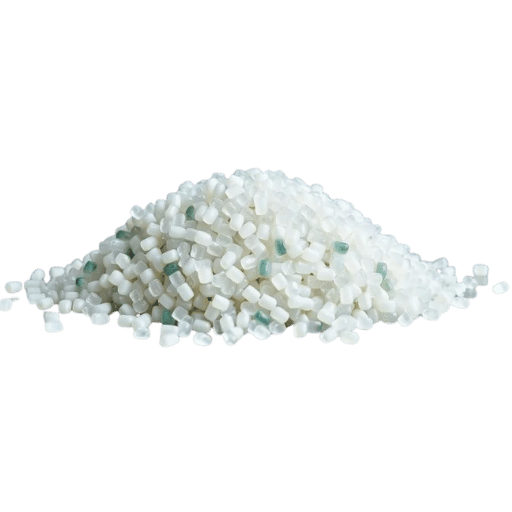
The global production of plastics is projected to be 270 million metric tons per year; most start off as a plastic pellet (Jambeck et al. 2015 in Science ; figure widely re-cited including by As You Sow). The downstream demand is divided amongst six industry sectors.
What are plastic pellets used for?
Packaging is the biggest single pellet user, taking around 45-50% of consumer grade recycled PE / PP / PET / HDPE pellet use, and roughly the same proportion of virgin use. Bottles, films, caps and food trays are all moulded or extruded from pellets. Automotive is the next largest sector; automobiles use door panels, dashboards, fluid reservoirs, bumper fascias and underhood ducts all typically extruded using PP, ABS or filled-PP pellet grades.
Construction uses PVC pellets for pipe, profile and cable insulation, plus HDPE for geomembran, pressure pipe etc. electronics use ABS, polycarbonate and PBT pellets for housings, connectors and switch bodies. Textiles use PET pellets which are made into polyester fibre. And the fastest-growing sector in this group is additive manufacturing – pellet fed 3D printing machines (sometimes called Pellet AM or Granular Material Extrusion) produce many large parts from pellets at one tenth the kilogram cost of filament fed 3D printers.
Pellets are the starting point, providing a even, free-flowing, product feed stock for any of three processes of form. These include: injection moulding where pellets are melted and shot into a closed mould; extrusion process where pellets are melted and shot through a die to produce a profile or film; and blow moulding where extruded pellet melt is inflated inside a mould to form a hollow container. For a more detailed explanation of the use of recycled pellets in injection moulding, see injection moulding with recycled-content pellets overview.
Recycled Plastic Pellets (PCR) — How Recyclers Turn Waste Into Resin
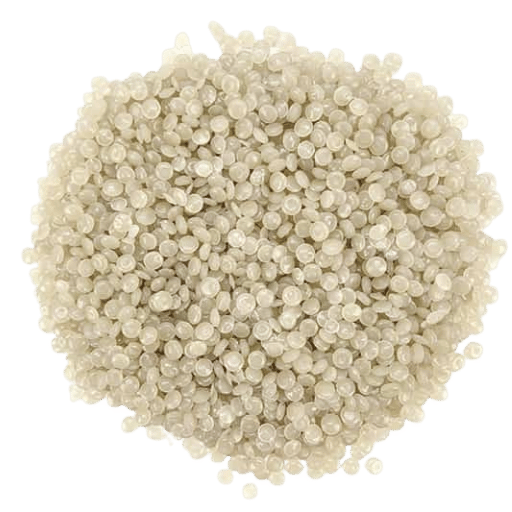
Recycled plastic pellets (also called PCR pellets for post-consumer recycled—or PIR for post-industrial recycled) are mass-equivalent to virgin pellets but bear a quite different commercial / quality profile. The price spread is a first signal: in 2026 the B2B CPC for “recycled plastic pellets” averages US $3.06 per click, while “plastic pellets” sits around US $0.83 — buyers are bidding significantly harder for recycled-content supply, even before tariffs and brand-pledge premiums.
Mechanical recycling is the backbone of the circular plastics economy that makes these pellets. Bales of sorted post-consumer plastic go through a wash line: a metal detector removes gross contaminants, a shredder reduces the bale to flakes, a washing system has the label and residual adhesive come off, a centrifugal or squeezing dryer pulls water content below 1 %, and the dried flake goes into an extruder fitted with a melt-filtration screen-changer or laser-cleaning filter. The clean melt then goes through the same strand or underwater-cut equipment used for virgin polymer—see this thermoplastic recycling overview for further detail on the mechanical workflow; see the plastic pelletizing machine cost guide for line cost and ROI inputs. Mechanical recycling is the most popular route, but it’s not the only one—chemical (advanced) recycling depolymerizes plastic back to its monomers, and a mechanical versus chemical recycling comparison weighs the trade-offs.
Food-contact restrictions are the constraints on PCR pellets. In particular (though there are others) for rPET, a US Food and Drug Administration “letter of no objection” or an EFSA equivalent in the EU is required before the pellet can re-enter food packaging—and the letter is process-specific (it is granted to a specific wash and decontamination flow, not to a polymer family). For PE and PP, food-contact rPCR has historically been more challenging to certify; the regulatory threshold is increasing in 2026 as brand-owner pledges drive demand. Buyers should request the particular FDA / EFSA letter code for all PCR pellets offered as food-grade. For a closer look at purchasing recycled plastic pellets and a high-level view of industrial plastic pelletizer machinery, see the manufacturer overview.
Plastic Pellet Pollution — Nurdle Spills, Microplastics & Operation Clean Sweep
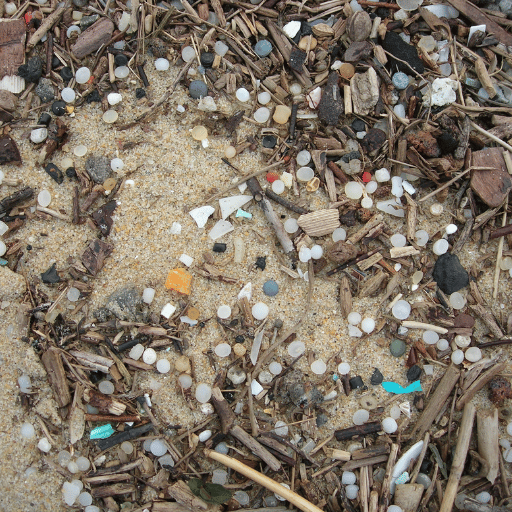
Plastic pellets are inadvertently released into the environment at every step of their lifecycle: production transfer, rail and ocean shipment, truck loading, and converter-floor handling. Industry estimates of annual pellet loss into waterways — including via storm drains and stormwater runoff from converter sites — range from 10 to 11.5 trillion pellets per year, with the lower figure cited by As You Sow (drawing from Rethink Plastic Alliance / ECOS 2020) and the higher figure cited by Fauna & Flora. Both data points come from assumptions rather than direct measurement, which is itself a separate story—the pellet-loss problem has no mutually-agreed-upon official statistic, in part because the plastics industry’s own initiative has failed to produce any public reporting. Carpenter and Smith first documented pellets in the Sargasso Sea in Science in 1972 (Carpenter & Smith 1972); fifty-plus years later, the issue is still being quantified by NGOs and researchers instead of by the industry that makes the material.
One case study summed up the problem to the shipping industry: the M/V X-Press Pearl disaster. The cargo ship caught fire off the west coast of Sri Lanka in May 2021, and is thought to have released roughly 1,680 tons of raw plastic granules or “nurdles” into the Indian Ocean (de Vos et al. 2021, Marine Pollution Bulletin). About 1,075 tonnes of pellet waste were later recovered from beaches around Sri Lanka, although the rest entered the ocean and continues to wash up on Sri Lankan shores nearly five years later. X-Press Pearl remains the largest single nurdle spill in recorded history.
Plastic pellets are cited as having the second largest direct impact on microplastic pollution to the ocean by weight. While the direct sources of plastic pellets have been recorded since 1972; there is currently no corporate transparency about the sources or volume of global pellet loss, nor who is responsible.
Pellets are roughly the size of a fish egg and are routinely mistaken for food by marine animals — the accidental ingestion route that turns small granules into a microplastic pollution vector. They also act as sponges for hydrophobic pollutants in seawater — PCBs, dioxins, and persistent organic pollutants — concentrating them at levels orders of magnitude above ambient water, then transferring them up the food chain when ingested. Beyond the general concern, peer-reviewed developmental-biology research has shown that PVC nurdles in particular have a measurable adverse effect on sea-urchin embryo development. Pellet ingestion can also cause malnutrition in seabirds and fish, since the pellets fill stomachs without providing nutrition. In short, pellet pollution is not a uniform problem across resin families or ecosystems.
Operation Clean Sweep (OCS), established in 1991 as a voluntary stewardship programme to cut pellet loss through best-handling practices — covered storage, pellet-trap drains, transfer-system inspection, sweeping protocols, and spill response procedures at converter sites — is the industry’s primary set of best practices for pellet containment. As You Sow has documented that the programme has not produced public, audited reporting in over 25 years of operation — a gap that the International Pollutants Elimination Network (IPEN) has used to argue for the International Maritime Organization to classify plastic pellets as hazardous cargo under the IMDG Code. For companion reading on broader ocean-plastic dynamics, see this plastic pollution in the ocean overview.
How to Choose the Right Plastic Pellet — The 5-Pillar Resin Selection Test
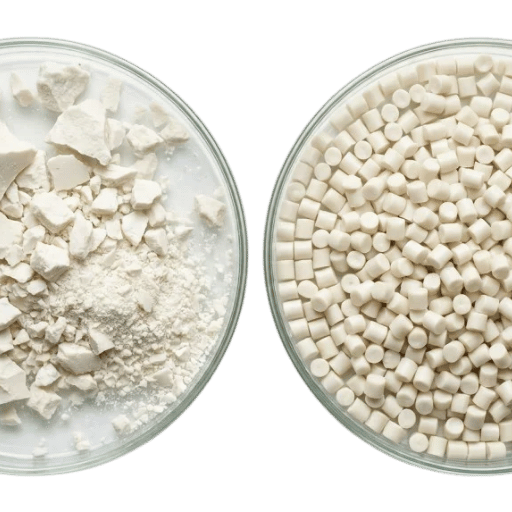
Choosing a pellet for a real product involves balancing five capitals: mechanical design loads, service temperature, legislative need, recyclability goal and cost ceiling. The 5-Pillar Resin Selection Test below is an operational short-list that will guide a purchaser or a designer to the relevant resin family in a matter of minutes. Each row states: if this is your binding limitation, then this is the pellet family to specify based on this property.
The 5-Pillar Resin Selection Test
- For a food-contact bottle or tray (Pillar 1 – compliance), indicate rPET or virgin PET. Food-contact regulation is now a mature process for PET (letter of no objection from the FDA, or EFSA equivalent, specific to your process is simplest).
- Pillar 2 (UV and load-sensitive loading) for an outdoor structural part will specify HDPE or talc filled PP. Available within the available suppliers HDPE and PP is the blends resistant to UV breakdown with stabilization. The density of the HDPE (0.94 g/cm) enables the structural section stiffness to be determined without glass-filled compounds.
- If sustained service above 140 C is the binding constraint (Pillar 3 – temperature), completely step out of the commodity table and specify PEEK or PEI. Both have a glass transition temperature comfortably above the HDPE, PP, ABS, PET practical ceiling for service, and can handle steam sterilization.
- For flexible film or stretch wrap (Pillar 4 – formability), specify low-melt-flow-grade LLDPE or LDPE. Reduced MFI equates to greater draw-down and tear strength on a blown-film line; LLDPE dominates stretch-film applications.
- When cost is the binding constraint on a moulded housing (Pillar 5 – economics), specify ABS or HIPS. Both are easily flowable in injection moulding, maintain dimensional tolerance, and accept paint or pad-printing without surface-preparation; ABS is the higher-impact polymer and HIPS range is roughly 15 – 25 % cheaper for non-impact applications.
A practical caveat: this short-list is just that, not a finished spec. The actual specification would need a particular MFI value, a package of additives (UV stabilizer, antioxidant, flame retardant if required), and a regulatory file for the specific application. The point of the 5-Pillar Test is to bring the 7 – 8 candidate resins down to 1 – 2 before the engineer sits with the polymer datasheet.
Plastic Pellet Industry Outlook — 2026 Trends
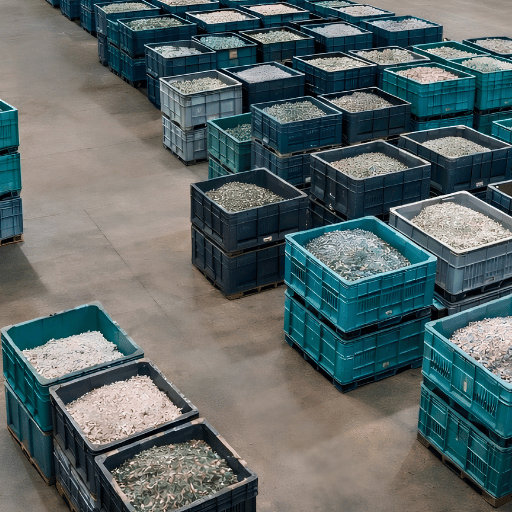
Three forces are shifting the plastics pellet market in 2026.
Recycled-content (PCR) demand continues to outperform supply. Intel Market Research forecasts resins made from PCR plastic pellet to grow 8 – 10% annually through 2032, buoyed by brand-owner packaging commitments and the EU directive; the recycled plastics market as a whole has been projected to grow from US $86.11 billion in 2025 to US$93.21 billion in 2026 (Waste360). The practical implication for converters is that PCR pellet supply will continue to tighten through the first half of 2026; locking long-term recycled-pellet contracts before Q3 2026 is a sensible hedge.
Virgin pellet prices hit bottom. Plastics News 2026 Materials Outlook called 2026 “the end of the resin down-cycle” – meaning virgin PE, PP, PVC pellet prices which were under sustained downward pressure for two years are expected to begin to recover in the second half of 2026. Buyers looking for multi-year supply contracts should expect virgin pellet prices to rise through late 2026 and into 2027.
Debate about classifying hazardous cargo heats up. Following the X-Press Pearl event, and subsequent events, IPEN scientists and member organizations have petitioned the International Maritime Organization to classify plastic pellets as hazardous cargo for marine shipment. Whether the IMO moves in 2026 or 2027, the trends are unambiguous: containerized shipment of plastics pellets will encounter amplified packaging, labelling, and incident reporting regulations. Shippers and pellet purchasers engaged with the issue should view this as an active rule change risk, not a theoretical possibility. The plastic pellet market sits at US $8.95 billion in 2025 and is forecast to grow at roughly 5.2 % CAGR to 2032 (Metastat Insight) — but the composition of that demand is shifting toward recycled and bio-derived feedstocks much faster than the headline market size suggests.
FAQ — Plastic Pellets
Q: What is the purpose of plastic pellets?
View Answer
A plastic pellet — a uniform 1–5 mm granule of polymer — is the de facto shipping unit for polymer between a polymer-maker and a converter. Pellets melt cleanly, flow uniformly into hoppers, and meter accurately into injection-moulding, extrusion, and blow-moulding machines. They exist because shipping bulk polymer in any other form (powder, melt, slurry) costs more, generates more dust, or is impossible.
Q: What is another name for plastic pellets?
View Answer
Nurdles, resin pellets, and pre-production pellets are interchangeable terms for the same 1-5 mm bead. Recyclers also use granule, though that word can mean either a finished recycled pellet or an upstream regrind flake – the context establishes meaning.
Q: How does a plastic pelletizer work?
View Answer
A pelletizer melts polymer, pushes it through a die (that is, extrudes it in strands) and cuts the strands into 1-5 mm beads. There are two dominant cutting geometries: strand pelletizing, by which extrudate strands are extruded into a water bath and chopped at the end of a long line, and underwater (die-face) pelletizing, where rotating knives chop the melt directly at the die while surrounded by flooded water. Industrial recycled-pellet lines typically run 200-2,000kg/h. For more, see Kitech’s plastic pelletizer machinery.
Q: Are plastic pellets toxic?
View Answer
A virgin pellet of PE, PP or PET is harmless to humans while in contact. But: floats in seawater, pelicans eat it and transfer persistent organic pollutants into the food chain. Costa et al. (2010) found that virgin plastic pellets in seawater absorbed PCBs and dioxins at par and much higher than water; absorbed additives in PVC ER are toxic.
Q: Do plastic pellets float?
View Answer
PE and PP pellets float in fresh water (densities 0.90–0.97 g/cm³). PET, PVC, PS, ABS, PLA, and TPU pellets sink (densities ≥1.04 g/cm³). The float-sink boundary is what mechanical recyclers use to separate mixed pellet streams.
Q: Why is pyrolysis not widely used for plastic pellets?
View Answer
Pyrolysis (thermal depolymerization back to oil or monomer) is technically possible for many polymers, but it competes with cheap virgin feedstock from petrochemical crackers and is energy-intensive. Output quality varies sharply with input cleanliness, and capital expenditure for a commercial pyrolysis line runs an order of magnitude higher than a mechanical-recycling pelletizing line at the same throughput. Mechanical recycling — sort, wash, extrude, pelletize — therefore dominates today’s recycled-pellet supply.
Sourcing recycled plastic pellets at industrial scale?
Kitech builds and commissions complete recycling lines: shredder, wash (+ abrasion-resistant conveyor, sink float separator, and air classifier), pelletizer (+ laser-cleaning melt filtration). Certifications include CE, UL, CSA. 500+ plants built.
About This Guide
About plastic pellets, the seven families of resin, the production- and recycling-supply chain, and the proto-oceanic pollution problem with the broken offshore drill pipe, this guide was written using the records of marine-oriented literature like the 1972 (Carpenter & Smith) and the 2013 (de Vosh et al., 2021) pilot study, technical documents from the US EPA & NOAA Office, and industry market research from 2025-2026 at Metastore Insight, Waste 360, and Plastics news. Of note: industry sources disagree on the annual pound and trillion-count spent on pellet loss (11.5 versus 10). Both numbers are used in the copy. This was review by the Kitech engineering team that builds the lines that convert post-consumer plastic into the recycled-content pellets just mentioned.
References & Sources
- Pre Production Plastic Pellets – NOAA Marine Debris Program, U.S. Department of Commerce
- Plastic Pellets in the Aquatic Environment: Sources and Recommendations — U.S. Environmental Protection Agency NEPIS
- Microplastics – NOAA Marine Debris Program;
- Reducing microplastic pollution from plastic pellet losses – European Parliament EPRS Briefing 2024;
- The M/V X-Press Pearl Nurdle Spill: Contamination of Burnt Plastic and Unburnt Nurdles along Sri Lanka’s Beaches – de Vos et al, Marine Pollution Bulletin 2021;
- Plastics on the Sargasso Sea Surface – Carpenter & Smith, Science 1972;
- Plastic Pellets – As You Sow Circular Economy program;
- Plastic Pellets — Information & Spill Response Guide — ITOPF (International Tanker Owners Pollution Federation)
- Explained: What are nurdles? – Fauna & Flora;
- Nurdle (bead) — Wikipedia
- 2026 PN Materials Outlook – Plastics News
Related Articles
- Designing a Plastic Pelletizing Line – line-layout, throughput sizing, and integration notes;
- Which Plastics Are Recyclable? – the recyclability map by resin code;
- Plastic in the Circular Economy – where pellets fit in the closed-loop picture;
- Plastic Recycling Plant Cost Guide 2026 – capital and operating-cost benchmarks;