Get in touch with Kitech Company



A compostable container looks like the obvious sustainable choice ne×t to a recyclable plastic clamshell or a disposable PET deli container. Label promises return-to-earth disposal; material is plant-based; marketing copy writes itself. Then the container gets to a US municipal waste system where roughly 12% of households have food-composting access, and the story ceases to be so simple. This guide walks through where each option actually wins – by material, certification, performance, end-of-life path, cost, and the PFAS question almost no supplier mentions.
Quick Specs: Compostable vs Recyclable at a Glance
| Typical compostable materials | PLA, bagasse (sugarcane fiber), molded fiber, bamboo, paper |
| Typical recyclable plastics | PET (#1), HDPE (#2), PP (#5) |
| Industrial composting time | 90–180 days at 58 °C / 60% humidity (per ASTM D6400) |
| US household access | ~12% for compostable / ~94% for plastic recycling collection |
| Best-fit use cases | Closed-loop event venues, BPI-certified composting markets, PFAS-restricted contracts (compostable) / High-volume foodservice with mature recycling streams (recyclable) |
At a Glance: Compostable Containers vs Recyclable Plastic
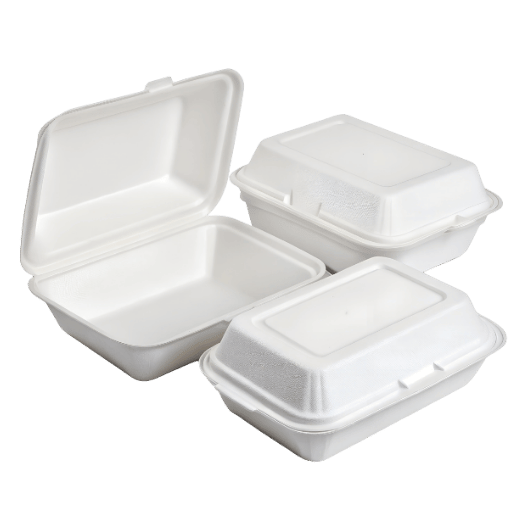
Both options replace single-use foam, but they solve different problems. A compostable container converts to soil amendment when the right facility e×ists; a recyclable plastic container re-enters the supply chain as new resin when the right collection program e×ists. Here is a quick comparison that cuts past the marketing.
| Dimension | Compostable container | Recyclable plastic container |
|---|---|---|
| Feedstock | Plant-based (PLA from corn/cassava, bagasse, bamboo) | Petroleum-derived or post-consumer recycled (rPET, rHDPE) |
| Disposal infrastructure | ~12% of US households (BioCycle 2023) | ~94% curbside collection access (US EPA) |
| Heat tolerance | PLA softens at 60 °C; bagasse handles ~95 °C | PP up to ~135 °C; PET ~70 °C |
| Microwave | Bagasse and aqueous-lined paper: yes; PLA-lined: no | PP yes; PET no |
| Cost per unit (8 oz clamshell, 2025) | $0.18–$0.35 | $0.05–$0.18 |
| PFAS risk | Possible in fiber liners; check cert | Not used in modern food-grade PP/PET |
| If it goes to landfill | PLA persists for decades (anaerobic conditions block degradation) | Persists for centuries; recoverable if diverted |
| Best-fit positioning | Disposal-controlled venues with composting partner | Open-stream foodservice in mature recycling markets |
Compostable vs Recyclable vs Biodegradable: What These Labels Actually Mean
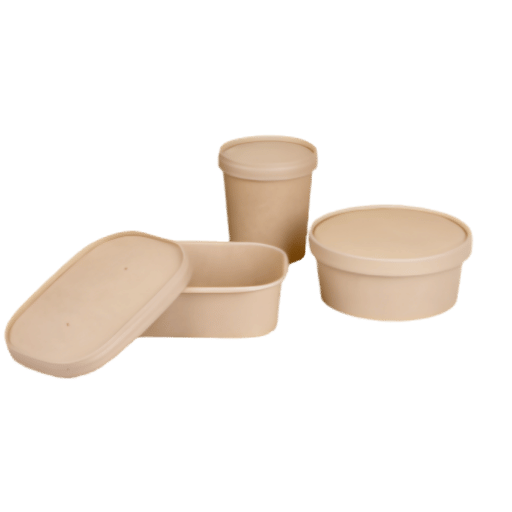
Three words get used loosely in marketing copy, yet they describe different end-of-life scenarios with different infrastructure needs. Rewording the distinction is how a responsible purchasing manager winds up contaminating a recycling bale or unwittingly providing an order of magnitude more microplastic to a landfill because they thought they had purchased “compostable.”
- Compostable – breaks down into water, CO, and biomass within a defined time and condition window, leaving no to×ic residue. In the US, the standard is ASTM D6400, targeting commercial composting facilities at roughly 58 C (136 F) and elevated humidity.
- Recyclable – the material can be collected, sorted, and reprocessed into new products. Recycleable containers are not required to be plant-derived. PET and HDPE serve as the standard-bearers because both have liquid mechanical recycling streams supported by plastic recycling solutions deployed at industrial scale.
- Biodegradable – a non-specific assertion that some (as yet undefined) natural process will break the material down. There is no mandated time-of-decomposition, no specified temperature threshold, and no to×icity limit. Biodegradable does not imply compostable.
A hierarchy makes sense here: every certified compostable item is biodegradable, but few things labeled “biodegradable” meet compostability standards. US Federal Trade Commission staff have questioned questionable biodegradable claims as deceptive under the Green Guideswhen products cannot break down in typical disposal environments.
Are compostable containers really compostable?
Only under particular circumstances, and only with a recognized certification. A container marked “compostable” without a certification mark is calling an unenforceable claim. A container certified to ASTM D6400 (or BPI in the US, OK Compost / EN 13432 in the EU) has been laboratory-tested to disintegrate by 90% in 90 days at industrial composting temps. None of those certifications guarantee performance in an outdoor compost pile or a landfill – both run too cold and too anaerobic for PLA to disintegrate within a practical timeframe. An honest interpretation: a compostable container is actually compostable only if it gets to a commercial facility that takes it.
Materials Side-by-Side: PLA, Bagasse, Bamboo vs PET, HDPE, PP

Material selection affects everything that comes downstream – heat treatment, moisture resistance, recycling stream eligibility, price, and the disposal route which the container can make it through. 6 materials encompass the majority of foodservice container decisions.
| Material | Class | Heat ceiling | Best food types | End-of-life path |
|---|---|---|---|---|
| PLA | Compostable bioplastic | ~60 °C (Tg) | Cold salads, deli, fruit, sandwiches | Industrial composting only |
| Bagasse | Compostable fiber | ~95 °C | Hot entrees, soups, microwave-ready | Industrial or home compost (varies by lining) |
| Bamboo / molded fiber | Compostable fiber | ~90 °C | Dry foods, low-grease entrees | Industrial; some home-compost certified |
| PET (#1) | Recyclable plastic | ~70 °C | Cold beverages, salads, deli | Curbside; bottle-to-bottle and bottle-to-fiber streams |
| HDPE (#2) | Recyclable plastic | ~120 °C | Dairy, beverages, rigid bottles | Curbside; high recovery rate |
| PP (#5) | Recyclable plastic | ~135 °C | Hot entrees, microwave reheat, soup | Curbside in expanding regions; widely accepted post-2022 |
Recyclable plastics outperform compostable bioplastics on heat resistance and unit cost, while the compostable fibres (bagasse, bamboo) outperform PLA on temperature performance. Headline summary: PLA is a cold-food material; bagasse is an all-temperature compostable; PP is the hot-food workhorse on the recyclable side. For mechanical processing logistics on the recyclable side, see types of plastic and recycling codes reference.
Certifications That Matter: BPI, ASTM D6400, EN 13432, and the Resin Codes
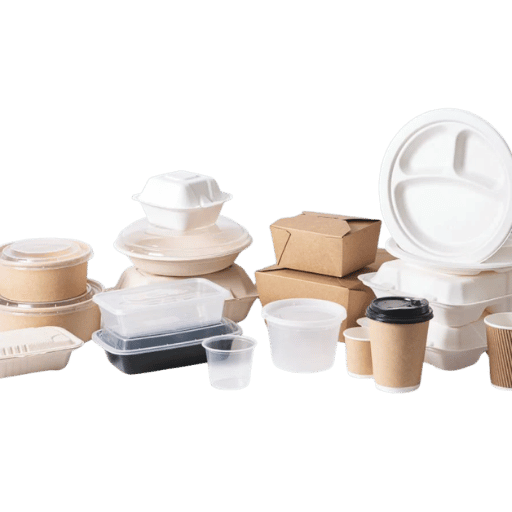
“Eco-smart”, on any label, is not a certification. Six marks carry weight in foodservice procurement, and each one verifies a different claim. The procurement test: if the supplier cannot identify a certification body and present a current certification number, treat the label as marketing.
| Mark | Verifies | Body | What it does NOT prove |
|---|---|---|---|
| ASTM D6400 | 90% disintegration in 90 days, no toxicity | ASTM International | Home compost performance |
| BPI Certified | ASTM D6400/D6868 compliance + zero added PFAS | Biodegradable Products Institute | Local facility acceptance |
| EN 13432 | EU industrial compost equivalent of D6400 | CEN / TÜV Austria | US facility acceptance, home compost |
| OK Compost HOME | Backyard compost performance at ambient temp | TÜV Austria | Industrial throughput speed |
| Resin Code #1–7 | Polymer identity for sorting | SPI / ASTM D7611 | Local recyclability; some codes are not collected curbside |
| How2Recycle | Plain-language disposal instructions | GreenBlue / SPC | Universal acceptance — instructions are regional |
BPI certification is the clearest indicator in the US compostable market because it combines ASTM D6400 with a no-added-PFAS promise—an important assurance in light of the contamination findings discussed below. Resin Code #1 (PET) and #2 (HDPE) are the only resin codes with consistent curbside acceptance across the majority of US municipalities; #5 (PP) acceptance has expanded significantly since 2022 but still not universally.
Performance Comparison: Heat, Microwave, Freezer, Leak Resistance
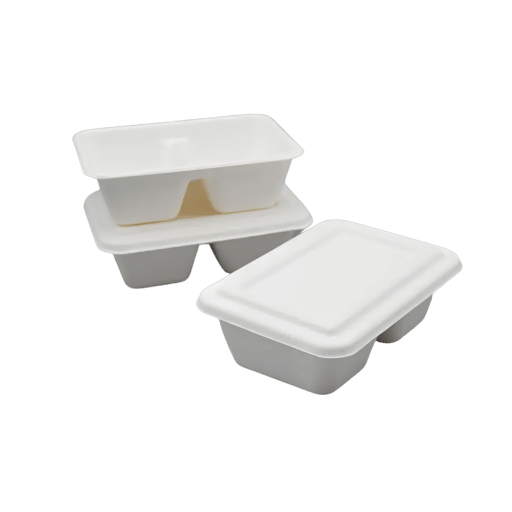
There are concrete, significant performance gaps between compostable and recyclable plastic. PLA appears similar to PET, but reacts very differently to heat. Bagasse takes the heat, but not all bagasse products take the freezer temperatures. Specification sheets for procurement matter more than marketing language.
| Capability | PLA | Bagasse | PP (recyclable) | PET (recyclable) |
|---|---|---|---|---|
| Microwave safe | No (warps at 60 °C) | Yes (uncoated or aqueous) | Yes | No |
| Hot fill (>80 °C) | No | Yes (≤95 °C) | Yes (≤120 °C) | Marginal |
| Freezer safe | Yes | Yes | Yes | Yes |
| Grease resistance | Excellent | Moderate (lining-dependent) | Excellent | Excellent |
| Leak seal with hinge lid | Yes | Vented lids common | Yes | Yes |
| Stackable for delivery | Yes | Yes | Yes | Yes |
📐 Engineering NotePLA’s glass transition temperature (Tg) lives at approximately 60-65C as demonstrated by NETZSCH thermal analysis data. When a PLA container heats above Tg, the polymer chains become mobile and the wall will deform in seconds. This is why a dishwasher cycle at 55C is fine for PLA but a 90C soup or microwave reheat is not. Crystallized PLA (CPLA) raises that ceiling to approximately 110C, which is why hot-soup compostables are virtually always specified to be CPLA or bagasse rather than standard PLA.
End-of-Life Reality: Industrial Composting Access vs Recycling Infrastructure
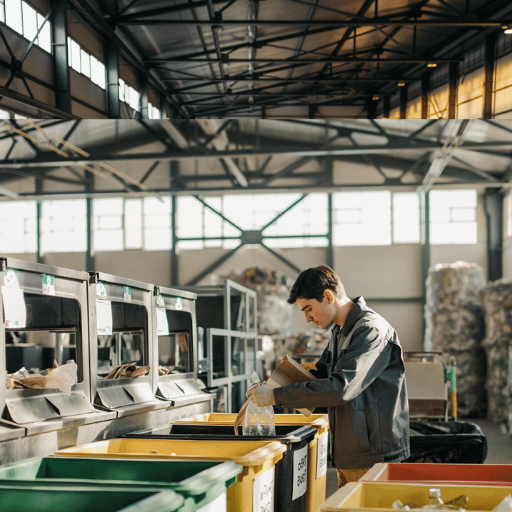
What a container does after it leaves the customer’s hand is one of the largest variables here. Since materials science only applies if the disposal path exists, the US infrastructure is asymmetric.
According to BioCycle data supplied by Modern Farmer in March 2024, approximately 15 million American households have access to food-waste composting programs—about 12% of all US households, spread across 400 programs in 25 states. Curbside plastic recycling collection is, however, available to an estimated 94% of US households according to the EPA’s 2024 financial analysis of US recycling infrastructure. A compostable container in 88% of the country is effectively a landfill container in disguise.
Landfill is not a “soft” failure. PLA requires heat, moisture and oxygen to degrade. Modern landfills tend to be anaerobic and operate at temperatures below 30C in most columns; in these conditions, PLA lasts for decades and is functionally indistinguishable from petroleum plastic. A Commission for Environmental Cooperation milestone report examining bioplastics waste described contamination rates and limited end-of-life options at North American facilities.
“The industry is beginning to realize that compostable multilayer packaging often performs worse environmentally than recyclable mono-material when the disposal infrastructure is honestly counted.”
— Senior packaging engineer, posted in r/weedbiz industry discussion (2024)
On the flip side, recyclable plastic only delivers when it reaches a sorting facility, gets separated by resin code, and lands in a working processing line. That last step is where industrial equipment matters. Modern plastic pelletizing equipment converts sorted post-consumer PET, HDPE, and PP into clean pellet feedstock for new bottles, containers, and rigid packaging — the actual mechanism that turns “recyclable” from a label into reality.
Bottom line: a compostable container only beats a recyclable plastic container on environmental footprint when the buyer can verify a working composting endpoint. In open-stream foodservice without that endpoint, the recyclable mono-material plastic — backed by a much larger collection footprint and a functioning mechanical recycling pathway — still wins the actual end-of-life accounting.
Cost and PFAS: The Hidden Variables Most Buyers Overlook

Two variables routinely get lost in the sustainability conversation: (a) what each container actually costs at order quantity, and (b) whether the “compostable” container contains intentionally added PFAS. Both move the decision.
On unit cost, an 8 oz hinged compostable clamshell typically lands around $0.18–$0.35 at case quantity in 2025, while the same shape made from recyclable PP or PET runs $0.05–$0.18. That’s a 2–4× delta on a high-volume, single-use item. For a quick-service operator that ships 600 containers a day, the annual difference works out to roughly $20,000–$45,000.
Whether that delta is worth paying depends heavily on brand positioning, customer willingness to pay, and whether a closed-loop disposal program actually exists.
Is compostable packaging more expensive than recyclable plastic?
Yes – on average $2-$4 per unit at the foodservice case level. This premium is primarily attributed to feedstock costs (corn-based PLA and sugarcane bagasse IPP trade at a premium to petroleum based PP) and lower production volumes that have not yet benefitted from the economies of scale of an established plastic resin industry. A small portion of the premium funds certification costs.
Cost differences offset by extended producer responsibility fees on traditional plastic packaging when the fee will be implemented in California, Oregon, Maine, Colorado, Minnesota, Maryland, and Washington – eco-modulation of the fee is decreasing for high recycled content material or certified compostables.
PFAS exposure is the surprise variable. PFAS — per- and polyfluoroalkyl substances — were widely used as grease and moisture barriers in molded fiber and paper food containers. Per the EPA’s 2021 report on persistent chemical contaminants in food waste management, PFAS in compostable food packaging is identified as a contamination source for finished compost.
Follow-up research summarized by Food Packaging Forum (2023) found that compostable serviceware can contaminate the resulting compost output with PFAS. Put bluntly, a “compostable” container without PFAS verification can poison the soil amendment it claims to produce.
⚠️ PFAS Audit Checklist for Buyers
- BPI certification is required (BPI disallows intentionally added PFAS as of 2020)
- Request a third party PFAS test report using EPA Method 1633 or total fluorine screening.
- State bans on PFAS food packaging—California, New York, Washington, Maine, et al.—in effect 2023-2025
- For Molded Fiber, Clieve to specify whether the grease barrier is PFAS free or aqueous based.
- Modern commercial-grade recyclable PP and PET don’t contain PFAS – this is a compostable-side risk, not a recyclable-side risk.
The 4-Question Container Test: A Decision Framework

Choosing between compostable v recyclable plastic is a matter of four yes or no questions. Run a procurement decision through the test and the answer will appear free of marketing puffery.
The 4-Question Container Test
- Heat: Will the contents touch the container above 70 °C? YES → bagasse, CPLA, or PP. NO → PLA or PET viable.
- Disposal endpoint: Does the venue have a verifiable BPI-certified industrial composting partner? YES → compostable becomes meaningful. NO → recyclable plastic delivers a better real-world outcome.
- Compliance: Are PFAS-free or recycled-content requirements in the contract? YES → BPI-certified compostable or rPET/rHDPE. NO → choose on cost and performance alone.
- Cost ceiling: Does the unit budget tolerate a 2–4× premium? YES → compostable in scope. NO → recyclable mono-material PP or PET.
By applying the four questions in five typical foodservice contexts I found definitive recommendations.
| Scenario | Recommendation | Reasoning |
|---|---|---|
| Stadium with on-site composting partner | Bagasse with BPI cert | Closed-loop disposal verified; hot food handles a stadium menu |
| Suburban quick-service drive-through | Recyclable PP clamshell | No composting endpoint; PP handles hot food and curbside recycling exists |
| Cold-pressed juice retail | rPET bottle or PLA cup | Cold contents fit PLA; rPET aligns with growing recycled-content procurement |
| University cafeteria, California | BPI-certified bagasse | SB 1383 mandates organics diversion; compostable infrastructure exists |
| Independent deli, mid-volume | Recyclable PP + How2Recycle label | Cost-sensitive operation, no composting access, customer disposal is curbside bin |
Industry Outlook: How 2025–2027 Regulations Reshape This Choice
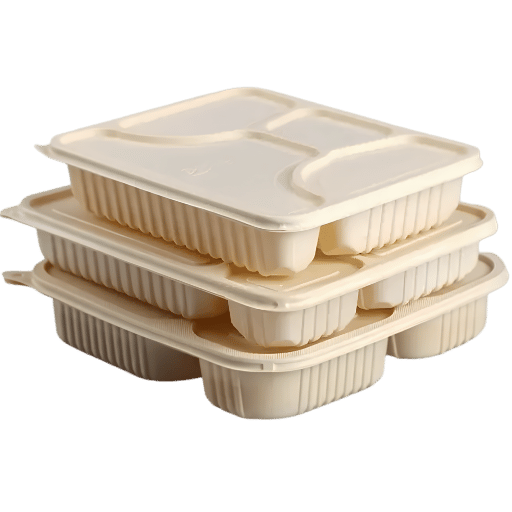
Between now and 2027 there are three overarching regulatory trends that are dynamically shifting the cost and risk profiles of both compostable and recyclable plastics – any procurement plan for containers drafted without accounting for it will become obsolete within two budget planning cycles.
1) Expanded Producer Responsibility (EPR). Seven US states have full-scope packaging EPR laws now (Maine, 2021; Oregon, 2021; Colorado, 2022; California, 2022; Minnesota, 2024; Maryland, 2025; Washington, 2025) per Proskauer’s 2025 EPR compliance guide. Oregon’s program launched July 1, 2025; if California’s full implementation milestone occurs by 1/1/27 the state will have recycled 30-65% of it by weight by 2032. Eight additional bills are pending. Covered producers pay fee rates based on the recyclability of their packaging – and modulate for simplicity with rewards for mono-material recyclable plastic and compostable, and penalties for mixed-material.
2) PFAS in food packaging. California, New York, Washington, Maine, Colorado have passed legislation barring intentionally added PFAS in food contact materials for 2023-2025 effective dates – more states and districts are working on this now. There are substantially more restrictions and industry support around compostable fiber containers, since PFAS was the grease barrier legacy for their line-haul fleet, than around recyclable PP and PET, where PFAS was not a standard component.
3) Market expansion. In 2023 the global compostable packaging market was worth around $74 billion and is forecast to reach around $114 billion by 2030 per Grand View Research – a CAGR of just over 6.4%. Demand for recycled-content plastic resin is growing rapidly in many categories driven by the same fee mechanisms as EPR. These solutions are growing alongside each other, not in opposition.
This is an actionable takeaway for a buyer preparing for 2026 procurement: secure BPI-certified compostable for any volume to verified composting endpoints, and secure recycled contents PP or PET for residual open stream foodservice volume – both are EPR p and g incentives, both minimize regulation risks, and both tie into evolving circular economy plastic programs that will frame the next decade.
Frequently Asked Questions
Q: Are compostable containers really compostable?
View Answer
AABit of both. Firstly, the container needs to be third party certified to ASTM D6400, BPI, or EN 13432–any unsubstantiated “compostable” claim from the manufacturers has no formal adherence standard. Secondly, it needs to reach an industrial composting plant operating at approximately 58C and take that material category. Otherwise in a backyard heap or in a landfill, certified PLA does not break down in any meaningful time frame. Approximately 12% of US households have access to a qualifying location.
Q: Can compostable containers be thrown in the recycling bin?
View Answer
No. compostable bioplastics are similar to PET in having roughly the same visual profile but melting and re-solidifying around somewhat different temperature. If such an item enters a PET recycling stream, it runs the risk of contaminating the bale and creating an inferior product to buy. Compostables have a home in industrial composting collection, never the curbside recycling bin.
Q: Does compostable mean PFAS-free or microplastic-free?
View Answer
Not necessarily. PFAS was common as grease barriers in molded fiber and paper food service ware, and EPA tests have shown migration of certain PFAS into finished compost. BPI must specifically exclude intentionally added PFAS, earning in the process the only strong US compostable certification mark. On microplastics, formulated PLA does bio-degrade into CO, water, and biomass under standard conditions but can degrade into tiny petrochemical pieces in cold or animal material environments.
Q: Are compostable containers microwave safe?
View Answer
Depends on the material. Conventional PLA melts at roughly 60C and collapses in a microwave – this applies to most translucent PLA cups and clamshells. Bagasse (sugarcane fiber) and uncoated or water-based coated paper any food container manage microwave re-heat up to 95 C. Crystallized (CPLA) is a higher temperature option and microwave capable. Check the supplier spec sheet, don’t just assume “compostable” is heat tolerant.
Q: Is compostable packaging more expensive than recyclable plastic?
View Answer
Yes – a typical case pack contains 2-4 hinges per unit in 2025. An 8oz compostable hinged container costs between $0.18-$0.35 compared to $0.05-$0.18 for the recyclable plastic equivalent. The premium price reflects input material cost, smaller production scale, and premium certification expense. EPR fees on virgin plastic materials in California, Oregon, and other early-EPR states are already narrowing the delta through eco-modulation.
Q: How do I dispose of compostable to-go containers correctly?
View Answer
Three steps to verification. Firstly, seek the BPI or ASTM D6400 mark–oxidized plastic claims have no other environmental benefit. Secondly, check with your waste hauler whether the municipal organics or green-bin program accepts certified compostable items; many do not. And thirdly, there is no industrial composting endpoint, the container head straight to landfill; in this case, the label is just a marketing ploy no better than referring to biowaste. Recyclable monmaterial plastic with curbside availability may have the most practical effect, better than ternery landfill.
Designing a closed-loop plastic recovery line?
Recyclable plastic only delivers when the recycling stream actually works. Explore Kitech’s plastic recycling equipment for the processing side of the equation.
About This Comparison
Kitech Recycling manufactures plastic shredders, washing lines, and pelletizers – not compostable containers. That positioning allows this comparison to remain honest about where compostable PLA and bagasse truly perform better than recyclable plastic and where the realities of US infrastructure (12% composting access, PFAS contamination risk, 2-4x cost premium) present circular mono-materials as the stronger practical choice. The data points were cross-checked against the EPA, ASTM, BPI, BioCycle, and Grand View Research sources referenced below; the 4-Question Container Test framework is unique to this post.
References & Sources
- ASTM D6400-21 Standard Specification for Labeling of Plastics Designed to Be Aerobically Composted – ASTM International
- Biodegradable Products Institute (BPI) Certified Compostable – Biodegradable Products Institute
- Emerging Issues in Food Waste Management: Persistent Chemical Contaminants (2021) – US Environmental Protection Agency
- Financial Estimates to Modernize Material Recovery Infrastructure (2024) – US Environmental Protection Agency
- Composting Makes Sense. Why Don’t More Cities Do It? (March 2024) – Modern Farmer, citing BioCycle data
- Milestone Study on Bioplastics Waste Management in the US and Canada – Commission for Environmental Cooperation
- Summer 2023 Research Snapshot: PFAS in Food Packaging – Food Packaging Forum
- Seven States and Counting: The 2025 Guide to EPR Packaging Compliance – Proskauer Rose LLP
- Compostable Packaging Market Size & Share Report, 2030 – Grand View Research
- PLA: Polylactide (Polylactic Acid) Thermal Properties – NETZSCH Analyzing & Testing
- USCC Positions and Compost Information – US Composting Council
Reviewed by the Kitech Recycling engineering team.
Related Articles
- Types of Plastic and Recycling Codes – Resin Identification Guide
- Recyclable Plastics: Which Resins Actually Get Recycled
- Biodegradable Plastic: Definitions, Standards, and Realities
- Mechanical vs Chemical Plastic Recycling Compared
- Circular Economy Plastic: Closed-Loop Recovery Models
- Plastic Material Recycling Comparison Tool