Get in touch with Kitech Company



Recyclable plastic bottles – a very soft sub-category – think recycle them in blue bin, walk away, the job is done. Reality lives in the bottom equilateral triangle: a number that reveals to a sorting machine, a buyer and a landfill operator the value of your bottle. In the US, around thirty percent of the PET bottles produced by the country in 2024 re-entered the curbside-recyclable life cycle; the rest joined the plastic waste stream as landfill, were sorted out as garbage, or shipped abroad. This guide interprets the numbers, tests the resins, posts the public 2024 returns and reveals what your bottle becomes after the truck departs.
Quick Specs — Bottle Recyclability at a Glance
| Code | Resin | Common bottles | Curbside? |
|---|---|---|---|
| #1 PET | Polyethylene Terephthalate | water, soda, juice, peanut butter | ✔ Yes (most common) |
| #2 HDPE | High-Density Polyethylene | milk jugs, detergent, shampoo | ✔ Yes |
| #5 PP | Polypropylene | yogurt cups, wide-mouth jars, caps | ✔ Mostly (program-dependent) |
| #3, #6, #7 | PVC, PS, Other | rare bottle uses | ⚠️ Rarely accepted |
Are Plastic Bottles Actually Recyclable? The Short Answer

Most hard-plastic bottles are part of a recycle stream in the United States and the European Union – but only those bottles, not PET in other packaging formats. A trio of resins carry them through the entire process, if they are bottles: PET (#1), HDPE (#2) and PP (#5). All five resins, as represented by their numbers, are used for a number of bottle formats (water, soda, juice, milk, shampoo, detergent, condiments). A further four numbers are seldom used in bottles (#3 PVC, #4 LDPE, #6 PS, #7 Other) and seldom make their way through an Material Recovery Facility (MRF) line.
“Recyclable” and “recycled” are two separate facts. According to the US Environmental Protection Agency, around 30% of PET (#1) bottles (29.1%, by the agency’s most recent data) and around 30% of natural HDPE (#2) milk bottles (29.3%) are returned to the curb. NAPCOR estimates for 2024 that while the PET (#1) figure should return to 30.2%, it peaked at 32.5% in 2023. In practical terms, then, if you place a #1, #2 or #5 bottle in the bin its’ statistical likelihood of being turned into new plastic in the future is one-in-three, the rest going into a landfill or downcycling destination.
Which plastic bottles are recyclable?
North American and European sets of major curbside-recyclable bottle resins: clear or colored PET (#1) drinks and foods, HDPE (#2) for milk jugs, detergent & shampoo bottles, PP (#5) for wide-mouth tubs, yogurt boxes, and more caps. Not normally curbside-recyclable: PVC (#3) bottles (rare; cleaning products), LDPE (#4) squeeze bottles (ketchup, honey in some markets), PS (#6) yogurt cups (in some markets), #7 Other resins. The chasing arrows refer to the resin, not the guarantee to recycle. A broader recyclable plastics overview covers the non-bottle categories.
The 7 Plastic Resin Identification Codes Explained
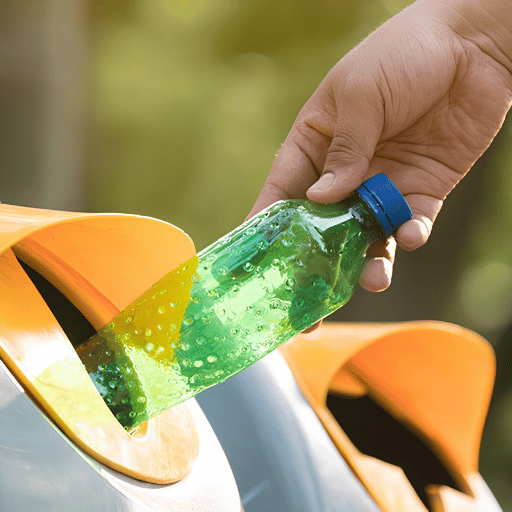
Resin Identification Codes are found within the little triangle on the bottom of most bottles and wraps. The codes originate from the ASTM D7611-20 / D7611M-21 standard, which took over the SPI identifiers in 2008, and put in a major revision in 2013. This set of changes, according to ASTM, directly targeted the misconception that plastics with chasing arrows could be assumed recyclable. Many products still bear the older chasing arrows triangle – and three out of five American adults read it as a recycling guarantee.
| Code | Resin (full name) | Bottle examples | Recycled into |
|---|---|---|---|
| #1 PET / PETE | Polyethylene Terephthalate | water, soda, juice, salad dressing | new bottles, polyester fiber, sheet |
| #2 HDPE | High-Density Polyethylene | milk jugs, detergent, shampoo | new bottles, pipe, lumber |
| #3 PVC / V | Polyvinyl Chloride | rare; some cleaner bottles | ⚠️ Generally not curbside |
| #4 LDPE | Low-Density Polyethylene | squeeze bottles (ketchup, honey) | ⚠️ Store drop-off only |
| #5 PP | Polypropylene | yogurt tubs, wide-mouth jars, caps | car battery cases, brooms, lumber |
| #6 PS | Polystyrene | rare in bottles (more in foam packaging) | ⚠️ Generally not curbside |
| #7 Other | PLA, PC, multilayer, mixed | Nalgene, some food packaging | ⚠️ Mixed-resin; no end market |
What does the recycling number on a plastic bottle mean?
It identifies the polymer family, not the recyclability. Recycle Ann Arbor – a Michigan MRF that has operated education programs for two decades – spells it out: “the chasing arrows symbol was actually created to communicate with producers, not consumers,” about which polymer was used during manufacturing. Whether or not the polymer has a market relies on local sorting machinery, the buyer side of the bale, and contamination levels – all of which vary by city.
The 1-2-5 Rule — A Quick Decision Tree
Use this 4-step check before any bottle goes into your bin:
- Read the number. No code at all? When in doubt, it goes in the trash.
- Read the digit. #1, #2, or #5 keep. #3, #4, #6, or #7 check your local program first; most reject these in curbside.
- Empty the bottle. A pre-rinse isn’t required by most US programs – merely emptying the bottle is sufficient.
- Cap on, not off. Re-attach the cap. Loose caps and lids fall through MRF screens and end up lost as residue (more on this below).
For full code-by-code detail beyond bottles, see types of plastic by resin family.
📐 Engineering Note
A single PVC (#3) bottle in a PET (#1) bale is the silent killer of recycling lines. PVC degrades at PET’s processing temperature, releasing chlorine and discolouring the recycled flake. The APR Design Guide classifies any PVC presence above the trace level as a Critical Detrimental design feature for PET recyclers – which is why optical sorting machines are calibrated, first and foremost, to reject PVC.
PET (#1) Bottles — The Most Recycled Plastic in the World

PET – polyethylene terephthalate – is the closest thing the bottle industry has to a circular material. It is clear, lightweight, food-safe, and accepted by every curbside program in North America and the EU. Most bottled water, soft drinks, juice, and salad-dressing bottles are PET, and most rPET (reclaimed PET) goes into one of four end markets: new bottles, polyester fiber for textiles and carpet, thermoform sheet (clamshells, trays), and strapping.
Headline data from the 2024 NAPCOR PET Recycling Report: the US PET bottle recycling rate was 30.2% in 2024, after a peak of 32.5% in 2023 – the first decline in several years, driven largely by a record surge in rPET imports that displaced demand for domestically reclaimed flake. Across the Atlantic, EUROSTAT reports the EU recycled 42.1% of all plastic packaging waste in 2023, with bottle-specific rates running higher again – Belgium and Latvia clearing 59%.
For PET bottle-to-bottle, a technical standard is set by the US Food & Drug Administration. Food-contact rPET requires a Letter of No Objection (LNO) issued by the FDA after the reclaimer demonstrates that the wash and decontamination process removes contamination below the agency’s threshold. That decontamination – vacuum and heat at low oxygen – is why a closed-loop PET bottle washing line appears the way it does. According to APR’s 2018 life cycle analysis, replacing virgin PET with rPET reduces energy consumption by up to 70%.
PET is recycled, but not infinitely recycled. Even in the most optimistic closed loop scenario fiber loss and weakening quality means virgin must be added each cycle. That chasing arrows icon suggests a perfect circle the chemistry does not allow.
— Synthesized from the work of Roland Geyer (UC Santa Barbara) and Trevor Zink, authors of the 2018 paper on material recycling and landfill diversion
For a deeper PET-only tour, the complete PET recycling guide covers wash chemistry, decontamination physics, and pellet-quality testing.
HDPE (#2) and PP (#5) Bottles — The Other Two Bottle Resins

If PET is the soft drink of the recycling world, HDPE is the milk. High-density polyethylene #2 addresses most opaque rigid bottles: milk jugs, laundry detergent, shampoo, conditioner, motor oil, household cleaner. Natural (colorless) HDPE is the most desirable bag on the market – it can be recycled into food grade bottles, pipes and bench-grade composite lumber. The US EPA estimates a 29.3% recycling rate for natural HDPE bottles in the latest statistics.
PP- polypropylene #5- is a recent addition to the common curbside mix. It dominates yogurt pots, wide-mouth jars and an increasing share of bottle caps. PP recovery has traditionally been low (single digits nationally) but APR’s PP Demand Champions program and a wave of state-level acceptance is pulling that number upward. Many Material Recovery Facilities that did not separate PP five years ago now do, largely because optical sorters are able to sort it cost effectively when volume reaches critical mass.
| Property | PET (#1) | HDPE (#2) | PP (#5) |
|---|---|---|---|
| US recycling rate | 30.2% (2024) | 29.3% natural (2018) | ~5–10% (regional) |
| Closed-loop bottle-to-bottle? | Yes (FDA LNO process) | Yes (natural HDPE) | Limited; growing |
| Float-sink in water | Sinks (density >1) | Floats (~0.95) | Floats (~0.90) |
| Main end markets | bottles, fiber, sheet | bottles, pipe, lumber | battery cases, lumber, caps |
That float-sink property matters more than it appears. After bales have been sliced and granulated, the flakes are agitated in hot water – the density difference is the segregator. PET sinks, cap floats and two streams break apart sans manual intervention. For machinery details on HDPE in particular, see HDPE milk bottle washing system and HDPE recycling line guide.
Why Recycling Rates Are Lower Than You Think

A bottle in your blue bin is not a recycled bottle. Between collection and a finished pellet, material is lost at every stage – to contamination, to downcycling, to market forces that make virgin cheaper than regrind. Numbers below are those that survive that road.
| Region / Material | Recycling rate | Year | Source |
|---|---|---|---|
| US PET bottles | 30.2% (down from 32.5%) | 2024 | NAPCOR |
| US HDPE natural bottles | 29.3% | 2018 (most recent EPA) | EPA |
| EU plastic packaging (all) | 42.1% | 2023 | EUROSTAT |
| Belgium plastic packaging | 59.5% | 2023 | EUROSTAT |
| Michigan PET bottles (state) | 57% | recent | Recycle Ann Arbor |
| All plastic ever produced (cumulative) | 9% | through 2015 | Geyer et al, Science Advances 2017 |
The first pattern is that state-level rates may be twice the national average when a bottle deposit is in effect – Michigan’s 57% PET rate exceeds the US national one by over 26 points, and the only market distinction is a 10-cent deposit. Second, the EU is years ahead of the US on rigid plastic recovery, in large part because Extended Producer Responsibility (EPR) has been the policy standard there for over twenty years. Third, “recycled” does not equal “closed-loop recycled.”
That third point is the single biggest shock to individual consumers. Oceana’s analysis of EPA data shows that most “recycled” PET bottles end up as an inferior “downcycled” product (e.g., polyester carpet fiber), which itself cannot be recycled into PET again. Ellen MacArthur Foundation’s plastic-packaging audit (although more than a decade old) found that, of the 14% of global plastic packaging collected for recycling in 2013, only 2% in fact was recycled into an equivalent or higher-value product. The remaining 12% was either downcycled, lost in process, or contaminated. Newer data is incremental; not revolutionary. For the bigger structural picture, see circular economy challenge for plastic.
Contamination Killers — What Makes a “Recyclable” Bottle Unrecyclable

Most of the gap between collection and recycling is bridged not by policy but by the actions of households in that critical half minute between emptying a bottle down and putting it in the bin. Four factors are at play the conventional wisdom is wrong on two of them.
⚠️ The Caps-On Reversal
Before about 2018, the memo was “recycle the bottle, throw the cap in the trash.” When MRF data revealed that loose caps – smaller than the usual screen – were falling through the sortation system and back into the landfill residue stream, the Association of Plastic Recyclers reversed that guidance. Re-attached, the cap travels with its bottle through the bale, gets ground with it, and is separated cleanly during the float-sink wash. Caps on, every time.
Should you recycle plastic bottles with the caps on or off?
Caps on has become the generally accepted US standard from APR and most municipal programs. The only exception: a handful of older or less-equipped MRFs still request caps off; the recycling-facility workers on r/AskReddit confirm the variability. Default to caps on; verify with your local program if it has specified otherwise in the last two years.
- ✔
Empty the bottle. A pre-rinse is not required by most US programs — emptying is enough. Sticky residue can attract pests at the MRF but does not block recycling. - ✔
Leave the label on. Wash water dissolves adhesives during reclamation. Tearing labels off makes no difference. - ✔
Re-attach the cap. Caps off get lost in MRF screens. - ⚠️
Watch full-wrap PETG sleeves. Shrink-sleeve labels that cover more than half a bottle’s surface can hide a clear PET bottle from optical (NIR) sorters and route it to the trash bale. APR’s Design Guide flags >50% sleeve coverage as a Critical Detrimental design feature.
Mixing resins in one container is by far the quickest way to break a recycling line. An all-time favorite is a #3 (PVC) bottle collected with #1 (PET) bottles: PVC (degrading at PET’s cut-temps) contaminates the entire reclaim batch, often turning the bale into a very inefficient #3 fuel feedstock. Separate collection at the household level is what keeps that feedstock viable.
From Bottle to Bottle — What Recycled PET Actually Becomes

The MOST asked recycling question about recyclable plastic bottles is also the most under-answered. What does this (my) bottle become?
Sincerely, you will not know until someone bid on the bale. rPET in North America has four main end markets. only ONE is for a new bottle.
rPET End-Market Mix (US, recent years)
- Polyester fiber – ~39% – clothing, carpet, fiberfill, automotive interiors
- New bottles (closed-loop) – ~30% – the food-contact path requiring FDA LNO
- Thermoform sheet – ~22% – clamshells, deli trays, egg cartons
- Strapping – ~6% – industrial cargo securement
- Other – ~3% – engineered resin blends
Mix is different each year it correlates with bid prices; data is an average based on recent NAPCOR reports.
Closed-loop bottle-to-bottle pathway – what consumers imagine when they use the word “recycled” – is the most technically intensive. In addition to cutting bales, grinding to flake, and washing in hot water and detergent, food-contact rPET adds a vacuum decontamination step under elevated heat at low oxygen that is validated by the FDA. That same machinery train appears in any modern PET recycling pelletizing machine: shredder → wash → float-sink → elutriation → vacuum decontamination → twin-screw extruder → pellet pelletizer. Brand owners pay a premium for food-grade rPET (typically 20-40% over virgin PET) because Extended Producer Responsibility (EPR) mandates and corporate sustainability targets require it. For the secondary route – non-food rPET in injection-molded parts – see injection molding with recycled plastic.
2025 Outlook — What’s Changing in Plastic Bottle Recyclability

Three regulatory and design forces have begun to shape plastic bottles recycling over the next 24-36 months. If you are designing, purchasing, or specifying packaging, you need to prepare accordingly now rather than after they arrive.
1. EPR cascade. California regulations for SB 54 received final approval in early 2026, with producer registration due by June 1, 2026, and the earliest source reduction milestones begin to effectively come into force in 2027.
Bring the EPR legislation effect to California: Ordered in 2032 (SB54 of California): 100% of single-use packaging, in California to be recyclable or compostable,with a 25% reduction in plastic packaging compared to baseline estimated use in 2023. Though not yet sign into law, parallel EPR legislation is enacted in Maine, Oregon, Colorado and Minnesota. Expect brand owners to be policy pull ERPET demand,not just market pull, within the next two production cycles.
2. Tethered caps go global. Yet another incentive for multi-nationals to tackle sightline visibility: the EU Packaging and Packaging Waste Regulation (PPWR) also makes tethered caps mandatory on most plastic beverage containers effective July 3, 2024.
A US tethered caps bill made it into appropriations limbo in October 2025 but, regardless of where the law stalls, multi-nationals are already making the switch to products with tethered caps. Caps-on guidance from APR naturally tackles this trend: a tethered cap is, of course, never separated from its container for the life of the product.
3. APR Design Guide goes semiannual. APR released the first semiannual update to its Design Guide for Plastics Recyclability in April 2026, putting stricter requirements on opaque PET, full-wrap sleeves, and adhesive selection. Moving to twice-yearly updates is a signal: the recyclability bar is going up steeper than the historical annual revision cycle. Brands that designed against last year’s guide may already be noncompliant. For a more granular view of the design-vs-process compromise, see mechanical vs chemical recycling debate.
What to do. If you are purchasing packaged goods look for a label comparing your rPET percentage–California SB 54 will require disclosure on most bottles by 2027. If you are choosing packaging for a brand, audit it against the most current APR Design Guide as opposed to a PAC member’s spring printout. If you are lobbying, the single most measureable effective trigger in the data is an obvious state bottle deposit; Michigan’s 57% PET rate is what a 10-cent deposit and two decades of consumer habit can produce.
FAQ — Common Plastic Bottle Recycling Questions
Q: Are all plastic bottles recyclable?
View Answer
No. #1 PET, #2 HDPE, and #5 PP bottles are accepted in basically every US and EU curbside program. #3 PVC, #4 LDPE, #6 PS, or #7 Other bottles are rarely accepted in curbside and often land in the landfill if you believe your curbside program (check local accepted list). Always confirm local.
Q: Do you need to rinse plastic bottles before recycling?
View Answer
No. Most US municipal programs require only that the bottles be empty before depositing. MRFs and reclaimers wash the flake in hot water and detergent – your tap water rinse adds nothing extra the wash stage cannot do better. EU municipal programs vary a little – some Northern European programs prefer rinsed containers at the sort line for better hygiene, but it is not a recycled plastics requirement.
Q: What plastic bottles are NOT recyclable?
View Answer
#3 PVC bottles- rare but used for some cleaning products- are not accepted in most North American curbside recycling because they contaminate PET reclaim. Motor oil bottles- even if made of #2 HDPE- are commonly rejected because of residue. #7+ Compostable/PLA bottles must go to an industrial composting facility. Multilayer bottles- usually a tiny barrier between two PET layers (like some beer and condiments bottles) are often technically #1 but they look weird when sorted (“flag”) in optical sorters and are shipped to the trash bale.
Q: Are recycled plastic bottles safe for drinking water?
View Answer
Yes- provided the rPET has a Food and Drug Administration Letter of No Objection (LNO). You can only be granted an LNO after a declaimer proves to the FDA it can decontaminate to below the agency dictated migration threshold. Most large US bottle producers use only agencies compliant LNO rPET, the EU’s food contact rules are also very strict (Regulation (EC) 282/2008).
Q: Why are recycling rates still so low?
View Answer
A process that involves a combination of three factors. First, collection gaps- the US is still very much a network of decentralized municipal programs and even if you only focus on PET bottles consumer away-from-home consumption (gas stations, airports) dumps bottles into general waste. Second, downcycling- most “recycled” PET becomes fiber that cannot be reground, so each cycle ends up also ending in landfill after two or three rounds of repro. Third, economics- when oil prices drop, virgin plastic becomes cheap, demand for recycled-flake drops, and reclaimers cut flux. The 2024 US PET rate decline (from 32.5% in 2023 to 30.2% in 2024) was built around exactly that; a flood of inexpensive rPET imports displaced domestic demand for sifted flair.
Q: What happens if I put the wrong plastic in my recycling bin?
View Answer
Best case, MRF workers pull it during pre-sort and send it to trash. Worst case, contamination at scale forces an entire bale to be rejected by the buyer. This happens when too many residents wishcycle. Recyclers price bales based on purity, and contamination as little as 5% can reduce the value by 30-50%, and at 10% the bale is economically worse than landfill. Costs are passed on as higher curbside fees the following year.
Related Articles
- PET bottle washing line guide – equipment-side walkthrough
- Biodegradable plastic explained – when “compostable” is and is not better than recyclable
- Plastic pollution in the ocean – what bottles do when they escape collection
- Thermoplastic recycling overview – how PET, HDPE, and PP differ at the polymer level
- Plastic recycling solutions hub – full equipment range from shredder to pelletizer
References & Sources
- Plastics: Material-Specific Data – US Environmental Protection Agency
- 2024 PET Recycling Report – NAPCOR (National Association for PET Container Resources)
- Plastic packaging waste in the EU: 35.3 kg per person – EUROSTAT
- APR Design Guide for Plastics Recyclability – Association of Plastic Recyclers
- Caps-On FAQ – Association of Plastic Recyclers
- Plastic Bottle Downcycling – Recycling Myth Month – Oceana
- ASTM D7611-20: Resin Identification Code Standard – ANSI
- FDA Letters of No Objection – Recycled Plastics – US Food & Drug Administration
- SB 54: Plastic Pollution Prevention and Packaging Producer Responsibility Act – CalRecycle
- Plastics Explained – Recycle Ann Arbor
About This Analysis
This document draws from the latest NAPCOR PET Recycling Report (2024), the newest EUROSTAT plastic-packaging release (2023), the US EPA’s Facts and Figures on plastic containers, and the April 2026 APR Design Guide update. All resin code recyclability claims are substantiated by ASTM D7611-20. Kitech team of PET bottle washing line manufacturers, HDPE recycling plant builders, and pelletizer makers, exporting to 30+ countries has reviewed.