Get in touch with Kitech Company

PE Film Washing Line – Complete Recycling Solutions

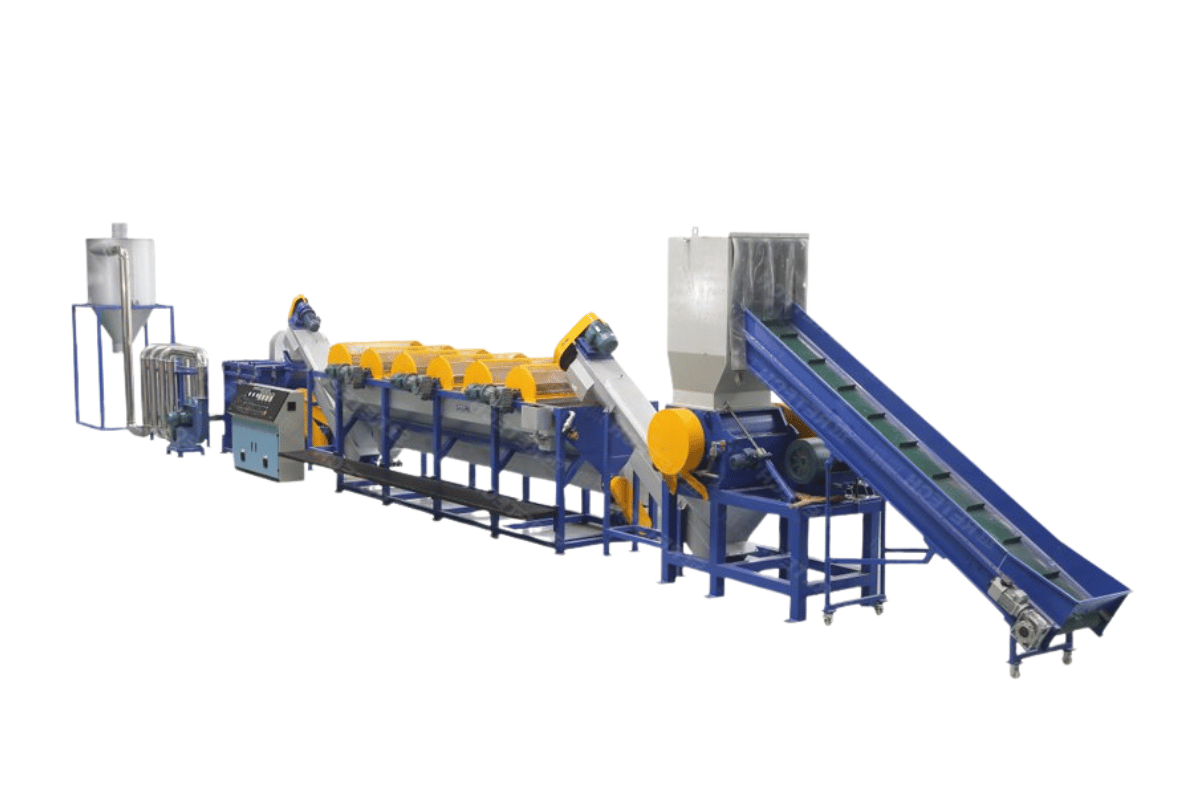
Plastic pollution stands as one of today’s most urgent environmental problems because effective polyethylene (PE) film recycling methods serve as essential solutions to this challenge. PE films serve as essential components for packaging materials and agricultural products and a range of industrial uses which create substantial waste after their use ends. The present recycling industry needs a high-performance PE film washing line because it processes contaminated waste films into reusable materials for recycling facilities.
Overview of Film Washing Lines
The film washing line operates as a complete system which manages the entire washing and recycling process for polyethylene (PE) and polypropylene (PP) films. The systems need various parts which include conveyors and shredders and washing tanks and friction washers and drying equipment. The process uses developed methods to eliminate all impurities which include dirt and labels and adhesives and residual materials from the films.
The primary goal is to produce high-quality, clean material that can be reintroduced into manufacturing processes, supporting a sustainable, circular economy. Modern film washing lines achieve their waste reduction objectives through the implementation of efficient systems which operate at high precision to recover all materials from their processes.
Definition and Importance of Film Washing Lines
Film washing lines are systems that clean polyethylene (PE) and polypropylene (PP) plastic films through the process of removing dangerous contaminants which include dirt and labels and adhesives and leftover materials. The recycling process depends on these systems because they produce uncontaminated plastic material that can be used in production. The production of high-quality recycled material through film washing lines leads to waste reduction and resource conservation and supports sustainable manufacturing methods.
Types of Films: PE and PP
Polyethylene (PE) and polypropylene (PP) can be shaped into different forms to make it easy to put them to practical use. Various forms of PE and PP are explained along with a brief description of their properties:
Low-Density Polyethylene (LDPE)
Three predominant characteristics inherent to the LDPE include viscosity, transparency, and excellent resistance to chemicals. LDPE is mainly used in making bags, shrink wrap, and coating paper surfaces.
High-Density Polyethylene (HDPE)
The strength and resistance level is much higher in HDPE which adds to the durability of the package as well as to its moisture protection. They are utilized in strong packaging, agricultural sheeting, and construction protection.
Linear Low-Density Polyethylene (LLDPE)
Key features of the LLDPE family of products make them appropriate for applications including stretch film, refuse sacks, and several food packs.
Bi-axially Oriented Polypropylene (BOPP)
The high clarity in BOPP films that improves its stiffness comes from a stretching procedure. They are treasured in applications where food container wrapping, label stock, or adhesive tape is used due to their perfect impervious surface nature.
Cast Polypropylene (CPP)
CPP films are known for high clarity, good seal strength, and moisture vapor barrier properties. These films find extensive applications as lamination films, packaging for baked goods, and medical field applications.
Such PE and PP films are developed for varying industrial purposes and this unique feature outlines their relevance within the packaging and outside of the packaging industries.
Applications in Plastic Recycling
Mitigation of pollution and wastage of resources could be achieved by engaging in plastic materials recycling as these help in minimizing the menace caused by such materials. Recycled plastics are among the many useful and efficient materials owing to their numerous applications in many fields. Here are the five leading applications:
1. Manufacturing of Recycled Product Packaging
Instead of using plastic bags, bottles and containers which are made from virgin materials, recycled packages from PE film washing line processing consider several tons of fresh plastic, reducing environmental impact significantly.
2. Construction Material Engineering
Such construction materials take in the plastics that are salvaged from nature and include plastic woods, plastic roofing, plastic water pipes, and plastic insulating materials. Such materials are usually very strong structurally and are very durable together with being weather-proof.
3. Textile and Clothing Industry
The production and innovation from recycled PET plastics fibers of items such as garments, wadding, and technical textiles take many forms. Such demand for these materials has fostered eco-fashion and sustainable textile manufacturing.
4. Automotive Applications
Use of recycled plastics in the process of vehicle manufacturing is encouraging as these plastics are used to make components like bumpers, dashboards, carpets, and insulation panels. The inclusion of these particular materials which are not metallic reduces fuel consumption of the vehicle.
5. Consumer Goods and Services
Recycled plastics are also utilized in the manufacture of furniture, toys, containers, gardening tools, and so on. This allows for functionality without solutions that exhaust natural resources hence encouraging the green economic loop.
Components of a PE Film Washing Line
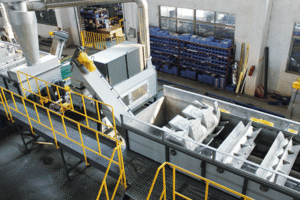
A PE film washing line consists of several essential components that work together to keep recycled polyethylene films in top condition so that they can be used again. The system integrates multiple specialized units to achieve optimal cleaning and processing results.
The above components are essential prerequisites for making good quality PE film from recycled plastic that can be used in a variety of applications.
Shredders: Initial Processing of Plastic Films
Shredders play a dual role, such as reducing the materials to a size whereby they can fit in the PE film washing line and ensuring that the process of shredding the materials does not become a time issue. Shredders with powerful blades are able to handle different kinds of films. This process increases the entire system efficiency as well as enhances the sufficiency of getting all the unwanted materials out in the preceding steps.
Designers make a shredder that will be able to cut those kinds of films without stopping the machine, which leads to a considerable reduction in material waste.
Friction Washers: Cleaning Mechanisms
The configuration of the PE film washing line targets the efficient washing of shredded plastic using a specialized component of the equipment—the friction washer. It is a straightforward device with either stationary or rotating blades or knives to force the washing of the dirty plastics aggressively. The agitation causes the embedded dirt including oils, adhesives, and other contaminants to loosen and come out of the plastics.
Furthermore, a certain amount of water is added to enhance the removal of these impurities. The stepwise mechanical and then hydraulic progression allows obtaining such level of cleanliness of the polymer that is required for the resulting work such as drying, pelletizing, and other processes.
Drying Systems: Preparing for Further Processing
PE film washing line is rendered inoperative without a drying unit. This is because the material that is processed in such line is usually very wet, and prior to such primary processing or pelletizing steps like extrusion, it has to be dried. Traditional drying systems are equipped with heaters and fans to reduce the moisture level to a needed lower range.
Use of burner dryers or desiccant dryers that incorporate burners is common for new materials due to the fact that these provide a dryness level that at times reaches below 5%. This eliminates concerns about quality of the final material and takes care of other issues like porosity and lack of consistency in the reprocessed plastics.
⚠️ Critical Importance of Moisture Control:
Whenever there is a question of the need to keep recycled materials dry, one has to remember that moist materials during recycling reduce the final quality of the product. This moisture will lead to degradation in the form of poor mechanization, the development of low tensile strength, and contamination of previously clean materials. These days in recycling it is impossible not to employ sophisticated dryers that control moisture levels and ensure end-user output is of high grades.
End-to-End Recycling Processes
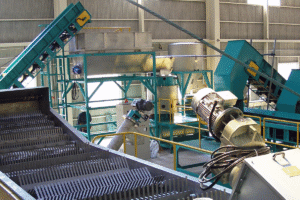
Dividing the recycling system into several stages that are well organized is necessary for recovering and protecting resources. This phase includes components such as curbside pickup or drop-off centers. After that, such materials are being sorted either by hand or using sorting technologies and separated into the appropriate type of recyclable material or quality.
During recycling, materials that are stained need to be cleaned because they cannot undergo the process in their stained condition. Finally, the process of washed materials proceeds with the production of raw material, as with the case of turning plastic materials into plastic chips, transformed for manufacturing. The aforementioned process utilizes all resources and explains the philosophy of preventing excessive waste.
Collection and Sorting of Plastic Films
The properties of plastic films such as low density and flexibility make the material challenging to recover and separate in conventional solid waste management systems. However, they require special handling for materials recovery, as recent reports on this issue indicate that collection is undertaken in a mainly specific manner—either using collection boxes in shops or using adapted recycling facilities.
Nevertheless, pressure on community recycling that rejects plastic films in its bins is considerably less as plastic films do not cause any machine breakdown, nor do they divert the waste to other recycling streams when properly managed. The machines will break, or all plastics will enter the recyclable trash if not properly sorted.
The traditional NIR (Near-Infrared) and optical sensors employing actuators for control may still perform satisfactorily in the separation of multi-laminates with different types of plastic films such as polyethylene and polypropylene. Such systems will be able to sort polymers chemically to an acceptable level, which is considered viable for recycling. However, there still remains a degree of human assessment, particularly with regard to clearing up any contaminants or waste material that cannot be recycled. This is necessary in order to perform the recycling activities in an organized manner that fits the changing market demands as well as the environmental regulations.
Shredding and Washing Stages
Plastic material preparation is a critical stage of plastic waste management. The purpose of this processing is to make it easier to deal with shredded commodities. For example, it is possible to add some water and effective surfactants to facilitate dirt, glues, oils, and food removal from the material, as there is more solution per volume dosage.
After the cleaning with water, most of the products are soaked into the wash solution for cleaning a few more residues that could not be removed earlier in the initial cleaning stages. Operations involving recyclable plastics would normally go in a manner of assuring such a product once cleared will be restored to optimal quality, and that needs some special washing agents—mainly associated with the use of water. The particles of the production process are then sorted, washed, and dried. Such processes are essential in enhancing how much material can easily be recycled.
Final Processing: Pelletizing and Packaging
In any production, it is mandatory that the material undergoes pelleting processes such as converting cleaned and dried shredded waste, then melted down again through complex dies. Indeed, resin pellets are artificial plastic composites specifically designed and intended for manufacture of various plastic products in one form or another as molded, cast, or extruded items.
When enough pellets of the desired shape and size are produced, machines come to a halt, and the pellets are left to harden, resized to match the required dimensions, and undergo quality checking. Finally, in the packing section, the pellets will be put in packages that will at all times protect them from outside pressure. This is mainly because recycling raw materials requires this step for the distribution of the material produced.
Benefits of Integrated Solutions for Waste Management
Advanced waste management systems enhance processes and provide a wide range of benefits. These integrated approaches offer comprehensive advantages for recycling operations:
- Process Optimization: It helps to tighten the process and its flow since the collection system, processing, and recycling are accomplished within one system minimizing all possible delays and wastage.
- Environmental Protection: The impact on the environment is quite positive in that more recycling is promoted other than landfill disposal.
- Resource Efficiency: Integrated approaches involve the optimum use of resources or application of resources in such a way that the costs are minimized as very little waste is produced.
- Regulatory Compliance: These systems help in upholding all the rules since waste management policies and procedures as they concern the environment are considered.
Integrated solutions constitute a high-level system enabling maximum recovery of resources and minimum environmental impact.
Cost Efficiency in Plastic Recycling
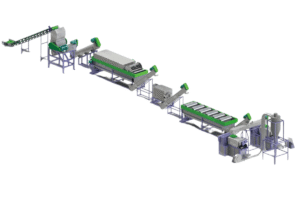
Economic feasibility of recycling plastics is determined by a blend of cost-saving processes, technology adoption, and supply economics. Recent data shows that on average, optical sorting technologies that incorporate artificial intelligence have decreased the costs involved in running an operation. This is mainly by allowing for better separation of waste materials that in turn results in reduction of impurities and consequently improves the quality of the recycled plastic content.
In addition, the use of these methods that are either mechanical or chemical can process more materials per batch or even hourly which maximizes the turnover and at the same time levels the unchangeable costs such as equipment or labor per unit produced. The PE film washing line is now considerably more affordable than it was a decade ago due to technological advancements.
Information on economies also indicates that closed-loop recycling strategies, in which plastic waste is recycled back through the process and converted into the identical type of product, are the most useful in terms of cost, because the demand for virgin material is reduced and the energy usage is also reduced accordingly. The association of producers and recycling plants also increases their cost-effectiveness since there is an opportunity to ensure recycled raw materials consumption, hence economic efficiency is more or less guaranteed.
Technology, process enhancements, and new economic models enhance the potential for plastic recycling to be not only environmentally friendly but also profitable in combating the global waste predicament.
Environmental Impact Reduction
The world over, there is considerable environmental concern about effective recycling of plastics for its several benefits such as reduced landfill wastes, conserving raw materials, and abating air pollution. Recycling reduces the requirement for primary plastic which is made from fossil fuels and hence has an energy cost attached to its consumption, making recycling quite beneficial.
Increasing levels of recycled plastic materials also help protect the environment from the exposure to the use of plastics, particularly when it comes to species in water habitats. It is highly desirable if PE film washing line operations are able to use density separation methods, various different types of processes, and combinations of the above-mentioned processes.
It is still very important to reach maximum citizen engagement methods as well as improvement on recycling ways and means to be able to achieve gradual environmental benefits.
Enhanced Quality of Recycled Materials
Better recycling techniques have made it possible to produce better processed recovered materials during recycling. For example, chemical recycling breaks down plastics into their basic component monomers allowing a higher quality of virgin-like materials to be reprocessed for their intended use. Further advancements in cleaning and sorting systems, utilizing artificial intelligence and optical sensors, also add to the degree of precision in recovering various types of recyclables, and as a result, lower the contamination levels.
PET plastics recovery is possible due to closed-loop recycling systems and now it exceeds 90% for the retrieval of food-grade material stemming from the usage of such plastics. The proliferation of such innovations helps in displacing virgin resources in production and pushes manufacturing to be more sustainable. As such, this new superior quality of the recycled materials brings together the consumer expectations for sustainability and industry’s demand for efficient materials.
Technical Specifications of Recycling Machines
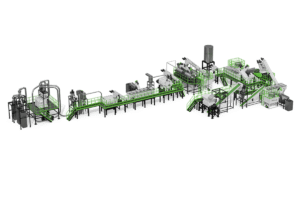
Modern PE film washing lines incorporate advanced technical specifications that enhance performance and efficiency. Understanding these specifications helps facilities make informed decisions about equipment selection and operational capabilities.
This information shows progress in the development of recycling technology and its improvement for more reasonable utilization of resources.
Key Features of PE Film Washing Lines
High-Capacity Processing
The machine can process approximately 2,000 kilograms of PE film every hour, thereby suiting large-scale recycling operations to a great extent.
Advanced Cleaning Technology
Designed to ensure very high levels of cleanliness, friction washers, hot washers, and float-sink tanks are used to separate contaminants like adhesives, dirt, and oils up to a purity level of around 99%.
Energy-Efficient Design
Characterized by the use of motors with low power consumption, efficient water systems, as well as energy recovery devices, which save up to 30% of the total operating energy.
Modular Configuration
This method deals with the interchangeability of the modules which is more convenient for the organization when it needs to conduct processes that need improvements in maintenance activity levels.
Comprehensive Drying Process
Encompasses centrifugal dewaterers, heat-based dryers, and airflow restrictors therefore enabling drying of the end product to below 5% moisture content before further processing or pelletizing.
Performance Metrics: Throughput and Efficiency
The system’s maximum output per day can reach significant volumes, differing due to the properties of raw materials, bulk density, and state of incoming material. The system is capable of recovering most of the products from the residual materials provided that additional energy is spent on drying and dewatering steps, with minimal product loss due to degradation—less than five percent efficiency loss.
This proves that the system is an effective and cost-efficient PE film washing line that allows meeting significant processing volumes while maintaining high quality standards.
Maintenance and Durability Considerations
To keep the system in check and utilize it to its fullest potential, it is imperative to carry out routine maintenance. This means that almost every single component, especially the drying systems and energy recovery devices, will have to be checked and rechecked after every 1,000 hours of use. If not, the elements may crossover such that operational chaos would prevail.
High precision engineering means that lubrication and wear limit monitoring (filter element replacing) would be required. Vibration measurements, as well as thermal images or other such data, will put the system on alert in good time, showing that action should be taken. It greatly helps in productivity improvement within the system and otherwise minimizes overhaul costs, also making the system last long in the end.
Maintenance Best Practices
- Regular inspection schedules every 1,000 hours of operation
- Systematic lubrication of all moving components
- Timely replacement of worn filter elements and wear parts
- Vibration and thermal monitoring for predictive maintenance
- Documentation of all maintenance activities for performance tracking
Such an outcome is only achievable with mechanized installations that are capable of monitoring and controlling perfectly the upper and lower specification limits for a very long time, ensuring consistent output quality and operational reliability.
Frequently Asked Questions
1. What Is the Primary Function of a PE Film Washing Line?
A Polyethylene (PE) film washing line functions as an industrial machine system which processes all flexible PE film waste coming from both consumer and industrial sources. The system performs washing and material separation processes which result in clean PE flakes or pellets from contaminated materials. Manufacturing companies can use the output material as a raw material substitute to create their products instead of using virgin plastic.
2. What Are the Essential Stages and Components of a Complete PE Film Washing Line?
The complete PE film washing line consists of multiple processing stages which require distinct specialized equipment for each stage:
- Shredding/Crushing: A primary shredder or granulator reduces the size of bulky film bales into smaller, more manageable pieces for uniform washing.
- Friction Washing: A high-speed friction washer or pre-washer uses mechanical scrubbing action to remove surface contaminants like dirt, sand, and paper labels.
- Sink-Float Separation: The flotation tank separates materials according to their density. PE film material floats in water while heavier contaminants sink.
- Hot Washing: The industrial hot wash tank uses alkali solutions to dissolve substances like glues, oils, and organic residues that are difficult to remove.
- Dewatering and Drying: The mechanical screw press or centrifugal dewatering machine handles water removal, followed by thermal drying to reduce moisture levels below 5%.
3. How Does the System Handle High Levels of Contamination?
The system incorporates multiple stages to eliminate various types of contaminants. The first step uses dry screening or trommeling to release any loose dirt that needs removal. The process uses friction washing and hot washing to eliminate all organic matter, oil, and grease that has become stuck to surfaces. The process uses mechanical scrubbing and chemical treatment in the hot wash and density-based separation to achieve high purity levels for processing heavily soiled film materials.
4. What Is the Significance of the Final Moisture Content?
The extrusion and pelletizing process requires a moisture content which stays below 5%. The presence of excessive moisture which exceeds 5% creates voids and steam pockets which lead to polymer degradation during the melting process. The resulting pellets become low-quality materials because their mechanical properties have been reduced. The production process requires an efficient drying system which serves as a crucial component for creating recycled material that holds value and can be processed.
5. What Are the Environmental Benefits of Utilizing a PE Film Washing Line?
The environmental advantages of a PE film washing line implementation create substantial benefits for the environment. The system diverts plastic waste from landfills and incinerators which helps reduce both land requirements and dangerous emissions. The system creates a circular economy for plastics which decreases the need for virgin fossil fuel-based polymers and helps conserve natural resources while reducing the complete carbon footprint of plastic production. Modern washing lines use advanced water treatment systems to recycle process water which helps reduce overall water usage.
6. What Are the Common Challenges in Operating a PE Film Washing Line?
The main operational difficulties arise from maintenance needs for equipment and changes in material conditions:
- Contaminant Diversity: The incoming waste stream can have highly variable contamination profiles requiring constant process adjustments.
- Equipment Wear: Sand and glass contaminants cause major abrasive damage to shredder blades and screws requiring frequent maintenance.
- Process Water Management: The process water quality requires proper maintenance through effective filtration of fines and dissolved contaminants.
Conclusion
The article presents advanced technological systems which operate through detailed workflows to maintain a complete PE film washing line system that achieves better recycling results while decreasing harm to nature and creating a sustainable economy. Innovation is revolutionizing the recycling industry through comprehensive processing solutions.
A well-planned system from collection to transportation, sorting and crushing, a PE film washing line, and efficient storage ensures that there is timely availability of material at the required location. The combination of high-capacity processing, advanced cleaning technology, and energy-efficient design makes modern PE film washing lines essential for sustainable plastic management.
Technology, process enhancements, and new economic models enhance the potential for plastic recycling to be not only environmentally friendly but also profitable in combating the global waste predicament.
Key Takeaways
- ✓ PE film washing lines achieve up to 99% purity in recycled materials
- ✓ Energy-efficient designs reduce operating costs by up to 30%
- ✓ Processing capacity ranges from 500-3000 kg/hour depending on configuration
- ✓ Final moisture content must be below 5% for optimal pelletizing
- ✓ Regular maintenance every 1,000 hours ensures system longevity
- ✓ Closed-loop recycling reduces environmental impact and operational costs
Reference Sources: PP/PE Film Washing System | Recycling Washing Line for PE Film/Rigid Plastic | Plastic Film Recycling Washing Line
Recommend reading: Industrial PE Film Washing Line Complete PP PE Recycling Solutions