Get in touch with Kitech Company

How to Start a PET Bottle Recycling Business in 2026


The year is 2026, and given the climate challenges the world is facing, starting a PET bottle recycling business is an excellent measure to impact the environment while reaping economic benefits. With the extent of accumulation of plastic wastes escalating without any boundaries, the importance of sustainable ways of eliminating plastic wastes has also increased manifold. This book concerns itself with the different requirements, the essential issues that potential businesspersons should be aware of in the field of interest for the PET bottle recycling business. Those aiming to operate in the circular economy, in a market that is rapidly expanding, or indeed both, will find actionable information in this comprehensive article to set about building a successful business for all the above purposes. Find out more about overall approaches, shifts in the industry, and technology that will all help build this potential yet very eco-friendly and self-sustaining business.
Introduction to PET Bottle Recycling Business
The art of PET bottle recycling, that is, finding and collecting used polyethylene terephthalate bottles, cleansing, reusing, and converting them to new products or materials, has existed for a while now. The reason is not far-fetched because it helps to contain the menace of plastic waste, saves energy, and most importantly, is good for the environment. Consumers are aware that PET has enabled access to the market of drink packages, which are always light, strong for consumer use, and recyclable. All these glass bottles are effectively made into rubrics and manufactured again, in the form of containers or even PET bottles, thus supporting the green and commercial strategies of zero waste and 3R.
Overview of PET (Polyethylene Terephthalate) Bottles
Polyethylene Terephthalate, abbreviated as PET, is a thermoplastic polymer resin that is strong and transparent. It is extensively used in packaging, especially during the storage of food and beverages. PET bottles are the best packaging solutions available due to their sturdiness, light weight, and impact resistance. Hence, they are popular amongst manufacturers and consumers alike. Furthermore, PET is such a material that does not react or interfere with the safety and flavor of stored material, and hence, it is safe to use in packaging.
PET stands out among other plastics, mainly because it can be reused and recycled. The symbol #1 designates PET as a part of the Resin Classification Code to indicate its ability to be processed at most of the sorting facilities around the country. This means that bottles made of PET can be gathered, ground up, and processed again to produce different items like textile fabrics for garment making, carpets, industrial straps, and even fresh packaging products. With the advent of technology, chemical recycling has also advanced so that it is possible to depolymerize PET and make fresh items out of it, resulting in a complete cycle of waste and resources in line with ideals of a circular design.
In addition to the convenience and low cost, the PET bottles are environmentally favorable in the aspect of production as they require the least amount of energy, unlike other forms of containers, and hence less greenhouse gases are emitted to the environment. The low weight of these bottles helps in cutting back transportation costs and, in effect, lessens the lessening of the burden to environment. Technological developments have also made plastic bottles and, therefore, PET more eco-friendly, such that recycled PET (rPET) is adopted in making bottles, besides ideas to curb low recycling rates and low material recovery. All these reasons make PET an unavoidable component of present-day sustainable development.
Importance and Benefits of the Recycling Business
Sustainability Impact
The collection of PET bottles for recycling contributes to the health of the environment and a more efficient use of materials. PET bottles are highly recyclable, and much less energy is required to produce recycled PET materials as opposed to when processing virgin PET materials. This also helps decrease landfill usage and, therefore, is beneficial in reducing both soil and water pollution. In addition, the use of PET plastic bottles decreases the use of raw resources, especially crude oil for the manufacture of the virgin polymer, and so decreases the emission of greenhouse gases. More effective recycling facilitates a circular flow within the economy because materials get recycled; thus, the carbon footprint of the plastic products is decreased over the whole life span of that product. There is still, however, a long way to go to improve PET bottle recycling business practices where the process is optimized, aiming to utilize each bottle and the consumer.
Economic Benefits in 2026
Engaging in PET reselling commerce in 2026 is very promising due to the significant global advocacy concerning ecosystem care, and it even protects the source of funds. Government officials across the globe are encouraging citizens to recycle and decrease the usage of plastic, which further encourages this type of venture by creating more stringent rules and regulations and offering incentives. It is estimated that the demand for recycled PET materials, or rPET, is rapidly increasing in the packaging, textile, and vehicular industries, mainly due to changes in the attitude of consumers and producers concerning materials that are not eco-friendly. Furthermore, technological advancements that already exist currently allow more effective and low-cost recycling of plastic, with quality rPET being one of the byproduct making it a more profitable process. Moreover, joining this occupation also helps in the reduction of environmental burning causes, for instance, through waste management through proper recycling, resource optimization, and carbon footprint reduction, thus contributing to the achievement of global goals of sustainable development.
Understanding the PET Bottle Recycling Process

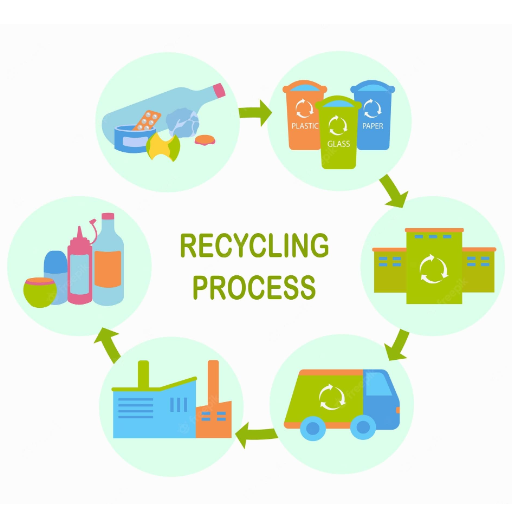
When it comes to the PET bottle recycling business, it follows a complex yet simple process with defined steps that are critical for minimizing the costs and ensuring high raw material recycled PET (rPET) is obtained. At the first step of the process, bottles are collected from specific storage points, and they undergo sorting to get rid of any undesirable materials from the waste stream. Following this, the plastics are cleaned up and prepared before any further processing. This implies that different plastics can be effectively separated, and commingled plastics can also be shredded into particular sizes of PET flakes, followed by washing for removing labelling and any other residual materials.
The next stage is decontamination, where the lighting technologies using heat catalytic reaction processing plus soap-water washing remove impurities to a level where the material can safely and efficiently be reused. The decontaminated PET flakes are then further processed in order to make pellets through an extrusion process. These pellets may be used in the manufacturing of new bottles, textiles, and other products. Lastly, a process of checking the quality of the rPET produced is undertaken so as to ascertain that it has no defects in it and that it doesn’t go against any regulations before it is ready to be put into operations all over again. Such a model of production not only helps in the reduction of pollution and wastage, but it also helps to reduce the consumption of virgin materials and hence contributes to the attainment of sustainable development.
Step-by-Step Breakdown
- Collection and Sorting: Recycling materials are collected from households, buildings, or skips and categorized into plastics, metal, glass, and paper through manual or automated means (optical detectors/magnets).
- Cleaning and Preprocessing: Recyclables are cleaned to eliminate debris like food remains or adhesives and transformed into easy-to-handle flakes.
- Transformation: Clean materials are processed (extruded into pellets for plastics) to be reintroduced into production.
- Quality Monitoring: Materials are tested for cleanliness and structural strength to ensure safety and application readiness.
- Producing New Items: Processed materials (rPET) are handed to producers for packaging, fabrics, or car parts.
Comparison: Mechanical vs. Chemical Recycling
| Feature | Mechanical Recycling | Chemical Recycling |
|---|---|---|
| Method | Washing, grinding, and melting into pellets. | Depolymerization into monomers via hydrolysis, glycolysis, or methanolysis. |
| Property Retention | Retains physical properties, but the quality drops after several cycles. | Recreates material with virgin-like characteristics; allows endless cycles. |
| Cost/Energy | Lower cost and energy consumption. | Higher resource, energy, and cost inefficiency. |
| Suitability | Predominant for cost-effective support. | Advantageous for superior material concentration/food-grade. |
Key Machinery and Technology Requirements
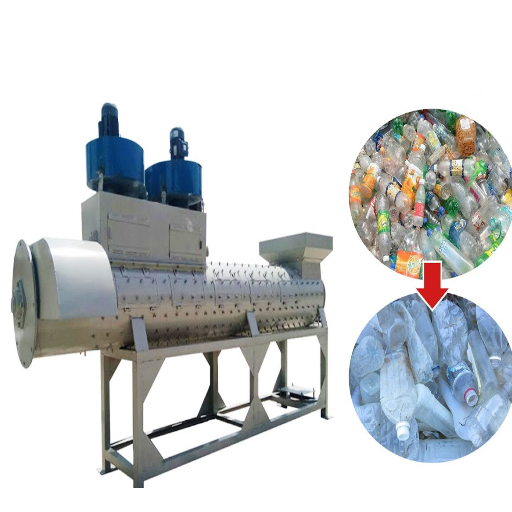
In order to establish an effective implementation of recycling processes, certain types of machinery and technology suitable for each type of recycling are required. In mechanical recycling, specifically, the centerpiece of the equipment includes shredders and airsweeree recycling technology. The cutting particle size reduction, material washing and cleaning, shaping, and overheating the recovered plastic in extrusion are performed with the relevant machines. It is necessary to control these systems and activities more accurately in order to increase efficiency.
Chemical recycling will require advanced reactors developed for thermal cracking or hydrocracking. That takes into account the need for these units not only to break down the material to its constituent monomers or other chemicals but also to do so in a controlled temperature and pressure environment. As for the additional systems, gasifier units, separation by solvents, and the treatment of any resulting waste and byproducts are usually offered.
Market Research and Business Feasibility
Performing extensive market research is vital if we hope to determine the feasibility of introducing and implementing such technologies. Of most importance is identifying the appropriate industries upon which to focus regarding sustainable material recovery services; reviewing the size of the market and its forecast growth rate, as well as looking into customer needs and frustrations. Moreover, the presence and the strengths of competitors are valuable as they indicate their likely positioning within the market and any voids that might exist.
Demand and Supply Assessment
The increasing demand for PET recycling is primarily driven by enhanced consumer knowledge on sustainability, tough environmental laws, and expanded utilisation of recycled PET (rPET) in the packaging, textile, and automotive industries. On the other hand, the availability of recyclable PET materials to be recycled and their contribution depend on waste collection efficiency, capacity of the recycling structures, and local recycling policies.
Key Industry Players
- Veolia Environment S.A. & Suez: Leaders in sophisticated waste management technologies.
- Waste Management Inc.: Specializing in eco-friendly recycling techniques in North America.
- Republic Services & Clean Harbors: Focused on circular economy and green services.
Setting Up Your Facility
Implementation Steps
- Investigating Possibility: Market analysis of local demand and waste PET sources.
- Permission: Obtain environmental, operational, and zoning licenses.
- Establishment: Secure space for sorting, washing, and grinding; purchase best-available equipment.
- Collection Systems: Partner with waste collectors or community systems for a steady supply.
- Quality Control: Implement strict regimes to meet industrial rPET standards.
- Laborforce: Employ and train workers on safety and equipment handling.
- Customer Engagement: Network with manufacturers to establish a customer base.
Selecting the Ideal Location
- Proximity to Waste: Next to or close to sources of PET waste to cut transportation costs.
- Transport Network: Access to major roads, railways, or seaports.
- Utilities: Reliable power, water, and waste disposal systems.
- Zoning: Compliance with local legal and pollution regulations.
- Labor Access: Locations near major labor market agencies.
Future Trends and Innovations in 2026

The pet bottle recycling business is now improving dramatically with the addition of newer techniques and technologies. This can further be demonstrated by advancements in chemical recycling strategies such as depolymerization, which converts the as-collected waste PET into its constituent monomers, facilitating the transformation into a high-quality, recyclable food-grade resin.
Emerging Technologies:
- AI and Robotics: AI-operated sorting devices using machine learning and image recognition to identify and classify waste with high accuracy.
- Blockchain Traceability: Using digital traceability for accountability and monitoring within the supply chain.
- Advanced Washing: Highly advanced washing systems that help recover lost functions of PET using special additives.
- Biodegradable Substitutes: Researching cheap, petroleum-independent alternatives for PET resins.
Global Market Outlook Beyond 2026
Several worldwide patterns in the pet bottle recycling business can already be seen affecting the market. Countries are restricting solid waste management and encouraging premium recycling technologies. The growing necessity for food-grade rPET is caused by the increasing ambition to achieve circular economy objectives. Large companies across the world are promoting the use of recycled materials in packaging. Strategies such as Extended Producer Responsibility (EPR) tend to boost the creation of a closed PET loop, promoting sustainability by influencing companies to go green more than ever before. In the end, these shifts signify an international movement towards a better reprocessing sector in which the advancement and collaboration of technologies go hand in hand with the legal framework in resolving environmental issues.
Reference Sources
PetStar PET Bottle-to-Bottle Recycling System: A Zero-Waste Circular Economy Business Model
Key Findings: This study highlights PetStar’s innovative business model for PET bottle recycling, which aims to achieve a zero-waste circular economy. The model focuses on disengaging recycled bottles from virgin PET production, promoting sustainability.
The Consumption and Recycling Collection System of PET Bottles: A Case Study of Beijing, China
Key Findings: This case study explores the PET bottle recycling system in Beijing, identifying key players such as recyclers, redemption depots, and recycling companies. It highlights the challenges and opportunities in improving collection rates.
Circularity Study on PET Bottle-to-Bottle Recycling
Key Findings: The research estimates that 52% of PET bottles are sent for recycling, emphasizing the need for higher recycled PET content in new bottles to enhance circularity.
Frequently Asked Questions (FAQs)
What is rPET, and how does it support the business of recycling PET bottles?
rPET (Recycled Polyester Terephthalate) or more commonly known as ‘recycled PET’ is an advanced thermoplastic resin used for making both fiber and container resins by recovering post-consumer plastics and agricultural plastics commonly referred to as PET bottles into clean, uncontaminated, and usable plastic pellets. To produce and reprocess beverage bottles through a pet bottle recycling business, the collection, flaking, washing, and food grade or pellet preservation of PET and rPET processes are engaged to enable producres and reclaimers to offer packaging materials, textiles, 3D printing material and other plastics with an ample amount of recycled materials in them for an eco-friendly production and less reliance on resin.
What role does waste management infrastructure play in achieving the success of a recycling firm?
A stable structure of recycling encompasses materials recovery factories, optic sort separators, grinders, shredding, and finally bales management levels, which limit feedstock contaminants and expansion. Inclusion of sort-out innovations and cooperation with plastic recovery companies or manufacturers maximizes the output of the reusable container flows and creates a highly refined recycled material, which can be used in the manufacturing of food-grade packaging or other premium products, thus increasing the recyclers’ returns.
When it comes to a pet bottle recycling business, what steps need to be in place to deal with waste?
The procedures usually involve the gathering of waste after the consumption of such plastic bottles, this is followed by a step of sorting them either manually or with the aid of machines, over the process and after that a bailing is done what indissolubly crushing in flash, these shreds are then included into pet flakes by washing them, after the water phase the solid phase is dried, and upon drying them these as rPET materials are extruded in form of pellets, which can either be bought in the market or used for the manufacture of other packages. Each step takes perhaps more special training in terms of minimising waste management, handling of contaminated objects and their retrieval within the materials making process, and converting them to usable recycled materials.
How can a recycler ensure that the recycled plastic material is appropriate for food contact and is safe for use in beverage containers?
A recycler intending to produce food-grade PET for manufacturing bottles must practice an extensive separation of PET and non-PET, colored and transparent, and other plastic containers, provide effective high-temperature and solvent-free eradication of contaminants, source the material only from certified processors, and carry out post-production bottling testing for cleanliness and release. Producers and regulators must also be actively engaged in the process so as to avoid any food safety issues.
What ways are there to assess and increase the recovery rates of pet bottle recycling businesses?
Recovery is the ratio between the plastic bottles collected and the proportion that is or becomes useful rPET or other recycled products. Enhancements are from optimizing efforts in collection from the community, marketing improved optical sorters, producing better graded bales, designing components to be recyclability friendly, such as the mono-material, where components are glued, and there are few complete labels, and coordinating among material recovery facilities and rebuilders to reduce contaminations and increase rates.
What are the potential end markets and breakthroughs for recycled PET sourced from the bottles, especially?
In the past, food-grade rPET was only utilized in water and soft drink containers or sheet production, whereas PET fiber could only be used in non-food applications and containers apart from its base material. There is a substantial demand in terms of sustenance of the market for recyclable materials due to the recycling efforts and increasing expectations of both policymakers and innovators who are able to make good-quality, durable, and environmentally friendly goods out of the available pellets or waste materials.


Trending now