Get in touch with Kitech Company

PE Film Washing Line Installation & Maintenance

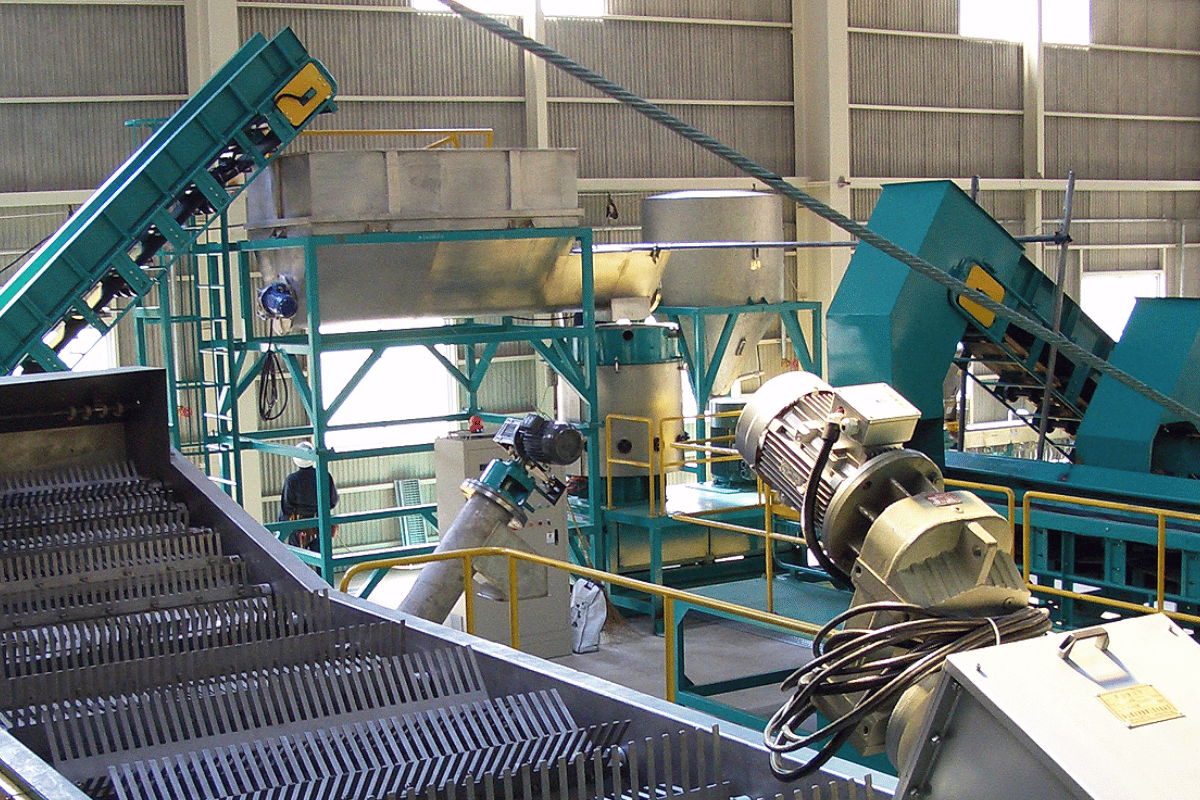
PE Film Washing Line Installation & Maintenance
A Comprehensive Guide to Efficient Plastic Recycling Systems
Considering the duties of a PE film Washing Line in the perspective of plastic recycling, it is now, even more, a simple economic reality that the functioning of the system should be tracked as a priority. More especially, in the establishment of a new plant, all the way up to the maintenance of functioning units. Besides, this paper will delve into an important and easy guide useful to skilled workers who seek to add value towards all their recycling endeavors. There might be such guidance in the form of a manual that includes several stages of assembly up to the extent of overcoming any maintenance issues that may crop up. These have been provided so that one has an in-depth understanding of the operation of the PE film washing line.
Overview of PE Film Washing Lines
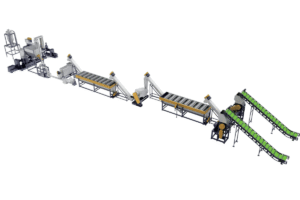
PE Film Washing Line is an advanced mechanism specifically designed for reprocessing polyethylene, mainly agricultural film, shrink film, and plastic cover. These washing systems ensure efficient ways of cleansing, dehumidifying and getting the PE films ready if primary quality virgin materials are to be replaced with recycled ones. Washers, flotation tanks, spin dryers and other installations are included primarily for the removal of any contaminants present on the surface of such films. The use of a plastic recycling plant with a PE film washing line eliminates the potential of having unused plastics, thus making the cleaned and processed waste plastic an absolute necessity for customer service purposes.
What is a PE Film Washing Line?
A PE Film Washing Line is a system designed and constructed by inventive engineers for the treatment of polyethylene film and its extreme versions, including packaging polyethylene, greenhouse polyethylenes and different plastic bags. These lines are designed as recycling infrastructure which involves the disposal of consumer’s secondary plastics waste or plastics used in industrial processes to produce waste-free usable plastic flakes and even pellets of good quality for manufacturing purposes again.
Key Operations:
Several operations are included in the machine, such as cutting film to smaller pieces via the use of a shredder, pre-washing the material, use of flotation tanks to separate light and heavier materials based on density. The friction washers and the thermal dryers help streamline the washing line by ensuring that all dirt and moisture do not exist in the finished composite. Moreover, latest versions of PE film washing lines can be fully automated and controlled or monitored to improve the machinery, reduce energy losses and enable ecologically friendly usage in consideration of EU standards.
Importance of Film Recycling
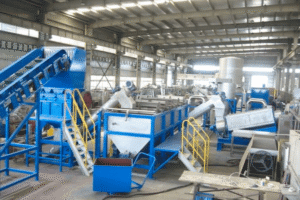
Environmental concerns and resource conservation occasioned by the segregation of waste and reuse of primary resources in modern society finds a solution in film recycling. There are numerous advantages of film recycling and there is data proof to support that such recycling is compulsory in contemporary waste management.
Plastic Waste Minimization
According to the United Nations Environmental Program (UNEP) and other agencies, the world generates more than 11 million tonnes of plastic waste in the oceans every year. Therefore, there is less landfilling when plastic films are recycled, and this assists in combatting marine pollution as well.
Reduced GHG Emissions
To reduce emissions, recycling one ton of plastic film prevents the production of one and a half tonnes of CO2 emissions, which comes primarily from the production of natural resources as raw materials. Such a great decrease in the GHG emission levels provides help towards worldwide measures aimed at cutting down on global warming.
Preservation of Environmental Resources
By recycling plastic films, less demand is placed on fossil fuel sources of energy which are the main resources used in creating fresh plastics. It is understood that through recycling of one ton of plastic a huge quantity of oil is conserved, about 16.3 barrels.
Economic Impact
People are employed and the economy advances due to the recycling industry. As outlined in the United States Recycling Economic Information (REI) Report, over 750,000 jobs and $37.8 billion in wages come from this recycling economy into which film recycling is a part.
Compliance with Regulations
More governments are now enforcing stricter laws when it comes to control of plastic wastes. A case in point is the Circular Economy Package of the European Union which dictates 55% of plastic packaging has to be recycled by 2030, hence making film recycling a necessity to remain compliant and avoid fines.
Film recycling is not only an exercise in waste management. In a larger scheme of things, however, it is an integral component of the sustainability agenda for economies around the world. It is these social and environmental consequences that justify the need for financing and advancement of sophisticated ways of recycling.
Applications of PE Film Washing Lines
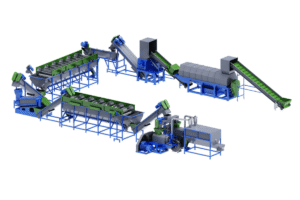
The modern recycling industry would have been retarded permanently if not for the invention of polyethylene film cleaning lines because these machines sterilize dirty polyethylene film beyond reuse and make them approved for reprocessing. Below are five examples of circumstances when the usage of PE washing film lines would be essential.
- Waste Film and Its Re-application in Agriculture
Mulch films used for agricultural purposes as well as greenhouse cover materials are the most common waste plastics. The washing lines aim at ensuring that all possible contaminants including dirt, chemicals and organic substances are fully eliminated such that the recycled material can be used for agriculture or industry meeting the set standards. Statistical data reveals that approximately fifty percent of agricultural films are recyclable, forming significant waste reduction. - Films Used in Consumer Packaging and Their Recycling
Post-consumer plastic films such as shopping bags, shrink films, packaging films and the like need thorough scrubbing and washing because they contain contaminants such as glues, labels, food particles and many others. The use of PE film washing lines is preferable as these effectively wash and separate the materials so that they can be used to manufacture new packages or composite materials from recycled material. - Reprocessing Commercial Films
Stretch films are commonly utilized when warehousing and transporting products and these films are usually soiled in dirt, grease or other industrial waste. The issue of such soiling is resolved with the help of PE Film Washing Lines in order to facilitate the recycling process of the materials back in the form of high-grade films hence reducing the consumption of virgin material by the industry. - Recycling Plastic Film Waste with Different Additives
A number of polymers and extraneous materials are usually present in plastic film waste. PE film washing lines allow improved separation and cleansing of polyethylene films such that contamination from other plastics is minimized. Recycling of PE films for producing high-quality pellets lies at the core of many sectors such as automotive, construction among others. - The Challenge of Dealing with E-Commerce Packaging Waste
Increased use of plastic film is attributed to the growth of online shopping. As a result, carrier bags, bubble wraps and other film products used in e-commerce containers can be enhanced by ensuring there are PE Film Washing Lines that focus only on such wastes. This material, upon cleaning, enters the economy to satisfy the demand of businesses for packaging materials which causes less ecological harm.
Components of a Plastic Film Washing Line
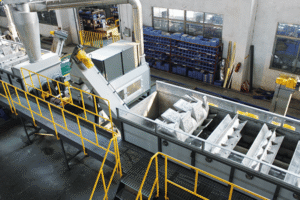
Shredding Equipment
The work done by this particular equipment is to crush the supplied plastic film materials to lesser sizes so that they can be handled easily.
Washing Chambers
These provide the mechanisms through which plastic films are washed by removing the likes of sand, glues and any other film residues through movement of the water.
Friction Washer
These machines incorporate the use of high speed scrubbing, which cleans the surfaces of the plastic films from persistent debris.
Separation Plant
These are mechanisms which contain methods such as densitometry for carrying out segregation of plastics and unwanted materials such as heavier particles.
Dryers
After they have been washed, films need to undergo centrifugal or thermal drying in order to remove any traces of moisture before the next stage of recycling.
Extrusion and Pelletizing Systems
Few washing lines have these devices that help in converting the clean plastic films into recycled pellets in order to make new products.
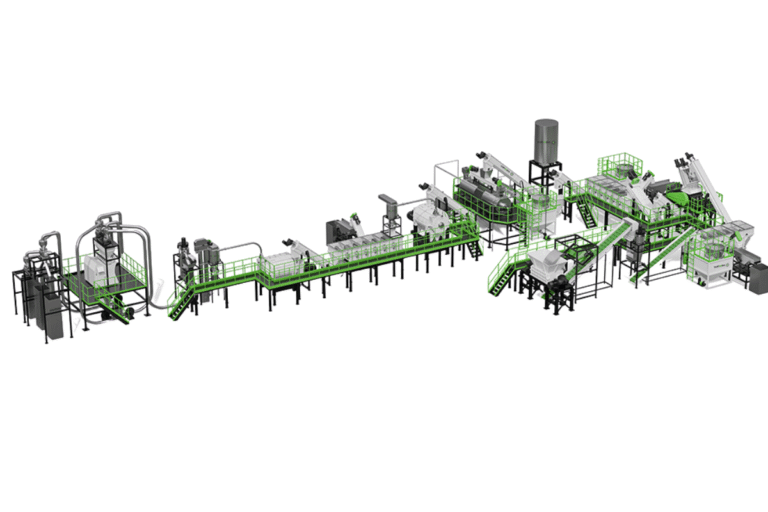
These tools combine correctly for the plastic film materials to be processed in a utilitarian manner for production of good quality recyclates.
Key Machinery in the Washing Line
A high productivity plastic film cleaning system ensures use of different machines in the course of recycling, each machine contributing a certain function. The following five categories of machinery are most utilized:
| Machinery | Description |
|---|---|
| Granulating Machines and Shredders | A central component in size reduction and downsizing, these apparatuses enable the waste treatment processes by turning massive plastic films into smaller sizes. The rotors in certain types of shredders can deal with capacities of 1000-2000 Kg/hr; the exact figures depend on the model and the materials to be processed. |
| Friction Washers | Friction washers work by using centrifugal force and rapid spinning to decontaminate surfaces or applications. The systems can spin very fast, in excess of 1,000 rounds per minute, which significantly increases the washing action. |
| Sink-Float Tanks | According to the principles of density separation, these tanks are structured to remove unfavorable impurities such as metallic solid wastes or other dense plastics from lighter polyethylene material. Their effectiveness is usually far above 90% separation rate and therefore lessens the contamination of the plastic outputs. |
| Centrifugal Dryers | Such equipment uses centrifugal phenomena to dewater the washed materials. These centrifugal dryers can reach less than 5 percent of water content for the recycled films due to their functioning that does not employ high temperatures. |
| Thermal Drying Systems | Also known as thermal dryers, these are used as a secondary step in moisture elimination. They are usually warmed up to specified temperatures (80°C to 120°C) conditions whereby the plastic is dried to reasonable standards necessary for the subsequent procedures like pelletizing or extrusion. |
Such devices increase the productivity of the process efficiency, accuracy, and quality assurance of processing the plastic film materials as each performs the strongest functions possible.
The Role of Shredders and Washers
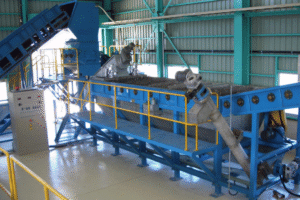
Plastics recyclers often focus on polyethylene film (PE film) recycling; however, there are other types of plastic film that can be successfully recycled as well. The most common are single and double reducers, but wet and dry shredders exist as well, each performing specific tasks usually at different stages of the separation processing.
- Single-Shaft Shredders:
These are used to reduce the size of a plastic film in a controlled manner. Each has a sturdy rotor and a hydraulic pusher that guarantees even sizes, reducing the size of the material from 10 to 80 mm for washing and even less for additional grinding. - Double-Shaft Shredders:
These types of shredders are more robust in both slicing and grinding with the use of double counter-rotating shafts. They cope with bulky or contaminated films at various heights and quantities of material. - Wet Shredders:
These shredders are employed in waste management for shredding material and cleaning it. In these systems, water is used in the shredding process to reduce the particle size and rid the surface of any dirt or labels. - Friction Washers:
Friction washers are plastic washing machines, which apply centrifugal forces to the plastic films to clean them and dry the plastic films to a certain extent. This technique helps to get rid of the dirt, oils, and sticky material that remain in the material. The measure of effectiveness of these washers is often expressed in terms of contamination removal and can be as high as a purification of 98-99%. - Separation Tanks:
Separation tanks can perform a secondary washing, although they are not typical washers. They are used to separate floating contaminants from other materials. Polyethylene and other materials having lower density than water shall float, whereas heavier ones like metals or gravel shall sink. This makes the separation of materials for further processing very effective.
The efficiency in plastic film recycling systems is achieved by combining the effectiveness of all these shredders alongside washers. This helps in raising the rates of these systems, allowing for constant operations and ensuring that the final products meet the purity levels needed in world recycling industries.
Understanding Drying Systems
The integration of drying systems in the recycling cycle of plastic films is essential in reducing the moisture level in such a way as to make it acceptable for further processing or recycling. These systems can be designed to incorporate a mechanical dryer, a thermal dryer, or a combination of both. A case in point is the mechanical dryers where the centrifugal systems remove water so that it is thrown out from the material through high-speed spinning. The thermal dryer relies on warming the air or using the infrared ray drying mechanism to eliminate the water content in the material. For the most part, there is no denoting ‘quality downgrades’ after the drying of the material.
Installation Process for PE Film Washing Lines
The PE Film Washing Line Installation & Maintenance procedure typically corresponds with the following ideas and measures being adopted:
1
Site Preparation
Prior to commencing the installation, the equipment is placed at the right height, ensuring the foundation is steady enough and some resources like electricity and water are within reach.
2
Supplying Equipment
Each part of the washing line, namely the shredder, washing tank, dryer has to be brought in and installed as directed in the layout. Particularly, it is bound to have such a relation with other parts in service order, that is accessible enough for servicing.
3
Utility Installation
Utility installation involves drainage connections which include water pipes used and, where applicable, electric lines.
4
Machines Leveling & Fixation
Hold the machines and equipment in positions which conform to their assigned functions and this will necessitate even distribution of weight on the results of layers of these equipment within the function verticals. The equipment equally requires to be properly held in position through fixings.
5
Installation of Control System
The control system installation is then followed, in which a control box is installed, and every sensor, motor, and other automation components are also assembled and wired out.
6
Testing and Calibration
Check the system under the dry operating conditions and test the individual components and carry out all the system integration tests. Correct possible misalignments or distortions outside of limits prior to the addition of any raw material.
7
Operational Training
Provide the people who will be using the equipment with appropriate training for all types, that is, everyday operations and troubleshooting.
The execution of the above mentioned measures will ensure that the installation of the washing line is carried out in a manner that meets the set production objectives.
Site Preparation for Installation
Where a piece of equipment is going to be put in, it should be prioritized to frame this facility so that easy access and handling is attained. For starters, lay down a specific area that will meet the designed space, access and ventilation requirements. The base should be stable to allow the equipment placed on top of it to operate without any eventualities since the work area should be leveled. Ensure all the connections like water and electric supply and any other requirements have been met or implemented in accordance with the engineering design of the work. Also, any current obstruction should be cleared and required space around the equipment for its installation and maintenance provided. Thereafter, the site must undergo an inspection on whether all legal or standard measures are in place including the PE Film Washing Line Installation & Maintenance.
Step-by-Step Installation Guide
Step 1: Examining Machinery’s Current Foundation and Establishing the Foundation
Begin by examining the base onto which the equipment will be secured. The foundation is required to be sturdy as well as able to bear the weight of the structure with equipment without lowering its levels. Since the equipment is to be placed on a flat ground, check the level of the place using a level meter.
Step 2: Putting in the Services
Go over the service lines and ensure everything is in order prior to the actual placement of the equipment. This applies to electric current, water as well as drainage. Determine if capacity or electricity inlet limitations of the equipment such as current and voltage can be sustained. Move and configure the cable ends and equipment to the relevant final consumers so the entire system is ready to use and incorporates the previously existent framework.
Step 3: Aligning the Equipment’s Base
When it comes to site preparation, and the foundation of the structure being ready, each piece of equipment is installed following the manufacturer’s instructions. There is a need to add a hoist or extra hands in order to facilitate the carrying of the objects in question. Equipment shall be of standard mounting elevation.
Step 4: Instrument Readiness and Its Verification
Once devices are installed, the calibration procedures must be carried out as instructed in the user guide. The activity aims to validate the system so that it can be used within its guidelines. Perform full functional testing and determine mechanical vibration and other performances in cases of use.
Step 5: The Item Is Final Check and Transfer
In the end, examine the installation in detail and make sure it complies with both technical and legislative standards. All actions should be registered at every step of the way. This includes compiling all test results and providing the relevant user or client with equipment manuals including safe use instructions.
Testing and Start-up Procedures
Here is a set of directions, measures and rules to be adhered to during the PE Film Washing Line Installation & Maintenance setup, inspections and commissioning in order to prevent breakdowns and safety hazards:
- Examination of the System at the Beginning:
Make sure that every component shown on the design plan is incorporated in the system. In case any defects are detected such as broken parts, unclean surfaces, or wires that are too long, list them. - Status Switch Testing:
Start the system gradually and let it run for a few seconds just in case there is any noise, warmth or error message in the display. - Testing of the Devices:
Verify the elements of all subcomponents in the system and perform all the operations of different subcomponents being converted on in the right manner. If the specialists propose tests they should be performed. - Safety Devices Test:
Put in mind and purpose to employ all the methodologies ensuring all safety aspects are considered, e.g emergency cut off, sirens, etc., in case of any eventualities or problems. - Calibrations and Installation:
Where need arises, instruments that need to be wound up or set up lie in any sensors, screens or any other contraptions available and should be properly controlled using perfect error-free instruments. - Sanction to Go On:
Writing down notes or remarks is recommended. In circumstances where every condition has been met by the system, request the desk in charge or its agent for complete execution. Make sure you store such records because apart from ensuring quality, they are also handy in the cases of follow-up maintenance or owing to a complaint.
Maintenance Best Practices for PE Film Washing Lines
Inspection of Components
It is necessary to organize the regular inspection of shredders, washing stations including tanks, drying systems and other parts and components. Any defect such as a worn out surface, tear, misalignment or damage that affects functionality should be noted.
Hygienic Processes
Ensure that filter screens and washing tanks do not become blocked and that they are active at all times by regularly removing all the remaining debris.
Greasing
Use the required grease on any movable mechanical parts like bearings and gears to reduce the level of wear within the equipment.
Filters
Filters should be replaced or cleaned according to the frequency indicated by the manufacturer to allow free passage of water and prevent system contamination.
Control Sensitivity
Check all parameters such as pump temperature and speed settings and adjust them in accordance with the optimum level suggested for washing by design.
Training of Employees
Give operators regular updates on proper use of equipment and self maintenance procedures to reduce errors and improve safety during operation.
Record Keeping of Maintenance Activities
It is important to record all maintenance activities performed including inspection and repair activities undertaken to evaluate equipment performance levels and determine any trend in failures.
Always employing the aforementioned best practices will help increase the performance, longevity, and dependability of a PE film washing line and quite possibly the reduction of operational expenses.
Regular Maintenance Schedules
Adherence to scheduled maintenance is vital if your PE Film Washing Line Installation & Maintenance features are to be effectively used. The following outline provides clear procedures on how maintenance is performed periodically.
| Frequency | Maintenance Activities |
|---|---|
| Daily Inspection and Upkeep |
|
| Weekly Maintenance |
|
| Monthly Maintenance |
|
| Quarterly Maintenance |
|
The following maintenance calendar will serve to prolong the life of the unit, keep its operations stable, and minimize/avoid unwanted failures.
Common Issues and Troubleshooting
1. Failure to Boot Up
Reason: Temporary loss of electricity or discontinuity in wiring.
Recommendation: Establish the feasibly available power connection and look if the connections are not loose. Reboot the system if applicable.
2. Inconsistent Operation or Speed
Reason: Shift of the sensors or system needs to be upgraded.
Remedy: Examine and readjust the sensors. Install any of the required software updates.
3. Heating Up Devices
Reason: Airways blocked or overoperation of the device.
Recommended Action: Clear any blockage on the vents. Decrease the tasks performed and let the device cool down before continuing with work.
4. Warning or Error Messages Appearing
Reason: Components have sustained damage, or programs are incompatible.
Course of Action: Consult the user manual for error codes interpretation and the stipulated diagnostic measures to take. Seek support of the technical team if the technical hitch remains unsolved.
While these problems may occur and may exist without interfering with the system’s performance, identifying and solving them in time averts the stoppage in operations, which implies impacts on the system.
Extending the Lifespan of Your Equipment
Regular maintenance and following the manufacturer’s suggested servicing intervals are fundamental components of prolonging any units and machinery. Always perform routine cleaning to avoid accumulation of dirt, dust and grime in the parts that can reduce their efficiency. Use the devices according to the parameters provided in the equipment specification without over straining or over loading them. Keep equipment in a cool, dry and chemical free zone where the conditions of controlled atmosphere are being preserved. Finally, all functional issues that arise or any abnormal functioning must be tackled as soon as possible either by clarification from the troubleshooting guide or technical support. Adopting such measures will prolong the functioning of the machine and minimize unnecessary deterioration in the course of service.
Building Your Own Plastic Film Washing Line
1. Design and Arrangement
To begin the construction of a washing line, it is vital to stipulate what the features of your washing line are to look like and also how the processes will look like from input of plastic film to the washing of the finished products. Notice that different functional sections have been provided and that the use of the equipment has been arranged in such a manner as to allow its use to a maximum without causing unnecessary delays.
2. Primary Apparatus
The washing line should incorporate at least the following systems:
- Crusher/Shredder which allows to crush the plastics to smaller sizes or sheets which are easily manageable.
- Washing Troughs which are used to remove dirt and other surface contamination from the plastic easily.
- Drying Mechanism (centrifuges or hot air dryers) to dry the washed material sufficiently.
3. Material Issues
Use hard wearing materials that can tolerate the aggressive surface of plastic sheets. The involved equipment should be able to work with the different film grades, LDPE or HDPE.
4. Water Management
A water purification and re-circulation system also comes in handy since it reduces both water wastage and costs incurred in the cleaners operations.
5. Safety and Regulations
Check that machines are operated within the accepted frameworks of safety and waste management as well as water consumption protocols.
The way you put them together and take care of them will ensure that your plastic film washing line will work at top power for a good time and produce top quality.
Design Considerations
The installation and maintenance of a PE Film Washing Line Installation & Maintenance system has a few guiding principles. An example of this is the availability of space – the system assembly should be done without any obstructions, and production output level is no less important. Further, thanks to technological advancement, production line efficiency goes hand in hand with resource economy so that excellent machines don’t use up amenities excessively. An issue deserving special attention is that of adaptability. The machinery shall perform a range of functions. For instance, films of several classifications can be recycled. Plus, system modifications make the possibilities of the complete unit familiar with maintenance, with minimum downtime enhanced through installation and utilization of complete components and remote controls. Lastly, restrictions must be included in the designing of the mechanical equipment – what the different regulations allow and what is prohibited within the given system, due to the fact that every action should have an impactive result and not surpass any environmental and professional boundaries given.
Cost Analysis and Budgeting
In-depth cost analysis aids in the creation of a realistic budget, and proper allocation of resources to maximize the available resources. The significant aspects of a cost analysis are the initial costs, operating costs, and maintenance costs of a system. The initial cost is that of acquiring the equipment and any other related costs, such as its installation or modification of existing infrastructure. Operating costs refer to the cost of energy utilized, labor provided, and materials used while maintenance costs relate to the cost of servicing the equipment periodically and replacing worn out parts. This analysis enables one to appreciate the total costs that the system is likely to incur in its useful life and also to strategize to suit the lowest possible costs. Functionality and safety tend to add up to the cost; hence it is smart to keep strategic measures to cut down cost but that do not distort the realization of economical operations.
Finding the Right Components
It is imperative to conduct an assessment of factors or requirements considered in selecting the parts. These factors consider but are not limited to the sizes, cohesion, warranty spans, and efficiency of use. The working machine or application dimension, capacity or environmental conditions must be known before any part is procured. Consider the quality of parts produced or supplied by such manufacturers or suppliers with established history in the industry. Look at where the cost is, and how long the warranty is to help in assessing the price of the guarantee and insurance against some of the risk. Finally, all the courses of action must be compared from the point of view of cost effectiveness, that is, how to economize given the price and service or quality pre-built into each option.
Frequently Asked Questions
1. Are There Any Particular Requirements at the Workplace to Place the PE Film Washing Line?
These fundamental concepts ought to be fulfilled during the construction as well as implementation process:
- Foundation: A level or reinforced cementitious floor surface is encouraged so as to install the equipment safely without generating noise disturbance. The designer shall determine the thickness of the concrete tops and the bracing needed as per the weight and other factors associated with the operation.
- Utilities: It is important to have an appropriation of three-phase electricity, air compressors and process water. The equipment specification lists the inclusive voltage, current, water pressure/flow.
- Space and Layout: Floor space should have dimensions that will accommodate equipment, raw material, finished products, maintenance corridors, and operators. Clearance should make provisions for vertical elements such as silos and conveyor belts of the system when mounted.
- Drainage: The foundation should be provided with an industrial drainage system which would help in the overflowing or washing of the plant. The drainage system must be distributed to the intended water collection or treatment area.
2. How Is the Conventional Installation and Commissioning Process Done Step-by-Step?
The entire procedure of installation is divided into stated, easy steps:
- Assembly Of Mechanical Components: Means placing and fixing of every machine component or element into its desired position or place shown in the drawing. It includes assembling of shredders, conveyors, washing tanks, dewatering systems as well as dryers.
- Water and Electrical Connection: Water and compressed air hoses with the relevant end joints have been manufactured and fitted. All the motors, sensors and boards are connected to the wiring box.
- Testing the Dry Mode: It is done without any materials to verify rotation direction of all motors, operation of the conveyors and control logic.
- Commissioning (Wet Run): This is done when water is in the system to observe if there are any leakages and the pump is functioning. After which, the material is added in small quantities to adjust operations and calibrate the instrumentation.
3. With What Regularity Should the Washing Line Be Maintained?
A preventive maintenance program ensures that a system performs optimally. The schedule of inspection intervals for various checks is as follows:
- Daily: Inspect the external condition of the system and check whether there is rubbing noise or visual damage. Look at the temperature and unusual noise of motors.
- Weekly: The blades of the shredder and the granulators must be inspected and sharpened or changed as the case may be. Filters clogged with slurry inside the corresponding friction washers or tanks should be replaced.
- Monthly: Bearings of all the rotating machines are to be greased. Wear of screw flights, paddles, and mesh screens is evaluated. Calibration of the sensors and testing of the safety interlocks.
- Annually: The team responsible will perform an inspection of the structures, including the inspection of the load carrying capacities of the motors as well as the inspecting of the protection of all the electrical equipment.
4. What Are the Factors Responsible for Frequent Discrepancies in Maintenance, And What Is the Remedy to Prevent Those Discrepancies?
Common wear and blockages are the most common maintenance issues:
- Surface Wear: Whenever foreign substances such as sand, glass, and metal are added into the bins, the shredding knives, worm gears and rotors of the friction washers are damaged. High abrasion reinforcement materials such as Hardox are advised to be used or pre-screening is done in order to minimize the heavy contamination in the materials. The cutter blades also need to be turned and changed at certain intervals.
- Blockages: Turning shafts and transfer points can be found entangled with plastic sheeting. This has been dealt with through the production of consistently quality flakes out of the shredder, regulated water to support transportation of the material and while designing chutes and belting conveyors, the angle and evenness of the surface is checked.
5. How Crucial Is It to Take Care of Chipper and Grinder Blades?
The functionality of the size reduction equipment is of utmost importance for the economic viability of the entire unit. Blunt or worn edges are unable to perform a sharp cut to material and thus the material is crushed and torn apart. This results in high variations in the dimensions of the flake and also waste of energy with an excessive production of fines. Such flakes do not prove effective for washing and instead cause clogging downstream. There must be a blade maintenance schedule that includes inspection, resharpening and the control over the gap.


Trending now