Get in touch with Kitech Company


![Recycling Plastic Bottles: From Collection to Pellets [2026 Guide]](https://kitech-recycling.com/wp-content/uploads/2026/05/0-1.png)
A field guide to recycling plastic bottles—what really happens between your curbside bin and a new beverage container, with 2024-2026 data on rates, prices, and EU vs. US headwinds.
Quick Specs: US Plastic Bottle Recycling at a Glance
| US PET bottle recycling rate (2024) | 30.2% — down from 32.5% peak in 2023 |
| Dominant resin codes recycled curbside | #1 PET bottles, #2 HDPE bottles, #5 PP containers |
| Industrial PET washing line throughput | 1,000–6,000 kg/h, depending on configuration |
| Largest rPET end-use market | Polyester fiber (carpet, fleece, fillings); bottle-to-bottle is growing |
| Global rPET market (2026 projection) | ~US$14.3B, forecast ~US$25.9B by 2033 |
How Plastic Bottle Recycling Actually Works
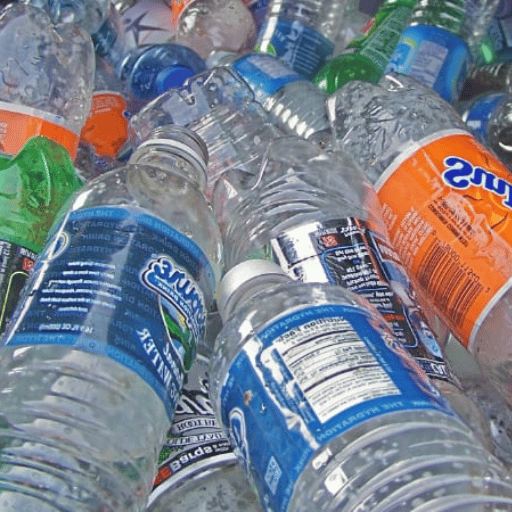
Recycling plastic bottles is a five-stage industrial chain—not one machine and not a magical loop. A useful mental model is the 5-Stream Recycling Path: Bale → Sort → Wash → Flake → Pellet. Each stage is owned by a different operator, and each stage rejects material that cannot economically continue forward.
- Collection. Empty bottles enter the curbside recycling bin, a public recycling bin, or a community drop-off recycling center, then move by hauler to a Materials Recovery Facility (MRF).
- MRF sorting and baling separates PET from HDPE, paper, glass, and metal using a chain of screens, magnets, eddy currents, and optical sorters; sorted plastic is compressed into 1,000–1,500 lb bales.
- A reclaimer washing line cuts the bale, grinds bottles into flake, washes the flake in hot caustic, then separates PET (sinks) from polypropylene caps (float) in a sink-float tank.
- Pellet extrusion follows: clean flake is melted, filtered, and extruded into pellets. Food-grade rPET pellets receive a US Food and Drug Administration (FDA) Letter of No Objection (LNO) after a vacuum-and-heat decontamination step.
- Manufacturer reuse closes the loop—brand owners use the pellets as post-consumer resin (PCR) for new bottles, polyester fiber, sheet, or strapping.
One headline number that most readers never see: in 2024, the National Association for PET Container Resources (NAPCOR) reported a US PET bottle recycling rate of 30.2%, slightly below 2023’s peak of 32.5%—itself the highest since 1996. Capacity is growing globally, but US recovery is not on a smooth upward curve.
Which Plastic Bottles Can Be Recycled? Resin Codes 1–7 Decoded
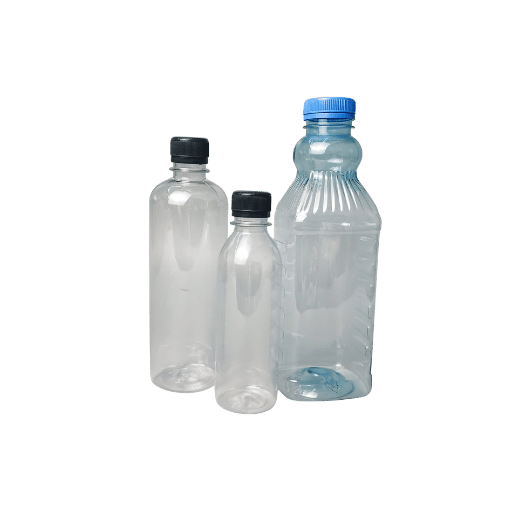
That chasing-arrows triangle on the bottom of a bottle is not a recycling promise. It is a resin identification code, originally created by the Society of the Plastics Industry and now governed by ASTM D7611-21, which simply tells a sorter which polymer a container is made of. Whether it actually gets recycled depends on whether your local program accepts that resin and whether a reclaimer wants to buy it.
| Code | Resin | Curbside-recyclable? | Common output |
|---|---|---|---|
| #1 | PET (Polyethylene terephthalate) | Yes (most US programs) | rPET pellet → fiber, sheet, new bottles |
| #2 | HDPE (High-density polyethylene) | Yes (most US programs) | Detergent bottles, milk jugs (rare), drainage pipe |
| #3 | PVC | Rarely | Mostly disposed |
| #4 | LDPE (films, bags) | No (return to store drop-off) | Composite lumber, trash bags |
| #5 | PP (Polypropylene) | Yes in most programs | Auto parts, paint cans, caps |
| #6 | PS (Polystyrene, foam) | Rarely | Mostly disposed |
| #7 | Other (incl. PLA bioplastic) | No — PLA contaminates PET stream | Industrial composting only |
How can plastic bottles be recycled in practice?
A short answer: codes #1, #2, and #5 are accepted by most curbside recycling programs in the US, while #3, #6, and #7 typically are not. Anything labeled #4 (films, plastic wrap, and bags) needs to go to a grocery-store drop-off location, never the curbside recycling bin—film tangles MRF screens and is a leading cause of MRF line shutdowns. APR calls the practice of tossing non-accepted plastics into the bin “wishcycling”—well-intentioned, but it raises sorting cost and contamination, and items still end up in landfill.
Preparing Bottles at Home: Caps, Rinsing, and the Squish Question
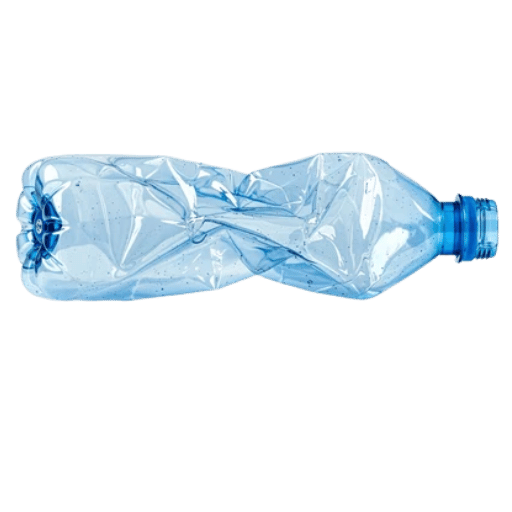
One piece of outdated advice still circulates in 2026: “remove the cap before recycling.” That guidance was correct in the 1990s and 2000s, when MRFs could not capture loose caps small enough to fall through screens. Modern reclaimer washing lines now separate caps from bottles by density during the sink-float wash step, so caps stay on through the process.
APR’s official current guidance is straightforward: caps on, please. Keeping caps on prevents loose caps from being lost on MRF floors, where they fall through screens designed for sorting paper.
- ✔
Empty all liquid. Rinse bottles that held food residue, sauce, or detergent—water rinse is fine, no soap needed. - ✔
Leave caps on. Squeeze a little air out before screwing the cap back; this prevents the cap from popping off during baling. - ✔
Skip the label peel. Reclaimer washing lines remove labels at the prewash and friction-wash stages—no need to peel at home.
💡 Pro Tip
Squishing bottles is fine if your hauler uses a single-stream collection truck. In dual-stream systems with sensor-based volumetric sorting, flattened bottles confuse the screens. When in doubt, leave the bottle whole—let the bale press do the compression.
Inside a Materials Recovery Facility (MRF): The Sorting Chain
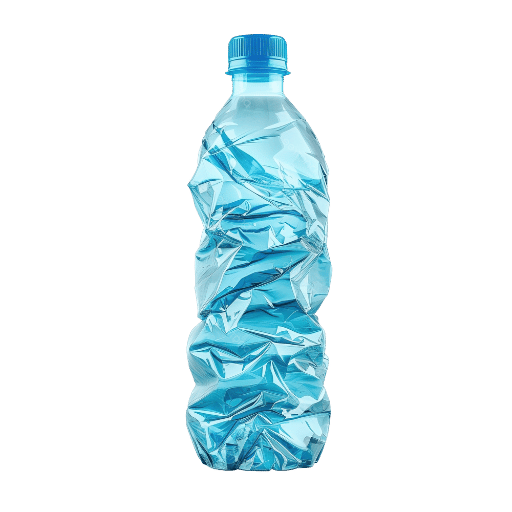
A Materials Recovery Facility is the choke point of the entire recycling system. Every household stream converges here, and every contamination problem compounds here. Flow goes: tipping floor → conveyor pre-sort → 2D vs. 3D screen → metal magnets → glass crusher → plastic optical sorter → quality control → baler.
Optical sorters are the most consequential piece of equipment in this chain. As bottles travel down a high-speed belt, near-infrared (NIR) sensors identify the polymer signature in real time. When the sensor sees a PET bottle, a precise puff of compressed air ejects it across a divider; everything else falls through to the next stage. PET, HDPE, and PP each get a dedicated optical sort station. Manual quality-control workers handle the last 5–10% of edge cases that NIR cannot resolve, plus stray contaminants—a category that, in any given week, includes everything from electrical cords to bowling balls.
“Imports of recycled PET have risen significantly in recent years, with some estimates as high as 50%.”
— Laura Stewart, Executive Director, NAPCOR (interview reported by Argus Media, 2024)
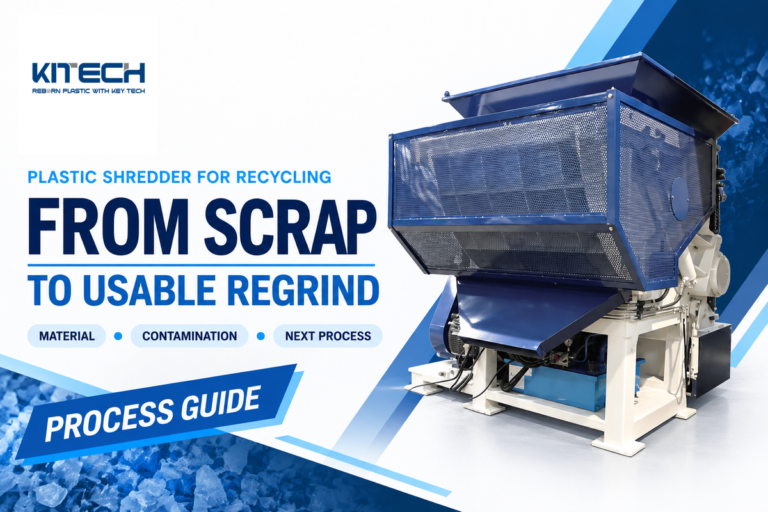
After sorting, plastic is compressed into rectangular bales weighing 1,000–1,500 lb, wrapped with steel wire, and stacked for sale. APR’s model bale specifications standardize density, contamination tolerance, and bale dimension so that MRF sellers and reclaimer buyers transact on consistent grades. Where an upstream plastic shredder on a feedstock yard reduces oversized scrap before MRF entry, in-MRF baling preserves bottle integrity until the reclaimer is ready to grind.
The PET Bottle Washing Line: From Bale to Clean Flake
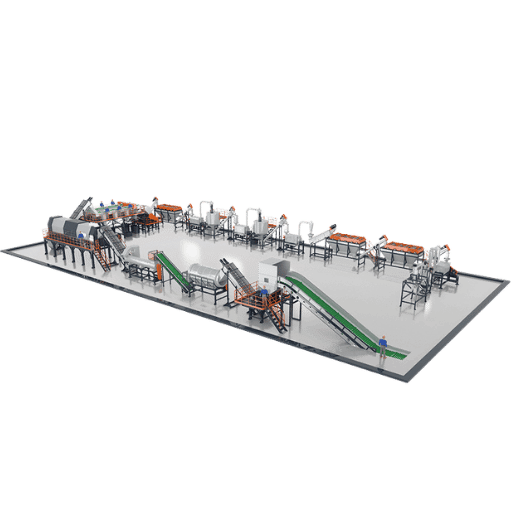
Bales arrive at the reclaimer as filthy, mixed-color, label-loaded blocks. A washing line’s job is to turn them into flake clean enough that an extruder downstream can pelletize without contamination ruining the melt. A modern PET bottle washing line runs the bale through five distinct stages.
- Debaler. Wire is cut and bales are loosened onto a feed conveyor.
- Label remover and prewash: a friction washer mechanically scrapes labels off bottle bodies; cold water carries away dirt and loose paper.
- Wet grinder (granulator): bottles are reduced to flake roughly 8–12 mm—small enough to wash thoroughly, large enough to feed an extruder.
- Hot caustic wash: flake circulates in a heated tank typically held at 80–85 °C with 1.5–2.0% NaOH and a surfactant. The caustic dissolves PVA-based label adhesives, sterilizes residual organics, and saponifies oils. Different reclaimers run different recipes—a hot wash vs. cold wash decision depends on the input quality and target output grade.
- Sink-float separation: clean-fraction flake enters a tank of water. Density does the work: PET (≈1.38 g/cm³) sinks; HDPE and PP caps (≈0.94 g/cm³) float. Both fractions are collected separately. Float fraction is rinsed and dried in a plastic squeezing dryer; sink fraction continues through final rinse and elutriation, where an upward airstream lifts off any remaining lightweight film.
📐 Engineering Note
Throughput targets for PET washing lines run from 1,000 kg/h on entry-level configurations to 6,000 kg/h on high-capacity bottle-to-bottle systems. The constraint is rarely the wash chemistry; it is the friction-wash residence time required to drop label residue below 50 ppm. Operators size their PET washing line capacity calculator targets to the dirtiest bale they will accept, not the average.
From Flakes to Pellets: Extrusion, SSP, and Food-Grade rPET
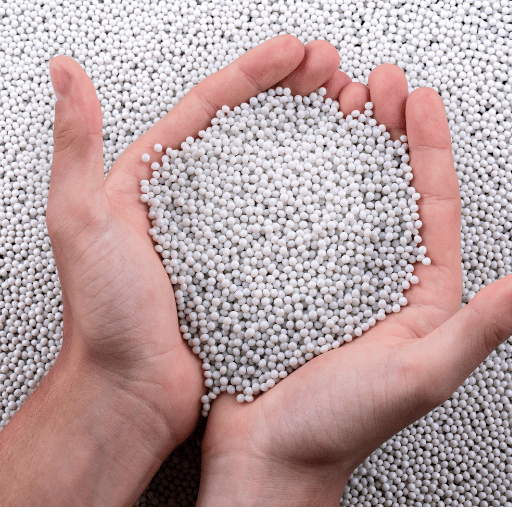
Clean flake is the input, but most buyers want pellet. Pelletizing transforms loose, irregular flake into uniform 3 mm cylindrical pellets that meter consistently into downstream injection-molding and bottle-blowing equipment. Extrusion also gives reclaimers their last chance to filter contaminants out of the melt.
A PET pelletizing machine melts flake at roughly 270–290 °C, pushes the melt through a fine screen pack to remove sub-millimeter solids, then cuts strands into pellets at the die face. Cooling and centrifugal drying complete the cycle.
Food-contact rPET requires a final, regulated step: solid-state polycondensation (SSP). SSP holds dried pellets at 200–220 °C for 8–12 hours under vacuum or inert gas. Two things happen: residual contaminants (volatiles, migration species) are driven off, and the polymer’s intrinsic viscosity (IV) is rebuilt from the wash-degraded value of around 0.70 dL/g back up to bottle-grade ~0.80 dL/g.
To sell rPET into food-contact applications in the United States, the resin process must hold an FDA Letter of No Objection (LNO) covering the specific decontamination technology used (21 CFR 174–179 framework). In the European Union, the equivalent is authorization under Regulation EU 10/2011 on plastic materials intended to come into contact with food. Both regimes require process validation against challenge-test contaminants—they are not paperwork formalities, they are why a clean rPET pellet can lawfully hold a soda again. The PET flake quality benchmarks upstream of SSP determine whether the LNO holds—bad flake fails challenge testing.
What Recycled Bottles Actually Become: rPET and rHDPE Applications
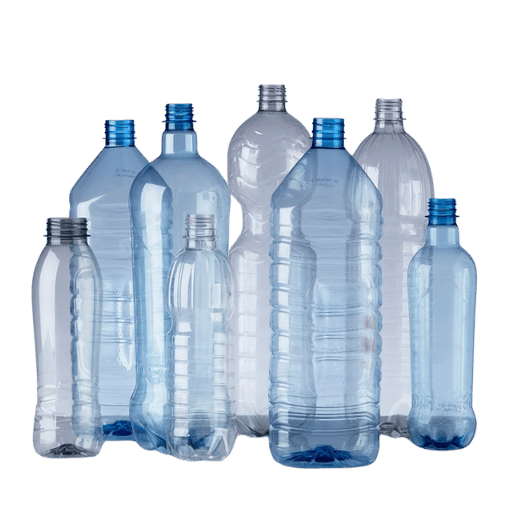
Two recycled streams emerge from a typical bottle washing line. PET has multiple end markets; HDPE (mostly caps in a PET line, plus stand-alone HDPE bottle programs) has a narrower set. ISO 14021 governs how brand owners may legally claim “recycled content” on packaging—the percentage must be substantiated and traceable.
rPET applications (clear flake / pellet):
- Polyester fiber — historically the largest share, going into carpet, fleece jackets, automotive interior textiles, and pillow stuffing.
- Bottle-to-bottle — a growing share, driven by EU recycled-content mandates and brand commitments. This is closed-loop recycling.
- Sheet and thermoforming — clamshell food packaging, blister packs, deli containers.
- Strapping — heavy-duty industrial strapping that competes with steel banding for palletizing.
rHDPE applications (color-mixed flake from a HDPE milk-bottle washing system):
- Detergent bottles — non-food-contact, accepts a wide color range.
- Drainage pipe and conduit — buried infrastructure, where colorant variability is invisible.
- Plastic lumber and decking — composite boards mixing rHDPE with wood flour for outdoor benches and dock material.
One uncomfortable reality: as Oceana documented citing Roland Geyer and Trevor Zink’s 2018 paper, US milk jugs are rarely closed-loop recycled. HDPE coming off a US household stream more often becomes drainage pipe than another milk jug—a downcycling pattern, not a closed loop.
Economics: Bottle Bills, CRV, and rPET Pricing
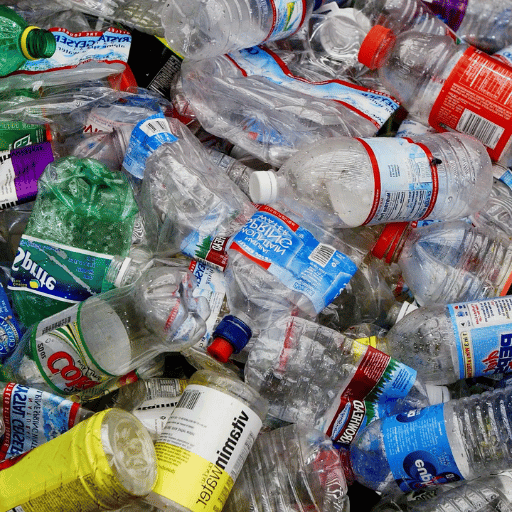
Two parallel economic systems determine whether a bottle gets recycled in the US. Container deposit (“bottle bill”) states use refund redemption to drive collection. Non-deposit states rely on willingness of MRFs and reclaimers to buy the bale on open markets.
| State | Standard deposit | Notes |
|---|---|---|
| California | 5¢ / 10¢ (≥24 fl oz) | CRV program; covers most beverage containers |
| Connecticut | 5¢ (10¢ for some, post-2023) | Expanded scope under recent reform |
| Hawaii | 5¢ | HI-5 program |
| Iowa | 5¢ | Returns at retailers and redemption centers |
| Maine | 5¢ / 15¢ (wine, spirits) | Highest scope of US bills |
| Massachusetts | 5¢ | Carbonated and beer only |
| Michigan | 10¢ | Highest standard rate |
| New York | 5¢ | Bigger Better Bottle Bill (2009 expansion) |
| Oregon | 10¢ | BottleDrop redemption network |
| Vermont | 5¢ / 15¢ (liquor) | Reform expansions in progress |
Guam also operates a 5¢ deposit program. On the wholesale side, ChemAnalyst’s North America R-PET Price Index fell 8.15% quarter-over-quarter in Q1 2026 on weak demand and abundant supply, with clear bale flake trading roughly $0.27–$0.33/lb in spot markets. Pricing as of Q1 2026—may not reflect current market.
Reality Check: Why Only ~30% of US Bottles Get Recycled
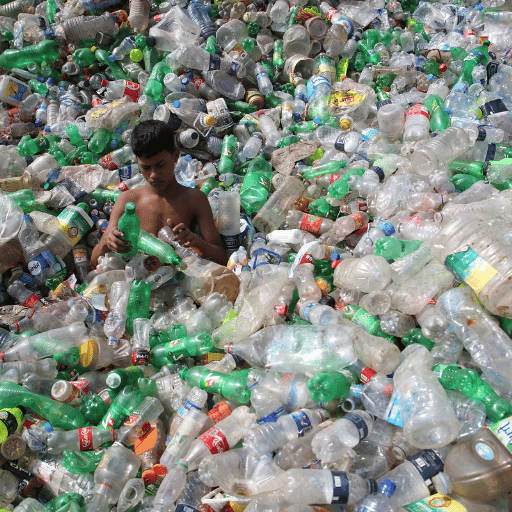
That headline number—30.2% PET bottle recycle rate per NAPCOR 2024—sounds modest. Reality is rougher. Roland Geyer’s 2017 Science Advances analysis found that only 9% of all plastic ever produced—across every manufacturing area, every product category, every region of plastic production—has been recycled. Ellen MacArthur Foundation’s 2017 plastics economy report quantified the gap further: of 14% of global plastic packaging collected for recycling, only 2% was effectively recycled into a product of equal or higher value; 8% was downcycled and 4% was lost in the process.
Tracing where the lost material goes is the point of “70% Loss Math”:
The 5-Stream Recycling Path: Cumulative Loss at Each Gate
- Stage 1 — Collection (≈70% loss). Most US bottles never enter the recycling stream at all. They leave with general trash, get littered, or end up in dumpster waste.
- Stage 2 — MRF reject (5–15%). Contamination, wishcycling, mixed bales, and film tangling drive material out the back end of the MRF and to landfill.
- Stage 3 — Wash and float-sink (5–10%). Glue residue, mis-sorted resin, and sub-spec flake drop out during reclaim.
- Stage 4 — Pellet contamination reject (3–5%). Melt filtration removes solids; out-of-spec batches are downgraded or sold off as fiber-grade.
- Stage 5 — Effective closed-loop yield: ~25–30%. The fraction that comes back as recyclable rPET pellet ready for another bottle.
⚠️ Important: downcycling vs. recycling
Recycling closes the loop—a bottle becomes a new bottle. Downcycling is a one-way arrow—a bottle becomes carpet fiber, that fiber later becomes nothing. Both reduce landfill volume in the short term, but only closed-loop recycling delays disposal indefinitely. When industry headlines report “billions of bottles recycled,” most of those bottles are downcycled, not closed-loop.
2026 Outlook: rPET Demand, EU Mandates, and US Softness
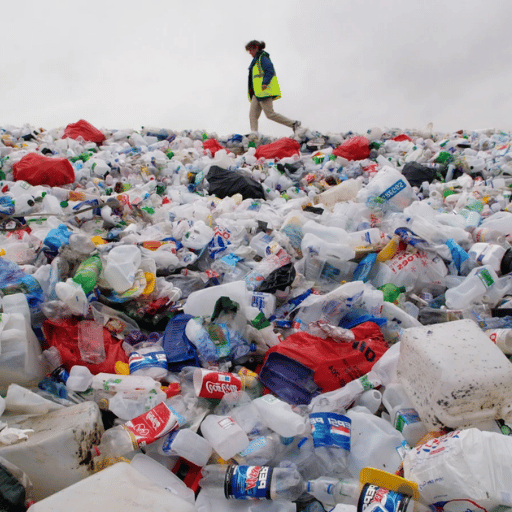
Three forces are reshaping plastic bottle recycling between now and 2030, and they pull in different directions.
- European pull from regulation: the EU Single-Use Plastics Directive requires 25% recycled content in PET beverage bottles by 2025, rising to 30% by 2030, with 90% separate-collection of PET bottles by 2029. That mandate is a hard demand floor for high-quality, food-grade rPET—and it competes globally for the same clean bale supply that US reclaimers want.
- US reclaimer headwind: NAPCOR’s 2024 report shows the US PET bottle recycling rate dropped from 32.5% (2023) to 30.2% (2024). Imports of recycled PET into the US hit a record share, with NAPCOR’s Laura Stewart quoted as estimating imports at roughly half of supply. Domestic reclaimer economics are squeezed by cheap imports during a period of weak end-use demand.
- Long-term market growth: Custom Market Insights’ 2025 forecast (reported by Yahoo Finance) projects the global rPET market growing from roughly US$14.3 billion in 2026 to US$25.9 billion by 2033—a meaningful tailwind for capacity investment, even if 2024-2026 looks bumpy in the US specifically.
For brand owners, the practical 2026 takeaway is to lock supply chain visibility on food-grade rPET now, ahead of EU compliance dates. For municipal recycling programs, durable importance lies in bale quality—high-priced product is the clean bottle bale, not the mixed bale.
Frequently Asked Questions
Q: Should I squish my plastic bottles for recycling?
View Answer
When using single-stream collection, squishing is fine and saves space. In dual-stream programs that use volumetric sensors to separate fibers from containers, squashed bottles can confuse the screen and end up in the wrong stream. If you do squeeze a bottle, leave the cap on after squeezing—that traps the compressed shape and prevents the cap from popping off in the bale press.
Q: Caps on or off when recycling plastic bottles?
View Answer
Caps on. APR updated its public guidance several years ago to “caps on” because modern reclaimer washing lines separate the polypropylene cap from the PET body during the sink-float wash step. Loose caps fall through MRF screens and get lost. Empty a bottle, screw its cap back on, and toss it in the bin.
Q: Is recycled PET safe for food and beverage contact?
View Answer
Yes, when produced under a validated decontamination process. In the US, food-contact rPET resin must hold an FDA Letter of No Objection (LNO) issued for the specific recycling technology—typically a vacuum-and-heat solid-state polycondensation step that drives off residual contaminants. In the EU, the equivalent authorization comes through Regulation EU 10/2011 on plastic food-contact materials. Bottles labeled as containing recycled PET come through these processes; rPET that fails challenge testing is downgraded to non-food applications such as fiber or strapping.
Q: Do you get paid for recycling plastic bottles?
View Answer
Only in deposit (“bottle bill”) states. Ten US states plus Guam refund the deposit you paid at purchase—typically 5¢ or 10¢ per container—when you bring the empty bottle to a redemption center, recycling center, retailer, or BottleDrop-style depot in your area. Outside those states, your curbside bottle is sold by the MRF as part of a bale, but consumers do not see that revenue.
Q: How many bottles does it take to make $100 in deposit states?
View Answer
At Michigan’s 10¢ rate, it takes 1,000 bottles to total $100. At California’s standard 5¢ rate, 2,000 bottles. At California’s 10¢ rate for ≥24 fl oz containers, 1,000. Non-deposit states pay nothing to the consumer for curbside bottles.
Q: Why does the EPA say only 9% of plastic gets recycled if PET bottle rates are higher?
View Answer
Two different denominators. The widely-quoted “9%” figure (from Roland Geyer’s 2017 Science Advances paper) covers all plastic ever produced globally, including industrial plastics, films, foams, mixed-polymer products, and regions with no recycling infrastructure. The 30% PET bottle figure (NAPCOR 2024) is much narrower: a single resin, a single product format, in the United States. PET bottles are among the easiest plastic items to recycle, so their rate is materially higher than the average for all plastic.
Q: Are plastic bottles recyclable or not?
View Answer
PET (#1) and HDPE (#2) bottles are recyclable in most US municipal programs and most developed-country systems. Whether they actually get recycled depends on whether your local program accepts them, whether they reach a MRF in clean enough condition, and whether a reclaimer wants to buy that grade of bale at the time. The recyclable-but-not-recycled gap is where the 70% loss math lives.
Q: Do I need to remove the labels?
View Answer
No. Reclaimer washing lines are designed to remove labels at the friction-wash and prewash stages. Tearing labels off at home does not improve the outcome and is not asked of consumers in standard APR guidance.
Related Articles
- Complete plastic recycling solutions — system-level overview of feedstock-specific recycling lines.
- Plastic pelletizer line — how flake becomes pellet across PET, HDPE, and PP streams.
- Plastic washing systems overview — washing line configurations for PET bottles, HDPE drums, films, and woven bags.
- Plastic recycling line selector — match feedstock and target output to a system configuration.
References & Sources
- NAPCOR 2024 PET Recycling Report — National Association for PET Container Resources
- The Plastic Recycling Process — Association of Plastic Recyclers (APR)
- Caps On, Please — APR FAQ — Association of Plastic Recyclers
- ASTM D7611-21 Standard Practice for Resin Identification Coding System — ASTM International
- Recycled Plastics in Food Packaging — Letter of No Objection — US Food and Drug Administration
- Regulation EU 10/2011 on plastic food-contact materials — European Commission
- EU Single-Use Plastics Directive — European Commission
- State Beverage Container Deposit Laws — National Conference of State Legislatures
- That Plastic Bottle You Thought You Recycled May Have Been Downcycled Instead — Oceana, citing Geyer 2017 and Ellen MacArthur Foundation
- R-PET Price Index Q1 2026 — ChemAnalyst
About This Analysis
This report on recycling plastic bottles synthesizes 2024-2026 data from NAPCOR, the Association of Plastic Recyclers, the EU Single-Use Plastics Directive, and ChemAnalyst’s R-PET pricing index. The technical detail on PET washing lines and pellet extrusion reflects the equipment configurations Kitech engineers for bottle-recycling reclaimers worldwide. Figures cited as 2024 NAPCOR data may be revised as the 2025 report is published.