
Get in touch with Kitech Company

Preventive Maintenance Contracts for Plastic Recycling Lines: A Buyer’s Guide

Preventive maintenance contracts for plastic recycling lines are agreements that tie named equipment to defined tasks, service windows, evidence, pricing boundaries, and escalation. The document is more than just ensuring a technician visits the plant a few times a year.
This guide helps operations, maintenance, and procurement teams build and compare contract scopes for an installed line. If you haven’t finalized the equipment for the process, start with Kitech’s plastic washing system guide; the focus of this guide is how to govern maintenance for equipment that’s already in scope.
What a Preventive Maintenance Contract Must Accomplish
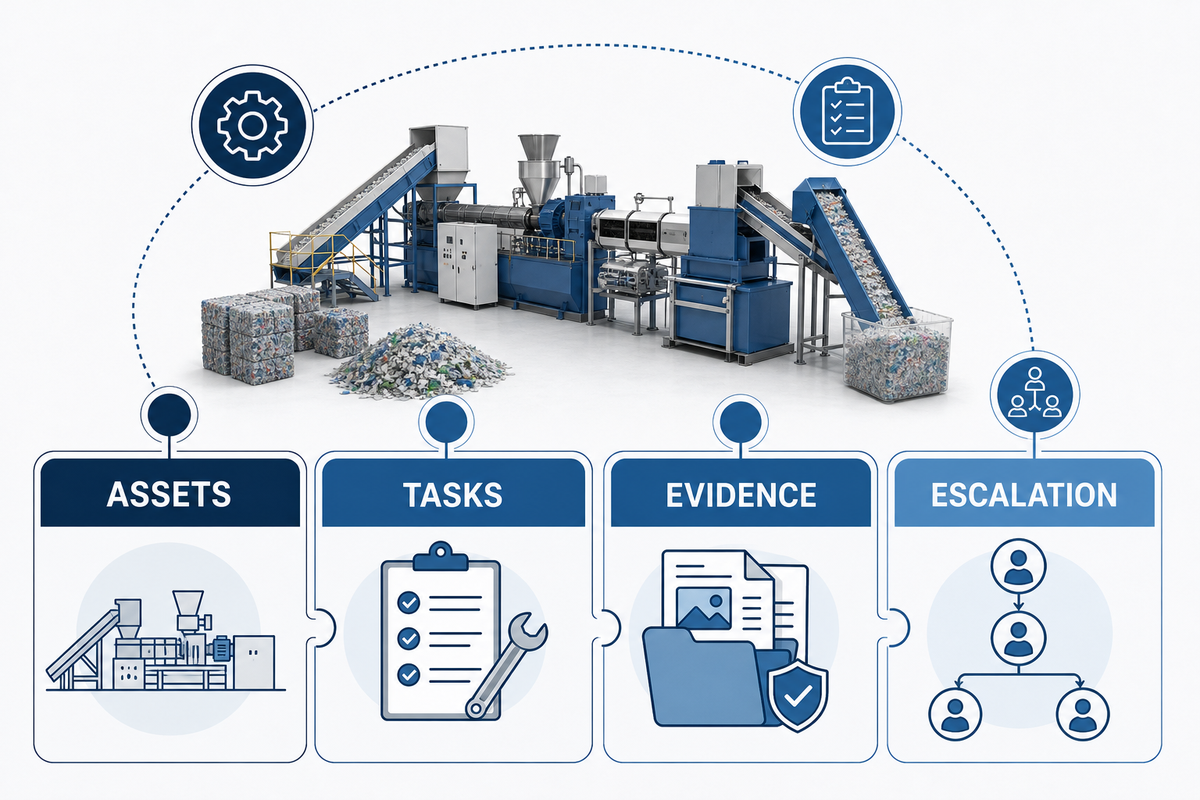
The contract should transform the intent “keep the line reliable” into a scope of work that both parties can schedule, price, do and verify. It needs to specify which machines are covered, what will be done, when it will happen, what proof will be returned, and what follows when an inspection reveals a defect.
The UK Health and Safety Executive’s maintenance guidance likewise treats maintenance as planned work tied to equipment condition, instructions, competence, and safe execution.
Keep preventive work and corrective repair work separate. An inspection can identify a worn bearing, damaged screen, leaking seal, unsafe guard, or unstable sensor, but the labor and parts needed to correct the finding are included only if the agreement says so.
| Contract layer | Question it must answer | Minimum evidence |
|---|---|---|
| Assets | Exactly what is inside the service boundary? | Make, model, serial number, location, and line section |
| Tasks | What will the provider inspect, measure, adjust, clean, or replace? | Task matrix with acceptance or escalation criteria |
| Timing | What triggers planned and unplanned support? | Calendar, operating-hour, condition, and service-level clocks |
| Evidence | How will the plant know the work was completed? | Measurements, findings, photographs, parts, actions, and sign-off |
| Escalation | What happens when risk exceeds the planned scope? | Named contacts, authority limits, quotation route, and stop-work rules |
Scope, responsibility, evidence and terms are core elements in maintenance guidance, but a general example is only a starting point. How much detail is useful is dependent on the type and configuration of the recycling line.
Build the Covered-Equipment and Task Matrix
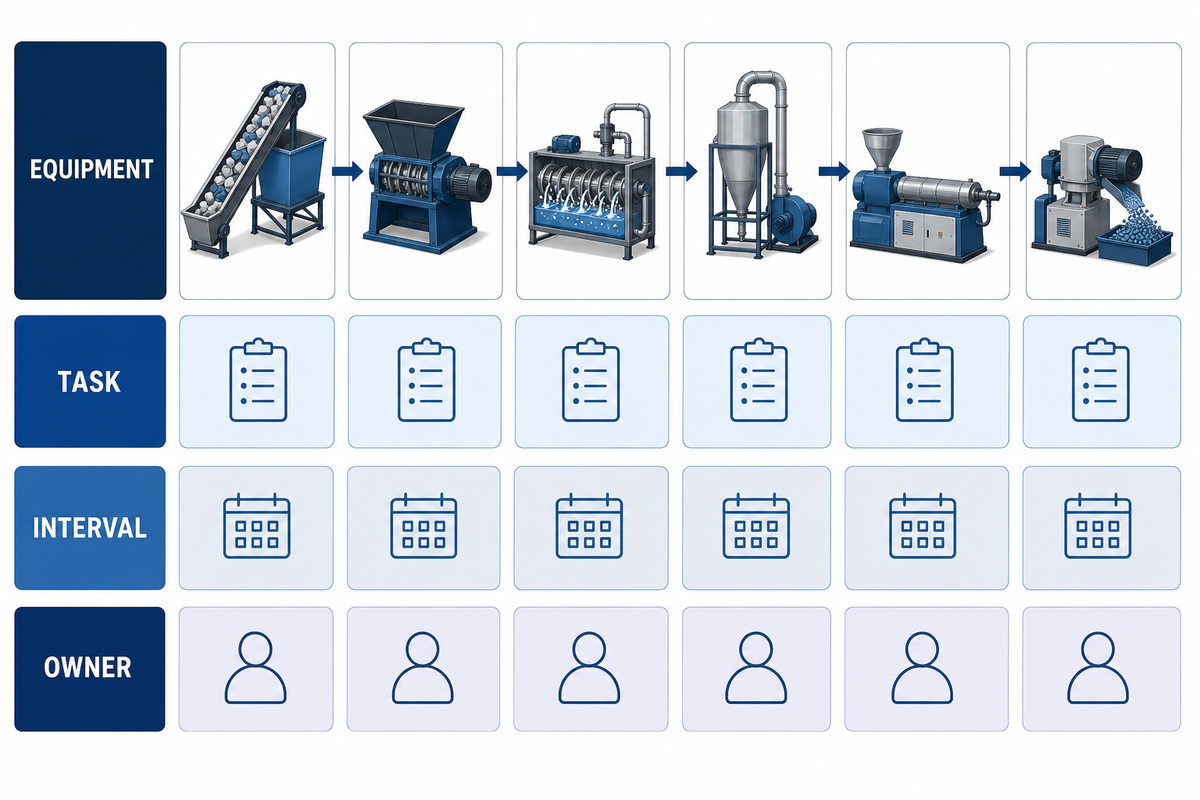
Start at the material infeed and finish at the final discharge, identifying all major equipment along the process. Do not copy a supplier’s generic machine list: record only installed equipment, including auxiliary systems that can stop production or change product quality.
The HSE maintenance framework supports building the plan from the actual equipment, its deterioration risks, and the work needed to keep it safe.
A wet washing line may consist of feeding conveyors, a shredder or granulator, pre-wash equipment, friction washers, separation tanks, screws, pumps, water treatment equipment, de-watering and drying equipment, storage, electrical cabinets, drives, sensors, and safety circuits. A pelletizing section adds its own extrusion, filtration, cooling, cutting, and conveying assets.
| Asset category | Define the planned task | Record the result | Clarify the boundary |
|---|---|---|---|
| Feed and conveying | Inspect belts, screws, rollers, chains, tracking, tension, drives, and sensors | Condition, alignment, adjustment, and follow-up | Splices, structural repair, housekeeping, and mobile loading equipment |
| Shredder or granulator | Inspect knives, clearances, screens, fasteners, bearings, drives, and lubrication points | Condition, measurement, adjustment, and action required | Sharpening, replacement knives, lifting, and major teardown |
| Wash and separation equipment | Inspect paddles, screws, tanks, nozzles, seals, pumps, leaks, and buildup | Wear, leakage, flow or pressure observations, and cleaning status | Water chemistry, sludge handling, chemicals, and wastewater plant |
| Dewatering and drying | Check screens, rotors, bearings, vibration, fans, heat, and airflow | Readings, abnormal condition, and recommended response | Balancing, rewinding, major rotor repair, and utility supply |
| Extrusion and filtration | Inspect heating, cooling, screw and barrel indicators, filtration, hydraulics, and drives | Settings, observations, pressure trends, and exceptions | Major overhaul, process recipe, and product release |
| Pelletizing and discharge | Inspect cutters, dies, water systems, conveying, screening, and storage interfaces | Wear, adjustment, and output observations | Pellet specification, packaging equipment, and downstream handling |
| Electrical and controls | Inspect listed cabinets, drives, sensors, interlocks, alarms, and connections | Test method, exceptions, settings changed, and backup status | Software licenses, obsolete hardware, plant network, and specialist testing |
| Safety systems | Inspect listed guards, switches, stops, interlocks, and warning devices within competence | Test record, exceptions, and release status | Plant procedure ownership, statutory inspection, and risk assessment |
| Utilities and environmental interfaces | Check agreed air, water, extraction, drainage, and treatment interfaces | Availability, leakage, blockage, and out-of-range condition | Central utilities, environmental permits, and waste management systems |
For each item, determine if the appropriate action is inspect, measure, clean, lubricate, adjust, test, calibrate, or replace. “Service as required” provides no assurance for comparison because one bidder may price a visual check and another may price a full measurement, adjustment and a written report.
Don’t confuse contract coverage and technical suitability. Map each planned task to a credible failure mode or compliance need, then decide whether the trigger should be calendar-based, operating-hour, condition-based, predictive, or run-to-failure. A fully covered task that cannot control the relevant failure mode is still poor maintenance design.
Scope-review scenario: A film-washing plant requests “granulator service,” but doesn’t stipulate whether knife-gap measurements, rotation, sharpening, or replacement are required. Bidder A prices inspection and a report; Bidder B prices adjustment and planned blade handling. The second price looks higher until the buyer normalizes the task, lifting support, replacement parts, and production window. The lesson is not that either bidder is wrong—it is that the original scope was not comparable. The scope wasn’t clear enough to compare the prices.
Scope test: If a buyer cannot determine from the matrix whether knife clearance measurement, pump-seal replacement, or sensor calibration is included, the proposal is not ready for price comparison.
Choose the Right Service Model
Maintain a separation between the delivery model and the maintenance strategy. OEM, third-party, in-house, and hybrid describe who performs or coordinates the work; calendar-based, operating-hour, condition-based, predictive, and corrective describe the action trigger. For each critical asset, map the expected failure mode to the selected task and trigger before deciding who should deliver it.
An original equipment manufacturer, independent service provider, and in-house team can all be appropriate. The decision depends on the installed base, proprietary access, local competence, response geography, parts strategy, and the facility’s ability to plan and document work. The United States Department of Energy maintenance framework distinguishes maintenance approaches rather than treating one trigger as automatic.
| Model | Potential fit | Questions to resolve |
|---|---|---|
| OEM-led | Proprietary controls, specialized equipment, warranty interfaces, or model-specific procedures | Which assets and regions are actually supported? Are travel, software, and parts included? |
| Third-party | Mixed-brand lines, local response needs, or a preference for one service coordinator | What evidence proves competence for each machine family and safety task? |
| In-house | Strong site team, high daily involvement, and established tools, spares, and work control | Which specialist tasks, diagnostics, or major interventions still require external support? |
| Hybrid | Plant team owns routine work while specialist providers cover defined assets or escalation levels | Who leads diagnosis, owns the record, and prevents gaps between suppliers? |
Maintenance, spare parts, warranty, training, and technical support are often separated on supplier web pages. Treat those as separate commercial decisions unless the proposal expressly combines them.
Do not award the contract from the provider label alone. Compare named technicians or competence requirements, control-system access, safety procedures, parts availability, report quality, subcontracting, and proof that the promised region can be served.
Write Measurable Service Levels
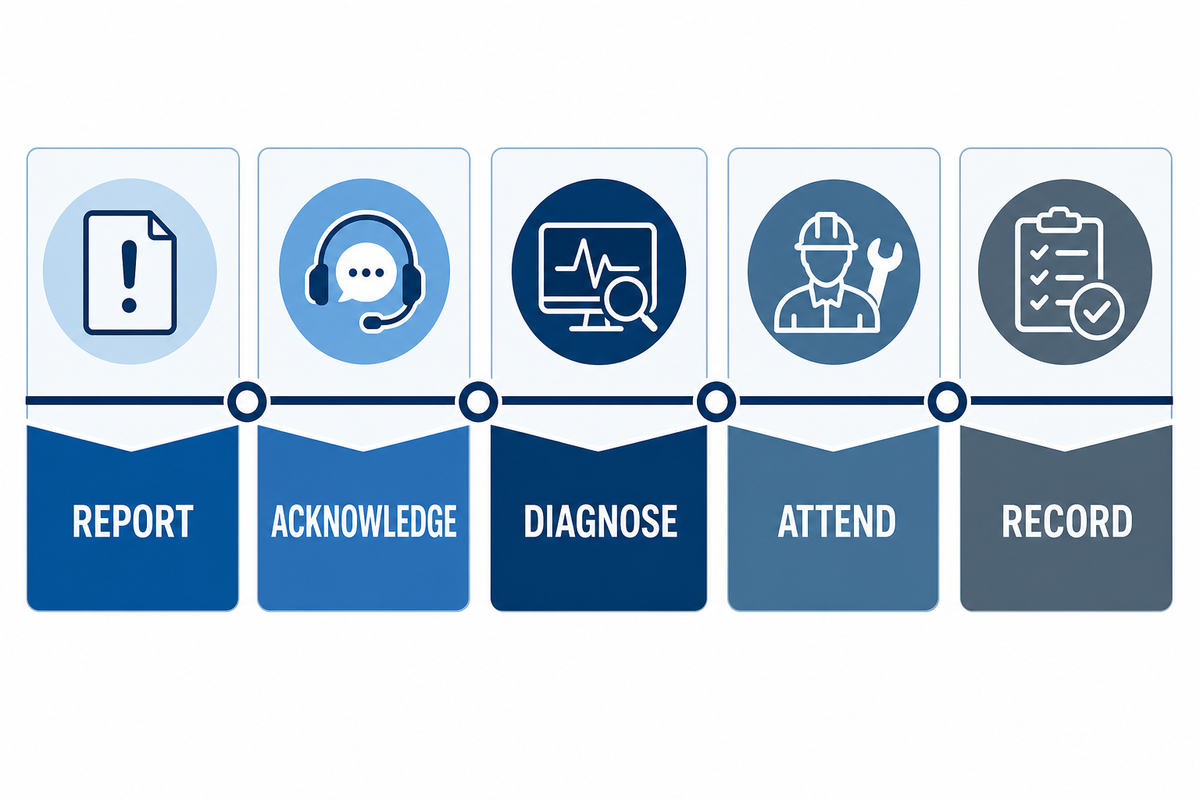
“Four-hour response” might refer to a different operational value each time it’s used, and may describe an email acknowledgement, the initiation of a remote diagnosis, dispatch of a technician, or reaching the plant. The contract must clarify which clock is running.
HSE’s maintenance guidance also points to planned frequency, competent execution, and records, which is why response and completion clocks need explicit definitions.
- Acknowledgement clock: Time from accepted request to confirmation and case number.
- Remote-support clock: time until a qualified person begins diagnosis with the required information.
- Mobilization clock: time until an onsite visit is approved, assigned, and dispatched.
- Site-arrival clock: time until the agreed resource reaches the plant, subject to declared coverage and access conditions.
Restoration is a separate measure from arrival, because arrival of the resource doesn’t ensure that the correct part, tool, or authority is also available. Define when each clock starts, when it pauses, business-hour or 24-hour coverage, severity categories, communication intervals, and what evidence closes the case.
ESCALATION SCENARIO: During a weekend shift, a dryer trips. The provider acknowledges the case within 30 minutes and begins remote diagnosis within two hours, but the qualified onsite resource can’t travel until Monday and the required sensor isn’t in local stock. A single “two-hour response” measure would show success while production remains stopped. Four clocks, a parts clock, and a declared coverage region expose the true service path prior to award.
If the contract uses up-time, provide the formula. Define the measured assets, planned downtime, upstream or downstream constraints, unavailable utilities, material problems, waiting for plant approval, and events outside the service provider’s control.
Define Spare-Parts and Consumables Responsibilities
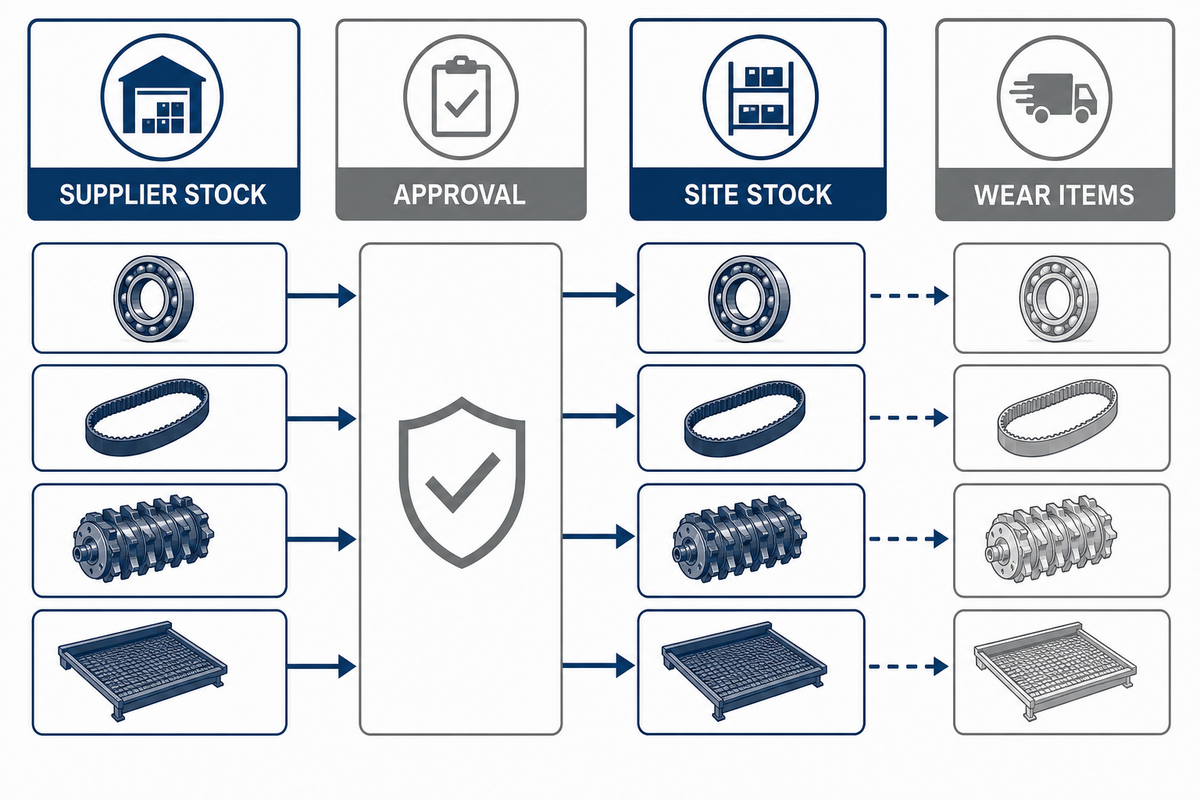
Separate routine service items, predictable wear items, strategic spares, and emergency purchases. A “parts included” line can mean caps, exclusions, non-stock items, freight, markups, or a requirement that the plant supply critical components.
The same HSE guidance makes clear that maintenance planning must account for the equipment and work involved; parts ownership and availability therefore belong in the written scope.
- Routine items: agreed lubricants, filters, seals, fasteners, cleaning materials, or test consumables used during a planned visit.
- Wear parts: knives, screens, paddles, belts, chains, liners, nozzles, or cutting components whose replacement depends on material and duty.
- Strategic spares: long-lead or single-point-failure items held to reduce exposure, whether owned by the plant or provider.
- Repair parts: components required after a diagnosed failure and normally quoted separately unless a coverage schedule says otherwise.
For every category, state the stock owner, location, minimum quantity, inspection method, reorder trigger, approved substitutes, obsolescence route, lead-time basis, and emergency freight treatment. Supplier pages can inform the questions, but only the signed price and responsibility schedules define the actual commercial promise.
Parts-risk scenario: A plant and its service provider both assume the other party holds a critical pump seal. The planned visit identifies leakage, but replacement waits for an imported component and emergency freight. A responsibility table would have shown the plant had strategic inventory, and the service provider had inspection and reorder notification. That’s a contract-design failure, not evidence that preventive maintenance itself was ineffective.
Allocate Safety and Site Responsibilities
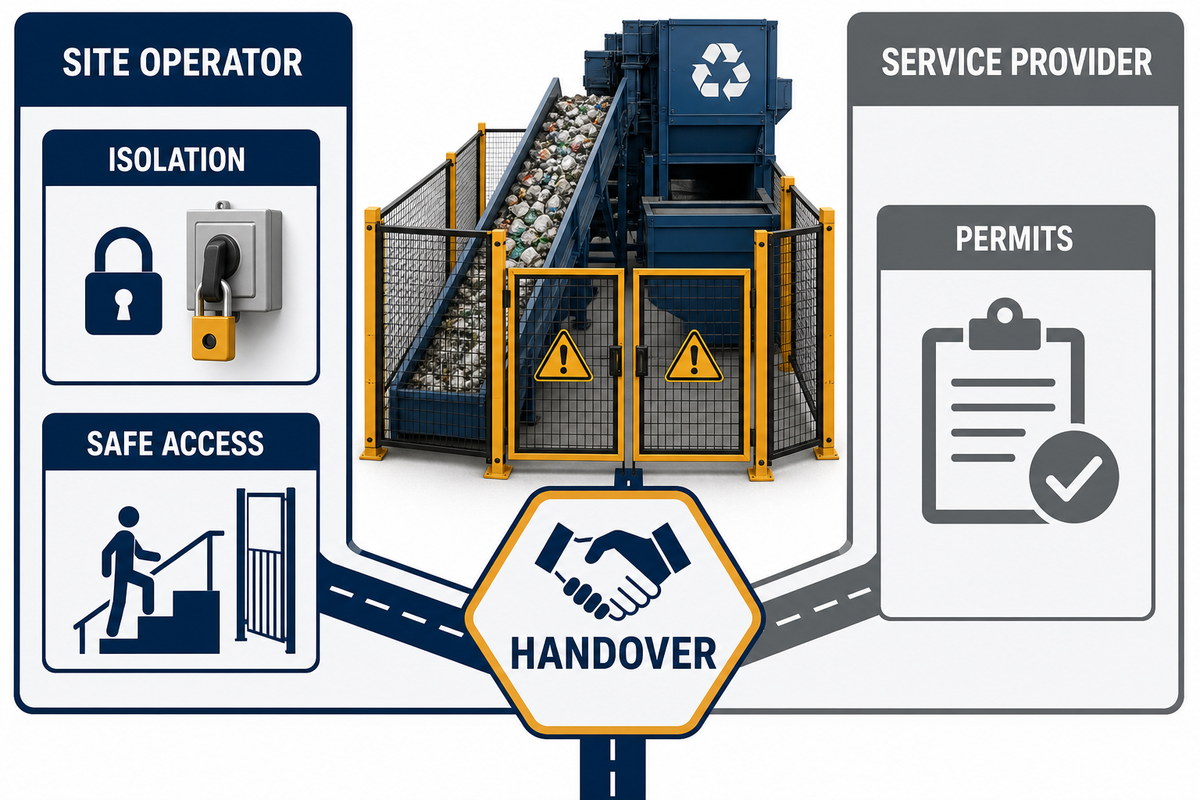
Contract designs don’t alleviate a plant’s responsibility for controlling site hazards. In the United States, OSHA’s hazardous-energy standard addresses servicing and maintenance where unexpected energization or stored energy could cause injury, including coordination involving outside personnel.
“The onsite employer and the outside employer shall inform each other.”
The contract should identify who will perform the work, isolate energy, verify isolation, control keys or locks, provide safe access, manage permits, restore guards, authorize testing and release the line for production. Local law, the plant’s program, equipment instructions, and qualified safety review will control the final procedure.
Where the cited United States rule is applicable, both host and outside employers must share their hazardous-energy procedures. A contract can’t remove the duty of either party to share their procedures. The rule’s periodic inspection requirement concerns the energy-control procedure and must not be misrepresented as a universal maintenance interval for the recycling line.
| Before work | During work | Return to service |
|---|---|---|
| Scope, hazards, isolation points, permits, access, cleaning, lifting, and production handover | Control of changes, additional defects, temporary removal, housekeeping, and stop-work authority | Tool and part check, guard restoration, settings, controlled test, exceptions, and authorized release |
Define the impact of a safety finding during scheduled work. The technician may need authority to stop a task, isolate an unsafe asset, or request a separate corrective quotation without being pressured to restart production.
Maintain routine maintenance, independent inspections, and statutory examinations as independent scopes. A normal service report does not automatically satisfy a jurisdiction-specific inspection duty; the UK Health and Safety Executive’s lifting-equipment guidance, for example, distinguishes maintenance from thorough examination and addresses examiner independence.
Require Useful Service Reports and Performance Indicators
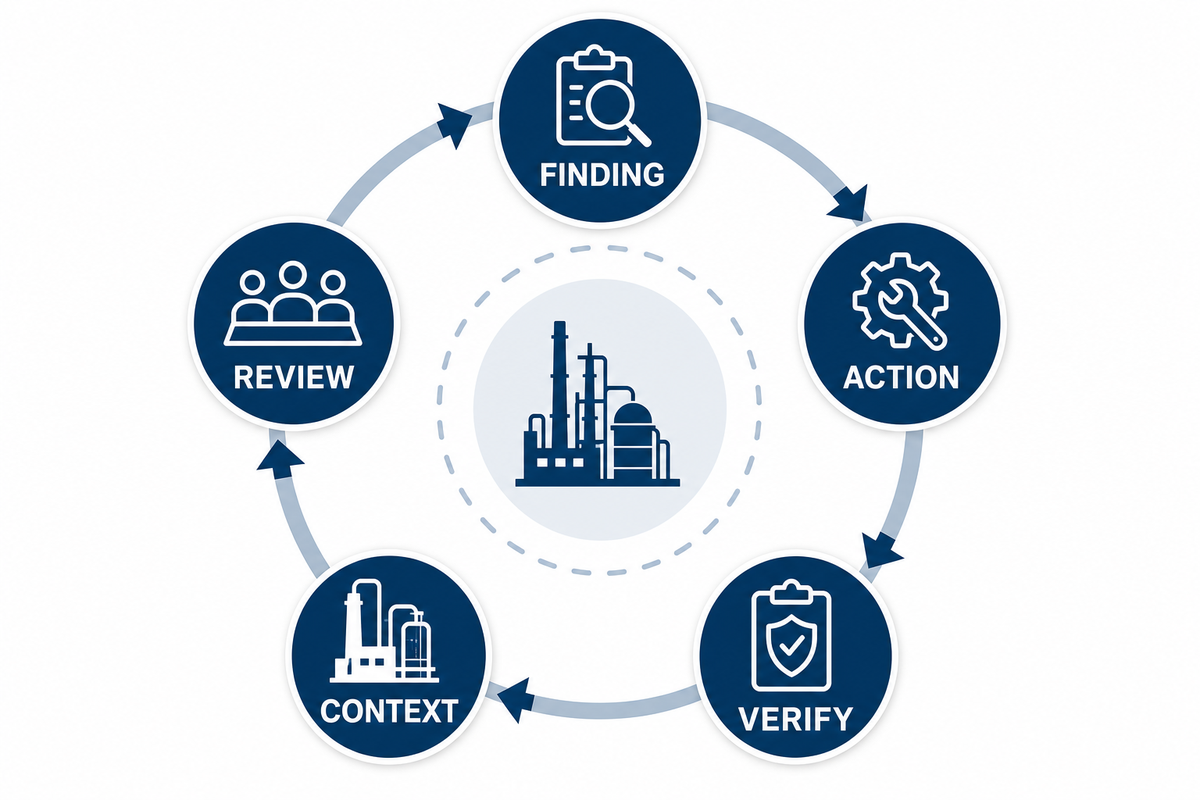
A signed visit sheet signifies the technician’s attendance and not the quality of maintenance. Show adjustments made, identify parts used, include photographs where applicable, disclose open actions, identify the responsible owner, and set a target date for completion. State any operational restrictions.
Use outcome and leading indicators jointly. Planned-task compliance and overdue actions show whether the system is being executed; repeat failures and attributed unplanned downtime show whether the selected work is addressing operational risk.
| Indicator | Definition to agree | Decision use |
|---|---|---|
| Schedule compliance | Tasks completed by due date ÷ tasks due, with approved deferrals shown separately | Execution discipline |
| Finding closure | Critical and high-priority actions closed by agreed dates | Whether reports lead to action |
| Repeat defect rate | Same defined defect recurring on the same asset within the review window | Task quality and root-cause escalation |
| Service-clock compliance | Cases meeting each of the four defined clocks | Delivery against the agreement |
| Attributed downtime | Unplanned hours assigned through an agreed event-classification process | Outcome context, not a stand-alone verdict |
Don’t include a speculative industry savings estimate in the business case. Build the plant baseline from its own event records, throughput loss, labor, scrap or rework, emergency freight, and maintenance history, then disclose what cannot be attributed to the contract.
Consider materials used, contamination, operating rates, wash conditions, utilities, upstream and downstream limitations, process changes and downtime events, as well as a shift in quality or throughput. Otherwise, a quality or throughput shift may be assigned to the service provider. Evidence should point to feedstock, process conditions or both.
Where new plastic applications use recycled output under a regulated or customer-approved end use, return-to-service criteria may extend beyond mechanical operation. The plant should define which process settings, cleanliness checks, product tests, approvals, and change-control records are required after work; the United States Food and Drug Administration’s recycled-plastics resource shows why process and intended-use conditions matter in food-contact contexts.
Prepare a Comparable Request for Quotation
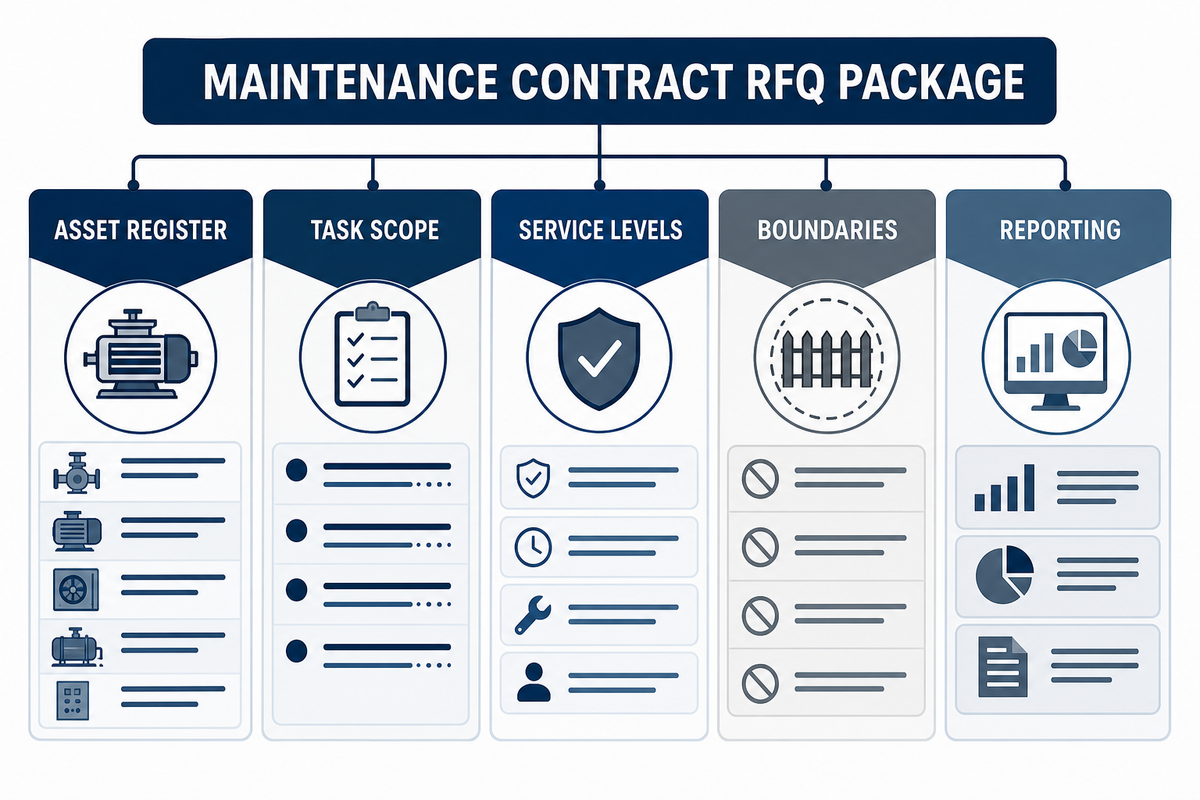
Send the same controlled information packet to each bidder. In a private bid or public tender, a low price may reflect fewer assets, fewer tasks, shorter reports, narrower service hours, more exclusions, or assumptions that another bidder priced explicitly.
Using the equipment-specific planning principles in HSE maintenance guidance helps buyers issue bidders the same asset, task, competence, and record requirements.
- Installed asset register and battery limits.
- Operating hours, shifts, feed material, contamination, wash chemistry and environment.
- Available manuals, drawings, parts lists, backups, and maintenance history.
- Required task matrix and proposed interval-review method.
- Planned service windows and production constraints.
- Four service clocks, severity definitions, and coverage geography.
- Report fields, data ownership, language, and delivery time.
- Parts, consumables, travel, overtime, freight, taxes, and subcontractor schedules.
- Safety, induction, access, lifting, utility, and permit responsibilities.
- Base Price, Options, Rates, Assumptions, Exclusions, Validity, and Escalation.
Ask bidders to return a completed compliance matrix rather than a narrative proposal alone. Every deviation should identify the affected asset, task, timing, record, provision, or commercial line so the award reflects value rather than an incomplete price.
For the first low-friction review, provide the installed line list, operating pattern, top recurring issues, existing spare parts list, and desired support region. This planning pack will help Kitech identify which industrial equipment information is needed to evaluate the maintenance scope as comparable or complete.
Govern, Review, and Renew the Contract
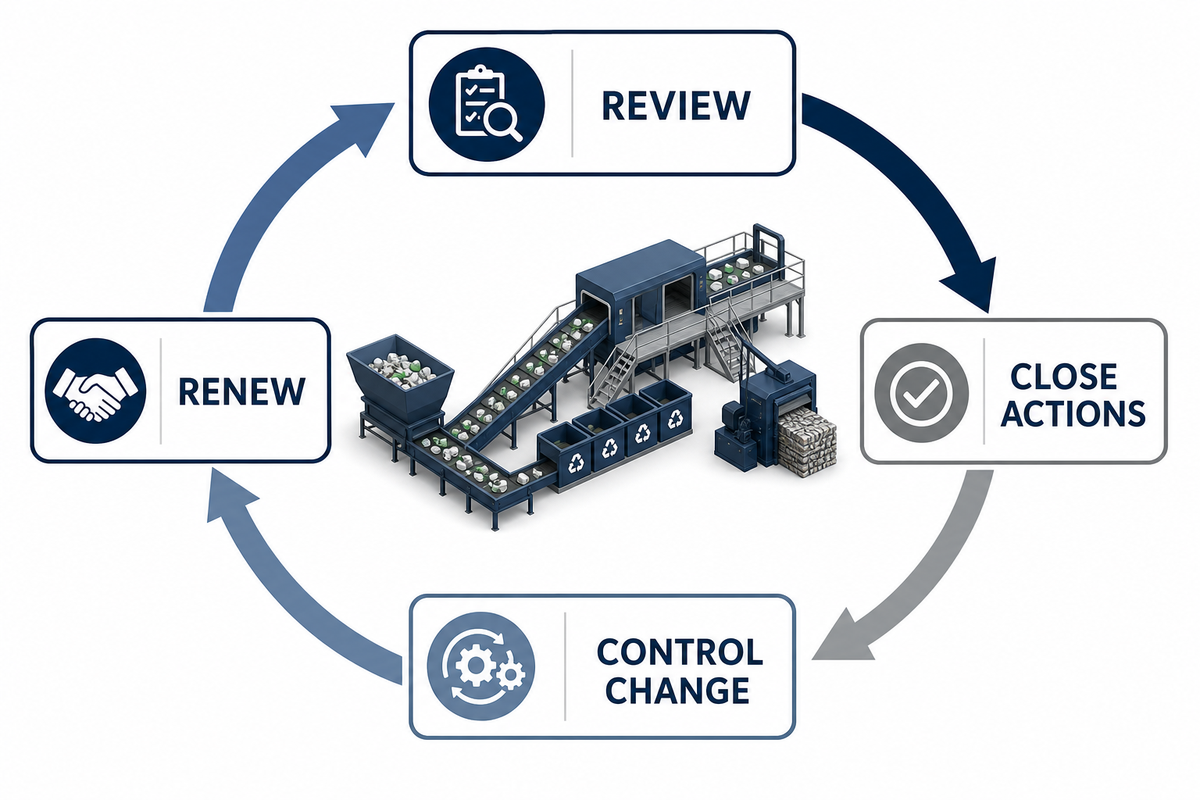
A contract for maintenance requires an operating rhythm after signing. Hold a short operational review for open findings and a quarterly review for scope, performance, recurring defects, parts risk, interval changes, training needs, and commercial exceptions. For commercial exceptions and other changes to the scope, hold as needed.
HSE’s maintenance guidance emphasizes planned arrangements and records, supporting a recurring review cycle rather than treating the signed contract as static.
Facts and attribution should be clearly distinguished in the quarterly report. A missed task is clear; a production stoppage may involve equipment condition, feedstock, utilities, operator action, upstream or downstream constraints, or delayed approval.
Define renewal dates, notice periods, price-review rules, transition support, data export, software or password handover, open-work transfer, and disposition of consigned parts.
Decision Framework: Select Coverage by Operational Risk
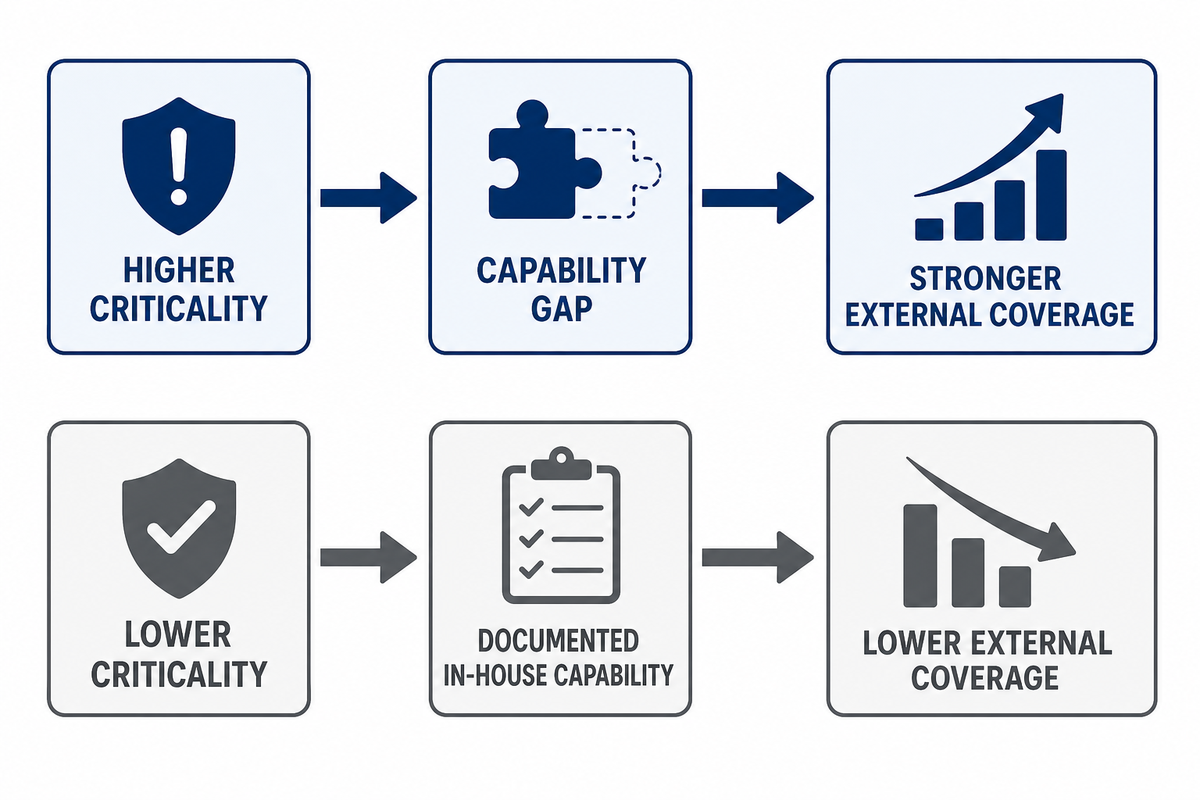
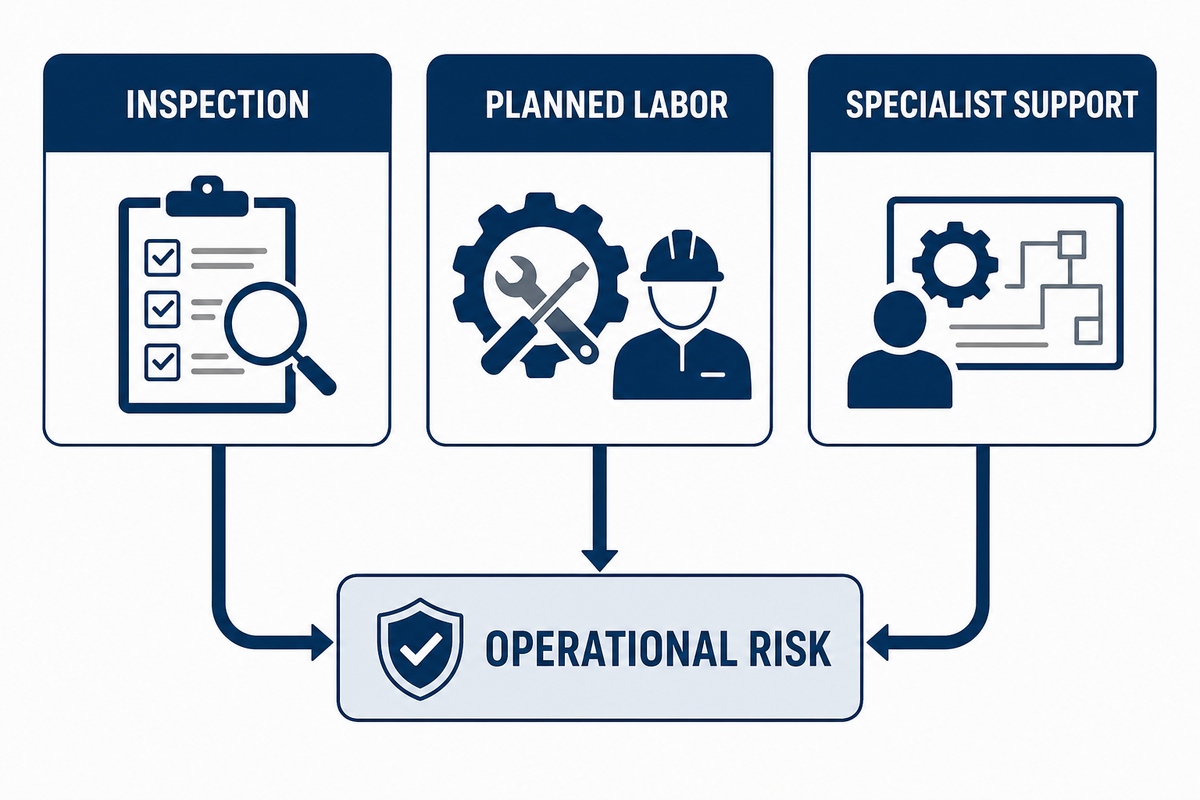
Use equipment criticality and capability gaps to determine what should go in the external contract. A hybrid scope is often clearer than paying one party to “maintain the line” without defining where plant competence ends and specialist support begins.
HSE maintenance guidance supports a risk-based choice of task frequency, competence, and control measures for each equipment group.
| Decision signal | Lower external coverage may fit | Stronger external coverage may fit |
|---|---|---|
| Production criticality | Redundant or low-consequence asset | Single-point failure or high restart cost |
| In-house capability | Documented skill, tools, time, and supervision | Specialist diagnostics, software, calibration, or major intervention required |
| Parts exposure | Interchangeable, local, short-lead components | Proprietary, obsolete, imported, or long-lead components |
| Condition evidence | Stable duty and well-understood failure modes | Variable contamination, loading, chemistry, or recurring unexplained failure |
| Response geography | Site can stabilize faults and wait for planned support | Downtime exposure requires defined remote and onsite escalation |
Each asset family may choose from availability options such as inspection only, planned labor, labor plus defined routine items, specialist escalation or broader options. Price should follow the defined scope and shouldn’t replace the scope.
Frequently Asked Questions
What is normally included in a preventive maintenance contract for a plastic recycling line?
A contract normally includes a defined equipment register, scheduled inspections, measurements, adjustments, lubrication or cleaning tasks, documented findings, and an escalation route. It should define the frequency or operating hour threshold for each task and specify who provides access, labor, consumables, and records. Corrective repairs, wear parts, travel, overtime, emergency attendance, and production losses are not automatically included; each item belongs in the scope and price schedules.
How often should a plastic recycling line receive preventive maintenance?
There’s no safe universal interval for every recycling line. Start with equipment manuals and applicable safety requirements, then adjust for operating hours, feed contamination, wash chemistry, loading, ambient conditions, and condition trends. Daily operator checks may coexist with monthly, quarterly, or operating-hour tasks. The contract should say who reviews intervals, what evidence can justify a change, and how overdue work is escalated.
Should spare parts be included in the maintenance contract?
Spare parts can be included, but the agreement should separate routine service items, predictable wear parts, emergency parts, and plant-owned strategic spares. For each category, name the stock owner, storage location, reorder trigger, approved substitutes, lead-time basis, markup, and freight treatment. This prevents a nominally covered visit from stopping because a critical knife, bearing, seal, screen, or sensor is unavailable.
What is the difference between a maintenance contract and a warranty?
A warranty addresses qualifying defects under stated conditions and for a defined period. A maintenance contract purchases planned inspections, service labor, reporting, support, or other expressly listed work. One can impact the other. The two can interact because neglected maintenance may affect warranty eligibility, but one does not replace the other. Neither automatically covers misuse, normal wear, consumables, every corrective repair, or production loss.
How can a plant compare OEM and third-party maintenance proposals?
Give every bidder the same asset register, duty profile, task matrix, service clocks, reporting fields, exclusions template, and pricing schedule. Normalize travel, overtime, parts markups, remote support, emergency work, and subcontractors. Then compare technical access, safety competence, installed-base experience, response coverage, report quality, and evidence of delivery. The provider label alone does not show which proposal closes the plant’s risks.
Turn the Guide Into a Contract-Ready Scope
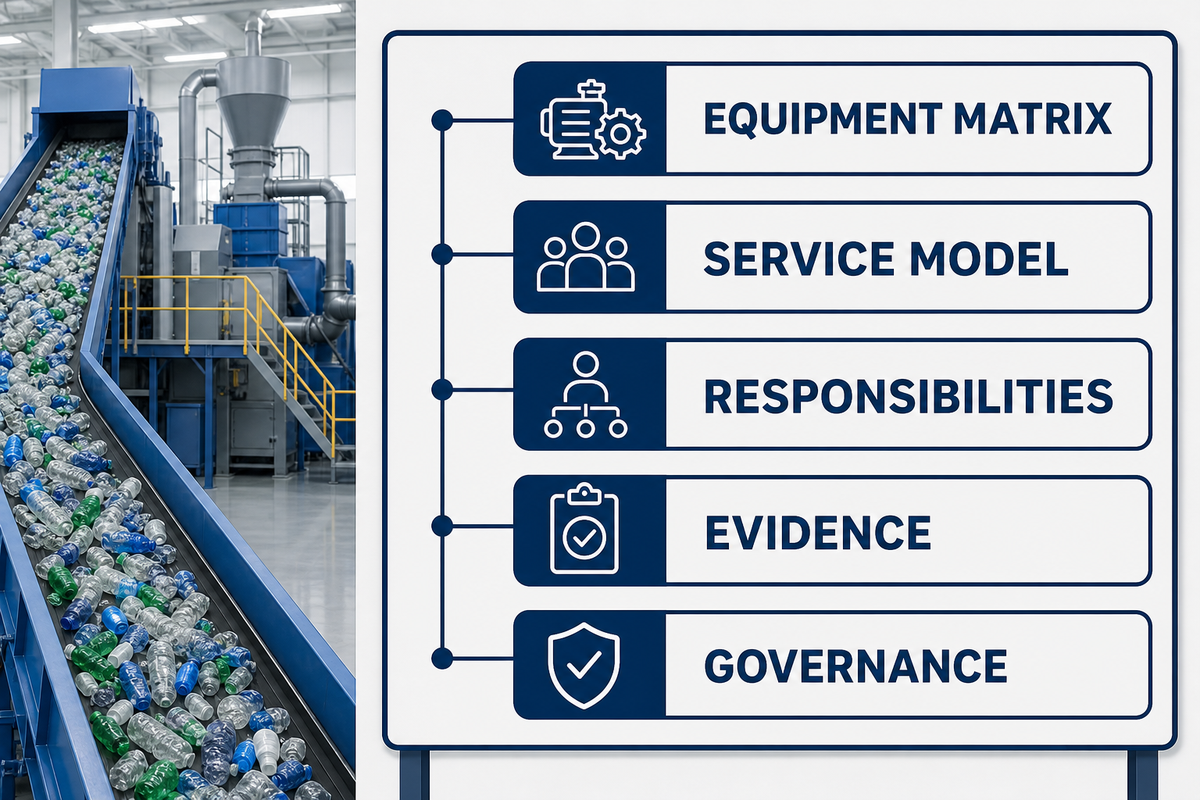
Start with the line already installed to create a useful agreement. Compile the asset register, recurring problems, operating duty, capacity, manuals, service history, strategic spares, project budget, and desired response region before requesting a quotation.
Before requesting a quotation, use HSE maintenance guidance as a check that the asset boundary, planned work, competence, and safe access requirements are documented.
Use the related Kitech resources to document the installed boundary: review the plastic shredder, plastic pelletizer, and the pelletizing-line rebuilding and upgrading guide where those assets or development decisions apply. Plant construction, modular additions, central utilities and environmental systems should appear only when they’re expressly inside the service boundary.
To discuss the equipment boundary and the information needed for a maintainable recycling line, contact Kitech. Any final scope, interval, safety procedure, price, or response commitment should be confirmed in the project-specific contract.
References and Sources
- OSHA 29 CFR 1910.147: The Control of Hazardous Energy
- UK HSE: Maintenance of Work Equipment
- Vecoplan: Parts and Service (supplier source)
- Rapid Granulator: Spare Parts and Service (supplier source)
- MaintainX: Maintenance Contracts (software-vendor educational source)
- Recycling Today: Maintenance for Recycling Companies
Related Posts



Trending now