Get in touch with Kitech Company


Thermoplastic and thermosetting plastic are distinguished by their behaviour following shaping. The majority of thermoplastics can, for instance, soften by means of heat and be reshaped multiple times. Standard thermoset plastics cure into a stable network, which cannot be remelted by usual means.
The difference there’s that clean polyethylene offcuts and a cured fiberglass panel have different recycling paths. Even PTFE, a thermoplastic, needs processes beyond ordinary melt extrusion.
Thermoplastic and thermosetting plastic behave differently under heat: thermoplastics tend to soften again; however, conventional cured thermosets have a crosslinked system. Select a process according to resin identity, condition and output needed.
Quick comparison
- Grinding a cured thermoset can produce usable filler without producing meltable resin.
- Thermoplastics include PE, PP, PVC and nylon; cured epoxy and phenolic resins are thermosets.
- Melting point, heat deflection temperature and service temperature answer different questions.
- A recycling route needs an accepted output: pellets, filler, recovered fibers or chemical feedstock.
Thermoplastic and thermosetting plastic: the key differences
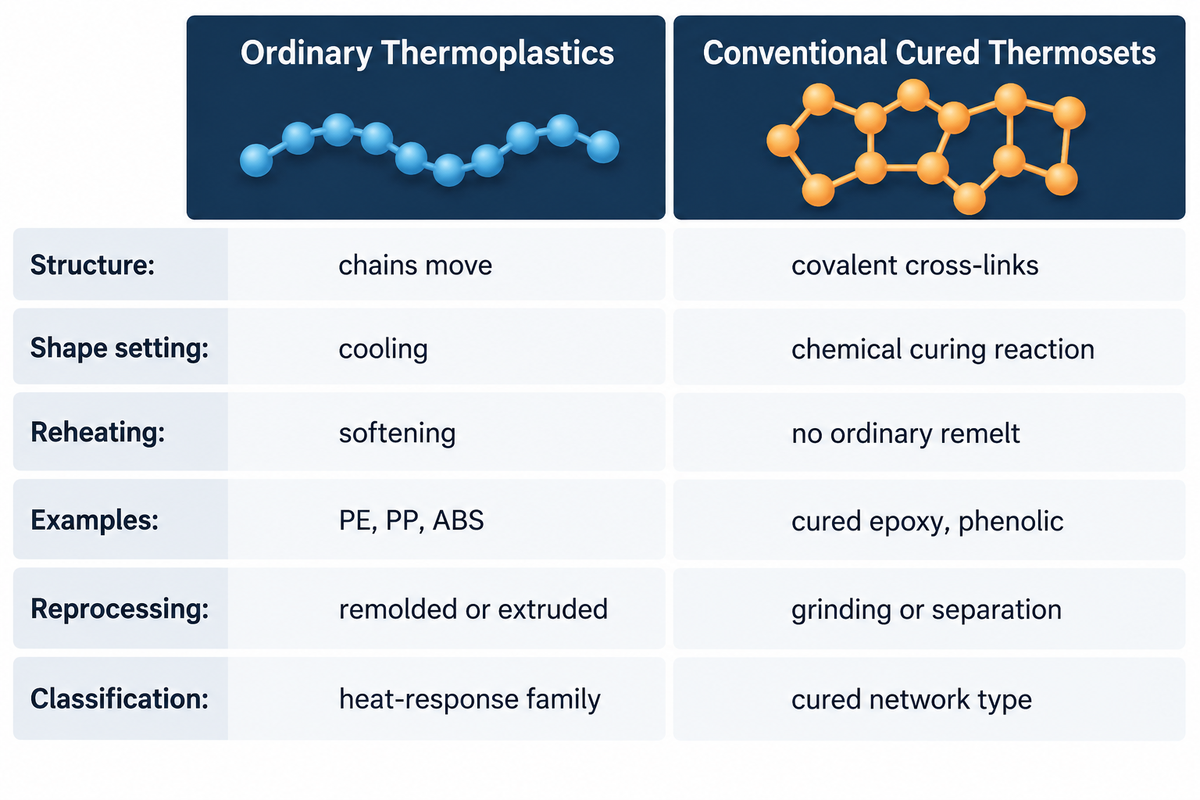
The difference between thermoset and thermoplastic materials concerns network formation during processing. Ordinary thermoplastics soften when heated and return to solid form on cooling. Ordinary thermosets form a nonreversible crosslinked structure during cure.
A conventional cured epoxy can’t return to its liquid state by reheating.
| Comparison | Ordinary thermoplastics | Conventional cured thermosets |
|---|---|---|
| Structure | Chains can move relative to one another during suitable processing. | Covalent cross-links join chains into a network. |
| How the shape sets | Cooling after softening or melting | A chemical curing reaction |
| Response to reheating | Softening; melt flow depends on the polymer and grade | No ordinary remelt; excessive heat can cause degradation |
| Common examples | Polyethylene, polypropylene, ABS | Cured epoxy, phenolic, melamine-formaldehyde |
| Typical reprocessing route | Compatible, prepared feed can be remolded or extruded. | Grinding, specialist separation or chemistry-specific recovery |
| What the classification establishes | Heat-response family | Cured network type |
The Open University explanation of polymers connects reversible softening with thermoplastic behavior. It also notes that thermal and oxidative degradation can change the properties of reprocessed material. Compatible feed can be remolded and recycled after its quality is assessed.
Thermoplastic examples and thermosetting plastic examples
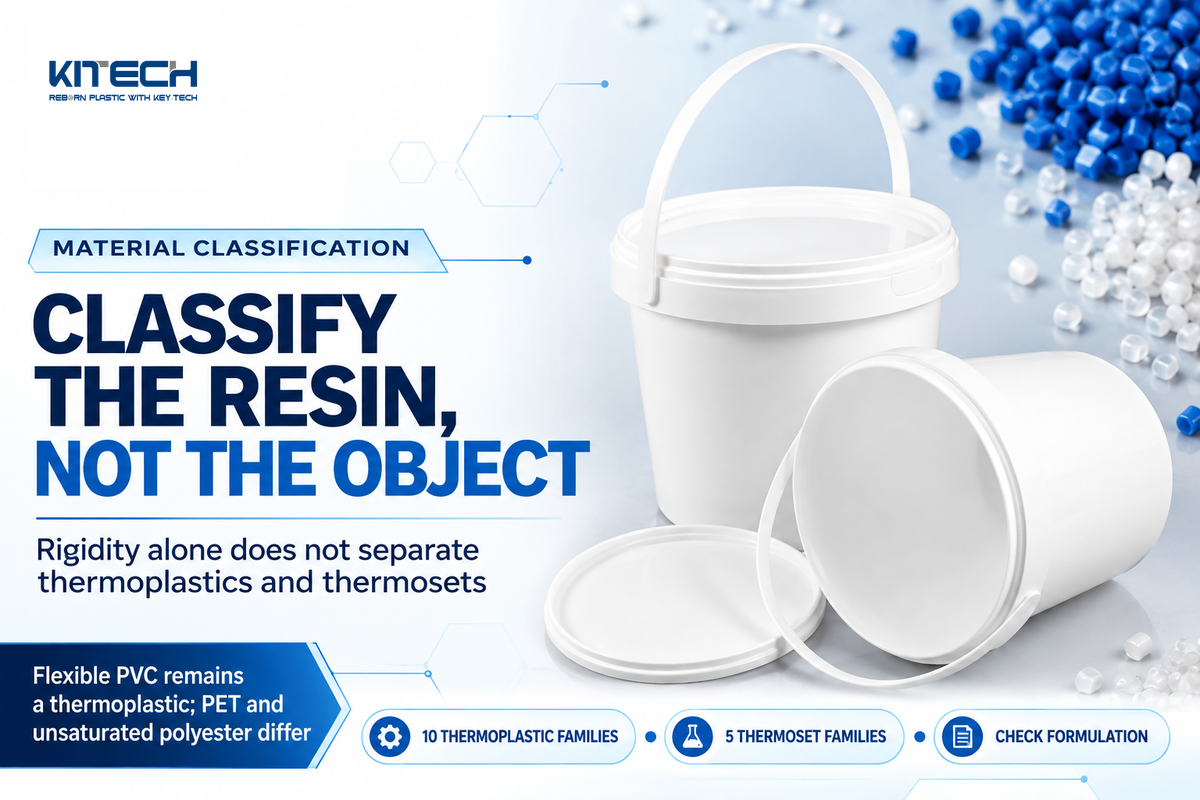
Familiar products provide useful starting points, but classify the resin rather than the whole object. A reinforced panel contains both a polymer matrix and reinforcement; a cable can contain several plastic materials. Physical properties such as rigidity alone do not differentiate thermosetting plastics and thermoplastics.
What are 10 examples of thermoplastics?
10 typical thermoplastic families: polyethylene, polypropylene, PVC, polystyrene, PET, ABS, polycarbonate, polyamide, acrylic and polyoxymethylene. These names include many grades with different properties. Both HDPE and LDPE are polyethylene so they’re summed up as one family here.
These thermoplastic materials belong to various families; this list is not a guide to mixing scrap.
| Thermoplastic type | Typical applications |
|---|---|
| Polyethylene (PE) | HDPE containers and pipe; LDPE films and flexible packaging. |
| Polypropylene (PP) | molded containers, caps and many household components. |
| Polyvinyl chloride (PVC) | rigid profiles and pipe, or plasticized cable coverings. |
| Polystyrene (PS) | rigid packaging and foamed insulation products. |
| Polyethylene terephthalate (PET) | beverage bottles and polyester fibers. |
| Acrylonitrile butadiene styrene (ABS) | housings and impact-resistant molded parts. |
| Polycarbonate (PC) | transparent guards and other tough engineering components. |
| Polyamide (PA, including nylon) | fibers, gears and wear components. |
| Polymethyl methacrylate (PMMA) | acrylic glazing and display panels. |
| Polyoxymethylene (POM, acetal) | precision gears and sliding parts. |
These types of thermoplastics differ in moisture sensitivity, additives, processing windows and end uses. Kitech’s guide to plastic examples and applications follows the connection between product and polymer in more detail.
What are 5 examples of thermosetting plastics?
Five well-known thermosetting plastic families are cured epoxy, phenolic, melamine formaldehyde, urea formaldehyde, and unsaturated polyester resin. Their finished networks are the relevant property. An uncured liquid or molding compound is a processing material; the final cured product behaves differently.
The use of fillers and reinforcement also changes the properties of each mixture.
- Cured epoxy: adhesives, coatings and fiber-reinforced components.
- Phenolic: molded electrical and heat-resistant components.
- Melamine-formaldehyde: decorative laminates and molded household items.
- Urea-formaldehyde: adhesives used in wood-based panels.
- Unsaturated polyester: fiberglass panels, tanks and molded composite parts.
Is PVC a thermoset or thermoplastic?
PVC is a thermoplastic. It can be rigid or pliable as the properties of the end product vary by formulation. Flexible PVC hasn’t become a thermoset just because plasticizers have been incorporated – for scrap it’s a good idea to identify the PVC and its additives and the polymer – whilst offcuts can be rigid-profile or mixed cables.
The Syracuse University Plastics Collection provides information on these families of materials and their uses, the thermosetting amino resins and thermoplastic acetal.
Two other names require attention. PET is a thermoplastic polyester; cured unsaturated polyester is a thermoset. Polyurethane also spans different structures: thermoplastic polyurethane, or TPU, differs from permanently crosslinked polyurethane systems.
Polymer chains, cross-links and the curing process
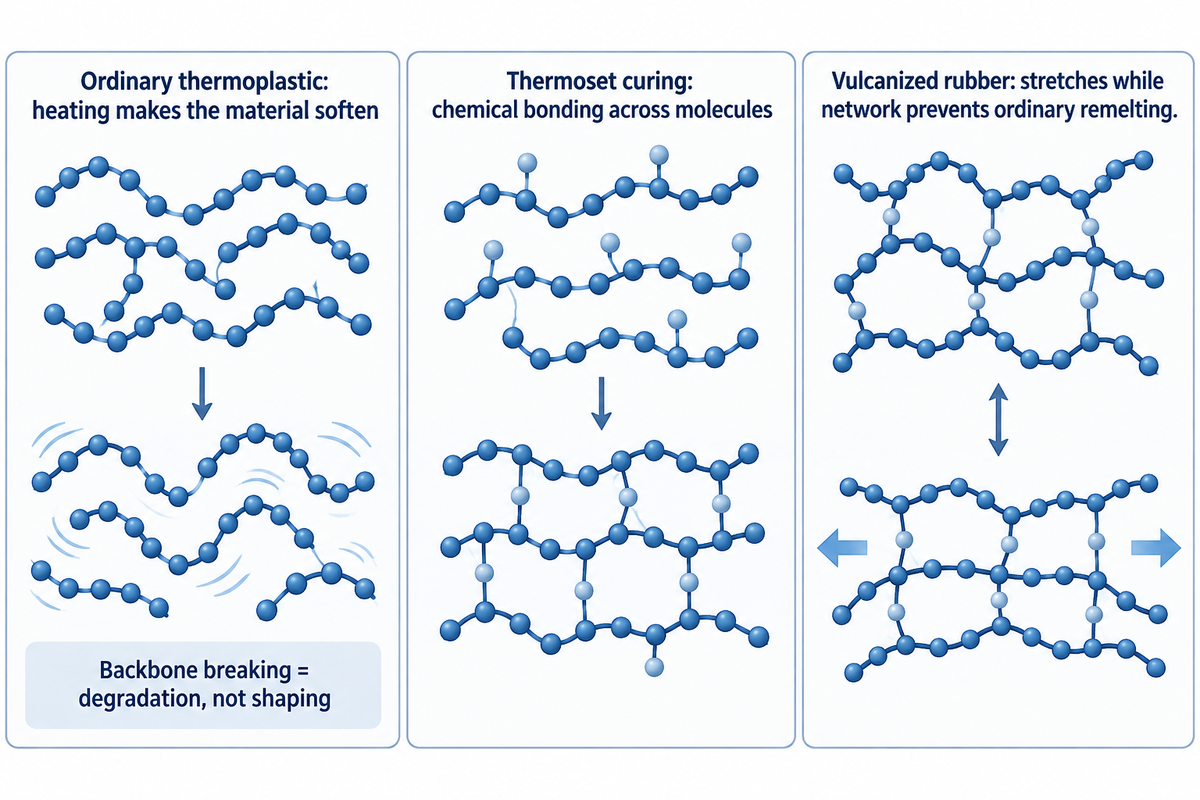
A polymer chain is one where the units along the chain are linked through polymerization from the monomers. In ordinary thermoplastic polymers, heating makes the material soften and become able to be shaped, but cooling makes it less formable.
Breaking the polymer backbone is degradation, not the intended shaping process.
Thermosetting polymers (also called thermoset polymers) complete a curing process in which chemical bonding takes place across molecules. It can form an irreversible network during standard processing. That process is powered by heat, a hardener or another trigger, and it varies based on the composition. “Thermosetting” does not mean that every system requires the same application of heat and pressure.
Crosslinking also accounts for why some elastic materials act like thermosets. Vulcanized rubber can bend and stretch while its network prevents ordinary remelting. See the Open University explanation of crosslinking in molded rubber. On the other hand, a solid thermoplastic may soften as it heats up.
Hardness, flexibility and network structure are separate characteristics.
Heat resistance, strength and chemical resistance
No one type is universally stronger or more heat resistant. As a comparison, look at the real grade mechanical properties: tensile strength, impact resistance, resistance to deformation and chemical resistance under the target time and temperature, especially at high temperature. Reinforcement, geometry, loading time and temperature may be more important than the thermoplastic vs thermoset designation.
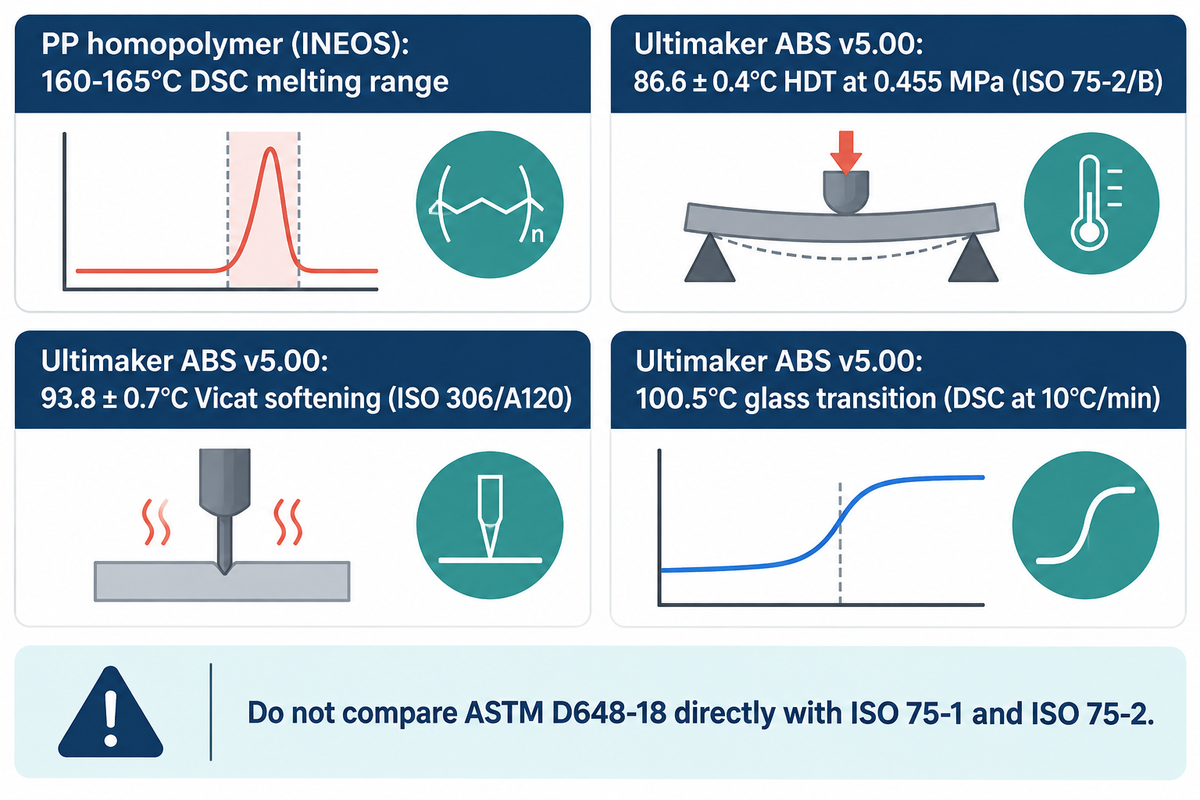
The following published values illustrate different thermal measurements.
| Material and source | Published value | Measurement and specimen context |
|---|---|---|
| PP homopolymer, INEOS reference | 160–165°C | DSC melting range; compiled typical literature values |
| Ultimaker ABS, v5.00 | 86.6 ± 0.4°C | Heat deflection at 0.455 MPa, ISO 75-2/B; printed specimen |
| Ultimaker ABS, v5.00 | 93.8 ± 0.7°C | Vicat softening, ISO 306/A120; printed specimen |
| Ultimaker ABS, v5.00 | 100.5°C | Glass transition, DSC at 10°C/min |
Sources: INEOS polypropylene reference and Ultimaker ABS data sheet, April 2022. Each value is attributed to that document and material condition.
Semi-crystalline thermoplastics have crystalline regions that melt; amorphous ABS has a glass transition rather than a crystalline melting point. Heat deflection measures deformation under a specified load. Vicat measures a specified penetration response.
ASTM D648-18 results must not be compared directly with results from ISO 75-1 and ISO 75-2.
For a corrosion-resistant tank liner, assess the specific chemical, concentration and exposure temperature. For an electrical insulator, determine the necessary electrical insulation performance and dimensional stability. Heat and chemical resistance are application requirements, not automatic benefits of every type of thermoset.
How thermoplastic and thermoset materials are molded
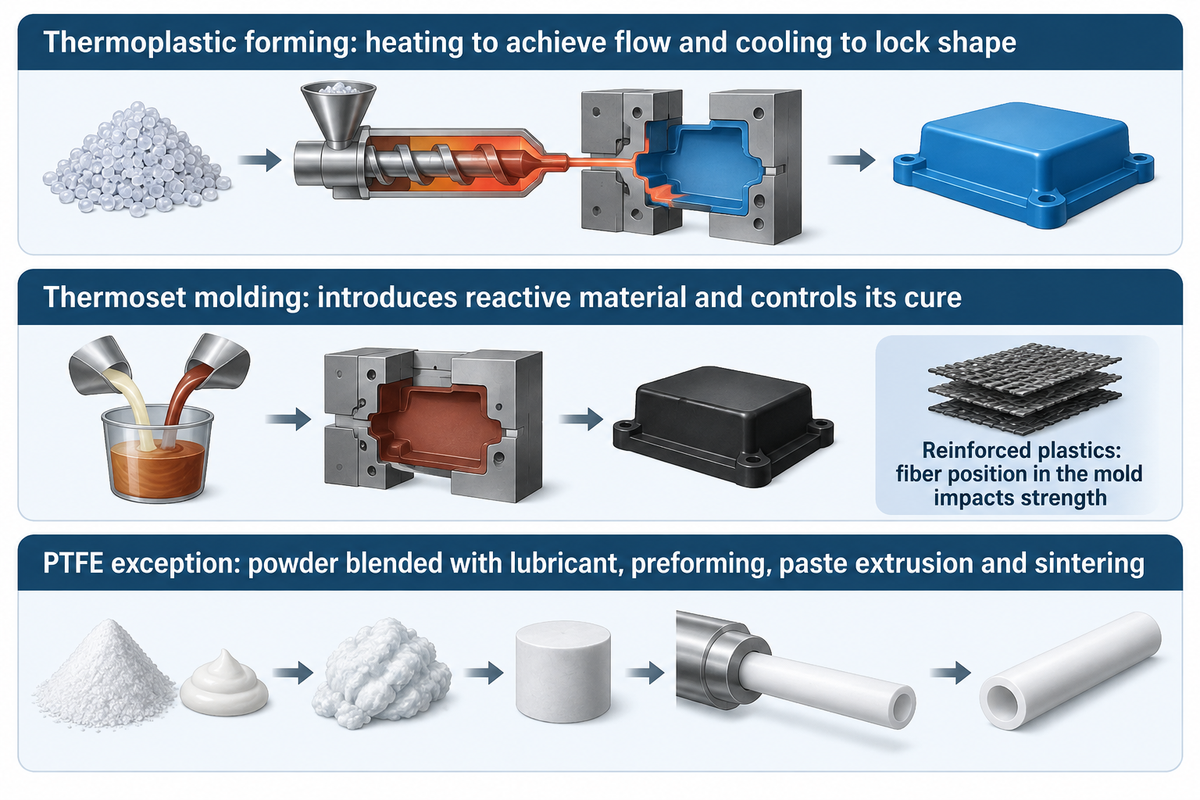
Thermoplastic forming typically requires heating to achieve flow and cooling to lock the shape. Thermoset molding introduces a reactive material and controls its cure. Suitable grades of thermoset or thermoplastic polymers can be injection molded, but material preparation, tools and temperature control differ.
An injection molding machine needs to be matched to the material and process.
Continuous thermoplastic profiles or sheet are manufactured by extrusion. Thermoforming reshapes suitable heated sheet. Compression molding, resin transfer molding and thermoset injection molding process different reactive compounds and reinforced plastics.
Composite materials may be reinforced with glass or carbon fibers, and the position of the fibers in the mold impacts the strength of the finished product and also the mold process.
PTFE is an important exception to simple melt-line thinking. A study of PTFE paste extrusion describes powder blended with lubricant, preforming, paste extrusion and sintering. Its high molecular weight and flow behavior prevent ordinary melt extrusion. Identifying a thermoplastic is therefore only the first step in choosing equipment.
Molding temperature and pressure can limit viable processes before resin price matters for heat-sensitive structures. Handling reinforcement and occupying tools for large reinforced parts can account for much of the manufacturing time.
Thermoplastic recycling and thermoset recovery routes
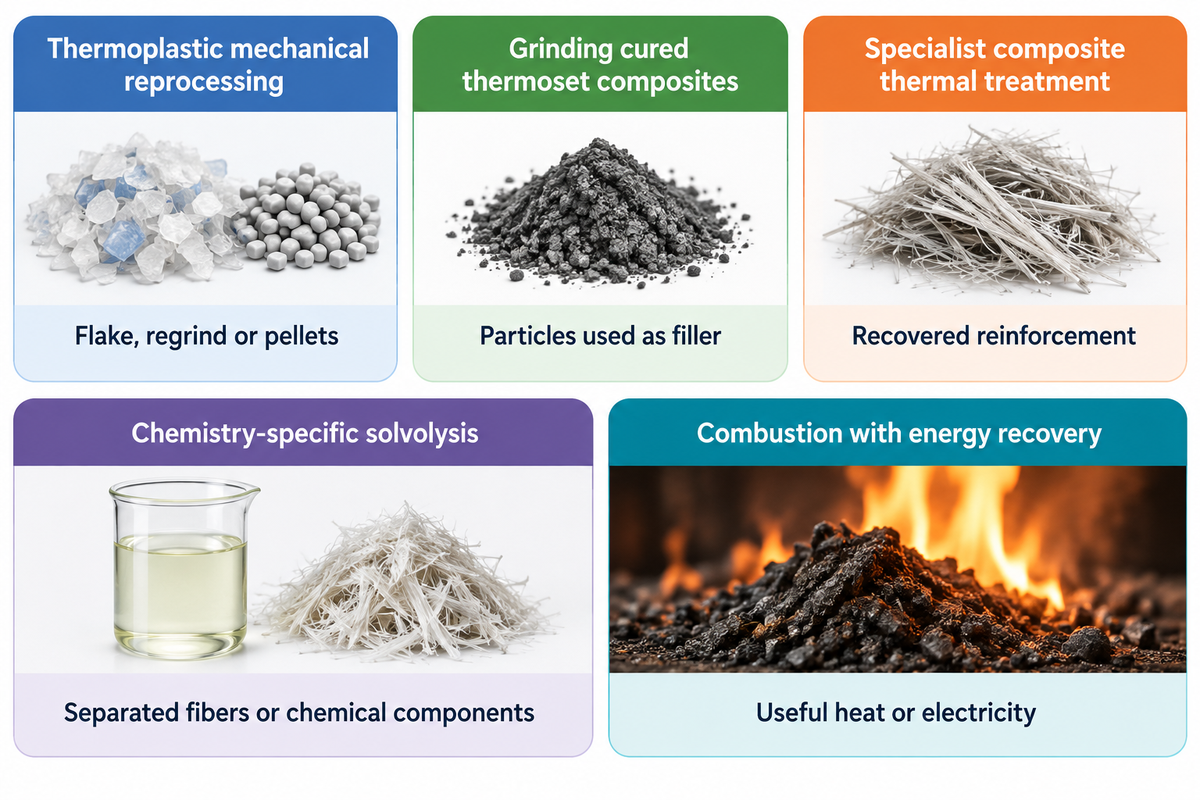
Appropriate thermoplastic scrap can be sorted and cleaned, reduced in size and reused to produce another product. Recovery routes detailed below identify recyclable resin, filler, fibres and chemical products.
| Route | Typical target output | Question that decides its usefulness |
|---|---|---|
| Thermoplastic mechanical reprocessing | Flake, regrind or pellets | Does the prepared material meet the next product’s specification? |
| Grinding cured thermoset composites | Particles used as filler | Can the receiving formulation accept their size, composition and loading? |
| Specialist composite thermal treatment | Recovered reinforcement and other process products | What fiber quality and usable fractions does this process retain? |
| Chemistry-specific solvolysis or deconstruction | Separated fibers, polymer fragments or chemical components | Can those fractions be separated and reused at the required quality? |
| Combustion with energy recovery | Useful heat or electricity | Is the objective energy recovery rather than recovered plastic material? |
The European EURECOMP project report discusses grinding thermoset composites for filler and separate solvolysis trials to separate reinforcement from resin. In that historical project, researchers could not efficiently separate all liquid-phase molecules for reuse. Recovering a fibre and recovering a reusable resin are two different things.
Thermoplastics can also degrade during reprocessing. A 2024 HDPE recycling study found chain scission initially, with increased oxygen exposure shifting the dominant mechanism toward long-chain branching. This affects how recyclate quality should be assessed; a fixed promise of unlimited unchanged cycles is misleading.
The U.S. Environmental Protection Agency overview distinguishes conversion, depolymerization and purification. Conversion can produce oils, gases and char, while direct combustion recovers energy. These routes aren’t interchangeable with turning sorted scrap into pellets.
What changes manufacturing and recycling costs?
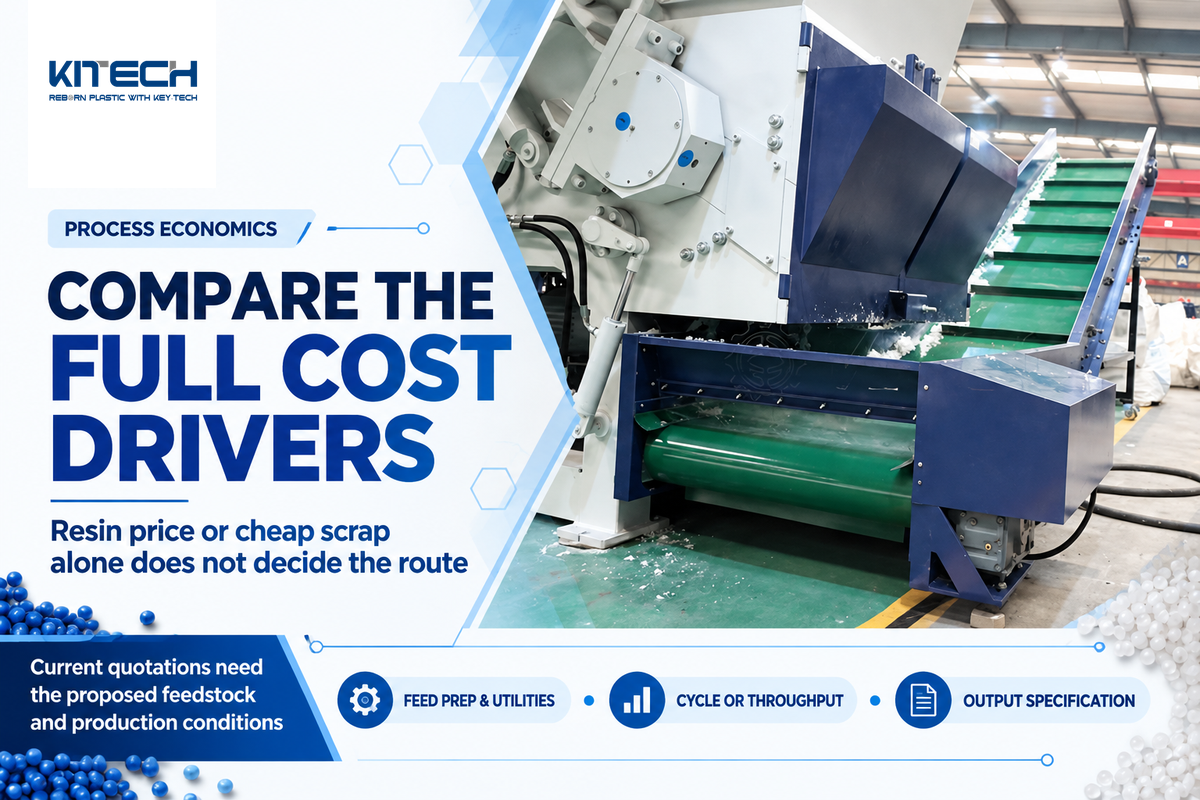
Total cost is affected by tooling, processing time, handling of the reinforcement, material preparation and the value of the accepted output. Choosing thermoplastics or thermosets does not guarantee the cheapest route. A cheap resin price may be overcome by a long cycle; cheap scrap can be expensive if its separation leaves very little usable material.
A 2023 study by Uekert and colleagues compared closed-loop recycling routes for common plastics and identified electricity, steam and organic solvents as major process contributors. A separate 2006 automotive floor-pan study found that tool thermal cycling and fabric scrap affected its epoxy versus reactive-polyamide comparison.
Build these cost categories into the comparison of proposals: feed prep, utilities, consumables, cycle or throughput, reject handling, and finally the customer’s output specification. Historical research explains the drivers; current quotations need the proposed feedstock and production conditions.
How to choose a route for plastic scrap
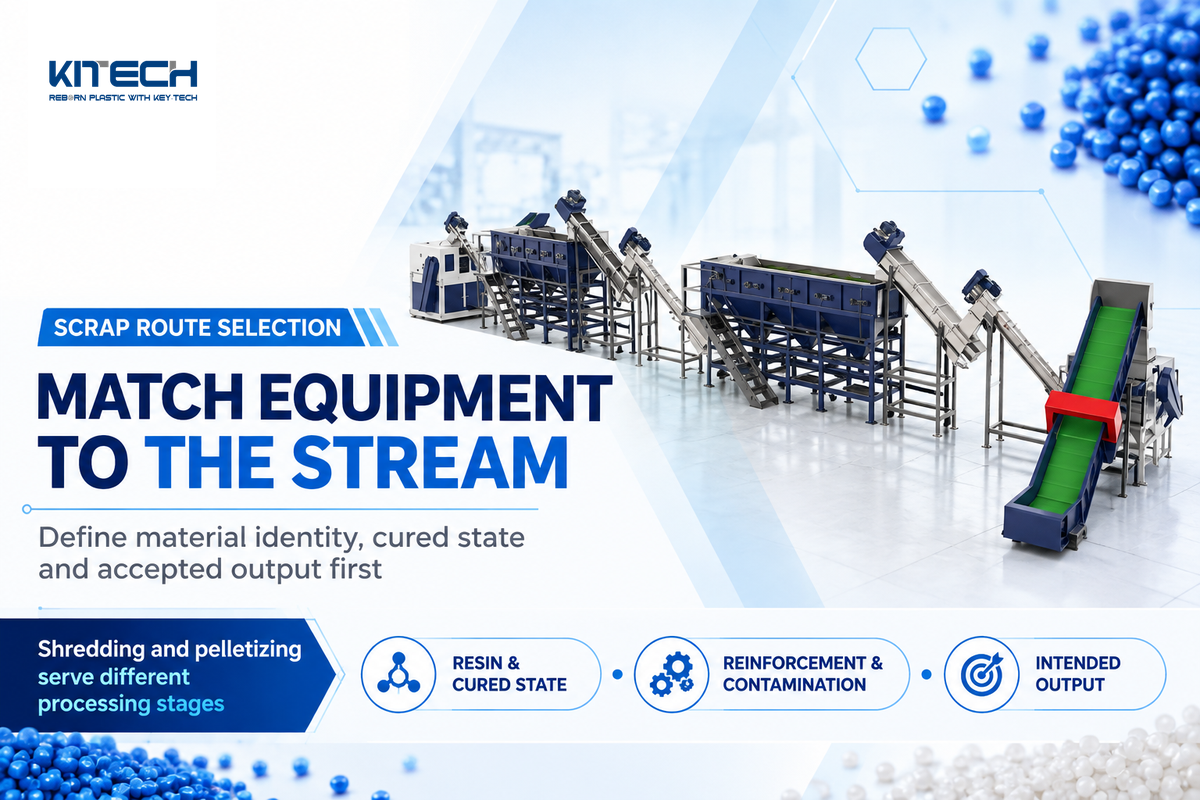
Select a scrap route by identifying the material, defining its state and agreeing on the product that will leave the process. Then match the equipment to those requirements. A material name alone leaves unanswered whether the batch contains cured resin, incompatible polymers, reinforcement, moisture or contamination.
| Incoming material | First route to assess | Evidence needed before line selection |
|---|---|---|
| Identified, compatible melt-processable thermoplastic | Mechanical preparation and reprocessing | Representative feed trial and required recyclate properties |
| Mixed or contaminated thermoplastic products | Sorting and cleaning before reprocessing | Composition, separability and remaining usable fraction |
| Cured conventional thermoset composite | Filler or specialist fiber/material recovery | A receiving application for the recovered fraction |
| Specialty thermoplastic or identified dynamic network | Material-specific processing | Grade-specific process compatibility and recovery partner |
| Unknown resin or multilayer construction | Identification and separation assessment | Composition and layer/reinforcement information |
Clean PE production offcuts may be a candidate for size reduction and melt reprocessing after their grade and output needs are established. Cured glass-fiber epoxy offcuts can also be shredded, but the resulting fragments do not become PE-like melt feed. Instead they could potentially be accepted as fillers or used for a composite-recovery protocol.
For a Kitech equipment discussion, provide the resin or product identity, cured state, reinforcement, contamination, incoming form and intended output. The plastic shredder range addresses size reduction; a plastic pelletizing line serves a different processing stage.
Where recyclable thermosets fit today
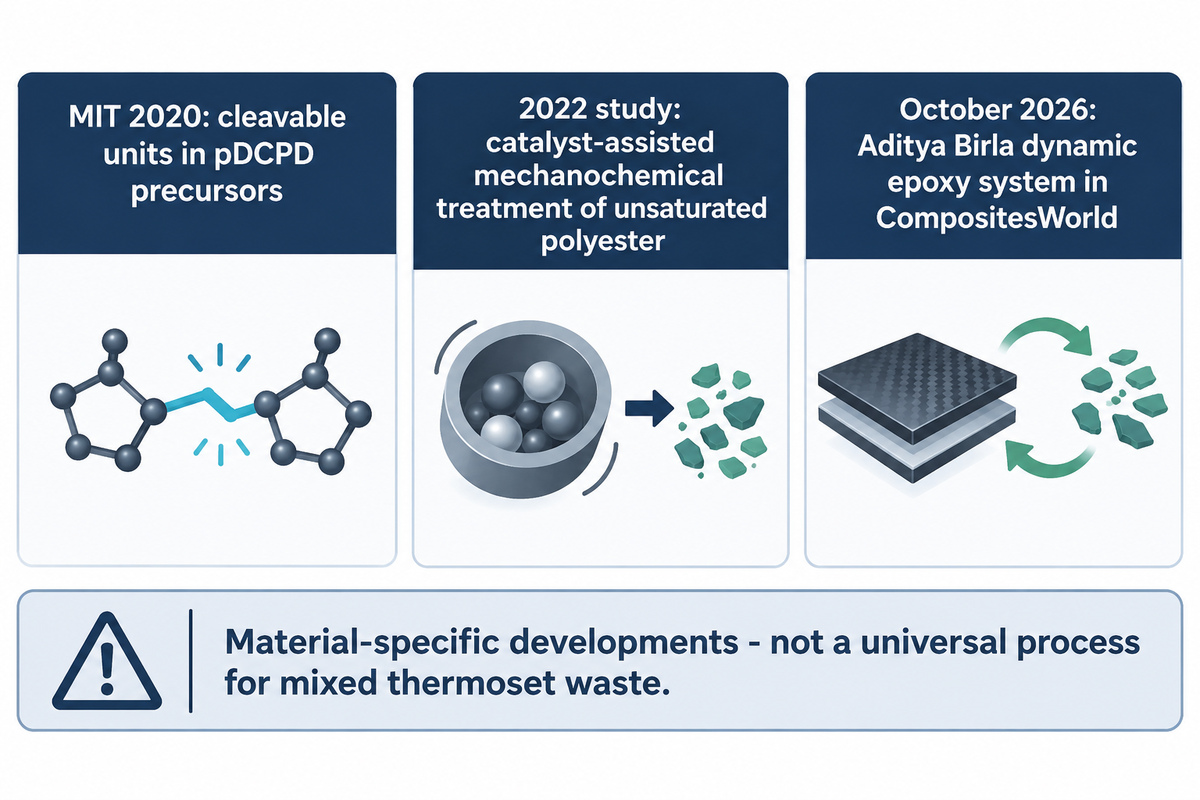
Recyclable thermoset studies involve designed cleavable networks, dynamic bond exchange and alteration of some existing cured materials. These approaches change the chemistry or network behavior that makes conventional thermosets difficult to recycle.
MIT’s 2020 work introduced cleavable units into pDCPD precursors. A 2022 unsaturated-polyester study used catalyst-assisted mechanochemical treatment to convert an already cured network into a reprocessable one. The authors described the latter as exploratory work without process optimization.
In October 2026, Aditya Birla executive Amit Dixit described the company’s dynamic epoxy system in CompositesWorld. Its reported capabilities include thermoforming and a specific solvolysis route. These are material-specific developments from the named organizations. They don’t establish a universal process for mixed thermoset waste or a Kitech-owned resin technology.
Frequently asked questions
Is nylon a thermoplastic or thermosetting plastic?
Nylon is a thermoplastic polyamide. Common nylon grades are used in molded engineering parts and fibers, and suitable grades can be processed again by heating. Their grade, moisture condition and previous processing affect the resulting properties. A nylon-containing product may also include reinforcement or other materials, so the product’s construction still matters when choosing a recycling route.
Is polyethylene a thermoplastic?
Yes. Ordinary polyethylene grades, including HDPE and LDPE, are thermoplastics. Their density and branching differ, but both belong to the polyethylene family. Crosslinked polyethylene is a separate processing case: crosslinks change its response to reheating. For recycling, distinguish ordinary PE scrap from crosslinked products and identify whether the batch contains other polymers, fillers or attached components.
Can thermosetting plastics be injection molded?
Yes. Suitable thermosetting compounds can be injection molded using a process that controls flow before cure and completes curing in the tool. This differs from conventional thermoplastic molding, where cooling sets the shape. The material formulation and equipment must be compatible. A cured thermoset part can’t be remolded through an ordinary heat-and-cool cycle like thermoplastics.
Is acrylic a thermoplastic?
Yes. Ordinary acrylic, or PMMA, is a thermoplastic used for transparent sheet and molded products. Its material grade and product construction determine suitable forming and recycling conditions.
Are elastomers a third type of plastic?
No. Elastomers aren’t a mutually exclusive third class: elastomer describes rubber-like behavior that can overlap with thermoplastic or thermoset structures. A thermoplastic elastomer can stretch and recover while remaining suitable for its specified thermoplastic processing route; a permanently crosslinked rubber is a thermoset elastomer. Treat “elastic” and “reheatable” as separate questions. This is why soft appearance can’t identify a scrap route, and why a rubbery item shouldn’t automatically be mixed with ordinary thermoplastic feed. Use the material designation and its cured or crosslinked state to decide which processing family it belongs to.
Match your scrap to its next use
For a Kitech recycling-line enquiry, start with a representative sample, its known composition and the product you want to recover. That gives the equipment discussion a specific feed and output target.
Discuss your material and recycling requirements with Kitech
The comparisons are a mixture of polymer teaching resources, published research and supplier data. The two scrap batches are illustrative scenarios, not documented customer trials by Kitech.
References & Sources
- Syracuse University: Plastics Collection material dictionary.
- Open University: Thermoplastics and thermosets.
- ASTM D648-18: scope and significance of heat-deflection testing.
- PTFE paste-extrusion viscosity and flow study.
- Defining quality by quantifying degradation in the mechanical recycling of polyethylene, 2024.
- European Commission: EURECOMP final report.
- U.S. EPA: Advanced recycling of plastics.
- Uekert et al.: Comparing closed-loop recycling technologies, 2023.
- EPFL: Manufacturing cost comparison for an automotive floor pan, 2006.
- MIT: Chemists make tough plastics recyclable, 2020.
- Bandegi et al.: Vitrimerization of crosslinked unsaturated polyester resins, 2022.
- CompositesWorld: Aditya Birla’s thermoformable epoxy system, 2026.