Get in touch with Kitech Company


Updated June 2026 · Reviewed by the Kitech technical team
Sort the different types of recyclable plastic. You just have to look at the little triangle number. Or not. The fact is that the number itself in the symbol has nothing to do with recyclability. Of the seven codes printed in the ubiquitous triangles on all kinds of plastic objects, only two or three can be successfully reused for new materials – and that depends on, in addition to the shape and cleanliness of the item, its local municipality.
We sort the seven codes according to what really happens to them after collection, rather than whether they just exist. At Kitech, we analyze what kind of resins downstream processing units can affordably transform into what’s now a part of a material cycle, what remains indifferent, and what’s immediately sent to landfill. And it’s this processing reality that truly defines whether plastic is to be recycled or not.
Quick Specs: Recyclable Plastics at a Glance
| Coding system | Resin Identification Code (RIC), ASTM D7611, numbers 1–7 |
| Widely recycled curbside | #1 PET, #2 HDPE (and #5 PP in a growing number of programs) |
| Rarely recycled curbside | #3 PVC, #4 LDPE, #6 PS, #7 Other |
| Store drop-off only | #2/#4 bags and film (not the curbside cart) |
| US PET bottle recycling rate | ~29% (2018, EPA) to ~30–33% (2023–2024, NAPCOR) |
| Reprocessing route | sort → shred → hot-wash → pelletize |
What “Recyclable” Really Means: the Resin Identification Code
The code you’ll see at the bottom of bottles, tub, etc., is called Resin Identification Code (RIC). it’s meant to assist the separation process – telling the sorting machinery the polymer from which the plastic is made, but no more. it doesn’t at all guarantee collectability or recyclability in your area, nor certify that your collected material even ends up in the reprocessing system.
The system was created by the Society of the Plastics Industry in 1988, now the standard ASTM D7611. In 2013, it was revised: in order to get rid of the false belief of the widespread collectability/recyclability, the “chasing arrows” of the old emblem were replaced by the solid triangle containing the RIC alone, the old symbol was then associated only to “recycled material”. So the recycling symbol you see on packaging is really a resin label, not a recycling promise. Local recycling centers, not the symbol, decide what is actually accepted. The U.S. Department of Energy’s Consumer Guide to Recycling Codes breaks down what each of the seven numbers means. Each one-digit code 1-7 indicates one polymer.
Why is that important for the sorting? A recycling operation process sorted resins (and the larger the amount, the higher value). If mixed or the presence of food or other types of plastic, the economic value of the collected lot drastically decreases and the whole batch ends up at landfill. For the sorter (which can be electronic, or in the past, manually controlled) this is the initial data input for the material sorting system.
Knowing the type of plastic used in an item is the first step in any guide to plastic recycling, because the recyclability of plastic shifts with form: the different types of plastic on a bottle and on a film can carry the same code, yet one is easily recyclable and the other difficult to recycle. In practice that gap is an expensive problem: because one wrong item can contaminate a whole bale, the recycling lines Kitech has built over years of field work treat the code as their first sorting signal, and even a 5% contamination rate can send a load to landfill.
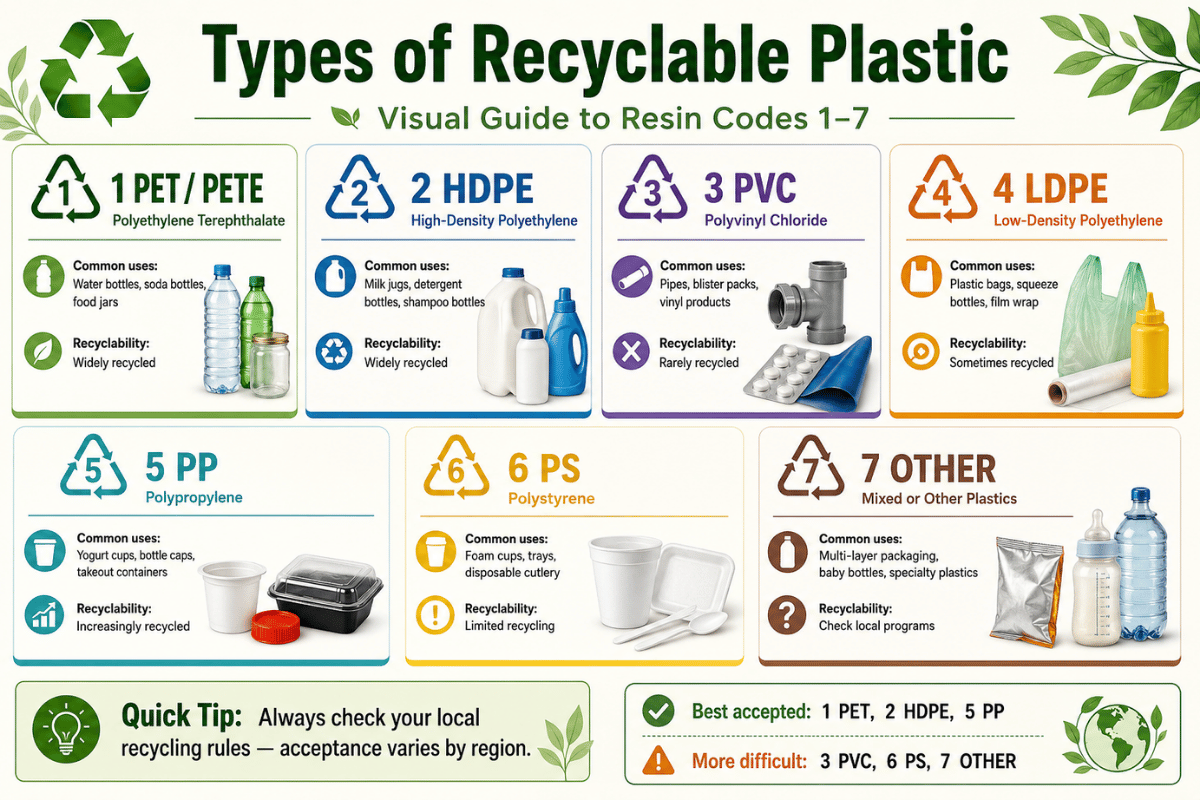
The 7-Resin Recyclability Scorecard: Plastic Numbers 1 to 7
Check here our 7-Resin Recyclability Scorecard, it covers each one-digit RIC code, a common example, whether it’s accepted in your curbside collection, a real world overview, and what happens with the recycling product. it’s useful to have a quick glance, however to understand more about each resin, it’s recommended to read further below in each of its section. The real problem for buyers is the gap between symbol and reality: in practice a #5 tub accepted in one city is landfill in the next, and a mis-sorted load can lose 30% of its value because contamination drags down the whole bale.
| Code | Resin type | Common items | Curbside? | Recyclability tier | What it becomes |
|---|---|---|---|---|---|
| 1 | PET / PETE | Water & beverage bottles | Yes | Green — widely | rPET flake, polyester fiber |
| 1 | PET (thermoform) | Clamshells, trays | Often no | Amber — limited | Mixed-PET, often landfill |
| 2 | HDPE | Milk jugs, detergent & shampoo bottles | Yes | Green — widely | Pipe, plastic lumber, crates |
| 3 | PVC / V | Pipe, trays, some toys | No | Red — rarely | Niche feedstock recycling only |
| 4 | LDPE | Grocery bags, bags and film, cling wrap | Store drop-off | Amber — film only | Trash bags, composite lumber |
| 5 | PP | Tubs, prescription bottles, caps | Growing | Amber — improving | Auto parts, compounded resin |
| 6 | PS | Foam food containers, styrofoam, CD cases | Rarely | Red — rarely | Insulation, picture frames |
| 7 | Other | Composite plastic, water jugs, PLA | No | Red — rarely | Limited; some to plastic lumber |
| 7 | Mixed / multi-layer | Pouches, blister packs | No | Red — not recyclable | Landfill or energy recovery |
Acceptance varies by municipality. Source: EPA and NAPCOR recycling data; curbside acceptance based on local municipal programs.
Widely Recyclable: PET (#1), HDPE (#2) and PP (#5)
If you want to memorize only three of all codes you see on packaging, these are them. They’re generally clean sorted by recyclers, there’s sufficient demand from secondary market, and they generally make their way back into our lives as new useful products. In practice, recyclers pay a premium for a clean PET bottle stream because the rPET market is strong; a load with even 10% of the wrong resin risks rejection, which is why Kitech sizes its washing lines around single-resin purity.
PET (#1) is the most commonly recycled plastic. Clear water bottles and beverage bottles are the classic example. The U.S. EPA puts the recycling rate of PET bottles and jars at 29.1% in 2018, and NAPCOR pegged the U.S. PET bottle collection rate at 33% in 2023. Recycled PET (rPET) is washed, melted and pelletized into food-grade flake, or spun into polyester fiber for carpet and clothing.
HDPE (#2) is the workhorse rigid resin: milk jugs, detergent bottles and shampoo bottles. EPA estimated 29.3% recycling rate of HDPE natural bottles in 2018. Once processed into pellets, recycled HDPE becomes pipe, plastic lumber, fencing and crates – durable building materials that tolerate post-consumer recycled material well.
PP (#5) – yogurt tubs, prescription bottles, bottle caps – used to be a maybe. The North American label program How2Recycle only decided polypropylene to be “widely recyclable” in 2022, and curbside acceptance is still expanding. Its post-consumer recycled material goes into automotive parts and compounded resin.
Is PET or HDPE more recyclable?
Both are accepted almost everywhere, but they behave differently. PET bottles command a strong end market for food-grade rPET, so a clean PET bottle stream is high-value – yet non-bottle PET, like clamshell thermoforms, is often rejected because it melts and contaminates differently. HDPE is more forgiving: colored and natural grades both have steady demand for non-food products. In practice, a clean PET bottle is the single most valuable curbside plastic, while HDPE is the most consistently accepted across item shapes.
Hard to Recycle: PVC (#3), LDPE (#4), PS (#6) and #7 “Other”
These four cover most of the non-recyclable plastics you meet day to day. They aren’t impossible to recycle, but they rarely have a curbside path, so treating them as recyclable just contaminates the bin.
The sheer amount of plastic at stake is large: global plastic waste runs to hundreds of million tons, and a huge share of those metric tons of plastic is disposable plastic packaging where the items are not recyclable through any curbside route. A #3 plastic pipe, a clear plastic clamshell, or a foam plastic food tray can look recyclable, but with no market to turn them back into products made from plastic, multiple types in this group are rarely recycled back into anything — the #6 plastics in foam being the clearest case.
✔ Sometimes recoverable
- LDPE (#4) – a plastic bag, grocery bag, cling wrap or other bags and film recycles through store drop-off, not the curbside cart, because film tangles the sorting machinery.
- PVC (#3) – durable pipe and trays; recoverable only through niche mechanical or feedstock recycling, not municipal programs.
⚠ Usually landfill
- PS (#6) – polystyrene and styrofoam foam food containers are light, bulky and low-value; most programs won’t take them.
- Other (#7) – composite plastic and multilayer items that can’t be separated into one resin.
One frequent point of confusion: a biodegradable or compostable plastic (often a #7 PLA) isn’t the same as a recyclable one. Compostables need an industrial composting facility and will actually contaminate a PET or HDPE recycling stream. If you want the full distinction, see our guide to biodegradable plastic.
⚠️ Important
When a single-use plastic carries no clear #1, #2 or #5, the safe default is the trash, not the recycling bin. A hopeful guess – “wishcycling” – costs recyclers more than an honest discard, because contamination can down-grade an otherwise clean bale.
The Recyclability Reality Gap: Why the Symbol Doesn’t Mean “Recycled”
Here’s the idea worth taking away, call it the Recyclability Reality Gap. Nearly every plastic product carries a resin code, yet the U.S. EPA pegs recycling of all plastic materials at around 10% or less, and the OECD reckons only about 9% of plastic waste worldwide has ever been recycled. A symbol on 100% of items, a recycling rate in the single digits: that gap is the whole story of plastic recycling.
“The chasing-arrows symbol is not regulated. A number tells you what a product is made of, not whether your local facility will recycle it.”
Guidance reflected in ASTM D7611 and EPA recycling resources
Does the recycling triangle mean a plastic item is recyclable?
No. Those triangles and numbers indicate a resin (plastic) code, not whether it’s recyclable. The #1 plastic that might get recycled when in the form of a bottle could very well end up in a landfill as a clamshell, and your local program’s ability to recycle #5 plastic as a takeout tub may not exist just miles away. Recyclability depends on three things: plastic resin, item type (form factor), and whether your curbside program or an area recycling facility has a local market that will pay for them. Local recycling guide lines should always be your first reference point – the resin code number is only the beginning.
How to Sort Bottles, Tubs, Caps and Film Correctly
The majority of contamination enters our bins from well-meaning individuals tossing the wrong items, convinced they’re helping. Use the Bin-Bag-or-Ban Sorting Rule to decide where each piece really goes. Most curbside recycling carts are built for bottles and tubs; plastic bags and film are the plastics that are accepted for recycling only at store drop-off, not in the recycling cart. When you make recycling a habit, sorting plastic containers correctly is what keeps the recycling process — and your local program — running. The EPA’s guide to recycling common recyclables confirms which bottles, jugs and tubs belong in the curbside bin. In the field, the most common mistake is tossing a greasy #5 container in the cart because it looks recyclable; that one wrong item can spoil a 1-ton bale of otherwise clean material, a problem recyclers measure in lost tonnage.
| If the item is… | Action | Prep |
|---|---|---|
| A rigid #1, #2 or #5 bottle, jug, tub or jar | Curbside bin | Empty, quick rinse, cap back on |
| A clean #2/#4 grocery bag, wrap or film | Store drop-off bag | Dry, clean, bundled together |
| A #3, #6 or #7 item, or anything food-soiled | Trash | No prep — keep it out of the cart |
Can plastic with a 5 on it be recycled?
In many cases, yes, it’s. But check your guidelines; in 2022 How2Recycle announced Polypropylene (#5), used in some prescription bottles, takeout containers, and lids, was being classified as “widely recyclable.” More and more curbside systems are beginning to include #5, and it can sometimes be recycled at store drop-off points (though never in your curbside cart). If your facility accepts PP, make sure to clean out the container and keep the lid on tight to recycle in the cart; otherwise it goes into the garbage.
Can pallet wrap and shrink film be recycled?
Yes, but not in your curbside bin. Films (like the packaging for toilet paper, food items or online purchases), bags and pallet wrap made from #2 and #4 plastics should be dropped off at designated store bins; it doesn’t belong in the same bin or shredder as rigid plastics because films jam the screens at the recycling facility, and have to be separated at separate “stretch wrap” lines or specialized film recyclers (a good example of How2Recycle store drop off material.)
What Happens Next: How Recyclable Plastic Is Reprocessed
Once the #1 or #2 arrives at our facility from your bin, it goes through a series of transformations. The journey:
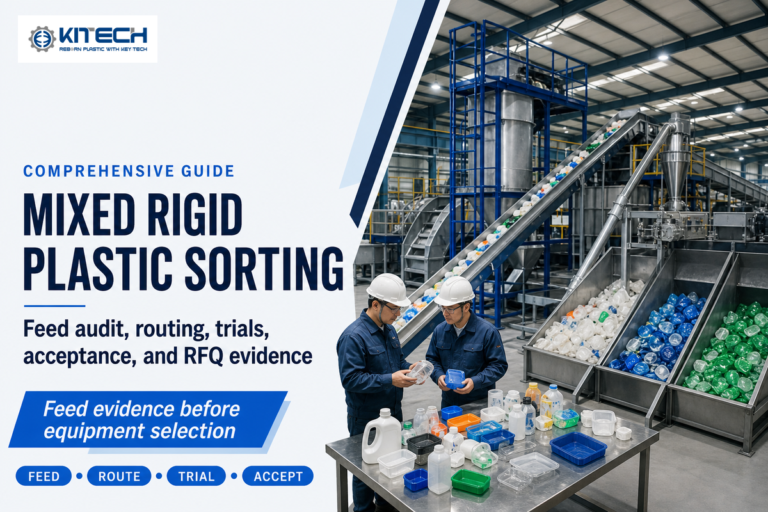
- Sort. With the help of both hand sorters and optical sorters, plastics are segregated by resin type, size and color into streams. For instance, #1 bottles are sorted from #2 bottles, sorted by color, and ultimately from rigid scraps of the same plastic type.
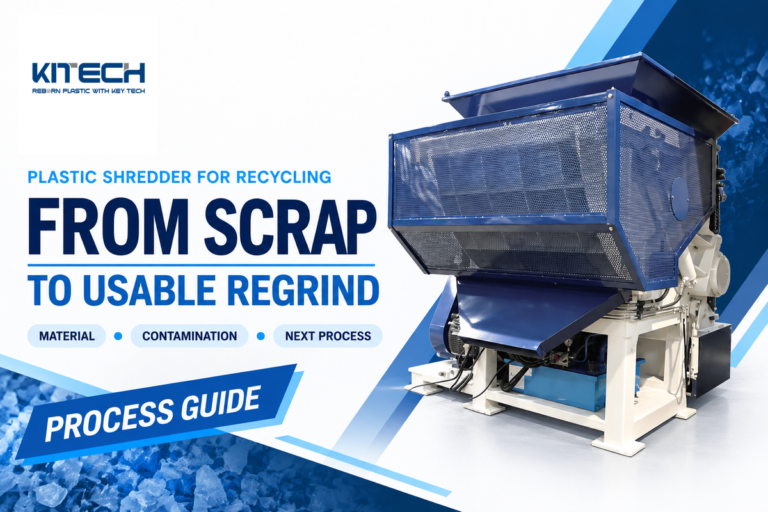
- Shred. Our shredder transforms bottles, jars, and other scrap materials into plastic “flake” ready for further processing. Across the lines we build for clients, a shredder screen of roughly 12–40 mm sets the flake size that fits the needs of downstream washing and pelletization processes.
- Hot-Wash. After separation, the flake is cleansed in hot water at about 80–90 °C to remove any labels, adhesives, food particles, or dirt that might be attached to the original plastic. For PET and HDPE applications this washing process is typically carried out with caustics in order to properly release any adhesives for higher-purity applications, like food grade, to be derived from the processed material.
- Pelletize. The clean and dry flake is melted down, filtered, and re-formed into small, standardized pellets for manufacturers to buy and turn into new products.
Patents in this field spell out the very same sequence. One 2023 method for decontaminating recycled plastic lists its steps as “selecting, grinding, washing, rinsing, drying,” and a PET process patent ends in “solidifying and pelletizing… 100% recycled PET.” It’s mechanical recycling, and it only pays off when the input is one clean resin. That is also why recycling companies and recycling services pay for clean, sorted feedstock: the plastic to recycle becomes pellets made from recycled flake and sold back to manufacturers — the proof that the plastic can be recycled when the stream stays pure.
📐 Engineering Note
For a recycled HDPE or PET line, target washed-flake moisture below roughly 1% before extrusion and keep contamination under about 200–500 ppm. A single misplaced PVC bottle in a PET load releases chlorine that scorches the melt and can down-grade an entire batch, so a #3 in the #1 stream is more than a sorting nuisance, it’s a chemistry problem. See our explainer on what a plastic pellet is and the difference between mechanical and chemical recycling.
Want the resin-specific detail? We walk through the full workflow for the two highest-value streams in our PET recycling guide and HDPE recycling guide, and the equipment itself on our plastic recycling solutions, plastic shredder and plastic pelletizer pages. ABS and other engineering-plastic scrap follow a similar shred-wash-pelletize route.
Outlook: Which Plastic Types Are Becoming Truly Recyclable
The list of recyclable plastics isn’t fixed, regulation and capacity keep pushing it. Recycled-content mandates are the real driver: the EU now requires 25% recycled content in PET bottles by 2025 and 30% in all plastic bottles by 2030, and as of August 2025 five U.S. states have passed post-consumer recycled content laws. That demand pull more resin into recycling programs whether or not the printed symbol ever changed.
Capacity is following that demand into the historically hard resins. The Association of Plastic Recyclers’ (APR) 2025 capacity data shows reprocessing capacity growing fastest for PP (+42%) and film (+44%), ahead of PET (+36%) and HDPE (+35%) — exactly the codes that used to be “technically recyclable” but rarely collected. The tension worth watching: U.S. PET bottle recycling actually slipped to 30.2% in 2024 from 32.5% in 2023, so the bottleneck now is collection and contamination, not reprocessing capacity.
For a buyer or specifier, the action is concrete: track how your local program handles #5 PP and store drop-off film, because that’s where the next gains in recyclable plastic are happening, and don’t assume a printed number tell you today’s answer. Our overview of the circular economy for plastic puts these shifts in context. In practice, buyers who track these shifts — the way Kitech watches PP and film capacity across the recycling lines it commissions — gain years of lead time, because a resin moves from “coded” to genuinely recyclable only when local processing catches up.
Frequently Asked Questions
Q: What are the 7 types of plastic recycling?
View Answer
#1 PET is bottle plastic; #2 HDPE is for jugs, #3 is pipes and trays, #4 films (grocery bags), #5 is tubs and bottles for pills. #6 polystyrene is styrofoam, and #7 is the other group: made from blends of plastic like PLA. These identification numbers refer to the base resin type rather than the recyclability status, with #1, #2 and increasingly #5 typically recovered through curbside recycling.
Q: Which types of plastic are recyclable?
View Answer
Most US curbside programs consistently accept two types of plastics: (#1 PET) bottles, jugs and tubs; and (#2 HDPE) bottles, jugs and tubs, as well as (#5 PP) in a majority of localities. The vast majority of store-accepted and all-bag plastics, including(#2, #4, and the all-bag category) clean #2 and #4 bags and films, don’t have the curbside program infrastructure to process. Recyclability rates remain low for the remaining plastics(#3, #6, #7).
Q: What types of plastic cannot be recycled?
View Answer
Plastics #3 (PVC), #6 (including Styrofoam for take-out) and #7 (Other) composite plastics are generally not collected in the curbside program. These materials do not have a local recycling end market and are difficult to sort into a single resin stream. Contaminated plastic (food debris on plastic) and most plastic films and bags should not be placed in the recycling bin.
Q: Why aren’t all plastics recycled even if they have a number?
View Answer
The code is a resin ID number and doesn’t tell you the plastic is recyclable. A plastic item is actually recycled when 3 pieces fit together in perfect harmony: (1) a recycling plant can easily sort the plastic into a clean stream that is pure #1 (for example), (2) someone will buy the recovered material and turn it into a new product, and (3) your town recycles #1. A whole bunch of resins fall short on one of these counts.
There’s no market for recycled #6 styrofoam, no real market for #1 film that gets caught up in machinery, and you just can’t separate many #7’s. That’s why we are recycling only 10 percent of our plastic waste even though it has codes everywhere on it.
Q: Is recycling plastic worth it?
View Answer
Yes- recycling clean #1, #2 and #5 plastic removes resin out of the land fill and into the recycled plastic supply that feeds a large increasing appetite for recycled content but let’s not forget the much larger wins from reduce & reuse in the first place.
Q: What happens to plastic that isn’t recycled?
View Answer
Any plastic that isn’t recycled ends up in landfill or burned in a furnace, or finding its way into the natural environment where it breaks down into microplastics over time. Any contamination in a clean bale – whether its from unwanted resin or food waste – means that it may end up back in landfill so sorting at your bin is almost as important as having the right recycling facility!
Why We Wrote This
Kitech builds the shredders, washing systems and pelletizers that turn collected PET, HDPE and PP into clean pellets, with 500+ recycling lines installed across 80+ countries. The reprocessing parameters and the recyclability ranking in this guide reflect what we see on those lines, which resins stay clean enough to pay, and which fall out of the stream. Reviewed by the Kitech technical team.
References & Sources
- Plastics: Material-Specific DataU.S. Environmental Protection Agency
- How Do I Recycle Common RecyclablesU.S. Environmental Protection Agency
- Consumer Guide to Recycling CodesU.S. Department of Energy
- ASTM D7611, Resin Identification Code StandardASTM International
- U.S. PET Bottle Recycling Rate DataNAPCOR
- 2025 Plastic Recycling Capacity in the US and CanadaAssociation of Plastic Recyclers