Get in touch with Kitech Company

Cement Bag Recycling: Challenges And Solutions

Cement Bag Recycling: Advanced Solutions for Sustainable Waste Management
Innovative Technologies and Practices for the Construction Industry
The current infrastructure system exists because construction workers build their projects but their work results in substantial environmental damage. The construction sector produces waste cement bags which have become an increasingly difficult problem to solve. Landfill sites reach capacity because materials that maintain their strength refuse to disintegrate build up in large quantities which also damages natural environments. This article investigates the challenges which recycling waste cement bags creates while it evaluates new effective methods that decrease their negative environmental impact. The research presents practical solutions for construction industry waste management by addressing both existing technical obstacles and upcoming technological advancements.
Understanding Cement Bag Recycling
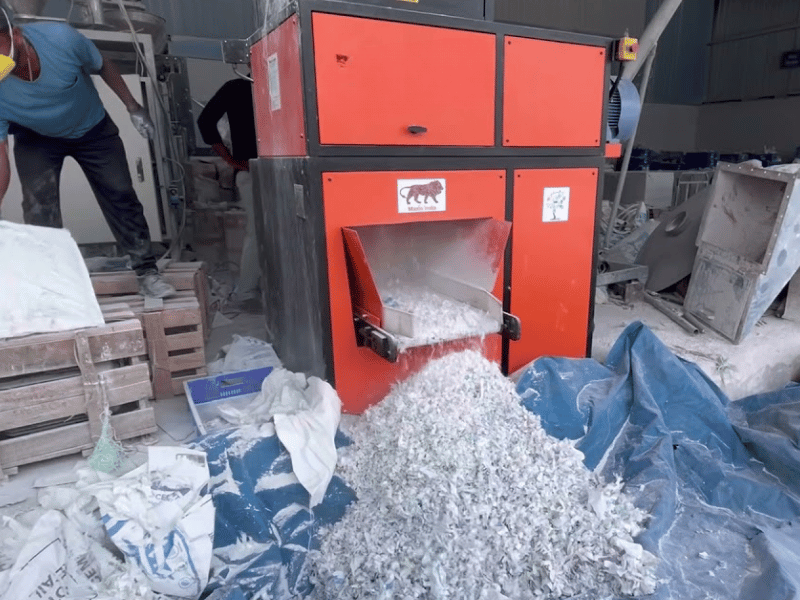
Cement bag recycling needs the process which requires people to collect used cement bags until they become cleaned for future use. The main obstacle to bag recycling exists because two elements create difficulties in recycling operations. Modern recycling technologies now include methods which enable proper material separation together with effective processing. The process of recycling cement bags enables their conversion into new bags and plastic products and various industrial applications which helps to decrease landfill waste while protecting natural resources.
What are Cement Bags and Their Composition?
Cement bags serve as dedicated containers which construction projects need to contain and deliver their essential cementing material. The construction of these bags uses multiple material layers which include kraft paper and woven polypropylene to create a durable product that can endure the heavy weight and rough texture of cement. Kraft paper-based bags are biodegradable, whereas polypropylene bags are made from recyclable plastic polymers. Modern cement bag designs may also incorporate laminated coatings or liners to enhance moisture resistance and prevent leakage during storage and transit.
The latest data shows that standard cement bags have a weight of 50 kilograms which equals 110 pounds yet regional rules and industrial standards can create weight variations. The bag composition creates a combination which enables practical use while maintaining eco-friendly standards because manufacturers use sustainable materials and biodegradable plastics to reduce their environmental footprint. The material combination provides the bags with strength while enabling them to comply with new environmental regulations and market needs.
The Importance of Recycling Cement Bags
The practice of recycling cement bags plays a vital role in decreasing waste and advancing eco-friendly building methods. The construction sector uses a large number of cement bags which causes environmental harm through landfill overflow and cement bag pollution when these bags are improperly discarded. Recycling programs enable the recovery of essential materials which helps decrease the need for fresh resources while decreasing greenhouse gas emissions that occur during manufacturing. The importance of recycling cement bags rests on five main factors which describe its significance.
Reduction of Landfill Waste
Recycling prevents millions of used cement bags from ending up in landfills each year. Efficient recycling programs in urban centers which experience high construction activity can decrease landfill waste by 30%.
Resource Recovery
The materials used in cement bags such as polypropylene can be processed again to create new products which include industrial fibers and packaging materials. The process helps preserve natural resources through decreased organic material extraction.
Energy Savings
Recycling cement bags requires much less energy than creating entirely new materials. The energy savings from recycling plastics range between 30% and 50% which leads to decreased greenhouse gas emissions.
Cost-Effective Manufacturing
Recycled materials provide industries with cheaper alternatives which enable them to decrease their manufacturing expenses. Businesses can develop sustainable manufacturing methods through recycling programs which help them cut costs while protecting the environment.
Environmental Protection
The incorrect disposal of cement bags leads to plastic pollution which harms both terrestrial and ocean environments. The recycling process prevents this danger since it guarantees safe treatment and complete recycling of materials back into production.
Sustainable recycling practices create solutions for environmental problems while helping the industry switch to circular economy practices.
Types of Cement Bags: PP, Woven, and More
Cement companies produce different bag types to meet the various industrial and logistical needs of their operations. The different product types offer distinct features which enable users to select products that meet their specific needs for product durability and cost effectiveness and environmental protection. Below are five common types of cement bags:
Polypropylene (PP) Bags
The bags that use woven polypropylene material create lightweight and durable and corrosion-resistant products. PP bags are highly durable and can withstand rough handling conditions, making them ideal for transporting cement over long distances.
Woven Polypropylene Bags
These bags use interwoven polypropylene strands to create a product that delivers high tensile strength. The construction industry uses them because they can be reused and they provide superior protection against both tearing and puncturing.
Kraft Paper Bags
The bags are made from multiple layers of kraft paper which has high strength and they are biodegradable and environmentally friendly. The packaging materials provide adequate durability to handle situations which require products to be used only once.
HDPE Laminated Bags
High-Density Polyethylene (HDPE) bags with lamination provide enhanced protection against moisture, ensuring the cement’s quality is maintained during transport and storage. These bags serve as strong containers which packaging companies use to store their products in bulk.
Jumbo Bags (Flexible Intermediate Bulk Containers – FIBCs)
These large bags store heavy shipments because they can hold cement that weighs up to 2,000 kilograms. The materials used to make these products include woven polypropylene, which businesses use for both industrial operations and international trade.
Cement companies produce different bag types to meet the specific weight and environmental and transportation needs of their operations. The selection of the appropriate bag type is crucial for both operational success and minimizing environmental impact.
Challenges in Cement Bag Recycling
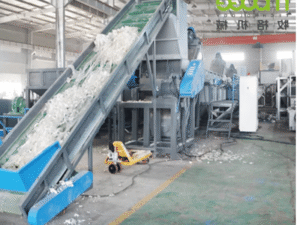
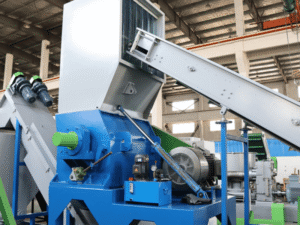
The most valid factors against cement bag recycling are that because cement is a powder, the traces left in the bag lead to recycling barriers and compromised quality of the recycled material. Cement bags employ the use of composite materials with different designs such as woven polypropylene with multi-layers or multi-coatings which creates recycling difficulties. It should be noted that the collection and transportation of used bags from numerous construction sites causes additional operational problems, and as a result, it is expensive. There is a lack of infrastructure for recycling and these bags as well as a weak market for the products made out of recycled materials do not help the development of any cement bag recycling programs. There must always be innovations so that the present day-level grievances could be dealt with even if that means coming up with better bags and innovating to design better recycling practices.
Identifying Waste Cement Bags
Construction sites often make use of waste cement bag, which is distinctly characterized by the combination of materials, provision for utilization and after-use situation. The waste cement bags are often polyethylene cement bags, and paper stacks cement bags; all of these are plastic containers that are capable of holding materials with higher water content such as cement and its alloys. The usage and disposal are estimated at 10 billion different cement bags per year, while this is hazardous as over one third of the bags will end in the rubbish or dump. Such identification is easily achieved by looking at the labels, which usually illustrate how recyclable the pack is. In the long term, it is expected to come up with even better methodologies, incorporating machine learning methods in waste management machines since cement bag recycling machine is even possible.
Contamination Issues in Recycling Processes
A major challenge in recycling processes is the problem of contamination, which is typically caused by non-recyclables or uncleaned recyclables being introduced into waste mass meant for recycling. Recent scientific enquiries and industry reports indicate that contaminants result in high levels of rejection at the recycling points, translating to higher costs and reduced expenditure.
Some areas have a contamination rate that exceeds 25%, meaning that in four bins, three are properly recycled, whereas the fourth is not. Moreover, contamination may damage the sorting equipment, misclassify the materials, and eventually mark the start of downcycling, whereby materials are recycled in low-grade artifacts. All these issues can also be addressed by proper education of the consumers, tightening the norms of sorting and focusing on the improvement of waste management technologies which are the basic components of the recycling process.
Technological Limitations of Recycling Machines
The problem of recycling machines has emerged based on not understanding how they differ technologically. For instance, it is devastating for most optical and chemical recycling processes to classify mixed or multilayer products as plastics or composites. There is also the issue of pollution. The performance of a machine can be hampered by either contaminated materials being placed in the machine or even by the wrong items in the collection hopper. Performance of this machine and others is therefore hampered by this material or these types of material. These limitations precisely make one understand the advancement of recycling techniques in order to achieve efficiency, elegance in recycling processes and effectiveness.
Innovative Solutions in Bag Recycling
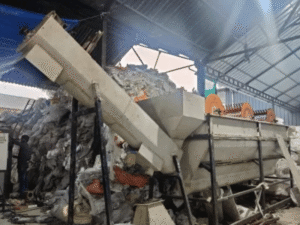
Over recent decades, production of recycling systems for cement bag recycling machine industry has undergone some radical changes. Notably, there has been another option that is simple yet promising and that is chemical recycling. As the name suggests, this process is quite different from the usual one. It seeks to untangle polymers that make up the said plastics to convert them into monomers to retrieve and make available very pure and quality commodities. This assists in saving even the simplest elements like the polyethylene used in production of plastic bags, with zero transformation especially in the performance aspects.
Another trend which has emerged of late is the creation of the artificial intelligence enabled sorting process. This type of application, which uses only machine learning technology, can distinguish and separate plastics into various categories based on their physical attributes such as weight or transparency but does it with higher accuracy. Therefore, to some extent, this improvement in technology to the waste facilities facilitates the process of extracting plastic bags from other wastes, reducing contamination of waste and resulting in more wastes being used.
Lastly and more importantly, versions that are either biodegradable or compostable make it entirely possible to replace their traditional plastic bag equivalents. This kind of substance can easily degrade under natural conditions or within engineered composting facilities, where it can be adequately transformed and hence this facilitates minimization of environmental damage over a period of time.
Advanced Recycling Machines for Cement Bags
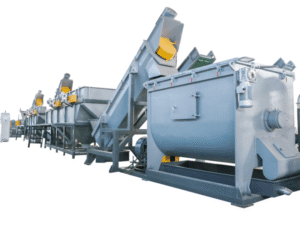
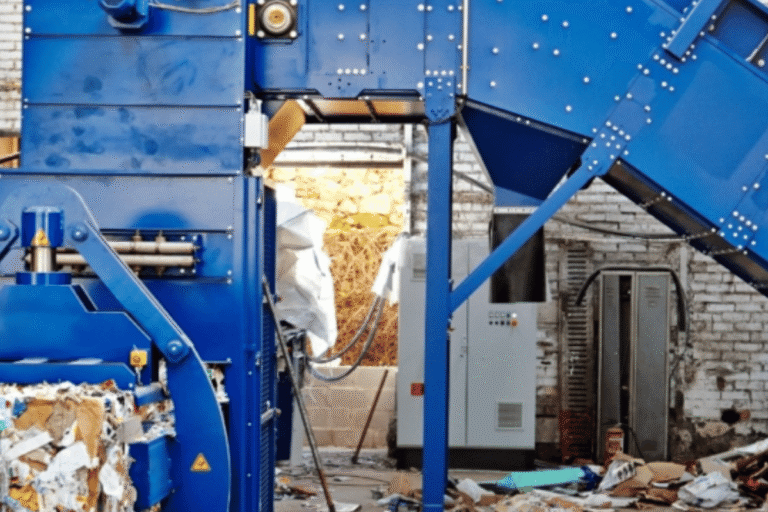
Taking into account the material’s properties and characteristics of the woven polypropylene or any other synthetic polymer in particular, a great deal of cement bag recycling is done with special equipment and compartment that can handle the kind of material. Outlined below is a list of five such machines and the advanced cement bag recycling machines are discussed in relation to their key features and use as follows.
1. Shredder Units
Task: Disintegrate cement bags further into simpler and smaller parts to make further processing easy.
Characteristics:
- Thick blades well equipped for cutting polypropylene and other rigid substances.
- Equipped with a production-rate up to 1000 kilograms per hour.
Usages: The step one mechanical methodology of recycling processes.
2. Granulator Machines
The Role: From the shredded substance; this machine creates the same size granules or pellets, hence uniform raw material for new production needs.
Features:
- Accurate cutting profile mechanisms which allow more efficient granulation.
- Emission resistant by controlling the dust within the system.
- The machinery has the capacity to process 500 kg to 800 kg of material per hour.
Industries: Plastics recycling and manufacturing of virgin raw materials.
3. Washing Units
Purpose: Cement bag pre-cleaning to free the bags from dust, glue and other hard particles.
Features:
- Series of wash tanks for the washing process.
- Water recycling system.
- 95% recovery rate of the processed water.
Industries: Industries focus on recycling clean materials.
4. Extrusion Machines
Purpose: Recycled material is melted and formed into new sheets, films or threads.
Features:
- Melting temperatures that reach up to 400°F.
- Constant feeding mechanism to assure high production of 1–2 tonnes/day.
- Presence of filtration systems for purifying.
Industries: Recycling of plastic to new products, e.g. new cement bags and others.
5. Automated Sorting Systems
Purpose: Built-in ways to distinguish and separate various kinds of unwanted or different plastic materials from the main material.
Main Characteristics:
- Machine learning tools for material management.
- Efficiency target of two or more tons per hour.
- Labor operations required only to slight extent.
Scope of activities: Improving the quality of recyclable raw materials for a certain range of purposes.
All these machines are a comprehensive system when put together in an integrated recycling plant. Such machines ensure reuse of plastic wastes in the environment in a more sustainable manner. These systems build on the great progress made in efficient waste management in the construction industry through the edge in technological innovations and efficiency.
The Role of Shredder Machines in Recycling
It is important to note that shredder’s working mechanism helps in solving the purpose of breaking down of the materials in terms of volume that makes it comparatively easy to perform the thereon. Utility of these devices extends beyond managing the waste and plays an important role in setting the stage for other secondary processes such as mechanical and chemical recycling. Discussed below are the five principal functions performed by the shredder machines in the process of recycling.
Five Principal Functions of Shredder Machines
- Reduction in The Volume of Waste Materials: The main aim of the shredder’s manufacturing is rectification of the bulk waste materials such as plastics, metals, and composite materials to the sizes that can be easily transported and handled. This becomes a need if one is to achieve the separation and additionally processing of waste in an efficient manner.
- Separating Impurities: Some modern shredders contain sorting devices that allow for the separation of impurities like remaining paper or non-valuable materials which results in processing more pristine recyclates.
- Aid In Achieving Uniformity in Material Output: The size of the shredded materials affects the working of the recycling machine especially for materials that require a specific size. The fundamental principle behind using shredders is to get the material disintegrated to such an extent that it would be able to fit into secondary converting equipment, i.e., granulators, pelletizers and the like, in the most efficient manner.
- Better Storage and Transportation: Shredding Machines compresses the size of the waste materials to a great extent which aid in easier storage as well as transportation hence reducing the logistics costs as well as environmental costs.
- Ready For Other Methods Of Recycling: The material is shredded so that it can be subjected to some secondary methods of recycling where it is supposed to undergo certain alterations like conversion into raw materials by means of chemical depolymerization, thermal recuperation, etc. This will allow for more ways where the possibility of recycling the materials heightens.
From a process point of view, the placement of shredders in recycling plants improves efficiency, reduces stresses, and increases the prospects of value added utilization of wastes.
Washing Recycling Machines: Importance and Function
Machines for recycling are used for various purposes that contain how to wash and prepare a given material so that it is of good quality and can be transformed into another product. They are fitted in such a way as to clean materials such as plastics, wood, metals, pottery etc thus dirt, oil, stickers, glues etc are removed. How such a process is done in terms of period, extent, rate etc will depend very much on the end product required and has a high bearing on its quality.
More details on this washing recycling machine and its functionality are given below:
| Function | Description |
|---|---|
| Types Of Washing | The process of washing machines is mostly surfaces of the waste for recycling. This is because most of the containers used to store items are plastics and typically have one or more layers of design and, these need to have after extended use emptying and washing to remove organic matter. |
| Contaminants Free Processing | Some models have the flotation tanks or sink-float separation systems to separate foreign lighter substances, for instance films, labels and so on, from the denser, recyclable materials i.e., PET-Polyethylene Terephthalate. |
| Reduction of Chemical Residues | Warm water and even the use of detergents would be of help in the machines, and to the extent that it decouples chemical harmful residues such as oils or fats, thereby producing recycled products which are safer and greener. |
| Drying Capabilities Post-Wash | In some cases, some washing processing systems may contain accessories such as fast spinning and heating to assist in drying which is necessary for processing prior to next steps which involve conversion of the plastic into pellets or even molds. |
| Energy and Water Efficiency | Most advanced washing technologies embody water recirculation systems that lower the need for excessive fresh water intake. Energy saving systems with high power output require lower power supplies, hence enhancing the green recycling process. |
These washing machine processes are producing high purity and high-quality recycled materials suitable for many industries of use.
Environmental Benefits of Recycling Cement Bags
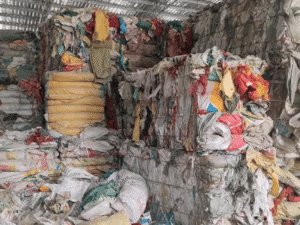
The negative environmental effects of waste generation associated with cement bags can be alleviated by proper solid waste management and more importantly, recycling. This is very important as recovery includes materials rather than their depletion which aids further production without the use of more resources. It also limits the energy required in producing fresh materials, resulting in lower levels of carbon emissions. As such, there is no green construction practices without recycling such as that of cement bags which works to protect the environment over a long period of time.
Reducing Waste and Promoting Sustainability
Owing to the presence of adverse ramifications brought about by the waste on the environment, recycling becomes an essential approach that promotes sustainable development especially considering the fact that countries across the globe produce approximately 2.24 billion tonnes of municipal waste, and yet, only 19% is recycled. In view of this information, it can be deduced that there is an urgent and evident requirement for improved methods for waste management including, but not limited to recycling. Effective control of use of non-fossil materials that in turn cause environmental damages is possible through a circular economy which by its structure, reuses materials such as plastics, metals or even paper that are embedded in its working mechanism.
The recycling process is also instrumental in reduction of greenhouse gases. Minimal energy is consumed in organization of recycled materials into final products as opposed to those made from raw materials only. For example, smelting of recycled aluminum does not necessitate the high consumption of energy associated with producing aluminum from ore. The larger objective of these measures is not just to lower emissions, but also to work towards water efficiency and cut down landfill waste. The idea of recycling plants is easily envisaged because of the increasing population that will obviously lead to an increase in waste production caused by the introduction of humans and their waste into the environment.
Energy Savings Through Recycling Processes
Reduction of energy usage can be achieved through Recycling processes, especially in cases where the materials are sourced from primary resources. It is estimated that close to 88% of the energy is saved when plastics are recycled compared to creating a new one from oil or petroleum. In the same way, it is said that about 30% of the energy is conserved whenever glass making backs up recycling instead of the intensive use of raw materials. Many of these benefits are attributable to the intensive extracting, refining and processing that is part and parcel of virgin products manufacturing. With increased implementation and emphasis on recycling programs, most sectors of production would be more energy efficient and contribute to reduced carbon production, which is good and proper resource allocations.
Impact on Plastic Waste Management
Measurement of Reduction in the Volume of Landfill Wastes
Exponentially less waste is directed to landfills because of recycling of plastics. Recent researches indicate that a ton of plastic being recycled results in the saving of roughly 7.4 cubic yards of landfill space, which is rather pertinent in light of the disposal challenges and reduced space incidents described.
Maintaining Energy Saving in the Production Process
A huge amount of energy is saved by recycling plastics, than in case of producing plastic products from scratch using pure material. As an illustration, half of the energy which is used in making polyethylene terephthalate (PET), by raw materials consumption, is cut when recycling PET polymer, hence its system gains are evident.
Decrease in Green House Gases Emission
Recycling plastics can offer direct pollution savings in terms of contributing to climate change. On average, each tonne of plastic recycled prevents the release of around 2.5 tonnes of carbon dioxide, as the amount of fossil fuel demanded decreases in the manufacturing process.
Decreased Need for Non Renewable Materials
Each time plastics are put back to use it means fewer exports of oil. For every 1000 kgs of plastics that are cleaned and processed for manufacturing, approximately 205.0 litres of oil would not be burned to fill that gap given that oil is a finite resource.
Curbing Pollutants
Effective recycling of plastics curbs disposal of plastics into oceans and other bodies or indiscriminate waste of materials. Studies indicate that recycling of plastic waste in the appropriate manner can help in reducing levels of plastic leakage to the marine system by as much as 50% limiting the adverse impacts of plastic on flora and fauna.
Future Trends in Cement Bag Recycling Technology
It is believed that the future of cement bag recycling machines has to do with efficiency as well as with ecological balance and growth. Novel methodologies and techniques enable more and more effective chemical consumption of mixed plastic films and liners, turning them into fresh manufacturing components. Mechanical techniques are developed further to improve discretionary separation and washing of intricate layers, thus enhancing fibre recovery with higher pulp fractions. Objective optimization is introduced to the sorting sequence in order to cut down on contamination and improve efficiency. Also, there is an increasing interest in the research of biodegradable, compostable and recyclable materials in lieu of cement bag designs in particular, which can help minimize the waste problem at source. Rising awareness in all industries and governments towards these technologies will encourage innovative technologies to spread and be used widely.
Emerging Technologies in Plastic Recycling
Development of improvements in plastic waste management and recycling promises to use high technologies in solving worldwide problems. Chemical recycling is one famous example that decomposes plastics back to their raw monomers or other chemical elements or smaller building blocks that aid in the production of superior quality plastic products to be used again. Mechanical recycling cannot accomplish all sorts of recycling situations since chemical processes are employed for cases of extremely contaminated plastic that does not need to be sorted in layers or some other forms of mixtures and materials.
The application of machine learning and artificial intelligence is extended further while elaborated algorithms help optimizing the separation of plastic types to a fine degree. Such technologies, when incorporated with mechanization, increase speed and accurateness help lower down rates of contamination that are prevalent in such processes and also enhance the productivity of such recycling plants among other advantages. Moreover, there has been ongoing research regarding complex enzymatic recycling and this appears quite promising as engineered enzymes are able to quickly decompose such plastics as PET down to monomers, which is environmental re-utilization of plastics.
The economic viability of these technologies, as global data trends show, has increased according to recent reports. Both corporations and governments increase their funding to install systems that address innovations such as the one above or any other waste generated due to these materials in massive scale. And as such, implementations of these systems which are based on data analytics and emerging technologies can totally change the face of plastic recycling industry.
Advancements in Pelletizing and Extrusion
Improvements made in typical methods of pelletizing and extrusion are aimed at improving plastic recycling, its efficiency, quality of products, and other environmental effects they pose. Extrusion processes in extruders have widened to include more thermoplastic polymers with appreciably high viscosity thus increasing the output rate in a more controlled melting process. The processes of pelletizing have been improved by innovative methods such as underwater pelletizers and cut strands, which help in the control of the size and shape of the particles, and also their uniformity facilitating their use in many applications. Computer-aided manufacturing (CAM), management information systems (MIS) and other similar methods have also been automated to a great degree so that there is minimal need for labor, consumption, and significantly increase production levels. These changes will contribute towards developing practical ways of recycling in response to these economic and environmental challenges.
Market Leaders in Recycling Machine Innovations
Some businesses of recent have turned to competitive aspects of the recycle machine industry, through innovations that significantly revolutionizes and organizes such work better. For example, Tomra Inc., has built, developed and even produced a very intelligent sorting machine for supplying to the world market. The application of the sensor technology in the recycling industry is applicable to several specifically recycling systems. For instance, the works of Vecoplan comprises various types of shredding and processing machineries however more so the huge high speed and high efficiency machines which handle more difficult materials with ease. In addition several companies like Bollegraaf Recycling Solutions appear to focus on developing material recovery concepts. There are very many worthwhile projects going on at the moment that aim at the best quality goods available, also considering the requirements of this changed recycling which are growing.
Frequently Asked Questions (FAQ)
1. What Are the Primary Functions of a Cement Bag Recycling Machine?
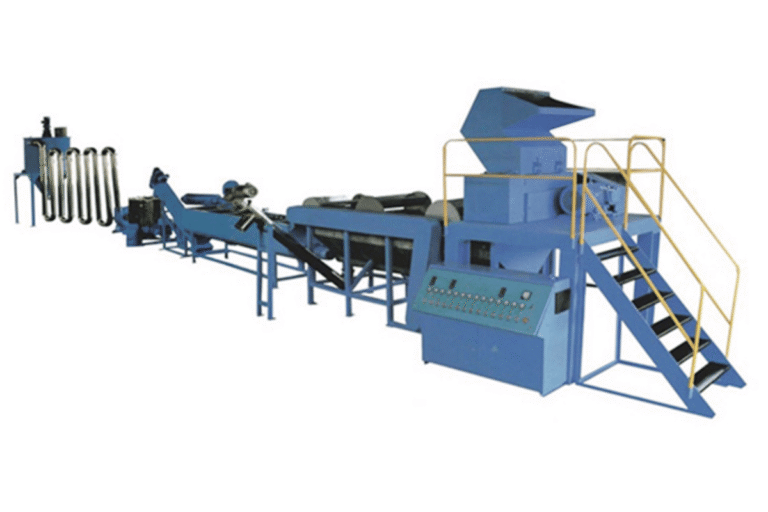
The machine known for recycling cement bags operates as an entire washing system which transforms used cement bags into reusable pure materials. The system performs its core functions through material size reduction and thorough washing which eliminates all remaining cement dust together with other impurities and through material separation and dewatering and drying processes. The final output results in clean polypropylene (PP) or polyethylene (PE) flakes which undergo pelletizing production.
2. What Are the Essential Components of a Complete Recycling Line?
The cement bag recycling line needs to operate with various specialized modules which function as one integrated system. The heavy-duty shredder needs to operate as the primary equipment which will reduce the durable woven bags to smaller pieces. The Pre-Washing-Rinsing System stage eliminates all loose particles from the surface while achieving most of the cement dust removal. The Crusher-Granulator machine converts shredded materials into smaller pieces which create uniform flakes that improve washing results. The high-friction washer uses high-speed paddles to create intense friction which scrubs the flakes to remove ingrained cement dust and paper labels. The Float-Sink Separation Tank uses water to separate the PP/PE flakes which float from denser contaminants which include residual cement particles and sand and metals which sink. The Mechanical Dewatering Machine uses centrifugal dryers and screw presses to extract most process water from the clean flakes. The Thermal Drying System uses a hot air dryer to achieve final moisture content reduction which reaches below critical threshold levels at 2% for material extrusion preparation.
3. Why Is Processing Cement Bags so Challenging Compared to Other Plastic Waste?
The main difficulty arises because residual cement dust shows both abrasive and alkaline characteristics. The dust causes machine parts to wear out at an increased rate especially which affects shredder blades and crusher knives. The cement dust combines with water to form a slurry which needs specialized filtration systems together with water treatment systems to stop it from forming blockages inside machines. The fibrous structure of woven bags also requires powerful, purpose-built shredders to avoid entanglement.
4. How Does the System Handle the Separation of Plastic from Residual Cement?
The separation process uses multiple stages to achieve its objectives. The process begins with shredding and continues with high-friction washing which removes dust from plastic flakes through mechanical means. The float-sink tank provides the main separation function which takes place at this stage. Polypropylene has a specific gravity lower than water, causing it to float. The cement particles together with other heavy contaminants sink to the bottom, where they get discharged. The plastic material achieves high purification through this density-based separation method.
5. What Is the Purpose of the High-Friction Washing Stage?
The high-friction washer serves as an essential equipment component which achieves high purity results. The system operates through the operation of plastic flakes which get stirred around at high RPMs while they remain immersed in water. The process generates intense scrubbing force because the flakes touch each other which removes hard-to-reach dust particles together with attached paper and labels. The mechanical action achieves complete cleaning results which exceed the capabilities of standard rinsing methods.
6. Can a Single Line Process Both Paper and Plastic Cement Bags?
The system designed for plastic (PP/PE) woven bags cannot operate with paper bags. The processes require distinct operational methods. The recycling of plastic materials needs shredding and washing and melting to complete the process while paper recycling uses pulping as its primary method. A pre-sorting step becomes necessary when a feedstock contains both paper and plastic bags. The plastic recycling line can, however, be designed to separate and remove paper labels that are part of the plastic bag’s construction.
Reference Sources
- •Waste Cement Bags Recycling Machine – The machine shows its main features through its ability to crush materials at high efficiency and its ability to wash and dry materials which can be tailored to particular customer requirements.
- •Cement Bags Shredder Machine – The text explains the dual-shaft shredders which handle cement bags through their design that uses suitable operating speeds and their built-in systems for protecting against excessive material capacity.
- •Plastic Cement Bags Recycling Machine – The system provides multiple robust machines which operate at high efficiency to recycle plastic cement bags. Recommend reading: PP Woven Bag Recycling Line from Leading China Manufacturer