Entre em contato com a Kitech Company


Atualizado em junho de 2026.
O filamento reciclado é um filamento imprimível re-feito de sucata limpa e impressões com falha em vez de pellets virgens Se você quiser recicle o filamento da impressora 3D, a resposta honesta é sim 'mas só é possível se você tiver acesso a qualquer um dos equipamentos corretos, o certo plástico, e gerar muito outro sucata. PLA, PETG, ABS, e TPU todos têm o potencial de ser transformado de volta em novo filamento, ainda praticamente nada pode ir em sua lixeira do meio-fio Este guia caminha você através das três opções reais 'faça-o-seu-extrusão, uma opção de correio-em, e um industrial 'e a engenharia que manter alguns spools bom enquanto outros entupir bicos.
Resposta curta: Para reciclar o filamento da impressora 3 D é triturar sucata limpa e de resina única em flocos de 2-5 mm, secá-los completamente em um secador rotativo (um secador de polímero dedicado é ideal) e, em seguida, alimentar esse floco em um filamento extrusora definido para produzir um fio consistente de 1,75 mm ±0,05 mm de diâmetro Ele funciona bastante bem para PLA e PETG, é muito mais desafiador com ABS, Nylon e PC, e em termos de dólares geralmente não se torna rentável até produzir 50 kg/mês de sucata de filamento purificado (embora os benefícios sejam quase inteiramente na redução de resíduos.
Especificações rápidas: resumo da reciclagem de filamentos
| Tipos home-recicláveis | PLA, PET, TPU ABS, classificado estritamente, nunca misturado |
| Aceitação na calçada | Nenhum na prática (código de resina #7 “Other”) |
| Perda de propriedade | na ordem de 10% tração por remelt inicial; ciclos virgens utilizáveis de ~5 após o 3o) |
| Diâmetro alvo | 1,75 mm ±0,05 mm, redondeza ≥95% |
| Equipamento de mesa | Triturador + extrusora de filamento, ~$700 (DIY) a ~$10.000 (prosumidor) |
| Passo inegociável | Secagem (PLA, PETG, nylon e PC são higroscópicos) |
💡 Principais conclusões
- Uma nota importante antes de começarmos o material de filamento reciclado pode não seja tão forte quanto virgem Pode ser tão bom nas primeiras ~ 3 passagens, então está sujeito a degradação acelerada.
- Estabilidade do diâmetro (Diameter) não força (strength) tem o maior potencial para falhar, e é a diferença entre um comercial de 0,05 mm e um DI 4,61TP3 T que causa tantos problemas de entupimento hot end.
- Nunca processe PLA, PETG e ABS no mesmo lote, suas janelas de fusão estão muito distantes umas das outras, então a resina de baixa temperatura queima enquanto a de alta temperatura mal derrete.
- Uma operação de reciclagem doméstica geralmente paga apenas “paga para si mesmo” acima de 50 kg/mês de sucata, mas reduz aproximadamente a metade da energia incorporada e evita a maior parte do desperdício.
Por que você não pode simplesmente jogar impressões 3 D na lixeira
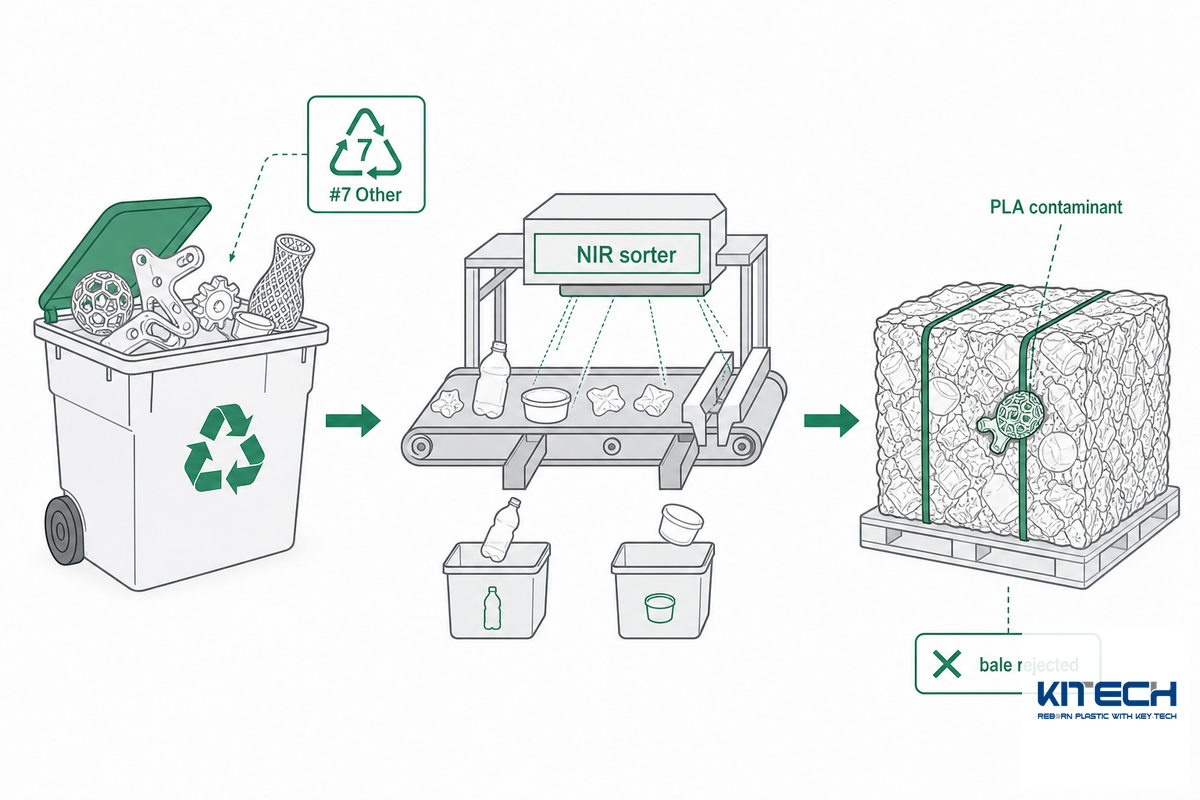
Na maioria dos casos, os recicladores locais o farão não aceite seu impressões falhadas, suportes, ou purga-conjuntos Praticamente todos os termoplásticos de deposição fundida-PLA, PETG, ABS, policarbonato, nylon-caem sob o “Outro código de identificação de resina” #7 como definido por ASTM D7611.
É aí que as coisas começam a dar errado na interpretação do número (A AST) define o número D7611 como uma forma de distinguir os plásticos uns dos outros, não como uma forma de sinalizar como eles podem ou devem ser reciclados. Esse código sinaliza apenas o tipo de polímero, não se existe um sistema de reciclagem nos EUA. Esboços da EPA que muitos plásticos não podem ser reciclados através de sistemas locais, geralmente porque um processo não existe - a maioria das instalações rejeita plásticos rotulados com 7: o site Recycle Ann Arbor afirma que recipientes de “plástico rotulados como #7 de qualquer formato não são recicláveis”
Existem também vários problemas com plásticos 1TP5. o primeiro e mais óbvio é simplesmente que as impressões 3 D não são nem caixa de armazenamento moldada em garrafa em carga complexa, irregular moldada e multicolorida - os classificadores próximos que classificam um fluxo de reciclagem são calibrados para garrafas, não para ABS e 1/2 preenchimento quadrado Segundo, um bioplástico perdido como PLA simplesmente atua como um contaminante em um fluxo; uma parte perdida do PLA diminuirá o valor de um fardo inteiro de plásticos temperados Linha inferior: a maior parte da reciclagem de resíduos de material de impressora 3 D é um esforço dedicado - não é uma característica automática da caixa azul; o resto deste guia cobre o processo esperado para fazê-lo bem A maioria das opções locais de reciclagem e centros de reciclagem simplesmente não têm processo de reciclagem para essas resinas, então para realmente reduzir o desperdício você tem que classificar por tipo de plástico e encaminhá-lo através de um dos canais dedicados abaixo Na prática, um único estrato PLA pode imprimir um problema real que você deseja que todo o custo - D e o custo - para a rota de impressão b3 e que você deseja que todo o problema os diferentes tipos de plásticos e seus códigos de reciclagem.
Quais filamentos de impressora 3 D podem realmente ser reciclados?
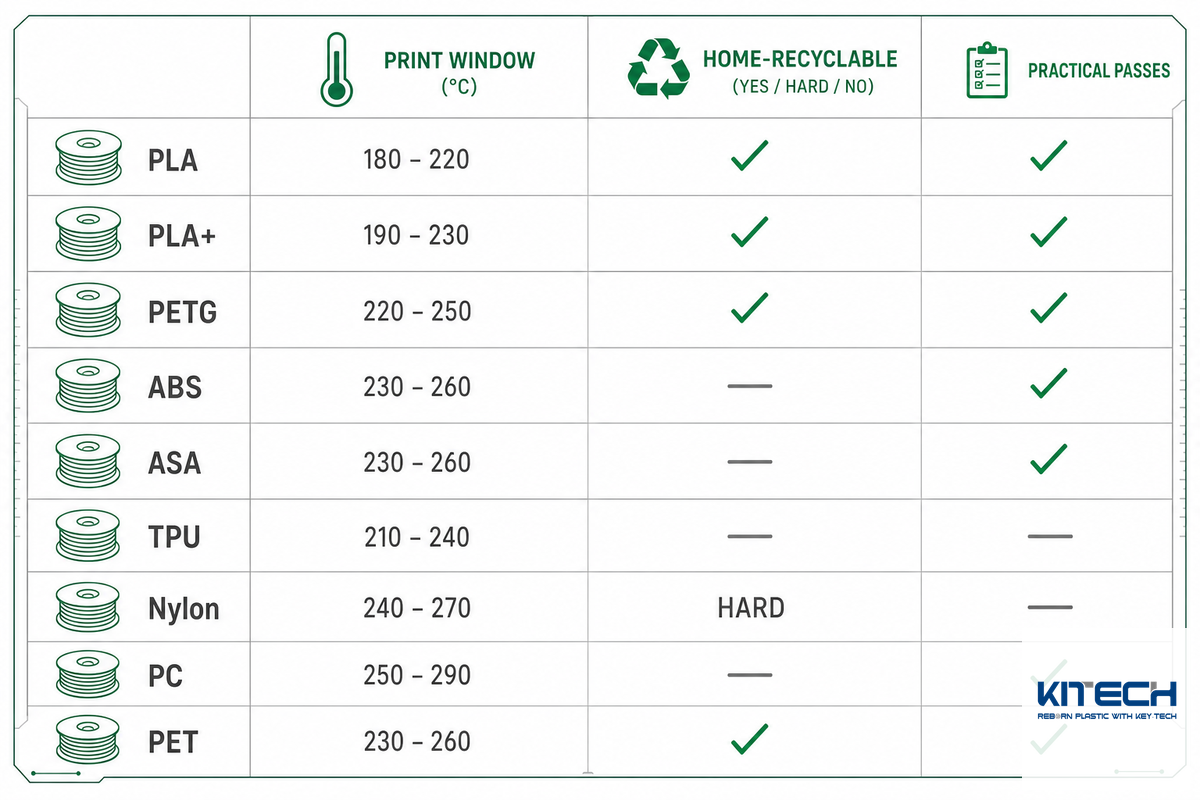
Todos os quatro principais mainstream mainstream: PLA, PETG, ABS e TPU; todos podem ser reciclados de volta para filamento (pelo menos que estritamente classificados por tipo Eles não podem ser realmente co-processados como eles têm pontos de fusão amplamente diferentes PLA está em torno de 215 C, PETG em 250 C, ASA/ABS estão em 260 C. PLA é o mais indulgente, nylon e PC são complicados Nenhum deles será aceito em sua coleção regular na calçada.
Quais tipos de filamentos você pode realisticamente recuperar depende do tipo de material e sua janela de fusão: PLA e PETG são os materiais de impressão mais fáceis de reciclar, enquanto PETG e ABS exigem secagem e ventilação mais apertadas.
Basta ler a resina na ferramenta abaixo e ver se a reciclagem DIY parece promissora, em que temperaturas secá-la e o melhor caminho através da máquina para você.
O Scorecard de Recuperação de Filamento de 9 Materiais
| Material | Janela impressão | Home-reciclável? | Secar antes de extrusar | Passes práticos | Melhor rota |
|---|---|---|---|---|---|
| PLA | 19020 °C | Sim (mais fácil) | 45 55 °C, 6 h | ~56 | Exclusão ou serviço DIY |
| PLA+ | 20025 °C | Sim | 50 °C | ~45 | Exclusão DIY |
| PETG | 2300250°C | Sim (crítico seco) | 65°C, 4°h | ~5 | DIY (duro seco) ou serviço |
| ABS | 2300260°C | Mais duro (fumos) | 70 08 °C, 2 4 h | ~34 | Serviço/industrial; ventilar |
| ASA | 2400260°C | Mais difícil | 70 °C | ~34 | Serviço /industrial |
| TPU | 210230 °C | Difícil (não será destruído) | 70°C | baixo | Serviço |
| Nylon (PA) | 2400270°C | Muito difícil | 70090 °C, 12 h | baixo | Serviço /industrial |
| PC | 260300 °C | Muito difícil | 90 °C | baixo | Industrial (pode combinar virgem) |
| PET (garrafas) | 2500270°C | Especialista (fita) | 65°C+ | n/a (fita) | Polifórmero ou industrial |
Janelas de impressão/secagem compiladas a partir de dados do fabricante da extrusora e fichas técnicas de materiais (teste de janela de fusão 3devo, Felfil, CNC Kitchen); classificações de reciclabilidade verificadas cruzadamente em relação a estudos de reprocessamento revisados por pares.
Qual filamento de impressão 3 D é reciclável?
Facilidade é uma ordem ascendente: PLA primeiro, depois PETG, depois ABS/ASA. PLA cuida da melhor maneira possível de sua casa triturador e extrusora; PETG recicla de forma limpa, mas é mais higroscópico e amarra facilmente se o material não estiver seco o suficiente; ABS é fácil o suficiente para reciclar além de cuspir fumaça nociva e deformar significativamente, tornando-o mais adequado para um processo interno ventilado ou em uma linha industrial.
Os maiores desafios vêm com o TPU (já que é muito fibroso e resiste a cortes limpos), e policarbonato ou nylon, pois são extremamente sensíveis à umidade, o que significa que os resultados domésticos repetíveis provavelmente serão ilusórios Lembre-se da regra da comunidade de que nunca misture plásticos diferentes, ou diga que o PETG fica pegajoso enquanto o PET é sólido, e o derretimento se torna inútil Veja nosso guia para Reciclagem de PET e policondensação em estado sólido por que a química do PET faz com que ele se comporte dessa maneira.
O fluxo de trabalho de reciclagem de filamentos domésticos: Classificar → Triturar → Seco → Extrude
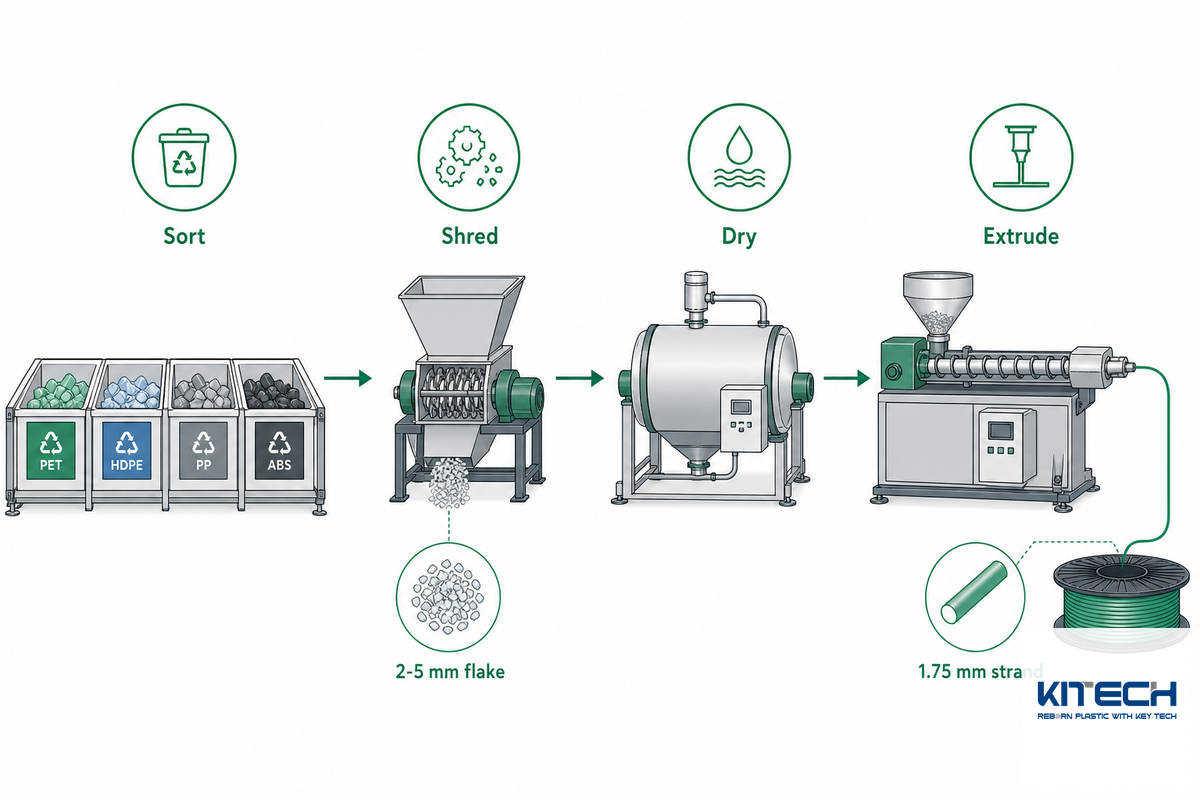
Para reciclar o filamento da impressora 3 D em casa, você precisará percorrer as mesmas etapas em ordem: classificar o material estritamente por tipo e por cor, triturar as impressões até flocos de 2-5 mm, secar bem o material para eliminar o excesso de umidade e alimentar esse floco através de uma extrusora de filamento ajustada à temperatura de fusão da resina, onde é puxada para um diâmetro de 1,75 mm ±0,05 mm. A maioria das falhas acontece neste processo, muitas vezes a mais comum das quais é deslizar ou até mesmo perder a etapa de secagem.
1. Classificar. Primeiro, separe por tipo de polímero. Segundo, classifique por cor. Pequenos vestígios de pigmentos mais escuros podem facilmente dominar a cor de um lote inteiro, tornando-o ainda limpo desligado-cortes ou filamento de purga parecem castanho-lamacentos Contaminar um lote de flocos de PLA com até mesmo uma única peça de PETG causará vazios de ar no filamento final Os cortes de impressão limpa e as purgas gastas são matéria-prima muito menos problemática do que as peças pintadas Classificar bem é como você remove contaminantes antes que eles destruam um lote, e é a etapa que permite reciclar impressões com falha em vez de lixá-las.
2. Destruir. Use um triturador de plástico para transformar impressões em pedaços que são mais facilmente manuseados pelo seu reciclador Concentre-se em peças consistentes de 2-5 mm. Se o floco variar muito em tamanho, o plástico reciclado não fluirá suavemente através da sua extrusora isso é muitas vezes devido à inconsistência de tamanho e contribui para flutuações no diâmetro do filamento e extrusão de surto Regrind tem metade da densidade aparente dos pellets, e muitas vezes é inconsistentemente dimensionado.
3. Seco. É importante que cada tipo de polímero deve ser seco completamente para melhores resultados PET, PLA, nylon, PC todos absorvem a umidade ambiente do ar, que pisca para vapor quando aquecido dentro de seu barril extrusora, causando bolhas, mudanças de diâmetro, e em casos extremos, danos reais às cadeias moleculares.PLA deve ser seco em torno de 50 C, PETG em torno de 65 C, ABS e ASA em torno de 75 C, e nylon até 90 C. O que você está apontando é um nível de teor de umidade que garante a extrusão sem problemas, assim como com polímeros reciclados convencionais! consulte o nosso guia sobre secagem e controle de umidade na reciclagem de plástico para os níveis de teor de água necessários para produzir plástico reciclado de alta qualidade.
4. Extrude. Alimente o floco em uma extrusora de filamento de parafuso único, que o derrete e o empurra através do bico e morre Esse derretimento contínuo é puxado, à mão ou por um sistema automático, para o diâmetro correto de 1,75 mm à medida que é enrolado no carretel. Você trabalhará principalmente para obter um diâmetro de filamento consistente nesta etapa do processo.
Nota de Engenharia A Disciplina de Diâmetro ±0,0 mm
O filamento comercial mantém 1,75 mm ±0,05 mm com redondeza em torno de 95%. Um recyclebot de código aberto de nível de pesquisa, por outro lado, mediu cerca de ±0,08 mm (±4,61TP3 T), o que causa subextrusão e entupimento em extremidades quentes apertadas. Você controla o diâmetro com quatro variáveis: (1) secagem (umidade causa oscilação); (2) tamanho de reafiação (surtos mistos de flocos); (3) estabilidade à temperatura de fusão; e (4) taxa de tração/carretel combinada ao fluxo. Segure esses quatro e o processo de extrusão a seco e triturado controle do qual as linhas de pellets industriais dependem paga dividendos.
Um exemplo da comunidade de fabricantes contará a história Um fabricante que reextrudou uma mistura uniforme (50/50) de resíduos re-moídos PLA e uma fonte virgem de PLA limpa ainda imprimiu peças sob e sobre-extrudadas porque o diâmetro oscilou entre 1,65 e 1,85 mm, cerca de 0,1 mm de vão, o dobro da especificação comercial A correção não era material mais forte: era uma secagem mais apertada e uma tração mais lenta e controlada.
️ Segurança: ventile o processo
Além do plástico, o processo de trituração/extrusão pode criar partículas ultrafinas (UFPs) e certas resinas, outros voláteis. Pesquisa da EPA dos EUA sobre impressão 3D identifica a extrusora de filamentos como fonte de partículas ultrafinas, mesmo a taxas iguais às próprias impressoras 3 D. Os CDC's NIOSH (Instituto Nacional de Segurança e Saúde Ocupacional) DIY 3D trata a impressão em makerspaces, pequenas empresas como um problema relacionado à exposição no local de trabalho e não apenas à qualidade de impressão. Ao executar equipamentos para seu processo de reciclagem, certifique-se de que está fazendo isso em ambientes bem ventilados ou sob exaustão localizada, prestando especial atenção ao executar ABS e ASA onde quente gera estireno.
Equipamento de reciclagem de filamentos: Recicladores de mesa comparados
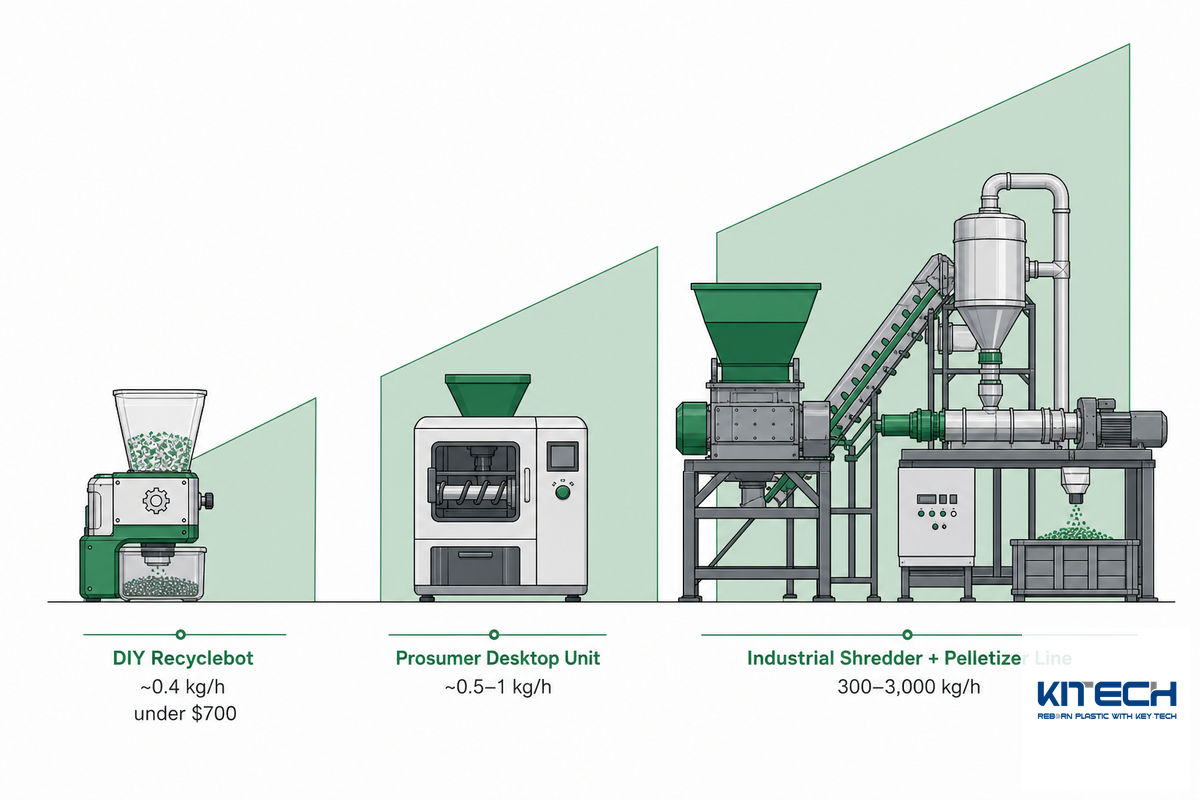
Para uso doméstico máquina de reciclagem de filamentos geralmente é duas peças de equipamento (setup), um triturador de filamentos e uma extrusora de filamentos (sending), existem algumas unidades de combinação tudo-em-um, e um determinado fabricante pode construir um reciclador de filamentos DIY a partir de planos de código aberto De qualquer forma, a extrusora de núcleo é a mesma: um triturador alimenta o filamento de resíduos limpos em um sistema de extrusão de filamentos que derrete e redesenha para calibrar A Impressão 3 D Guia de campo do reciclador de filamentos de mesa abaixo compara produtos populares no mercado, antes de explorar opções industriais maiores você considerará se levar a sério a impressão 3 D, ou montar uma grande fazenda Os preços abaixo são atuais a partir do verão de 2026 e mudam por modelo e país.
| Sistema | Tipo | Rendimento | Faixa de preço | Melhor para |
|---|---|---|---|---|
| DIY Recyclebot (código aberto) | Extrusora (+ triturador separado) | ~0,4kg/h | <$700 construir | Fabricantes/pesquisa |
| ExtrudeX | Kit DIY (+ triturador) | baixo | ~$300 | DIY do orçamento (601TP3 T virgem + 40% desperdício) |
| Felfil Evo | Extrusora (+ triturador Felfil) | ~0,5kg/h | ~80€01.500 | Prosumidor orçamental |
| Criador de filamentos de crioulity M1 + Triturador R1 | Extrusora + triturador/secador | ~1kg/h | Consumidor | Fabricantes desktop |
| Filabot EX2 | Extrusora (+ Moedor Filabot) | ~0.51kg/h | $2,995T2,750 | Prosumidor /laboratório |
| Criador de filamentos 3Devo | Extrusora + sensor de diâmetro | ~0,7kg/h | ~$48k | Laboratório/educação |
| ProtoCycler V3 (ReDeTec) | Moedor tudo-em-um + extrusora | ~0,5kg/h | $9,999 | Prosumidor tudo-em-um |
| Filabot EX6 (industrial-lite) | Linha extrusora | mais alto | ~$14.000 | Pequena produção |
| Triturador industrial + peletizador linha | Linha completa (triturar + lavar + peletizar) | 30003.000 kg/h | Capex industrial | Fazendas de impressão/recuperadores |
(Dados retirados das especificações do catálogo do fabricante, ou seja, Filabot, ReDeTec, 3 devo, Creality. Open-source recyclebot literatura, bem como versões anteriores Confirme o preço do varejista atual antes da compra)
Você pode derreter e reutilizar o filamento da impressora 3 D?
Sim, isso é exatamente para que serve uma extrusora de filamento. Plástico residual limpo e triturado adequadamente, seco e depois derreter e extrusá-lo em um fio contínuo enrolado em um carretel. A consistência é a única captura: uma extrusora de baixo custo geralmente não possui controle de diâmetro em linha, portanto, desvios de largura do fio.
Essa deriva torna uma impressora sub ou excessivamente extrusiva, ou força limites rígidos sobre quais impressoras podem executar o material reciclado. Para melhores resultados, granule ou peletize o material reciclado antes da extrusão; alimentar o fragmento irregular dá um fio quebradiço e inconsistente.
O que a reciclagem faz com a qualidade do filamento (e como limitá-la)
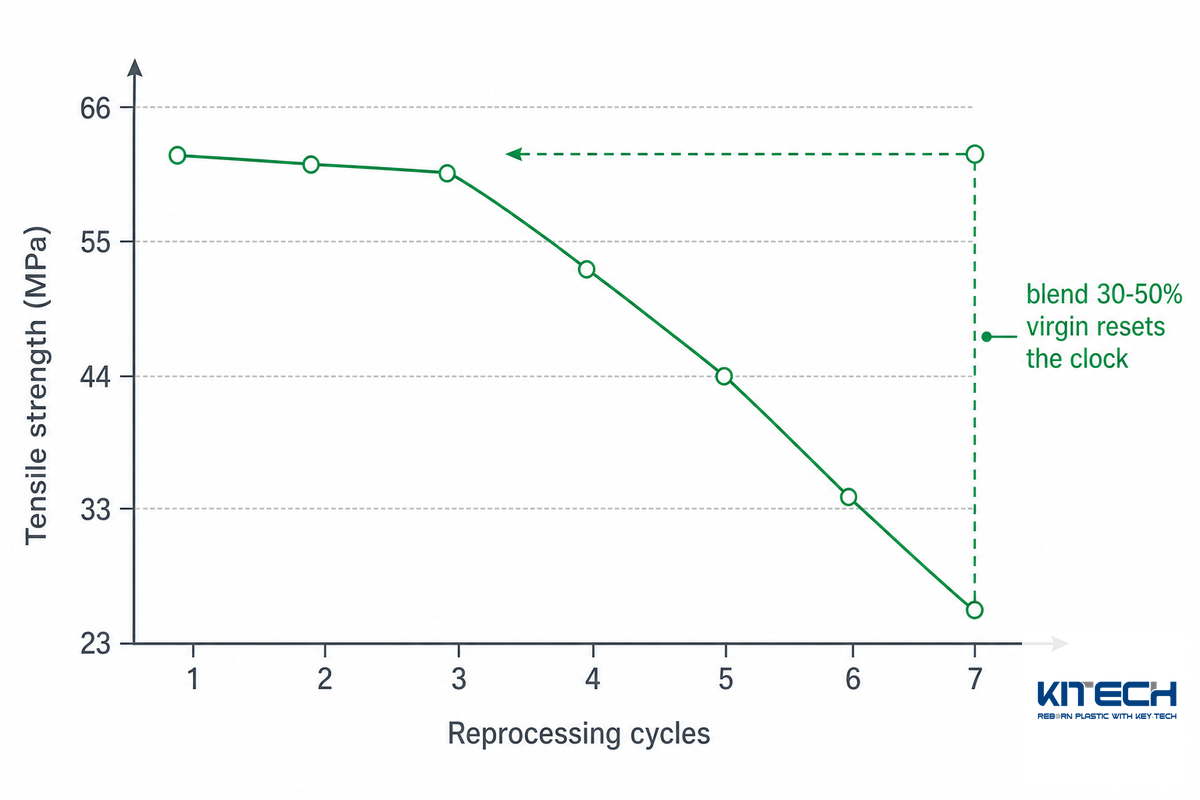
Aqui está a maior imprecisão encontrada na maioria dos guias de instruções: o processo de reciclagem não corta a resistência em linha reta O filamento reciclado não perde força em proporção direta ao número de passagens, e a curva difere entre os tipos de filamentos, uma vez que PLA, PETG e PC se degradam cada um em sua própria programação, em vez de todos de uma vez.
Nas primeiras 1-3 passagens, o PLA e o PET reciclados muitas vezes combinam ou melhoram os materiais virgens originais devido a um aumento na cristalinidade obtido com o reprocessamento adequadamente controlado dos plásticos. Um estudo realizado na Universidade do Texas, Austin, revelou que as propriedades mecânicas do PLA foram em grande parte “não afetadas, mesmo depois de passar por quatro passagens de reciclagem de”. Dados da Michigan Tech policarbonato reciclado medido a 64,9 MPa, bem alinhado com o virgem. Em outras palavras, resíduos de PLA bem secos podem voltar como filamento que rivaliza com o filamento virgem, quase tão bom quanto o filamento novo nas primeiras passagens.
Em algum lugar além do terceiro ciclo ou assim, a deterioração entra em ação e começa a acumular interesse Em um teste, a tensão de tração do PLA degradou-se de cerca de 66 MPa para cerca de 23 MPa através de sete ciclos de refusão, enquanto a transição vítrea permaneceu amplamente plana (o PLA fica perto de 60-61 C e mal muda com o reprocessamento).Esses primeiros ciclos ainda podem ser notavelmente benignos: alguns experimentos mostram a força do PLA se mantendo bem no início, e é por isso que a orientação revisada por pares geralmente limita a reutilização prática em cerca de três a cinco ciclos A alavanca que ‘redefini o relógio’ está na forma de mistura: adicionar 301TP3 T a 501TP3 T polímero virgem retorna desempenho próximo ao nível básico.
Esteja avisado, porém, de que os números dos laboratórios refletem matéria-prima imaculada. A exposição aos raios UV, o histórico térmico, a carga de corantes e a contaminação transportada pelo real impressões falhadas significa que o material “field” provavelmente degenera mais rapidamente do que os estudos indicam Mantenha o controle de quantas vezes cada lote é re-derretido e inspecione em vez de apenas assumir que cada peça impressa pode ser processada como restos limpos frescos fora da cama.
“Reciclar resíduos de plástico em filamento com um recyclebot de código aberto corta a energia incorporada desse filamento em cerca de 901TP3 T e o custo do material para alguns centavos por quilograma A barreira nunca foi a química, estava dando às pessoas as ferramentas.”
Uma dica inesperada de um estudo recente sobre PET reciclado: virar o ventilador de resfriamento da peça completamente fora de cogitação com aquele túnel de vento para plástico durante a solidificação - pode elevar de forma mensurável a resistência à tração testada da peça, permitindo períodos mais longos para cristalização Muitas vezes, verifica-se que os materiais reciclados podem ter um desempenho melhor com menos resfriamento do que você poderia ter discado para filamento fresco Confira nossa mesa em graus de qualidade de pellets reciclados para as classificações da indústria utilizadas no reprocessamento.
O que se sustenta
- PLA/PET para os primeiros ~3 ciclos (pode combinar virgem)
- Resistência à tração reciclada do PC (~65 MPa)
- Misturado 30050% virgem recupera perto da linha de base
0 Que degrada
- Resistência à tração após ~3 ciclos (até grandes perdas pelo ciclo 7)
- Consistência do diâmetro (a causa real do entupimento)
- Adesão da camada em sucata fortemente reimpressa
Sem equipamento? Programas de reciclagem por correio e take-back
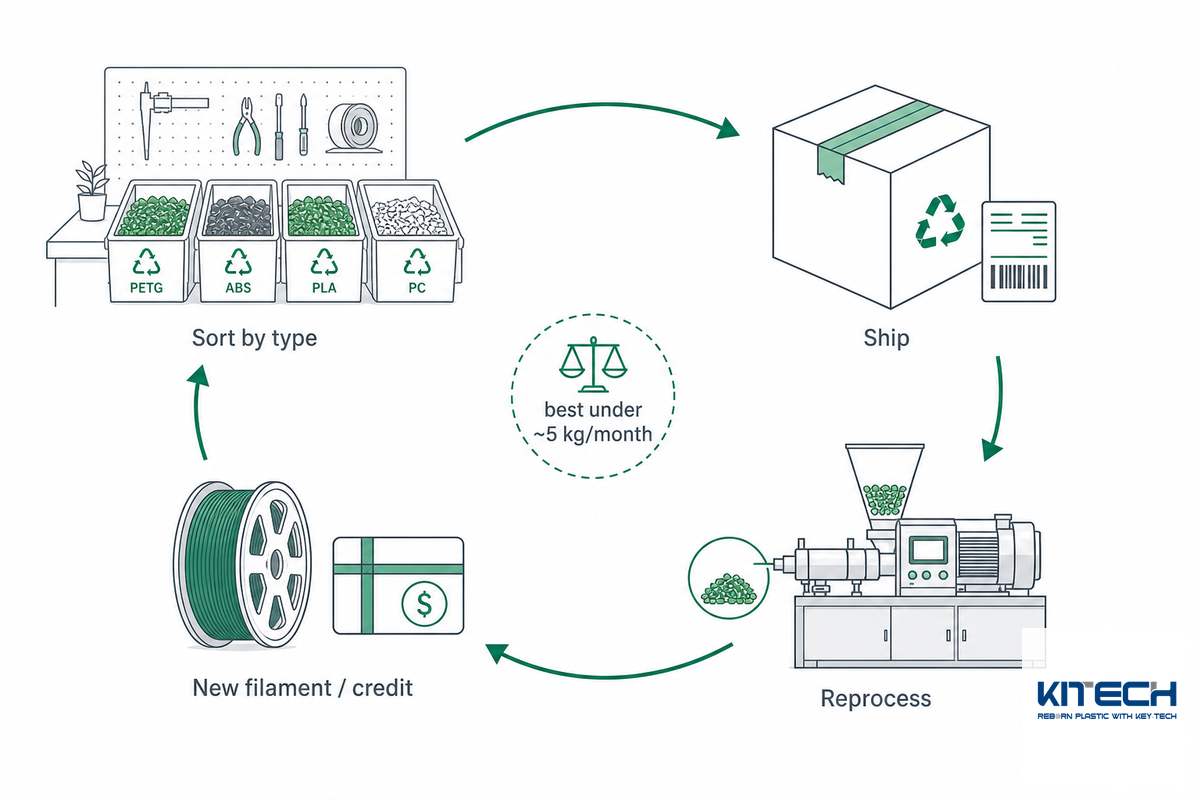
Se investir no equipamento por si mesmo não é uma opção, vários serviços de reciclagem de filamentos e programas especializados de reciclagem tirarão seus restos de plástico de suas mãos Esses métodos de reciclagem por correio permitem que você envie seus resíduos e faça com que outra pessoa os reprocesse. Printerior oferece o que chama de modelo de classificação e envio que concede pontos resgatáveis por novos filamentos com base em materiais limpos e bem segregados. TerraCycle vende “Zero Waste Boxes” ($195-$352, dependendo do tamanho) que pode ser preenchido com filamento e carretéis (entre outras coisas). FormFutura também oferece um serviço de takeback para PLA e filamento PETG, e atualmente a Filabot está testando uma opção de mail-in para impressões com falha (especificamente de PLA) Universidades seus próprios loops também 'R.E.M.A.urn University's REM coleta campus impressão resíduos & roundups como Guia de serviços da All3DP acompanhe nove ou mais opções de envio e entrega pelo correio, às vezes com um reciclador perto de você.
Se você estiver gerando sob alguns quilos de plástico com falha por mês, um serviço de mail-in pode ser a melhor opçãoO tempo é a compensação oculta: porque uma caixa pode levar 60 dias ou mais para preencher no volume do hobby, na prática os pontos ou crédito da loja recuperam apenas um pequeno 1TP3 T do valor da resina, então o mail-in é realmente uma maneira de evitar desperdícios, não economizar dinheiro Os especialistas indicam um limite de “útil” para tais serviços como estar abaixo de aproximadamente 5 kg por mês, momento em que o tempo de espera (6-12 meses até você preencher uma caixa) é relativamente equilibrado com o tempo típico de volta de 6-8 semanas Quanto aos carretéis vazios, se eles são feitos de papelão, provavelmente podem ser colocados em suas caixas normais na calçada; se forem feitos de plástico, podem ser enviados através de uma caixa de resíduos zero. E criticamente: evite colocar PLA ou qualquer #7 plástico reciclável em suas caixas regulares de plástico curbsclide apenas para listas de biodegradáveis em instalações de volta, que é uma pasta industrial ou compostaminadores apenas para compostados de plástico com base de plástico, e para compostela, em que é apenas para compostela de forma segura.
O filamento de reciclagem realmente economiza dinheiro? A matemática do intervalo
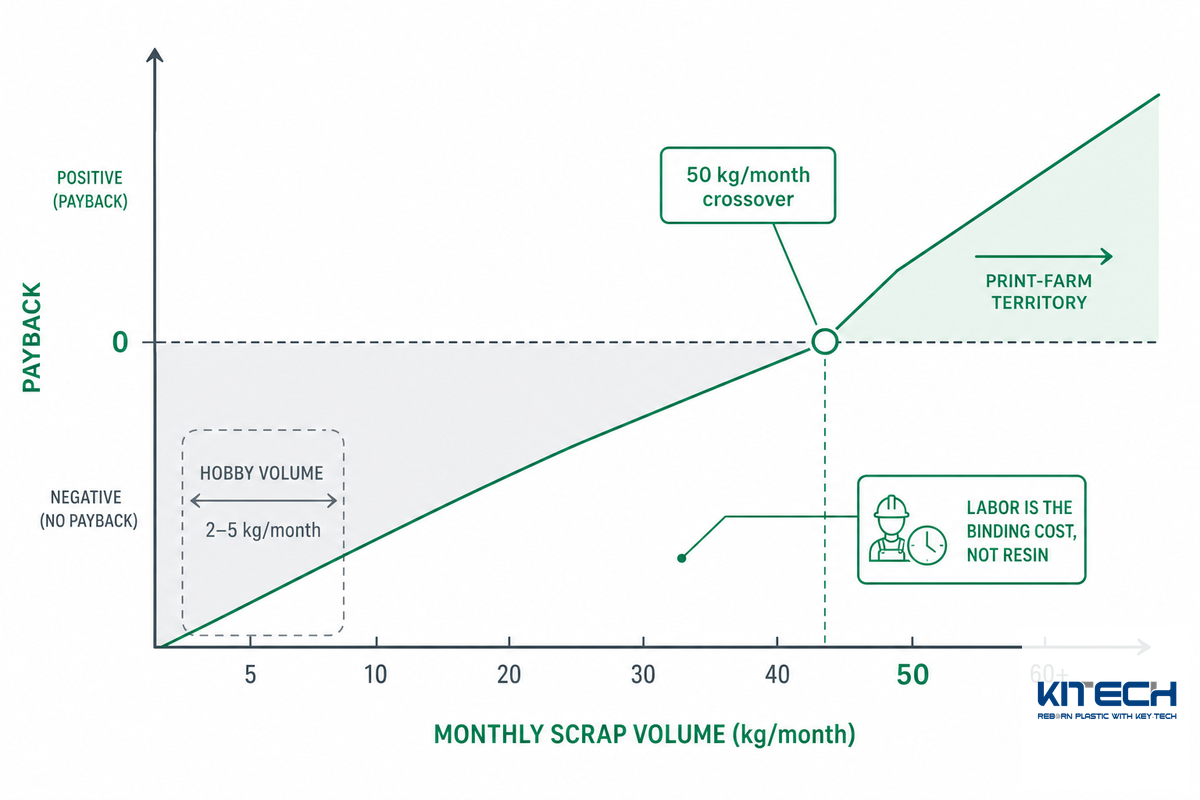
Economizar dinheiro reciclando seu próprio filamento é algo que normalmente só faz sentido econômico quando você atinge um determinado volume limite Enquanto o material em si é quase gratuito (original Estudos RECYCLEBOT custos de processamento sugeridos de cerca de 2,5 centavos/kg contra $20-$50+/kg para filamento comercial), o custo geral é contabilizado pela máquina, energia e seu tempo A maior parte do valor na reciclagem de seus próprios resíduos de filamento é manter o plástico fora do aterro, uma vez que a resina em si é quase gratuita.
Vamos percorrer os números com um exemplo do mundo real Se você produzir 3 kg de filamento de sucata por mês, e assumir que o custo do filamento é 1TP25/T4 isso resulta em não tratar centavos $75/mês de economia bruta Em um reciclbot $700 DIY (ignorando o trabalho, a construção como hobby), o retorno é aproximadamente $700/$75 = 9-10 meses Mas em uma unidade prosumer $3.000, o retorno é superior a três anos Adicione em um rendimento razoável um modelo ROI considera 90-1001TP3 T como ficção “fan e define o uso para 60-851TP3 T, juntamente com um adicional de 2,5 horas de trabalho por quilograma, e o caso financeiro simplesmente não se sustenta para fabricantes casuais Em relação ao custo de trabalho por 20 kg, o trabalho de banca é o trabalho por conta-quilograma, o trabalho livre como o trabalho por conta-quilograma, o trabalho por conta-quilograma, o trabalho por conta-5555555.55.5.550000000000000000000005000050505050505050500005050000005050500000000000000000000000000000000005050000000000005000505050000050000050000000000005000000000000000000000.
️ A janela de equilíbrio
Para o hobbyista médio (2-5 kg/mês), nenhum reciclador vai quebrar mesmo com base em dinheiro puro, mas se você quiser evitar colocar plástico em aterro e diminuir a energia incorporada em cerca de 901TP3 T, pode valer a pena Um ponto realista de quebra de caixa arranca alguns onde cerca de 50 kg/mês, que normalmente é território de fazenda de impressão Abaixo desse número, simplesmente optar por reciclar os plásticos para se sentir bem, não rico.
Quanto vale 1 grama de filamento?
Como a maioria dos filamentos custa algo entre $20-$50 por quilograma, um grama vale algo entre $0.02-$0.05. a um custo tão baixo por grama, torna-se difícil justificar o preço de um recyclebot doméstico apenas com base no retorno, mesmo que seja bastante gramas antes do retorno.
Fabricação de filamentos a partir de garrafas PET e outros resíduos de plástico
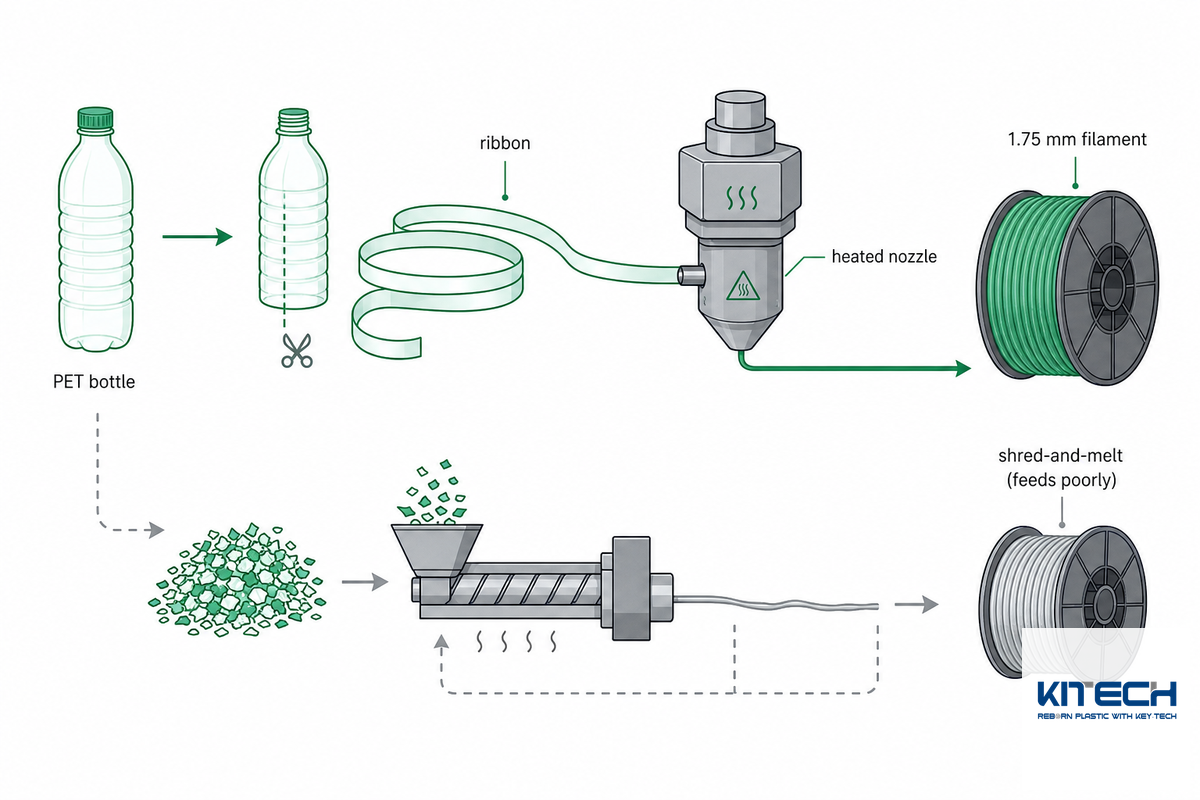
Além da sucata que você produziu em casa, você poderia considerar fazer garrafas de comida e bebida em algo útil Transformar resíduos de plástico em filamento de impressora 3 D de garrafas é a rampa de acesso mais acessível, e o design de código aberto é barato o suficiente para prototipar em um fim de semana Em um assunto totalmente diferente, há um design, o Polyformer (reconhecido pelo Prêmio James Dyson), que transforma uma garrafa de comida PET em filamento reciclado Em vez de reciclá-los, o design corta uma garrafa limpa em uma fita contínua e puxa essa fita através de um bico aquecido, depois para fora em filamento de 1,75 mm Sua beleza está em sua simplicidade (um projeto DIY que é simples, barato e até imprimível! a necessidade é real: onde não há reciclagem de PET curbside, as garrafas são simplesmente resíduos e o poliformador de código aberto foi construído pela primeira vez para transformar garrafas descartadas em filamentos de 1,75 mm em Ruanda, onde carretéis comerciais são caros e difíceis de obter.
Só para você não ter expectativas muito altas, há dois motivos para considerar Primeiro, o PET é duro localmente porque sua garrafa fina de densidade se alimenta mal através de extrusoras padrão de parafuso único reciclar o problema real a fita sidesteps Também tende a absorver água (higroscópica), e materiais de fita ou lascados precisam estar completamente secos e não devem ter a chance de ficar muito quentes, pois podem ser a causa do que é conhecido como degradação hidrolítica (as cadeias de materiais encurtam e seu peso molecular é significativamente reduzido).Em segundo lugar, os materiais PET não são muito fluíveis, e o filamento PETG não se sai bem em extrusoras tipo parafuso padrão devido à sua estrutura fina Para a maioria dos propósitos, a compra de material de fornecedores de PETG com conteúdo reciclado resultaria em um processo de degradação mais bem-sucedido e confiável O Polyformer raramente pode ser usado como um processo de custo mais simplista/menor ou, para o usuário que requer um pouco mais de recursos educacionais, como uma ferramenta de processamento de espaço hidroelétrico em vez de uma pequena aplicação de PET-continunda, em vez de uma pequena aplicação de processamento de pets.57.
Quando se tornar industrial: o crossover de 50 kg/mês
Se o seu volume conseguir acompanhar, um hobby pode tirar muito proveito de uma extrusora de mesa típica (aproximadamente 0,4 a 1 kg de material por hora), mas essa velocidade rapidamente se transforma em um gargalo para espaços de fazenda e fabricante de impressão produzindo números muito maiores, da ordem de dezenas de quilos de resíduos de impressão 3 D por mês.
Uma vez que você atinge aproximadamente 50 kg por mês, você entra em uma escala completamente diferente, onde a reciclagem industrial compensa: investir em granuladores/trituradores industriais, peletizadores e produzir pellets prontos para processo de fusão padrão que são utilizados no compounder ou equipamento de granulado fundido O crossover “50 kg por mês “ é um termo usado para descrever o ponto em que a economia da fabricação muda para a escala industrial em fato, até 12 toneladas por ano de sucata de impressão 3 D da produção na BMW já é reciclada de volta em filamento.
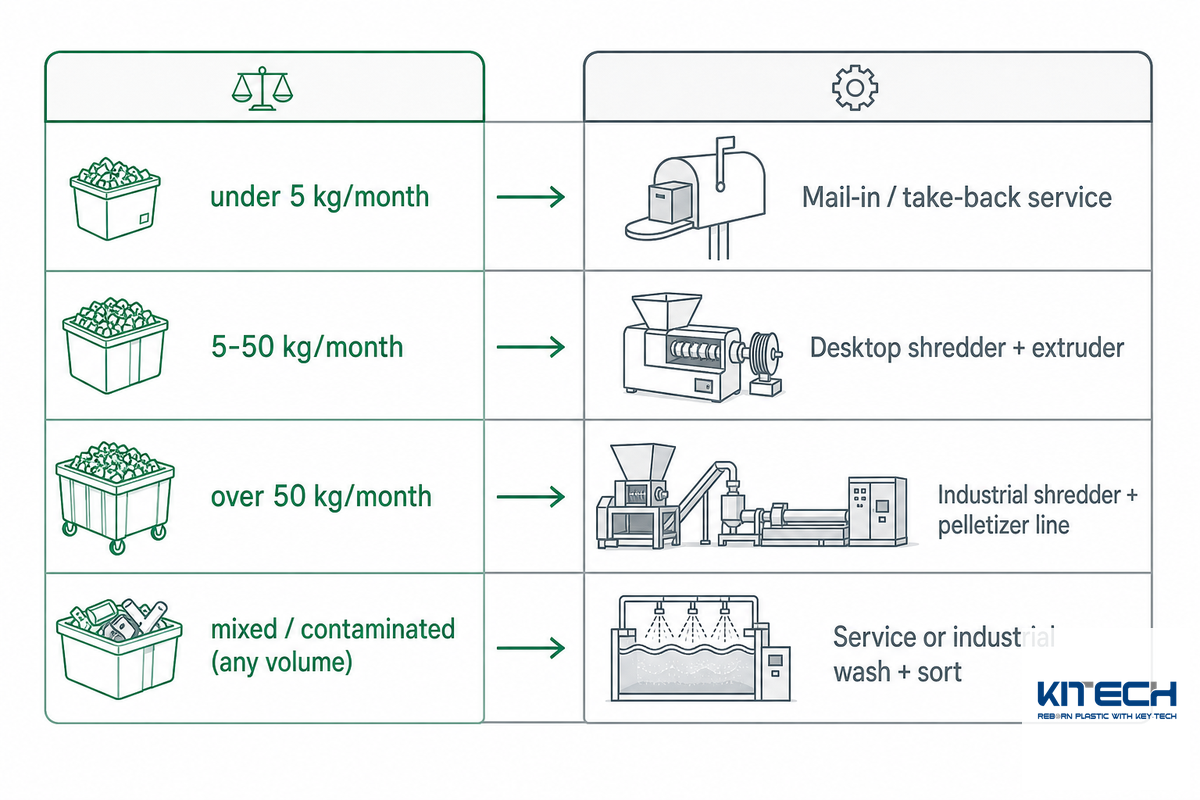
Usar o Triagem Reciclar ou Enviar para se colocar:
| Sucata mensal | Rota recomendada | Porquê |
|---|---|---|
| <5kg | Serviço de correio/retirada | Capex nunca paga; o tempo de acumulação é aceitável |
| 50kg | Triturador de mesa + extrusora (secador + sensor de diâmetro) | Volume justifica uma unidade prosumer; diâmetro de controle |
| > 50kg | Linha industrial do triturador + do peletizador | O rendimento da área de trabalho torna-se o gargalo; compostos de alimentação de pellets |
| Misto/contaminado (qualquer volume) | Serviço ou lavagem industrial + linha de classificação | As unidades domésticas não podem limpar ou separar de forma confiável |
Se sua balança está rastejando em direção ao crossover de 50 kg mês, uma solução de reciclagem dedicada em nível industrial torna-se muito importante 100% que lida com lavagem, filtração por fusão e secagem A Kitech é a pioneira nesse mundo, desenvolvemos equipamentos nessa escala, nossa seletor de linha de reciclagem de plástico e guia de custos do triturador industrial são bons próximos passos, ao lado de nossa linha completa de soluções de reciclagem de plástico.
O Outlook: Filamento Reciclado Torna-se Mainstream
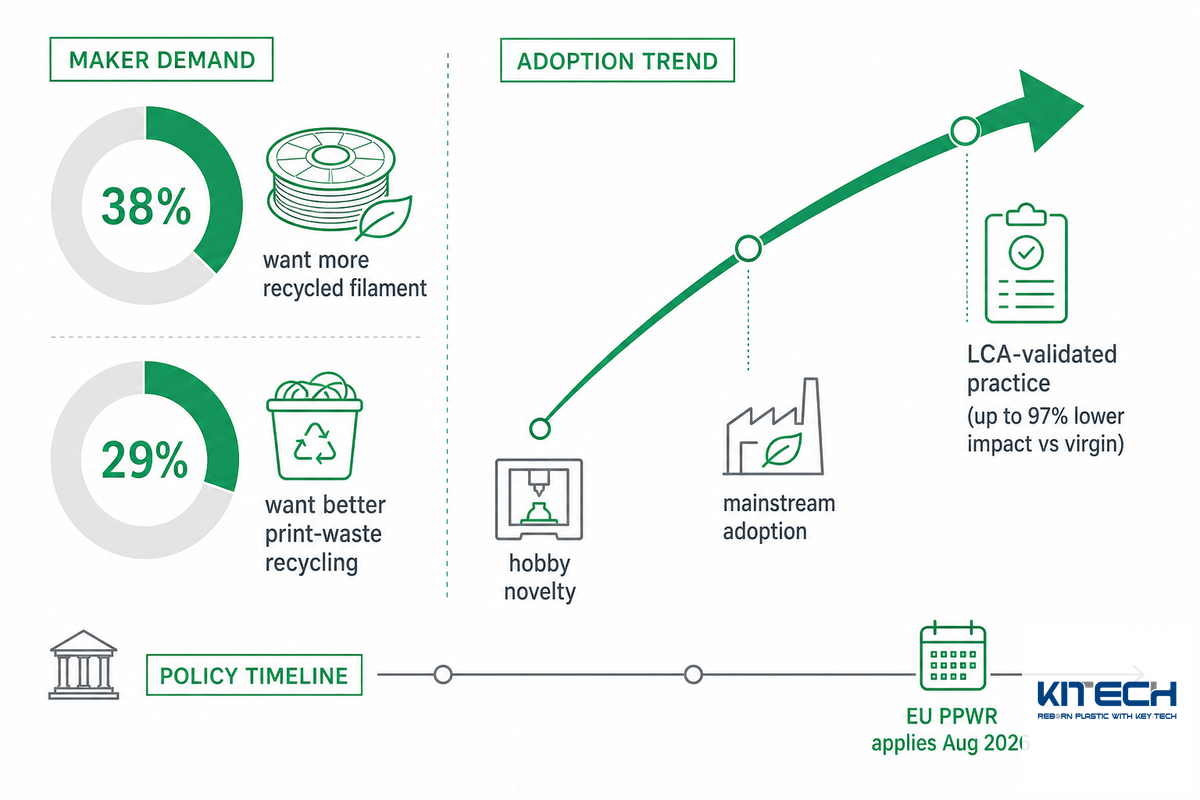
O que importa neste momento não é um gráfico de mercado; é que a demanda e a política estão convergindo para a matéria-prima reciclada Em uma pesquisa do setor, os fabricantes de mudanças mais procurados para a impressão 3 D eram mais filamentos reciclados (381TP3 T) e melhor reciclagem de resíduos de impressão (291TP3 T) E a reciclagem distribuída passou da novidade do hobby para uma prática validada pelo ciclo de vida: Uma revisão por pares avaliação do ciclo de vida mostrou um impacto ambiental 97% menor do que o estoque virgem.
A regulamentação está a conduzir-nos na mesma direcção. da UE Regulamento de Embalagens e Resíduos de Embalagens é aplicável desde 2025 e implementado até agosto de 2026, introduzindo conteúdo reciclado mínimo obrigatório. E os estados dos EUA estão a aprovar um aumento na legislação de responsabilidade alargada do produtor para aumentar ainda mais os custos do plástico virgem.
A seleção de compradores para filamentos irá de “pode ser reciclado?” para “compro isso para meu desktop, serviço ou aplicação industrial?” (Para escala, o tamanho do mercado de filamentos recicláveis é de cerca de $1.4 B em 2025 e projetos em direção a $3.7 B até 2033; números aproximados, mas a direção é clara).Se você está construindo capacidade para 2026, faz sentido determinar qual dos cenários acima é o seu com Triage, e projetar impressões para fazer menos resíduos antecipadamente Qualquer que seja sua escala, uma jornada de reciclagem que transforma impressões com falha em peças feitas de materiais reciclados é como a impressão de mesa pode contribuir para um modelo de fabricação mais sustentável e com menor desperdício. Transformar essa pressão política em fornecimento real depende de uma camada industrial que a engrenagem de hobby não pode alcançar: linhas de produção de fabricantes como Kitech, construídas em torno de trituração de precisão e controle de processo de grau ISO 9001.
Perguntas frequentes
Q: Qual filamento de impressora 3 D é reciclável?
Ver Resposta
PLA, PETG, ABS e TPU podem ser re-pelletados em novo filamento, mas somente se mantidos estritamente para digitar devido a diferentes janelas de fusão PLA é o mais fácil; PETG caso contrário não produz problemas, mas deve ser seco duro; ABS funciona em grande parte, exceto para problemas de desgaseificação e empenamento; nylon, policarbonato e TPU são muito difíceis e exigem uma linha de serviço ou industrial Nenhum deles está disponível na reciclagem de calçada para ampla categoria #7 “Outro”.
Q: Vale a pena reciclar PLA?
Ver Resposta
Depende da escala O PLA é o filamento mais home-reciclável, um reciclador de desktop raramente paga abaixo de cerca de 5 kg/mês, e os hobbyistas geralmente geram 2 kg/mês Abaixo disso, reciclam o PLA para o benefício ambiental (cerca de 901TP3 T menos energia incorporada do que virgem) em vez de economia, ou usam um serviço de correio Acima de ~ 50 kg/mês os números começam a somar.
Q: Você pode derreter e reutilizar o filamento da impressora 3 D?
Ver Resposta
Sim. desfie a sucata de material 1 para flocos de 2-5 mm de tamanho uniforme, seque muito bem e depois alimente-a para uma extrusora de filamento na temperatura de fusão da resina, enrolando o fio Você precisará de um bom controle de diâmetro, idealmente 1,75 mm + 0,05 mm, e pode ser necessário alimentar alguns pellets virgens após alguns ciclos, pois a cadeia de material encurta por algum fator em cada refusão.
P: Quanto vale 1 grama de filamento?
Ver Resposta
Entre 2 e 5 c por grama, dado o preço de varejo típico entre $25 e $50/kg (por que a reciclagem precisa de um enorme rendimento antes que a máquina comece a ganhar o que quer.
Q: O filamento reciclado pode ser tão forte quanto novo?
Ver Resposta
Normalmente sim o primeiro par de ciclos que você pode controlar o reprocessamento para trazer PLA/PET de volta muito perto/na força virgem e PC reciclado força vem em torno do mesmo (cerca de 65 MPa).Por ~ ciclo 3, queda de força, você vai começar a ver mais perda de uniformidade de diâmetro Ao misturar 30-501TP3 T material virgem, recuperamos a maioria das perdas.
P: O que faço com carretéis de filamentos vazios?
Ver Resposta
Os carretéis de papelão geralmente são recicláveis na calçada; carretéis de plástico podem ser enviados por correio em Zero Waste Box ou em um programa de recarga que reutiliza o núcleo.
Passando pela área de trabalho?
Se sua fazenda de impressão ou loja está gerando mais sucata do que uma unidade de desktop pode suportar, a Kitech projeta trituradores industriais, linhas de lavagem e pellets construídos para 3000 kg,000 kg/h. Diga-nos seu volume e material, e nossos técnicos especificarão a linha certa para suas necessidades.
Por que escrevemos isso
A Kitech constrói trituradores, sistemas de lavagem e peletizadores que transformam resíduos plásticos em matéria-prima utilizável, por isso abordamos a reciclagem de filamentos da maneira como abordamos uma linha industrial: como uma espécie, trituração, processo de extrusão onde o controle de diâmetro decide o resultado Não vendemos recicladores de mesa, o que nos permite ser honestos de que, para a maioria dos amadores, a recompensa é a redução de resíduos, não dinheiro, e que a economia só muda quando você cruza para volumes de fazenda impressa. Revisado pela equipe técnica da Kitech.
Referências e fontes
- Prática padrão ASTM D7611/D7611M-21 para codificação de artigos plásticos para identificação de resinaASTM Internacional
- Como faço para reciclar? Recicláveis comunsAgência de Proteção Ambiental dos EUA
- FAQ sobre Reciclagem e Compostagem de Plástico (ASTM D6400)Agência de Proteção Ambiental dos EUA
- RepRapable Recyclebot: extrusora de código aberto para conversão de plástico em filamentoHardwareX (Pearce et al., Michigan Tech)
- Propriedades mecânicas da impressão de extrusão de material de partículas de policarbonato recicladoUniversidade Tecnológica de Michigan
- Benchmarking das propriedades de tração do ácido polilático (PLA)Universidade do Texas em Austin
- Avaliação do ciclo de vida da produção de filamentos na reciclagem distribuída de plásticos via manufatura aditivaSistemas de Resíduos Mais Limpos
- Polifórmero: Garrafas Plásticas para FilamentoPrêmio James Dyson 2022
- Regulamento de Embalagens e Resíduos de Embalagens (a partir de 2026)EUR-Lex, União Europeia
- Pesquisa de impressão 3D (emissões de partículas ultrafinas)Agência de Proteção Ambiental dos EUA
- Abordagens para Impressão 3 D Segura (controles de exposição)NIOSH/CDC